Gametophyte dominant, independent, multicellular, initially ±globular, not motile, branched; showing gravitropism; glycolate oxidase +, glycolate metabolism in leaf peroxisomes [glyoxysomes], acquisition of phenylalanine lysase* [PAL], flavonoid synthesis*, microbial terpene synthase-like genes +, triterpenoids produced by CYP716 enzymes, CYP73 and phenylpropanoid metabolism [development of phenolic network], xyloglucans in primary cell wall, side chains charged; plant poikilohydrous [protoplasm desiccation tolerant], ectohydrous [free water outside plant physiologically important]; thalloid, leafy, with single-celled apical meristem, tissues little differentiated, rhizoids +, unicellular; chloroplasts several per cell, pyrenoids 0; centrioles/centrosomes in vegetative cells 0, microtubules with γ-tubulin along their lengths [?here], interphase microtubules form hoop-like system; metaphase spindle anastral, predictive preprophase band + [with microtubules and F-actin; where new cell wall will form], phragmoplast + [cell wall deposition centrifugal, from around the anaphase spindle], plasmodesmata +; antheridia and archegonia +, jacketed*, surficial; blepharoplast +, centrioles develop de novo, bicentriole pair coaxial, separate at midpoint, centrioles rotate, associated with basal bodies of cilia, multilayered structure + [4 layers: L1, L4, tubules; L2, L3, short vertical lamellae] (0), spline + [tubules from L1 encircling spermatid], basal body 200-250 nm long, associated with amorphous electron-dense material, microtubules in basal end lacking symmetry, stellate array of filaments in transition zone extended, axonemal cap 0 [microtubules disorganized at apex of cilium]; male gametes [spermatozoids] with a left-handed coil, cilia 2, lateral, asymmetrical; oogamy; sporophyte +*, multicellular, growth 3-dimensional*, cuticle +*, plane of first cell division transverse [with respect to long axis of archegonium/embryo sac], sporangium and upper part of seta developing from epibasal cell [towards the archegonial neck, exoscopic], with at least transient apical cell [?level], initially surrounded by and dependent on gametophyte, placental transfer cells +, in both sporophyte and gametophyte, wall ingrowths develop early; suspensor/foot +, cells at foot tip somewhat haustorial; sporangium +, single, terminal, dehiscence longitudinal; meiosis sporic, monoplastidic, MTOC [= MicroTubule Organizing Centre] associated with plastid, sporocytes 4-lobed, male cytokinesis simultaneous, preceding nuclear division, quadripolar microtubule system +; wall development both centripetal and centrifugal, 1000 spores/sporangium, sporopollenin in the spore wall* laid down in association with trilamellar layers [white-line centred lamellae; tripartite lamellae]; plastid transmission maternal; nuclear genome [1C] <1.4 pg, main telomere sequence motif TTTAGGG, KNOX1 and KNOX2 [duplication] and LEAFY genes present, ethylene involved in elongation; chloroplast genome with introns (not: Mesostigma), close association between trnLUAA and trnFGAA genes [precursors for starch synthesis], tufA, minD, minE genes moved to nucleus; mitochondrial trnS(gcu) and trnN(guu) genes +.
Many of the bolded characters in the characterization above are apomorphies of more or less inclusive clades of streptophytes along the lineage leading to the embryophytes, not apomorphies of crown-group embryophytes per se.
All groups below are crown groups, nearly all are extant. Characters mentioned are those of the immediate common ancestor of the group, [] contains explanatory material, () features common in clade, exact status unclear.
Sporophyte well developed, branched, branching dichotomous, potentially indeterminate; hydroids +; stomata on stem; sporangia several, terminal; spore walls not multilamellate [?here].
II. TRACHEOPHYTA / VASCULAR PLANTS
Sporophyte long lived, cells polyplastidic, photosynthetic red light response, stomata open in response to blue light; plant homoiohydrous [water content of protoplasm relatively stable]; control of leaf hydration passive; plant endohydrous [physiologically important free water inside plant]; PIN[auxin efflux facilitators]-mediated polar auxin transport; (condensed or nonhydrolyzable tannins/proanthocyanidins +); borate cross-linked rhamnogalactan II, xyloglucans with side chains uncharged [?level], in secondary walls of vascular and mechanical tissue; lignins +; roots +, often ≤1 mm across, root hairs and root cap +; stem apex multicellular [several apical initials, no tunica], with cytohistochemical zonation, plasmodesmata formation based on cell lineage; vascular development acropetal, tracheids +, in both protoxylem and metaxylem, G- and S-types; sieve cells + [nucleus degenerating]; endodermis +; stomata numerous, involved in gas exchange; leaves +, vascularized, spirally arranged, blades with mean venation density ca 1.8 mm/mm2 [to 5 mm/mm2]; sporangia in strobili, sporangia adaxial, columella 0; tapetum glandular; sporophyte-gametophyte junction lacking dead gametophytic cells, mucilage, ?position of transfer cells; MTOCs not associated with plastids, basal body 350-550 nm long, stellate array in transition region initially joining microtubule triplets; archegonia embedded/sunken [only neck protruding]; embryo suspensor +, shoot apex developing away from micropyle/archegonial neck [from hypobasal cell, endoscopic], root lateral with respect to the longitudinal axis of the embryo [plant homorhizic].
[MONILOPHYTA + LIGNOPHYTA]
Sporophyte growth ± monopodial, branching spiral; roots endomycorrhizal [with Glomeromycota], lateral roots +, endogenous; G-type tracheids +, with scalariform-bordered pits; leaves with apical/marginal growth, venation development basipetal, growth determinate; sporangium dehiscence by a single longitudinal slit; cells polyplastidic, MTOCs diffuse, perinuclear, migratory; blepharoplasts +, paired, with electron-dense material, centrioles on periphery, male gametes multiciliate; nuclear genome [1C] 7.6-10 pg [mode]; chloroplast long single copy ca 30kb inversion [from psbM to ycf2]; mitochondrion with loss of 4 genes, absence of numerous group II introns; LITTLE ZIPPER proteins.
LIGNOPHYTA†
Sporophyte woody; stem branching axillary, buds exogenous; lateral root origin from the pericycle; cork cambium + [producing cork abaxially], vascular cambium bifacial [producing phloem abaxially and xylem adaxially].
SEED PLANTS† / SPERMATOPHYTA†
Growth of plant bipolar [plumule/stem and radicle/root independent, roots positively geotropic]; plants heterosporous; megasporangium surrounded by cupule [i.e. = unitegmic ovule, cupule = integument]; pollen lands on ovule; megaspore germination endosporic, female gametophyte initially retained on the plant, free-nuclear/syncytial to start with, walls then coming to surround the individual nuclei, process proceeding centripetally.
EXTANT SEED PLANTS
Plant evergreen; phytochrome gene triplication, anthocyanin biosynthetic pathway, nicotinic acid metabolised to trigonelline, (cyanogenesis via tyrosine pathway); microbial terpene synthase-like genes 0; primary cell walls rich in xyloglucans and/or glucomannans, 25-30% pectin [Type I walls]; lignin chains started by monolignol dimerization [resinols common], particularly with guaiacyl and p-hydroxyphenyl [G + H] units [sinapyl units uncommon, no Maüle reaction]; roots often ≥1 mm across, stele diarch to pentarch, xylem and phloem originating on alternating radii, cork cambium deep seated, gravitropism response fast; stem apical meristem complex [with quiescent centre, etc.], plasmodesma density in SAM 1.6-6.2[mean]/μm2 [interface-specific plasmodesmatal network]; eustele + [ring of vascular bundles around pith], protoxylem endarch, endodermis 0; wood homoxylous, tracheids and rays alone, tracheid/tracheid pits circular, bordered; mature sieve tube/cell lacking functioning nucleus, sieve tube plastids with starch grains; phloem fibres +; cork cambium superficial; nodes 1:1 [a single trace leaving the vascular sympodium]; leaf vascular bundles amphicribral [phloem surrounds the xylem]; guard cells the only epidermal cells with chloroplasts, stomatal pore with active opening in response to leaf hydration, control by abscisic acid, metabolic regulation of water use efficiency, etc.; branching by axillary buds, exogenous; prophylls two, lateral; leaves with petiole and lamina, lamina simple, development basipetal; sporangia borne on sporophylls, aggregated in indeterminate cones/strobili; spores not dormant; grains monosulcate, aperture in ana- position [distal], primexine + [involved in exine pattern formation with deposition of sporopollenin from tapetum there], exine and intine homogeneous, exine alveolar/honeycomb; ovules with parietal tissue [= crassinucellate], megaspore tetrad linear, functional megaspore single, chalazal, sporopollenin 0; gametophyte ± wholly dependent on sporophyte, development initially endosporic [apical cell 0, rhizoids 0, etc.]; male gametophyte with tube developing from distal end of grain, gametes two, developing after pollination, with cell walls, starch grains 0, nucleus not coiled; female gametophyteinitially syncytical, walls then surrounding individual nuclei; embryo cellular ab initio, suspensor short-minute, embryonic axis straight [shoot and root at opposite ends], primary root/radicle produces taproot, other roots developing from it [= allorhizic], cotyledons 2; embryo ± dormant; chloroplast ycf2 gene in inverted repeat, trans splicing of five mitochondrial group II introns, rpl6 gene absent; ??whole nuclear genome duplication [ζ/zeta duplication event], 2 C genome size (0.71-)1.99(-5.49) pg, two copies of LEAFY gene, PHY gene duplications [three - [BP [A/N + C/O]] - copies], 5.8S and 5S rDNA in separate clusters.
VII. ANGIOSPERMAE Lindley / MAGNOLIIDAE Takhtajan / MAGNOLIOPHYTA Cronquist, Takhtajan & W. Zimmerman / ANTHOPHYTA Cronquist - Back to Main Tree
Lignans, O-methyl flavonols, dihydroflavonols, prenylated flavonoids, triterpenoid oleanane, 3-O-methyl rhamnose, +, apigenin and/or luteolin scattered, [cyanogenesis in ANA grade?], lignin also with syringyl units [S lignin, positive Mäule reaction}, syringyl:guaiacyl ratio more than 2-2.5:1 [e.g. in wood fibres], βaryl ether concentration higher, biphenyls lower, hemicelluloses as xyloglucans; root cap meristem closed (open); pith relatively inconspicuous, lateral roots initiated immediately to the side of [when diarch] or opposite xylem poles; epidermis probably originating from inner layer of root cap, trichoblasts [differentiated root hair-forming cells] 0, hypodermis suberised and with Casparian strip [= exodermis]; shoot apex duplex-type [with initials in several layers, tunica/corpus construction], tunica 2-layered; starch grains simple; primary cell wall mostly with pectic polysaccharides, poor in mannans; tracheid:tracheid [end wall] plates with scalariform pitting, multiseriate rays +, wood parenchyma +; sieve tubes enucleate, sieve plates with pores (0.1-)0.5-10< µm across, cytoplasm with P-proteins, not occluding pores of plate, companion cell and sieve tube from same mother cell; ?phloem loading/sugar transport; nodes 1:?; dark reversal Pfr → Pr; protoplasm desiccation tolerant [plant poikilohydric]; stomata randomly oriented, brachyparacytic [ends of subsidiary cells ± level with ends of guard cells], outer stomatal ledges producing vestibule, reduction in stomatal conductance with increasing CO2 concentration, ABA-mediated response to vapour pressure deficit; lamina formed from the primordial leaf apex, margins toothed, venation reticulate, its development acropetal, overall growth ± diffuse, secondary veins pinnate, fine venation reticulate, with internally directed veinlets, (1.7-)4.1(-5.7) mm/mm2, vein endings free; flowers perfect, pedicellate, ± haplomorphic, protogynous; parts free, numbers variable, development centripetal; P = T, petal-like, each with a single trace, outer members not sharply differentiated from the others, not enclosing the floral bud; A many, filament not sharply distinguished from anther, stout, broad, with a single trace, anther introrse, tetrasporangiate, sporangia in two groups of two [dithecal], each theca dehiscing longitudinally by a common slit, ± embedded in the filament, walls with at least outer secondary parietal cells dividing, endothecium +, cells elongated at right angles to long axis of anther; tapetal cells binucleate; microspore mother cells in a block, polen grains central [many/sporangium, not al in contact with tapetum], microsporogenesis successive, walls developing by centripetal furrowing; pollen subspherical, tectum continuous or microperforate, ektexine columellate, endexine restricted to the apertural regions, thin, compact, intine in apertural areas thick, orbicules +, pollenkitt +, flavonols 2-glycosylated, (isorhamnetin +); nectary 0; carpels +, superior, free, several, spiral, ascidiate [postgenital occlusion by secretion], stylulus at most short [shorter than ovary], hollow, cavity not lined by distinct epidermal layer, stigma ± decurrent, carinal, dry; suprastylar extragynoecial compitum +; ovules few [?1]/carpel, placentation marginal, anatropous, bitegmic [outer integument novel], integuments largely free from chalaza, micropyle endostomal, outer integument 2-3 cells across, often largely subdermal in origin, inner integument 2-3 cells across, often dermal in origin, parietal tissue 1-3 cells across, nucellar cap?; megasporocyte single, hypodermal, functional megaspore lacking cuticle; female gametophytelacking chlorophyll, free nuclear/coenocytic phase much abbreviated, four-celled [one module = two synergids + egg and polar nuclei, latter sisters, polar nucleus ≡ egg nucleus of other embryophytes, egg nucleus ≡ ventral canal cell]; ovule not increasing in size between pollination and fertilization; pollen grains bicellular at dispersal, germinating in less than 3 hours, siphonogamy, pollen tube unbranched, growing towards the ovule, between cells, growth rate 80-20,000 µm h-1, tube apex of pectins, wall with callose, lumen with callose plugs, penetration of ovule via micropyle [porogamous], whole process takes ca 18 hours, distance to first ovule 1.1-2.1 mm; mature male gametophyte tricellular, gametes 2, lacking cell walls, ciliae 0 [microtubule organizing centre, multi-layered structure, etc., all 0], sperm nuclear basal proteins histones, histone H2B8 mediates chromatin compaction, transcription proceeds, double fertilization + [polar nucleus also fuses with a gamete]; ovules aborting unless fertilized; fruit indehiscent; mature seed much larger than fertilized ovule, small [5> mm long], exotestal, dry [no sarcotesta]; endosperm +, ?diploid [one polar nucleus + male gamete], cellular, development heteropolar [first division oblique, micropylar end initially with a single large cell, divisions uniseriate, chalazal cell smaller, divisions in several planes], copious, oily and/or proteinaceous, embryo ab initio with cellular divisions, when mature short [<¼ length of seed]; x = ?, Arabidopsis-type telomeres [(TTTAGGG)n], nuclear genome [1 C] ca 1.73 pg [(0.167-)1.738(-18.066) pg, 1 pg = 109 base pairs] / 5.7 Gb mean / 0.6 Gb mode; plastid and mitochondrial transmission maternal; ndhB gene 21 codons enlarged at the 5' end, single copy of LEAFY and RPB2 gene, knox genes extensively duplicated [A1-A4], AP1/FUL gene, palaeo AP3 and PI genes [paralogous B-class genes] +, with "DEAER" motif, SEP3/LOFSEP and three copies of the PHY gene, [PHYB [PHYA + PHYC]]; chloroplast IR expansions, chlB, -L, -N, trnP-GGG genes 0, (mitochondrial group I cox1i729 intron +). - 72 orders, families, (223,300-)352,000(-422,127) species.
For links to orders, see the side bar (and also "ORDERS" in the top bar, includes synonymy), and for links to families, see "FAMILIES" in the top bar - again, synonymy is included.
Note: In all node characterizations, boldface denotes a possible apomorphy, (....) denotes a feature the exact status of which in the clade is uncertain, [....] includes explanatory material; other text lists features found pretty much throughout the clade. However, the precise node to which many characters, particularly the more cryptic ones, should be assigned is unclear. This is partly because homoplasy is very common, in addition, basic information for all too many characters is very incomplete, frequently coming from taxa well embedded in the clade of interest and so making the position of any putative apomorphy uncertain. Then there are the not-so-trivial issues of how character states are delimited and ancestral states are reconstructed (see above).
On occasion, I use the term "basal" when talking about phylogenetic trees. However, this is in the context of a ladderized tree and refers to branch(es) on the tree immediately below the clade that is currently being discussed (and its sister). Thus Equisetum, Amborella, Acorus, Enkianthus, Humbertia - indeed, all and any clades - can be called "basal" from this point of view. Of course, at one level, it is difficult to talk about branching of a phylogenetic tree since there is neither "trunk" nor "branch", in the sense that no one of a pair of sister clades is other than a sister clade, while at another level, it seems almost natural to use base/basal to talk about the topology of trees, since the trees in my gardens have all had apices and bases, tops and bottoms (c.f. McDaniel 2021). And of course, there has been hybridization and introgression, and so there is extensive grafting of branches of many of these trees... However, note that "basal" has only the topological connotations I have just mentioned, and there is certainly no implication that these basal branches necessarily lack apomorphies or are "primitive" in any way. Indeed, the terms "primitive" and "advanced" are so heavily loaded that I have tried not to use them at all. "Plesiomorphic", and "apomorphic", its opposite (or "derived"), refer to the evolutionary status of individual characters, although I may also use these terms when I am talking about clades.
Age. Age estimates of crown-group angiosperms vary considerably, although many are in the range (210-)150-140(-130) Ma (e.g. J. A. Doyle 2001; Sanderson & Doyle 2001; Wikström et al. 2001; Aoki et al. 2004; Davis et al. 2004a; Sanderson et al. 2004; Bell et al. 2005; Leebens-Mack et al. 2005; Moore et al. 2007; Soltis et al. 2008: a variety of estimates; Moore et al. 2010; S. A. Smith & Brown 2018; Lutzoni et al. 2018; Y. Yang et al. 2020: Suppl. Fig. 22). Bell et al. (2010: note topology) suggest ages of (199-)183(-167) and (154-)147(-141) Ma (see also Magallón 2009) and Iles et al. (2014) ages of (167.7-)158.7(-151) Ma. Some recent estimates based on molecular data tend to be substantially older, Magallón (2008 and references) and Magallón & Castillo (2009) noting ages of 182-158 Ma and 130 or 242 Ma respectively, i.e. mostly Lower to Middle Jurassic or older, indeed, S. A. Smith et al. (2010: see esp. Table S3) suggested that crown-group angiosperms were (270-)228, 217(-182) Ma, and there are ages of 275-216 Ma in Magallón (2010), (280-)246, 209(-186) Ma in Zeng et al. (2014; see also Rothfels et al. 2015b), 267-247 Ma in J. W. Clark and Donoghue (2017), and ca 279 Ma in Z. Wu et al. (2014). Yet again, other ages are somewhat younger, e.g. (240-)205(-175) Ma in Clarke et al. (2011: other dates), (256-)198(-163) Ma in N. Zhang et al. (2012, similar in J.-Y. Xue et al. 2012 and W. Song et al. 2024), (257.9-)208.7-193.7(-157.7) Ma in Magallón et al. (2013) for this clade and around 195.4-185.3 Ma in Naumann et al. (2013); see also Schneider et al. (2004). (152-)144(-133) Ma is the estimate in Silvestro et al. (2015), ca 244.7 Ma in Tank et al. (2015), (253-)221, 206(-176) Ma, or as much as ca 242 or as little as 161-154 Ma in Foster et al. (2016a, q.v. for caveats), and 246.5-197.5 Ma in Morris et al. (2018a). Magallón et al. (2015) estimate the age of crown-group angiosperms to be around (141-)139.4(-136) Ma by taking the fossil record as an indicator of their age; they argue that since quite a number of fossils are known soon after this date, their absence before is perhaps real; dates of clades within angiosperms from this paper should be interpreted accordingly (see also Sanderson 2015). Beaulieu et al. (2015) suggest that some older ages for crown-group angiosperms should be treated with caution, finding ages of around 140-130 Ma where (270-)228-217(-182) Ma was the previous estimate (S. A. Smith et al. 2010), although Beaulieu et al. themselves were agnostic about what any "real" age might be. Ca 130 Ma is the estimate in Laenen et al. (2014), (237-)196(-161) Ma in Foster & Ho (2017), while the preferred ages in Salomo et al. (2017: 22 possible fossil calibrations) are (342-)284(-226) Ma (20 fossil calibrations), although other estimates using different combinations of fossil and seed plant age constraints, sampling, etc., ranged from (397-)363...257(-202) Ma. The age in Murat et al. (2017) is (238-)214(-190) Ma, 256-149 Ma was suggested by Barba-Montoya et al. (2018), a post-Jurassic origin being rejected, and 263-234 Ma by L. Zhang et al. (2019). See also Guindon (2018), P.-L. Liu et al. (2020); a recent plastome estimate is that by H.-T. Li et al. (2019: 62 fossil calibrations) and is quite early - (267-)209(-187) Ma - while an estimate of ca 200.9 Ma by X. Guo et al. (2021) that used nuclear genomes is not that different. L. Yang et al. (2020) suggested an early Triassic age of 255.1-222.2 Ma, B. J. Harris et al. (2022) suggest a similar age of perhaps around ca 245 Ma and Y. Xiang et al. (2024) an age of ca 247.3 Ma; the estimate in Y.-L. Qiu et al. (2024) is ca 219.9 Ma. Interestingly, Xiang et al. (2024) suggested that no fewer than 32 ordinal lineages had evolved in the Jurassic, 6 more by the Triassic, although there is no evidence of this in the fossil record; this is the Jurassic fossil gap (Li et al. 2019).
Most estimates of the age of angiosperms based on fossil data are substantially younger than these molecular estimates, and much of the fossil record seems to suggest that the crown-group age of angiosperms is early Cretaceous (see below) - Y.-L. Qiu et al. (2024: see T. 5) note that at ca 132.9 Ma, the fossil-based age is 65.7% younger than the molecular age of ca 219.9 Ma just mentioned, a figure exceeded only by Anthocerophyta. Sauquet and Magallón (2018) comment on this rather extraordinary situation where ages from different sources seem to be irreconcilably different. Indeed, although several papers coming out over the last fifteen years or so have described a number of Jurassic angiosperm fossils from China (see below.), the identity of these fossils has been questioned. Nevertheless, ages coming from molecules and from fossils can perhaps be reconciled. Zavialova and Tekleva (2021: Fig. 11, note scaling) in their analysis of early pollen that might be angiospermous date crown-group angiosperms to some time in the Norian, i.e. in the later Triassic, around 217 Ma or so. Silvestro et al. (2021a) took the ages of angiosperm macrofossils (so not pollen) and factored in things like how common fossils of particular families were, how common members of those families are today, and suggested times-of-origin for the majority of angiosperm families; they thought that the time-of-origin of angiosperms as a whole was mid-Jurassic, around 180 Ma. A number of these dates have been added here, although there are questions as to the identities of some of the fossils used. Indeed, Budd et al. (2021) questioned the methodology that Silvestro et al. (2021a) had proposed, suggesting that their results largely depended on the age of the oldest fossil in the family and the number of fossils known for that family, but Silvestro et al. (2021b) took issue with this rebuttal. Sauquet et al. (2021/2022) also questioned aspects of the work of Silvestro et al., noting for instance some very different age estimates for clades that were undisputed sister taxa. And apparently less cosmically, but with very important implications if verified, is a 99 Ma fossil from Myanmar that has been placed in crown-group Phylica (Rhamnaceae) (C. Shi et al. 2022); the roll-on effect of the age of this fossil is a crown-group age for Rhamnaceae of (293-)259(-218) Ma, and a re-evaluation of ages throughout the angiosperm tree is then in order (e.g. T. He & Lamont 2022; Lamont & He 2022). However, recent work suggests that the identity of this fossil is incorrect - somewhere close to Lauraceae seems the best bet (Beurel et al. 2024, 2025; see elsewhere for discussion).
There are several more or less indirect estimates of the age of angiosperms. Thus angiosperms have been optimized as the ancestral host plants for sawfly larvae - and sawflies are estimated to be Triassic in age (Schneider 2016), however, see caveats there, and some sawfly families are to be found on ferns. Along the same lines, Kawahara et al. (2019) estimated that the age of Angiospermivora, a lepidopteran clade that includes nearly all moths and all butterflies, almost all the caterpillars of which eat angiosperms, at (277-)256(-234) Ma, late Permian. Matheny et al. (2009) suggested that angiosperms were early hosts of the basidiomycete ectomycorrhizal Inocybaceae; an early to late Jurassic origin of angiosperms is suggested, and ages of early host families seemed to be older than those offered by Wikström et al.(2001). D. Ren (1998; see also Ren et al. 2009) suggested that angiosperms had evolved by the Jurassic because brachyceran flies, including Nemestrinidae (tangle-vein flies), tabanids and Apioceridae, were abundant in the mid- to late-Jurassic ca 165 Ma - extant members visit angiosperms, and that, Ren thought, was likely to have been the case with these insects, rather than their visiting anthophytes. Ayuso-Fernandez et al. (2019) thought that ligninolytic peroxidases capable of breaking down complex syringyl-rich angiosperm lignins evolved some (254-)194(-124) Ma.
A brief summary of all this literature: "The age of flowering plants is unknown" (Sauquet et al. 2021/2022, title of first version of paper), seems reasonable as of viii.2025. Thus little solid context can be provided for early angiosperm evolution, and since this problem does not affect just the age of angiosperms, even if Sauquet et al. (2021/2022) think that it may be less severe in taxa higher up the tree, it compromises much of the discussion in these pages (see also below).
Evolution:Divergence & Distribution. For ages of clades throughout angiosperms, see e.g. Wikström et al. (2001), Hedges and Kumar (2009: summary of early dates), Magallón and Castillo (2009: angiosperms), Durka and Michalski (2012: the European flora), Magallón et al. (2013: land plants), Zanne et al. (2014), Foster et al. (2016a), Harris and Davies (2016: Table S4), S. A. Smith and Brown (2018), Janssens et al. (2019/2020: rbcL, matK (inc. trnK), crown-group angiosperms ca 200 Ma), Ramírez-Barahona et al. (2020: angiosperms; c.f. Budd & Mann 2020), Silvestro et al. (2021a: ages based ultimately on fossils), Jiao et al. (2022: Ks distribution) and Y.-L. Qiu et al. (2024: extensive discussion on the problems of dating). I have not tried to incorporate all the ages here, since some articles have hundreds of them and in others the topology of the tree is substantially different from that below. To the user: check topologies and sampling when using ages from any publication. Ages apparently for families and genera, etc., may well be for a subgroup in those taxa - although I have tried to check for this, there may well still be problems, indeed, things are getting worse given the likelihood that phylogenetic relationships in several areas may change. See also Janssen and Bremer (2004: monocots), Hedges et al. (2006), Clarke et al. (2011: constraints on ages), Kumar et al. (2017) and the TimeTree and the caveats on the Home page there. Also, note that as of xii.2019 onwards, nuclear genome/transcriptome/microsynteny analyses are increasingly suggesting a reevaluation of some of our ideas of relationships, based as they have been largely on data from the plastome. See also below for more on ages.
As mentioned above, estimates of the number of species of angiosperms vary widely, anywhere between (223,300-)352,000(-422,127), and although in this site the focus here is on higher-level clades, a few cases are mentioned where estimates of species numbers in particular genera vary greatly. Furthermore, M. S. Barker et al. (2015) noted that the majority of autopolyploids - and some allopolyploids - had not been described as species, but perhaps could be, and this would add some 51,000-61,000 species. Although there are sources like Plants of the World Online (accompanied by original descriptions) and the World Flora Online, and also the Catalogue of Life, where there are variously developing lists of accepted species, synonymies, distributions, etc., there are also suggestions that a more formal list of accepted species for all organisms seems to have quite widespread support in the whole community, systematists and other users of names alike (Lien et al. 2023) - we shall see. On the other hand, Maddison and Whitton (2023: see their Retrospecive Reproductive Community Concept) suggest quite reasonably that there is no such thing as a species rank, so the species numbers mentioned below become very difficult to interpret as other than vague indicators of diversity (see also Mishler). Furthermore, Olivares et al. (2023) looked at the Geonoma undata complex which includes perhaps three morphological species, but some 14 molecular clades - this complex was the site of active hyper-cryptic radiation, which if such events are at all common... As to genera, tribes, etc., families and orders, the groupings most mentioned below, they are preeminently human constructs, they are not "natural", = "as in nature". When I started this site, I thought that these groupings should be monophyletic in the sense of "all and only the descendants of a common ancestor", but given that hybridization is widespread, one's enthusiasm for such a requirement for higher taxa, let alone species, has to be tempered - see also elsewhere. Genera in several families are very much in a state of flux as ideas of relationships change, but the successive classifications of the Angiosperm Phylogeny Group are an attempt to bring stability to familial groupings in particular - and there have been very few changes here over the years. Some higher-level relationships are somewhat less stable because of the advent of the widespread use of nuclear data and resultant conflict over the relationships they suggest compared with those suggestedd by plastome data, but this instability does not affect the families recognized, and ordinal circumscription only slightly, but ordinal relationships, especially in the (super)Rosid area rather moe, and relationships with Malpighiales and Ericales in particular need much attention. Indeed, it should be remembered that all taxa, particularly above the level of species, have an element of convention, meaning that comparisons of numbers of families in different areas, mention of the largest genera in the Amazon, lists of genera with over 500 species, and so on, are of less general interest than one might expect.
Of course there have been extensive discussions on the evolution and diversification of angiosperms, with comparisone to those of other land plants, see e.g. Hasebe (1999), D. Soltis et al. (2005a, b), S. A. Smith et al. (2011), Laenen et al. (2014), Magallón et al. (2018), Vamosi et al. (2018), etc., etc.; Hernández-Hernandez and Wiens (2020) emphasized that features associated with diversification differed according to the level of the hierarchy being considered (and this links on to recent literature about disparity - e.g. J. W. Clark et al.2023). Hundreds of shifts in diversification rates within angiosperms are identified by Landis et al. (2018); see also Zuntini et al. (2023: Extended Table 1), who looked at nested and non-nested diversification rate increases across all angiosperm orders; the former occurred relatively frequently only in Fabales, Lamiales and Sapindales, which had 7-12 diversification events, 6-11 of which were nested; of the other orders with a fair number of such events, five were rarely nested, and two were intermediate. Sánchez-Reyes et al. (2017) look at ages, diversification rates and age/richness correlations for a number of clades and Harris and Davies (2016) and especialy Henao Diaz et al. (2018/2019a, see also Wiens & Scholl 2019, Henao Diaz et al. 2019b; Henao-Diaz & Pennell 2023) examine the relationship between clade age and patterns of diversity. It is clear that it is more difficult to talk about evolution than we had thought. It has been evident for a decade or more that conflicts between molecular- and morphological (fossil)-based crown-group ages, uncertain stem-group ages, and lack of knowledge of stem-group relatives all makes talking about angiosperm diversity and evolution very difficult (e.g. Beaulieu et al. 2018; Sauquet & Nagallón 2018; van der Kooi & Ollerton 2020; Sauquet et al. 2021), and other problems have been outlined recently by Lovea and Pennell (2020), and then there is the issue of the effect of analyses of nuclear genomes on the topology of the seed plant tree - see W. J. Baker et al. (2021a, esp. Fig. S6b: Seed Plant Tree of Life - the most recent version of this is iv.2023, which included 8336 genera. One should perhaps temper one's enthusiasm when reading the following pages.
Zuntini et al. (2024) noticed that angiosperm diversification seemed to be associated with times of gene-tree conflict, both fairly recently within the last ca 20 MY, and also at the beginning of angiosperm evolution; in this early burst of diversification over 80% of angiosperm orders evolved. A net diversification increase possibly associated with the ε/epsilon nuclear genome duplication of angiosperms is placed at the Mesangiosperm node (Tank et al. 2015), i.e., there is a considerable lag between initial cause and effect. P. Soltis and Soltis (2016) briefly discuss the evolution of the flower in the context of this duplication. At 50 Ma, the lag period suggested by J. W. Clark and Donoghue (2017, see also 2018) between the ε duplication (319-297 Ma) and angiosperm diversification (267-247 My) is at the upper limits of Tank et al.'s estimates. Furthermore, if Clark and Donoghue (2017) are right in their estimate of the age of the duplication - 319-297 Ma - and authors like Magallón et al. (2015) are right in their estimate for the crown-group age of angiosperms - ca 139 Ma - the lag period is around 170 Ma, and things could be yet more complex, if the stem-group age of angiosperms is over 450 Ma (e.g. T. He et al. 2015). In any event, the evolutionary fuse of angiosperms is anything from 84 to 273 My (Barba-Montoya et al. 2018; see also H.-T. li et al. 2019), and this is discussed further under both stem- and crown-group angiosperms. As we have seen above, estimates of the age of crown-group angiosperms are all over the map.
Be such ages as they may, Simonin and Roddy (2018) see genome downsizing in angiosperms as critical to their rise to global dominance, in that it enabled smaller nuclei, and hence short stomatal guard cells, high stomatal density, high venation density and ultimately higher rates of gas exchange and photosynthesis. However, Amborella, etc., have small genomes but do not have this physiological syndrome, so, like genome duplication, there may be a lag period between possible cause and effect here. ANA grade angiosperms have rather low rates of speciation if perhaps slightly higher rates of genome size evolution (rate of evolution, rather than size per se, seems to be the important thing), a situation that does not really change until the evolution of monocots and core eudicots (Puttick et al. 2015; see also Leitch & Leitch 2008). In any event, the clade size imbalance at the base of the angiosperm tree should give us pause for thought when making simplistic associations between floral characters, genome duplications, etc., and their relationship to diversification (see also Lunau 2004). Thinking about embryophyte evolution in general, substantial time may elapse between the origin of a gene and of the important phenotype with which it becomes associated (Bowles et al. 2020; Donoghue et al. et al. 2021).Whatever any global drivers of angiosperm diversification might be, more locally-operating features and diversifications of individual clades greatly help in understanding overall angiosperm diversity (e.g. Crepet & Niklas 2009; P. Soltis et al. 2019; Onstein 2019). Crepet and Niklas (2009) noted that episodic high diversification rates had persisted in angiosperm evolution, and although such rates had been high initially in gymnosperms and ferns, they decreased. Angiosperms may be distinguished by the continued evolution of morphological and reproductive innovations, evolutionary "reinvention", associated with evolutionary variation involving much parallelism on the new themes that had evolved (Crepet & Niklas 2009; Onstein 2019). Whether such "'trait flexibility' and 'trait-dependent diversification'" are themselves heritable traits (Onstein 2019: p. 6) is a separate issue.
Where exactly to place many characters on the angiosperm tree is unclear. This is in part because some taxa in the ANA grade have been surprisingly little studied, there is considerable homoplasy as well as variation within and between families of the ANA grade in particular in several characters, and relationships immediately above the ANA grade are uncertain. Here progress in the analysis of numerous taxa with large amounts of nuclear data, as in W. J. Baker et al. (2021a, b: see also Seed Plant Tree of Life) is going to be critical. For discussion on the interrelationships of the five mesangiosperm clades with mention of other papers using predominantly nuclear data to sort things out, see elsewhere. Of course, the morphology of those gymnosperms - currently largely unknown - that are on/branches of the angiosperm stem clade will also affect where apomorphies currently placed at the crown-group angiosperm node are to be pegged. Although "key evolutionary innovations" are placed on a tree by Z.-H. Wang et al. (2017), they are in odd places - see also the tree topology, also odd.
There was at end-2022 effectively a pentatomy - the five mesangiosperm clades - in the main tree above the ANA grade which made life very difficult, to say the least. Thus one topology used by Endress and Doyle (2015) on which to optimize characters is [ANA-grade angiosperms [[Chloranthales + Ceratophyllales] [[magnoliids + monocots] eudicots]], another is [ANA-grade angiosperms [monocots [[Chloranthales + magnoliids] [Ceratophyllales + eudicots]]] (see the chloroplast gene analyses of Jansen et al. 2007; Moore et al. 2007). Zeng et al. (2014) optimised the distribution of a large number of characters on a tree with a topology [monocots [magnoliids [[Ceratophyllales + Chloranthales] eudicots]]]. The exact position and magnitude of changes in characters like leaf venation density (see Boyce et al. 2008) and pollen tube growth rate (e.g. J. H. Williams 2008: Reese & Williams 2019; Williams & Oliveira 2020) on the tree are provisional.
Furthermore, if reticulate-perforate pollen is optimized to the [Austrobaileyales + other angiosperms] node (see Friis et al. 2009b for a discussion), it effectively makes the pollen morphology of the common ancestor of all angiosperms ambiguous. 34/44 origins of perianth differentiation occur in the ANA grade, Magnoliidae and monocots (Reyes et al. 2018), and there are also some 117 reversals. Similarly, there have been some 130 origins of monosymmetry and about half as many losses (Reyes et al., 2017). Other features such as a nucellus only one (Nymphaeales) to three cells across above the embryo sac and a stylar canal lacking an epidermal layer appear to be plesiomorphies for basal grade angiosperms (J. H. Williams 2009), but where on the tree a thicker nucellus and a stylar epidermal layer are acquired has not been indicated. How to categorize - whether as vassels or as tracheids - variation in the vascular elements in the ANA grade is difficult (Poncet et al. 2019). For other features such as the placement of details of sugar transport in the phloem, which has both ecological and phylogenetic implications, see below; their placement on the tree is frankly speculative. Different topologies of ANA-grade angiosperms (see below - it is only whether or not there is an [Amborellales + Nymphaeales] clade that is an issue) may have little effect when thinking about the evolution of characters like those of habit/habitat (c.f. Barkman 2000b; Drew et al. 2014), but together the patterns of variation of characters and problems with the delimitation of character states and their optimization (see elsewhere) should cause some concern. Furthermore, Hydatellaceae in particular are highly derived (see also Endress & Doyle 2015).
For possible floral features of the ancestral angiosperm, see e.g. J. A. Doyle and Endress (2000), Endress (2001a), Endress and Doyle (2015), Gottsberger (2016a) and in particular Sauquet et al. (2017). Sauquet et al. (2017) suggested that that the ancestral condition for both the perianth and androecium was to be 3-merous and at least 4-whorled, the gynoecium being spirally arranged, and that much subsequent floral evolution, e.g. of the pentapetalous flower, was by merging of adjacent whorls. This is rather different from evolution from an ancestor with spirally-arranged parts, the conventional view (for spiral→whorled, see also Ronse de Craene 2018; Kitazawa & Fujimoro 2020: infraspecific polymorphism). When there is spiral phyllotaxis there is considerable flexibility in the numbers, etc., of floral parts, but with the change to whorled phyllotaxis the flexibility of the floral organ identity determination programme became reduced, and floral development became more canalized (P. Wang et al. 2015). However, Sauquet et al. (2017: Fig. 1) did not find strong support for their preferred hypothesis and it may well be the result of the approaches used: "MP... has the attractive property that no assumption is made on the relationship between change and branch length; ... Conversely, ML and rjMCMC results are conditional on the assumption that rates of morphological change are constant through times and across lineages." (Sauquet et al. 2017: Supplementary Methods). Despite this apparent attractive property of MP, the behaviour of ML and rjMCMC methods was seen as an "advantage" (ibid.) and they used the results of the rjMCMC analyses as an initial guide to their thoughts about floral evolution. (Such tensions are evident in several other morphological analyses/character optimizations that have appeared in the last few years and that use similar methods.) Since molecular clocks are somewhat out of favour these days, the reasons for invoking a morphological clock, as in ML and rjMCMC methods, are unclear to me. In any event, one of the key aspects of this reconstruction is that a whorled androecium abuts a spiral qynoecium. However, the likelihood of this has been questioned by Sokoloff et al. (2017b; see also De-Paula et al. 2018: comments on characters), who found no convincing examples of such phyllotactic shifts between the androecium and gynoecium and very few between the perianth and androecium in extant angiosperms, and thought that the ancestral flower was likely to be entirely whorled or entirely spiral. Primary polyandry in which stamens develop centripetally from separate primordia, is common in the ANA grade, magnoliids, etc.; for further discussion of polyandry, see Pentapetalae and euasterids. Rümpler and Theißen (2019: "the war of the whorls") note that a number of independent developmental variables affect such features. Furthermore, the present is not necessarily a good guide to the past, as Sauquet et al. (2018) rightly observed - the pull of the present - but all bets would currently seem to be off (Ledford 2018). Sauquet et al. (2017) also noted that in a few cases phyllotactic shifts occurred during floral development, and in such cases they scored the taxon as it came to appear - and this would make it comparable to more of the literature that they included. However, one can question such an approach, and emphasizing the earliest stages is surely equally if not more defensible (e.g. Stull et al. 2018; c.f. Vasconcelos et al. 2016). For a summary of the main features of the evolution of the angiosperm floral ground plan, see Smyth (2018), the genetic mechanisms involved being divided into those affecting phyllotaxy, boundaries between different organ categories, variant organ primordia (particularly in the androecium), organ fusion (mostly connation), intercalary growth, monosymmetry, floral determinacy, and the distinction between flowers and inflorescences. For the ABCE floral organ identity genes - additional genes were coopted to the original B- and C-class genes, and then there was gene duplication of all four MADS domain proteins in the ancestor of angiosperms - and so the evolution of floral organ identity quartets, see Ruelens et al. (2017). These quartets are the four-protein complexes that bind to and regulate genes that produce reproductive organs, i.e. the petals, sepals, stamens and carpels, in angiosperms and gymnosperms - the latter of course produce only the last two.
Thinking about pollen in particular, the "standard view" is that the ancestor of flowering plants had monosulcate pollen (e.g. Walker & Walker 1984; J. A. Doyle 2013), but pollen of Amborella is anaulcerate. Moreover, if reticulate-perforate pollen is optimized to the second node on the tree (see Friis et al. 2009 for a discussion), it makes the pollen morphology of the common ancestor of all angiosperms ambiguous, and in any case the exine of Amborella has been variously interpreted (J. A. Doyle 2009). There is also much variation in microsporogenesis and pollen morphology in Austrobaileyales, Nymphaeales, Chloranthaceae, etc. (e.g. Furness et al. 2002; Taylor et al. 2015). For exine development and sporopollenin production, see e.g. Heslop-Harrison (1968; papers in 1971), Ariizumi and Toriyama (2011), Chebli et al. (2012) and Quilichini et al. (2015), and for tapetum type and orbicule production in particular, see Verstraete et al. (2014 and references). Sporophytic tapetal cells play an important role in pollen wall development (Heslop-Harrison 1968; see also Blackmore et al. 2009 for a good introduction). For pollen characters of angiosperms of the ANA grade and the magnoliids, see also under the respective orders, Sampson (2000), Doyle (2005: c.f. topologies of trees used, 2008a, 2008b). Wortley et al. (2015), Luo et al. (2015), L. Lu et al. (2015) and others - note character state delimitation, sampling, treatment of variation, optimization, etc. - are placing pollen variation on the angiosperm tree, and their work should be consulted by those interested. Despite the amount of work on pollen morphology and development over the years, we know very little about the function of pollen grain structure and of the baroque diversity of its external form. Mander (2016) looked at the result of pollen evolution in angiosperms by placing aspects of pollen form in a combinatorial morphospace and found much of the latter to be unoccupied, and later found no latitudinal gradient in the disparity in pollen ornamentation (Mander 2018). Lupia (1999) and Lupia et al. (1999) looked at the diversity of pollen form over the Cretaceous and early Tertiary periods. Pollenkitt of many angiosperms includes hydroxycinnamic acid (HCAA) and flavonol α-1,2-linked diglycosides (3-O-sophorosides) of tapetal origin that may be antioxidants protecting the pollen against UV radiation (Fellenberg & Vogt 2015: "tryphine"; see also below), while Pacini and Hesse (2005) outline the possible functions of pollenkitt.
Armbruster et al. (2002) and X.-F. Wang et al. (2011) discuss the evolution of syncarpy and the complex patterns of gains and losses of various kinds of compita (see also Endress 2001a; Endress & Igersheim 2000; etc.). Staedler et al. (2009; see also Wang et al. 2011) thought that the presence of an extragynoecial compitum could be an apomorphy of angiosperms, and it would then have to be lost at least twice. See also Endress and Igersheim (1997 and references), Armbruster et al. (2002), and Endress (2015) for where to place compitum characters on the tree, but this will depend on the optimization procedure used and of course resolution of relationships along the backbone of the tree. A stylar canal lacking an epidermal layer is plesiomorphous for ANA angiosperms (J. H. Williams 2009). For gynoecial morphology and carpel closure, about which much has been written, see e.g. Endress (2015), Sokoloff et al. (2013), Sauquet et al. (2017), etc.. In Amborellaceae and some other ANA-grade angiosperms, including Hydatellaceae, the stigma has multicellular papillae. Endress (2001a) notes i.a. that the carpels (?of the ancestral angiosperm) may have uniseriate hairs, and in Trimeniaceae and Nymphaeales the apical cell of these hairs is elongated and tanniniferous. For the evolution of placentation "types", see Ickert-Bond et al. (2014c) and particularly Shivaprakash and Bawa (2022).
Ovule morphology has received much attention. The inner and outer integuments have independent origins, and the former starts to develop before the latter (Kelley et al. 2009 and references). The outer integument is unique to angiosperms, and there has been much discussion over the equivalence/homology between these integuments and the structures surrounding the ovule in other seed plants. Gasser and Skinner (2018) discuss gene expression here; i.a. the gene INNER NO OUTER belonging to the YABBY family is unique to angiosperms; if lost, ovules become unitegmic through suppression of the outer integument, and also straight. Curvature of the ovule, i.e. an anatropous ovule, may be an apomorphy here, anthough Herting et al. (2020; see also ) discuss a variety of ways - some post-pollination - in which the ovules of Pinales and Cupressales may end up facing the cone axis. It has been suggested that the outer integument may represent a modified cupule wall (e.g. Doyle 2006). Features such as parietal tissue (= nucellus) two to three cell layers across above the embryo sac are plesiomorphous for ANA angiosperms (J. H. Williams 2009), but where higher up on the tree they might change is unclear.
Turning to gametophyte development, M. Hu et al. (2024) note that male meiotic cytokinessis is bidirectional in basal angiosperms, unidirectional in monocots and core eudicots. J. H. Williams (2007, 2012a, esp. 2008, 2009, 2012a, 2012b; Williams & Mazer 2016) has looked at many aspects of pollen tube/male gametophyte growth and development. A number of changes in the gametophytic phase of the angiosperm life cycle result in its usually being notably shorter than that of extant gymnosperms (Williams 2012b). For example, the pollen tube growth rate in angiosperms is much higher than that of gymnosperms - growth rates are 80-600 µm/hour in ANA-grade angiosperms, overall in angiosperms 10-20,000 µm/hour, with a number of Fagaceae at the low end of the spectrum (Germain 1994; Sogo & Tobe 2005d) - derived; there is no correlation between the growth rate of the pollen tube and genome size. However, in gymnosperms that lack flagellated sperm growth rates are only 10-20 µm/hour, with Gnetum being at the high end of the spectrum, and there is a negative correlation with genome size, less obviously with chromosome number (Hoekstra 1983; esp. Williams 2008, 2009; Reese & Williams 2019; Williams & Oliveira 2020; Bomblies 2020; also Rudall & Bateman 2008). Polyploidy and genome size do affect the rate of pollen tube growth in seed plants: Immediately after a polyploid event the pollen tubes are wider and tube growth is slower, but over time the growth rate returns to normal or even speeds up, although tube width may not change (Reese & Williams 2019; Williams & Oliveira 2020; Bomblies 2020: autopolyploids). When pollen tube width increases after polyploidy yet pollen tube growth rate is maintained there are increases in wall production rates (Williams & Oliveira 2020). Perez di Giorgio et al. (2018) discuss aspects of the control of pollen tube growth, aquaporins novel to angiosperms being involved in the transport of water and non-ionic compounds across tube membranes. As Williams showed, in angiosperms the male gametophyte is subject to novel interactions with the stigma and to competition with other male gametophytes as the pollen tubes grow down the style/compitum. The development of callose plugs and callose in the pollen tube wall probably facilitates this faster pollen tube growth, and callose tubes and fast growth rates are both apomorphies of angiosperms. Although callose synthase genes are expressed in at least some gymnosperm pollen, the pollen tube there is cellulose-based (Williams 2008; Parre & Geitmann 2005: mechanical properties of callose; Abercrombie et al. 2011). Harder et al. (2016 and references) discuss different patterns of pollen tube growth in the style, basically, the population ecology of male gametophytes (Williams & Mazer 2016 and references for recent research). The end result of all this is that fertilization occurs within about 24 hours of pollination in most angiosperms as compared to seven days, or often far more, in extant gymnosperms (Williams 2008). Note, however, that sperm nuclei in some Liliaceae-Lilieae with much DNA in their nuclei may take 3-8 days to fuse with the female gamete after penetrating it (Bennett 1972). For differences in pollen tube growth and time between pollination and fertilization in Pinaceae/other gymnosperms and angiosperms see also Fernando et al. (2009) and Rounds and Benzanilla (2013). Heslop-Harrison (1987) discusses pollen germination and tube growth in general. What directs the early stages of pollen tube growth is unclear (Okuda & Higashiyama 2010 for a summary). Okuda and Higashiyama (2010), Kawashima and Berger (2011), Lora et al. (2018) and references discuss the roles of the obturator, integuments and synergids in directing the final stages of pollen tube growth through the micropyle, the normal route; LUREs, defensin-like cysteine-rich polypeptides that the latter produce, seem to guide the tubes. Buttress et al. (2022) have recently suggested that details of chromatin condensation may characterize angiosperms. The sperm nuclei lack protamines, as do such nuclei in gymnosperms, but, unlike gymnosperms, the chromatin condenses yet transcription continues. This is because of the histone H2B.8, apparently unique to angiosperms (?unknown from Amborella, present in Nymphaeales); this histone is characterized by having a 93-amino acid addition - an intrinsically disordered region - in the amino-terminal tail (Buttress et al. 2022). Finally, a complex series of events surround plasmogamy, the fusion of the male gametes with the egg cell and central cell; given that the male gametes seem normally to be equivalent, there must be factors that prevent polyspermy, the fusion of both gametes with either the egg or central cell (Kawashima & Berger 2011).
Although angiosperms do not have flagellated gametes, some of the features there seem to have been repurposed. Thus acetylated α-tubulin is found in the spline, flagellae, etc., of Ginkgo as well as in the microtubules of Nicotiana tabacum (Southworth & Cresti 1997; Vaughn & Renzaglia 2006).
Looking now at the female gametophyte, Friedman (2006; c.f. Tobe et al. 2000) described the very distinctive embryo sac of Amborella: A third synergid cell arises from a cell division that also produces the female gamete/egg, and the result is a 9-nucleate embryo sac. In nearly all other angiosperms the two polar nuclei are sister to the egg nucleus (at the micropylar end) and the central chalazal nucleus (at the chalazal end), and the egg is produced by a nuclear division. Friedman and Ryerson (2009; see also Xi et al. 2014) discuss the evolution of the angiosperm embryo sac in detail, and that of Amborella may be derived, but it will depend on how characters are optimized. Indeed, Porsch (1907) had early taken the view that the micropylar and chalazal ends of the eight-nucleate embryo sac were identical, and given what we know now, one could argue that the eight- (or nine-)nucleate embryo sac would then result from the duplication of the 4-nucleate unit of Nymphaeales and Austrobaileyales. Furthermore, Tobe (2016) recently described embryogenesis and fertilization in the odd genus Cardiopteris (Cardiopteridales-Cardiopteridaceae) where it seems that cells that would be antipodal cells in the normal Polygonum embryo sac form the egg apparatus, so there may be more flexibility in the development of the embryo sac than has been allowed. Indeed, the development of the embryo sac is a complicated operation, Tekleyohans et al. (2016: p. ) bemoaning the fact that "the remarkable ability of all FG [female gametophyte] cells, to be basically able to adopt any other FG cell identity, has complicated the interpretation of mutant phenotypes.". For a detailed description of embryo sacs, see B.-Q. Huang and Russell (1992).
One way of summarizing all this is to note that the overall level of complexity, that is, the number of distinctive plant parts or "morphological element types" of angiosperms, shows a notable increase over that of both gymnosperms and free-sporing plants (Leslie et al. 2021). However, this increase may not be evident in the basal branches of the angiosperm tree, furthermore, some Bennettitales, even crown-group conifers (but not Gnetales), may have been as complex as some ANA-grade angiosperms (but not Nymphaeales), and interestingly, adoption of animal pollination does not seem to be immediately connected with high complexity values (Leslie et al. 2021). Along somewhat different lines, J. W. Clark et al. (2023) discuss disparity, phenotypic diversity within/between groups, with a focus on embryophyte evolution; there is not that much variation in disparity within angiosperms, but values there are distinct from those of other embryophytes. Leslie and Mander (2023) note that variation within pteridophytes, with exceptions like Salviniales and Equisetales, is low throught the group,
In gymnosperms, there is much growth of the female gametophyte after pollination but before fertilization, often quite a lengthy period, and it is of course the female gametophyte that provides the reserves for the seed; the female gametophyte is often called endosperm, although it differs in its origin from that in most angiosperms (e.g. Haig & Westoby 1989; Friedman 1995; Friedman & Carmichael 1996; J. H. Williams 2012b; Carlquist 2012b). Gametophyte growth is less in at least some species of Gnetum, but even there the ovule increases appreciably in size after pollination. The ovule itself grows little after fertilization since provisions for the developing embryo have already been sequestered in the massive female gametophyte. In most gymnosperms if ovules have to abort or are not fertilized there is substantial loss to the plant, however, as insurance, albeit incomplete, this ovule growth in gymnosperms may start only after pollination (Little et al. 2014).
On the other hand, there is usually little or no increase of angiosperm ovule size after pollination but before fertilization, the time between these two events being very short. The gametophyte remains very reduced, and since few reserves are committed to angiosperm ovules with their tiny mature female gametophytes, little is lost when unfertilized ovules abort. Resources start to be channelled to the developing embryo in a transfer mediated by the evolutionarily novel endosperm tissue that develops only after fertilization; maternal perisperm tissue may also be involved (Haig & Westoby 1991; Friedman 2001b; Baroux et al. 2002; Leslie & Boyce 2012; Sakai 2013; Little et al. 2014; Lafon-Placette & Köhler 2014; L. Yuan et al. 2018). Thus production of seed reserves in angiosperms is a post-fertilization event, and the pre-fertilization ovules are small, representing little investment by the plant, and many ovules can easily be accomodated within a single carpel (L. Yuan et al. 2018). Itagaki et al. (2019) summarized the literature on minimizing costs of ovule production, and found that there seems to be little correlation of ovule size with plant size.
For details of the fertilization process, see Kawashima and Berger (2011) and especially Shamrov and Anisimova (2024). The two male gametes are identical (but not in taxa like Plumbago zeylanica, a derived feature there; see also heterofertilization in the next paragraph) and both are involved in fertilization - the double fertilization that is an apomorphy of angiosperms. Here one gamete fuses with the egg cell, producing a zygote, the other fuses with a haploid or diploid maternal nucleus to produce endosperm, tissue involved in the nutrition of the embryo. Endosperm usually has a diploid maternal and a haploid paternal contribution and is unique to angiosperms, but little is known about its evolution (e.g. Baroux et al. 2002; Friedman & Williams 2004; Nowack et al. 2007; Kordyum & Mosyakin 2020). Interestingly, L. Yuan et al. (2018) recently found that in Ginkgo biloba the CKl1 gene, expressed in the neck canal cell, sister to the egg cell (and initially in other cells of the female gametophyte), can partly rescue a mutation of a gene in Arabidopsis involved in specifying an endosperm precursor, the central polar nucleus, near sister of the egg nucleus there. If the female gametophyte is built up of two 4-nucleate modules, then both polar nuclei may have similar origins.
Bachelier and Friedman (2011) discuss female gametophyte competition within a single ovule and its implications for angiosperm evolution. Whether or not a triploid endosperm is a synapomorphy for all angiosperms or only for those angiosperms above the ANA grade is unclear (Friedman 2001a, b, 2006; Baroux et al. 2002; Kordyum & Mosyakin 2020), but Friedman et al. (2003a, esp. b) and Friedman and Williams (2003, 2004) incline towards the latter hypothesis. If diploid endosperm is the ancestral condition, triploid endosperm will have evolved in parallel in Amborella and again in the mesangiosperm clade (see also J. H. Williams & Friedman 2004 and references; Xi et al. 2014). Why there should be variation in embryo sac development in the ANA grade and sporadically elsewhere, too, that affects the balance of maternal and paternal genes in the endosperm is unclear. However, a higher ratio of paternal genes in diploid compared to triploid endosperm (1:1, vs 1:2) may lead to more "selfish" behaviour of individual endosperm tissues as they scavenge nutrients at the expense of other ovules in the carpel (e.g. Friedman et al. 2008; esp. Friedman & Ryerson 2009) - hence perhaps the rather low ovule number (per carpel) of many ANA-grade angiosperms which have this higher ratio. Nymphaeales have only a slight amount of diploid endosperm and it probably functions as transfer tissue betweem embryo and perisperm (Friedman et al. 2012), the latter being tissue of maternal origin. Chalazal endosperm is involved in nutrient transfer from the mother to the embryo, and chalazal endosperm cells have larger nuclei caused by nuclear fusion or endoreduplication, processes that can be disturbed by genomic imbalance of the endosperm, resulting in the death of the embryo (Gehring & Satyaki 2017). Povilus et al. (2018) found that in Nymphaea thermarum increasing the relative male contribution to the developing seed increased endosperm growth alone, while increasing the female ploidy level decreased seed growth in general, including that of the endosperm, irrespective of the paternal contribution; this was consistent with what happens in interploidy crosses in angiosperms. Povilus et al. (2018) interpreted this as showing how the female parent could control seed development (see also Haig 2013b). Female control is commonly exerted through the genomic imbalance of the triploid endosperm (female gene dosage relatively increased) or by maternal imprinting of the endosperm (Povilus et al. 2018; Kordyum & Mosyakin 2020); see also Gehring and Satyaki (2017) for the complexities of male and female genome control of the endosperm. In the process of heterofertilization gametes from different pollen grains fertilize the egg and fuse with the primary endosperm nucleus, and this also affects the genomic balance between embryo and endosperm. Under such circumstances the endosperm is less related to the embryo than in normal double fertilization, and in maize the embryo that develops is smaller (C. C. Wu et al. 2013, see also 2011).
Interestingly, in crosses involving parents of different ploidy levels, maternal genome excess is associated with early endosperm cellularization and paternal excess with delayed cellularization (Gehring & Satyaki 2017), and failure of cellularization - impaired cellularization timing - results in embryo arrest/death (e.g. Hehenberger et al. 2012; Lafon-Placette & Köhler 2014). W. Xu et al. (2022) noticed that in Arabidopsis the failure of the endosperm to cellularize in triploid hybrids led to the death of the latter; the embryo failed to develop abscisic acid-mediated dehydration tolerance. One might wonder if there are connections with general endosperm evolution (cellular → nuclear; helobial) in angiosperms. However, in crosses between wild tomatoes, where endosperm is cellular, but derived, the endosperm does not start to break down until the early globular stage of the embryo. This is pretty much the same stage as in Arabidopsis, with nuclear endosperm (Roth et al. 2018), hexose levels increasing, although they normally decrease at this time, sucrose increasing (Hehenberger et al. 2012: the heart stage critical). There is also the possibility of kin selection between ovules, depending on the number of ovules per flower - but even when there are many ovules per flower, each flower may have only one or a few pollen/male gamete donors, and this is true in other situations, as in monocots like orchids; competition between ovules is low and there may even be cooperation (Bawa et al. 2019; see also Shivaprakash & Bawa 2022). (Of course, even if the genetic divesity of the offspring produced by a single flower is low, at the level of the whole plant, genetic diversity between offspring may be high.) For more on the evolution of interactions between the embryo, the maternal and paternal parents, and triploid endosperm tissue, see Geist et al. (2019), Lafon-Placette (2020), Ao (2020) and Bente and Köhler (2024); the vagaries of endosperm development are involved in barriers against hybridization between individuals in different species and those with different ploidy levels. For variants of endosperm anatomy and development (endosperm "types") and endosperm evolution, see elsewhere. Note that it is unclear whether what goes in the forms of double fertilization found in Gnetales is relevant here, and to say the whole issue is complex and not well understood is an understatement.
Romanov et al. (2023) looked at fruit and seed evolution in the ANA grade. The basal fruit type in angiosperms was unclear - a drupelet or some kind of berrylet was a possibility, as was either a seed lacking any sclerenchymatous layer or an exotestal seed. Seed size and embryo length:seed length in ANA angiosperms are summarized in Losada et al. (2017). For the possibility that morpho-physiological dormancy is the ancestral condition for angiosperms, see Willis et al. (2014b) and Fogliani et al. (2017).
Note that overall, the whole angiosperm life cycle has been speeded up (Stebbins 1965, 1981), and the evolution of carpels faciltates maximum seed production, seed dispersal, and seedling survival (Stebbins 1981). Seedlings of angiosperms grow faster than those of gymnosperms; again, time to maturity is reduced (e.g. Bond 1989; Coiffard et al. 2006). Overall, angiosperms tend to become mature at a younger age than do gymnosperms (Bond 1989; Verdú 2002). However, within gymnosperms, some species of Ephedra (Gnetales) are mature by about 7 years, although 20-100 years are comparable ages for most other gymnosperms (B. Wang et al. 2015).
For changes in phyllotaxy, Ronse De Craene et al. (2003); chloranthoid leaf teeth - three veins converging at or below the apical gland of the tooth - may be a feature of all angiosperms (J. A. Doyle 2007; Doyle & Upchurch 2014). For a survey and evaluation of floral morphology and systematics, see Matthews and Endress (2012), Endress and Doyle (2015: ANA angiosperms in particular), Hickey and Taylor (1995), Rudall (2013) and Claßen-Bockhoff (2016b), also Taylor and Kirchner (1995: carpel evolution), Wing and Boucher (1998: ecology), Donoghue (2004: general), Whitney (2009: stronger selection for divergent flower than fruit morphology). For the evolution of microsporogenesis, see especially Furness et al. (2002b) and Taylor and Osborn (2006). What goes on in the male gametophyte in the period from pollination to fertilization is of much current interest (J. H. Williams & Mazer 2016 for literature). For the proliferation of antipodals, see Holloway and Friedman (2008), and for variation in embryo size, see Verdú (2006). For various other aspects of early angiosperm evolution, see below.
Ecology & Physiology. See also Early Cretaceous Evolution below for the ecology of ANA-grade angiosperms and of that of early angiosperms in general.
The mycorrhizal condition of members of the ANA grade is largely unknown, as is that of Canellales, Piperales, and most Laurales. Mycorrhizae are absent in Nymphaeales and Ceratophyllales, as might be expected for aquatic groups (Landis et al. 2002; B. Wang & Qiu 2006). However, the ancestor of Magnoliophyta may have had vesicular-arbuscular mycorrhizae, and this condition may have been a feature of the common ancestor of all seed plants, if not to be placed still deeper in the tree (see Maherali et al. 2016, also Werner et al. 2018).
Tropical ecosystems are responsible for 80% of isoprene/monoterpenoid emissions, some 20% of tropical tree species being isoprene (CH2=C(CH3)-CH+CH2) emitters. In a study in the Amazon basin about 64% of the species in the five most abundant genera ("hyperdominants", in total ca 50% of the individuals) emit isoprene, around 29% also/only produce monoterpenes, these being C10H16 compounds made up of two isopreene units (Jardine et al. 2020). Photosynthesis in isoprene emitters can yield net carbon gain at higher temperatures, isoprene protecting against stress/higher temperatures (Jardine et al. 2020). The triterpenoid oleanane is widely distributed in angiosperms, in the long-extinct seed plant groups giganopterids and Bennettitales, and also in some ferns (Taylor et al. 2006; Feild & Arens 2007 and references; note that the triterpenoid isoarborinol is synthesized by a marine bacterium - Banta et al. 2017); it is unlikely that the ability to synthesize oleanane is restricted to angiosperms.
S. Kim et al. (2004a) and Herendeen et al. (1999: a useful table) discuss woodiness and wood anatomy, and of course the numerous papers by Sherwin Carlquist are invaluable sources of information here. The presence of vessels is placed at the [Austrobaileyales + the rest] node, although the distinction between vessels and tracheids can be hard to make (e.g. Carlquist 2012a, c). Amborella may have vessels only two cells long (Feild et al. 2000b), vessels in Nymphaeaceae and Cabombaceae are quite distinctive (Carlquist & Schneider 2009; Schneider & Carlquist 2009), and vessels are absent in Hydatellaceae. Overall, vessels of one sort or another may have arisen some three times in the basal part of the angiosperm tree, and vessels in taxa of the basal angiosperm branches may be less efficent in water transport than tracheids in Pinales, for example (e.g. Sperry 2003; Pitterman et al. 2005, 2010; Hacke et al. 2005, 2015). Along the same lines, the venation density of the lamina in ANA-grade angiosperms is low and rather similar to that of gymnosperms, pteridophytes, etc., but not like that of most Pentapetalae, etc.. The anatomical and physiological changes that may in part be responsible for angiosperm success seem not to be present in the basal branches of the angiosperms (e.g. Feild et al. 2009a, 2011a; Simonin & Roddy 2018 - see also Genes & Genomes below).
An arsenite transporter controlled by the single-copy ACR3 gene and promoting arsenic tolerance is found throughout land plants other than flowering plants (Indriolo et al. 2010), so its loss is another apomorphy.... Boyce at al. (2004) noted that the lignification of the primary cell wall was heavy in ANA-grade angiosperms (and in Drimys, a magnoliid) and gymnosperms, less in eudicots, and this had implications for ion-mediated xylem flow. However, the sampling is very preliminary. Compared with conifer lignin, primarily made up of guaiacyl (G) units, the syringyl(S)-rich lignins of angiosperms are less dense and less highly condensed and the polymer units are smaller and have more β-ether inter-unit linkages. Wood fibres are rich in S units, while in vessel elements G lignin predominates (A. Wagner et al. 2015); any implications this might have for fungus-mediated breakdown of lignin is unclear. Wagner et al. (2012) compare anounts of some minor components in angiosperm and conifer lignins. p-hydroxybenzaldehyde, a component of many lignins, is apparently absent from broad-leaved angiosperms - at least from magnoliids and most eudicots (Towers & Gibbs 1953), but it is present in monocots and in some living gymnosperms (and also some Myrtaceae, etc.).
Eight families of Late Embryogenesis Abundant (LEA) genes that are expressed in response to stress - desiccation in particular - are known from throughout flowering plants, including Amborella, but some are lost in aquatics (Artur et al. 2018). They are commonly expressed in seed development, but also in the adult stage of resurrection plants. The LEA_2 gene family is by far the largest, being ten times the size of all other families bar one, and interestingly, members of this family are involved both in stress responses (e.g. Graether & Boddington 2014: dehydrins) and also in plant hypersensitive responses after infections; tandem gene duplications seem to be involved in the diversification of this gene family (Artur et al. 2018).
C. Wang et al. (2015) suggested that canonical brassinosteroid signaling evolved in stem angiosperms and ethylene signaling soon after the evolution of crown angiosperms.
Pollination & Seed Dispersal.Amborella itself is more or less dioecious (Anger et al. 2017), while members of Nymphaeales and Austrobaileyales have a variety of breeding systems. Protogyny is very common in basal angiosperms (Routley et al. 2004), while protandry is common in eudicots and above Petrosaviales in monocots (see also Bertin & Newman 1993; Endress 1994b). For connections between protogyny and protandry and self-compatibility and -incompatibility, see Routley et al. (2004 and references). Armbruster et al. (2002), Hristova et al. (2005) and Sage et al. (2009) suggest that the basic condition of the angiosperm stigma may have been dry, the incompatibility reaction being at the stigmatic surface, and the pollen tubes growing intracellularly, rather than wet, the incompatibility reaction occurring down the style, and the pollen tubes growing in the stigmatic secretion (see also Allen & Hiscock 2008; Thien et al. 2009); dry stigmas are often associated with sporophytic self-incompatibility, the probable ancestral state for angiosperms (Lau et al. 2017). For differences in pollen tube growth between Pinaceae and angiosperms - pollen tubes in these two groups are probably independently evolved - see Rounds and Benzanilla (2013).
Primary stamens develop centripetally from separate primordia, is common in the ANA grade, magnoliids, etc.; for further discussion of polyandry, see Pentapetalae and euasterids.
Genes & Genomes. The Amborella Genome Project (2013) suggested that there had been a genome duplication, the ε/epsilon duplication event, somewhere in the ancestry of angiosperms (see also Jiao et al. 2011), and J. W. Clark and Donoghue (2017) date this event to 319-297 Ma, S. Kim et al. (2004b) to ca 260 Ma and Hernández-Hernández et al. (2006) to ca 290 Ma (see also Karlgren et al. 2011; Landis et al. 2018). However, the timing of such early events have been questioned by Ruprecht et al. (2017), and the ε duplication is not placed as an apomorphy for angiosperms above (see also Zwaenepoel & Van de Peer 2019; Carta et al. 2020). Indeed, Carta et al. (2020, see also Jiao et al. 2011) question links between some of the most extensive radiations and ancient rounds of polyploidization. As will quickly become evident, there have been numerous whole genome duplication/polyploidy events, associated reductions in genome size, genome rearrangements, and changes in gene content pretty much throughout the angiosperm tree (e.g. Wendel 2015; see also below; Murat et al. 2017; Landis et al. 2018: Fig. 1, Appendix S1). However, one of the problems with such early events is knowing exactly where they are to be placed - e.g. see the discussion about the γ genome duplication - and so when they happened.
It has been suggested that the base chromosome number of the ancestral angiosperm might be x = 5-7 (Stebbins 1971; Raven 1975), or more specifically x = 7 (Oginuma et al. 2000; Carta et al. 2020: this group suggests base numbers for families throughout the angiosperm tree). However, Murat et al. (2017) thought that the ancestral karyotype for angiosperms consisted of fifteen protochromosomes, indeed, as Renner (2026) reasonably suggested, first identifying chromosome-like synteny blocks (CLSBs) by looking at other genomes, the most intact CLSBs then being such protochromosomes, would be the way to start, rather than emphasizing chromosome numbers per se, as has been characteristic of much work attempting to identify ancestral chromosome numbers. The genome duplications just discussed are one thing, but the level of more mundane polyploidization is high in angiosperms, being similar in monocots (32.8%) and eudicots (31.7%), somewhat higher in basal eudicots than the rest where the rate is overall similar, while in monocots it is higher in commelinids, being over twice that in the rest of the clade (Halabi et al. 2023).
For 1C genome values, see e.g. Plant DNA C-values Database, consulted vi.2013 and subsequently, also Bennett and Leitch (2005, 2010) and Carta et al. 2020 (sizes for many angiosperm families). Nuclear genomes in many angiosperms are small, 1-1.4 picograms being the estimated ancestral 1C value, a size also found for nodes along the backbone of the angiosperm tree (Masterson 1994; Soltis et al. 2003c: some small clades along the backbone not included; Leitch & Bennett 2005; Leitch et al. 2005; Puttick et al. 2015; Pellicer et al. 2018). Similarly, Dodsworth et al. (2015) suggested that the mean 1 C value for angiosperms was 5.7 Gb, the mode 0.6 Gb - small genomes predominated. Pellicer et al. (2018: see also Ickert-Bond et al. 2020) noted that the mean genome size for angiosperms (n = 10768) was ca 0.6 pg/1C compared with 16.6 pg/1C for conifers (Pinales + Cupressales, n = 299). However, some Santalales, Liliales and Asparagales in particular have very large genomes, sometimes over 100 times as big as those of other angiosperms (any connection between ploidy level and genome size is at best weak). As mentioned, however, extant gymnosperms - and also pteridophytes - have relatively large genomes, although the sizes of those of Ephedra in particular are very variable (there is polyploidy here) and that of Gnetum notably small for a gymnosperm (Wan et al. 2018), and here genome size and ploidy level are quite closely linked (Leitch et al. 2005; Nystedt et al. 2013; Ickert-Bond et al. 2015a, 2020; Pellicer et al. 2018). See also below for general discussion on genome duplication and genome size; as will become clear, the two are not that tightly coupled in angiosperms.
T. Zhao and Schranz (2019), looking at genome order across angiosperms, found that overall there was a low proportion of syntenic genes in the eudicots and an even lower proportion in monocots (the overall comparison was with mammals), however, Brassicaceae and many Poaceae had a notably higher proportion of such genes. On the other hand, angiosperms had many multicopy and/or lineage-specific microsynteny clusters, and again there was a phylogenetic signal, with a number of families or other clades having clusters specific to them (Zhao & Schranz 2019: over half the 107 species included were in four families).
Gossmann et al. (2016) compared genes expressed in the gametophyte and those expressed in the sporophyte and found that there was a higher proportion of rapidly evolving and young genes in the former, perhaps connected with factors like the low tissue complexity of the gametophyte (genes are developmentally less linked) and haploidy. Cui et al. (2015) suggested that new sporophytic genes for plant defence and the like might result from the competition between male gametophytes, and there may be a similar pattern in the moss Physcomitrella (O'Donoghue et al. 2013)...
As is common in other angiosperms Amborella has numerous Long Terminal Repeats in the pericentromeric regions of its chromosomes and the genes on its chromosomes are densely arranged; in other land plants these features are more evenly distributed along the chromosomes (Carey et al. 2024). A PCA analysis of functional protein domains suggested that angiosperms were rather different from the other vascular plants in the study, although Amborella was perhaps intermediate (Wan et al. 2018: sample size small). For B-function floral genes, etc., see S. Kim et al. (2004b) - synonymy: AP3 and PI with DEF and GLO respectively. The numbers of LATERAL ORGANS BOUNDARIES DOMAIN genes in Amborellales are around double those in extant gymnosperms, while elsewhere in the angiosperms numbers may be (much) higher again (Chanderbali et al. 2015). Ma et al. (2015) noted that some genes in the RNA-directed DNA methylation pathway (RdDM) pathway were restricted to angiosperms and that sRNA 24 nucleotides long is abundant there; in other land plants the peak was at 21 nucleotides, that peak being less obvious in angiosperms. Interestingly, Dicer-like 2 (DCL 2), a protein that makes sRNAs, is present in Pinaceae, Ginkgo and angiosperms, but not in the two Gnetales examined (?loss) (Ma et al. 2015: ?Cycadales). For the number and distribution of 5S and 35S rDNA sites along the chromosomes, see Roa and Guerra (2012) and especially Garcia et al. (2016). Thus there tend to be fewer 35S sites in angiosperms than in gymnosperms, and although the modal number in both is two per genome, four is close in angiosperms, but certainly not in gymnosperms; where possibly the sites are at the ends of the short arms of chromosomes (always in the terminal region in holocentric chromosomes), and they are at the ends of the chromosomes when there is only a single site. However, Pinaceae tended to differ from other gymnosperms in having notably more interstitial positions for both 5S and 35S rDNA sites, interestingly, Pinaceae (= Pinales) were more similar to angiosperms in the overall distribution of 5S rDNA positions while gymnosperms minus Pinales were more similar when it came to 35S rDNA positions (Garcia et al. 2016: Fig. 1). Rosato et al. (2016) discuss the distribution of 45S RNA in bryophytes s.l. in the context of bryophytes being a basal grade of land plants, and they found that the 5S and 45S genes were linked and overall there was little variation.
Some members of the YABBY transcription factor family - the vegetative genes YABBY 1, 2, 3, 5 - are i.a. involved in bifaciality/abaxial gene expression in the developing leaf, while the reproductive genes, CRABS CLAW and INNER NO OUTER, are mostly involved in aspects of floral development, e.g. the development of the outer integument, nectaries (including extrafloral nectaries), etc. (Romanova et al. 2021, 2023a). Some general aspects of nuclear genome evolution in vascular plants are discussed elsewhere.
There are two quite extensive surveys (Corriveau & Coleman 1988; Q. Zhang et al. 2003) of plastid inheritance in angiosperms that have since been put in a phylogenetic context (Birky 1995: the first paper; Y. Hu et al. 2008: both papers). Plastids, indeed, organelle genomes in general, are commonly, if unstably, of maternal inheritance (Greiner et al. 2014), although Q. Zhang and Sodmergen (2010) suggest that biparental inheritance (bpi) is quite common, perhaps 20% of all angiosperms having substantial biparental inheritance (bpi), and very low levels are common; basically, there is a continuum. Plastid inheritance is most often maternal in angiosperms, while strictly paternal inheritance is rare, although the opposite is true of gymnosperms (e.g. Birky 1995; Snijder et al. 2007; Hu et al. 2008; Greiner et al. 2015). Active duplication of plastids in the generative cells of male gametes of taxa like Weigela floribunda that show bpi has been demonstrated (Hu et al. 2008 and references). Bpi is especially evident in cases of interspecific but not intraspecific hybridization (Hansen et al. 2007; see also Ruhlman & Jansen 2018), and it is also substantially increased when temperatures are cool (Chung et al. 2023: Nicotiana tabacum). Zhang and Sodmergen (2010), Barnard-Kubow et al. (2016) and others have suggested that bpi helps rescue plants from cytonuclear incompatibility, and it is noticeable that a number of clades with plastomes that are distinctive in one way or another (e.g. Fabaceae-IRL clade; Geraniaceae, Campanulaceae) include taxa with bpi (see also Shrestha et al. 2019). This may reflect general destabilization of the plastomes, so the existence of chloroplast variants may help here, but as Barnard-Kubow et al. (2016) note, bpi is known from taxa with apparently ordinary plastomes. In any event, bpi seems to show a fair bit of phylogenetic signal, if for the most part it characterizes shallow nodes (Hu et al. 2008; c.f. in part Birky 1995); overall, sampling is still poor. Although bpi would not seem to affect whether or not there is recombination in the plastome, so not changing the deleterious effects of Muller's ratchet on the plastome (c.f. in part Chung et al. 2023), it would at least facilitate selection between different plastomes. Temperature is not the only factor affecting bpi, plastid DNA being degraded by the exonuclease DPD1 (Chung et al. 2023).
The basic angiosperm plastome contains 113 genes - 79 protein-coding genes, 30 transfer RNA genes, and 4 ribosomal RNA genes (Wicke et al. 2011a). For several chloroplast genes whose losses are synapomorphies for angiosperms, see Jansen et al. (2007), and for general plastome evolution, see Kua et al. (2012), and it will be clear that there have been extensive parallelisms in the evolution of the plastomes of echlorophyllous parasitic and mycoheterotrophic plants. Hein and Knoop (2018) discuss RNA editing in the chloroplast; variation here may have some phylogenetic signal. For the evolution of the IR/LSC junction in the plastome, see R.-J. Wang et al. (2008), Mower and Vickrey (2018), etc.. Extensive evolution in the NADH dehydrogenase-like (NDH) complex of genes is associated with this node (Ruhlman et al. 2017).
W. Guo et al. (2016a) summarize information on genes in the angiosperm chondrome, and suggest that ancestrally there were 41 protein genes and 25 introns, the genome was slowly evolving, and so on. RNA editing seems to decrease up the tree, and in angiosperms members of MORFs/RIPs (multiple organelle editing factors/RNA editing factor interacting proteins) are involved, unlike in ferns (Selinose & Sugitz 2016; Knie et al. 2016). For the mitochondrial group I cox1i729 intron, probably acquired via HGT from fungi, see Mower (2020).
Chemistry, Morphology, etc.. Yonekura-Sakakibara et al. (2019) noted that prenylated flavonoids were to be found in angiosperms - and also in liverworts - alone in land plants. Wang and Chapple (2010) discuss the evolution of S-type lignins, a feature of angiosperms but scattered elsewhere in vascular plants. Interestingly, there is G-type lignin in vessels and S-type lignin in wood fibres, c.f. also Selaginella (Peter & Neale 2007; Novo-Uzal et al. 2012). Monolignins, especially in S-lignins, may be acetylated, and the distribution of this feature could be interesting (Novo-Uzal et al. 2012). Andersson et al. (1973) briefly mention lignin composition of the bark of some eudicots. For more on lignins and their evolution, see elsewhere. Xylans are more common than glucomannans in the cell wall (Zhong et al. 2019), as also in Gnetales. Magnoliales, at least, have glucoronosyl units every (6) 8 (10, 12) xylosyl residues, and they are acetylated, but there are no α-arabinosyl units (Busse-Wicher et al. 2016). For mannans, etc., see also Popper and Fry (2004): Austrobaileya has mannans, although two other members of Austrobaileyales sampled lack them, Nymphaea also has mannans, but other Nymphaeales and Amborella were not sampled. Pribat et al. (2010) discuss the distribution of a folate-dependent phenylalanine hydrolase, which may be correlated with major plant groups when sampling is improved. Triterpenoids are produced by a diversity of subgroups of CYP716 enzymes in angiosperms, especially in eudicots, but they are absent in monocots (Miettinen et al. 2017). It is possible that duplication of the CYP73 - cinnamate 4-hydroxylase - gene, involved in the second step of the phenolic network synthesising phenylpropanoids, occurred somewhere around here, and although Renault et al. (2017) are inclined to place class II CYP73 genes as an apomorphy of seed plants as a whole, they seem to be known from Taxaceae alone in gymnosperms. Reaction wood, the response of trunks and branches to gravity generally develops on the adaxial side of the branch/away from the centre of gravity and may have a distinctive anatomy. Although angiosperms often have a particular kind of reaction wood, there is substantial variation in more basal angiosperms and the character/character complex has not yet been placed on the tree; for further details, see elsewhere.
For root traits, see Valverde-Barrantes et al. (2017), for root hairs see L. Huang et al. (2017), Hwang et al. (2017), Salazar-Henao et al. (2016) and references, also discussion elsewhere. In plants that have rhizomes the hypodermis there is often more or less suberized and has a Casparian strip (e.g. Perumalla et al. 1990b). During the first year leaf traces make connections only with xylem (Tomlinson et al. 2006); c.f. Pinales. Boyce and Knoll (2002) discussed leaf development in megaphyllous vascular plants in general, noting that dicots at least have diffuse/internal leaf development and their fine venation was reticulate and with internally directed veinlets; ferns, however, commonly had marginal meristems, their veins ends are at the leaf margin, etc.. Hagemann and Gleissberg (1996) described the marginal blastozone (they thought that the use of the term "maristem" was inappropriate here) of the angiosperm leaves, a structure involved in primary morphogenesis but not in subsequent histogenetic differentiation. Indeed, as Ichihashi and Tsukaya (2015) put it, "The plate meristem consists of parallel layers of cells dividing anticlinally to play a major role in leaf growth. The marginal meristem [sic], which is located at the edge of the leaf between the adaxial and abaxial surfaces, contributes to the establishment of tissue layers within the leaf" (see also Esau 1977); the former may well be an apomorphy of angiosperms (Sack et al. 2012). Stomatal morphology and development in many members of the ANA grade is notably variable (e.g. Upchurch 1984; Rudall & Knowles 2013).
For perianth and androecial initiation, see Endress and Doyle (2007, 2015). The filiform apparatus is developed at the micropylar ends of the synergid cells (Zini et al. 2016).
Phylogeny. Gitzendanner et al. (2018b) summarized 30 years of work using data from plastomes to suggest relationships in land plants. Evidence currently favours the hypothesis the pteridophytes form a basal grade in extant vascular plants, and seed plants include angiosperms that are sister to a clade that includes all extant gymnosperms. Vascular plants are sister to the bryophyte clade, and together they make up the embryophytes. For further information on the major seed plant groups, see above, Cupressales, Cycadales, Ginkgoales, Gnetales and Pinales, and for discussion about their relationships, see also Angiosperm History I, conifers in general, and extant seed plants in general.
Within early-diverging angiosperms, Donoghue and Mathews (1998) listed 16 different hypotheses of relationships that involved the first three nodes alone. However, Amborellaceae by themselves have often been found to be sister to other angiosperms (not an hypothesis that Donoghue and Mathews included), Nymphaeales are sister to the rest, and then Austrobaileyales, the three making up the ANA grade (this used to be called the ANITA grade) (e.g. Mathews & Donoghue 1999, 2000; Y.-L. Qiu et al. 1999, 2001: checked for long-branch attraction - none, 2006b [some analyses], 2007; P. Soltis et al. 1999, 2000; Parkinson et al. 1999; Zanis et al. 2002; Magallón & Sanderson 2002; Kim et al. 2003; Borsch et al. 2003, 2005; Hilu et al. 2003; Nickerson & Drouin 2004; Aoki et al. 2004; P. Soltis & Soltis 2004; Müller et al. 2006a; Hansen et al. 2007; Duarte et al. 2008; McCoy et al. 2008; E. K. Lee et al. 2011; Zeng et al. 2014; Drew et al. 2014; Wickett et al. 2014: transcriptome analyses; Sun et al. 2014: chloroplast and nuclear data; etc.). For other studies, see S. W. Graham et al. (2000), Cai et al. (2006), Bausher et al. (2006), Chang et al. (2006), Jansen et al. (2006b, 2007), Ruhlman et al. (2007), Moore et al. (2007, 2011: position not as stable as one might like), Wu et al. (2007), J.-L. Huang et al. (2010: c.f. rooting), Iles et al. (2014), Zhong and Betancur-R (2017) and Gitzendanner et al. (2018a). These relationships were also recovered by H.-T. Li et al. (2019) in a 2,881 plastome (80 genes in the analysis) study that included all orders and 85% of the families, surely close to the last word in chloroplast-based relationships (but see Li et al. 2021). In general, the topology of the tree they found, the PPA (plastid phylogenomic angiosperm) tree, is similar to that on which APG IV (2016: see below) was based, and Li et al. are mentioned below only when there are differences from the APG IV tree or from family-level relationships that have been accepted here, and also sometimes to emphasize a point (see especially Li et al. 2019: Suppl. Fig 3).
On the other hand, Goremykin et al. (2003a), using complete chloroplast sequences, but for only 10 angiosperms, suggested the relationships [[Amborellaceae + Calycanthaceae] [eudicots + monocots]], but poor taxonomic sampling (monocots were represented by Poaceae alone) with resultant long-branch attraction may be responsible for these results (D. Soltis & P. Soltis 2004; Jansen et al. 2004; Stefanovic et al. 2004; Degtjareva et al. 2004b; D. Soltis et al. 2004). Grasses themselves are highly derived monocots (see Kuhl et al. 2004 for the very distinctive genome of Poaceae). Goremykin et al. (2004) found the same general result when adding Nymphaea; it linked with Amborella - which was still not sister to all other angiosperms. Indeed, even when looking at complete chloroplast sequences of just a few flowering plants, the inclusion of Acorus, breaking up the long branch leading to Poaceae, had a major effect (Stefanovic et al. 2004), although questions remained about the models used in the analyses (Lockhart & Penny 2005; Goremykin et al. 2005).
An [Amborellales + Nymphaeales] clade has quite often been recovered. This topology was perhaps particularly prominent in some analyses of mitochondrial genes (for which, see also below), as in Y.-L. Qiu et al. (2006b), although there were several unexpected, if poorly supported, relationships elsewhere in their preferred tree (Qiu et al. 2010; see also Qiu et al. 2000, 2005, 2006a). Sun et al. (2014) also found this topology in most of their mitochondrial analyses, as did Barkman et al. (2000: genes from all three compartments) and Evkaikina et al. (2017: chloroplast genes). Soltis et al. (2007; data from D. Soltis et al. 2000) found that the relationships obtained depended on the method of analysis; Bayesian analysis favoured [Amborellaceae + Nymphaeaceae], while parsimony yielded [Amborellaceae + The Rest] (see also Bausher et al. 2006: ML compared with MP; Mardanov et al. 2008: support weak). Goremykin et al. (2012) suggested that a wrongly specified substitution model would produce a topology [Amborellaceae + The Rest]. What kinds of characters are analysed may be important. Goremykin et al. (2009b) found an [Amborella + Nymphaea] clade after removing a relatively few (500) highly variable positions from the analysis (see also Goremykin et al. 2015), and although criticized by Drew et al. (2014) who found that the characters removed gave the [Amborellaceae + The Rest] topology, studies hint more or less strongly that rate heterogeneity may be an issue (Barkman et al. 2000a; Stefanovic et al. 2004; Leebens-Mack et al. 2005; Finet et al. 2010; Goremykin et al. 2013). In a comprehensive series of analyses, Xi et al. (2014) thought that the problem had to do with the rate of gene evolution, not amount of data. Concatenation results tended to give a clade [Amborellaceae + The Rest], but if fast-evolving sites were removed an [Amborella + Nymphaea] clade was found, as in all their coalescence analyses. In a series of analyses of fairly well sampled transcriptome data, Wickett et al. (2014) found very little support for the [Amborella + Nymphaea] clade whatever the analytical method used. Simmons and Gatesy (2015) returned to the analysis of Xi et al. (2014) and suggested that one of the reasons that their preferred topology was found was that Selaginella, with a very long branch, was used for rooting and some of the coalescence methods they used were susceptible to misrooting caused by its inclusion, and also that the slowly evolving genes in some of their analyses had very little phylogenetic signal. There might be somewhat more support for an [Amborella + Nymphaea] clade in the plastid data, but that suggestion, too, was questioned (Simmons & Gatesy 2015 and references). Edwards et al. (2015) also tended to recover an [Amborellaceae + Nymphaeales] clade, again using sites that were parsimony-informative but evolving only slowly (see alo Xi et al. 2014; Goremykin et al. 2015), but their results were questioned by Simmons (2016); Shen et al. (2017: remove one gene!) evaluate the support for the [Amborellales + Nymphaeales] clade. The [Amborellaceae [Nymphaeales [Austrobaileyales...]]] topology is the preferred hypothesis (see also L. Zhang et al. 2019; O.T.P.T.I. 2019; S. A. Smith et al. 2019; Y. Yang et al. 2020: no Austrobaileyales).
Sampling and analytical strategies are critical, the latter particularly in cases like this when there are - and can only be - relatively few taxa, but each can have very large amounts of data (e.g. Jarvis et al. 2014). In some cases large amounts of data may indeed be the solution, in others, perhaps quite surprisingly little data per taxon but improved sampling seems to do the trick (e.g. Rokas et al. 2005; Hedtke et al. 2006: see also below). The discovery that Hydatellaceae are sister to other Nymphaeales (Saarela et al. 2006) unexpectedly did allow sampling in this area of the tree to be improved, but the topology there was not affected. Fiz-Palacios et al. (2011) suggested a number (25+) of "non-conventional" relationships in their study on land plant diversification, but these, too may reflect taxon sampling issues; I rarely mention these relationships here. More data are not always an unmixed blessing, thus Barrett et al. (2012) used whole plastomes of monocots, but found that adding data did not result in the gradual stabilization of support values, rather, these continued to fluctuate even when there was quite a lot of data initially and relatively few more data were added. But of course plastomes are their own worlds (J. J. Doyle 2022).
The merits and demerits of coalescence and concatenation approaches have been much debated, and the former in general seem to have advantages (e.g. Buddenhagen et al. 2016; Mello 2018; L.-N. Zhang et al. 2019; Gonçalves et al. 2019: chloroplasts; S. A. Smith et al. 2019; Xiong et al. 2022). Cai et al. (2020) found that nodal support was higher in concatenation that coalescence analyses, but using the former there was statistical inconsistency across data sets. Shen et al. (2017) noted that single genes (concatenation) or a single site in each gene (coalescence) could significantly change the topology recovered; indeed, it is often satisfying to see analyses in which totals of genes supporting, contradicting, or being neutral with respect to each node in the tree are provided.
Some kinds of DNA data may be positively misleading when it comes to understanding relationships (Duvall & Ervin 2004; Y.-L. Qiu et al. 2005; Duvall et al. 2006, 2008b; G. Petersen et al. 2006b). Thus mitochondrial data tend to give odd topologies, and horizontal transfer is notably common in mitochondrial genomes (Sanchez-Puerta et al. 2008, 2011; Hao et al. 2010; W. Wang et al. 2012; c.f. Cusimano et al. 2008; Rice et al. 2013). Walker et al. (2019) and Gonçalves et al. (2019) critically examine the behaviour of plastid genes, the former group suggesting that the relatively little used rpoC2 gene individually performs best, while the latter i.a. noting particular areas where there were changes from earlier studies (see also Gonçalves et al. 2020b). Indeed, much of the initial work on understanding relationships in land plants was based on data from plastomes, initially just one or a few genes, but latterly whole plastomes were analyzed. Plastome analyses have culminated in papers like those of H.-T. Li et al. (2019), which used 2,694 plastid genomes from 1,390 genera of angiosperms, and Li et al. (2021), including plastomes from 4,498 species and representing 73 more families than the previous paper (genomes of six mycoheterotrophic families did not behave and were excluded). This latter paper represents the apotheosis of plastome analyses - however, ultimately, plastomes and mitochondrial genomes are single genes (for the former, see J. J. Doyle 2022) and should be understood accordingly. Indeed, trees based on nuclear and plastome data may be rather different, and in several places there is still substantial uncertainty about relationships. However, costs of data acquisition are falling, and genome and transcriptome data from the nuclear genome are now being accumulated for considerable numbers of plants, e.g. O.T.P.T.I. (2019: one thousand transcriptomes of green plants, nearly all streptophytes) and Mandel et al. (2019: ca 1000 nuclear genes, 207 genera, green plants. Indeed, efforts to sequence all genera of flowering plants are now underway, and here one goal is to sequence the same 353 genes from the nuclear genome (= Angiosperms353 project: see M. G. Johnson et al. 2019) in all the angiosperms sampled. An early version of this project used 347 genes from 3,099 angiosperms, including representatives from 99% of the families (W. J. Baker et al. 2021a: see also Seed Plant Tree of Life). Although there are a number of distinctive topologies evident in this tree and in version 2 (i.2022: over 9,800 terminals there) and subsequent versions, I have noted them only sometimes in the discussion below - mostly distinctive positions of families and orders, but there are few mentions of relationships of genera within families based on this tree alone (Baker et al. (2021a) was not a data analysis-type paper, but see e.g. Baker et al. (2021a: Fig. S6) for ordinal relationships).
However, W. J. Baker et al. (2021a) was just a preview, and within a few months there were a dozen or more papers at the family/order level using Angiosperms353 data (e.g. see references in Baker et al. 2021b). One of the goals of the Angiosperms353 project, a part of the Plant and Fungal Tree of Life (PAFTOL) project, is to assemble a large, combinable set of nuclear data across all angiosperms, including from herbarium material when necessary (M. G. Johnson et al. 2019). This is in fact is rather like what was ultimately achieved with the rbcL gene, and in this context we can think of Chase et al. (1993) as being a precursor. There more taxa were added over the ensuing twenty years or so, and then a few other genes from the plastome were sequenced, and then whole plastomes - and now the focus is on various kinds of nuclear analyses. Current nuclear analyses of course have orders of magnitude more data than those early studies, and issues now being discussed are the relative utility of lineage specific and universal bait sets, the value of non-coding data captured from flanking regions, the pros and cons of coalescent and concatenation approaches (again), the value of Angiosperms353 data for (infra)specific/population-level studies, the incorporation of paralogous genes, and so on (e.g. Shah et al. 2021; Hendriks et al. 2021; Siniscalchi et al. 2021a; Maurin et al. 2021; Kadlech et al. 2021; etc.). Additional papers in American J. Bot. 108(7). 2021 (Baker et al. 2021b for an overview) are associated with others dealing with somewhat more methodological issues in Applic. Plant Sci. 9. 2021. Zuntini et al. (2024) should be consulted for the most recent analysis of Angiosperms353 data (see also the associated Seed Plant Phylogeny version viii.2024), now very extensive although still lacking a few - but alack, very interesting! - holomycoheterotrophic and aquatic taxa. G. Zhang and Ma (2024) should be consulted for a review of molecular (nuclear) studies current as of the end of 2023. The frequent use of pie diagrams indicating, for instance, the percentage of genes supporting particular branches at a node, is illuminating, showing support for a node irrespective of what more conventional measures like bootstrap values might suggest, and it may help us think about deep hybridization and its consequences.
Hybridization has long been recognized as being widespread in many groups of embryophytes, but it was generally thought to be something that happened around the species "level", and with little effect on classifications such as those discussed here. However, Poczai (2013: emphasis on polyploidy), for example, had suggested that having trees with reticulations would be appropriate, and as molecular work has developed, it has become clear that polytomies are not at all uncommon at various levels in trees, and these are often the result of hybridization, as well as rapid evolution and incomplete lineage sorting. Lutteropp et al. (2021) developed a method for depicting networks, while Gagnon et al. (2022) found that there were parts of the Solanum tree where relationships remained unclear despite the addition of much data, and hard polytomies might be a more accurate depiction of relationships than a simply branching tree. Future trees will need to include polytomies/reticulations (see especially Stull et al. 2023; also G. Zhang & Ma 2024, etc.) - and of course thinking about evolution in the context of such trees with grafting branches is going to be challenging. For more on hybridization, see whole genome duplications and for discussion about the general problems involved, see elsewhere.
Indeed, interpretation of trees is by no means straightforward. Analyses of taxa within Daucus carota, and between it and neighbouring species, using chloroplast, mitochondrial and nuclear genes suggested different relationships, and this was true even when comparing different analyses of the nuclear genome (SNPs, all chromosomes, 460726 parsimony informative characters, c.f. 94 nuclear orthologues, all chromosomes, 21011 characters) - and in the last case the different results were strongly supported... (Spooner et al. 2020). As Ringelberg et al. (2022a: p. 33) put it “[W]hat fraction of genes supporting a clade should be used as a cut-off for delimiting taxa? To what extent does it matter if there are alternative topologies that are supported by a substantial fraction of genes, even if that number is lower than the number of genes that supports the 'main' topology and what are the classificatory implications when only a small fraction of genes is informative for certain relationships. ... [There are] questions about whether it is justified to delimit multiple segregate genera when the relationships amongst them are unresolved and potentially form a polytomy. Large phylogenomic datasets also highlight cases of cytonuclear discordance even more starkly than before, raising questions about what is the best approach when different genomes (i.e. nuclear, plastid and mitochondrial) have different evolutionary histories, as is often the case.”
Things are very interesting right now (end of 2025). The One Thousand Plant Transcriptomes Initiative (2019) looked at one thousand plant transcriptomes across all green plants. H.-T. Li et al. (2019, 2021) provided very extensive whole-plastome analyses of 4,498 species of angiosperms covering just about all families. Kress et al. (2022) talked about plans for whole-nucleome sequencing, etc., of plants in the context of the Earth BioGenome Project, and they hoped that all families and half the genera would have been sequenced in two years. In that context, the trees in Zuntini et al. (2024) are based on analyses of a mere 353 nuclear genes, but they are distinctly different from those in APG IV and in the plastome analysis of H.-T. Li et al. (2021); perhaps six more orders will be needed if this topology is confirmed, and certainly there are substantial differences in the topology of ordinal relationships, and of familial relationships within some orders, when compared with earlier work. Zuntini et al. (2024) has extended Angiosperms353 analyses to include some 7,923 genera (they include all orders and families) of flowering plants - note the differences in the topologies recovered by APG IV, Li et al. and Zuntini et al.. And Y.-L. Qiu et al. (2024: 1 nuclear, 2 plastid, 2 mitochondrial markers) provided an extensive dated tree of embryophytes as a whole (610 OTUs, 464 families, 129 orders). These latter authors thought that there might be methodological problems in analyses using large nuclear data sets (see also Qiu & Mishler 2024: detailed analysis of papers dealing with the relationships of bryophytes s.l.), suggesting that the use of more chloroplast and mitochondrial genes might be the answer, since such genes would not have the homology issues that they saw as compromising large-scale nuclear analyses (Qiu et al. 2024). Indeed, in a comparative study of Liliaceae-Lilieae using transcriptome, Angiosperms353, plastid and mitochondrial data, D.-F. Xie et al. (2024) suggested that the latter, showing less variation, might be more valuable when trying to disentangle older relationships lower in the tree. However, given that the comprehensive analysis of Li et al. (2021) involved whole plastomes and differs appreciably from the tree in Zuntini et al. (2024), that holoparasitic and mycoheterotrophic taxa can have genomes that are very hard to place (see below), that there can be problems with the use of mitochondrial data, that data from both organelles are inherently limited, and that hybridization may confuse the issue, working out relationships is by no means easy. In any event, understanding relationships in parts of the tree that Xie et al. (2024) produced, as in Malpighiales and Laurales, for example, is difficult.
Comparing the relationships suggested by three groups for taxa immediately above the basal ANA grade is interesting.
1. APG IV (2016: largely chloroplast data): [Chloranthales, [[Canellales + Piperales] [Magnoliales + Laurales]], [Monocots [Ceratophyllales [Eudicots ... (The topology in H.-T. Li et al. 2021 - plastome data - is similar, except that the tritomy is no more).
2. Zuntini et al. (2024: Angiosperms353 nuclear data): ... [Ceratophyllales [Monocots [Chloranthales [[Canellales + Piperales]] [Magnoliales + Laurales]]] [Eudicots... Support for the position of Ceratophyllales is very weak. And relationships in the nuclear analyses of Y. Xiang et al. (2024) are [Ceratophyllaes + Mesangiosperms], or [Ceratophyllales [Chloranthales + Eudicots]].
Somebody has to be wrong - and of course these are just fragments of phylogenies. Thus the relevant part of the classification in T. Zhao et al. (2021) is consistent with that in Zuntini et al. (2024), although elsewhere there are differences. But what to do? Indeed, changes to the hierarchy are now being suggested as sampling and analyses of the nuclear genome improve, which presumably might worry Y.-L. Qiu et al. (2024) and Qiu and Mishler (2024) somewhat - although the latter emphasized the importance of looking for consistency when comparing the results of carefully thought-out studies.
As mentioned, the American Journal of Botany 108(7). 2021 was dedicated to papers dealing with relationships in angiosperm orders that were based on analyses of Angiosperms353 sequences, 353 loci being collected for an ever-expanding number of plants (see PAFTOL - data release 2.0 of January 2022 consisted of 9,823 angiosperm specimens from 412 families, 7,514 genera and 9,404 species). It is going to be interesting and instructive to see the extent of the conflict between the (largely chloroplast-based) topologies on which the character hierarchy in APWeb up to 2020 had mostly been based and topologies stemming from projects like Angiosperms353 (for the most recent version of which, see Zuntini et al. 2024) and analyses of complete nuclear genomes. An immediate reaction is that there seem to be quite extensive differences between the two, although not so much at the level of family/tribal circumscriptions - however, keep an eye on Dioscoreales, for example - but rather more at the level of relationships between orders, and perhaps also at the level of relationships between families in orders, although Ericales and Malpighiales are particularly problematic in this respect. What will extensive nuclear data have to say about relationships of major clades within Pentapetalae, the position of Chloranthales, Gnetales, Equisetum) and so on? It is also clear that we cannot expect Angiosperms353-type data to somehow magically clear up all the areas where we did not understand relationships (e.g. Maurin et al. 2021; Antonelli et al. 2021; Lee et al. 2021), indeed, in just about every paper in American J. Bot. 108(7). 2021 there were comments about parts of the trees in which relationships remained problematic. Unfortunately, the answer to the question (posed in the context of avian phylogeny, but of more general application), "what is more useful in phylogenetic analyses?" - developing more biologically realistic models, adding more data, more taxa, or different kinds of data, seems to be "Yes" for everything (see e.g. Reddy et al. 2017; Stiller et al. 2024).
But this is only the beginning. Ideas of relationships continue to develop, for which, see comments throughout these pages, but especially Pentapetalae, rosids, lamiids, campanulids, and commelinids. It is clear in the general analyses of Angiosperms353 data (e.g. Zuntini et al. 2024) that the positions of several holomycoheterotrophic and submerged aquatic clades in particular are still problematic. Further discussion on the relationships of such plants may be found under Ceratophyllaceae, Hydrostachyaceae and Podostemaceae (submerged aquatics), and Apodanthaceae/Rafflesiaceae, Thismiaceae and relatives (holomycoheterotrophs and parasites). Indeed, as is mentioned elsewhere, Cai et al. (2025b) found that 98.9% of the nuclear genes in Apodanthaceae/Rafflesiaceae were found to be uninformative when it came to placing these taxa, half of rhe genes that were normally conserved had been lost - this included housekeeping genes - there had been extensive horizontal gene transfer, there were high substitution rates and very A-T rich genomes. Cai et al. (2025b) thought that Apodanthaceae and Rafflesiaceae inhabited the 'phylogenetic danger zone' of excessive ILS and long branch attraction (see also Apodanthaceae/Rafflesiaceae).
There are convenient summaries of the copious literature on relationships between the major angiosperm clades in e.g. P. Soltis & D. Soltis (2004), D. Soltis et al. (2005b, 2016) and Y.-L. Qiu et al. (2005). For information on broader patterns of relationships, see especially the notes at the mesangiosperm node; for relationships higher up in the tree, see especially monocots, eudicots, Pentapetalae/core eudicots, asterids and euasterids. For discussion on the positions of Chloranthaceae, a group that branches off somewhere in the monocot/eudicot/magnoliid area, see Mesangiospermae, and for relationships between the three bryophyte groupss and vascular plants, see the extensive discussion in Y.-L. Qiu and Mishler (2024). The main tree here (out of date) is more conservative than that in A.P.G. V (2025, c.f. in particular O.T.P.T.I. 2019), and in places A.P.G. IV is more conservative than A.P.G. III (2009).
Classification. This is hierarchical. All species are placed in genera, and then the basic classificatory framework in which genera are placed is that of tribe, supertribe, subfamily, family and order. For angiosperms I largely follow the Angiosperm Phylogeny Group classification (current version, A.P.G. IV 2016). There are a few differences resulting from recent work, but these should be considered only tentative and do not represent differences of principal, although I do consider stability of names and their circumscriptions a higher priority than do some members of that group - the circumscriptions of Dioscoreaceae, Orobanchaceae and even Cactaceae have occasioned much discussion... In a few places there are are polytomies, i.e. tritomies and above, but they mostly reflect current uncertainties of our knowledge, they are not supposed to imply multifurcations unless this is specifically mentioned. The classification is summarised (down to family, and with links) elsewhere. There are some infra-familial classifications, and these are increasing in number. For other embryophytes, I follow what seem to be the best supported hypotheses. I use a phylogenetic classification, and for the principles that underly such classifications, see e.g. Stevens (2006a) and elsewhere here.
Over the years, it has become ever more obvious that stability is an invaluable aspect of the A.P.G. system (and this is one of the reasons why it was developed in the first place) - and in classifications in general. Communication is possible because we are using the same meanings for words, and in the context of the A.P.G. system, this means the circumscriptions of families, genera, etc.. In general, words can and do change their meaning, but for the users of classifications such as this, stability is paramount. Not that there can be no change, however, it could be argued that extending family limits in Dioscoreales and the Orobanchaceae areas, etc., as some problems have developed there, is premature. For example, in Dioscoreales it is not as if there are well-supported ideas of relationships that would be guiding our decisions - rather, apart from Nartheciaceae relationships of pretty much everything else in the order seems to be up in the air, and a broad Dioscoreaceae that includes the rest of the order solves little. Under such circumstances, characterising the groups involved (there are plenty of family names around here), might seem the most sensible approach. As one understands more about relationships, any necessary changes can be made - indeed, in A.P.G. V.a very broad Orobanchaceae is adopted - I use Orobanchaceae s. str. to refer to the clade most think about when they talk about the herbaceous (hemi)parasites that are common here.
I remember in the discussions that the APG had when Asparagaceae s.l. were first bruited it was suggested that characters for the family would be found. They were not, so as it is, when talking about plants in this area one always has to use the appropriate subfamilial name, Asparagaceae s.l. being largely meaningless in terms of coneying ideas about morphology, the combination "Asparagaceae + subfamily" is indeed quite widely, but certainly not universally, used. Indeed, some use Asparagaceae s. str. (two genera!) or one of the familial names available for the six other main clades here. Indeed, there are other classifications out there, for instance that of D.-L. Fu (2019) and collaborators, in which, for example, the classes Scutellopsida (≡ Poaceae here) and Leguminopsida (≡ Fabaceae) are recognised, and they include a substantial number of new (but unpublished as of iii.2026) names for the families into which the classes are divided...
There is an additional issue that should be dealt with, and that concerns the characterizations of monotypic families and the like - from the point of view of set theory, having the characterizations in more than one place would be redundant - Gregg's Paradox (see Gregg 1954 - I was thinking about Gregg's Paradox when I stumbled across Rod Page's useful post on iPhylo, "Wikipedia and Gregg's Paradox" of 6.x.2009). So what should be done about characterizations of taxa like Amborella trichopoda, the only species of its genus, family and order, or Humbertia madagascariensis, the only species of its genus and subfamily? Should such characterizations be broken up, with particular characters placed at the order and family nodes (this could be done for Amborella, for example)? However, if characters are moved to particular nodes, it implies that there is some reason to think they might be apomorphies at that particular level - but there is no reason to think that in these cases. Or perhaps the characterizations should remain intact? If so, where should they be placed? Again, the reader will associate the apomorphies with whatever rank the description is associated, and if they are in more than one place, this will simply be confusing (set theory aside). In this site the characterisations are placed as high in the tree as they can be, with a simple mention of the appropriate lower-level taxa in which they have been placed. Thus Amborella trichopoda alone is characterized, but this is preceded by mentions of Amborellaceae and Amborellales. Apomorphies are mentioned, and of course they may have evolved anywhere along the 130-250 million year old branch on which Amborella sits - estimates that the two strata of genes involved in dioecy here may have evolved ca 4.97 and 2.41 Ma (Carey et al. 2024) are very much the exception. Similarly, there is a characterization of Humbertia madagascariensis and mention of Humbertioideae; again, exactly when any apomorphies mentioned evolved is unclear. If one is using the Phylocode, one can simply name the branch on which such taxa sit, but again, exactly where those apomorphies arise on that branch is unclear. However, remember that, as mentioned elsewhere, all classifications are made by humans, and to talk about "natural" classifications is misleading.
For full bibliographic information on all names above genus in angiosperms, see Reveal and Chase (2011), Reveal (2012) and especially Reveal's Index nominum supragenericorum plantarum vascularium (2000 onwards); the latter is an invaluable resource that I had hoped would be kept up-to-date after Reveal's death, although, sadly, it seems not to be.
Synonymy: Alismatidae Takhtajan, Arecidae Takhtajan, Aridae Takhtajan, Asteridae Takhtajan, Bromeliidae C. Y. Wu et al., Burmaniidae Heintze, Caycanthidae C. Y. Wu et al., Caryophyllidae Takhtajan, Ceratophyllidae Doweld, Chloranthidae C. Y. Wu et al., Commelinidae Takhtajan, Cornidae Reveal, Dillenidae Reveal & Takhtajan, Ericidae C. Y. Wu et al., Hamamelididae Takhtajan, Iliciidae C. Y. Wu et al., Juncidae Doweld, Lamiidae Reveal, Lauridae C. Y. Wu et al., Liliidae J. H. Schaffner, Loranthidae Tieghem, Malvidae C. Y. Wu et al., Myrtidae J. H. Schaffner, Nelumbonidae Takhtajan, Nymphaeidae Takhtajan, Orchididae Heintze, Piperidae Reveal, Plumbaginidae C. Y. Wu et al., Polygonidae C. Y. Wu et al., Ranunculidae Takhtajan, Rosidae Takhtajan, Rutidae Doweld, Theidae Doweld, Triuridae Doweld, Winteridae Doweld, Zingiberidae Cronquist - Magnoliophytina Reveal - Magnoliophyta Reveal
Note: In all node characterizations, boldface denotes a possible apomorphy, (....) denotes a feature the exact status of which in the clade is uncertain, [....] includes explanatory material; other text lists features found pretty much throughout the clade. However, the precise node to which many characters, particularly the more cryptic ones, should be assigned
is unclear. This is partly because homoplasy is very common, in addition, basic information for all too many characters is very incomplete, frequently coming from taxa well embedded in the clade of interest and so making the position of any putative apomorphy uncertain. Then there are the not-so-trivial issues of how character states are delimited and ancestral states are reconstructed (see above). Of course, putting apomorphies here in particular is a distinctly dubious proposition, given both the position of the clade and the black hole of ignorance immediately basal to angiosperms.
Amborellaceae are sprawling shrubs with apparently two-ranked, exstipulate leaves; the rather undulate margins are coarsely serrate. The plant is dioecious and the flowers are small, with an undifferentiated perianth. The staminate flowers have sessile anthers and the carpelate flowers a few carpels that develop into drupelets with pock-marked stones and pockets of almost resinous substances.
Evolution:Divergence & Distribution. The fossil Cecilanthus polymerus from early Cenomanian Maryland was thought to be magnolialean (Herendeen et al. 2016), however, it is associated with Amborella in some analyses by López-Martínez et al. (2023a: Fig. 2B, Table 3) although positions elsewhere in the ANA grade and magnoliid angiosperms are also possibilities. Similarly, Carpestella lacunata, found in Early to Middle Albian deposits in the S.E. U.S.A., also has strong support for an association with Amborella in a Bayesian Inference analysis, but it is linked with various ANA-grade angiosperms, magnoliids, etc., in other analyses (López-Martínez et al. 2023a: Fig. 4, Table 1 and references).
Assuming that New Caledonia finally became emergent only some 37 Ma (Grandcolas et al. 2008; Keppel et al. 2009; Cluzel et al. 2012; de Queiroz 2014; Swenson et al. 2014, 2015; Grandcolas 2017; Nattier et al. 2017 for references), proto-Amborella must have been hanging out somewhere else for a very long time. However, Condamine et al. (2016) suggest that metapopulations of the clade may have persisted on ephemeral islands in the New Caledonian region (see also Heads 2018a, 2023), while Wallis and Jorge (2018; see also T. He et al. 2016a) thought that New Caledonia may have remained emergent, and Giribet and Baker (2019), emphasizing the old ages of some clades endemic to the island, also inclined in that direction.
Ecology & Physiology. Feild et al. (2003b, see also 2003a) looked at how Amborella coped with the shady conditions common where it grows. Interestingly, the plant has many members of the PEP carboxykinase gene family (Lyu et al. 2024)... Flores Tornero et al. (2020 and references) look at the expression of genes in the egg apparatus and pollen tube.
Pollination Biology. For dioecy in Amborella, see Anger et al. (2017) - there are in fact some perfect flowers that uncommonly set fruit; see also Carey et al. (2024). Indeed, dioecy, here the ZW condition, has only recently evolved, estimates being ca 4.97 and 2.41 Ma for the two strata (= genes with similar levels of Ks), and there is little evidence of degeneration in the sex determining region (Carey et al. 2024, q.v. for details).
Both insects and wind are effective pollinators, so the plants are ambophilous (Thien et al. 2003; see Culley et al. 2002 for ambophily; Gottsberger 2016a). Stigmatic exudates may join all the stigmas of a single flower together, so pollen landing on a stigma can pollinate ovules in more than one carpel, i.e. there is an extragynoecial compitum (J. H. Williams 2009).
Genes & Genomes. For the genome of Amborella, see the Amborella Genome Project (2013). There are ancient transposons, but there is no evidence of recent transposon insertions (see also Poncet et al. 2019). As is common in other angiosperms Amborella has numerous Long Terminal Repeats in the pericentromeric regions of its chromosomes and the genes on its chromosomes are densely arranged; in other land plants these features are more evenly distributed along the chromosomes (Carey et al. 2024).
The chondrome of Amborella is distinctive in that it has 41 protein-coding genes, the most of any angiosperm (equal to Liriodendron, see C. Lee et al. 2023). What is more remarkable is that it is huge and contains genes from a number of land plants, and such "foreign" genes may also migrate to the nucleus (Bergthorsson et al. 2004; c.f. Goremykin et al. 2009: methodological problems?). At ca 3.9 Mb, it is about seven times the normal size and has acquired about three genome's worth of green algal DNA, two genome's worth of moss DNA (at least three different mosses are involved), and one genome's worth of angiosperm DNA (Rice et al. 2013); it has been suggested that mitochondrial fusion was involved in this process (Petersen et al. 2020). The algal DNA is similar to that of the trebouxiophyte Coccomyza, a component of lichens, perhaps suggesting that wounding of Amborella plants somehow facilitated the uptake of mitochondrial DNA from associated epiphytes. The angiosperm DNA came from Fagales, Oxalidales, Santalales, Ricinus (Malpighiales-Euphorbiaceae) and Bambusa (Poales-Poaceae), and the two latter genera are not currently known from New Caledonia (Rice et al. 2013; Poncet et al. 2019). Some movement of foreign genes into the chondrome is known from parasitic plants (e.g. Mower 2010; Petersen et al. 2020 and references), but chondromes like that of Amborella are as yet unknown from other angiosperms (but c.f. Lophophytum, perhaps), indeed, from other land plants. One wonders what is distinctive about Amborella that might cause it alone to be such "a graveyard of foreign genes" (Rice et al. 2013: p. 70).
Chemistry, Morphology, etc.. For the absence of aluminium accumulation, see Thien et al. (2003) - overall, the chemistry of Amborella seems to be poorly known.
Amborella lacks reaction wood, its stems tending to sprawl, especially when young (but see Roussel & Clair 2015); in terms of architectural models (Hallé et al. 1978) the plant conforms to Troll's model. Some pits of the tracheary elements lack membranes, so technically they are vessels; open conduits are made up of only two such cells (Feild et al. 2000b), but Carlquist (2012a: p. 107; see also 2012c) thought that these were artefacts, noting that "intact porose pits in end walls of Amborella can be found". Stomatal morphology is quite variable, although the brachyparacytic configuration is common (Carlquist & Schneider 2001). The leaves are described as being spiral at first (Cronquist 1981; Takhtajan 1997), but c.f. Posluszny and Tomlinson (2003); they appear to be two-ranked along the branches, but this could be because of secondary reorientation (c.f. Coffea).
The perianth is spiral and undifferentiated. There is little agreement about pollen morphology: Sampson (2000) and Hesse (2001) suggest that the pollen is not really tectate (see also J. A. Doyle 2000, 2001, esp. 2009; Doyle and Endress 2000), and the aperture is difficult to categorise, as well as not always being present. J. H. Williams (2008, 2009) describes pollen tube development and fertilization. The ovule has been described as being orthotropous (straight), anatropous, or intermediate (Tobe et al. 2000); for the distinctive embryo sac, see above. The drupe of Amborella differs from a drupe in the strict sense in that the bulk of the woody layer is mesocarpial in origin, unlike the drupes of Laurales, etc., where the woody layer is often endocarpial (Bobrov et al. 2005; Romanov et al. 2018). The nature of the "resinous" cavities in the mesocarp is unclear; although not observed by Bobrov et al. (2005), they were conspicuous in material that I saw and are unlikely to be an artefact caused by re-expansion of dried fruits prior to study. The seed coat appears to have thin, unlignified walls, as might be expected in such a fruit, although some lignification has been reported (Tobe et al. 2000).
Additional information is taken from Bailey and Swamy (1948), Money et al. (1950) and Philipson (1993), all general, Metcalfe (1987: anatomy), Rudall and Knowles (2013) and Rudall and Bateman (2019a: stomata), Sampson (1993: pollen), Yamada et al. (2001a: ovules), and for endosperm, see above.
Previous Relationships. Amborellaceae were included in Laurales by Cronquist (1981) and Takhtajan (1997).
(This section remains under construction, and always will.)
The first three sections below are more or less introductory, while the others attempt to summarise particular aspects of angiosperm evolution and diversification. Sections 2 and 3 include aspects of the evolution of insects and fungi respectively; their associations with angiosperms have been of great importance for both parties. Some of the issues raised here are taken up later and more from the point of view of the plant. The focus in section 3 is on mycorrhizal and endophytic relationships between fungi and land plants. Our knowledge of the evolution of stem-group angiosperms remains rudimentary (section 4). The evolution of flowers and fruits figure prominently in narratives of angiosperm evolution and success (see sections 4, 5A-C, 6A, 7), and they are indeed important, although not in any simple sense. In sections 5D and 5E in particular I discuss some physiological-ecological dimensions to angiosperm evolution, emphasizing aspects that seem to have had a major hand in shaping the global environment over the last 100 Ma or more, and in sections 6B-D I look at other aspects of angiosperm evolution, in particular at the evolution of lowland tropical rain forest and the myriad linkages of plants and animals that today characterize it. In section 8 I turn to asymmetries in evolution, emphasizing relatively small groups of both plants and animals that seem to have had a disproportional (in terms of their species numbers) effect at scales from the global environment to the local community. When thinking of plants in a more ecological context - in section 8B in particular - measures like primary productivity, biomass accumulation, and the like can be used as indicators of importance, and many species-rich clades in the gentianids then barely have even a walk-on part. In section 9 I attempt a summary. Needless to say, many very important topics are ignored.
In a broad study of ovule, carpel and fruit evolution, Y. Xiang et al. (2024) reconstructed the phylogeny of angiosperms (61 orders, 231 families, 502 species; 7 data matrices with 237-922 orthologous genes); the positions of families like Ceratophyllaceae and Chloranthaceae depended on the analysis (ibid. )
Y. Xiang et al. (2024) looked at the evolution of characters largely of the gynoecium and fruit, also habit, across all angiosperms, optimizing the evolution of these characters on trees that they recovered in analyses using nuclear data - using the tree in Leebens-Mack et al. (2019) made little difference (see Supplemental data). They suggested that four "modules" could be recognized. Module 1: ovary apocarpous, each carpel with one to many ovules, fruit usually aggregate. Module 2: ovary syncarpous or with a single carpel, each carpel locule with more than two ovules, fruit usually a capsule or berry. Module 3: ovary the same as in Module 2, each carpel with only one or two ovules, fruits usually single-seeded and dry (achene, nut, samara, or schizocarp) or fleshy (drupe). Module 4: ovary monomerous, with one to many ovules, fruits usually follicle-type. (Note that the fruit "types" mentioned are nearly always to be interpreted in a broad sense.) Using these ovary/fruit modules for ancestral analysis at the family level, basal angiosperm clades, e.g. the ANA Grade and early diverging eudicots, tended to have Module 1. There were transitions from Module 1 to Module 2 at the MRCA both of core eudicots and monocots. There have been been several transitions to Modules 3 and 4, e.g. at the MRCA of Fabids and that of Lamiids. There were also some reverse transitions from Module 3 to Module 2, for example, in early divergent lineages of Lamiales. The evolution of fleshy from dry fruits occured numerous times within a single module, within orders and even families, thus Xiang et al. (2024: p. 244) noted that the dry→fleshy fruit transition had occurred "hundreds" of times; indeed, not surprisingly there was extensive polyphyly in all the features that Xiang et al. (2024) discussed. Furthermore, they noted that about half of the families that had berries were trees or shrubs, the others being mostly herbs, whereas almost all the families that had evolved drupes were trees (ibid. p. 241).
When thinking about evolution in general, well-supported phylogenies are of course essential, yet there are several parts of the Main Tree as well as of many ordinal trees where we know less than we would like about such matters. The huge data sets now being developed are likely to yield some unexpected topologies, especially as nuclear data in particular become more widely used (e.g. Rydin et al. 2017: mitochondrial data cause conniptions in Rubiaceae; OTPGI 2019; Stull et al. 2020; C. Zhang et al. 2020), and the Angiosperms353 data set being developed (W. J. Baker et al. 2021a, b: see the Seed Plant Tree of Life, Zuntini et al. 2024 provide a recent analysis of these data, but the generic sampling is still expanding...) is playing an important role here - indeed, this will be so whether or not changes to our ideas of relationships are needed. Evidence for hybridization is becoming ever more widespread, with potentially serious effects for phylogenies that are based on analyses of single genomic compartments, but also more generally, and monophyly in the sense of "all and only the descendents of a common ancestor" can no longer be the sine qua non for the formal rceognition of taxa. Smedmark et al. (2014) emphasized how difficult it was to reconstruct biogeographical events if more than one topology was allowed in places where support was weak, so using a single tree for such reconstructions was inadvisable. However, one still sees trees of different topologies used in the discussions of relationships, classification, and biogeographical patterns of the one group, which makes very little sense, and phylogenetic uncertainty similarly compromises our understanding of diversification (Peña & Espeland 2015). There are critical issues of dating (there are impotant developments here - vii.2023), working out diversification rates, optimising characters on trees (see elsewhere), etc., that need to be understood, and I discuss some of these briefly below. The primary literature should be consulted for details, C. S. P. Foster (2016) is a very readable account that covers many of these issues, while Sauquet and Magallón (2018) identified six major questions bearing on angiosperm macroevolution.
The relationships of angiosperms to other seed plants, 0ther than a sister group relationships with extant gymnosperms (and what is going on with Gnetales is still unclear), are still poorly understood, and thus so are the whens, whys and hows of their initial diversification (see Davies et al. 2004b; Friis et al. 2005, 2011; Frohlich & Chase 2007; Pennisi 2009; Lee et al. 2011; Herendeen et al. 2017; Meyer-Berthaud et al. 2018); Buggs (2017) discusses the historical dimension of this problem. Here we need to distinguish between the origin of the clade of which angiosperms are the only extant representative, i.e. stem angiosperms ("origin 1"), the origin of plants with carpels, tepals, and a heterosporangiate strobilus, i.e. the evolution of plants with flowers ("origin 2"), and finally, the origin of crown-group angiosperms, i.e. extant flowering plants and their immediate common ancestor ("origin 3"). Stem angiosperms presumably are early Carboniferous in age or even older, 350±35-305-275±35 Ma, if the angiosperm clade is sister to the clade including all living gymnosperms (e.g. Savard et al. 1994; Crane et al. 1995; Crane 1999; Magallón & Castillo 2009; Clarke et al. 2011), perhaps to a younger bound of Permian in age (J. A. Doyle 1998a). Even if crown-group angiosperms are as much as 270 to 182 Ma (S. A. Smith et al. 2010, but c.f. Beaulieu et al. 2015), they will still have a substantial stem history. For the bulk of this some 100 My+ period plants along the angiosperm stem probably had naked seeds, lacked flowers, etc. - for further discussion, see below.
Current evidence suggests that extant gymnosperms are monophyletic, but they are usually paraphyletic with respect to angiosperms when fossil gymnosperms are included - some variant of the anthophyte hypothesis. When integrating extant taxa and fossils in attempts to understand the relationships of angiosperms, for example, morphological analyses may yield rather less information than might be supposed (Puttick et al. 2017; see also O'Reilly et al. 2016). Overall, little progress has been made over the last fifty years or more in identifying plants that can be placed somewhere between angiosperm origins 1 and 3 (e.g. E. L. Taylor & Taylor 2009; J. A. Doyle 2012).
The estimation of an age for a clade is a critical step when thinking about evolution, but how best to do this remains a subject of intense discussion (e.g. Magallón and Sanderson 2001; Graur & Martin 2003; Pirie et al. 2005; Renner 2005b; Bell & Donoghue 2005; Magallón & Sanderson 2005; Rutschmann et al. 2007; Sanderson et al. 2004; H. Wang et al. 2009; Magallón 2009; Milne 2009: sampling; Inoue et l. 2010: fossil calibration; S. A. Smith et al. 2010; Burleigh 2012; Sauquet et al. 2012; Magallón et al. 2013; Magallón 2014; Ronquist et al. 2014: tip dating; Heath et al. 2014; Sytsma et al. 2014; Warnock et al. 2014; Clarke & Boyd 2014; Bell 2015; Schenk 2016: secondary calibrations; Foster et al. 2016a: different ages with different methods, increased/more representative sampling needed, methodological changes, new information from fossils - just about everything; Matschiner et al. 2016: cichlids get around by long distance dispersal; Saladin et al. 2017: value of fossils; Landis 2017: dating using palaeogeographic events; Warnock et al. 2017: molecular clock and fossil calibrations; Foster et al. 2017; Foster & Ho 2017: clock partitioning; Salomo et al. 2017: fossil constraints; Barba-Montoya et al. 2018; Guindon 2018; Carruthers & Scotland 2020; Villaverde et al. (2020b: problems with RAD-seq phylogenies), Y.-L. Qiu et al. (2024: extensive discussion), and so on. See also Hedges et al. (2006), Kumar et al. (2017) and the TimeTree, also Mello (2018). Dates based on molecular, tectonic, and paleontological data are often in conflict, and the first two often give substantially older ages than the last (c.f. some Nymphaeales; Wilf & Escapa 2014 and subsequent correspondence).
In all too many cases there are wildly different estimates for the same event. For instance, compare Wikström et al. (2001, 2004), Clarke et al. (2011) and Z. Wu et al. (2014) for angiosperm ages, Wikström et al. suggest a crown-group age in the Cretaceous, Clarke et al. an age in the Jurassic or earlier, and Wu et al. an age in the mid-Permian. In a study of different ways of calibrating, and two different ways of dating, Sauquet et al. (2011) found that the ranges of the means alone for each node varied by up to a factor of 10 (see also Parham et al. 2011). Relaxed ages are of course often substantially older than constrained ages - for example, Magallón and Castillo (2009) found that the relaxed crown-group age for angiosperms was about 242 Ma and the constrained age about 130 Ma. See also Sauquet et al. (2012) for Nothofagus, Crisp and Cook (2011), Martínez et al. (2012) and Condamine et al. (2015) for cycads, Barreda et al. (2010b, 2012a) and Heads (2012) for Asteraceae (and Waters et al. 2013 for a critique of the latter), Crisp et al. (2014) for Asphodelaceae-Xanthorrhoeoideae, and Franzke et al. (2016) for Brassicaceae. Beaulieu et al. (2015) suggested caution for some claims of angiosperm ages while J. W. Brown and Smith (2017/18) outlined another set of problems. The end result is that, with articles like these, it becomes difficult to believe much about dating at all, and of course that then affects our understanding of many other aspects of evolutionary biology. As Sauquet and Magallón (2018: p. 1172) observed of the range of estimates for the age crown-group angiosperms, it was "staggeringly broad" - indeed. Bromham (2019: p. 484) concluded her review of six questionable assumptions often made when trying to get dates from molecular data by saying "Are molecular dates becoming more reliable? The awkward truth is that, unless we already know the truth, we just don't know.". A couple of other recent examples where problems are extreme include Isoëtes, where crown-group ages vary by a factor of ten or so depending on where fossils are placed in the tree and what particular molecular data are used (D. Wood et al. 2019/2020). Similarly, in Ephedra (Gnetales) Rydin et al. (2021) could not immediately chose between estimates of the age of crown-group Ephedra that varied between 3 and 74 Ma, even if an Early Cretaceous age could be confidently rejected.
Some problems with determining ages and understanding other aspects of the evolutionary process may result from trying to reconcile differences in the topologies of gene and species trees. Such differences may result from factors like incomplete lineage sorting, hybridization, and horizontal gene transfer; inclusion of paralogous genes may increase ages/their uncertainties (W. Zhou et al. 2022). Determining ages after combining the different topologies of the trees produced in a particular study may affect the apparent ages of the ultimate branches in particular of the tree, increasing some and decreasing others; more internal branches are likely to be less affected (e.g. Mendes & Hahn 2015/2016; esp. Carruthers et al. 2022).
Fossil evidence is central to dating, but of course fossils are usually more or less incomplete, and their identity, especially that of older fossils, always needs to be confirmed. Indeed, some studies have questioned what had previously seemed to be quite well established fossil identifications (e.g. Cook & Crisp 2005; Nothofagus; Biffin et al. 2010b: Araucariaceae). Recent developments in leaf identifications using a sparse code learning approach may completely overhaul this aspect of the business, although the study in question used cleared leaves, which fossil plants are remiss in not providing (Wilf et al. 2016a; see also Spagnuolo et al. 2022). The composition of cuticle waxes of fossils may also help in identifications (Vajda et al. 2017; McElwain 2017: potentially very important). Fossils cannot be expected to be simply "ancestral", rather, they may lack the apomorphies of the crown-group and/or they may have evolved distinctive features of their own, and so the fossils may be linked with unrelated groups in morphological analyses, and/or they may be assignable to more than one node. Not all parts of the organism fossilize equally easily/well or tell the same story, and in the zoological literature in particular there are attempts to tease apart differences in the signal provided by different kinds of characters - and this also depends on the group in question (Sansom & Wills 2017 and references). But fossils, treated with care, can help in the calibration of molecular trees (e.g. Gandolfo et al. 2004; A. Graham 2010; Clarke et al. 2011; Parham et al. 2011; Ronquist et al. 2012: total evidence; Warnock et al. 2014, esp. 2017; Grimm et al. 2015: comparing Bayesian approaches; Salomo et al. 2017; etc.), and their role here can be quite sobering (Wilf & Escapa 2014; c.f. Q. Wang & Mao 2015, but see Wilf & Escapa 2015). Good, well-identified fossils of crown groups give minimum ages (Donoghue & Benton 2007), but they cannot give maximum ages. Under some circumstances fossils can be included in molecular and especially morphological analyses with extant taxa (Pyron et al. 2011; Mongiardino Koch & Parry 2019/2020), even if the results of such analyses may seem questionable. Indeed, if referred to a stem group their significance is ambiguous since stem groups can persist after the evolution of the crown group associated with them (see Budd & Mann 2020). The fossil record is sure to have surprises (indeed - see Barreda et al. 2015; Wilf et al. 2017a), although reports of Jurassic flowers (e.g. Z.-J. Liu et al. 2015; Han et al. 2016 and references) need confirmation. Herendeen et al. (2017) critically review some of these fossils, and none passes the muster (see also Sokoloff et al. 2019c, also below). Schönenberger et al. (2020) describe the development of an angiosperm-wide data base that allows the suggested positions of fossil angiosperms to be tested against molecular backbones, although the latter leave a little to be desired. Sauquet and Magallón (2018) offer a number of suggestions for a "fossil revolution", including the description of fossils whose relationships are unclear (so making their odd morphologies generally accessible), the use of total evidence approaches to dating, etc.. Mongiardino Koch and Parry (2019/2020) also emphasize the importance of including fossils in analyses, noting that the inclusion of fossils with reasonable amounts of data may affect tree topologies very considerably. López-Martínez et al. (2023a) integrate morphological (floral) data from fossils and extant angiosperms with molecular data as they attempt to identify 24 well-preserved fossils - sobering, not least if one compares where those fossils have been used to calibrate phylogenies and where those fossils are placed by López-Martínez et al. (2023a), if often with considerable uncertainty. Interestingly, Silvestro et al. (2021a) used fossils to estimate the probability of fossilization of angiosperm families and concluded that angiosperms indeed originated in the mid Jurassic, i.e. fossil and molecular data might provide similar age estimates after all. Although Budd et al. (2021) question the method used, suggesting that the younger fossil-based ages were correct, Silvestro et al. (2021b) defend their method and results.
Below are a couple of examples of the problems faced:
— The recent description of Phylica piloburmensis and Eophylica priscastellata, the former placed in crown-group Phylica (Rhamnaceae-Phyliceae) and the latter sister to Phylica, based on material found in 99 Ma amber from Myanmar (C. Shi et al. 2022) suggest that fossils may yet hold surprises. Indeed, fossil buds of this plant had been identified as a gymnosperm seed, and Eophylica itself (sterile) was earlier described as Electrophycus astroplethus (Poinar & Brown 2021), a new genus of green alga and apparently the earliest name for this plant (but c.f. Poinar & Chambers 2022). In any event, the inclusion of these fossils in Rhamnaceae would cause major upheavals in our understanding of angiosperm evolution, but their identities have recently been questioned (see Oskolski et al. 2024; Beurel et al. 2024, 2025, also elsewhere).
— Poaceae, q.v. for more details, are an example of a group whose age presents particular problems. Fossils identified as Poaceae-Poöideae (Poinar 2004, 2011) from Cretaceous amber from Myanmar are dated to ca 98.8 Ma (Shi et al. 2012). As with Phylica above, such dates would imply that many other dates for clades in Poaceae, indeed in flowering plants as a whole, are too young and so should lead to a general rethinking of angiosperm evolution. But yet more: "With the discovery of a Claviceps-like fossil infecting a floret of an Early-Mid Cretaceous Asian grass, we propose that the progenitor of Claviceps evolved in Asia among early grasses sometime in the Mid- to Late Jurassic" (Poinar et al. 2015: p. 17). Similarly, Heads (2018c) suggested that the stem-group age of Simplicia, a member of Poeae endemic to New Zealand, was late Jurassic-Cretaceous, i.e. around 140 Ma, so crown-group angiosperms would probably be Triassic, if not earlier. Even the ca 66 Ma age of crown Oryzoideae phytoliths from India (e.g. Prasad et al. 2011, accepted by Iles et al. 2015) will have a substantial knock-on effect on other age estimates, and hence on diversification rates, biogeography, etc. (Christin et al. 2014). And of course the crown-group age of angiosperms themselves is also very uncertain - see above.
A clade restricted to an island would seem to have to be younger than that island, but there are several examples suggesting the contrary in these pages (see also Heads 2011, 2018a: metapopulation vicariance; c.f. Franzke et al. 2016). Perhaps the best example is Mankyua (Ophioglossaceae), the only extant species of a clade about 194.8 Ma, and the only place from which it is known is Jejudo Island, a small island just off Japan and ca 2 Ma (Gil & Kim 2018). Certainly, island ages cannot be used as a maximum age constraint for a clade without there being supporting evidence (c.f. in part J. R. Clark et al. 2008; Crisp et al. 2011b), and there is much discussion about the geological history of islands like New Zealand and the ages of clades on those islands (e.g. Knapp et al. 2005; Cook & Crisp 2005; T. He et al. 2016a; Wallis & Jorge 2018; McCulloch & Waters 2019); clade ages on New Caledonia have also occasioned considerable discussion (e.g. Cruaud et al. 2012; Condamine et al. 2016; He et al. 2016a; Grandcolas 2017; Nattier et al. 2017; Pillon &anp; Buerki 2017; Heads 2018a, b; Wallis & Jorge 2018). Along the same lines, even if there were no other problems with dating, ages of clades that are being associated with particular dispersal or vicariant events may be overestimates because of patterns of extinction (Barraclough 2010: Fig. 4).
Vicariance aside, the suggested age-of-origin of a clade that is thought to have moved to Madagascar from Africa (for example) will not necessarily be the same as the age when it actually moved there (its age-of-dispersal), or of the crown-group age of that clade; formation of a clade, its dispersal and its diversification are certainly not necessarily contemporaneous events. In particular, if all the evidence one has for for the age of a species/clade on an island (or anywhere) is the age of its common ancestor with its sister taxon (e.g. Hillebrandia sandwicensis, now on Hawaii, and Begonia, its sister group - although we do know a little more in this case), then that age may indeed be a maximum age for the species/clade, but of itself conveys precisely zero information as to how long that species has been where it is (see also Ho et al. 2015; Swenson et al. 2019).
Note that the argument in the paragraph above is not that dissimilar from that of using sister-group comparisons to estimate the effect of the acquisition of a particular feature on subsequent diversification - see Käfer & Mousset 2014 and Diversification below. Indeed, estimates of clade ages usually assume a bifurcating model of speciation (but c.f. discussion in the Introduction). Thus if the sister group of the clade of interest is found to be older than current estimates of the stem group age of the latter clade, then the stem-group age of that clade has to be older. But as Crouch et al. (2021) note, if the model of speciation being used is that of budding, the situation is rather different. In budding-type speciation - think of divergence of a peripheral isolate - the "parental" species is unaffected by the speciation event; estimates of the age of the "parental" clade cannot be immediately related to that of the clade initially represented by the species that budded off it - or that species may have budded off from a clade that is sister to the clade for which one has fossils (Crouch et al. 2021). Things get complicated, although applying budding models of clade origins works best for groups with good fossil records - which of course largely excludes most plants.
Many ages for clades are given on these pages, and dates from older literature, certainly not all mentioned here, are conveniently assembled in e.g. Hedges and Kumar (2009) - see also above. However, it should already be abdundantly clear that all dates should be treated with extreme caution, since a very large number of dates in the literature, even if recently published, must be more or less seriously wrong (and see also Louea & Pennell 2020) - or, if with a large standard error (for example), of little real use. As I mentioned above, Sauquet et al. (2021/2022) summarize the extensive literature on the age of the angiosperms very briefly - and to the point: "The age of flowering plants is unknown". The original literature should be consulted for details of methods used, the actual node to which the date refers, i.e. the node immediately subtending those species in the family (for example) that have been sampled (I have tried to be accurate) rather than automatically considering such ages to be that of the crown group of the family, the range of dates suggested, and the topology of the tree being dated. Here I refer to crown-group ages for the most part, although stem ages can often easily be worked out by looking at the crown age of the next node down the tree; in a number of cases there is a prolonged period between the origin of a clade and the diversification of its extant members, the so-called phylogenetic fuse (Cooper & Fortey 1998).
Distributions are not easy to interpret. First of all, there is ever-increasing evidence that the present and past distributions of many plant and animal groups are very different. Thus early in the Cenozoic the distributions of a number of tropical taxa that are today rather restricted were much wider (e.g. Wing 1987; Plaziat et al. 2001: Nypa; S. Y. Smith et al. 2008; Herrera et al. 2011: Stephania; Collinson et al. 2012: survey of the middle Eocene Messel flora; Kapgate 2013: Cyclanthaceae; Stull et al. 2016 and references: Icacinaceae), and some of these broader distributions persisted as late as the Miocene (e.g. Ferguson et al. 1997; Manchester et al. 2009 and Q. Zhang et al. 2021 East Asian "endemics"). There have been similar range changes in the Southern Hemisphere, for example in conifers (Wilf 2012), Eucalyptus (Hermsen et al. 2012), Casuarinaceae (Carpenter & McLoughlin 2025), etc.. Similarly, in the Oligocene the ancestors of hoatzins, hummingbirds and parrots were flying around forests in Europe (Mayr 2002, 2004, 2009). Genera and families continue to be added to the list of groups in which past and present distributions are very different (e.g. Wehr & Hopkins 1994; Friis et al. 2011: numerous examples; Crisp et al. 2011b; Stull et al. 2012a; Manchester et al. 2012; Grímsson et al. 2013, 2017b; Hofmann et al. 2015; Sadowski et al. 2015, etc.). Many taxa now restricted to Southeast Asia grew in Europe and North America in the Cenozoic (e.g. Ferguson et al. 1997; Manchester et al. 2009) and many taxa currently known from Australia or elsewhere in Southeast Asia are found in Palaeocene-Eocene forests of Patagonia (Merkhofer et al. 2015; Carpenter & McLoughlin 2025), although such changes in longitudinal distributions are perhaps easier to understand (in these cases, migration via Antarctica). For more on how organisms achieve the ranges that they have, see e.g. Van der Pijl (1982), Gehrke and Linder (2009), Schurr et al. (2009), Tamme et al. (2014), Chacón et al. (2017) and also the individual family accounts.
Secondly, as with estimating ages, pattern→process arguments are dangerous, and independently-derived ages are essential when interpreting distribution patterns. Patterns that might seem to reflect vicariance caused by plate tectonic events may be better explained by more recent dispersal/migration events (e.g. Sanmártin & Ronquist 2004; Renner 2005b; de Queiroz 2005, esp. 2014; Wen & Ickert-Bond 2009: summaries, also Higgins et al. 2003; Nathan 2006; Yoder & Nowak 2006; Carpenter et al. 2010b; Gillespie et al. 2012a; W. J. Baker & Couvreur 2012a, b; Christenhusz & Chase 2012; Hauenschild et al. 2018b). Even Lars Brundin's hitherto iconic chironimid midge drift-determined distributions may need reinterpretation from this point of view (Krosch et al. 2011). Pure vicariance ages, i.e. ages based (in practice) largely on distribution patterns alone, tend to be rather different from those suggested for other reasons (e.g. c.f. Heads 2014 and de Queiroz 2017; see also Grehan 2017; Heads 2018b), and metapopulation vicariance, with change driven by directed evolution and sporadic fixation of ancestral polymorphisms (e.g. Heads 2017, 2018a, 2019) also makes thinking about distributions and ages complicated. However, if the ages for some crucial fossils are upheld, vicariance may have to be revisited (see in part Ladiges & Cantrill 2007; Heads 2008; etc.). Thus Wilf and Escapa (2014) questioned the ages of a number of Patagonian fossils and hence the dispersal-type explanations that were based on these ages (see also Wilf et al. 2013, 2016; Barrera et al. 2015).
A strict vicariance approach to biogeography in which pattern necessarily equals process, downplays the importance of long distance dispersal (LDD) events in achieving plant ranges. Here the problem is the detection of such necessarily rare events. However, Nathan et al. (2008; see also Nathan 2006) suggested situations in which LDD might be promoted, while Viana et al. (2016a) examined the gut contents of birds cached by Eleonora's falcon on Alagranza (the Canaries), and this allowed them to suggest dispersal distances of propagules in those birds of a minimum of 80 or 170 km, depending on the plant species whose propagule had been recovered (see also Ridley 1930, a classic; Berg 1983). Viana et al. (2016b) looked at the factors affecting LDD (obviously, plant propagules are not the only things that they disperse) in migratory birds in general, emphasizing its probable great importance. Nevertheless, both relying on chance or largely unprovable events may seem equally problematic, although Viana et al. (2016b) analyse such issues... If LDD is suspected, the modes of diaspore dispersal become of considerable interest, although it is difficult to know what went on in any particular instance given that such events are very unlikely to be observed directly and suspected LDD events are in the more or less distant past when conditions may have been rather different from those current. There are, however, suggestions of recent (Kalwij et al. 2019: Ochetophila-Rhamnaceae) and not-so-recent (Valdebenito et al. 1990, 1992; J. F. Smith et al. 2008: Peperomia-Piperaceae) LDD events in the southern hemisphere, for example (see also Turner et al. 2006). Guilliams et al. (2017), Schenk and Saunders (2017), L. A. Johnson and Porter (2017), Villaverde et al. (2017) and others discuss bipolar and amphitropical distributions and their causes.
Despite the caveats raised in the last two sections, reliably dated and identified fossils are central to thinking about the evolution of taxa and interpretimg their distributions (e.g. Deanna et al. 2020 and references).
The apparently simple issue of species numbers is in fact not that simple even when discussing the size of extant clades. There are three aspects to this - what is really the clade of interest?, how many species does it contain and what is a species?
What is really the clade of interest? I take it as axiomatic that comparisons between taxa simply because they have the same hierarchical rank are ill-advised, putting it mildly. Simplistic "major clade"-type comparisons are of little value (e.g. S. A. Smith et al. 2011; Igea et al. 2015 - but see Ricotta et al. 2012 and Laenen et al. 2014: Fig. 1), and that all Poaceae, for example, are assigned to tribes (see below) does not thereby make comparisons between these tribes of any biological interest. There are many examples of extreme clade size imbalance throughout the tree in which categorical ranks are less than informative about evolution and diversification. Thus an emphasis on genera and genus size (e.g. Frodin 2004) is inappropriate; the proper units of comparison for a genus are its sister taxon and/or other clades of the same age, not other genera (c.f. Givnish 2016: Brocchinia is to be compared with all other Bromeliaceae). Although I do comment on genus size on occasion, remember that ultimately such numbers merely refer to the size of a clade for which there is an accepted name at generic rank. Adjustments may also have to be made if one is thinking about characters and diversification since the ages of a clade, whether crown or stem, and of apomorphies associated with that clade may all differ (Käfer & Mousset 2014: see below).
Orchidaceae are often considered to be very diverse in terms of numbers of species - perhaps they are #1 when compared with other families, but they are a good example of the problems faced when making such statements (see also elsewhere. Since Orchidaceae are sister to all other Asparagales, the difference in species number, although considerable, is only four-fold (ca 27,800 vs 7,100), furthermore, Asparagales as a whole, with ca 34,900 species, may be sister to commelinids, with some 24,500 species. Within Orchidaceae the highly speciose and mostly epiphytic-CAM crown Epidendroideae include around 19,560 species (figures from Pridgeon et al. 2005, 2009, 2014), i.e., about two thirds of the species in the whole family (e.g. Gravendeel et al. 2004). And then there is also the small matter that Petrosaviaceae, with two genera and three species, may be sister to Orchidaceae (H.-T. Li et al. 2019), while within Orchidaceae, Apostasioideae, with just two genera and fifteen species, are sister to the rest of the family, and neither Cypripedioideae nor Vanilloideae, the next clades in the orchid tree, are that diverse... Furthermore, the clade [Asparagales + Liliales] may be sister to the commelinids. So answers to the questions, "Are orchids particularly diverse, and if so, why?", are not straightforward. Perhaps Epidendroideae, or a clade within them, are the hyperdiverse group (see below for another example).
How many species does a particular clade contain? Estimates of the number of extant species of flowering plants vary by a factor of about two - 422,127 (Govaerts 2001) to 223,300 (Scotland & Wortley 2003) - and perhaps add 20% (Joppa et al. 2010); when necessary, I use an intermediate figure of 352,000 species of flowering plants (see Paton et al. 2008); c.f. Nic Lughadha et al. (2016) for comments on this and other estimates. However, new estimates come out every other year or so, e.g. Christenhusz and Byng (2016), where, at 295,383 species, the number is lower, but using their predictions of the rate of description of new species they will have the same number as Paton et al. at about 2045 AD... Interestingly, links to the numbers in Christenhusz and Byng were immediately posted on Wikipedia, however, a still more recent estimate, 369,434 species, is very different (Nic Lughadha et al. 2016; see also Freiberg et al. 2020). In some groups such uncertainty is particularly great, and even estimates of species numbers in groups that one would have thought were well known vary widely, two examples being Narcissus (estimates in the last five years range from 15-81 species: Marques et al. 2017) and Ophrys (16-350 or so species: e.g. Bateman et al. 2011a; Vereecken et al. 2011; Alibertis 2015: photographs!; Cuypers et al. 2022, see also below). Species numbers increasingly depend on the kinds of data collected and how they are analysed and evaluated, and this is a very active area of research. Furthermore, as Mallet (2013: p. 690) noted, "species counts over large areas of space and time [like those in these pages] represent only a sketchy measure of biodiversity, a measure that owes more to taxonomic and metaphysical fashion than to science" - and be grateful that land plants represent a clade that is relatively small and stable in numbers in the great scheme of things, especially when compared with several animal groups (c.f. Mahé et al. 2017; Larsen et al. 2017: 1,000,000->7,000,000 species overall...). Numbers for clades below try and take account recent major revisionary work, etc., but treat taxon numbers below with a grain of salt and remember that they change with time, indeed, as of iv.2026 I looked up the species numbers forHedyotis (Rubiaceae: two web and two recent printed sources), and obtained the numbers 115 (w), 150 (w), 250 (p) and 515 (p). Numbers of genera and above in particular have little significance.
Many characters seem to come and go on the tree almost willy-nilly, so making character optimisation a distinctly hazardous undertaking, yet knowing where characters change on the tree is a obviously a prerequisite for thinking about evolution. Thus using either Bayesian methods or maximum likelihood, making apparently reasonable assumptions about the relative weighting of gains versus losses, or just using the simple models of evolution explicit in ACCTRAN or DELTRAN, all may affect the positions of synapomorphies on trees, and hence our ideas of evolution (e.g. Donoghue & Ackerley 1996; Cunningham et al. 1998; Omland 1997, 1999; Ree & Donoghue 1999; Polly 2001; Webster & Purvis 2001; Ronquist 2004; Crisp & Cook 2005; Sannier et al. 2007, 2011; Remizowa et al. 2010b; Cohen 2012; O'Meara 2012; Sokoloff et al. 2013d; Sundue & Rothfels 2013; Gascuel & Steel 2014; Kriebel et al. 2014; Wright & Hillis 2014; Wright et al. 2015; King & Lee 2015; Wortley et al. 2015; Royer-Carenzi & Didier 2016; Sauquet et al. 2017; Parins-Fukuchi 2017; Stull et al. 2018). Although genomic data are becoming more extensive, resolving relationships in some areas nevertheless remains very difficult; hard polytomies are evident. In such situations thinking about character evolution is very tricky (an understatement); Koenen et al. (2019) grasp this particular bull firmly by its horns (see also Duchêne & Lanfear 2015). And even when a character is confidently associated with a node, knowing when it may have evolved is yet another issue - does one use stem age or crown age (e.g. Pausas et al. 2018)? In sister-group comparisons to see if features like latex acquisition affect diversity, the same question arises (but see below under 1G, Diversification). Syme and Oakley (2012) suggest that tree-based and node-based methods give very different results when it comes to allowing reversals, and there is an interesting literature bearing on the issue of character mapping in the context of gene trees and species trees, ILS, and so on (Mendes & Hahn 2015/2016; Hahn & Nakleh 2016; Carruthers et al. 2022). Muñoz-Rodríguez et al. (2022b) suggest that fewer than 5% of the nodes in angiosperm phylogenies had diagnostic features associated with them. And of course the very definitions and circumscriptions of the features of interest are all too often problematical, and there is further discussion on this very important set of issues in the Introduction.
Mention may be made below of changes in diversity of clades over time, but it will be clear that this is a rather fraught operation. A recent paper by Philippi et al. (2025) emphasized how difficult this may be because of the problems caused by geographic variance in sampling - as they suggest, "global marine biodiversity has been largely static over the Phanerozoic" - indeed, although the focus of this paper is on marine diversity, the paper has broader implications. Furthermore, understanding the palaeoecological context of the evolution of angiosperms is a challenge. Ecological contexts change over time, and that of the early Cenozoic diversification of angiosperms is likely to be quite different from those of the origins of stem- and crown-group angiosperms; the past and the present are not immediately comparable. The Cenozoic context is initially connected with the bolide impact at the K/P boundary and the eruptions that produced the massive Deccan Traps (see below for detail), although much of angiosperm diversity - and that of the animals associated with it - as we now appreciate it seems to be a phenomenon of the later Cenozoic, and again the ecological context has changed; Meseguer et al. (2014b) attempt to deal with the problem. And the further that we go back in time, the proportion of no-analogue communities, i.e. those that we cannot understand by extrapolating from the present to the past, increases.
Palaeontologists face this problem on a daily basis. Thus Rothwell et al. (2000) reconstructed the palaeoecology of the small, probably short-lived conifer Aethophyllum using a combination of evidence from the fossil, the palaeoenvironment, etc. (see also e.g. Strömberg 2006). Although it is tempting to read the ecology of early angiosperms from that of extant taxa of the ANA grade, this is hazardous (e.g. Wheeler & Baas 1991, 1993; Uhl 2006; Philippe et al. 2008). Little et al. (2010) challenged the reliability of the use of aspects of leaf morphology, especially the presence of teeth, as palaeoclimatic indicators (for which, see e.g. Wolfe 1978). However, Royer and Wilf (2006; see also Zohner et al. 2019) suggest there may be a connection between teeth and temperature, teeth enabling photosynthesis the more the growing season was short. In any event, since the immediate relatives of angiosperms are unclear, working out how the ancestral crown angiosperm might have functioned will for now have to be a top-down process (Feild & Arens 2005, 2007), even if the present is only an imperfect key to the past (see also Quirk et al. 2024).
With time, the tree, distributions, apomorphies, and numbers of species, we can perhaps finally begin to think about diversification. Although mentioned frequently below, "diversification" and the related "adaptive radiation", "key innovation" and "success" are all concepts that are imprecise, difficult to estimate and difficult to interpret (for some literature, see Heard & Hauser 1995; Bengtsson 1998; Hunter 1998; Sanderson 1998; Davies et al. 2004; Ricklefs 2007; Olson & Arroyo-Santos 2009; Ackerly 2009; Wertheim & Sanderson 2010; Yoder et al. 2010b; Stadler 2011a, b; Drummond et al. 2012; Givnish 2015b; Tucker et al. 2016: more ecological; Gillespie et al. 2020; Schenk 2021; A. H. Miller et al. 2022, etc.). There are at least four major issues here, the first two of which have already been partly dealt with: A, how to make estimates of species numbers and how these numbers change over time, B, linking character changes at a node to other changes, and thinking about the causal role of such change(s) in aspects of the subsequent history of that clade, C, how can one think about changes and their effects on the organism, all issues that are part of a more general issue, 4) how can/should one think about evolution and its results - is it a matter of species numbers, and/or changes in morphological disparity, that is, overall morphological diversity, the morphospace occupied (Puttick et al. 2020), and/or changes in ecological roles/moving into a new adaptive zone, and/or changes in such features as dominance, biomass production or net primary productivity of clades? Furthermore, diversity in terms of species numbers and disparity are not necessarily linked (Puttick et al. 2020), a point also made by Schenk (2021: cf. adaptive radiation and diversification), noting that there are not that many species of Darwin's finches, and as will be obvious from these pages biomass production and species number often do not march in step, and so on. However, species numbers are (perhaps) at least directly comparable, even is they vary greatly depending on the source used, while estimates of disparity are subjective and cannot readily be compared (Chartier et al. 2021).
A very important literature deals with the proper use of phylogenetic comparative methods that allow us to make reasonable suggestions that a particular organismal/intrinsic or extrinsic feature can usefully be linked to the subsequent history of the clade it characterises (Maddison & FitzJohn 2014; Beaulieu & O'Meara 2016; Uyeda et al. 2017/2018 and references). In this respect a potential "key innovation" is like any other character: How is it to be linked to a particular node? Nee et al. (1994) early suggested ways of estimating birth and death rates in phylogenies of extant taxa. In curves showing diversity in clades over time, what can seem like an abrupt radiation, with rapid diversification after a period when there was little apparent diversity - the "broom and handle" and "stemmy" patterns evident in many clades - may in fact be the result of extinction, diversification after the extinction event resuming at a rate similar to that before the event (e.g. Crisp & Cook 2009). Extensive sampling (>80%) may be needed if accurate estimates of slowdowns in diversification are to be made (Cusimano & Renner 2010), extinction is hard to estimate (Rabosky 2010c), and diversification rates will automatically tend to increase towards the present (for rate scaling and changes in evolutionary rates over time, see Harmon et al. 2021). Chronograms may suggest different interpretations of phylodiversity than phylograms (Elliott et al. 2018; Jantzen et al. 2019). Simple experiments estimating future extinctions showed that these might affect estimates of clade size imbalance at nodes of up to ca 50 Ma (Clarke et al. 2011). In general, estimating clade size imbalance and the rate of change of clade size over time are remarkably tricky operations, especially in the near absence of fossils, the usual situation (e.g. Magallón & Sanderson 2001; Tarver & Donoghue 2011; Rabosky 2010a, b, c.f. Meyer & Wiens 2017, then c.f. Rabosky 2017b/2018...; Beaulieu & O'Meara 2014: rates of evolution along different branches of a phylogeny; Morlon 2014: review; Marshall 2017: v. useful cautionary notes). Even when there is an excellent fossil record, strategies like removing recently-radiating clades may be needed if one is to detect diversity loss in other clades (Morlon et al. 2011: whales, etc.; see also Stadler 2011b); Hogel and Slater (2020) discussed the importance of varying extinction rates in the context of a total group metatree. Indeed, doubt has been cast on the whole enterprise of working out the dynamics of diversification, there being innumerable possible explanations for the patterns in any particular tree showing diversification over time (Louca & Pennell 2020, see also Pagel 2020; c.f.(?) in part Morlon et al. 2020; Pennetier et al. 2020: phylogenetic pattern and time-dependent vs diversity-dependent diversification).
In any case, looking for increased diversification rates may not be the best way to think about the effect of the acquisition of a key innovation (Rabosky 2017a; see also Rabosky & Goldberg 2015; A. H. Miller et al. 2022). Note that both speciation and extinction rates may depend on the age of the group being examined - the younger the group, the faster the rates (Henao Diaz et al. 2018/2019a); if this relationship is confirmed, much literature will have to be re-examined. It may be difficult to distinguish between diversity-dependent and time-dependent diversification (Pannetier et al. 2020). M. Sun et al. (2019a) offer a critique of methods used to ascertain diversification rates, focusing on the rosids, and they found i.a. that common procedures used in phylogenetic analyses like representative (as compared to random) sampling, etc., were problematic, and the density of sampling affected the results. Comparing diversification rates in Magallón et al. (2018) and in Sun et al. (2019a), those in the latter might be an order of magnitude higher, and Sun et al. (2019c/2020) noted that diversification rates within clades could be affected by taxon sampling.
But this is only part of the story. The use of sister taxa when estimating the effect of putatively important features on diversification, an apparently straightforward operation (e.g. Sargent 2004), in fact needs some care. If the feature of interest is apomorphic then the clade with that feature is ceteris paribus likely to be smaller than the paraphyletic group with the plesiomorphic condition of that feature - and even if the sister taxon is known, the clade with the apomorphy had to acquire the feature of interest, which may not have been at the time of the split of the clades, and so it may well have had less time for diversification (Käfer & Mousset 2014; Lamont et al. 2018b - see also 1B, Age and 1E, Character Optimisation, above). Another way of thinking about this is that there are temporal incongruences between divergence times in species trees and those in gene trees; in the context of the multispecies coalescent process, divergences in gene trees necessarily predate those in the species tree (Carruthers et al. 2022).
Having found features of interest in the diversification of a clade, and worked out when those changes occurred and when there were changes in clade sizes, there is the not-so-small matter of associating environmental/extrinsic features with these changes. This is by no means easy, although Bouchenak-Khelladi et al. (2015; see also Beaulieu & Donoghue 2013; Donoghue & Sanderson 2015; Givnish 2015b, and others) make the attempt. And then is the issue of whether the diversity at a node is to be thought of as representing an adaptive radiation, with members of a clade "doing" different things, more an ecological concept (e.g. G. G. Simpson 1953; Schluter 2000; Stroud & Losos 2016), or diversification, more a species number issue. Other measures such as morphological disparity (Minelli 2016; Oyston et al. 2016; Nürk et al. 2019), dominance, biomass production and net primary productivity can all be evaluated at a variety of phylogenetic and ecological scales. There has also been much talk about key innovations and keystone species (more ecological: e.g. Hurlbert 1997), while Avolio et al. (2019) discuss some of the different uses of "dominant", they prefer a definition that includes both commonness and the effect of the species on community and ecosystem (Barua 2011; Cottee-Jones & Whittaker 2012; A. H. Miller et al. 2022 for these and other concepts; see also below.
However, following on from the last paragraph, despite the massive literature dealing with diversification rates, they may not be that important when thinking about the numbers of species in clades or in particular areas of the world. Climate and environmental heterogeneity seem to be the main drivers of species richness, and in the tropics, for example, species richness is probably the result of the age of the environment and/or the high ecological carrying capacity of warm, wet and/or environmentally heterogeneous environments in the tropics, but not diversification rates per se (Tietje et al. 2022). This is particularly relevant when trying to understand large-scale patterns like the latitudinal gradients of biodiversity that have become evident in the Tertiary (see below).
Finally, angiosperms and the organisms with which they associate form complex symbiotic systems at a variety of levels. The physiology of land plants is mediated by fungi and bacteria intimately associated with the plant and growing both in the surrounding soil and in the plant itself, and this has shaped and continues to shape the environment at all scales - and there may even be connections with the microbiomes of basal streptophytes (Knack et al. 2015). Most plants are mycorrhizal, and they also have a variety of often poorly understood fungal and bacterial endophytes. These may affect the growth of the plant, whether by fixing nitrogen, detering pathogens, improving growth rate, or the like (Kembel et al. 2014; Weiß et al. 2016 for references). Thus features ascribed to plants may be the result of interactions between plants, fungi, and/or bacteria (Friesen et al. 2011), and this goes far beyond the ancient endosymbiotic events that resulted in chloroplasts and mitochondria. An individual plant can be thought of as a microcosm or some kind of complex chimaera, as Herre et al. (2005) noted when refering to tropical plants and their endophytic fungi in particular, and the plant microbiome, all the microrganisms associated with the plant, makes up what has been called its second genome (see below). Such ideas have been elaborated by, for instance, Bordenstein and Theis (2015), F. M. Martin et al. (2017), Tripp et al. (2017a) and Bakker et al. (2020).
Direct associations between plants and insects, whether the latter are parasites, herbivores, detritivores, gall-formers, seed-dispersers or pollinators, are ubiquitous. As is summarized by Benton et al. (2021, q.v. for details), the diversification of angiosperms is often broadly contemporaneous with the massive diversification of many insect groups (see also Peris & Condamine 2024), and these groups are now more or less dependent on the plants, or the two are co-dependent (there is some argument as to just how close the linkages are - see also above).
Ehrlich and Raven (1964) formally articulated the idea of co-evolution that centred on relationships between angiosperms and the insects that ate them (see also Brues 1924 for an early discussion on such matters; Fraenkel 1959; Futuyma 1983a). Some generalist herbivorous insects eat several species of plants, but other species can deter such insects by sequestering a variety of toxic metabolites, however, the insect may move on to a new host. Such host switching is often associated with the evolutionary radiation of a herbivore on the new host, the "escape and radiate" hypothesis (e.g. Ehrlich & Raven 1964; Thompson 1989, 2013; Fordyce 2010; Cogni et al. 2022), and such radiation is quite common (de Vienne et al. 2013). For insect radiations that occur after plant radiations, see e.g. Stirman et al. (2010), Leppänen et al. (2012); dating the diversification of both partners is critical (but for dates, see above). Although no clear co-evolutionary mechanism was articulated by Ehrlich and Raven, the general idea was that chemical evolution in the plant was best represented by a series of stepwise gradual changes. However, it is useful to think of many aspects of plant chemistry as being combinatorial, which goes along with discussion of the "lego-ization" of plant chemistry or "lego-chemistry" (Menzella et al. 2005 and Sherman 2005: polyketides; Forrister et al. 2022 and references: variation in Inga). Evolution can then be thought of as the regulation of gene expression (Forrister et al. 2022); to grossly oversimplify, the genes that are actually expressed may be a subset of those that an individual has, and differences in secondary metabolites between sister species reflect regulatory changes, not the progressive evolution of secondary metabolites. Marquis et al. (2016) attempt to link herbivory, changes in secondary metabolites, and speciation, ideas that have been further developed by Maron et al. (2018) in a critique of this paper. Janzen (1980), Schemske (1983), Futuyma (2000), Brouat et al. (2001), Futuyma and Agrawal (2009), T. Kato et al. (2010), Fordyce (2010), Janz (2011), de Vienne (2013) and Cogni et al. (2022) and many others have all grappled with such ideas.
Co-evolution now includes anything from situations in which changes in the two members of the association are not directly linked, to those in which changes in one member of the association is loosely linked to changes in the other (cospeciation need not be involved), to cospeciation where speciation of one member of an association effectively entails speciation of the other (and of course coevolutionary ideas can be applied to situations other than plant-insect interactions - see Janzen 1966 and C. C. Smith 1970 for two early examples). However, strictly reciprocal evolutionary change and diversification of co-evolving plant and insect or other animal is at best uncommon (Suchan & Alvarez 2015), even in Ficus, a poster child of coevolution (Satler et al. 2019; esp. G. Wang et al. 2020), and interactions leading to the evolution of new traits may occur only over a relatively brief period, a "coevolutionary vortex in an evolutionary stream" (Suchan & Alvarez 2015: p. 100; Strong et al. 1984). This reciprocal change usually involves vertical inheritance of parasites/endophytes (de Vienne et al. 2013), although there is quite close co-evolution in some examples of herbivory and parasitism (e.g. Winkler & Mitter 2008; Althoff et al. 2012; Endara et al. 2018). Another way of thinking about the relationship between plant and herbivore is not so much a coevolutionary arms race but an host defence chase, where the herbivore may be found eating unrelated plants, but these plants all have similar metabolites that are defences against some herbivores but are useful and sequestered by others, e.g. iridoids, cardenolides (Bowers 2022) - and the plant may even lose this defence (Beran & Petscehnko 2022). Plant and insect diversification are clearly linked, although understanding details of the connections between the two is not straightforward (Farrell & Mitter 1994). Some possible connections between plant and animal diversification are to be found in the individual order pages, also in the discussion of the Cretaceous and Cenozoic diversification of angiosperms, the role of some pollinators, etc.. I find the term "coevolution" of little use unless it is precisely defined.
Thinking about the type of plant damage caused by insects, etc., L. Xiao et al. (2025: p. 8) noted that "the Paleozoic-Triassic ... is dominated by oviposition, surface feeding, and margin feeding; by contrast, the modern-Late Jurassic ... is associated with piercing and sucking, galling, mining, hole feeding, and skeletonization". Indeed, there was a broader range of feeding styles 165-100 Ma than there is now, and the overall pattern of herbivory in late mid-Jurassic gymnosperms ca 165 Ma was similar to that in recent angiosperms, that is, nestedness was high, turnover was low. In both Middle Jurassic gymnosperm-dominated forests and in modern forests "growth form diversity, pollination mutualisms, antiherbivore plant defenses, plant-insect mimicry, and narrowness of [damage type] functional breadth" (L. Xiao et al. 2025: p.9) are to be found.
Some details of plant-insect relationships (in addition to pollination relationships) are mentioned after individual orders and families, for example, insect groups that are especially likely to be herbivores on particular families (see the section "Plant-Animal Interactions" after each family). Most insects eat only at most a few species of plants, generalist herbivores being relatively uncommon, especially in the tropics (Forister et al. 2014; Boulain et al. 2018). What attracts an egg-depositing insect to one plant and prevents it laying eggs on another is often some aspect of plant chemistry that is detected by the insect (see e.g. Bernays & Chapman 1995 and Fernandez & Hilker 2007: Chrysomelidae; Suzuki et al. 2018: butterflies and gustatory receptor genes), of course, plants have evolved a variety of defences - mechanical (hairs, waxes, etc. - Kaur et al. 2022), phenological, chemistry, etc. - against herbivory. More related plants sometimes do have more similar animals eating them (Weiblen et al. 2006; Futuyma & Agrawal 2009; Quicke et al. 2025 for literature), simply because they will tend to taste similar, having similar secondary metabolites - note, however, that strict coevolution seems not to be the norm. The observations were made mostly on plants less that 2 m tall and did not include leaf miners, stem borers, etc. (Quicke et al. 2025). Of course, related plants may show greater than expected diversity of traits involved in defence as they try to escape the herbivores eating their congeners growing in the same area (e.g. Becerra 2007; Becerra et al. 2009; Kursar et al. 2009), indeed, any correlation between protective compounds and phylogeny is overall often moderate at best (Cacho et al. 2015 and references). Sedio (2017) and Sedio et al. (2017, 2021) discuss the coexistence of members of plant species groups, herbivory, and interspecific diversity in secondary metabolites.
I mention the study by Quicke et al. (2025) quite often below. This study of caterpillars found in three vegetation types in Guanacaste, Costa Rica, is a remarkable effort. Carried out over 38 years, it represents some 883,000 caterpillar-food plant records, 197,366 separate observations and 29,215 individual caterpillar-plant associations, that is, unique, independent rearing events - all told, some 7,160 species of Lepidoptera (201 families - for families, see van Nieukerken et al. 2011) were found on 2,489 species of plants; 1,751 caterpillar species were found only once.
Plant tissues are for the most part rather nutrient-poor, and plant cell walls are made up of substances like cellulose, rather indigestible, and lignin, still more indigestible. Lignin and cellulose digestion in termites occurs via their association with protozoa or the fungi they cultivate (Ni & Tokuda 2013; Zanne et al. 2022 for the sensitivity of wood decay in termites to temperature), while some other insects and other arthropods are able to break down cellulose walls independent of any mutualistic association with micro-organisms, and this has implications for the evolution of land plants and their associated insects (Calderón-Cortés et al. 2012 for literature). Note, however, that the insect groups that can break down cell walls do so via the pectinolytic polygalacturonases - plant cell wall degrading enzymes - that they have, and these have been acquired via horizontal transfer from bacteria. In other cases, lignin and cellulose yield little of value to the insect. Yet although plants may not seem to offer much to insects and other herbivores, herbivory is often very extensive. As a result, the plant may commit a major part of its resources to defence. Thus phenolic defences in the young leaves of two species of Inga (Fabaceae) were ca 30% dry weight, or around 50% dry weight flavonols when a tissue-bound element was included (Lokvam & Kursar 2005; see also Salazar et al. 2018). Burseraceae-Protieae with higher diversity in metabolites that affected herbivores, either positively or negatively, overall committed less to defence, and herbivore species richness was negatively correlated with metabolite richness. Those metabolites that reduced herbivory were more conserved across the plant phylogeny, but there was no particular correlation between the metabolite composition of the plant and herbivore phylogeny, as might be expected for a system such as this where the herbivores are largely generalists (Salazar et al. 2018). However, it should not be forgotten that it is not easy to measure how an insect affects the plant, since ultimately one major negative effect will be on the fitness of the plant, and this is rarely measured directly (Erb 2018).
Protective secondary metabolites may be found in substances like resin or latex, or they may be translocated via the vascular tissue, or there may be other specialised tissues involved. Herbivorous insects that eat plants with such defences may show distinctive trenching or vein-cutting behaviours which stop the supply of any protectants to the plant tissue distal to the trench or cut and enable the insect to eat the leaf; there is evidence of this behaviour in Eocene-age leaves (47.5-42.5 Ma) from Germany (McCoy et al. 2022). However, such behaviours are also seen on plants like Passiflora and Pelargonium; these are not noted for their latex, although the latter at least can be aromatic and has glandular hairs (see e.g. Dussourd & Eisner 1987; McCloud et al. 1995; Becerra et al. 2001; Dussourd 2009). As Dussourd (2016) suggests, what we know about trenching behaviour is probably just the tip of the iceberg.
Herbivorous beetles comprise around 25% of herbivorous animals, Phytophaga making up around 140,000 species; of these the chrysomelid leaf beetles include around 40,000 species or more. Leaf beetles are able to digest plant cell walls, and Kirsch et al. (2025) tease apart how the beetles are able to do this. In some 21,000 species the genes involved come via horizontal gene transfer from microbes, while in some 13,500 species the insect is associated with symbionts that can digest the various components of plant cell walls (the genes are often localized on plasmids); diversification in these beetles began around 140 Ma (Kirsch et al. 2025). All three of the cellulolytic genes examined were beetle-encoded (i.e. they arrived in the beetle via h.g.t.), while only 1/5 of the pectolytic genes was largely so encoded, and the others and the seven hemicellulolytic genes examined were a bit of a mish-mash (Kirsch et al. 2025).
Looking at things from another point of view, there are different forms of herbivory/plant defence in the tropics, at least, and these may occur within the one genus. Thus Inga umbellifera has the "escape" strategy - rapid leaf expansion, simultaneous flushing of the leaves (which are low in nutrients), very rapid expansion of these leaves and delayed greening - and the plant is less effectively defended in terms of the variety of herbivores found on it and the amount of leaf that gets eaten. On the other hand, taxa like I. goldmanii have a "defence" strategy - extrafloral nectaries attracting ants and leaf flavanoids, etc. - that is more effective in defence, the plant having lower herbivore diversity, and this despite the more prolonged juvenile stage of the leaf. Overall, there is rather more extensive herbivory in the taxa wih the escape strategy during leaf expansion, brief though the vulnerable period may be. Leaves in general once expanded were tougher and contained distasteful metabolites and were better defended (Kursar & Coley 1991, 1993; Coley et al. 2005; etc.). The taxa examined by Kursar and Coley (1993) were all shade-tolerant plants from Panama, and it seems in general that taxa with the "escape" strategy may be derived from those with the "defence" strategy. For more on herbivory, eic., in ihe species-rich Inga, see elsewhere.
Of course, protective secondary metabolites may become something of a double-edged sword. Some insects eat only plants with particular noxious metabolites that most herbivores stay away from, and these insects may well co-opt these metabolites for their own defence (e.g. Termonia et al. 2001 for chrysomelid leaf beetles; also elsewhere for Heliconius butterflies and Passiflora). In such situations, larvae and/or adults often have warning colouration, i.e., they are aposematic (Bowers 1993 for aposematic caterpillars). They may also use plant metabolites for pheromones to attract mates, or these metabolites may simply act as oviposition cues (Brower & Brower 1964 on butterflies; Nishida 2002 for a review). Secondary metabolites quite often benefit herbivores, especially generalists but also specialists (Smilanich et al. 2016), and although some may protect against herbivores, others attract/are necessary for herbivores (e.g., glucosinolates in Brassicales attract glucosinolate-specialist insects). Some herbivorous insects effectively track plant secondary metabolites and are found on whatever plant has a particular metabolite independent of the phylogeny of the plant groups concerned (e.g. Winkler et al. 2009). Thus glucosinolates are found in both Putranjivaceae (Malpighiales) and Brassicales, as are the pierid butterflies that are attracted to glucosinolates, while swallowtail butterflies (Papilionidae-Papilioninae) are found on Rutaceae and Lauraceae, the two having similar alkaloids, and on Rutaceae and Apiaceae, which both have furanocoumarins (e.g. Berenbaum et al. 1996; Berenbaum 2001; Sat et al. 2020).
Within herbivores, there is a general decrease in host specificity both in temperate and tropical regions that follows the sequence: granivores > leaf miners > fructivores > leaf chewers = sap suckers > wood eaters > root feeders (Novotny & Basset 2005), but there is an increase in host specificity from temperate to tropical regions (Forister et al. 2014). There is also specialization in weevil-plant associations: fruit and seed > wood > root and stem eaters (McKenna et al. 2009), while Novotny et al. (2010: around 24 guilds listed) found specialisation greatest in four guilds, leaf suckers, larval leaf chewers, leaf miners, and fruit chewers, guilds like root and phloem chewers showing less specificty. How insect larvae feed, i.e., whether they are internal feeders like stem borers and whether they can tolerate raphides, or latex, etc., may be more conserved than associations between larvae and particular groups of plants or other types of feeding behaviours (e.g. Powell 1980; Peigler 1986; Powell et al. 1999: associations with latex-containing plants; Konno 2011: chemistry; Farrell & Sequiera 2001; Lopez-Vaamonde et al. 2003, 2006). Phylogenetic conservatism may be greater in groups in which the adults tend to remain close to plants in/on which they grew up, as with beetles, compared to the situation where the adult may fly away, as in many lepidoptera (Berenbaum & Passoa 1999).
Extant angiosperms show a correlation between woodiness and tannin frequency and a negative correlation between tannins (generalized defence) and alkaloids and other secondary metabolites (specific defence). Plants that were obvious or apparent to herbivores (= plant apparency) were longer lived and had large amounts of generalized defences, while less apparent plants were those that were more short-lived and had lower amounts of more specific defences (e.g. Feeny 1975, 1976; Silvertown & Dodd 1996; see also Levin 1976; Mole 1993; Endara & Coley 2010). Apparent plants were late successional, non-apparent plants early successional, although herbs in general came to be thought of a non-apparent (see Smilanich et al. 2016). (Insects that were specialized on their hosts ate the first group, other insects the second, and also the first - Endara & Coley 2010.) "Quantitative" defences like polyphenolics are more generalised, and butterflies such as Lycaenidae are the herbivores, while "qualitative" defences are highly toxic and butterflies like Nymphalidae are specialized herbivores (Fiedler 1996). Consistent with the apparency theory, the level of herbivory in woody plants is higher than that in herbivorous plants (Turcotte et al. 2014: see caveats about analyses).
The nature and amount of the defensive compounds produced can also be explained, and perhaps more satisfactorily, by the resource availability hypothesis, in which herbivore defence is thought of from a cost:benefit point of view (Endara & Coley 2010 for a summary). In particular, the growth rate of the plant affects the nature and amount of defences. Fast-growing plants need less in the way of defence since their leaves are short-lived and would soon be replaced even if they had not been eaten (Endara & Coley 2010). Deciduous plants in general, with their rather thin leaves, will tend to be eaten by insects more than plants with long-lived xeromorphic leaves (e.g. Coley & Barone 1996; Arnold et al. 2001; Wilf et al. 2001; Lewinsohn et al. 2005). When there are low concentrations of available nutrients, growth is slow, the leaves are long lived, and defences are laid down (Coley et al. 1985; Endara & Coley 2010). Along the same line, herbaceous light-demanding taxa are more often attacked by biotrophic fungi, fungi needing living plant tissue (therefore probably not loaded with toxic substances) to prosper, whereas woody taxa, and especially those growing in shaded conditions, were more likely to be infected by necrotrophic fungi, fungi which first kill plant tissue before digesting it (García-Guzmán & Heil 2013). Ali and Agrawal (2013) summarized the curent state of knowledge about the generalist/specialist paradigm, noting how little was really known about details of herbivore:plant interactions. Indeed, condensed tannins can be found in massive amounts in leaves and are sometimes thought to be an antiherbivore device - except that it has been suggested that they may not affect the activities of herbivores much, rather, they increase the tolerance of plants to herbivory, facilitating plant recovery after herbivore damage by increasing nitrogen uptake from litter, frass, etc. (Madritch & Lindroth 2015; see Barbehenn & Constabel 2011 for a review of a difficult literature). Although tannins may be involved in protein precipitation in an insect's gut, the oxidative capacity of tannins in more alkaline portions of the gut, perhaps most evident in some ellagitannins, may also affect the animal (Salminen & Karonen 2011).
There is much discussion about possible correlations between geography, species richness, herbivory and defensive metabolites, and some geographical dimensions of these correlations are discussed later. Menken et al. (2009) suggest a correlation between species numbers, host specificity and feeding habits in Lepidoptera in particular. Internal plant feeders tend to be small, have higher host specificity, and show relatively little diversification, while external feeders tended to be larger, show less host specificity, and formed more speciose clades. Nylin et al. (2014) thought that transient polyphagy in the larvae of nymphalid butterflies facilitated diversification and subsequent host-plant shifts (see also Ehrlich & Raven 1964; Marquis et al. 2016), however, other work suggests that in some butterflies, at least, there is no simple connection between host-plant shifts and diversification (Hamm & Fordyce 2015). The plesiomorphic condition in Lepidoptera is small size and internal feeding such as burrowing, and these are features of caterpillars of moths of the basal lepidopteran clades, the adults of which have jaws, and those of basal Glossata (the adults have proboscides) such as Eriocraniidae (Menken et al. 2009; Imada et al. 2011) - overall the change in host plant preferences has been from specialist to generalist (Menken et al. 2009).
In some cases, diversification of plants can be linked to the development of particular defences, but this does not happen in any simple fashion (indeed - see Forrister et al. 2022); the mechanism by which insect diversification increases when feeding on angiosperms is also unclear (Janz 2011). However, recently the application of ideas from island biogeography to the problem has been suggested. With cecidomyiid gallers, at least, if host species are closely related, insect diversity may increase because it is easier to switch hosts, and if ranges of insects are large and the plants are structurally complex, diversity also increases; clade age has little to do with it (Joy & Crespi 2012; for age, c.f. Brändle & Brandl 2002 [in part]; Farrell & Mitter 1994). However, angiosperm diversity per se may have less to do with arthropod herbivore diversity than one might think; it is more likely that it is host partitioning/niche packing within these angiosperms that has driven the functional diversity of herbivores, and overall arthropod diversity, at least during the Cenozoic (Forister et al. 2015; esp. Albrecht et al. 2023).
To summarize: The impact of insect/plant associations on plant diversification is still poorly understood (e.g. Futuyma and Agrawal 2009: also other papers in Proc. National Acad. Sci. 106(43)). In addition, mutualists, particularly bacteria or viruses, associated with the insect, or parasites of the insect, or even viruses of parasites of the insect, may all affect interactions between the insect and plant, and sometimes in surprising ways (Poelman et al. 2011; Frago et al. 2012; Zhu et al. 2014, 2018; Tan et al. 2018). We need to know more about both the timing of diversification and patterns of phylogenetic relationships in both insect and plant, and evidence for the former in particular is often lacking or unclear (de Vienne et al. 2013), worse, there can be uncertainty in both areas; this is discussed further below.
The evolution of bees (Anthophila) is of course of particular importance, given the close involvement of many of them with angiosperm pollination (for bees and pollen, see Westerkamp 1996; for an account of all bee groups, see Michener 2007). Apoidea is a clade that includes Anthophila and the spheciform wasps, a group that feeds their larvae with insects (e.g. B. R. Johnson et al. 2013), and Apoidea probably evolved from within the digger wasps, "Crabronidae" in particular, which is a wildly polyphyletic group that is to be split into eight families or so (Peters et al. 2017a; Branstetter et al. 2017a; Sann et al. 2018). Communal nesting and eusociality occurs throughout this larger clade (Sann et al. 2018). The immediate sister group of bees may be the aphid wasps Ammoplanidae (Sann et al. 2018). An early fossil, perhaps sister to other Apoidea, was found in amber of Upper Albian (probably Early Cenomanian age (99.4-)98.8(-98.2) Ma (Shi et al. 2012) from Myanmar (Poinar & Danforth 2006), however, it may really be a predatory wasp (Ohl & Engel 2007; c.f. Danforth & Poinar 2011). The sister group of [bees + wasps] is Formicidae, ants, another group closely associated with plants; there are other clades that are wasps in the old sense that are basal to the [ants [some wasps+ bees]] clade.
Anthophila/Apiformes make up a clade that has around 20,200 species (see Cardinal et al. 2018 for sizes and ages of clades throughout the group; Danforth et al. 2019 for solitary bees in particular; E. A. B. Almeida et al. 2023 for phylogeny, etc.) and it includes all bees; these are placed in some seven families. The basic phylogenetic structure was thought to be [Dasypodainae [[Meganomiinae + Melittinae] [[Andrenidae [Halictidae [Stenotritidae + Colletidae]]] [Apidae + Megachilidae]]]] (Cardinal & Danforth 2013; Peters et al. 2017a), the old mellitids, represented by Dasypodainae and [Meganomiinae + Melittinae], being paraphyletic, although they are monophyletic in Hedtke et al. (2013) and Cardinal (2018). These relationships in Anthophila have recently been tweaked, and are suggested to be [Melittidae [short tongued + long-tongued bees]], that is, [Melittidae (inc. Meganomiinae, Dasypodainae) [[Andrenidae [Halicitidae [Colletidae + Stenotriidae]]] [Apidae + Megachilidae]]], the last two families being the long-tongued bees (Danforth et al. 2018; Almeida et al. 2023; etc.). Bees originated on West Gondwana, [Africa + South America], which was rather xeric at the time (Michener 1979; Almeida et al. 2023). Cardinal and Danforth (2013) had suggested that crown-group Apiformes are some (132-)123(-113) Ma, all families having diverged by the K/P boundary, while Cardinal et al. (2018, see also Cardinal 2018) similarly estimated that the age of the crown-group was some (156-)125(-?107) Ma. Suggestions are that the age of stem-group Apiformes is a little older, (182-)149(-119) Ma, in line with some estimates of ages for the origin of angiosperms; Sann et al. (2018) date stem-group Anthophila at (148-)128(-108) Ma, Cardinal (2018) (174-)140(-137) Ma and Almeida et al. (2023) (137.9-)ca 124(-106.6) Ma - again Cretaceous diversification; see also Cardinal et al. (2018) for details of ages and relationships, which are summarized below - note that bees are plesiomorphically solitary, rather short-lived, univoltine and oligophagous. Bees appear to have originated on Gondwana (Africa, America), and are notably absent from India and Australia (Almeida et al. 2023).
Melittidae include only some 200 species and are largely African; their crown-group age is perhaps (125-)97(-79) Ma. Mellitinae, with some 97 species, are (75-)65(-54) Ma, and include oil-collecting bees. Dasypodainae have ca 94 species, and they are (68-)48(-30) Ma. Diversification rates throughout the group are low (Cardinal 2018). Michez et al. (2007) described Palaeomacropis eocenicus, with hairs on its legs very similar to those of the oil-collecting hairs of Macropis (Mellitinae) itself, from France in amber from the early Eocene some 53 Ma.
[Megachilidae + Apidae]. These two groups make up the long-tongued bees (long tongues are derived) and are well supported as sister groups; they may have diverged 135-120 Ma (Grimaldi & Engel 2005) or (127-)116(-105) Ma (Cardinal 2018). Both groups extended northwards in the warm periods of the Paleocene-Eocene, Apidae and Megachilidae being known from Baltic amber of Eocene age (Danforth et al. 2006 and references), although megachilids in particular now have more restricted distributions.
Megachilidae are a major clade of some 4,100 species of mostly solitary bees including the mason and leaf-cutting bees, and the crown group has been dated at (154-)126(-100) Ma (Litman et al. 2011) or (115-)103(-92) Ma (Cardinal 2018). Three quarters of the family belong to Osmiini and Megachilini, and the latter, with a crown-group age of (45-)21(-14) Ma, include half the family (Cardinal 2018). Megachilidae, e.g. Anthidiini, Osmiini and Megachilini, collect pollen on the ventral surface of their abdomens, and they also collect plant resins, whether to construct their nests, for chemical camouflage, defence (including against microbes in the nectar, etc.) or moisture regulation (Chui et al. 2022: esp. Table 1); Eucalyptus, dipterocarps, Zygophyllaceae, grass trees, Asteraceae and Banksia, and especially Pinaceae and Cupressaceae, are among the sources of the resins. Megachile itself has some 1,478 species in 52 subgenera, and includes the leaf-cutter bees, as well as resin bees (here M. pluto is the largest bee known) and mortar bees (it is unclear how many species actually cut leaves - Wikipedia (consulted xi.2025) suggests that of the ca 4,200 species of bees in North America, ca 242 species are leaf-cutters). Female leaf-cutter bees surround the cells in which their larvae develop with the parts of leaves that they cut - but these leaves are not any old leaves, and i.a. fungi growing on the leaf surface are important. In a recent study by Luizzi et al. (2025), the leaf-cutter M. lippiae was found to prefer the leaves of Floribunda roses, on which the fungus Aspergillus (Ascomycota-Eurotiomycetes) was to be found, compared with leaves of other roses - leaves with Bacillus and Alternaria were not favoured. Aspergillus, some species of which reduce insect feeding and fitness, here reduced the activity of Ascosphaera (also Eurotiomycetes), a fungus that causes chalkbrood, a disease of larval bees, in the bees' nests (Luizzi et al. 2025). Indeed, in a study involving sites in three quite different parts of the world 42% of leaf-cutter bees were found on members of Fagales, Rosales and Fabaceae, three of the four members of the nitrogen-fixing clade, thus leaf-cutter bees cut the leaves of 41/42 species of Fabaceae growing at the University of Arizona arboretum (Sinu & Bronstein 2018). Latex-containing leaves were untouched by the bees - and as an aside, leaf-cutting bees do not often pollinate Asteraceae.
The initial diversification of Apidae with its ca 5,850 extant species placed in three subfamiliesmay have been in the early to mid Cretaceous 116-100 Ma, perhaps occuring in association with the evolution of angiosperms (Grimaldi 1999, see also Engel 2000; Grimaldi & Engel 2005; Michez et al. 2009, 2012: discussion of fossils purporting to be bees; Grimaldi & Engel 2005; Almeida & Danforth 2009; Cardinal & Danforth 2013; Cardinal 2018; c.f. Renner & Schaefer 2010). Crown-group Apidae are have been dated to (95-)87(-78) Ma (Cardinal & Danforth 2011) or (113-)104(-95) Ma (Cardinal 2018). Within Apidae, there are numerous subfamilies.
The biggest subfamily is Apinae which includes around 3,600 species in some 21 tribes. Particularly noteworthy are the somewhat over 1,000 species of primitively eusocial corbiculate bees, bees with corbiculae, a honey basket that is usually on the hind legs; these include bumblebees (Bombini), honey bees (Apini), orchid bees (Euglossini) and stingless bees (Meliponini). Here suggested relationships are [Euglossini [Apini [Meliponini + Bombini]]]]] (Bossert et al. 2018) or [[Euglossini + Apini] [Meliponini + Bombini]] (e.g. Cardinal et al. 2010; Cardinal & Danforth 2011; Danforth et al. 2013; Martins et al. 2014a) have been suggested, although the relationships [Euglossini [Bombini [Apini + Meliponini]]] were obtained in morphology-based analyses (Canevazzi & Noll 2015 and references). These corbiculate bees are estimated to be (89-)77(-66) Ma (Martins et al. 2014a, q.v. for other estimates) Ma (Cardinal & Danforth 2011), (82-)75(-70) Ma (Cardinal 2018) or somewhat younger, around 62 Ma, i.e. early Palaeocene (Peters et al. 2017a). Within the corbiculate clade, the age of the crown group of the stingless, rather speciose and highly eusocial Meliponini, with some 503 species, is estimated to be (61-)58(-56), (56-)51(-48) or (61-)55(-52) Ma, the age of Bombini with ca 260 species some (31-)21(-12), (48-)26(-14) or (32-)19(-10) Ma, that of Euglossini (orchid bees) with ca 246 species is some (35-)28(-21), (38-)26(-17) or (30-)26(-23) Ma, that of Apini (8 species!, Old World) some (30-)22(-16), (29-)22(-17) or (28-)22(-18) Ma, and finally, the age of crown-group Euglossini are 42-27 Ma (Ramírez et al. 2010) and (30-)26(-23) Ma (estimates are from Cardinal & Danforth 2011, Martins et al. 2014a, q.v. for other ages, and Cardinal 2018). Note that many Euglossini are solitary bees, the males collecting fragrances from orchids, etc., and storing them in their hind legs. Indeed, in addition to some megachilids, it is Apinae such as Euglossini, Apini and Meliponini that collect resins, largely for similar functions (Chui et al. 2022). In addition, Apinae-Centridini, with an age of perhaps (94-)80(-61) Ma, the stem-group age (100-)91(-82) Ma (Cardinal 2018) include some 257 species of solitary bees that make up an important oil- and resin-collecting group particularly active on flowers of Malpighiaceae, the oil that they collect being used to feed their larvae and the resin used in nest contruction (Cardinal 2018). Another age for Bombini, is (49-)44.6, 27.9(-25.4) Ma (Hines 2008: Table 1, highlighted areas), while for relationships within Bombini, see S. Cameron et al. (2007; also Hines 2008), and for their classification, see P. H. Williams et al. (2008).
Ages of fossils assigned to corbiculate clades are interesting. Thus fossils of crown-group Meliponini are reported from the Late Cretaceous Raritan Amber ca 91 Ma (Dehon et al. 2014), which contradicts the ages just given. On the other hand, although a fossil from the Late Cretaceous (96-74 Ma) New Jersey amber was assigned to the extant genus Trigona, also Meliponini (Michener & Grimaldi 1988), both the age of the bee (it is now estimated to be 70-65 Ma) and its relationships (it is placed in Cretotrigona, a stem meliponine) have been re-evaluated (Engel 2000). The fossil euglossine Euglossopteryx biesmeijeri from Green River, Utah, is estimated to be ca 47 Ma (Dehon et al. 2014). The fossil Bombus cerdanyensis was found in deposits ca 10 Ma from Spain (Dehon et al. 2014), Bombus s. str. being ca 18 Ma. Such fossils provide new information on the distribution and evolution of particular corbiculate groups and suggest that there may have been global Eocene-Oligocene cooling-induced extinctions (Dehon et al. 2014).
Finally, Anthophorini are a large, widely distributed clade of digger bees with some 750 or more species; their crown-group age is (69-)54(-42) Ma (Cardinal 2018). The anthophorine Protohabropoda pauli, represented by ca 25 Ma fossils from Late Oligocene France, reinforces previous hypotheses of the evolution of this group in terms of ecological shifts by the Oligocene from tropical to mesic or xeric habitats (Dehon et al. 2014).
Apidae include two more subfamilies, Xylocopinae, carpenter bees, etc., with four tribes and Nomadinae, cuckoo bees, with 10 tribes, a subfamily made up of nest parasites of other bees. Xylocopinae, carpenter bees, which have a more or less global distribution and include around a thousand species, some of which are social. This clade may have entered the Cenozoic as four clades that had diverged about 20 Ma before, but in the early Cenozoic diversification increased considerably; before the Cenozoic there is likely to have been extinction in these clades (Rehan et al. 2013).
[Andrenidae [Halictidae [Stenotritidae + Colletidae]]]. The crown-group age of this clade is Ma (Cardinal 2018).
Andrenidae is a family with almost 3,000 species placed in three subfamilies that is found through much of the world. Pisanty et al. (2022) discuss the evolution of the speciose Andreninae and in particular the largely northern hemisphere Andrena, with some 1,550 species, many oligolectic (see also below). The crown-group age of Andrena was estimated to be (38-)32(-27) Ma, but the overwhelming majority of species are in clades that diverged at most some 20 Ma (Pisanty et al. 2022); Ramos et al. (2022) suggested that the crown group [Andrena + Alocandrena] was (58-)50(-40) Ma Andrena antoinei has been described from ca 25 Ma fossils from France (Dehon et al. 2014). Panurginae are somewhat smaller, Perdita, with over 600 species, being the largest genus, while the last subbfamily, the Neotropoical Oxaeinae, include only some 21 species that prefer flowers with porose anthers. The family started diverging (85-)67(-54) Ma (Cardinal 2018) or (99-)91(-82) Ma (Ramos et al. 2022). Originally South American, they are now widely distributed, most are to be found in temperate/arid areas, half the genera are in South America, but they are absent from tropical Asia and Australia. Shifts from South to North America occurred before the Isthmus of Panama developed, and Ramos et al. (2022) chronicles the extensive movements of the group. Ramos et al. (2022: 7 genes) recognized 13 tribes, most monophyletic, [Andrenini + Euherbstiini] being sister to the rest of the family. Panurginae-Perditini was the only major clade in the Apiformes that Cardinal (2018) found to have diverged exceptionally rapidly (there were some 16 clades that diverged exceptionally slowly).
[Halictidae [Stenotritidae + Colletidae]]. The crown-group age of this clade, a well supported group, is (120-)109(-90) Ma (Cardinal 2018).
Halictidae are a widely-distributed family that include the sweat bees; they have some 4,425 species. Over three quarters of these are in the subfamily Halictinae, which has a crown-group age of (73-)65(-58) Ma (Cardinal 2018).
[Stenotritidae + Colletidae]. The two families diverged (101-)85(-71) Ma (Cardinal 2018), while E. A. B. Almeida et al. (2011) suggested that the stem age of Stenotritidae was some (112-)92(-73) Ma (see also Almeida & Danforth 2009). Their distributions may reflect the break-up of Gondwana ca 100 Ma, Stenotritidae being entirely Australian while Colletidae are also quite common in South America (e.g. Cardinal 2018); there is no obvious Tertiary burst of diversification (Almeida et al. 2011).
The crown-group age of the Australian Stenotritidae is only (37-)20(-7) Ma (Cardinal 2018). The family includes a mere 21 species, and is the only family with estimated crown-group ages largely in the Miocene (Almeida et al. 2023: Fig. 2).
The solitary bee group Colletidae, including some 2,600+ species of largely generalist bees, is most diverse in the southern continents; there are no endemic genera from Madagascar and India. Colletidae initially reached Australia from South America, and now some 50% of the extant Australian bee fauna is made up of colletids (the crown-group age of the family is estimated to be (81-)70(-60) Ma - Cardinal 2018), indeed, 25% of Australian bees are members of Euryglossinae alone (Slattery et al. 2023). Furthermore, flowers of the southern/austral plant families Myrtaceae, Fabaceae, and Proteaceae, prominent in the Australian flora, are commonly pollinated by members of Australian colletid groups such as Euryglossinae (esp. Myrtaceae), Hylaeinae, and Neopasiphaeinae (Slattery et al. 2023); note that there are neither Andrenidae nor Melittidae from Australia.
(See F. Martin 2017, Tedersoo 2017a, and Brundrett and Tedersoo 2018 for important entries into the literature, and keep an eye on the New Phytologist.)
Embryophytes and fungi established associations very early in the Silurian/Devonian (e.g. Selosse & Tacon 1998; Nebel et al. 2004). Spores like those of Glomeromycota date from 460-455 Ma in the middle Ordovician (Redecer et al. 2000), and some vascular plants in the ca 407 Ma Rhynie Chert flora formed associations with both mucoromycotes and in particular several major lineages of Glomeromycota (Remy et al. 1994; Strullu-Derrien et al. 2014b (but c.f. Harper et al. 2020), 2017, 2025; also Field et al. 2019 and references; Rimington et al. 2019; Harper et al. 2020). In some extant bryophyte s.l. clades Mucoromycotina are associated with the gametophytes, Endogone-like fungi forming mycorrhizae with liverworts like Treubia and Haplomitrium (Field et al. 2012, 2014, 2015d) and with hornworts (e.g. Bidartondo et al. 2011; Desirò et al. 2013; see also Rimington et al. 2019). Fungi in these liverworts are found in the rhizoids and thallus, and the relationship between plant and fungus seems to be one of mutualism (Field et al. 2014). Members of a clade of the basidiomycete Sebacinales-Serendipitaceae are also associated with liverworts (Weiß et al. 2016), but this is likely to be a fairly recent connection. Mosses - but not Takakia - usually lack mycorrhizal associations (Read et al. 2000; Kottke & Nebel 2005; Duckett et al. 2006b; Ligrone et al. 2007; Wickett & Goffinet 2008; Stenroos et al. 2010; Pressel et al. 2008, 2010; Rimington et al. 2014, 2017). Indeed, the common ancestor of extant land plants is very likely to have had genes involved in the establishment of mycorrhizal associations (B. Wang et al. 2009: tree rooted on liverworts, more basal streptophytes not included).
Since the nature of the plant-fungus association in many non-seeding embryophytes can be rather different from the classic ectomycorrhizal (ECM) or (vesicular) arbuscular mycorrhizal (AM, AMF) associations, it has been suggested that such early plant-fungus relationships are best called paramycorrhizal (Kenrick & Strullu-Derrien 2014b). There is discussion as to whether mucoromycetes or glomeromycetes were initially involved in these associations, some recent papers suggest the latter were the first, although Pirozynski and Malloch (1975: as oomycetes, chytrids, etc.) had early suggested that fungi that are now included in glomeromycetes were involved in early symbioses. However, the issue is now more complicated because relationships between bryophytes and vascular plants are being re-evaluated, recent evidence suggesting that the two are reciprocally monophyletic (for further details, see elsewhere), while fine root endophytes, previously included in Glomus, are in fact mucoromycotes (see below). Early land plants may have had associations with both AM and mucoromycote fungi, as occur in extant liverworts and hornworts (Feild et al. 2015d; see also T. N. Taylor et al. 2004).
Glomeromycota (glomeromycetes) are often the fungi involved in AM associations with extant plants (Schüßler et al. 2001). Interestingly, the recently-described Archaeosporites rhyniensis, from the Rhynie chert of ca 407 Ma, would have been placed in the extant glomeromycete Archaeosporium using morphology alone - molecular data would be needed to confirm its relationships (Harper et al. 2020); a variety of other glomeromycetes are found in the Rhynie Chert of ca 407 Ma, although fossil fine root endophytes are rare (Brundrett et al. 2018: Table 1; Walker et al. 2018). Strullu-Derrien et al. (2025) recently described a species of Rugososporomyces, another glomeromycete - beautiful detail - from the Windyfield chert, also ca 407 Ma, the second AM fungus to be described from Aglaophyton majus. The origin of Glomeromycota may be dated at (715-)659(-606) Ma, their diversification beginning (529-)484(-437) Ma, roughly contemporaneous with the early diversification of embryophytes (485-)482(-473) Ma; mucoromycotes, their sister group and possibly also involved in early AM symbioses (as fine root endophytes), are ca 406 Ma, based on the divergence of Endogone (Lutzoni et al. 2018). Stem group ages may be as much as 980 Ma (references in Kokkoris et al. 2020a). Finally, how the suggestion by Giesemann et al. (2019, 2021) that Arum and Paris AM types may have quite different roles in the movement of C through the community might play out in the context of these 400 Ma fungi is unclear - both fungal types are recorded from plants found in the Rhynie Chert deposits (T. N. Taylor et al. 2004).
The evolution and ecological significance of mycorrhizae have been widely discussed (see Malloch et al. 1980; papers in Allen 1992; Read et al. 2000; Landis et al. 2002; Egger & Hibbett 2004; L. L. Taylor et al. 2009; Field et al. 2012, 2014, etc.), including in particular the morphology of the plant/fungus interface (e.g. Peterson & Massicotte 2004; Peterson 2013 and references) and how the fungus uses the 10% or more of photosynthesate that it gets from the plant (Leake et al. 2004). For the general economics of the exchange between the two partners - mostly sugars from the plant, but a greater variety of metabolites from the fungus, see Wyatt et al. (2014). For a comparison of carbon cycling in ECM- and AM-dominated communities, with a focus on subarctic alpine Sweden, see Soudzilovskaia et al. (2015) - soils in the latter are associated with organic horizons in which there is higher respiration, lower extractable C, etc.; Bahram et al. (2020) also noted similar - and really quite extensive - differences in the soils under AM and ECM trees in the Baltic area. For organic nutrient uptake by mycorrhizae, the amount of carbon in the soil, etc., see Orwin et al. (2011: kind of mycorrhizae not specified) and Frey (2019). For comprehensive surveys of mycorrhizal associations, see Brundrett (2008: updated online resource, replaced by Soudzilovskaia et al. 2020), Brundrett (2009), Akhmetzhanova et al. (2012) and in particular the nice review/summary in Tedersoo et al. (2020), also Garbaye (2013) and numerous papers in the New Phytologist, e.g. New Phytol. 242(4). 2024, that have appeared over the years. Finally, AM and ECM angiosperms, or angiosperms without mycorrhizae. tend to differ in pollination and seed dispersal type (Yamawo & Ohno 2024, see also below).
This is a complex story. Thus ARBUSCULAR RECEPTOR-LIKE KINASE is to be found throughout AM embryophytes, if of uncertain function, along with some 56 other genes, in the AM Marchantia paleacea and AM angiosperms; these genes are all part of a core symbiotic genetic program involved in things like hormonal signaling pathways, aspects of symbiont nutrient metabolism, etc., and even giberellin-like diterpenoids may be produced by the liverwort (bryophytes lack giberellin) (Sgroi et al. 2024). However, being mycorrhizal is not a simple either/or matter, furthermore, different kinds of fungal associations may form sequentially in the one individual, or in different places with different individuals of the one species, etc. (Field & Pressel 2018 and references; Rimington et al. 2019; Teste et al. 2019), or one species of fungus may enter into different kinds of associations with different plants (see also below), or the fungi involved in a particular mycorrhizal association may change (Lespiaucq et al. 2021: orchid mycorrhizae, but alluded to in various contexts below), and so on. Since intercellular spaces are poorly developed in mosses AM will ex definitio be hard to find there (e.g. Soudzilovskaia et al. 2020). Not all mycorrhizal associations are mutualistic, i.e. having positive effects on both partners, and depending on the circumstances the benefits of a mycorrhizal association may change, the fungus sometimes ending up as being parasitic on the plant (e.g. N. C. Johnson et al. 1997; M. D. Jones & Smith 2004). Furthermore, the genome of the glomeromycete Rhizophagus irregularis has a number of similarities with those of Mucoromycotina (Tisserant et al. 2013), the two groups being more closely related to each other than to dikaryotic fungi (K. Lin et al. 2014: other zygomycotes not included), and both groups have Mollicutes-related endobacteria (Desirò et al. 2014); relationships between the two groups need clarifying (Field et al. 2015d). Indeed, fine root endophytes, fungi with hyphae ca 1.5 µm across that produce fan-like arbuscules and small vesicles (and perhaps ectomycorrhizae), are quite common in vascular plants. They had been included in Glomus, but analysis of their SSU 18S ribosomal RNA gene groups them with mucoromycote-Endogonales (Endogonaceae, Densosporaceae), not with Glomus and relatives (Orchard et al. 2016; Hoysted et al. 2017; Prout et al. 2024 - see below). A possible complication in the story of the evolution of mycorrhizal relationships is the association of fungi with the gametophytic generation in liverworts, hornworts and even monilophytes, but with the sporophytic generation in seed plants (Desiró et al. 2013), although in some lycophytes and monilophytes the same fungus is found in both generations (Winther & Friedman 2008; Field et al. 2015). Finally, members of the basal Agaricomycete order Sebacinales are involved in important interactions with land plants from liverworts to orchids and oaks, with both chlorophyllous and echlorophyllous plants, and in associations that range from endophytic to ectomycorrhizal. Most of the estimated 1,000+ species in the order are undescribed, and only fairly recently has it been divided into two families. One is the largely ectomycorrhizal Sebacinaceae (= Group A Sebacinales of earlier studies), also found on basal Ericaceae, some orchid mycoheterotrophs and even a few other angiosperm endophytes (Selosse et al. 2009; Weiß et al. 2016), and the other is the ecologically very diverse Serendipitaceae (= Group B Sebacinales), of which only four species have been described and of which "fruiting bodies"/basidiomes had never been seen until quite recently (Weiß et al. 2016).
Mycorrhizae are thought to be uncommon in epiphytic taxa (Janos 1993; see other papers in Mycorrhiza 4(1). 1994; Desirò et al. 2013; M. Kato & Tsutsumi 2013), but c.f. Ericaceae and Orchidaceae, two of the major epiphytic angiosperm groups (e.g. Kottke et al. 2008; Martos et al. 2012). Ericoid mycorrhizae (ERM) will be discussed along with ectomycorrhizae (ECM), since although the two are rather different, their effects on the biosphere are similar/complementary (see also elsewhere and below. However, orchid mycorrhizae will not be mentioned further here, although the general nature of their fungal associations are quite similar both to ECM and ERM (Toju et al. 2016; c.f. in part Imhoff 2009; see elsewhere), basidiomycetes, including Sebacinales-Serendipitaceae, are found to be commonly involved (Weiß et al. 2016). Aquatic plants, hardly surprisingly, often lack mycorrhizae (see Safir 1987 and Radhika & Rodrigues 2007 and references for records; de Marins et al. 2009). Mycorrhizae are also often absent in many Proteales, Caryophyllales, Brassicales, and the like (see also Soudzilovskaia et al. 2020). Such plants fall into two groups, those that grow on relatively fertile soils with exchangeable P, e.g. Brassicales, or those that grow on soils that are either low in P or where the P is sorbed onto the soil, e.g. by goethite, as in Proteales (Lambers et al. 2015c; see also Werner et al. 2018). Indeed, other than Proteales, many non-mycorrhizal plants are annuals, e.g. in Lamiales (Trappe 1987; Wilson & Hartnett 1998; Jayne & Qigley 2014; Brundrett 2017b; Brundrett & Tedersoo 2018 for summaries, c.f. in part Werner et al. 2018 and Wipf et al. 2019) and are i.a. effective colonizers of disturbed habitats (e.g. Pirozynski & Malloch 1975). Along similar lines, annuals obtained less benefit from joint associations with AM and rhizobia than did perennials, in the latter the benefits from the joint association being enhanced, not additive or less (Primieri et al. 2021). AM associations in particular are proportionally somewhat less common in island plants than in plants from the mainland, and also in plants that grow at higher latitudes (Delavaux et al. 2019, 2021, see also below - ECM plants are certainly abundant there), indeed, Bueno et al. (2017) found that non-mycorrhizal species made up to ca 30% of the total flora at higher latitudes in Europe. Overall some 8% of vascular plants lack mycorrhizae, and a further 7% were only facultatively mycorrhizal (Brundrett & Tedersoo 2018). Around 17% of the records compiled by Soudzilovskaia et al. (2020) were of non-mycorrhizal plants, and of these 27% were from graminoids, 42% from herbs, and 6% from aquatics. Although normally non-mycorrhizal species may on occasion be associated with AMF, vesicles sometimes being produced but arbuscules only rarely, and there may even be some movement of carbon from plant to fungus (Lekberg et al. 2015), there are several reports of the growth of non-mycorrhizal plants being reduced when growing with AM plants (see Veiga et al. 2013: experiments on Arabidopsis thaliana; Y. Wang et al. 2022: review). These non-mycorrhizal/facultatively AM plants are sometimes called the naked-root plants (Cosme 2023). E. I. Jones et al. (2015) discuss the general problem of cheating in mutualistic situations like those mentioned here, as do Gomes et al. (2019) - mycoheterotrophy may be one outcome. A number of angiosperms (also some pines, etc.) form associations with both AM and ECM, either simultaneously or successively (Egerton-Warburton & Allen 2001); simultaneous associations in seedlings (Quercus agrifolia was being studied) were deleterious to the plant. The list of such plants is appreciable, and there are of course simultaneous associations between plants, mycorrhizal fungi and N-fixing bacteria. Although the focus here is on associations that occur under natural conditions, mycorrhizal and endophytic associations play an important role in agriculture (see e.g. papers in Plants People Planet 3(5). 2021). In any event, although the discussion below starts off treating endo- and ectomycorrhizae as is they were quite different, it should be clear that any lines that are drawn between the two should be drawn with caution.
3B1. Endomycorrhizae/Arbuscular Mycorrhizae (AM). The association between plant and glomeromycete AM fungus is very often obligate (Kohler & Martin 2017). Arum and Paris types of AM have been described, the former representing ca 60% of AM associations, the latter the remainder (Giesemann et al. 2019), and until recently it seemed that any distinction between the two was both hard to make and not that important ecologically (Dickson 2004; Peterson & Massicotte 2004). Glomeromycete hyphae are aseptate, and the Arum type has densely-branched intracellular arbuscules and sparsely-branched hyphae running between the cells, while the Paris type has intracellular hyphal coils from which arbuscules may develop and at most few intercellular hyphae, the movement of fungus within the plant being directly between cells (e.g. Gallaud 1905; F. A. Smith & Smith 1997; Torti et al. 1997; Peterson & Massicotte 2004; Giesemann et al. 2019), and there are vesicles, etc.. The differences between the two mycelial types depends in part, at least, on whether or not there are intracelluldar spaces in the tissues of the host plant, and there are cases where the one species of fungus produces different mycelial types in different species of plant, where different species of fungus always produce the same morphology in the one plant species, or where the one species of plant may produce both mycelial types (Smith & Smith 1996 and references; Dickson 2004; Sýkorová 2014; Tominaga et al. 2021). However, overall there seemed to be pretty much a continuum of form (e.g. Dickson 2004; Dickson et al. 2007). Ivanov et al. (2019) described details of the fungus-plant interface that focused on the nature of the periarbuscular membrane that surrounds the fungal arbuscules and that is synthesised by the plant; it is across this membrane that mineral nutrients move in to the plant and carbohydrates move in to the fungus. AMF never enter meristems or the vascular cylinder (Sýkorová 2014).
Very interestingly, Giesemann et al. (2019, 2021) have quite recently suggested that Arum and Paris AM may play quite different roles in the movement of C through the community; this is discussed further later and also when thinking about mixotrophy in fungi. Tominaga et al. (2023) noticed that, perhaps surprisingly, when gibberellin was added to Eustoma grandiflora (Gentianaceae) with Paris-type AM there was the synthesis of antimicrobial monoterpenoids like swertiamarin (a secoiridoid glucoside) which in turn promoted hyphal branching in the arbuscules of Rhizophagus spp., but not Glomus; strigolactones were not involved in the development of these mycorrhizal associations, but gibberellic acid was. Tominaga et al. (2021) noted, although the sample size for some aspects of the generalizations is small, in Arum type AM like Lathyrus, and to some extent in the intermediate Daucus, gibberellin inhibits the production of strigolactones, normally involved in early stages of AM development, so negatively affecting arbuscule development. Strigolactones and swertiamarin/gentiopicroside apparently represent alternative ways of developing AM. Indeed, it is possible that Paris-type AM may enable the hosts - often herbaceous, several ferns have also been studied - to grow in more shaded conditions (see also Giesemann et al. 2021). Finally, unlike strigolactones, application of gentiopicroside, which as mentioned promotes AM formation in Eustoma, does not cause the germination of seeds of Orobanche minor (Tominaga et al. 2021, 2023). There is also possible variation in polysaccharide metabolism in the roots - altogether a complicated story, and I should have distinguished more often here between the two kinds of AM associations mentioned above, furthermore, a number of aspects of strigolactone evolution and activity are poorly understood (J. Clark & Bennett 2023).
That aside, AMF are very widespread, being found in about 70% of seed plants, 72% of flowering plants, 67% of ferns, and 92% of plant families (Blackwell 2011; Brundrett 2009; Brundrett & Tedersoo 2018), perhaps 200,000 or so species of plants being involved (Rinaldi et al. 2008; Giesemann et al. 2019). Soudzilovskaia et al. (2020) estimated that some 70% of the records of mycorrhizae that they had accumulated were of AM, 44% of obligatory AM being recorded from shrubs and/or trees, while 64% of facultative AM were from herbs or graminoid plants. AM associations are of long standing, and if they were not to be found in the common ancestor of all land plants (Parniske 2008), they characterize at least a major subset of vascular plants (see above). AM associations predominate in the tropics, AM associations with woody plants being much less common towards the Arctic (see also below), and Veresoglou et al. (2019) suggest connections with the light budget; Veresoglou et al. (2018) examine latitudinal variation in glomeromycete diversity in China. Mycorrhizae are uncommon in fossil gymnosperm roots, although AM have been described in Upper Permian Glossopteris, the Triassic voltzialean Notophytum, etc. (Harper et al. 2013, 2015 and references).
Just how many times AM associations evolved in land plants is unclear; in part, it depends on the very definition of mycorrhizae and on the relationships of bryophytes, which are now often thought to be monophyletic and sister to vascular plants (e.g. Puttick et al. 2018). Furthermore, the recent realisation that fine root endophytes, although initially described as Glomus tenue, is/are in fact mucoromycotes, and that such endophytes are quite widespread in land plants (Orchard et al. 2016, 2017; see also below), means that caution is needed when reading the earlier literature on the evolution of ecophysiological interactions between AM and land plants (Field et al. 2019). Finally, note that AM angiosperms form a rather particular subset of angiosperms as a whole (Yamawo & Ohno 2024, see below).
Some 290 species of Glomeromycota have been described (Öpik et al. 2010; Merckx et al. 2012), and all form AM associations. Overall, individual species are widely distributed and show low host specificity (references in Schappe et al. 2017), and they inhabit relatively fewer plants away from the tropics; the diversity of AMF was linked to the diversity of their AM hosts (e.g. Toussaint et al. 2019; Barceló et al. 2019). A single species of plant may be associated with several species of AMF, and this in herbs in boreal coniferous forests (Hepatica-Ranunculaceae alone is associated with 26 species of AMF) to the tropics (Öpik et al. 2008). Some surveys suggest that the dispersal of glomeromycetes may be limited, partly because their spores are relatively large and not readily dispersed by wind (Tedersoo et al. 2014b, but c.f. Geml 2017), and along these lines, the proportion of AM plant species in the flora was found to decrease with the isolation of islands (Delavaux et al. 2021), and this may bear on spore dispersability. Such observations lead to suggestions that glomeromycete diversity may be considerably underestimated (see also Kottke & Kovács 2013). In a survey in an AM forest in New Zealand, Mart&iacu;nez-García et al. (2014) could associate only 8 out of the 113 glomeromycete OTUs found there with names, and Gorzelak et al. (2017) found a number of unidentified AMF in northern Thuja plicata-dominated forests. But even if there are around 1,500 species of glomeromycetes (Rosendahl 2008; N. C. Johnson 2009; Kivlin et al. 2011; Mathieu et al. 2018: Pickles & Pither 2013 for cautionary comments and see above), that is still far fewer than the some 200,000 species or so of AM plants (Rinaldi et al. 2008; Kottke & Kovács 2013; E. Chen et al. 2018a). Indeed, other work suggests that glomeromycetes show very little local endemism, 93% of the taxa (virtual taxa) being known from more than one continent and one third found on six (Davison et al. 2015: Antarctica not included; also Öpik et al. 2016; Pärtel et al. 2016; Savary et al. 2017; see comments by Bruns et al. 2016) - not necessarily at odds with the findings of Martínez-García et al. (2014). There is indeed some evidence for host specificity or at least host preferences in AMF (e.g. Gosling et al. 2013; Martínez-García et al. 2014). Interestingly, Klironomos (2003) found a variety of responses of plants to inoculation by Glomus etunicatus (measured by dry weight increase after 16 weeks), and there were pairs of plant-fungus species from the same family (Asteraceae and Fabaceae) that responded positively (ca ≥30% increase in biomass) or negatively (ca 30≥ decrease - i.e. the fungus was behaving like a parasite/pathogen) to being associated. López-García et al. (2017) found that the phylogenetic over-/underdispersion of AM communities depended on the life form of the plant with which they were associated - and on when the soil was collected. The bottom line seems to be that the extent of co-dependency between fungus and plant for the most part remains to be demonstrated, and that widespread predictable co-occurrence is unlikely (Kokkoris et al. 2020b).
Although there may be relatively few species (but what are species here? - see below) of AMF, differences in AM taxa associated with two species of the palm, Howea, growing on different soil types on Lord Howe Island, off Australia, may be connected with the coexistence of these closely related species (Osborne et al. 2017). Pärtel et al. (2017) emphasized that the extent and linkages of tropical grasslands and savannas during the last glacial maximum was associated with the largest species pools of AMF. Wipf et al. (2019) even suggested that annual species had a greater diversity of AMF than perennials, and that half the identified AMF are found only on one species (see Torrecillas et al. 2011, 2012)... Wenner et al. (2014) found that fungi in related species (= in same genus, subfamily) of Asteraceae tended to be most similar (here Glomeromycota were in a minority); overall, AM fungal diversity was not correlated with that of its hosts (Tedersoo et al. 2014b), and in Panamanian forests composition of AMF was affected more by soil properties than tree identity, that of other fungi (no ECM fungi there) was affected by both (Schappe et al. 2017). Many plants form associations with several species of fungus, and ecological specialists and generalists may form associations with different fungi (Husband et al. 2002; Öpik et al. 2009, 2010). A single plant can also form different associations sequentially (van der Heijden et al. 2006) or unrelated species of plants may be colonized by the one fungus (Kottke et al. 2008; Walder et al. 2012). Thinking about specificity from a different point of view, gypsum-derived soils may have some distinctive AMF (Torricellas et al. 2014). Overall, plant—fungal associations are dynamic and complex, in such associations the plant acquiring P, its resistance/defence against diseases and herbivory is affected as is C accumulation in the soil, the two exchange metabolites, there is the associated soil microbiota to take into consideration, and so on (e.g. Ajaz et al. 2025).
Some evidence suggests that fungal associations in AM networks are nested, that is, specialist fungi, AMF forming particular associations with plants, are frequently found along with generalist fungi that are also found on other AM plants (Toju et al. 2016 and references, c.f. 2018; Rimington et al. 2019). In a metaanalysis Ajaz et al. (2025) suggest that fungal plant relationships are both modular and anti-nested, that is, connections between modules is by way of members of the two groups that have few connections.
The basic biology of glomeromycetes remains poorly understood (Kokkoris et al. 2020a); Walker et al. (2018) provide a well-illustrated guide to their morphology. The spores are large, variable in shape, and have anything from 130 to 35,000 nuclei and with considerable inter- and intraspecific variation (Kamel et al. 2017; Kokkoris et al. 2020a). The nuclei in any one spore are unlikely have an immediate common ancestor and it has been suggested that that the units of selection are the individual nuclei (Jany & Pawlowska 2010). The hyphae are coenocytic, and hyphae from different but compatible mycelia can fuse allowing the exchange of nuclei, making the nuclear mix potentially yet more complex (Giovannetti et al. 2004; Simard et al. 2012; M. Chen et al. 2018). However, K. Lin et al. (2014; see also Bruns et al. 2018) found little variation between different nuclei from the one spore; the fungus may be dikaryotic or unikaryotic (Ropars et al. 2016; Kokkoris et al. 2020a), the dikaryotic condition persisting for a very long time. The phenotype of a particular species of AM fungus also depends on its host plant (Mathieu et al. 2018 for references), and Sanders (2018 and references) noted the great variation in fungal traits and in the growth of the plants with which the fungi were associated (see also e.g. Koch et al. 2017; Ezawa & Saito 2018). This is in spores from the same fungus with no obvious sex (but see later), and if the pangenome - a concept designed to encompass population-level genomic variation in microbes - is large, as it seems to be (see E. Chen et al. 2018a), then interactions between the fungus and different species of plants may well be complex. Indeed, infraspecific genome diversity in at least some AMF is very great. Thus Chen et al. (2018a), focusing on six laboratory-grown isolates of Rhizophagus irregularis coming from the same place in Switzerland, found a huge pangenome of around 150,000 genes (it is likely to become still larger), about four times the size of the genome of Arabidopsis thaliana and around ten times larger than that of some other fungi; around 50% of the genes in any one isolate were "dispensable or accessory genes with known molecular functions" (ibid. p. 1168), and there was also considerable variation in transposable elements (TE) between isolates (see also Mathieu et al. 2018; X. Sun et al. 2018: genome of Diversispora epigaea) and overall very high level of TE content (Morin et al. 2019). There are still unanswered questions over how glomeromycetes reproduce. Thus R. irregularis has a number of genes that elsewhere would be involved in sexual reproduction (Tisserant et al. 2013 and references), and such genes have been found in other taxa (Morin et al. 2019). Although sexual reproduction and accompanying inter-nucleus genetic recombination in at least some taxa may seem likely (E. Chen et al. 2018b), it has yet to be demonstrated. Overall, rather little is known about the relationships between pangenome diversity, mode of reproduction, what might be species and their limits, and AM establishment and functioning.
Finally, glomeromycetes have a variety of bacterial endosymbionts (references in Wipf et al. 2019), but bacterial-AM fungal interactions are poorly understood (. Transmission of these bacteria may be vertical, and Burkholderia-related endobacteria seem to have a positive effect on their hosts, Gigasporaceae (X. Sun et al. 2018). Mollicutes/Mycoplasma-related endobacteria occur more widely in glomeromycetes, and horizontal transfer of genes occurs in both directions (Sun et al. 2018).
Some of the genes involved in the establishment of AM interactions are the same as those involved in establishment of nodulation (both by Rhizobium and the actinorhizal Frankia) in the nitrogen-fixing clade - there is a common symbiotic signalling pathway (CSSP) involving the accomodation of the fungus inside the plant cells and the interaction of fungus and plant there, and this may have originated around about 430 Ma in the Silurian (e.g. Gherbi et al. 2008; Gutjahr et al. 2008; Maillet et al. 2010; Svistoonoff et al. 2014; F. M. Martin et al. 2017; Barker et al. 2017; Gough & Bécard 2017; MacLean et al. 2017; J. Clark & Bennett 2023, etc., see also Fabales). The CSSP may well be ancestral in land plants (e.g. Martin et al. 2017), and there may have been strigolactone production, if not sensitivity, in the immediate ancestor of embryophytes (Clark & Bennett 2023). There is also recent evidence of its involvement in at least some ectomycorrhizal associations (Cope et al. 2019), although any connection with endophytic associations is unknown. Delaux et al. (2014) distinguish between CSSP genes, which also have other functions, and AM-specific genes. Usländer et al. (2026) found that some micro RNAs from the AM fungus Rhizophagus irregularis moved into cells of Lotus japonicus, the host, where they promoted colonization by the fungus - cross-kingdom RNA interference, ckRNAi (also known from ECM associations). These ckRNAis probably promoted extablishenment of the fungus by interfering with the host's fungal defences - but only locally (Usländer et al. 2026). The establishment of AM associations and a variety of aspects of the root nodulation process starting with root hair curling are associated in Fabaceae and can be linked to an autophagy-related kinase, precursors for all these activities being produced by autophagy (Estrada-Navarrete et al. 2016). Initial attraction of the fungus to the plant, and also hyphal branching, is mediated by strigolactones secreted by the root (e.g. Akiyama 2010; Clark & Bennett 2023), strigolactones acumulating in roots in response to both low P and N concentrations (Clark & Bennett 2023), although as mentioned above (some) Paris-type mycorrhizal associations which respond rather to things like secoiridoid glucosides may be exceptions (Tominaga et al. 2021, 2023). Lipochito-oligosaccharides are also involved in the signaling between plant and fungus (Maillet et al. 2011), and a karrikin receptor complex plays a role in the initial interaction between plant and fungus, and this complex is found widely in embryophytes (Gutjahr et al. 2015). Note that both karrikins and strigolactones have a butenolide element, butenolides being lactones with a 4-carbon heterocyclic ring - i.e. -C=C-C(= O)-O-C- (e.g. see Clark & Bennett 2023: Fig. 4). The invasion of plant tissue by the fungus involves appressorium formation in reponse to the production of cutin monomers and is similar to the establishment of parasitism (Bonfante & Genre 2010), especially by oomycetes (e.g. E. Wang et al. 2012, see also Brassicaceae and Fabaceae), although the overall effect of AMF on gene expression of the host is much less than that of endophytic or parasitic fungi (Dupont et al. 2015). For the set of "ancestral" AM genes in Selaginella, see Bravo et al. (2016). Interestingly, many important plant genes involved in AM associations have been detected in streptophyte clades immediately basal to the embryophytes and in basal clades of land plants (Delaux et al. 2012, 2015); for instance, strigolactones may initially have been involved in rhizoid elongation in the gametophyte (Delaux et al. 2012), interestingly, strigolactone perception by roots seems to be known only in mosses and seed plants (Clark & Bennett 2023 - for more on strigolactones, see Orobanchaceae). Genes involved in signalling pathways are abundant in glomeromycetes, but in general it would be good to know more about what is going on in mucoromycetes (Strullu-Derrien et al. 2018).
In AM associations, nutrient uptake by the plant, especially of phosphorus (P) is increased. Indeed, P availability may control the symbiosis (S. Wang et al. 2010). Under low phosphate conditions root branching often increases, hence facilitating the increase of AMF, and the plant enables/pays for colonization of the fungi by diverting sucrose in particular to the roots to the tune of 20% or more of the total photosynthesate (Jakobsen & Rosendahl 1990: cucumber; S. E. Smith & Read 2008; Fusconi 2014; Sheldrake et al. 2017). Interestingly, Tisserant et al. (2013; see also Bitterlich et al. 2017 and references) noted that the colonization of plants by AMF might result in a 20% net increase in their photosynthesis (Kaschuk et al. 2009: crop Fabaceae); cost and benefit are directly connected. AMF often improve plant growth during droughts, i.a. improving P uptake by the plant (Augé 2001), although interestingly, Cosme (2023) found fewer gains and losses of drought tolerance in AM than in ECM/EM associations and far fewer than in naked associations. Litter decomposition rates in tropical rainforest - AMF are prominent here - are notably higher than in other vegetation types (D. Zheng et al. 2008), and an interesting wrinkle here is that Brzostek et al. (2015) noticed that litter decomposition rates increased when AM trees were girdled - competition with soil microbes? AM effectively scavenge nutrients that become available as leaves, etc., decompose, but they cannot access nutrients in the complex humic substances in the soil organic matter that is left behind, thus organic P in temperate deciduous forests is in a less available pool than the P (as phosphate) where AM plants predominate (Rosling et al. 2015; see below). Most soil P is to be found in soil microbes, and AM efficiently scavenge soluble phosphate, but this becomes progressively more difficult to access as soils age (Turner et al. 2012). Gosling et al. (2013) found that the diversity, but often not colonization rate, of AMF was affected by the concentration of soil P, while Sharda and Koide (2010) found that high P levels were associated with lower levels of AM associations, or the associations might even become detrimental to the plant (see also N. C. Johnson 2009). The amount of P in the soil was found to affect species distributions in Panamanian l.t.r.f. (Condit et al. 2013). Along similar lines, endangered AM herbaceous plants in Eurasia persisted under low P conditions, but were lost when P was high (Wassen et al. 2005). Root hairs or an AM association may be alternative ways for a plant to obtain P when it is in short supply (Schweiger et al. 1995 and references).
Some recent work suggests that nitrogen (N) uptake is also increased. Thus Herman et al. (2011) found that soil microbial decomposers benefit from AM, and movement of N to the plant increased considerably (see also Nehls & Plassard 2018; Field & Pressel 2018; S. Wang et al. 2020: NO3- uptake in Poaceae and Pinaceae). However, Field et al. (2019) found little N transfer to the plant in a Marchantia/glomeromycete association. The uptake of metals, etc., in metal hyperaccumulating plants is affected by the mycorrhizal status of the plant (Orlowska et al. 2013). Commonly, the growth of the plant is stimulated (Sýkorová 2014), water uptake increases and overall growth and reproduction improve under conditions of water stress (Read 1991; Allen 1992; D. L. Jones et al. 2004: interaction of AMF and root exudates produced by plant; Govindarajulu et al. 2005; Leigh et al. 2009 and references; Tian et al. 2010; Bonfante & Genre 2010; S. E. Smith et al. 2011, 2015; Jayne & Quigley 2014; Xue et al. 2018; Ezawa & Saito 2018; Wipf et al. 2019). How changing CO2 concentrations in the atmosphere might affect the soil C storage activities of AM is unclear (Verbruggen et al. 2012 and references), and Terrer et al. (2016) noted that AM plants did not respond to elevated CO2 concentrations if available N was low (c.f. ECM plants).
Glomeromycetes are unable to break down and utilize complex biopolymers (Tisserant et al. 2013), a loss that has been dated to the end-Carboniferous ca 310 Ma (which has implications for glomeromycetes in bryophytes s.l.) and as mentioned they obtain carbohydrates from the host plant (Helber et al. 2011; see also Walder et al. 2012; Kaiser et al. 2014; Strullu-Derrien at al. 2018). Sucrose that has been moved to the roots is converted by plant invertases to glucose and fructose which are then taken up by the fungus, and plastids in the plant initiate lipid biosynthesis, glycerol-3-phosphate acyltransferase being involved, in at least some cases the AMF being unable to synthesise lipids (Rich et al. 2017; M. Chen et al. 2010). Much of the carbon transferred to the fungus is used up in respiration, furthermore, hyphal turnover time is commonly around as little as five days, so much C from the plant soon moves into the soil and thence back into the atmosphere (Staddon et al. 2003). Estimates suggest that around 5 gigatons of C may move from plants to AMF annually (Bago et al. 2000; Field & Pressel 2018), and at least in some cases this a quid pro quo arrangement. Kiers et al. (2011) found that in a Glomus intraradices—Medicago truncatula experimental system, the plant supplied the fungus with sugars if the fungus was providing it nutrients - conversely, the fungus supplied the plant with nutrients if the plant was giving it sugars (relationships between the plant and other species of Glomus were different). Other C-containing compounds are involved, thus recent work suggests that lipids/fatty acids move from the plant to the fungus, AMF having lost some fatty acid synthase genes (Kamel et al. 2017; Luginbuehl et al. 2017; Rich et al. 2017, esp. 2021; Xue et al. 2018). Carbon is stored in fungal spores, for example, as lipids (Rich et al. 2017).
A meta-analysis suggested that the increase of biomass in the host plant after inoculation with AMF was 65.7% ± 8.2 SE (Hoeksema et al. 2019). Overall, most AMF were associated with a variety of plant groups, although Funneliformis was particularly widely distributed, while the clade sister to other glomeromycetes, a clade that includes Archaeospora, was notably uncommon. There were few obvious patterns that linked with host phylogeny, although Funneliformis tended to have relatively lower beneficial effects than other taxa, except on Poaceae, but there Gigaspora had particularly low beneficial effects (Hoeksema et al. 2019).
AM also have other effects on their hosts and the environment. They may improve soil structure - they produce large amounts of glycoproteins (L. L. Taylor et al. 2009; Garbaye 2013) - and drainage and so affect weathering; they may also help the plant in dealing with water stress (Augé 2001, 2004; Lehto & Zwiazek 2011; Jayne & Quigley 2014). AMF often improve plant growth during droughts, i.a. increasing stomatal conductance, more so in C3 than C4 plants (Augé et al. 2015; see also Worchel et al. 2013). However, J. Sun et al. (2025) noted that although AM may enhance drought tolerance, in neither tomatoes nor peas, their study groups, did they find that AMF improved the water transport capacity of the roots. Under certain conditions AM counteract negative effects of seedling damage, although overall rare species were more likely to benefit from the fungi - i.e. the Janzen-Connell effect was supported (Bachelot et al. 2016). The effect that parasitic species of Pedicularis with differing nutrient requirements had on their host, Trifolium repens, depended on the association of the latter with AMF and rhizobia, and in some combinations inoculation with the fungus might benefit both host and parasite, in the former alleviating damage caused by the parasite (Sui et al. 2018; see also Sui et al. 2014). The effect of the fungus on the host depends on a variety of factors.
Because hyphae of AMF from different plants may fuse, a potentially quite large number of plants from the same or different species may be put in indirect contact with each other (Giovannetti et al. 2004; see also Giesemann et al. 2009, 2011). As a result, the estimation of the costs and benefits accruing to the parties involved becomes complicated (Walder et al. 2012). Maherali and Klironomos (2007) found that ecosystem functioning was improved if all three major types of Glomeromycota were in the one community.
There are additional dimensions to AM-plant associations. The jasmonic acid pathway, involved i.a. in defence against microorganisms that kill plant tissue before getting nutrients from it and against chewing insects, is upregulated in AM symbioses (Hause et al. 2002; Harley & Grange 2008; Jung et al. 2012; Wasternack & Hause 2013). There is antagonism between this pathway and the salicylic acid pathway that causes the down-regulation of the latter, thereby perhaps making the plant more vulnerable to attacks by microorganisms that utilize living tissues and by sap-sucking insects (e.g. Thaler et al. 2012; Bastias et al. 2017). Furthermore, oomycete infection is connected with fungal associations. The RAM2 - Reduced Arbuscular Mycorrhization - locus is lost; RAM2 is involved in the production of cutin monomers recognized both by glomeromycetes during the establishment of AM associations and by oomycetes during the initiation of parasitism (E. Wang et al. 2012; Geurts & Vleeshouwers 2012). Hence loss of the ability to form AM associations is linked to the development of resistance to oomycete infestations in Brassicales. Indeed, this loss has happened in parallel in various seed plants - perhaps around 25 times or so (Werner et al. 2018; see also e.g. Delaux et al. 2014; Selosse et al. 2015; Maherali et al. 2016; Kamel et al. 2016). In many cases it appears that AM associations have been replaced by ecto-, ericoid or orchid mycorrhizae, by the adoption of carnivory, etc. (Werner et al. 2018: Brassicaceae/Brassicales the major non-mycorrhizal group mentioned); in such cases there are changes in the basic metabolism of the plant. Note that apart from Orobanchaceae-Orobancheae and a few other mycoheterotrophic taxa there is not much happening in terms of plant-fungal interactions in the core asterids.
In their summary of AM activity, S. Wu et al. (2024: esp. Fig. 1, Table 1) noted that AM fungal exudates and biomass were key sources of chemodiversity in the soil organic matter (SOM). Microorganisms in the soil immediately surrounding the AM hyphae (the “hyphosphere”) drove SOM decomposition and resynthesis, while AMF mediated physical changes in the soil and influenced SOM transport, redistribution, transformation, and storage. Finally, AMF drove mineral weathering and SOM interactions with minerals. Altogether a complex and rather poorly known series of events. For other articles on AM, see e.g. Botany 94(6). 2016, papers in F. Martin (2017), M. Chen et al. (2018: review).
3B2. Ecto- and Ericoid Mycorrhizae (ECM and ERM). Vrålstad (2004; see also Villareal et al. 2004; Brundrett 2004; Imhoff 2009; Tedersoo et al. 2010b; Cosme et al. 2023, etc.) have suggested that ECM and ERM fungi form a single ecological guild, one of whose characteristics is the uptake of dissolved organic N by the plant (Lindahl et al. 2002: opposition between decomposer and mycorrhizal fungi; D. L. Jones et al. 2004: ability to take up amino acids universal?; J. E. Hobbie & Hobbie 2008: tundra, two mycorrhizal types difficult to distinguish; Clemmensen et al. 2014: ECM and ERM of different importance in forests of different ages; Talbot et al. 2008: VAM; Inselbacher et al. 2012). Ericaceae-Pyroloideae, -Arbutoideae and -Monotropoideae are associated with ECM Sebacinaceae (see also Selosse et al. 2007), Monotropoideae in particular including a number of holomycoheterotrophs. Furthermore, a number of ascomycetes in particular form distinctive ericoid mycorrhizal association ( ERM) with many other Ericaceae (Read 1996; Garbaye 2013; Martino et al. 2018; Perotto et al. 2018; Martino et al. 2018), as do the basidiomycete Sebacinales-Serendipitaceae (Selosse et al. 2007; Imhof 2009 for a summary; Weiß et al. 2016), etc.. (Serendipitaceae and a number of other fungi also form associations with Orchidaceae (Setaro et al. 2012; Yagame et al. 2016), but they are not discussed further here - for orchids and their fungi, see elsewhere. Importantly, species of ascomycetes can form ERM with Ericaceae as well as endophytic or ECM associations with Pinaceae growing in the same habitat (e.g. Vrålstad et al. 2000, 2002; Grelet et al. 2009; Vohnik et al. 2013; Perotto et al. 2018; Martino et al. 2018; see also below), suggesting again that the distinction between ERM and ECM fungi is not that great. As Grelet et al. (2009: p. 364) observed, "the morphology of the mycorrhizal association (ERM or ECM) is under the control of the host plant". ECM are discussed first, while ERM are dealt with towards the end of the section.
ECM-plant relations are surveyed by Itoo and Reshi (2013); Corrales et al. (2018) outline what is known about ECM associations in the tropics. ECM/ERM seed plants are generally woody, although there are some herbaceous ECM taxa, particularly in Arctic-Alpine environments (e.g. Newsham et al. 2009: e.g. Polygonum and Carex, see esp. the old Kobresia). ECM fungi are associated with relatively few species of seed plants, although estimates vary: 2,500-3,000 species (S. E. Smith & Read 2008), 5,600 species of angiosperms + 285 species of gymnosperms (Brundrett 2009), 6,000-7,000 species in 250-300 genera (Tedersoo & Brundrett 2017) and ca 8,000 species (Rinaldi et al. 2008), both including gymnosperms; also F. Martin et al. (2016). Soudzilovskaia et al. (2020: e.g. Fig. 2) estimated that of the records of vascular plants with mycorrhizal associations, some 8% had ECM associations, 2% more were joint AM/ECM plants, and 77% of the species involved were trees; overall ECM plants made up ca 0.7% of all vascular plants. As to the numbers of fungi involved in ECM asociations, we are talking about maybe 20,000 species (Cosme 2023 and references), so the numbers of plant and fungal species are the reverse of those involved in AM associations. Note that ECM angiosperms form a rather distinctive subset of angiosperms as a whole when it comes to pollination, seed dispersal, etc. (Yamawo & Ohno 2024, see below).
Tedersoo et al. (2012, 2014b) and Pickles and Pither (2013) emphasized the care that is needed when estimating the diversity of ECM fungi in ECM associations. Indeed, a single individual of aspen, Populus tremula, may host as many as 122 ECM species (Bahram et al. 2011; see also Gardes & Dahlberg 1996; Kennedy et al. 2012 Walker et al. 2011; Timling & Taylor 2012; Khokon et al. 2023). Of course, until the advent of molecular methods, identification of the fungi depended on their being cultivable and undergoing sexual reproduction, and although Sebacinales, for instance, can now be identified using molecular data, some remain unculturable and most are undescribed (Tedersoo et al. 2010b; Weiß et al. 2016). Although there are ECM associations in the very heterogeneous white sand vegetation (varalliles) in tropical South America (e.g. Roy et al. 2016), ECM fungal diversity there is unclear (see Biotropica 48(1). 2016 for white sand vegetation). The clade size of ECM fungi varies greatly. Thus the ascomycete Cenococcum geophilum, the commonest ECM fungus (although not that well represented in the study by Hoeksema et al. 2019), is the only ECM member of the 19,000+ species of the Dothidiomycetes (Peter et al. 2016). ECM fungi include basidiomycetes like Boletales, with around 1,300 species, and Agaricales, with about ten times as many, also Pezizales and other ascomycetes like Cenococcum, and also some Zygomycota.
How often did fungi form ECM associations with plants? How often? The ability to form such associations has evolved perhaps 82-86 times in fungi, especially in ascomycetes and basidiomycetes, but also in Mucoromycotina, where Endogone, the fungus involved, is known as ECM on both Pinaceae and Fagaceae (Tedersoo & Brundrett 2017; Hoysted et al. 2018; Cope et al. 2019; Rimington et al. 2019 for references), and more origins are likely to be discovered especially in tropical and south temperate areas (F. Martin et al. 2010; Tedersoo & Smith 2013, 2017; see Wurzburger et al. 2016 for clades).
When did these ECM associations form? The ages of many of these fungal clades are split about equally between the Late Cretaceous (e.g. Amanita) and the Cenozoic (e. g. Hebelomateae, Tricholomatineae) (Ryberg & Matheny 2012; Tedersoo et al. 2014a and references; Sánchez-García & Matheny 2017: movement onto Pinus). However, Bonito et al. (2013) looked at the evolution of truffles (ascomycetes), and they suggested that the age of the clade that included Helvellaceae and Tuberaceae, all ECM fungi, was rather older, probably Juassic (184.7-)160.8(-137.4) Ma; the m.r.c.a. of Tuberaceae was dated to some (179.1-)156.9(-134.5) Ma, and Bonito et al. (2013) thought that its host was likely to have been an angiosperm. In another estimate, the stem age of Cantharelles and Sebacinales (basidiomycetes), used as a proxy for the evolution of the ECM habit, was still older, in the Triassic ca 229 Ma, somewhat after the early diversification of gymnosperms - indeed, the radiation of plants and mycorrhizal fungi may have been simultaneous (Lutzoni et al. 2018). For the phylogeny of mushrooms, see Varga et al. (2019). Kohler et al. (2015) suggest that ECM associations with plants developed in the last ca 175 Ma, and a clade of ECM, brown rot, and one white rot fungus is dated to ca 115 Ma. Seed plants involved with ECM fungi show a strong phylogenetic signal (e.g. Alexander & Lee 2005; L. L. Taylor et al. 2009, 2011). The ECM habit predominates in only a few clades, a total of ca 8,500 species in 335 genera in 30 clades being a recent estimate, ca 2% of plant species (Brundrett & Tedersoo 2018). ECM plants include Fagales (some 1000 species), Pinaceae (210 spp.), Dipterocarpaceae (680 spp.) and relatives (together 915 spp.), and Fabaceae-Detarioideae (250 spp. - Brundrett 2009; 450 spp. - B. Mackinder pers. comm. viii.2012), while some Salicaceae (Salix, Populus, 485 spp.) and other small clades are also ECM plants (see also Tedersoo & Brundrett 2017; Tedersoo 2017; etc.). As to the ages of these seed plants Pinaceae are likely to be the oldest - but note that the span of suggested crown-group ages here is in excess of 220-100 Ma, and of course the ECM habit may have evolved in the stem group... Crown-group Fagales, ancestrally an ECM clade, have been dated to around (125-)120-62(-49) Ma, which is not particularly helpful. Another major ECM clade is in Malvales and is made up of [[Pakaraimaea + Cistaceae] [Sarcolaenaceae + Dipterocarpaceae]], a clade dated to as recently as (25-)23(-21) Ma (Wikström et al. 2001) or ca 83.2 Ma (Hernández-Gutiérrez & Magallón 2019), although ages in this area are notably uncertain. Estimates of the age of crown-group Fabaceae-Detarioideae, in which ECM associations are notably common, range from ca 29.2 Ma (Lavin et al. 2005) to 68-64 Ma (de la Estrella 2017); for other estimates, see Tedersoo and Brundrett (2017) and Tedersoo (2017b) in particular. Augusto et al. (2014) dated confirmed ECM symbioses in both angiosperms and gymnosperms to the mid-Cretaceous, some 115 Ma, probable ECM symbioses in gymnosperms might be over 200 Ma in the Late Triassic, and possible ECM symbioses over 250 Ma, as early as the Permian, although Augusto et al. warn about extrapolating from the ecophysiological proclivities of modern gymnosperms to those of their early relatives. Variation in the traits of fine roots is associated more with plant habit - woody vs non-woody - than with the mycorrhizal status of the plant - AM vs ECM (Valverde-Barrantes et al. 2020), although ERM may be an exception (see below).
Before going further, a word of caution. Given the number and diversity of fungal species involved in ECM associations and the number of times ECM associations have developed in embryophytes, we should not expect details of these associations to be invariable, so caution should be exercised over any generalisations made. Indeed, traits of different isolates of the one ECM fungal species may well show variation (e.g. Plett et al. 2020: the bolete Pisolithus microcarpus on Eucalyptus grandis; Medina-Vega et al. 2024).
ECM plants, unlike AM plants, are notably common throughout temperate to Boreal/Arctic areas and also in montane habitats (Steidinger et al. 2019), although Dipterocarpaceae, ECM plants, are largely Indian-South East Asian-Malesian and Fabaceae-Detarioideae, also ECM, dominate large areas of Africa in particular. In the Arctic, the distribution of ECM fungi is that of their hosts, mostly Pinaceae, Salicaceae and Rosaceae, so they are to be found quite far north, if fewer at the very highest latitudes (Newsham et al. 2009; Veresoglou et al. 2019: importance of light). Indeed, all boreal tree species are associated with ECM (Smith & Read 2008). AM are found to 82o N while ECM and ERM are found to only 79o N, being limited by the ranges of their mostly woody hosts (Newsham et al. 2009). However, AM fungal species were not found beyond 74o N in the Canadian Arctic (Olsson et al. 2004) and were very uncommon just below the Arctic Circle in Alaska, and this contrasted strongly with the diversity of other ecological groupings of fungi, although the disparity in terms of numbers of clones was somewhat less (D. L. Taylor et al. 2013). The diversity of ECM fungi increases in mid to high northern latitudes and that of ERM fungi also increases towards the poles, in both cases consistent with the distribution of their seed plant associates (Wardle & Lindahl 2014; Tedersoo et al. 2014b), although some early work suggests that the story in tundra habitats may not be so clear (Gardes & Dahlberg 1996). The relative abundance of ECM/ERM fungi in North Temperate to Arctic areas is part of the reason why fungi as a whole tend not to have a bell-shaped latitudinal diversity curve, as is discussed later. Other groups of soil-dwelling organisms show a similar pattern that is perhaps connected with the substantial vertical stratification of soils in ECM-dominated communities (Tedersoo et al. 2012; see also Delgado-Baquerizo et al. 2016). ECM fungal diversity in dipterocarp forests and in detarioid savanna seems to be unexceptional.
Garcia et al. (2015) and Cope et al. (2019) emphasize that differences in how ECM associations are established and maintained reflects the highly polyphyletic origin of both partners involved (see also above; Lebreton et al. 2021). Thus ECM clades have quite a diversity of degradative enzymes (Martin et al. 2016; Lebreton et al. 2021). Hess et al. (2018) looked at the evolution of the ECM habit in Amanita but found no particular way of distinguishing the genomes of the ECM members of the clade that they studied from those of asymbiotic members, and both ECM and asymbiotic taxa might lose their genes involved in the production of plant cell wall degrading enzymes (PCWDEs: see also Looney et al. 2021), indeed, the loss of some genes involved in cellulose, hemicellulose, etc., breakdown might mean that the plant could not detect the fungus (see also Perotto et al. 2018). Hess et al. (2018) even toy with the idea that saprotrophic taxa might have some rudimentary capacity to form symbioses with plants, hence the recurrent evolution of ECM symbioses in particular (see also Hess & Pringle 2014). On the other hand, Schneider-Manoury et al. (2020) thought that the endophytic habit (see below) may have been ancestral to the ECM habit. Interestingly, Wong-Bhagrachaya et al. (2022) noted that the ECM agaric Pisolithus microcarpus produces microRNAs that are involved in cross-kingdom gene silencing and aiding in the estblishment of the association of the fungus with the plant - a similar phenomenon has been noted in some AM associations. Along similar lines, although the common symbiotic signalling pathway (CSSM) is involved in the establishment of ECM in Populus with Laccaria bicolor (Agaricales-Hydnangiaceae), even other species of Laccaria have rather different sets of symbiosis-specific proteins, and the CSSM may not be involved in the establishment of ECM associations in at least some Pinaceae-Pinoideae (Cope et al. 2019).
In ECM associations the fungal hyphae form a complete sheath investing the fine roots, the Hartig net, and hyphae penetrate between the epidermal and also cortical cells, the latter in gymnosperms; it is this sheath, not the root/root hair system (root hairs are often absent - Nehls 2008), that forms the interface between the plant and the soil (e.g. Clowes 1951; L. L. Taylor et al. 2009). Although some ECM Nyctaginaceae do have root hairs, the ECM association there may be fairly recent and it is certainly somewhat different from such associations in other groups (Haug et al. 2005). Tuberculate ECM, clusters of roots surrounded by hyphae, are another ECM variant (Paul et al. 2007: Pinus; M. E. Smith & Pfister 2009: Quercus). The fungi also form rhizomorphs of various morphologies that extend sometimes many metres from the plant, a distance that depends on the particular association (Agerer 2001; Hobbie & Agerer 2010; Águeda et al. 2014 and references), and these rhizomorphs are involved in foraging for nutrients (see below). Usually the Hartig net involves only the outermost layer of cells of the roots, but sometimes, as in Pinaceae, the hyphae penetrate more deeply (Brundrett 2004). The fungal hyphae are septate and are inter- but not intracellular.
Returning now to ECM/ERM fungal diversity and thinking about the specificity of the association between plant and fungus, i.e. patterns of relationships in the two groups and overall diversity of ECM fungi on the one host or host species, things get complicated. Individual species of ECM fungi may be quite widespread, for example, the ascomycete Cenococcum geophilum is very common and occurs in various successional stages of temperate forests - interestingly, no spores of any kind are known from this fungus (Meyer 1964; Visser 1995; Obase et al. 2017). Overall local ECM fungal diversity is often high and depends in part on the phylogenetic diversity of the host plants (Gao et al. 2013: focus on generic diversity; Nguyen et al. 2016). In general, ECM fungi are most diverse in mid-latitudinal areas, although diversity is also high in Patagonia, at ca 40-50o S, and this diversity is associated with the abundance of ECM plants, but in this case not their diversity (Toussaint et al. 2019; Barceló et al. 2019). Fungi in some tropical lowland ECM associations are as diverse as those in more temperate climates (Henkel et al. 2012: Dicymbe-Fabaceae; Brearley 2012: Dipterocarpaceae), and specificity is often low here, too (e.g. Vasco-Palacios et al. 2018; c.f. Molina et al. 1992). In a comprehensive survey of ECM specificty, Molina et al. (1992) suggest that it is sometimes quite high in Pinaceae in particular, although overall the percentage of host-restricted ECM fungal species might be quite low. However, in some tropical communities where ECM plants although present, are uncommon, the specificity of the ECM fungus for the host may be quite high (Bruns et al. 2002; Timling & Taylor 2012; M. E. Smith et al. 2013; Corrales et al. 2018), although Nguyen et al. (2016) found specificity became apparent only when comparing fungi associated with different orders or higher groups of seed plants. African and Malagasy ECM woodlands showed relatively less fungal diversity, the same ECM fungi being found on unrelated species and at different successional stages (Tedersoo et al. 2011). ECM fungi associated with Alnus show considerable specificty, with all 40 or so species of basidiomycetes involved being restricted to the genus (but only 4/6 of the ascomycete associates); however, overall fungal diversity was low compared to European forests dominated by Fagaceae or Pinaceae (Tedersoo et al. 2009). Van Galen et al. (2023) found that different species of Nothofagus in New Zealand had preferences for different species of fungi, particularly evident in species of Nothofagus from different subgenera, and the phylogenies of the host and symbiont showed similarities, and there may also be specialisation of fungi on different hosts - correlated evolution. There can be a distinct fungal succession as in regrowth of jack pine forests after burning (Visser 1995), or, more generally, as the forest gets older (Hagenbo et al. 2108; see also Molina et al. 1992). Mueller et al. (2014) found that fungal ECM associates of Pinus muricata changed along an edaphic gradient, and pygmy trees growing in more stressed conditions diverted more resources to their associated fungi, and the growth of the latter was more exploratory. Specificity was reported to be highest in the early stages of other successional situations when fertility was lowest (Reverchon et al. 2012: also saprophytic fungi; Hayward et al. 2015). Tedersoo et al. (2013: Salicaceae, also sometimes AM) found that the phylogenetic relationships of the host had a strong effect on both ECM richness and community composition (see also Pölme et al. 2013). Indeed, the ECM species that associate with a particular plant species may depend on the genotype of the latter, thus the ECM associates of seedlings of pinyon pines (Pinus edulis) varied, but resembled those of their parents, which were either drought-tolerant, the basidiomycete Rhizopogon roseolus being prominent in their ECM community, or drought-intolerant, two species of the ascomycete Geopora then being prominent (Gehring et al. 2017a). This is quite a widespread phenomenon that potentially affects plant-microbe associations in general, and is further affected by the form of N in the soil, etc. (see Schweitzer et al. 2004; Sthultz et al. 2009a, b; Gehring et al. 2014; Gallart et al. 2017). Extensive shifts between unrelated plant hosts can occur within small clades of fungi - thus the ECM Strobilomyces/Afroboletus clade (Boletaceae), with perhaps 50 species, is found on five major unrelated clades of seed plants from pines to peas and eucalypts (Sato et al. 2016). However, suilloid basidiomycetes (Boletales) are pretty much restricted to Pinaceae, although they have commonly been introduced (Sato & Toju 2019; Vellinga et al. 2009). Indeed, looking at ECM introductions in general, the introduced fungus only sometimes moves on to native plants, rather, it may be replaced by a local ECM fungus (Vellinga et al. 2009). Interestingly, neither ECM nor ERM fungal networks are nested, that is, specialist fungi, forming associations with only a few species of plants, often do not also grow on generalist ECM plants in the same area - c.f. some studies on AM plants (see Toju et al. 2016, 2018 and references). In a broad survey of ECM specificity in European forests, van der Linde et al. (2018) found that overall 7% of the fungi were restricted to a single species of plant, otherwise, fungal species tended to associate either with members of Pinaceae or with broad-leaved angiosperms. However, it may not be that easy to interpret the significance of fungal host distributions that include both angiosperms and gymnosperms (Lofgren et al. 2018); for an overall review of the specificity of ECM symbioses, see Hoeksema et al. (2019). There is considerable taxonomic and geographic specificity in the association between parasitic Monotropoideae and the ECM fungi on which they depend (Bidartondo & Bruns 2001). Finally, somewhat complicating the issue, it was found in a pot experiment that the species of ECM fungi that grew with Pinus strobus and P. sylvestris depended on whether or not the pines were also growing with Vaccinium (Kohout et al. 2011).
ECM may help the plant acquire N and P from organic material as diverse as pollen, dead nematodes and the weathering of rocks. ECM hyphae produce extracellular enzymes like acid phosphatases, and some can break down organic N (Perez-Moreno & Read 2000), and the hyphae are often common in the humus layer of the soil and the mineral layers immediately below that (e.g. E. A. Hobbie & Hobbie 2008; L. L. Taylor et al. 2009, 2011; Lehto & Zwiazek 2011; Koele et al. 2012; Habib et al. 2013; Averill et al. 2014; Shah et al. 2016; Rosling et al. 2016; Fernandez et al. 2015; Hawkins & Kranabetter 2017; Nehls & Plassard 2018; Steidinger et al. 2019; Keiluweit & Kuyper 2020). N may also be transferred to the plant in an organic form, e.g. as glutamine (Alexander 1989a; Newbery et al. 1997; Michelsen et al. 1998; Read & Perez-Moreno 2003; Cairney & Meharg 2003; Lindahl & Taylor 2004; F. Martin & Nehls 2010; Bonfante & Genre 2010; but c.f. Persson & Näsholm 2001: common in plants in vitro). Some ECM fungi can break down chitin from exogenous chitin - they need to have the relevant endochitinases, and there is the possibility of release of N; more species can decompose proteins (Maillard et al. 2023). Interestingly, Jörgensen et al. (2024) noted that the growth of ECM fungi on spruce in Sweden was little affected by the concentration of soil N, however, as atmospheric N deposition increased ECM biomass decreased and fungal community composition changed. When atmospheric CO2 concentrations were increased, the biomass of ECM plants increased considerably even if available soil N was low (Terrer et al. 2016: c.f. AM plants). 61-86% of the N in plants growing in Alaskan Arctic tundra came from their ECM/ERM associates (J. E. Hobbie & Hobbie 2006, E. A. Hobbie & Hobbie 2008). N derived directly from rock breakdown can greatly increase ecosystem C storage in coniferous ECM forests, and in many of the parts of the globe where these forests grow the relative increase in total N coming from rock breakdown is highest, sometimes over 100%, and of course other nutrients are released at the same time (Morford et al. 2011; Thorley et al. 2015; Houlton et al. 2018) - ECM fungi are "rock-eating fungi" (Jongmans et al. 1997: p. 682). Indeed, ECM fungi can switch between saprotrophic (≡ decay - Zak et al. 2017) and biotrophic life styles (Habib et al. 2013, but see below). The fungi may retain N in their mycelium, perhaps especially when the supply of photosynthesate from the plant is high, and the result is soil with very low N concentrations that is unfavourable for the growth of non-ECM/ERM plants (Näsholm et al. 2013; see also Read 1998), although details of the N balance between fungus and host are complex (Garcia et al. 2015; Terrer et al. 2016). Indeed, the result of ECM/EM associations (including associations with Rhizoscyphus - see Ericaceae), is a soil with a very deep organic horizon, the material there being low density, unstable and dessication-prone, and forests with ECM/ERM plants have around 70% more C per unit nitrogen than soils with AM (Averill et al. 2023; Dalling & Willey 2025). In a study of beech, Fagus sylvatica , in two localities in Germany, Khokon et al. (2023) found that 53 fungal taxa were associated with beech, and they suggested that it was the diversity of this association that was important for N acquisition by the plant, rather than the presence of any one particular fungal species - it will be interesting to see how widespread the importance of such diverse associations is. Furthermore, Khokon et al. (2023) noted that NH4+ was taken up more than NO3-, indeed, 5/19 fungal genera had no nitrate-transporter genes at all (Khokon et al. 2023). In general, ECM aid in the uptake of both P and N, as well as helping the plants deal with metal toxicity in the low pH soils that develop in pine-dominated communities (Read 1998), but it is unlikely that carbon moves from humus to the plant via ECM fungi (e.g. Kohler & Martin 2017). There are also suggestions that ECM and free-living microbes compete for organic N, and if ECM are suppressed then microbe biomass increases along with organic matter decomposition because of the activities of microbial C-degrading enzymes (Averill et al. 2011). As mentioned above, litter from AM plants has a lower C:N ratio than that of ECM plants and decomposes more quickly (Gehring et al. 2017b and references). Nevertheless, the organic matter produced is associated with soil minerals and is stable, the organic N being inaccessible to theseAMF, perhaps more so than the availability of N in the more slowly-decomposing litter of ECM plants to ECM fungi (Terrer et al. 2016 and references). Cornelissen et al. (2001) compared 83 species of temperate plants and found when comparing the ERM, ECM and AM groups, relative growth rates along with foliar N and P and litter decomposability went from low (ERM) to high (AM), although looking at woody species in general, deciduous species both grew faster and had more decomposable litter than evergreen species, while AM herbs grew faster than AM woody plants.
ECM fungi are not saprotrophic, having few enzymes that break down crystalline cellulose, i.e. lacking PCWDEs/CAZymes, and elements of the secondary metabolome are deleted, however, transposable elements, along with genome size, increase (e.g. Michelsen et al. 1996; Jonasson & Michelsen 1996; Lindahl & Tunlid 2014; Habib et al. 2013; Kohler et al. 2015; F. Martin et al. 2016; Tunlid et al. 2017; Looney et al. 2021). Nevertheless, the viability of the plant-fungus association may hinge on the ability of the fungus to utilise the humic substances that make up soil organic matter (e.g. Schmidt et al. 2011; Rosling et al. 2015; Shah et al. 2016). ECM fungi cannot break down lignin (e.g. Martin et al. 2016), ECM fungi having only a limited ability to break down lignocelluloses, although some have co-opted oxidizing enzymes that, with sugar from the plant, do break down lignocellulosic material, liberating N and P which is taken up by the plant, or they use peroxidases for this purpose (Shah et al. 2016; Cheeke et al. 2016). The two groups of enzymes that are characteristic of brown and white rot fungi respectively have evolved sets of new functions, for example, rather than obtaining carbon they scavenge nutrients (Doré et al. 2015; Shah et al. 2016). Certainly the saprotrophic activities of ECM fungi are much more constrained than those of ERM fungi or fungi associated with orchids (see below: Kohler et al. 2015; Martino et al. 2018). Interestingly, genome changes have been identified in the saprotrophic Gloeopeniophorella convolvens that are similar to, if less extreme than, those of its ECM relatives in Russulaceae.
However, a study suggested that transfer of N from soil organic matter to the plant via ECM fungi had yet to be conclusively demonstrated (Pellitier & Zak 2017), and the extent and importance of the Gadgil Effect, N-mining by ECM fungi and the resultant N limitation for saprotrophs, is unclear (Zak et al. 2019 and references). To the extent that it might occur, it depends on the environment, substrate quality, and the particular ECM fungus (Fernandez et al. 2019; Zak et al. 2019; G. R. Smith & Wan 2019; Hicks Pries et al. 2023); do ECM fungi oxidize organic matter to release N, so benefiting the plant? or is N immobilized in fungal biomass? Nevertheless, D. Johnson et al. (2023a: the "virtuous phosphorus acquisition" hypothesis) suggested that an important aspect of at least dipterocarp- and Fagaceae-dominated ECM forests in Southeast Asia-Malesia was their ability to take up P as well as N, both perhaps in an organic form. AMF take up largely inorganic P, ECM can utilise substances like phosphorylated inositols (myoinostol, C6 H6 OH6, a carbocyclic sugar, e.g. the hexaphosphorylated form, phytic acid) as well. The interaction of the common mycorrhizal network with seedlings was also important (Johnson et al. 2023a; see also M. Liang et al. (2021) for seedlings and mycorrhizal type). Brearley et al. (2023) suggested that the story was unlikely to be so simple (indeed - see above), and noted i.a. that dipterocarp density in Malesia was unaffected by the concentration of P in the soil, and how dipterocarps grew so fast was unclear. Hicks Pries et al. (2022: p. 11) recently noted "The expected patterns of increasing soil C:N and decreasing MAOM [mineral-associated organic matter] with increasing EcM basal area were only observed within sites where (1) the dominant ECM-associated trees were in the Pinaceae or Fagaceae and (2) the dominant EcM fungi had medium-distance exploration types, more melanized tissues, and a greater potential to produce peroxidases." They thought that more attention should be paid to the particular species of fungi and plants involved, less as to whether the fungi and plants were ECM/AM (associated). Although they were looking at only the top 10 cm of the soil (see Hicks Pries et al. 2023, 2024 for problems here), their paper does rather leave things in limbo. Indeed, comparisons across a number of tropical sites suggested that the distributions of ECM trees was independent of the nutritional status of the soils in which they were growing (Medina-Vega et al. 2024).
The association between fungus and plant is close, if not quite so close as in AM associations, although in both there has been loss of PCWDEs, etc. (Perotto et al. 2018). Around ¼ of the genes that are upregulated in ECM interactions are restricted to a particular fungal species (Kohler et al. 2015), and around a fifth of these are mycorrhizal-induced small secreted proteins, which produce effector proteins that move into the nucleus and suppress the defence pathways of the host, so allowing the ECM association to be established (F. Martin et al. 2016).
The basidiomycete Laccaria bicolor has lost the ability to produce invertase and so cannot break down sucrose (see alsoAMF), the glucose it needs being produced by the activities of the host plant invertase (Kohler & Martin 2017), and this may be true of all ECM basidiomycetes, but at least some ascomycete ECM fungi have their own invertase and so can produce glucose (Nehls et al. 2010 and references). When all is said and done, ECM fungi may acquire up to 70% of the N and P that a plant requires, and at the same time they utilize 8-34%, or perhaps even half, of the photosynthetically-fixed C the plant produces, and host allocations to the fungus being particularly high in nutrient-poor soils (Hobbie 2006; Nehls 2008; S. E. Smith & Read 2008; Högberg et al. 2010; Nels et al. 2010; Koide et al. 2013; Phillips et al. 2013; Ekblad et al. 2013; Allen & Kitajima 2014: NPP; Fernandez et al. 2015 and literature. How long ERM root tips, fine roots, fungi and fungal rhizomorphs live varies, but the latter, at least, may persist for months or even years (Agerer 2001; Allen & Kitajima 2014 and references). Indeed, as Read (1998: p. 328) noted of the Pinus/ECM association, "pine roots are simply food bases which nourish an extremely dense mycelial system". Sucrose from the plant may be convereed into trehalose in the fungus; the fungus may also produce glycogen (Nehls 2008). Since the mycelium:root ratio is something like 200,000:1 on a soil volume basis (Read 1998), the high carbon requirements of the fungus are not surprising, and ECM trees increase their photosynthetic capacity in response (Nehls et al. 2010 and references). Estimates of the increase of biomass in the host plant after inoculation with ECM fungi are 80.3% ± 27.1 SE in a meta-analysis carried out by Hoeksema et al. (2019), however, the figures were rather lower in those Fabaceae examined and higher in Myrtaceae. Interestingly, overall the benefits were lower if N was added (c.f. Fabaceae) but were higher with the addition of P. Overall, there was quite a pronounced interaction between fungal and host phylogeny, and basidiomycetes like Scleroderma and in particular Pisolithus (both Boletales) were particularly common ECM associates (Hoeksema et al. 2019).
There is probably an evolutionary sequence, soil/litter saprotrophs → brown rot fungi → white rot fungi → ECM fungi (e.g. Kohler et al. 2015), although it is not simply linear and too much should not be made of these decomposition "types"; these life styles have evolved independently, furthermore, Hibbett et al. (2000) suggested that white-rot fungi might on occasion be derived from within ECM clades. Brown rot and white rot fungi, the former active on gymnosperm wood and the latter on that of angiosperms, are both wood decomposers that utilize cellulose, but only the latter, widely scattered through Agaricomycetes, can mineralize lignin so removing it from the ecosystem, although they may not always decompose the cellulose (Eastwood et al. 2011; Floudas et al. 2012; Kohler et al. 2015; Ayuso-Fernández et al. 2019; Varga et al. 2019). Development of ECM associations in Boletales, at least, may be favoured by low N and high organic matter (= mostly lignin), ecological conditions that result from the activities of brown rot and to a certain extent fromAMF. The soil organic matter accessed by ECM fungi is made up of small fragments of lignin, polysaccharides, peptides, etc. (Schmidt et al. 2011; Shah et al. 2016), however, carbon does not move from this organic matter to the fungus, it all comes from the plant (Tunlid et al. 2017).
In addition to their influence on plant mineral nutrition, ECM can help mitigate some negative effects that dark septate fungal endophytes (see below) may have on the plant (Reininger & Sieber 2012). The role ECM fungi might play in helping the plant cope with drought stress is unclear, although they may help the plant get water from weathered/weathering bedrock (Lehto & Zwiazek 2011 for a review: root hairs?). Overall, ECM-associated taxa may be more sensitive to drought that AM-associated taxa (Gehring et al. 2017b). However, ECM/ERM have a much higher incidence of gains and losses of drought tolerance than AM and in particulat naked root plants (Cosme et al. 2023). In another aspect of ECM-plant associations, wounding Populus x canescens associated with the ECM Laccaria bicolor was found to cause extensive changes to the secondary metabolites the plant produced; the new metabolites deterred the activities of the leaf beetle Chrysomela populi (Kaling et al. 2018). Bahram et al. (2020) noted that both pathogenic and saprotrophic fungi were lower in ECM-dominated forests, and pathogen suppression may help drive positive plant:soil feedbacks in ECM-dominated communities. For other aspects of the ecological interactions of ectomycorrhizae, see below.
The genome size and content of ECM fungi varies dramatically and 7-38% of their genes may be lineage specific and without known functions (Kohler & Martin 2017). Given the extreme polyphyly of the ECM habit, different clades of ECM fungi may vary in details of the nature of their associations with plants (see also Tunlid et al. 2017), but overall physiological similarities between different clades of ECM fungi can be quite extensive (Peter et al. 2016).
There can be up to 2000 m of ECM hyphae per cubic centimeter of fresh soil (Read & Boyd 1986).
Turning now to ericoid mycorrhizal (ERM) associations, much information about them has been summarized by Vohnik (2020). ERM are largely restricted to Ericaceae, although they are not found in all members of the family while they are perhaps also to be found in Diapensiaceae, also Ericales but not immediately related to Ericaceae. Soudzilovskaia et al. (2020) estimated that ERM plants made up around 2% of all records of mycorrhizal plants, and 95% of the species involved were shrubs and/or trees, but mostly shrubs; there are almost 4,000 species of ERM Ericaceae. ERM fungi have far greater saprotrophic abilities than ECM (or AM) fungi, and in this are more in line with plant pathogens and soil/litter saprotrophs, and they have numerous PCWDEs/CAZymes (carbohydrate-active enzymes), together involved in breaking down cell walls, and in general enzymes involved in secondary metabolism (Martino et al. 2018; Perotto et al. 2018). Note that such differences in saprotrophic activity, etc., occur within those species that form both ECM and ERM associations. ERM associations usually lack a Hartig net and the hyphae may be intracellular - Ericaceae have a variety of morphologically different associations with ERM fungi. Melanin, involved in stress resistance, is commonly synthesized, and it makes fungal biomass recalcitrant (c.f. lignin and plants), so being resistant to decay, and is an important component of the sequestered carbon in at least some older boreal forests (Read et al. 2004; Clemmensen et al. 2014; Lindahl & Clemmensen 2017), although collembola like to eat it (Fernandez et al. 2015). However, ERM fungi can digest most organic compounds to be found in soil organic matter, including chitin, etc. (Martino et al. 2018; Selosse et al. 2017c).
ECM and ERM plants may grow togther, and there are a number of studies chronicling their interactions. Thus Dunleavy and Mack (2024) described the responses of ECM Betula nana and ERM Rhododendron tomentosum to increasing N. Initially, the growth of both species increased, but as concentrations of N got higher, the growth of R. tomentosum decreased; enzyme activity around the Betula roots did not changes, that arounnd R. tomentosum decreased; R. tomentosum became shaded out. Changes become complex as grazing, temperature, etc., are taken into account in a long-term study of tundra grassland - thus when warming was combined with fertilisation and absence of grazing, ECM and ERM plants were replaced by AM plants, ERM plants coming to be a mere 1% of the total biomass, yet ERM fungi were quite abundant because of aspects of their physiology (Le Noir de Carlan et al. 2024).
ERM plants are found from the Arctic to (warm) temperate areas, usually where soils are acid, and also in tropical montane regions, their distribution partly overlapping that of ECM plants (e.g. Barceló et al. 2019). Thus Leotiomycetes, ascomycetes that are commonly ERM, become more diverse towards the poles and their ericaceous associates are also common there (Wardle & Lindahl 2014; Tedersoo et al. 2014b), indeed, ERM fungi are common and conspicuous in heath vegetation north of the boreal forest zone (Lindahl & Clemmensen 2017). ERM have been dated to ca 90 Ma (van der Heijen et al. 2015 and references), but the fossil (see Paleoenkianthus), on which this age is based, may not even be stem Ericaceae, and in any event Enkianthus itself does not have ERM (but see Vohnik 2020); the origin of ERM - probably an apomorphy of the [[Cassiopoideae + Ericoideae] [Harrimanelloideae [Epacridoideae + Vaccinioideae]]] clade - can perhaps be dated to around 77-65 Ma (Wagstaff et al. 2010; Z.-Y. Liu et al. 2014), although this age needs confirmation (and see also Schwery et al. 2014; Martino et al. 2018 for unlikely older dates). For more information, see elsewhere
3B3. Mucoromycotes, Including Fine Root Endophytes. The distinctive nature of the association between fine root endophytes (FREs, or MFREs) and land plants was recognized only quite recently (Orchard et al. 2016). The "fine endophytes" described as growing in the roots of some Arctic plants (Newsham et al. 2009) had been considered to be a kind of AM association. However, molecular analyses suggest that the fungi involved, which produce fan-like arbuscules and small vesicles, or are ectomycorrhizal, are mucoromycotes, not Glomus or relatives, and belong to Endogonales, [Endogonaceae + Densosporaceae] (Orchard et al. 2016, 2017; Prout et al. 2024). Fine root endophytes are the only group apart from AM glomeromycetes that also form arbuscules - well, sort of -inside cells (Orchard et al. 2017; Hoysted et al. 2018). The hyphae of glomeromycetes are usually >3µm across, those of FREs 2>µm across (Prout et al. 2024: Table 1). Note that the morphology of the mucoromycote can vary considerably, both within an individual and between species (Hoysted et al. 2019).
Mucoromycete associations have been found in fossils, including some from the Rhynie Chert and the coeval Windyfield Chert from around 407 Ma (Strullu-Derrien et al. 2014b, 2025 c.f. Harper et al. 2020), a little younger than the glomeromycetes (Prout et al. 2024) [Rework]. Endogonales, the mucoromycetes involved, form associations with a variety of extant plants, both bryophytes s.l., especially liverworts, also hornworts, but not mosses, and a few vascular plants including angiosperms, and these associations are not nested (Rimington et al. 2019: 36 taxa of fungi involved, in two or perhaps five families); other species form ECM associations (see above). Mucoromycote in angiosperms are known especially from Fabacae and Poaceae - and from around fourty or so families in total (Orchard et al. 2017). Although it can be difficult to identify and grow the fungi, some at least seem to be saprotrophic and can be grown in axenic conditions (Prout et al. 2024). Haplomitriopsida (liverworts) can form associations with Endogonales alone, and there are complex patterns of gains and losses of such associations in other liverworts, while in AM glomeralean fungi in these liverworts, once the association is lost, it is not regained; mucoromycote-liverwort associations are regained only in liverworts that have maintained their AM associations (Rimington et al. 2019: ?sampling). Indeed, AM and mucoromycote fungi quite often co-occur in associations that appear to be stable (Field et al. 2019; c.f. Werner et al. 2018) with considerable implications for biosphere evolution (see elsewhere); in such associations the fungal networks are nested (Rimington et al. 2019).
Mucoromycote Endogonales, like otherAMF, have large genomes (96-230 Mb for four taxa examined), with numerous repeats, and also a reduction in number of PCWDEs, although there were not likely to have been that many in stem members of this clade. Interestingly, there were rather few small secreted proteins other than those specific to single species, and their transposable element content was high (Chang et al. 2018). The level of parallelism in genome size and content between Endogonaceae and the glomeromycete Glomerales and Diversisporales is high (Morin et al. 2019).
These mucoromycetes, like AM and ECM, also form nutritional mutualisms with land plants (Orchard et al. 2016, 2017; Hoysted et al. 2018; Prout et al. 2024 for reviews). The C source of mucoromycotes is their host, but mucoromycotes are nutritionally more flexible than glomeromycetes and can transfer organic N to their hosts, although the extent to which they can depolymerise proteins, nucleic acids and carbohydrates, i.e. their saprotrophic abilities, is unclear (Field et al. 2019; see also Prout et al. 2024). FREs may enhance the uptake of phosphorus in low P conditions, and they tend to be tolerant of some more ecologically extreme conditions thanAMF (and they also tolerated high N conditions better) (Orchard et al. 2017). Glomeromycetes and mucoromycetes seem to play similar roles in the physiology of the plant, although the latter may have more plant cell wall degrading enzymes (Field & Pressel 2018 and references; Field et al. 2019). In the case of liverworts N and also substantial amounts of P may be transmitted to the host (Field et al. 2014, 2015c, 2019), but in Lycopodiella inundata N was the main nutrient involved (Hoysted et al. 2019); C moves from the host to the fungus. Interestingly, mucoromycetes associated with the lycophyte Lycopodiella both took far more C from, and gave far more N to, their host - over two orders of magnitude more - than in mucoromycote associations with hepatics (Field et al. 2015c; Hoysted et al. 2019). Field and associates in particular have looked at C movement from the plant - a fern, an angiosperm, and a couple of liverworts were the subjects - to fungus, whether AM or FRE, and N and and P movement from the fungus, and ultimately from the organic nutrients supplied, to the plants. The bottom line is that varying amounts of C, N, and P moved around, depending on atmospheric CO2 concentrations, the focus of their studies (e.g. Field et al. 2012, 2015c, 2019; Hoysted et al. 2017, 2018). In general, fine root endophytes may be important in the N metabolism of their hosts.
Endophytic associations of non-parasitic (at least initially) fungi growing inside plants are ubiquitous, and unlike mycorrhizal associations the fungus lives entirely inside the plant. These fungi in the endosphere, i.e. growing inside the plant, are often quite different than those in the rhizosphere, although at the same time some endophytic fungi may end up functioning rather like AM associations (e.g. Almario et al. 2017) and endophytic fungi on occasion may be mycorrhizal (Vohík et al. 2013; Lukesová et al. 2015: see section 3D).
Endophytes have been placed in four groups. Class one endophytes are ascomycete clavicipitaceous fungi and occur especially in Poaceae-Pooideae with which they form very close associations (e.g. Schardl 2010; Card et al. 2014). Transmission is via the seed (vertical transmission). In other endophytes, transmission is usually via fungal spores, i.e. horizontal transmission (Arnold 2008). Class two endophytes pervade all the tissues of the plant; the fungi involved are not particularly speciose. Class three endophytes are restricted to shoots and are very diverse. Class four endophytes, dark septate endophytes (DSE: dark because of fungal melanin - see Fernandez et al. 2013), are restricted to roots (Rodriguez et al. 2009); some of these endophytes also form ECM and/or ERM and/or saprotrophic associations, or they may have negative effects on the plant (Jumpponen & Trappe 1998: review; Lukesová et al. 2015; Schlegel et al. 2018; Ruotsalainen et al. 2022); Pressel et al. (2016) are sceptical that DSE in pteridophytes, at least, are other than saprotrophic... For "fine root endophytes" see above.
All seed plants, but perhaps particularly Poaceae and Ericaceae (e.g. Petrini 1986, other papers in Fokkema & van den Heuvel 1986; Saikkonen et al. 2004), harbour endophytic fungi (Rodriguez et al. 2009; Hoffman & Arnold 2010; Friesen et al. 2011), and the number of species of fungi involved is probably very large indeed. Arnold et al. (2001) found 418 morphospecies of class three endophytes in only 83 leaves of two species of tropical trees, Ouratea (Ochnaceae) and Heisteria (Erythropalaceae) while Sato et al. (2015) found 1,245 ascomycetes, probably endophytes, in 442 root samples taken from dipterocarp forests in Sarawak (see also Bills & Polishook 1994; Frohlich & Hyde 1999; Arnold & Lutzoni 2007 and other articles in Ecology 88[3]. 2007; M. C. Ferreira et al. 2017). Diversity of fungi associated with single individuals of Dactylis glomerata were not reaching an asymptote (Sánchez-Márquez et al. 2007), while 21 species of trees in New South Wales had on an average ca 140 taxa/sample (Lee et al. 2019). However, Vincent et al. (2015) found rather low beta diversity of the endophytic community in New Guinea rain forest trees - relatively few generalist species, many rare species. Most endophytes are Ascomycota, Xylariaceae and Clavicipitaceae being notably common (Rogers 2000; Sánchez-Márquez et al. 2007). However, R. Martin et al. (2015) found 118 basidiomycete taxa (12% of all isolates) in leaves and sapwood from 192 collections of two species of Hevea; many appear to be wood decaying white rot fungi (brown rot fungi are at most uncommon as endophytes), and some have very wide distributions. Endophytic fungi are particularly common in Sebacinales-Serendipitaceae (Weiß et al. 2016 and references). Much still remains unknown about endophytic fungi. Thus a recently-described ascomycete order, Phaemoniellales, was initially based on endophytes growing in the sapwood of Peruvian Hevea (K.-H. Chen et al. 2015; see also Gazis et al. 2012).
Of the main endophytic groups, the ascomycete clavicipitaceous Epichloë, is a class one endophyte found in Poaceae q.v., especially in Poöideae. It affects the host in a variety of ways, including suppression of the establishment of AM associations (König et al. 2018 and references), and the level of aphid infestation and that of their parasites and parasitoids can be affected by the fungus (Omacini et al. 2001). In Epichloë symbioses, the jasmonic acid pathway, involved in defence against microorganisms that kill plant tissue before getting nutrients from it and also against chewing insects (as are the metabolites synthesized by the fungus), is upregulated, as in AM assocations (Bastias et al. 2017; Harley & Grange 2008). Antagonism between this pathway and the salicylic acid pathway causes the down-regulation of the latter, perhaps thereby making the plant more vulnerable to attacks by microorganisms that utilize living tissues and by sap-sucking insects (Bastias et al. 2017; for salicylic and jasmonic acid interactions, see also R. M. Anderson et al. 2024).
DSE, class four endophytes, rich in refractory melanin, are widely distributed among seed plants in particular. They grow in a variety of habitats, perhaps being particularly common in boreal forests; indeed, Bjorbækmo et al. (2010) and Timling & Taylor (2012) noted the high frequency of melanized fungi and DSE (obviously, not mutually exclusive categories) in high northern latitudes; DSE have been found up to 82oN and 77o S (Newsham et al. 2009). They are often sterile or reproduce asexually, i.e. they are anamorphs. DSE may decrease the growth of conifers with which they are associated, but the effect depends on host, temperature, and association of the plant with ECM, just to begin with (Reininger & Sieber 2012). They may also facilitate the uptake of N (Newsham et al. 2009; Newsham 2011); see also Jumpponen 2001; Lukesova et al. 2015).
In other than class one endophytes, details of what the fungi are doing in/to/for the plant, let alone of any advantages that might accrue to any of the parties involved, are still poorly understood (e.g. see S. E. Smith & Read 2008: summary; Rodriguez et al. 2009: summary; Kernaghan & Patriquin 2011; Chaverri & Samuels 2013: Trichoderma; May 2016; Koudelková et al. 2017: Rhododendron leaves; Schlegel et al. 2018; Christian et al. 2019: endophytes and N uptake in Theobroma). However, DSE such as the ascomycete Chaetomium may be involved in making the host more tolerant of heavy metals (Haruma et al. 2017). The basidiomycete Piriformospora [= Serendipita] indica (Sebacinales-Serendipitaceae) can help the plant tolerate root hebivory (Cosme et al. 2016; see also Oberwinkler et al. 2013; Franken 2012), it alleviates salt stress and increases resistance to root and leaf diseases in barley (Baltruschat et al. 2008), and has other effects on the very wide variety of plants it colonizes, and typically it increases vegetative growth by up to ca 50% (see Franken 2012; Ray & Craven 2016; Weiß et al. 2016 for summaries and literature). Helotialean fungi (ascomycetes), common inside the root of non-mycorrhizal Arabis alpina, are involved in the uptake of P in low-P soils and consequent improved growth of the plant, and they seem effectively to replace the AM fungus; CAZymes were notably diverse, perhaps being involved in plant cell wall degradation (Almario et al. 2017). Hiruma et al. (2016) looked at the association of another ascomycete endophyte, Colletotrichum tofieldiae, with Arabidopsis and found a similar relationship; indole glucosinolates were also part of the story. Fungi may affect seed germination and survival (U'Ren et al. 2009), and endophytic associations are probably at least intermittently mutualistic (Carroll 1988, 1995); they may facilitate stress tolerance in the host (Rodriguez & Redman 2008).
The effects can be complex. Metarhizium robertsii (Clavicipitaceae: see also below) can help its host plant alleviate salt-induced oxidative stress (Behie & Bidochka 2014). Van Bael et al. (2009) found that leaf-cutter ants seemed to dislike plants with numerous endophytes. Beetles fed high-endophyte Merremia umbellata (Convolvulaceae) leaves seemed to do fine, but their chances of getting captured by predatory ants increased nine times (Hammer & Van Bael 2015). Endophytic fungi have also been implicated in the protection of the host plant against fungal pathogens (L. L. Martin et al. 2012: in vitro; Raghavendra & Newcombe 2013). Lignases have been detected in a number of ascomycetes endophytic in Uruguayan Myrtaceae (Bettucci & Tiscornia 2013), while metabolites synthesized by endophytic fungi in Carapa guianensis may be antibacterial, antiviral, or trypanocidal (M. C. Ferreira et al. 2015). Interestingly, saliva from herbivores may disrupt the endophyte-plant relationship, for instance, by reducing the amount of toxic alkaloids produced by the endophyte (Tanentzap et al. 2014). There are several endophytes in Bromus tectorum, introduced into North America, and one of them, Fusarium c.f. torulosum, was the preferred food of the fungivorous nematode Paraphelenchus acontioides, the nematode apparently increasing the abundance of the fungus in the plant, although without any apparent ill effects to the latter (Baynes et al. 2012).
N has been found to move from caterpillars parasitized by the ubiquitous insect pathogen, the ascomycete Metarhizium (Hypocreales, Clavicipitaceae, related to class 1 endophytes of Poaceae) to grasses and Fabaceae-Faboideae, plants in which the fungus is also an endophyte (the fungus has been recorded from a variety of plants), while C from the plant may move into the fungus (Behie et al. 2012, 2017; see also Leroy et al. 2017). Mutualisms can get complex here: Metarhizium can be free-living, endophytic in a wide variety of plants, some species preferring trees or herbaceous plants, at least locally, and/or a parasite of insects (Wyrebek et al. 2011). Indeed, Metarhizium and fungi like the related Beauveria are widely distributed, parasitize numerous species of insects, are similarly promiscuous when it comes to being endophytes, and have been shown to benefit the plants with which they are associated; they may be important elements of the global N cycle (Behie & Bidochka 2014). One of the commonest endophytes, globally distributed, is the ascomycete-Helotiales PAC species complex - the Phialocephala fortinii- Acephala applanata species complex. This is both pathogenic, saprophytic on dead roots, has over 20,000 protein-coding genes, including numerous CAZymes and enzymes involved in secondary metabolism including melanin synthesis, etc. (Grünig et al. 2008; Schlegel et al. 2016).
Interestingly, fungal endophytes in a group of Australian trees tended rather strongly to show positive interactions and so were often found together, although there were some negative interactions between fungi that had the same trophic mode (Lee et al. 2019).
How the complex interactions between endophytic fungus and host are set up and maintained has been studied in some detail in Serendipita indica. Within minutes of the initial contact of fungal chlamydospores with the plant there are changes in gene expression in the host, changes that go on for weeks as the fungus establishes itself in the plant (Weiß et al. 2016 and references). Some endophytes affect the rest of the endophytic community. Thus the toxic indolizidine alkaloid, swainsonine, is synthesised by the endophyte Undifilum (= Alternaria), an imperfect stage of Pleosporaceae, Dothidiomycetes, and Harrison et al. (2018) found that general endophyte richness was inversely related to plant size and the presence of Alternaria. Like ECM associations, the biotrophy involved in being an endophyte may be achieved by modifications in saprotrophic ancestors (Weiß et al. 2016). However, the extensive reprogramming of the Poa host genome by Epichloë endophytes, at least, is more like what happens when pathogenic fungi attack the plant, whereas mycorrhizal fungi have a much smaller effect (Dupont et al. 2015).
The life styles of the immediate relatives of fungal endophytes are various. Endolichenic fungi, fungi living inside lichens (but not the lichenising mycobionts whose association with algae constitutes the lichen thallus), and endophytic fungi may be phylogenetically close, while lichenising and endophyte clades tend to be exclusive (Arnold et al. 2009b; U'Ren et al. 2012; K.-H. Chen et al. 2015). Sebacinales (basal basidiomycetes) are notably diverse ecologically (Selosse et al. 2009; Weiß et al. 2012, esp. 2016), and the immediate relatives of the endophytes there may be saprotrophic taxa, although these are little known. Grass endophytes (related to ergot, also ascomycetes) are perhaps derived from insect pathogens, and some species of fungi are both pathogen and endophyte (Spatafora et al. 2007; Sasan & Bidochka 2012;). As mentioned above, Metarhizium and relatives (ascomycetes, Clavicipitaceae) can be both endophytes and insect parasites (Behie & Bidochka 2014). In Colletotrichum the difference between being a pathogen and an avirulent endophyte may be a single gene (Schulz & Boyle 2005). In general, endophytic fungi are often more related to pathogens and other endophytes than to saprotrophic fungi (U'Ren et al. 2009), and they are sometimes derived from necrotrophic fungi, parasitic fungi that first kill the host cell before digesting it (Delaye et al. 2013; García-Guzmán & Heil 2013; see also Chen et al. 2015). Trichoderma (Hypocreales, an ascomycete) has various associations with plants and other fungi, and endophytes may become saprotrophic or mycoparasitic on the death of the host (Chaverri & Samuels 2013; see also Schulz & Boyle 2005 and references; Oberwinkler et al. 2013). Fusarium graminearum behaves more as a vertically-transmitted endophyte on both C3 and C4 North American grasses, with which it may have evolved, and produces only trace amounts of trichothecene toxins, while on introduced wheat and barley it behaves as a pathogen and produces substantial amounts of the toxins (Lofgren et al. 2017).
There is more on the plasticity of endophytic fungi immediately below. Given all the life styles adopted by the relatives of endophytes, and even endophytes themselves, and the complexity of the plant-microbe interactions they suggest, it seems only reasonable to talk about "the endophytic continuum" (title of Schulz & Boyle 2005), or, as they say (ibid.: p. 675), "many endophytes seem to be masters of phenotypic plasticity: to infect as a pathogen, to colonize cryptically, and finally to sporulate as a pathogen or saprophyte.".
All these associations result in a complex web of interactions between plant and microorganism. As Kiers et al. (2011: p. 880) noted, "plants are typically colonized by multiple fungal species ..., and fungal “individuals” can simultaneously interact with multiple host plants ... or species". Thus a single species of plant or even an individual plant may well have a variety of associations with fungi, or one fungus can form different kinds of associations with different species of plants, associations of the same or different kinds being simultaneous or not, or the nature of the association may change as the plant ages or the seasons or soil nutrients change. The result is that very complex networks can form - the only combination that seems to be forbidden is associations between different genets of the one species of fungus (e.g. Bruns et al. 2002; Villareal-Ruiz et al. 2004; Simard & Durall 2004; Selosse et al. 2007; McGuire 2007a; Horton & van der Heijden 2007; van der Heijden & Horton 2009; Kjøller et al. 2010; Kennedy et al. 2012; Simard et al. 2012; Hynson et al. 2013; van der Heijden et al. 2015a; Michaëlla Ebenye et al. 2017; Wipf et al. 2019; Kaur et al. 2022). Furthermore, this is as true of the fungal associations of a liverwort as of those of a grass - flexibility in the interactions of plant and fungus may be of advantage to both parties (Gerz et al. 2017; Nelson et al. 2018; Martino et al. 2018; Teste & Laliberté 2018; Soudzilovskaia et al. 2020). Teste et al. (2019: esp. Table S2) list cases in seed plants where the one plant has more than one kind of mycorrhizal association - dual mycorrhizal plants - whether in response to flooding or droughts, as an insurance strategy, protection against pathogens, allowing cheaper seedling establishment, and so on.
The result is that the distinction between different mycorrhizal or endophyte "types" can be less than clear-cut, as is the very distinction between having or lacking mycorrhizae and being a parasite or a mutualist (e.g. Lekberg et al. 2005; Gao & Yang 2010; esp. Vrålstad 2004; Perotto et al. 2012; Peterson 2012; Maherali et al. 2016; Brundrett 2017b: AMF and endophytes; Almario et al. 2017; Toju et al. 2018). It is not uncommon for a single species of plant to have more than one kind of mycorrhizal association, thus Salix may harbour ECM and/or AMF, not to mention DSE (e.g. Van der Heijden 2001; Becerra et al. 2009; see also Poole & Sylvia 1990; Molina et al. 1992; Bidartondo et al. 2011: thalloid liverworts; Desirò et al. 2013: hornworts; Bennett et al. 2017: Supplement for AM/ECM associations; Tedersoo & Brundrett 2017; Tedersoo 2017b). Dual ECM/AM associations may be particularly common in Australia (Brundrett 2017a), although it has been suggested that in dual associations, AM are most common early in the plant's growth, ECM predominate latterly (Adams et al. 2006; Gerz 2017 and literature). Similarly, the one species of fungus can form more than one kind of association with plants (e.g. Vrålstad et al. 2000, 2002; Grelet et al. 2009; Perotto et al. 2018; Martino et al. 2018), and this is especially true of fungi that can form both ERM and ECM associations; AM and ECM may also enter the roots of non-host plants, often with deleterious effects on the non-host (Y. Wang et al. 2022). Tuber, normally ECM, may also form endophytic associations, perhaps the ancestral state of the ECM habit, at least here, and also form ascocarps, contributing to them as the maternal parent (Schneider-Maunoury et al. 2019). Furthermore, some Tuber species appear to have allelopathic effects on the surrounding vegetation, many species of plants not growing around trees with the fungus, the "truffle brûlé effect" (Streiblová et al. 2012). As mentioned before, the line between mutualism - or at least prolonged symbiosis - and parasitism is a fine one (Rogers 2000; Schulz et al. 2002; Eaton et al. 2010 and references; Oberwinkler et al. 2013), and overall plant-fungus associations are various and complex. Thus AMF in some grasses efectively become parasites at high soil P concentrations (Grman 2012 and literature) and some fungi may be harmless endophyte, parasite or saprotroph (e.g. Schlegel et al. 2016). Similarly, Rasmann et al. (2017) discuss the complex interactions between fungi in the roots, plant growth-promoting rhizobacteria, etc., and plant herbivores and their parasites. Some ERM and ECM fungi may form endophytic associations, and some endophytic fungi are physiologically quite similar to ERM fungi (Martino et al. 2018). Members of the Phialocephala/Acephala (ascomycetes, Helotiales) species complex may be DSE, ECM or ERM (e.g. Grünig et al. 2008; Vohník et al. 2013; Lukesová et al. 2015). Chambers et al. (2008) found that DSE on a variety of plants in southeast Australian sclerophyll vegetation may also be ERM fungi on Epacridoideae there. Not surprisingly, ascomycetous fungal isolates from ECM and ERM plants and from DSE may more or less interdigitate on phylogenetic trees and show little phylogenetic divergence (e.g. Vrålstad et al. 2002; Walker et al. 2011; Perotto et al. 2012). Understanding how a plant that is the host of different groups of symbionts simultaneously - often called tripartite symbioses - reacts to their presence is difficult, especially when aspects of the environment such as water and nutrient status are taken into account (e.g. Villareal-Ruiz et al. 2004; Grelet et al. 2009; Larimer et al. 2010, 2012; Worchel et al. 2013; Augé et al. 2015). Weiß et al. (2012) found the same nuclear LSU sequences of basidiomycetous Sebacinales in taxonomically unrelated plants growing in different areas, sometimes the association was mycorrhizal, sometimes endophytic, and they suggested that Sebacinales might play an important role in ecosystem integration. Members of Sebacinales certainly have a variety of relationships with plants (Weiß et al. 2009, 2016; Oberwinkler et al. 2013; Varma et al. 2013).
For some time it has been suggested that in some complex ECM fungal networks there may be one- or two-way carbon transfer between the two (or more) plant parties involved (see Robinson & Fitter 1999 for a review). In an early study Simard et al. (1997a, b, see also Whitfield 2007) found that ca 6.6% of the C fixed by seedlings of Betula papyrifera moved to those of Pseudotsuga menziesii via their common ECM associate in conditions of deep shade (there might also be mutual exchange of C). In another case it was suggested that 5-15% of fixed 15N2 moved from Alnus glutinosa to Pinus contorta (Ekblad & Huss-Danell 1995), and although the ecological significance of this was unclear, N and P movement through other common mycorrhizal networks has also been suggested (Simard et al. 2012 and references). Vigorously-growing seedlings involved in such networks are sinks for nutrients, etc., and outperform smaller seedlings (Simard et al. 2012), somewhat similarly, mycorrhizae of large, well-lit AM plants acquired nutrients from the soil around neighbouring plants, which as a result did not thrive as well (Weremijewicz et al. 2016: experimental set-up). ECM networks may link the oldest to the youngest individuals in Pseudotsuga menziesii forests (Belier et al. 2010), although this does not necessarily mean that there is nutrient exchange between them (Michaëlla Ebenye et al. 2017), while ECM networks link tall trees of Pinus, Larix and Fagus, and they may exchange photosynthesate, maybe 40% of the fine root carbon coming via mycorrhizae; this is equivalent to around 4% of the net primary production of the surrounding forest, although little of the exchanged C moved beyond the roots (Klein et al. 2016). Non-structural carbohydrates are involved in the overall water balance of the plant, maintaining turgor pressure and so facilitating photosynthesis and drought tolerance, and in paired seedlings of P. ponderosa, one of which is illuminated and the other shaded and the two being linked by ECM, these carbohydrates are reduced in both the shaded and the non-shaded plant; although ECM were thought to mediate this response, exactly how was unclear (Sapes et al. 2020).
However, in some recent work it has been suggested that the transfer of nutrients from one seed plant to another via a common mycorrhizal network may be rather unlikely, and the documentation of any such transfers leaves something to be desired, as Henriksson et al. (2023) showed in their detailed analyses of these and other papers purporting to show C or N transfer; Karst et al. (2023) were similarly sceptical, suggesting that nutrients probably moved in the soil solution, for instance, rather than via a common mycorrhizal network (see also D. G. Robinson et al. 2023). However, recent C13 studies showed that carbon could move from beech to douglas fir via ECM fungi that the two had in common - but the carbon did not move between the plants themselves (Audisio et al. 2024). That being said, in mixotrophic Orchidaceae - ?some to ?most members of the family - especially those involving ECM, and also in other plants with Paris-type AM (see Giesemann et al. (2019, 2021), there is indeed movement of nutrients from one plant to another via a fungal associate, and this also occurs in mycoheterotrophis plants in general (they used to be called parasites) which are associated with ectomycorrhizal and other kinds of fungi (see also the discussion under Orchidaceae). Indeed, Merckx et al. (2024) suggested that there were around 580 species of holo-/fully mycoheterophic plants, such plants having evolved at least 40 times (papers in Merckx 2013a), some 28,000 species of initially mycoheterotrophic plants, a figure that includes all the Orchidaceae apart from some of these full mycoheterotrophs, and an unknown number of partial mycoheterotrophs, which include taxa such as Paris-type AM - indeed, autotrophy versus initially or fully holomycoheterotrophic is an overly simplistic distinction, quite a large number of angiosperms may be mixotrophs of one sort or another, and the extent of the "wood-wide web" (Merckx et al. 2024) is unclear.
Plant-fungal relationships can indeed be complex. Serendipitaceae from orchids formed ERM on Calluna vulgaris in vitro (Weiß et al. 2016). Genets of the suilloid Rhizopogon formed a complex web of associations with Douglas fir (Pseudotsuga menziesii, Pinaceae), the youngest and oldest plants being connected (Beiler et al. 2010; for ECM legumes, see Fabaceae). In forests at the Arctic treeline, ECM fungi from shrubs move on to seedlings germinating after fires, although it is unclear if direct mycorrhizal connections between the two parties are established (Hewitt et al. 2017). However, associations between seedlings and mycorrhizal adults of the same or different species can facilitate mycorrhizal establishment in the former, especially in the case of ECM (Horton & van der Heijden 2007 and literature). Generalist ECM species from the same habitat in Oregon associated with Cercocarpus ledifolia (Rosaceae) also form associations with Quercus garryana (Fagaceae) and Arctostaphylos spp. (Ericaceae) (McDonald et al. 2010). The fungal associates of Arbutus menziesii (Ericaceae-Arbutoideae), from Pacific North America and with arbutoid mycorrhizae, are diverse, and are found on other angiosperms growing in the same area, and in particular as ECM on Pseudotsuga (Kennedy et al. 2012); in central Italy a Pinus → Arbutus unedo shift of ECM associates has been documented, with several extra-zonal fungi that are usually associated with conifers now being found on Arbutus (Di Rita et al. 2020); in forests of the eastern USA ECM trees and ERM shrubs grew together, the soil C:N ratio increased - the ERM plants increasing C, the ECM plants decreasing N, and there was an increase in the relative basal area of ECM trees and of the cover of the ERM shrubs (Ward et al. 2021). Although it has been suggested that temperate ECM associations usually develop from fungal propagules in the soils (Hewitt et al. 2017), this may be particularly true of early successional situations where fungi like Laccaria develop from spores in the soil spore bank (Horton & van der Heijden 2007 and literature). There is lability in the associations in which the ascomycete Rhizoscyphus ericae (c.f. also Meliniomyces) is involved; it often grows as an ERM on the hair roots of north temperate Ericaceae and as an ECM on Pinus in the same community (Grelet et al. 2010; see also Villarreal-Ruiz et al. 2004; Martino et al. 2018); the fungus also forms mycorrhizal associations with Jungermanniales-Schistochilaceae, leafy liverworts (Pressel et al. 2006c, 2008). ECM fungi in woodlands and savannas of Africa and Madagascar are relatively uniform, and one species of fungus can form associations with plants in different families and at different successional stages, and this can perhaps facilitate ecological succession and also community shifts (Tedersoo et al. 2008, 2011). Villareal-Ruiz et al. (2004) persuaded a single fungal mycelium to form an ECM with Pinus sylvestris and an ERM with Vaccinium myrtillus at the same time, and the ascomycete Acephala, a dark septate hyphal species, showed similar behaviour, although not simultaneously (Lukesová et al. 2015). Seedlings of ECM plants quite commonly benefit when growing close to mycorrhiza-associated adults (e.g. Horton & van der Heijden 2007; Simard et al. 2012; Gerz et al. 2017 and references; Hughes &anp; Hengeveld 2021), indeed, scattered through these pages are a number of examples where the Janzen-Connell effect seems to be inapplicable to ECM associations in particular, perhaps rather less so when AMF are involved (Horton & van der Heijden 2007). Furthermore, stimuli activating defence-related genes may be transmitted to one plant from another via fungal hyphae, at least in some AM associations (Jung et al. 2012 and references). In AM-plant networks in which a number of plants are linked, fungus-mediated communication of information such as the presence of pests and diseases can occur between members of this network (Y. Song et al. 2019: Nicotiana). Scott et al. (2025) suggest that in such situations one plant may not be signaling another about the fact that it is being attacked by herbivores, rather, an associated fungus may detect cues of such an attack and signal that to other plants with which it is associated hence ensuring the health of these plants - hence providing for its own well-being.
There may be associations between very different embryophytes and their different generations. Thus liverwort gametophytes can form associations with fungi that are also ECM on the flowering plant on which the liverwort is epiphytic. Examples include Marchantia/mycorrhizal fungus/Podocarpus and the mycoheterotrophic chlorophyll-less liverwort Cryptothallus/the basidiomycete Tulasnella/Pinus-Betula (Read et al. 2000; Bidartondo et al. 2003; Kottke & Nebel 2005 and references).
What goes on between the partners in AM-plant and mucoromycote-plant networks is not simple. Robinson and Fitter (1999) found little evidence for the movement of C between plants linked by AMF; they examined Plantago lanceolata associated with Festuca ovina or Cyonodon dactylon via fungi. On the other hand, networks involving Thuja plicata (Cupressaceae) and its AMF did suggest that C in young trees came from that in older trees (Gorzelak et al. 2017), but an investigation of nutrient exchange was no part of this study. However, recent findings may upend our ideas about some AMF-plant associations. Giesemann et al. (2019) found that almost 50% of C in the leaves of Paris quadrifolia came from its associated fungus, while in Arum maculatum all C came from its own photosynthetic activities. The fungal associates of these two plants represent the two main AM morphotypes, so a question is, do these morphotypes consistently behave differently in this repect? Is P. quadrifolia a partial mycoheterotroph that habitually obtains its C by way of the fungus associated with it? Do photosynthesates move from one plant to another by way of links provided by Paris-type AMF, particularly in low light conditions? (Giesemann et al. 2019, 2021)? Giesemann et al. (2019) found that there was some movement of C into Anemone nemorosa, also with Paris-type AM, but not into other taxa with Arum-type AM; in a broader study, Giesemann et al. (2021) found some movement of C in about half the species with Paris-type AM that they examined, perhaps including saplings of Acer and Cornus, but not in plants with Arum-type mycorrhizae. In this context thinking about the fungal associates of holomycoheterotrophic land plants (for which, see Imhof et al. 2013) is interesting. Of these obligate mycoheterotrophs (excluding Orchidaceae and Ericaceae in particular, which are associated with ascomycete and basidiomycete fungi, often ectomycorrrhizal), the fungi are all Glomus group A. Although there is quite a diversity of fungal form, very often one can see fungal coils inside the host plant cells, and in their survey Imhof et al. (2013) noted specifically that there was no mycoheterotroph with Arum-type AM. The mind boggles.
There have been suggestions of correlations of aspects of root morphology and function with type - or absence - of mycorrhizal associate; this is discussed further below.
Associations between plant and fungus may become very close. Thus mycoheterotrophic plants lack chlorophyll entirely and are nutritionally entirely dependent on the activities of their associated fungi, at least for their primary metabolites. Glomeromycetes are the associates in some mycoheterotrophic plants including the gametophytes of lycophytes and ferns and the sporophytes of some monocots, Gentianaceae, etc. (e.g. Bidartondo et al. 2002; Merckx et al. 2012; Jacquemyn & Merckx 2019). Fungi from the Glomus A group are involved (Schußler et al. 2001; Winther & Friedman 2009). Such associations with glomeromycetes may be sensitive to the amount of P in the soil, as was found in a Panamanian study when they disappeared when soil P increased above 2 mg P kg-1 (Sheldrake et al. 2017), rather as increasing soil P is known to negatively affect the abundance and behaviour of AMF in general (N. C. Johnson 2009). Overall, up to 90% of the plant's P may come from AMF (Sheldrake et al. 2017). Basically, mycoheterotrophic plants are cheaters of AM or ECM associations, and tend to grow in humid, shaded, low-fertility conditions conditions where soil pH, nitrate, N:K ratios are low, etc. (Gomes et al. 2019). In mycoheterotrophic (and mixotrophic) Ericaceae and Orchidaceae modified ECM associations are common, as well as are associations with saprotrophic fungi, and these allow the plant to get carbon indirectly from other angiosperms also associated with the fungus or from decaying organic matter (e.g. Perotto et al. 2012; Oberwinkler et al. 2013; Hynson et al. 2013). Mycoheterotrophic plants often seem to be very rare, although since they spend most of their life underground and the plants may be small and inconspicuous even when in flower it is difficult to be sure, and their overall distributions can be quite wide (Gomes et al. 2019); it will be interesting to see what the distributions of the numerous Thismia species currently being described turn out to be. However, their rarity can sometimes be linked to the restricted distributions of their fungal associates (Merckx et al. 2013b). Of course there is a continuum between full autotrophy and echlorophyllous obligate mycoheterotrophy, especially in Orchidaceae where obligate mycoheterotrophy of the seedlings is practically universal (e.g. Johnson et al. 1997; Johnson 2009; Simard et al. 2012; Jacquemyn & Merckx 2019). Interestingly, in mixotrophic Orchidaceae carbon acquired from the fungus may be more or less restricted to below-ground parts of the orchid (the future mycoheterotroph!), while that fixed via photosynthesis of the plant remains in the above-ground parts of the orchid (see below), and overall, the specificity of the fungal association is correlated with the amount of carbon supplied by the fungus. See the papers in Merckx (2013a) for mycoheterotrophy in general and its variants, see Orchidaceae.
Extant forests made up of AM trees are often more diverse than forests dominated by ECM trees (Malloch et al. 1980; McGuire 2007a; Peay 2016; but c.f. Carterton et al. 2022). There are rather few species of angiosperms in ECM-dominated communities in temperate and in particular boreal areas (see below). Laliberté et al. (2013) discuss the diversity of vegetation associated with ECM in terms of the youth of the soils; tropical soils are older, more strongly weathered, and the vegetation more diverse. However, tropical ECM dipterocarp-dominated forests are as diverse as tropical forests anywhere (Read 1991, 1996; Page et al. 2012), while AM-dominated forests in the U.S.A. are about as diverse (not very) as ECM-dominated forests (Carterton et al. 2022). Peh et al. (2011a) had found no differences in the soils under the tropical Gilbertiodendron dewevrei and those under adjacent mixed forests. On the other hand, Bahram et al. (2020) had found that in the Baltic area where ECM dominance was associated with species-poor communities, soils in ECM- and AM-dominated forests differed: In the former there were "relatively more AMF, bacteria, fungal saprotrophs, and pathogens in the topsoil compared with sites dominated by [ECM] plants [where there was] lower fungal diversity and bacteria:fungi ratios" (ibid.: p. 1189). [Similarly, Tedersoo and Bahram (2019) reviewing.] M. Deng et al. (2023) compared planted plots of different ages and with various mixes of AM and ECM trees in subtropical forests in S.E. China. They noted that with increased diversity there was higher N and P acquisition and nutrient resorbtion, higher net primary productivity, higher litter breakdown of the less recalcitrant litter, less protection against pathogens, and conspecifics were inhibited; they found the opposite when ECM species were more abundant (Deng et al. 2023). On the other hand, comparisons across a number of tropical sites suggested that the distributions of ECM trees was independent of the nutritional status of the soils in which they were growing (Medina-Vega et al. 2024). Liang et al. (2021) looked at seedling regeneration in mixed AM/ECM forests, and found that ECM trees showed positive plant—soil feedback, and that putative pathogens were less of an issue that in AM trees - overall, ECM trees showed lower conspecific negative density dependence than did AM trees. The abundance and colonization of AM and ECM fungi were unaffected by host adult density, the density of ECM seedlings was more important. Note that the ECM trees in this study were mostly members of one family, Fagaceae, while the AM trees came from a variety of families - but such an imbalance is common. Overall, the ability of - and cost to - AMF in accessing soil nutrients may be lower than in ECM fungi (Liang et al. 2021). There is a body of literature suggesting that AMF equalize niche differences between the plants with which which they are associated, stabilizing competition and facilitating the coexistence of their hosts, coexistence depending on mycorrhizal status and AMF responsiveness of the host (e.g. Wagg & McKenzie-Gopsill 2022; Willing et al. 2024 and references). Altogether a complex story. As will now be discussed, there are indeed differences between tropical, temperate and subarctic forests, in climate, soils, physiological ecology, and in floral and fruit biology of the ECM and AM trees found in different proportions in these forests.
Maherali et al. (2016) discuss evolutionary changes between ECM and AM associations, and also the non-mycorrhizal condition, in seed plants, while Hoeksema (2010) loked at the possibility of coevolution between the partners. There are few transitions between the three conditions, mycorrhizal associations being rather stable (see also Kiers & van der Heijden 2006). Thus Rimington et al. (2019) in their study of mycorrhizal associations in hepatics noted that there was perhaps one origin of glomeromycete associations there, and one or two losses, but no re-development of this association, although mucoromycote associations with liverworts were notably more labile. There have, however, been a number of suggestions that being an endophyte may be a precursor to the mycorrhizal habit (e.g. Selosse et al. 2009; Strullu-Derrien at al. 2018; Martino et al. 2018, etc.). Indeed, as Hoeksema (2010: p. 290) noted, mycorrhizal evolution was "unlikely to typically follow the predictions of simple mutualistic coevolutionary models ... selection may be influenced by a mixture of beneficial and parasitic ecological outcomes, by a mixture of symmetries of benefit between different combinations of plants and fungi, and by the effective degree of symbiotic intimacy of the interaction ... which is perhaps uniquely ambiguous for mycorrhizal interactions". Yamawo and Ohno (2024) noted that AM angiosperms tended to found in tropical areas and to have biotic pollination (presence of petals...) and endozoochorous seed dispersal; they have low population densities, plant-soil feedbacks tend to be negative, while fungi associated with them are generalists and seed dispersal in particular is over longer distances. ECM plants, on the other hand, tend to prefer temperate or cooler conditions, pollination is largely abiotic (wind) and seed dispersal is anemochorous; they have higher population densities, plant-soil feedbacks from conspecifics are positive, their associated fungi tend to be more specific and seed dispersal distances were shorter. Yamawo and Ohno (2024) suggested that AM plants that did have abiotic seed dispersal tended to evolve the ECM habit, and ECM plants with biotic pollination and seed dispersal tended to evolve the AM habit. One will have to keep an aya on ECM dipterocarps with their low population densities and biotic pollination... Finally, remember that the loss of mycorrhizae is a feature of clades that are usually herbaceous (Proteaceae are an exception) or aquatic, and it may be associated with a higher speciation rate (Maherali et al. 2016 and references). Amycorrhizal plants also tend to have thinner roots, etc. (Ma et al. 2018).
Bacteria, including N-fixing bacteria (see the N-fixing clade, are also common endophytes, and are part of the endosphere, i.e. the microorganisms growing inside the plant. Thus a diversity of bacteria and fungi have been isolated from the latex of Euphorbia spp., a habitat that one would not have thought to be notably suitable for such organisms (Gunawardana et al. 2015). As with fungi, the line between parasite and pathogen is not sharp, and bacteria may move from e.g. hemipterans associated with plants to the plants themselves (Caspi-Fluger & Zchori-Fein 2010). Overall, the microbiome of the endosphere varies more from species to species and is more linked with host plant phylogeny than is that of the rhizosphere (Fitzpatrick et al. 2018). Under drought conditions, or with abiotic stress in general, the composition of the microbiome in the endosphere may change, although the implications of this are unclear (Fitzpatrick et al. 2018). Carrión et al. (2019) found that bacteria like Chitinophaga and Flavobacterium in the endosphere became enriched upon invasion by a fungal pathogen (Rhizoctonia solani), activities associated with fungal cell wall degradation being stimulated and fungal root disease being suppressed. A great variety of bacteria and other microorganisms flourish in the rhizosphere, the surface of the root and the soil immediately surrounding it (e.g. Hardoim et al. 2008; Lemaire et al. 2011b). It has even been suggested that plants may derive N, etc., from bacteria that enter the root and then are digested by the plant (Paungfoo-Lonhienne et al. 2010); rhizosphere bacteria may facilitate the uptake of organic N (J. F. White et al. 2015); and bacteria have been implicated in fixing N in tuberculate ECM on conifers (Paul et al. 2007). Indeed, bacteria can be very important for ECM (and AM) associations, whether facilitating the establishment of mycorrhizal associations (mycorrhization helpers) or being integral to its subsequent functioning (mycorrhizal helpers), being involved in N fixation, solubilization of nutrients in the soil, protection against root pathogens, and the like (Garbaye 1994; D. L. Jones et al. 2004; Frey-Klett et al. 2007; Müller et al. 2016; Devaux & Labbé 2017: mycorrhiza helpers). However, interactions between plants and rhizosphere microorganisms are poorly understood, although root exudates may change as mycorrhizal associations are established, and this affects the composition of the rhizosphere (Uroz et al. 2019) - overall, substantial amounts of carbon (maybe 3-5% GPP) may move from the root to the soil via these exudates (Jones et al. 2004). In general, bacteria can affect the growth of the plant, whether directly by fixing N or indirectly, by changing how resources (and not just those in the root) are allocated sometimes even when represneting a minority of the endophyte community, deterring pathogens, and the like (Kembel et al. 2014 for references; Pennisi 2015; Henning et al. 2019).
Both bacteria and fungi are also found in the phyllosphere, the above-ground surface of the plant (Leveau 2006, Vacher et al. 2016 for reviews). Thus some 7,300 bacterial OTUs were found on 57 species (ca 420 OTUs/tree) from Barro Colorado Island, Panama, and there may be some 11,615 bacterial OTUs in the phyllosphere of plants on that island alone (Kembel et al. 2014: use of current phylogenetic ideas does not affect results - S. W. Kembel pers. comm. xi.2014; Griffin & Carson 2015 for a review). Indeed, it has been estimated that there are some 1026 bacteria in the phyllosphere (see Leveau 2006). Similarly, several hundred species of fungi have been found in the phyllosphere of the temperate Quercus macrocarpa (Jumpponen & Jones 2009). The combined fungal phyllosphere/endophyte community may be stratified in the tree canopy, and there may also be intraspecific geographic variation (Harrison et al. 2016), but little is known about such things - in/on Sequoia sempervirens, for example, basidiomycetes were surprisingly common (Harrison et al. 2016), Amend et al. (2019) found that the diversity of the phyllosphere on Hawaiian Scaevola taccada was nested, rhizosphere > soil > ... > fruit, while Chi et al. (2005) tracked the migration of endophytic rhizobia in rice plants from the roots to the leaves. For a brief review, see Laforest-Lapointe and Whitaker (2019).
Fungi associated with plants may have endosymbionts themselves (Frey-Klett et al. 2007). Mycorrhiza-plant associations often include bacteria as additional partners, whether growing on the surface of the mycelium and synthesising crucial metabolites or living within the hyphae. The bacterium CandidatusGlomeribacter gigasporarum (near Burkholderia) is found in the AM fungus Glomus (Castillo & Pawlowska 2009, 2010; Bonfante & Genre 2010). Such bacteria can affect the growth of the fungi, and they may be vertically transmitted like the fungal genome itself (Bianciotto et al. 2003; Hoffman & Arnold 2009). Numerous bacteria (mostly Proteobacteria) and a diversity of fungi have such relationships, although they sometimes seem to be rather casual (Hoffman & Arnold 2010; Oberwinkler et al. 2013). Viruses in endophytes may affect the ability of the host plant to grow in particular conditions. Thus Márquez et al. (2007) found that only when the endophytic fungus Curvularia protuberata (Pleosporaceae) was infected with a double-stranded RNA virus was Dicanthelium lanuginosum, the host of the fungus, able to grow in volcanically-heated soils in Yellowstone at ca 65o C.
Another way of thinking about mycorrhizae is as extensions of the root, although they are by no means simple extensions. Here I draw on data from See et al. (2022: Tables 1, 2). These authors estimated that there were about 175,000 cm of ECM fungal hyphae in 1 cm3 of soil, ca 2,400 cm of AM hyphae/cm3 and a mere 2.1 cm roots/cm3 (the comparison is between woody plants). ECM hyphae regenerated at a rate of 0.3-1.1 month-1, AM hphae regenerated ca 5 times/month-1, the fastest, and roots regenerated at a rate of ca 0.07/month-1. So in terms of exploring the soil in the context of facilitating organo-mineral interactions, hyphae in general, but ECM hyphae in particular, completely change what roots alone can do (See et al. 2022). Obviously this is not the whole story, but See et al. (2022) note that mycorrhizae also serve as subterranean "fungal highways", flagellated bacteria swimming along the water films on the hyphal surfaces. One procees from the root, to the rhizosphere, and then to the hyphosphere.
To a certain extent this site covers the evolution of land plants as a whole, and adding a historical dimension to plant-fungal interactions makes things complex, and very quickly. Of course, not only is atmospheric [CO2] increasing now, but it was also (much) higher at times in the past. Thus Terrer et al. (2021) looked at C sequestration, N uptake, etc., in largely temperate ECM (woody) and AM systems (grasses, some woody). In AM systems when atmospheric CO2 increased above-ground biomass increased only slightly, but soil organic matter increased because root production increased, yet nutrients in the soil organic matter were less accessible to microbial (AM) decomposition and the C:N ratio increased. In ECM plants, on the other hand, above-ground biomass strongly increased, fungi mobilizing nutrients from the soil, the soil C:N ratio decreasing (Terrer et al. 2021). In tropical Miombo woodlands, for example, the woody plants are largely ECM, but there is also a substantial component of AM grassy vegetation. Of course, ECM (and ERM) are younger than AM associations...
It turns out that several distinctive "plant" metabolites such as indolizidine (swainsonine) and ergoline alkaloids are not synthesized by the plant itself, but by fungal or bacterial associates of the plant; they are toxic to animals and presumably protect the plant (e.g. Popay & Rowan 1994; Tan & Zou 2001; Gunatilaka 2006; Kusari et al. 2012; Markert et al. 2008; Wink 2008; Schardl et al. 2013: Convolvulaceae; Pryor et al. 2009: Fabaceae; Wink 2008), and Celastraceae and especially Poaceae are also distinctive in this regard. Such compounds seem to be ordinary plant metabolites (D.-X. Zhang et al. 2009; Friesen et al. 2011), and they are also of considerable interest for those working on applied uses of "plant" compounds. Similarly, endophytic bacteria are involved in selenium (Se) uptake by Se-accumulating plants (Lindblom et al. 2013; Sura-de Jong et al. 2015), while "true" plants secondary metabolites like terpenoids and quinolizidine alkaloids are produced more or less exclusively in mitochondria and/or chloroplasts, i.e. in endophytic bacteria whose associations with plants are very ancient (Wink 2008; Irisarri et al. 2021). At the same time one must not forget one of the major components of C in the soil comes from fungal hyphae, not from litter or roots (e.g. Clemmensen et al. 2013; Hawkins et al. 2023), and the fungi involved are of various kinds and are involved in various kinds of mycorrhizal-type associations with plants - from which they get massive amounts of C via plant photosythesates. The necromass of these fungal hyphae is also very important (W. Huang et al. 2022).
Thus there are numerous close and important ecological linkages between organisms of all sorts both above and below the ground (Wardle et al. 2004 and references). Recent work helps us to understand the complexity of such associations. For example Z. Wen et al. (2025) summarized work on bidirectional interactions between the rhizosphere microbiome and associated microbiota and root traits; although there are clearly a number of major unanswered questions, the connections between the two are close, and one needs to understand much more about these interactions - and some 5-21% of the carbon fixed by the plant moves in to the soil, largely via root exudates. Bouwmeester et al. (2025) summarized work on chemical interactions between plants and the soil biota - again, how little we really know is very evident. Poaceae provide an example of such bidirectional interactions, and here linalool, produced in the leaves of maize and other Poaceae, affects the root microbiome of the plant, in turn negatively affecting the growth of the next generation of grasses, but strengthening plant defences of all sorts, including those against both above- and below-ground herbivores, fungal and viral pathogens, eelworms, etc. (see Poaceae for details). There can be Bacillus-plant signaling, the latter then producing p-coumarate, which causes selenobacteria to produce nanoparticles, the plant then recruiting growth-promoting rhizobacteria (Sun et al. 2022; Sahil & Jain 2025) - and so it goes.
Indeed, mycorrhiza—organism relationships and mutualistic interactions in general make one reconsider exactly what an individual might be, how this complex association that makes a functioning whole might change over time, what is the unit of selection, and so on. The complexity of the interactions between plants, animals and microorganisms almost beggars description, and tritropic (or higher) interactions are common. For example, the effect of a caterpillar on the plant can be manipulated by that caterpillar's parasitoids, and ultimately by polydnaviruses in the parasitoids - the saliva of the infected caterpillar is less likely to elicit plant defences than that of an uninfected caterpillar (Tan et al. 2018; see also F. Zhu et al. 2018; Q. Liu et al. 2021: mutualistic attacks by herbivores on rice). Whether caterpillars on a white oak leaf have parasitoids may be determined by whether or not the oak plant has sap-sucking insects like coccids - rather remarkably, they suppress the emission of caterpillar-induced volatile compounds by the plant, so perhaps preventing the parasitoids finding the caterpillars (R. M. Anderson et al. 2024). Plant galls are interactions between various kinds of organisms. Some 30,000 species of arthropods (or maybe far more) alone are involved, the morphologies of the galls often being unlike anything the plant normally produces - galls have aptly been called extended phenotypes - note that the galler ultimately controls gall morphology, even if the tissues of the gall are those of the host plant (Stone & Cook 1998; Stone and Schönrogge 2003; Shorthouse et al. 2005 and other articles in Basic. Applied Ecol. 6(5). 2005; Hearn et al. 2019; Betancourt et al. 2020: plant gene expression in a cynipid gall; Aloni 2021; Markel et al. 2024; Jhu et al. 2025: root galls caused by nematodes). Phytohormones may be produced by the galling insect, also effector proteins, thus one thinks of variation in the morphology of the gall from the point of view of the galling insect. Structures like legume nodules are also a kind of gall. Finally, elements of the genomes of bacteria and fungi associated with the plant, whether positively, as in nitrogen fixation, or negatively, as in plant pathogens, may move from bacterium to bacterium or fungus to fungus by some kind of horizontal transfer (Batstone 2021) - the symbiosis islands of N-fixing rhizobia are an example.
To conclude. Rather than thinking of individual plants and their genomes it may be more useful to think of plants as holobionts with hologenomes, a microcosm composed of plant, bacteria, fungi, etc. (so maybe not so micro) that makes up the holobiome. Thus in experiments using herbaceous plants, S. Cheng et al. (2024) emphasized the aquisition by the plant of a core microbiome, in this case 8% of 278 species selectively enriched from the rhizosphere, the particular species depending on the phylogeny of the host and composition of the root exudate; they affected the uptake of N. Indeed, a particular fungal associate may affect aspects of the plant such as floral morphology and hence pollination, as well as nutrient uptake (Bordenstein & Theis 2015; Vandenkoornhuyse et al. 2015; Gilbert & Tauber 2016; Diaz-Muñoz et al. 2016: "contextual organismality"; Theis et al. 2016; Gundel et al. 2017; Gehring et al. 2017a, b: fungus, pine genotype, water balance; Hawkins & Kranabetter 2017: N uptake and ECM; Tripp et al. 2017a: symbiome; Brody et al. 2019: the effect of host genotype on AM and ERM associations; Lyu et al. 2021). The holobiont in this context is a plant "in interaction with all associated microorganisms as an entity for selection in evolution" (Lüttge 2022: p. 184), although any dividing lines between individual organisms, holobionts and holobiont-like systems (Matyssek et al. 2022) can be difficult to draw. Indeed, as Gehring et al. (2017a: p. 11170) observed, "ECM community composition represents a heritable plant trait", while earlier Rayner (1915: p. 128) had noted that many fungus-dependent ericaceous species had "solved the problem of growth upon the poorest and most unpromising soils, but have solved it at a price of their independence", to which Pirozynski and Malloch (1975: p. 162) added "they and other land plants never had any independence, for if they had, they could never have colonized the land" (see also Knack et al. 2015).
The angiosperm stem group probably diverged from other seed plants by the late Palaeozoic (Moldowan et al. 1994; E. L. Taylor et al. 2006; Lutzoni et al. 2018: (395-)365(-338) Ma). So how might the heterosporangiate strobilus with short internodes, the ovules being enclosed in a carpel, i.e., what we now think of as the angiosperm flower, have evolved from the separate male and female strobili with ovules borne free on ovuliferous scales that are found in most gymnosperms, living and fossil? Is the flower a monoaxial structure, as in most cycad strobili, or is it polyaxial, as in a pine cone, or are the flowers of some groups monoaxial and those of other groups polyaxial? The latter idea might suggest that angiosperms are polyphyletic (see Friis et al. 2011: pp. 141-144 for a summary of such ideas); more recently, X. Wang and Wang (2010) and Z.-J. Liu and Wang (2015) suggest that angiospermy may have arisen more than once and Fu et al. (2017/2018) also toy with this idea. Indeed, the envelopment of the seed to produce a fruit-like structure is likely to have happened independently in a number of groups like Bennettitales, Doyleales, and angiosperms (Rothwell & Stockey 2010, 2016 and references; see also Friis et al. 2011; Tomlinson 2012 and angio-ovuly), and the old idea that carpels were inrolled leaves with ovules on their margins is surely overly simplistic (see also Crane et al. 1995; Endress 2019; X. Wang et al. 2020 and references; H. Liu et al. 2022). Pollen tubes in Pinales/Gnetales and in angiosperms also probably evolved independently since at least some glossopterids had multiciliate male gametes (Nishida et al. 2004; c.f. Lee et al. 2011: cilia lost and regained?).
Groups that are candidates for being immediately related to angiosperms - that is, if they are, they will end up along the immediate stem of the angiosperms - include Corystospermales (Pteruchus, Ktalenia, etc.: Frohlich & Parker 2000), Bennettitales and Caytoniales. Note that the first two - they have characteristic paracytic syndetocheilic stomata, and Bennettitales have transversely oriented stomata (Rudall & Bateman 2019; Rudall 2023b) have recently been found fossil from deposits in Jordan dated as as early as late Permian perhaps 260-251.9 Ma (Blomenkemper et al. 2018), and they persisted in the Southern Hemisphere until after the K/P bolide impact, so into the Palaeocene (Donovan et al. 2018). In the much-discussed Caytonia, poorly known, from the younger Mesozoic, the ovule is borne inside an inverted cupule, the cupule wall being equated with an outer integument (but c.f. Shi et al. 2021) - with interesting implications for pollination, although, like most other gymnosperms, the pollen grains end up at the micropyle (e.g. J. A. Doyle 2006, 2008b; Doyle & Donoghue 1986a, b, 1992; Doyle & Endress 2010; Friis et al. 2011). Caytoniales have been linked with Umkomasiales (= Corystospermales, including Doyleales) and the diminutive Petriellales (and also Ktalenia) as the CUP group (Friis et al. 2019d). Vegetatively Corystospermales are striking, with various kinds of anomalous secondary growth, including endarch xylem, polyxyly, some species have medullary bundles, etc.. They do not have axillary buds, and these are also unusual in cycads and medullosans, but unlike those two groups the wood is pycnoxylic. They are perhaps close to the peltasperms, but other connections have been suggested, including with cycads (Artabe & Brea 2003). Relationships between corystosperms and Ginkgo are quite likely (Shi et al. 2016). Here the cupules, often in the axil of a bract, may almost completely enclose the seed, but with a transverse, slit-like opening, or there are two or more flaps in the outer part of the cupule, the seeds escaping through this valvate structure, and there are one-many seeds per cupule. Such CUP plants are widely known from both hemispheres in the Early Cretaceous, persisting to the Late Cretaceous (leaves of Sagenopteris = Caytoniales) (Friis et al. 2019d). Pteridosperms that have been linked with angiosperms also include Pentoxylon, glossopterids, a poorly known group in which ovules are borne on the leaf (Friis et al. 2011 for a summary), and Peltaspermales, also with compound seed cones (Taylor & Taylor 2009; Rothwell & Stockey 2016).
Seed morphology and anatomy in particular, but also pollen morphology, suggest that Bennettitales, Erdmanithecales and Gnetales in particular should be placed together as the BEG group, and Caytonia may also belong here (Rydin et al. 2006; Friis et al. 2007, 2009a: four new genera, 2011: especially chapter 5, 2013, 2019d, e; Mendes et al. 2010). Bennettitales were especially common in the Jurassic (although they may have persisted to the Oligocene - McLoughlin et al. 2011), Erdmanithecales persisted into the Late Cretaceous, while Gnetales, also diversifying considerably in the Jurassic-Cretaceous (e.g. Y. Yang et al. 2020), are still extant. (Some Jurassic-Early Cretaceous fossils described as angiosperms seem to have a better home in the gnetalean area - Herendeen et al. 2017 and literature.) The BEG group has chlamydospermous seeds, i.e. seeds in which the ovule has a long integument and a nucellus at least half fused to the integument, the whole being surrounded by a sclerenchymatous envelope developed from a structure outside the integument; the method of micropyle closure and leaf insertion are other possible similarities (Friis et al. 2019c). Understanding the morphology and relationships of Gnetales in particular - for instance, are the angiosperm-like aspects of the morphology of Gnetum evidence of relationships between the two, or parallelisms? - makes a complex story, and for further discussion, with a focus on Gnetales, see elsewhere.
Plants with an heterosporangiate strobilus, i.e. with both types of sporangia usually surrounded by a perianth, are the anthophytes (for the anthophyte hypothesis, see Relationships of Gnetales #6). These include flowering plants and Gnetales (Gnetales are far from having a flower, but they do have heterosporangiate strobili, even if only one type of sporangium normally produces spores), and also fossil gymnosperms like Bennettitales; the glossopterid seed ferns were also thought to be fairly close. Many early morphological studies linked Gnetales and angiosperms. These groups were embedded in a paraphyletic assemblage made up of conifers, cycads, etc. (e.g. Crane 1985a, b; J. A. Doyle & Donoghue 1986a, b; Nixon et al. 1994; Taylor & Hickey 1995; Doyle 1998a, b; Friis et al. 2011 for a good summary); Doyle (in Sanderson et al. 2000: p. 783) noted that this position was "well supported" in bootstrap analyses that were carried out subsequently. Various fossil groups, especially Erdmanithecales and Bennettitales, are commonly associated with Gnetales, rather complicating our understanding of relationships and evolution. The evolution of features such as insect pollination and endosperm have sometimes been interpreted in the context of the anthophyte hypothesis (Lloyd & Wells 1992; Friedman 1995), and indeed this phylogenetic context has not lost its appeal (Rudall & Bateman 2019).
We turn now more specifically to the evolution of bitegmic ovules and carpels, notable angiosperm features. In a comprehensive morphological analysis of just about everything from progymnosperms like Aneurophyton to angiosperms, but with a focus on Doylea, Rothwell and Stockey (2016) found little support for branches along the spine, including those that suggested the relationships [paraphyletic gymnosperms/various fossils [Doyleales [gnetophytes [Petriellales + angiosperms]]]]. Puttick et al. (2017) reanalysed the data matrix of Hilton and Bateman (2006) using a variety of methods and additional data matrices, both real and simulated, and found that Caytonia consistently came out sister to angiosperms (a not uncommon position, see also J. A. Doyle 2008b; Shi et al. 2021), but broader groupings depended on the methods of analysis used (see also O'Reilly 2016), and with Bayesian analyses, that was all you got. As Puttick et al. (2017: p. 6) noted of a Bayesian analysis they carried out on the Hilton and Bateman data set, "This [low resolution] suggests that the available data are insufficient to discriminate among the competing hypotheses, and this long-standing debate [about the relationships of angiosperms as evident in the fossil record] is largely an artefact of the false resolution of parsimony methods". Although Rudall and Bateman (2019b: p. 619) agreed, noting that "the instability of taxonomically broad morphological phylogenies should not be underestimated", they clearly hoped that careful coding of mophological characters might solve the problem. Overall, the BEG clade, diverse as they may have been in the earlier Cretaceous, would seem to have little immediately to do with angiosperm origins. If morphology alone can allow us to infer the relationships of plants that might be close to crown-group angiosperms, morphology is currently not helping much. Gernandt et al. (2016), Rothwell et al. (2018a), Coiro et al. (2017/2018, esp. 2019) also discuss fossils, morphology and phylogeny, as do Mongiardino Koch and Parry (2019/2020), Niklas and Crepet (2022), López-Martínez et al. (2023a, b), etc.. Matsunaga and Smith (2021) noted that support for fossil placements needed to be strong, and in Arecaceae fruits, at least, sampling of extant taxa for characters was more important than the amount of missing data in fossils (see also Guillerme & Cooper 2016), and they also carried out interesting pseudofossilization experiments - see Arecaceae.
Rudall and Bateman (2010) reasonably thought that the morphology of crown-group conifers, being highly derived, might be of little help in thinking about that of the ancestors of angiosperms. This turns the problem over to the interpretation of fossil remains (see e.g. below) and the association of particular fossils with the angiosperm stem, and here there has been little progress over the last fifty years or more. Apparent similarities between the ovules of some Magnoliaceae and the cupules of Caytonia (e.g. Umeda et al. 1994) are probably superficial; features like the lobing of the integuments which induced this comparison seem to have little phylogenetic significance (e.g. Endress & Igersheim 2000; Endress 2005c).
There has been much discussion about the evolution and homologies of the integuments. What in particular do the two integuments found in angiosperms represent? Emphasis has been placed on the origin - dermal and/or subdermal - of the cells that give rise to the integments. Emphasizing such data, Stoffberg (1991) concluded that the single integument of gymnosperm ovules was equivalent to the outer integument of a bitegmic angiosperm ovule. It has been suggested that the two integuments are of quite different origins and ages, thus the inner integument (i.i.) perhaps represents a modified dichotomising telomic system while the outer integument is leaf-like and derived from a cupule wall (see J. A. Doyle 2006; also Skinner et al. 2004: expression of a YABBY gene in the o.i.). The i.i. of the angiospermous ovule develops first (e.g. Schneitz 1999), while Endress (2011b) noticed that anatropous ovules tended to be bitegmic, straight ovules unitegmic, and he saw connections between angiosperm ovules and fossils like Caytonia. Similarly, Gasser and Skinner (2018) noted that ino (=inner no outer) mutants did not develop an o.i. and the ovule was straight. Rudall (2021) has also discussed this issue extensively. The ovule-bearing structures of Caytonia and Glossopteris have been linked with the ovules and even carpels of extant angiosperms by invoking appropriate morphogenetic gymnastics, but it does not make for satisfactory reading.
However, Shi et al. (2021) recently looked at recurved corystosperm cupules from the Early Cretaceous of Inner Mongolia and interpreted the recurved ovules there as having a single, unvascularized integument (= i.i.) in turn surrounded by the cupule stalk and three unvascularized flaps of tissue, the o.i. to be. Examining other fossils (see e.g. Taylor et al. 1994; Klavins et al. 2002; Shi et al. 2016; Rothwell & Stockey 2016), some of which lacked subtending bracts, the cupule wall was variously developed, ovules/seeds varied from one to several, the seeds were flattened to variously angled, etc., Shi et al. (2021) considered that the ovule stalk + cupular flaps were equivalent to the asymmetric o.i. of many angiosperms - hence the anatropous bitegmic ovules of the basal angiosperm flower. Corystosperm fossils go back to the Late Permian, almost certainly long before the evolution of the angiosperm flower, but along with Caytonia and glossopterids they were found to be sister to angiosperms, and with Petriellales, corystosperms and Doyleales nearby, in a phylogenetic analysis that Shi et al. (2021) carried out - and note how Bennettitales, corystosperms and Pentoxylon had moved around the tree compared with an earlier study cited (c.f. J. A. Doyle 2008b). Interestingly, the tree in Rothwell and Stockey (2016) had suggested very different relationships - simplified, they were [cycads [[Caytonia + Corystospermales] [[Bennettitales + Pentoxylon (= anthophytes)] [other conifers s.l. extant and extinct [Doyleales [Gnetales [Petriellales + angiosperms]]]]]]].
Baum and Hileman (2006) proposed a developmental genetic model for the evolution of the angiosperm flower which may also help in the interpretation of the significance of particular fossils. Frohlich and Parker (2000, see also Frohlich 2001) had suggested that the heterosporangiate strobilus had evolved in pteridosperms like Corystospermales (the CUP group) from a male strobilus on which ectopic cupules developed - their "Mostly Male" theory of the origin of angiosperm flowers. LEAFY/FLORICAULA genes were likely to be associated with male reproductive structures, they suggested, and NEEDLY genes with female. However, work on the expression of LFY/FLO and NLY orthologs suggest that both genes are expressed in early-stage primordia, but the former are then expressed in ovules and microsporangia while the latter are expressed in the ovuliferous scale, aril, microsporophylls, etc.. The expression of both genes in both male and female cones is not consistent with the "Mostly Male" theory (Vásquez-Lobo et al. 2007 and references; Moyroud et al. 2010; Tavares et al. 2010; see also Bateman et al. 2011b). Mathews and Kramer (2012; c.f. Kelley & Gassner 2009 for a more conventional approach) analyse ovule development in seed plants and floral development in angiosperms and think how these structures might have evolved, and i.a. they suggest that evolution is less the change in form of pre-existing structures than the assemblage of new developmental modules in the context of homeosis, heterotopy, and heterochrony (see also Harrison et al. 2005b; Pires & Dolan 2012; Lovisetto et al. 2012; Almeida et al. 2014). Ruelans et al. (2017) thought about how the perfect angiosperm flower might have evolved in the context of floral quartet models; the Baum and Hileman model seemed most satisfactory, and gene duplications in the immediate ancestor of angiosperms also seem to have been involved. As the Amborella Genome Project (2013) note, most of the genes involved in the development of the flowers of crown-group angiosperms are ancient, it is how they became assembled that made the flower what it is.
To summarise: Ideas of relationships between angiosperms and other seed plants remain in limbo (Scott et al. 1960; Feild & Arens 2005, 2007; Frohlich & Chase 2007; Herendeen et al. 2017; Sauquet & Magallón 2018). As Cronquist (1981: p. 2) earlier noted, "no direct connection of the angiosperms to any other group is known from the fossil record", while a quarter of a century later Feild and Arens (2007: p. 292) observed, "It is not hyperbole to claim ‘all bets are off’ on the question of angiosperm sister groups", and things have not changed, despite our improved understanding of the evolution of the ovule. In particular, it is unclear what gymnosperms/seed ferns are to be linked with stem-group angiosperms, regardless of of where Gnetales are to be placed on the tree (e.g. Rudall & Bateman 2010; see also above). In a comprehensive review on the bearing of fossil data on the origin of the flower, J. A. Doyle (2008b) concluded that our understanding of the fossil record was insufficient to help much in understanding angiosperm origins. Taylor and Taylor (2009) reached much the same conclusion, and they emphasized that timing was important. For instance, glossopterids barely cross the Permian-Triassic boundary, so they go extinct some 100 Ma before the earliest angiosperms - at least, by some estimates. Cascales-Miñana et al. (2016b) are inclined to think that stem-group angiosperms can be dated to the Triassic, perhaps to the events immmediately following the Permo-Triassic extinction event (for which, see elsewhere, also Blomenkemper et al. 2018). Some of the recently-described Jurassic fossils that are thought to be angiosperms (but see below, also Meyer-Berthaud et al. 2018) might then be better identified as stem-group angiosperms, the younger Cretaceous angiosperm record representing the diversification of crown-group angiosperms (Cascales-Miñana et al. 2016b: Fig. 1, c.f. topology, extant gymnosperms there polyphyletic). Indeed, both the ages of crown-group angiosperms (see elsewhere) and the ages of their "phylogenetic fuses", or stem groups, guide one's thinking about evolution, and stem-group angiosperms must have been around for a very long time - 84-273 Ma is the spread of possibilities in Barba-Montoya et al. (2018) alone. But, as discussed e.g. under early angiosperms, Silvestro et al. (2021a, b, c.f. Budd et al. 2021) suggest that by their interpretation of the fossil record of angiosperms their evolution can be dated to the mid-Jurassic or thereabouts.
Pollination. Some early seed plants are likely to have been wind pollinated, and the ovules of seed plants in general, including pteridosperms, probably had pollination droplets that aided in the capture of pollen (Nepi et al. 2009, 2017; Liao et al. 2025). A diversity of members of the proteome involved in carbon modification and defence are to be found in the pollination droplets of all extant gymnosperms (Prior et al. 2013, 2019). A number of gymnosperms, both living and extinct, have saccate pollen, the sacci seeming to be wings that aid in the dispersal of the pollen grains, but these sacci are as much like water wings, and help float the pollen captured in the pollen droplet to move on to the micropyle, although they may also reduce the settling velocity of the pollen grains as they approach the ovule, a low settling velocity being characteristic of wind pollination (Schwendemann et al. 2007; Bolinder et al. 2015; c.f. Hall & Walter 2011 in part). There is a general correlation between saccate pollen, erect cones, inverted or downwards-facing ovules, and the presence of a pollination droplet - although perhaps not in Cordaitales. Such saccate pollen has evolved more than once, and it has also been lost - but apparently never regained (e.g. Stützel & Röwekamp 1999b; Leslie 2008, 2010b; especially Leslie et al. 2015a). Pollination droplets may be involved in pollen capture as long ago as in the Middle Pennsylvanian seed fern, Callospermarion pusillum, capturing pollen being dispersed by wind (Rothwell 1977; c.f. Labandeira et al. 2007). Nepi et al. (2009), Little et al. (2014) and von Aderkas et al. (2014) discuss the composition of the nectar-like pollination droplets that are probably to be found in all gymnosperms - even in wind-pollinated taxa these droplets are rich in sugars. Recent work suggests that the droplets of wind-pollinated taxa are lower in sugar but higher in total amino acids than those of ambophilous taxa, i.e. taxa in which there is pollination by both wind and insects (Nepi et al. 2017; 13 species examined); there is also a greater proportion of non-protein amino acids, amino acids that can influence pollinators, in the droplets of ambophilous taxa - all in all, the droplets were rather like angiosperm nectar, although the latter had higher sucrose concentrations.
Insects perhaps first appeared in the Middle Silurian (Misof et al. 2014: molecular dates) to Late Devonian (Garrouste et al. 2012: fossils) - they probably evolved as embryophytes appeared and moved on to land (B. Wang et al. 2022). The major insect groups pollinating angiosperms include Coleoptera, Diptera, Hymenoptera, Lepidoptera and Thysanoptera, and their initial evolution substantially predates that of angiosperms, even if some aspects of the diversification of angiosperms and insects are linked (Asar et al. 2022; Peris & Condamine 2024). Early insects are implicated in the pollination of gymnosperms perhaps as far back as the Carboniferous ca 330 Ma (Labandeira 2010; Peris et al. 2024). Peris et al. (2024) emphasize the importance of thermogenesis in early insect pollination. Seed ferns like Medullosales and perhaps Lyginopteridales may initially have been involved; their reproductive structures were large and enclosed, the insects moving inside and acquiring energy for flight, food in general, mates and protection; heating of these structures would also vapourize odours so attracting the pollinator. The pollen of Medullosales was also very large, 100-500 µm long, not what you would expect to find in wind-pollinated plants (Peris et al. 2024).
A variety of insect groups - beetles, Neuroptera, Mecoptera (scorpion flies, known from the early Late Permian perhaps 260 Ma - X. Lin et al. 2019, see also below), Kalligrammatidae (lacewings), lepidoptera and true flies (bee flies may be early Jurassic - see Wiegmann et al. 2011), thrips, etc., are thought to have been involved in pollination, a number of these insects having quite long proboscides (D. Ren 1998; Labandeira 1998, 2006, 2010; Grimaldi 1999; Labandeira et al. 2007; D. Ren et al. 2009; Peñalver et al. 2012; Labandeira & Currano 2013; de Medeiris & Peris 2025: general survey of beetle flower visitation/pollination). Crown-group ages of all these clades date to the Carboniferous or perhaps Permian (Misof et al. 2014; Asar et al. 2022: Fig. 1), although Tong et al. (2015, see reply by Kjer et al. 2015) thought that a number of ages should be ca 100 Ma older. Lepidoptera are sister to caddisflies, Trichoptera, both having holocentric chromosomes (C. H. Wright et al. 2024); crown-group Lepidoptera may be around 260 Ma, later Permian (Tong et al. 2015), while Kawahara et al. (2019) suggest that they are Late Carboniferous, proposing a Middle Triassic age of (261.1-)241.4(-218.9) for the origin of nectarivory in the Glossata, the moth+butterfly clade with proboscides that makes up the overwhelming majority of lepidoptera (adults of basal lepidoptera have jaws and ate pollen). Theae ages make any link between angiosperm and lepidopteran diversification rather complicated, and although Kawahara et al. (2019: p. 22658) noted of their ca 241 Ma age for the origin of nectarivory in lepidoptera that it "overlap[ped] with the estimated diversification periods of speciose flowering plant crown groups", this does seem something of a stretch. Interestingly, scent receptors in these lepidoptera are highly conserved - for instance, the ability to detect phenylacetaldehyde, a component of floral scent common in most angiosperms, is found throughout Glossata (M. Guo et al. 2020). Lepidopteran diversification may have begun on Jurassic or even Late Triassic gymnosperms (Labandeira et al. 1997; Wahlberg et al. 2013), although this has been questioned (Grimaldi 1999; Grimaldi & Engel 2005; Regier et al. 2015: esp. Fig. 10). Stem-group ages in Wiens et al. (2015) also cover quite a spread. Note that some lepidopteran scales in deposits from the late Triassic 212 and 201 Ma that are hollow and may have a serrated apex have been linked to non-ditrysian (basal) Glossata, i.e. they are moths with proboscides (hence Glossata), the females having but a single opening for mating and laying eggs (hence non-ditrysian) (van Eldijk et al. 2018).
Early insect pollination is discussed by Labandeira et al. (2007), Asar et al. (2022), Peña-Kairath et al. (2023: pollination in the Upper Jurassic ca 163 Ma), Stephens et al. (2023), Peris and Condamine (2024) and others. It is quite likely that a number of Early Permian gymnosperms as well as the ancestors of flowering plants were pollinated by insects, and of course insect pollination is well known from extant gymnosperms including a number of Gnetales and Cycadales; pollination drops exuded by the ovule are likely attractants for these early pollinators. Khamrov et al. (2023) found some Lower Permian tillgardembiid insects (Polyneoptera, extant members of which include crickets, cockroaches and mantids) with cordaitalean pollen on their bodies; these insects are from the Perm region of Russia and are 283-273 Ma. However, whether such insects were pollinators is unclear, and the same is true of other fossil insects from this time that had ingested pollen.
Kawahara et al. (2019) suggest that the first Glossata (moths) may have used their proboscides to drink water or sap, and the pollination drops found on ovules may also have become a part of an insect pollination mechanism, as in some extant Gnetales (Rydin & Bolinder 2015; see also Frohlich 2001), and in the past Ginkgoales (C.-C. Hofmann et al. 2021 and references) and in Cycadales, albeit in the latter in a somewhat different way (Nepi et al. 2017). Thus in the late Triassic 212/201 Ma basal glossatan moths may have visited gnetalean-type plants for nectar and pollinated them (van Eldijk et al. 2018). However, Glossata in general have a unique odorant receptor, the insects being sensitive to phenylacetaldehyde, which indicates production of both nectar sugar and pollen, and this is found in the floral scent of most angiosperms (and is also produced by wind-pollinated plants like maize), but it is not emitted by gymnosperms (Guo et al. 2020; see also Schiestl 2010).
Insects with long proboscides may have originated at least 13 times during the Mesozoic alone (Asar et al. 2022), and there are three origins of long tongues in Mecoptera or scorpion flies, long-tongued Mecoptera diversifying from the mid-Jurassic to the mid-Cretaceous; they are thought to have pollinated gymnosperms alone (e.g. pseudopolycentropodid scorpion flies from the Burmese amber - X. Lin et al. 2019). A variety of beetle groups that today pollinate gymnosperms date back to the later Jurassic ca 150 Ma (McKenna et al. 2015). Gymnosperm pollen, Monosulcites, was associated with Darwinylus marcosi, a fossil false blister beetle (Oedemeridae-Oedemerinae) that was found in Spanish amber from ca 105 Ma; it is interesting that as far as is known adults of all living Oedemeridae feed on angiosperm pollen (Peris et al. 2017a, b). All told, four pollination modes have been identified in insects visiting gymnosperms in the mid-Mesozoic: Punch and suck (thrips), chewing (blister beetles), tube-sucking (lacewings) and sponging (dipterans: see Peris et al. 2017a). Cai et al. (2018) suggest a long-term association - before the break-up of Gondwana - between cycads and the beetles (and thrips) that pollinated them (see also Hall & Walter 2018; Salzman et al. 2020; c.f. Cycadales: Divergence & Distribution). Salzman et al. (2020) noted that the behaviour of both cycad and pollinator, whether weevil or thrip, was similar, with daily temperature increases of the male cone being asociated with a parallel increase in volatile production, the insects being repelled by high concentrations of the volatiles yet attracted by lower concentrations - a push-pull pollination mechanism, possibly ancestral in Zamiaceae/Cycadales. Records of pollenivory by beetles in cycad pollen cones may go back as far as around 245 Ma (Klavins et al. 2005).
Bennettitales, flourishing from the Triassic to the Cretaceous, are a somewhat enigmatic group that had large, rather flower-like reproductive structures, those of Cycadeoidaceae in particular producing both pollen and ovules, but little is known about how they were pollinated (Friis et al. 2011). However, Peñalver et al. (2015) found a ca 105 Ma dipteran brachyceran fly in amber, and it had a long proboscis with pollen probably from a bennettitalean plant attached; such flies are quite widely distributed in the fossil record and are known from deposits 125-100 Ma. Another brachyceran ca 160 Ma with a ca 12 mm long proboscis may have pollinated the bennettitalean Williamsoniella karataviensis (Khramov & Lucanshevich 2019). Scorpion flies are also quite large pollinators with a diversity of proboscis lengths (ca 0.75-14.5 mm long - Q. Liu et al. 2018) and may also have fed on a variety of Mesozoic gymnosperms (Peñalver et al. 2015). Labandeira et al. (2016) suggest that kalligrammatid lacewings (Neuroptera) - they lived from 260 to 85 Ma - were also likely to have pollinated bennettitalean plants. These lacewings show notable parallelisms with Lepidoptera, including eyespots and scales on the wings, etc., and their proboscides were ca 0.5-18 mm long; they flourished 165-99 Ma (Labandeira et al. 2016; Liu et al. 2018). Diptera are suspected of pollinating Williamsoniaceae in the Late Albian ca 105 Ma (Peris et al. 2017). Features of fossil ephedroid-type pollen may fit the insect pollination syndrome, i.a. the pollen tending to clump (Bolinder et al. 2015a, b), and species in genera like Ephedra may initally have been insect-pollinated, their pollen having some 12 or so unbranched pseudosulci, compared with maybe 6 or so branched pseudosulci, less dense pollen, etc., in wind-pollinated taxa (Bolinder et al. 2015a, but c.f. Bolinder et al. 2021; C.-C. Hofmann et al. 2021: Gnetales). Scent may also have been an important attractant for these pollinators (van der Kool & Ollerton 2020).
Butterflies and bees diversified during the later Cretaceous-Paleogene and there is direct evidence of insect pollination of angiosperms after ca 100 Ma; before that evidence is only indirect (Peris et al. 2024). The long-tongued Mecoptera mentioned above became extinct perhaps around 85 Ma (X. Lin et al. 2019), and B. Wang et al. (2022) also discuss the decline of gymnosperm-associated insects (see also below). Indeed, angiosperms have never had a monopoly on insect pollination (see also Erbar 2014; Asar et al. 2022).
Seed Dispersal. In extant gymnosperms (but less so in Gnetales) unfertilised ovules are sometimes about as large as seeds, the ovules keeping on growing until fertilization, which may be a long time after pollination; seed reserves are gametophytic tissue. In angiosperms, however, ovules are small, the time to pollination is short, and the seeds are nearly always relatively much larger than the ovules, reserves commonly coming from tissue (endosperm) that is produced after fertilization. Angiosperm ovules can be aborted with little loss to the plant if pollination does not occur, but in gymnosperms the loss is often much more substantial (Haig & Westoby 1989).
Sims (2012) suggested that during the middle Mississippian to Pennsylvanian average seed size increased to about 8 mm3, a value that held largely steady until the evolution of flowering plants, when it decreased; cycads (large) and many Pinales (small) are the two ends of the seed size spectrum in extant gymnosperms. Mesozoic seeds are diverse morphologically (e.g. J. M. Anderson & Anderson 2003), and animal dispersal is likely to have been quite common (Friis et al. 2011). The Cretaceous-Aptian (ca 120 My) toothed and long-tailed avialan Jeholornis primus had numerous spherical ovules/seeds/fruits (the form genus Carpolithes) ca 8-10 mm long in its gut (Z. Zhou & Zhang 2002), their size suggesting that they came from a gymnosperm. Lovisetto et al. (2011) discuss the evolution of fleshiness in disseminules of seed plants in general; in general, similar genes are involved, even if fleshiness may develop in very different places/from very different tissues. It has been suggested that the evolution of fleshiness in diaspores was initially as a defence against seed predators rather than an adaptation for seed dispersal - seed dispersers were not around when fleshiness evolved, and fleshy, edible fruits are then more of an exaption than anything else (Mack 2000; Moles 2017). However, Tiffney (2004) suggested that potential seed dispersers have been around for a long time, also cautioning about the perils of uniformitarianism, for instance, noting that ovules of early seed plants might have been very large before pollination (see above), complicating any understanding of what fleshiness was "for".
Plant-Animal Interactions. For plant-arthropod associations, see Labandeira (2006), who noted that medullosan pteridosperms showed a particularly high level of herbivory in the Carboniferous compared to that of other plants of that time. Galls, often thought to have diversified along with early angiosperms, are known on Glossopteridales and Peltaspermales in particular from the Lower Permian (Schachat & Labandeira 2015). Herbivory of angiosperms by lepidopteran larvae has been dated to (276.7-)257.7(-234.5) Ma, the age of the Angiospermivora, and they may initially have been internal plant feeders (Kawahara et al. 2019), basal clades of lepidoptera may have been gymnosperm eaters (Winkler & Mitter 2008). See above for more on lepidopteran diversification. Recently, L. Xiao et al. (2025) have suggested that the pattern of herbivory evident in angiosperms had developed on gymnosperms by the late Middle Jurassic in the Callovian ca 165 Ma, i.e. some 60 My before angiosperm dominance. There generally was low turnover, the replacement of damage types from one fossil plant assemblage to another, but high nestedness, that is, the damage type compositions of less rich fossil assemblages are subsets of richer assemblages (Xiao et al. 2025). These authors also suggest that insect family-level diversity and mouthpart disparity had reached a plateau by then while parasitoids of herbivores may have been helping to control herbivory for some 180 My (see also Labandeira & Li 2021).
Background: The climate in the late Upper Jurassic-early Lower Cretaceous was dry - certainly Pangea had a notably dry interior - but continents were drifting apart, and sea levels were rising (e.g. Tennant et al. 2016). Atmospheric CO2 concentrations were about 1,400 p.p.m. around the mid Cretaceous, possibly the highest concentrations since the late Devonian ca 360 Ma, but they declined subsequently, if with the odd hiccup; there may have been a particularly abrupt decrease in the middle of the Cretaceous (Feild et al. 2011b; Barclay et al. 2010; McKenzie et al. 2016). Oxygen concentrations were also high (Shi & Waterhouse 2010; Beerling & Franks 2010; He et al. 2012; Franks et al. 2013). The Mesozoic was a period of overall increasing temperatures, the highest mean surface temperatures in the last 500 My or so being ca 36o C in the Turonian 93.9-89.4 Ma, but temperatures have tended to decrease since then (E. J. Judd et al. 2024). There have been noticeable positive hiccups early in the Triassic associated with the Permo-Triassic Mass Extinction and again more recently associated with the Palaeocene-Eocene thermal maximum. Unlike in both the Palaeozoic and Caenozoic, there were no glaciations in the Mesozoic, and temperature and atmospheric CO2 concentrations have benn correlated throughout this whole period (Judd et al. 2024).
Ages of fossil plants that have been called with greater or less degrees of confidence crown-group angiosperms, or at least plants with the features of crown-group angiosperms, vary greatly, as will be discussed immediately below, and molecular estimates show an even wider spread; these latter are summarized above and range from 280-130 Ma or so.
There are number of reports of pre-Cretaceous angiosperm pollen. Some can be dismissed because of incorrect dating or contamination (Hochuli & Feist-Burkhardt 2013 for literature). However, there are several pollen types from the Middle Triassic (ca 243 Ma) of northern Switzerland that are similar to angiosperm pollen, being monosulcate, columellate, semitectate and reticulate, but with a very thin nexine (Hochuli & Feist-Burkhardt 2013). Since such pollen grains are found in a variety of habitats, it is a little difficult to explain the absence of angiosperm megafossils if the pollen really was from angiospermous plants. Hochuli and Feist-Burkhardt (2013) reasonably elect to consider these grains to be pollen of relatives of stem-group angiosperms, which could include a variety of plants. If columellate pollen is ancestral in angiosperms, there may be connections with the Triassic reticular-columellar Crinopolles pollen type (J. A. Doyle 2001; Zavada 2007). Other grains from the Triassic and Jurassic are remarkably like the very distinctive pollen of Acanthaceae-Tricantherinae (see also Tripp & McDade 2014b), but they, too, are not associated with macrofossils, and Acanthaceae-Tricantherinae were unlikjely to have been around then. However, other angiosperm-like pollen types are associated with macrofossils, for instance, the late Triassic palm-like Sanmiguelia with its palmately-plicate and petiolate leaves, although whether any are from stem-group angiosperms is uncertain (Friis et al. 2011: pp. 158-162; Herendeen et al. 2017; Coiro et al. 2019; c.f. Cornet 1986). Overall, pre-Cretaceous pollen identified as being angiospermous seems unlikely to have come from angiosperms (Coiro et al. 2019; Zavialova & Tekleva 2021), and although T. He and Lamont (2022) question this conclusion, linking the pollen to a flower with stamen- and carpel-type structures remains critical.
There are questions as to the basic morphology of early angiosperm flowers, and if confirmed, our search image of stem-group angiosperms will have to change. Thus when reporting on possible pre-Cretaceous angiosperms from China, X. Wang (2010a) thought that carpels consisted of an axis (cauline, = placentae) subtended by bracts (foliar, = carpel walls: see also Guo et al. 2103; W. Liu & Ni 2013; W.-Z. Liu et al. 2014; X. Zhang et al. 2017, 2019; Wang 2018). Possible early angiosperms include the early to mid-Jurassic Schmeissneria, previously placed in Ginkgoales, was considered to be angiospermous, having closed carpels (X. Wang et al. 2007, 2009, 2010b; Z.-J. Liu & Wang 2015 and Wang 2018 for discussion). Another mid-Jurassic fossil, Xingxueanthus, is reported to have had closed carpels as well as a style (X. Wang & Wang 2010; Wang 2018). Both these plants were thought to be stem-group angiosperms and they have angiospermous gynoecia. Euanthus panii, also from the same locality, was described as having 5 sepals and petals, probably 5 tetrasporangiate stamens, a semisuperior ovary with quite a long hairy style, and ovules, although details of ovules and anther contents in particular are hard to make out (Z.-J. Liu & Wang 2015) and the authors were not sure whether these were fossils of stem- or crown-group angiosperms. Han et al. (2016) described the very small - <4 cm tall - Jurassic (>164 Ma) Juraherba which looks faintly like an onion but it apparently has long-pedicellate, axillary flowers that perhaps have parietal placentation (see also X. Wang 2018). Herendeen et al. (2017) and Coiro et al. (2019) in particular have reviewed such fossils and the literature bearing on their identity and thought that none was definitely an angiosperm, some that could be identified seemed rather to be Gnetales or Ginkgoales (see also above), while Euanthus, for example, might well be part of a conifer cone (see also Sokoloff et al. 2019c). Similarly, the carpels of Solaranthus (?= Euanthus) daohugouensis (see X. Wang 2018) are probably resin bodies of a male cycad cone (S. Deng et al. 2014). Wang (2018) should be consulted for details of the interpretations of these fossils as angiospermous in nature, although written before the critiques just mentioned.
Nevertheless, findings of early putative angiosperm or ancestral angiosperm fossils continue to be reported. X. Zhang et al. (2019) had discussed carpel/ovule development in Illicium lanceolatum in detail, interpreting the carpel as being a leaf subtending an ovule-bearing branch, and Santos and Wang (2022) describe the cone-like structure of the mid-Triassic Combina from Spain along very similar lines as having axillary anatropous ovules almost enclosed by a subtending bract (= "precarpels"). Early angiosperm fossils include the Early Jurassic Nanjinganthus dendrostyla from deposits that are at least ca 174 Ma (Fu et al. 2017/2018). D. W. Taylor & Li (2018) are inclined to think that it could indeed be a flowering plant and note that it has substantially more characters (79%) in common with the ancestral flower of angiosperms as reconstructed by Endress and Doyle (2009) than as reconstructed by Sauquet et al. (2017), only 46% (see also Rümpler & Theissen 2019). Nanjinganthus is described as having 5-merous flowers with an inferior ovary that has ovules on the outer wall, no obvious carpels, and a remarkable branched style; although there are large numbers of fossils of this plant, neither angiosperm pollen nor vegetative remains were recovered with the flowers (Fu et al. 2017/2018: are the "calyx" and "corolla" clearly distinct?, anyhow, they look rather like cone-scales). As Fu et al. (2017/2018) suggested when discussing the morphology of this curious flower, either present angiosperm morphology was no guide to working out what might be ancestral fossils, or angiospermy had evolved more than once (see also Anonymous 2018). Coiro et al.(2019) and Sokoloff et al. (2019c) suggested that Nanjinganthus was more likely to be a conifer cone (but c.f. Santos & Wang 2022). The morphology of other Lower Cretaceous fossils such as Varifructus lingyuanensis, ca 125 Ma and described as having follicles with seeds attached on their dorsal sides and with a megaspore membrane, etc. (X. Liu et al. 2020), is also distinctive. The ca 125 Ma monocot Sinoherba ningchengensis is younger; it is herbaceous, with sheathing leaf bases and small flowers that have a 2- or 3-seriate perianth, while the gynoecium, bilocular apically, has a single basal ovule (Z.-J. Liu et al. 2018a/2021), however, it is unclear what the "root with nodes bearing fibrous rootlets" (Liu et al. 2021) on this plant might be.
Interestingly, morphological phylogenetic analyses place Sinoherba in a clade with Hydatellaceae, Cyclanthaceae and Najadaceae, and the larger clade to which it belongs also includes monocots and Nymphaeales and is sister to all other angiosperms (Z.-J. Liu et al. 2018a/2021). However, this and some other phylogenetic analyses incorporating morphological data from fossils inspire little confidence (see also elsewhere); morphology may indeed be all we have, but often it gives us little to write home about. Bateman (2019) and Bateman et al. (2006b) also question such fossils, i.a. noting that it is remarkably difficult to come up with a morphological characterization of a flower. Certainly, some of the most distinctive characteristics of angiosperms such as double fertilization are unlikely to be seen in fossils.
If crown-group angiosperms are 280 to 186 Ma (e.g. Zeng et al. 2014; Foster et al. 2016a), so certainly Jurassic if not mid-Permian in age (see above; c.f. Beaulieu et al. 2015), rather than Cretaceous and only some 140-130 Ma, we have a series of problems. We will probably need to think of different sets of gymnosperms/pteridosperms as being involved in the evolution of the angiosperm flower, and the ecological context for the evolution of angiosperms and of the insects associated with them will also differ. So Salomo et al. (2017) suggested that crown-group angiosperms appeared (342-)284(-226) Ma when conditions in general were rather dry, even if these plants were probably growing in locally more mesic areas, or, as Feild et al. (2009a: p. 258) put it, angiosperms may have persisted as "a rare, localized line that was highly dependent upon water for several million years". How angiosperms hung on as this presumably not very diverse clade for 50 Ma or much, much longer is yet another question. In any event, interactions of plants with their pollinators and seed dispersers have taken place in the context of this changing biosphere (see also Boyce et al. 2010; Marazzi & Sanderson 2010). Thus Fleming and Kress (2013) suggested that crown-group Zingiberales were late Jurassic or early Cretaceous in age, perhaps around 159 Ma, but, if so, what vertebrates might have pollinated them is unclear (they think vertebrate pollination is the plesiomorphous condition for the group - polytuberculates or small dinosaurs, perhaps), and as to what might have pollinated ancestral angiosperms, which must be much older than 150 Ma, is yet another matter. Furthermore, there are suggestions of an extinction at the Jurassic-Cretaceous boundary ca 145.5 Ma, and this is discussed in some detail by Tennant et al. (2016; see also Chaboreau et al. 2014). At this time, there were extinctions (and radiations) over a rather protracted period of some 25 Ma, a period that saw the arrival of bolides between 145-142 Ma, the eruptions that produced the huge Ontong Java plateau in the Pacific starting perhaps rather later, ca 115.5 Ma (Davidson et al. 2023), and so on, although there seems to have been little effect on the land flora (Tennant et al. 2016). The effect on agaricomycote fungi is unclear - here increased diversification had begun in the early Jurassic ca 180 Ma and lineage numbers and speciation rates seem not that much affected (Varga et al. 2019: Fig. 2).
In a recent review of the problem of when crown-group angiosperms first appeared, Coiro et al. (2019) examined the fossil data carefully and concluded that it does not support pre-Cretaceous origins, rather, they thought that the older dates in molecular studies were the result of some inherent biases in the methods used to estimate ages. Silvestro et al. (2021a), on the other hand, take very much the same fossil data and estimate the probability of fossilization of angiosperm families - and they suggest that angiosperms indeed originated in the mid Jurassic (but see Budd et al. 2021, and Silvestro et al. 2021b for a reply). Recent fossil discoveries (C. Shi et al. 2022; T. He & Lamont 2022) have further stirred the pot.
Given the wide spread of ages suggested for the first crown-group angiosperms, the narratives for later angiosperm evolution may be quite different. As is mentioned below, some suggest that angiosperms had already achieved ecological dominance by the end of the Cretaceous, while others suggest that tropical rain forest as we know it had barely developed then, and that Cretaceous angiosperms were ecologically and physiologically rather unlike many of their Cenozoic successors. There are similar tensions in the literature on the evolution of animals associated with plants.
Angiosperm diversification is often discussed in terms of the consequence of the evolution of flowers (and fruits). To oversimplify: The diversity of flowers and fruits represent adaptations to animals involved in pollination and fruit dispersal; flowers in particular allowed greater speciation rates (e.g. Hickey & Doyle 1977; Niklas et al. 1983); see also B. Wang et al. (2022), c.f. in part Benton et al. (2021). Of course, the demonstration of a direct connection between diversification and pollination is going to be difficult (van der Niet & Johnson 2012)! Nevertheless, floral differences are often involved in species barriers, plants evolving to adapt to their local pollinators (e.g. Newman et al. 2015), furthermore, there are other important changes in the life cycle like increased efficiency in producing seeds and shorter gametophyte phase (see below). However, there are a couple of things to remember here. First, although what pollinated the seed plants immediately ancestral to angiosperms is unclear, insect pollination in extant gymnosperms (e.g. Zamiaceae, Gnetales) is quite common, and the same was probably true for at least their immediate fossil relatives (e.g. Peris et al. 2017 for a summary; see Toon et al. 2020; C.-C. Hofmann et al. 2021; B. Wang et al. 2022; Peris et al. 2024, also elsewhere). Insect pollination is by no means unique to angiosperms, but pollination droplets, involved in both wind and insect pollination in gymnosperms, were probably to be found in at least some stem-group angiosperms (but which?: see also Toon et al. 2020). Second, herbivory was widespread throughout the Mesozoic. For example, it has been suggested that Jurassic mammals (162.4-)161, 158.5(-156.9) Ma - gliding eleutherodonts in this case - were herbivores, perhaps also eating ovules (Meng et al. 2017). Third, there have been vegetative and associated physiological changes that have profoundly affected the ecology and evolution of angiosperms and indeed the climate of the whole earth (see below). It is not only species numbers and flowers and fruits that matter, but also what clades "do", i.e. their roles in the ecosystem and their effects on the biosphere as a whole, that will help us understand angiosperm evolution (e.g. Bengtsson 1998; in particular Augusto et al. 2014: emphasis on the ecophysiological dimensions; Rothman 2001; Minelli 2016: emphasis on morphological disparity).
A recent study of angiosperm evolution is that of Y. Xiang et al. (2024) looked at the evolution of characters largely of the gynoecium and fruit, also habit, across all angiosperms, optimizing the evolution of these characters on trees that they recovered in analyses using nuclear data - using the tree in Leebens-Mack et al. (2019) made little difference (see Supplemental data). They suggested that four "modules" could be recognized. Module 1: ovary apocarpous, each carpel with one to many ovules, fruit usually aggregate. Module 2: ovary syncarpous or with a single carpel, each carpel locule with more than two ovules, fruit usually a capsule or berry. Module 3: ovary the same as in Module 2, each carpel with only one or two ovules, fruits usually single-seeded and dry (achene, nut, samara, or schizocarp) or fleshy (drupe). Module 4: ovary monomerous, with one to many ovules, fruits usually follicle-type. (Note that the fruit "types" mentioned are nearly always to be interpreted in a broad sense.) Using these ovary/fruit modules for ancestral analysis at the family level, basal angiosperm clades, e.g. the ANA Grade and early diverging eudicots, tended to have Module 1. There were transitions from Module 1 to Module 2 at the MRCA both of core eudicots and monocots. There have been been several transitions to Modules 3 and 4, e.g. at the MRCA of Fabids and that of Lamiids. There were also some reverse transitions from Module 3 to Module 2, for example, in early divergent lineages of Lamiales. The evolution of fleshy from dry fruits occured numerous times within a single module, within orders and even families, thus Xiang et al. (2024: p. 244) noted that the dry→fleshy fruit transition had occurred "hundreds" of times; indeed, not surprisingly there was extensive polyphyly in all the features that Xiang et al. (2024) discussed. Furthermore, they noted that about half of the families that had berries were trees or shrubs, the others being mostly herbs, whereas almost all the families that had evolved drupes were trees (ibid. p. 241). The focus in this paper is very largely on extant angiosperms; in what immediately follows the focus is more on the past, and on the evolution of organisms that have become associated with angiosperms.
In what follows, I initially focus on angiosperm evolution, and later I attempt to integrate angiosperm diversification with that of some of their more important plant and animal associates. Faute de mieux, I usually assume an early Lower Cretaceous age for the appearance of crown-group angiosperms, although this is becoming ever more debatable. As already mentioned, estimated ages of crown-group angiosperms are all over the shop, and ages within angiosperms are not much more satisfactory.
The most comprehensive reviews of Cretaceous angiosperm history are those of E. M. Friis and collaborators (e.g. Friis et al. 2011, 2019a and references), on which this whole section draws heavily; see also Krassilov (1997), Dilcher (2010), Taylor (2010: genes possibly involved), Cantrill and Poole (2012) and Barreda et al. (2019), both Antarctica, and J. A. Doyle and Upchurch (2014). Doyle (2008b), Specht and Bartlett (2009), Endress (2010a), Doyle and Endress (2010), Sauquet et al. (2017: see esp. Supplementary Data 13) and others provide surveys of the floral morphology and biology of extant basal angiosperms. For the floral morphology of the immediate common ancestor of angiosperms, see e.g. Doyle and Endress (2000), Endress (2001a, 2010a), etc., and in particular Sauquet et al. (2017, 2018).
In what follows I will take the story to the end of the Aptian, ca 113 Ma, i.e. a little before the end of the Lower Cretaceous and just after the first appearance of tricolpate pollen, the signature of eudicots, in the fossil record.
The earliest angiosperms are particularly well represented as fossil pollen, rather less as flowers, etc. (Coiro et al. 2019). The pollen of early angiosperms is more or less globose, monosulcate, with a continuous tectum, columellate infratectum, and thin endexine (e.g. J. A. Doyle 2005; Friis et al. 2011; esp. Coiro et al. 2019; see also Hughes 1994 and references). There is also an increasing number of macrofossils from sites in North America and Portugal. Doyle (2001) flagged the abundance of fossils with ascidiate carpels and exotestal seeds in these floras - and in extant members of the ANA grade and Chloranthaceae. Friis et al. (2019b) note the presence of an endothelium in Early Cretaceous seeds from Portugal associated with Chloranthaceae and think that an endothelium may have been common in early angiosperms in general (an endothelium is also found in some extant Piperales); they summarize the possible functions of such an endothelium. Fossil pollen from the Cretaceous Valanginian-Hauterivian 141-132 Ma has been attributed to angiosperms, and their diversification was well under way by 137 Ma as judged by these pollen remains, but it was 10-30 Ma or more before crown-group diversification really got going (e.g. Feild & Arens 2005). Thus in the Barremian-Aptian ca 125 Ma there are some 140-150 taxa recorded from Portugal alone, a number that steadily increases (e.g. Friis et al. 1999, 2000a, 2010b, 2017c, 2019a, f). This is a remarkably diverse flora, even if some of the material may be somewhat younger, perhaps Albian and ca 112 Ma (Heimhofer et al. 2005, 2007). Friis et al. (2019f and references) note how the abundance of fossils does not capture the diversity of the early angiosperms. They found that in the Torres Vedras flora, from the Late Barremian and Early Aptian, although only 18% of the remains were of angiosperms, these included 62% of the species - and they described 20 new genera.
Very few, if any, of these fossils can be confidently assigned to extant families, but many of them (85% in some studies) are from ANA grade, magnoliid-type or somewhat monocot-like plants, certainly not eudicots (e.g. Friis et al. 1997a, 1999, 2001, 2010a, 2011, 2017a, 2019a, esp. 2019f, 2020a-c; Heimhofer et al. 2007; J. A. Doyle et al. 2008: early putatively monocot fossils; Doyle 2014b: identifications of Early Cretaceous fossils). Doyle and Endress (2010: relationships [Chloranthaceae [[magnoliids + monocots] eudicots]], 2014) and Friis et al. (2011, 2020b) should be consulted for possible phylogenetic placements of a number of mostly magnoliid and ANA-grade Cretaceous fossils. Indeed, many older plant fossils have very odd character combinations (e.g. Feild & Arens 2005; Fries et al. 2011 and references). For example, Archaefructus (it was placed in it own family, Archaefructaceae), probably an aquatic herb from the Barremian-Aptian at least 124 Ma (Sun et al. 2002), has been interpreted as having flowers unlike those of any extant angiosperm - they are perfect, there is no perianth, the receptacle is very elongated, the stamens are paired, and the carpels are conduplicate - or perhaps these "flowers" are inflorescences, the paired stamens representing staminate flowers and the carpels, carpelate flowers. Hyrcantha, also more or less aquatic, is from the same Barremian-Aptian deposits in China (Dilcher et al. 2007); it has leaves with sheathing stipules and partly connate carpels with apparent resin bodies at their apices. Z. Zhou et al. (2003), Friis et al. (2003b, 2011), Crepet et al. (2004), Ji et al. (2004), Doyle and Endress (2007) and others offer interpretations of the flowers of this and other early fossil angiosperms.
Such fossils may represent quite distinct but now extinct clades (von Balthazar et al. 2008). Friis et al. (2018b) draw attention to the possibility of quite extensive extinction early in angiosperm evolution (their focus was on Albian fossils, in particular exotestal seeds, perhaps 112-107 Ma, and which they could not place in an extant family) and how it might affect our understanding of early evolution. Indeed, a variety of strange-looking putative angiosperms have been discovered in deposits from northeastern China, and although the identities of a number are disputed (Sun et al. 2006; Y. Yang & Ferguson 2015: some "angiosperm" fossils are near Ephedra), fossil finds from this area continue to challenge our understanding of angiosperm evolution (e.g. Sun et al. 2011, but see Z. Zhou 2014: eudicots). However, fossils ascribed to Sarraceniaceae (asterids-Ericales) recovered from deposits of about the same age as those in which Archaefructus was found (H. Li 2005a, b) have turned out to be galls of the conifer Liaoningocladus boii (W. Wong et al. 2015), which is something of a relief (see also Friis et al. 2011: pp. 158-162; Herendeen et al. 2017; and discussion above). In any event, the development of an angiosperm-wide morphological database to be used to place fossils in the context of topological constraints provided by molecular phylogenies (see Schönenberger et al. 2020) should certainly help.
Moore et al. (2007) suggested some time between 148.6-135.5 Ma for a rapid separation of the Chloranthaceae, monocot, magnoliid, eudicot and Ceratophyllum clades (see also Sun et al. 2011). Plants ca 130-120 Ma belong to the ANA grade, Chloranthaceae, and Ceratophyllum areas, while magnoliids, Platanales, and Buxales predominate later. Fossils assignable to Chloranthaceae date from the late Barremian ca 130 Ma onwards, some being very like extant Hedyosmum (e.g. Crepet & Nixon 1996; Friis et al. 2006b, 2011, 2019f; Doyle & Endress 2014, 2018). Pseudoasterophyllites, vegetatively like Ceratophyllum, has been linked with Tucanopollis, an abundant palynomorph from Africa-South America over 125 Ma, and also with Chloranthaceae (Kvacek et al. 2012). A [Chloranthales + Ceratophyllum] clade would be of considerable interest and importance (see also Doyle et al. 2015; Gomez et al. 2015, c.f. Herendeen et al. 2017), but molecular evidence for it is as yet not compelling (see elsewhere for more discussion). Monocot pollen 120-110 Ma has been identified as Araceae-Pothoideae (Friis et al. 2004; see also J. A. Doyle et al. 2008; Friis et al. 2011; Iles et al. 2015: c.f. Hoffmann & Zetter 2010), and Aroideae (a decidedly non-basal clade) in deposits ca 112 Ma from Portugal (Friis et al. 2010). Although overall monocot fossils are not very common, perhaps because monocots are largely herbaceous and may have fossilized less well, there is quite a diversity of monocots in Spanish late Early Cretaceous (latest Albian) deposits ca 105 Ma, some assignable to Araceae (leaf, inflorescence) and others not identified (Sender et al. 2019). Pollen data suggest a monocot/magnoliid split in the early Aptian-mid Albian 125-105 Ma (Heimhofer et al. 2005; Hochuli et al. 2006), while Jud and Wing (2012) thought that monocots and eudicots might have diverged 125-119 Ma (see also Jud & Hickey 2013; W. Wang et al. 2014), initial angiosperm diversification having occurred a mere 5-10 Ma before that (see also Wang et al. 2016a, b). Magnoliids diversified somewhat later for the most part (Friis et al. 1997a, 2006b for reviews).
The flowers of early angiosperms appear to be rather generalized. Interestingly, they are often small to very small (and their pollinators? - see below), quite often less than 1 mm long and/or across - there are very small fossil waterlilies, very small Hedyosmum-like flowers, etc. (see e.g. Crane et al. 1995; Doyle & Donoghue 1986a; Friis & Crepet 1987; Friis & Endress 1990; Friis et al. 2000, 2006b, 2010b, 2011, 2019f; Endress 2001a; Weberling 2007; Doyle 2008b; Doyle & Endress 2000, 2010, 2011), although Sauquet et al. (2017) do not mention a size for the ancestral angiosperm flower that they reconstructed. The stamens are often wedge-shaped, with a relatively massive apex, stout filaments and connectives, and anthers opening by laterally-hinged valves (e.g. Crepet & Nixon 1996; Endress 2008c and references; Endress 2011a) - although perhaps not in the earliest angiosperms. Styles were at most short, and dry stigmas and protogyny were probably the common conditions (e.g. Sage et al. 2009; Endress 2010a). There was often only a single ovule per carpel, perhaps the ancestral state for angiosperms (e.g. Doyle 2012), the stamens produced only a few pollen grains, and there is initially no evidence of nectaries (e.g. Crepet et al. 1991; Dilcher 2000; Friis et al. 2006b, 2011). However, quite "derived" features are early apparent. Thus Sinocarpus, from the Barremian-Aptian 139-122 Ma, had carpels that were apparently connate at the base (Leng & Friis 2003), and flowers with inferior ovaries were surprisingly common early on (e.g. Crane et al. 1995; Friis et al. 1999, 2011). Interestingly, Oyston et al. (2016; see also J. W. Clark et al. 2023; López-Martínez et al. 2023b) suggested that angiosperms as a whole have shown rather little variation in disparity over time, that is, the amount/extent of morphological variation in a sample of taxa has remained pretty much constant (c.f. gymnosperms), and this is also true of individual angiosperm groups like palms. Lupia (1999) had noted that pollen disparity increased in the later Early Cretaceous some time between the Aptian and Albian ca 113 Ma, but it subsequently remained flat even across the K/P transition. Chartier et al. (2014) looked at the overall range of variation in 8 floral features that Stebbins (1951) had previously looked at, and found that this was greatest in basal eudicots*, followed by basal angiosperms*, monocots, and so on, while disparity was least in lamiids, campanulids and malvids (all the groups in Chartier et al. 2014 are paraphyletic - asterisks above - apart from the monocots). López-Martínez et al. (2023b: 30 floral characters, 1201 living angiosperms, 121 fossils) carried out a much more extensive analysis; however, of their four time bins, the two in the Cretaceous break up the period of the Cretaceous Terrestrial Revolution (ca 125-80 Ma), of the eleven plant groups that they recognized five were paraphyletic (they based group content on Ramírez-Barahona et al. 2020), and some of the character states seem to be divisions of continua, so interpretation of this work is difficult. They noted that disparity increased with the age of the group and was relatively greater in small groups, while ANA, the magnoliids and the eudicot grade had the greatest disparity (these three groups included three of the four groups with the smallest sample sizes); on the other hand, there was relatively little variation in floral disparity in the malvids, campanulids and lamiids (see also Chartier et al. 2014), and these groups have overall low levels of disparity coupled with high species richness compared with the other groups (López-Martínez et al. 2023b: Fig. 3). Magallón et al. (2015) also found an early rise in angiosperm diversity. (Other named time periods, all three overlapping at 100-90 Ma, that are sometimes mentioned below, include the Angiosperm Radiation of 125-90 Ma and the Angiosperm Terrestrial Revolution ca 100-50 Ma - Peris & Condamine 2014 and references.)
Little is known about the evolutionary physiology of flowers. However, Roddy et al. (2016) suggest that the flowers of magnoliids and ANA-grade angiosperms have relatively numerous stomata, high transpiration rates, and much-branched vascular bundles connected to stem xylem, overall, carbon investment was high. However, in monocot and eudicot flowers much less water was lost, stomata are largely absent (see also Lipayeva 1989) and vascular connections to the stem less evident, perhaps occurring more via the phloem; water loss and overall carbon costs were lower. Galen et al. (1993) looked at the carbon cost of various parts of the flower of Ranunculus adoneus from opening to fruit ripening and found that the petals were responsible for most of this cost, and although there were very few (two!) stomata per carpel, photosynthesis there appreciably defrayed the carbon cost of fruit and seed production. Of course, sepals in taxa in which they persist may also affect the carbon balance of the fruit, but the costs of producing fruits of extant taxa like Bertholletia must be very appreciable. Sampling is an issue here, and how such findings might relate to the very small flowers and fruits of early angiosperms is unclear.
In some extant magnoliids and ANA grade angiosperms in particular it can be difficult to distinguish between perianth and prophylls and bracts, there can be intermediates between the perianth and stamens, the numbers of parts and their arrangement vary, pollen morphology and embryo sac development vary, etc. (e.g. Buzgo et al. 2004; M. L. Taylor et al. 2008, 2015; Endress 2008a; J. A. Doyle & Endress 2011; Abercrombie et al. 2011; Wortley et al. 2015; L. Lu et al. 2015). Taxa in which DEF-like and GLO-like proteins can form homodimers predominate in the ANA grade and magnoliids (DEF-like proteins cannot form homodimers above the latter node, and GLO-like proteins cannot form them in eudicots); heterodimers are formed throughout flowering plants, although the situation in gymosperms is less clear (Melzer et al. 2014). Similarly, Hernández-Hernández et al. (2006) and Gloppato and Dornelas (2018) note a duplication in a B-class MADS-box gene in the ancestor of angiosperms producing APETALA3-like (DEF) and PISILLATA-like (GLO) gene lineages. This ability to form both homo- and heterodimers may contribute to the diversity of floral morphologies in these basal clades (Melzer et al. 2014), and perhaps in their extinct relatives. There is variation in hetero- and homodimer formation in PI-like and AP3-like genes in monocots, and within Poaceae in particular (Bartlett et al. 2016). In the fading borders/sliding boundaries model of floral evolution (see also Theißen & Melzer 2007), genes whose expressions are quite tightly linked to particular floral whorls in eudicots show much less specificity in more basal angiosperms (Chanderbali et al. 2009, esp. 2010 and references: Lauraceae and Nymphaeaceae emphasized, 2016). Along the same lines, Warner et al. (2009) noted that "petalness" and "sepalness" in flowers of taxa from Nymphaeales and Austrobaileyales was environmentally controlled, the exposed areas in buds of Nymphaea, for example, being sepal-like on the outside. Understanding floral development in these clades will clarify floral evolution in angiosperms as a whole (Chanderbali et al. 2016a), for instance, the development of fully whorled phyllotaxis in the perianth, i.e., not the common monocot condition where the tepal whorls do not fully encircle the floral apex, and change in the control of "sepalness" would be a route to developing eudicot flowers. A recent reconstruction of the possible ancestral angiosperm flower (Sauquet et al. 2017) which, although apparently very Magnolia-like, differs in important details, may also help us to understand these early fossils since it suggests a different route to the evolution of typical monocot and pentapetalan flowers (see above for further discussion).
As to what pollinated early angiosperms, little directly is known. However, it is likely that insects already pollinating gymnosperms moved on to angiosperms (Bernhardt 2000; Ollerton 2017; van der Kooi & Ollerton 2020; Peña-Kairath et al. 2023; Peris & Condamine 2024); insect pollination in ancient gymnosperms is discussed briefly above. A suggestive example, although from rather later in the Cretaceous, is the gymnosperm pollen associated with a fossil false blister beetle (Oedemeridae) found in Spanish amber from ca 105 Ma - as far as is known adults of all living Oedemeridae now feed on angiosperm pollen (Peris et al. 2017a, b). Kooi and Ollerton (2020) note that insect polllination is mediated by scent as an attractant in extant gymnosperms, the evolution of visual attractants perhaps being an angiosperm novelty. Four pollination modes have been identified in insects visiting gymnosperms in the mid-Mesozoic: Punch and suck (thrips), chewing (blister beetles), tube-sucking (lacewings) and sponging (dipterans: see Peris et al. 2017a). Peris and Condamine (2024) noted that family-level diversification in the five most diverse insect orders, Hymenoptera, Hemiptera, Diptera, Lepidoptera and Coleoptera increased markedly ca 175 Ma (although with Lepidoptera it is not hard to show a marked increase if the base is 0-2), and again ca 125 Ma. Note that although here I am emphasizing the relationship between angiosperms, insect diversification, and pollination, herbivory by the larvae of these insects is also of great importance, as is discussed under individual families and elsewhere on this page, while Peris and Condamine (2024) note that other factors like global temperature affect the diversification of the two groups.
It is thus quite possible that insect pollination occurred in early angiosperms (S. Hu et al. 2008), although Hu et al. (2012 and references) suggest that pollination may have been by both insects and wind, ambophily (see also Friis et al. 2011; Bernhardt 2000). Some sort of insect pollination is likely to have evolved in gymnosperms quite some time before the appearance of angiosperms (see above), and Labandeira (2000) included Coleoptera, Diptera, Hymenoptera, Lepidoptera and Thysanoptera in his "big five" angiosperm pollinators. How pollinators handled the flowers of early angiosperms, mostly very small, is unknown, although extant members of early-branching clades of Lepidoptera (monotrysian "microlepidoptera"), at least, are also usually very small (Regier et al. 2015 for a phylogeny; Mitter et al. 2016). B. Wang et al. (2013) reviewed the possible role of beetles in the pollination of early angiosperms, noting that potential pollinators such as Scarabaeoidea and Chrysomeloidea had evolved by or at the early Cretaceous; for the possible early importance of beetles, see also Thien et al. (2009), Bao et al. (2019) and Wang et al. (2022). Bernhardt (2000) thought that it was insects other than beetles that were initially involved in pollination, and these insects would have been small, and with short mouth parts. Labandeira (2010 and references) suggested that many pollinating clades of Hymenoptera, Diptera, and Lepidoptera originated around the late Barremian/end Albian some 125-100 Ma, and although Misof et al. (2014: p. 767) note, "we dated the spectacular diversifications within Hymenoptera, Diptera and Lepidoptera to the early Cretaceous, contemporary with the radiation of flowering plants" (see also Grimaldi 1999; Lunau 2004), any connection between insect and plant diversification then is unclear, and anyhow dates in Tong et al. (2015; c.f. Kjer et al. 2015) are sometimes substantially earlier (see also Regier et al. 2015 for caveats over dating). Nevertheless, Peris and Condamine (2024) suggested that angiosperms mitigated insect extinction in the Cretaceous. Schachat et al. (2019) note a peak of insect diversification (family-level) in the Aptian ca 125-113 Ma, perhaps even earlier, but attribute this to the diversification of parasitic and parasitoid groups. Butterflies, which are moths that became diurnal perhaps because of the existence of an appropriate food source for the adults (?= angiosperm flowers), so escaping nocturnal predators (bats), and now of course a major group of pollinators, may have diversified perhaps (110.3-)98.3(-86.9) Ma (Kawahara et al. 2019), (129.5-)107.6(-89.5) Ma (Chazot et al. 2019) or (143-)119(-91) Ma (Espeland et al. 2020: other estimates there), while Peris and Condamine (2024) suggest that there was substantial diversification of butterflies only after the K/P extinction event. Bees are perhaps unlikely to have pollinated the very earliest flowers. Thus Cardinal and Danforth (2013; see also Cardinal et al. 2018) suggest that crown-group Anthophila (bees) are some (132-)123(-113) Ma, all families having diverged by the K/P boundary, while Sann et al. (2018) date stem-group Anthophila at (148-)128(-108) Ma. Certainly, their diversity in the earlier part of the Cretaceous was low (e.g. Grimaldi & Engel 2005). It is worth mentioning that Ammoplanidae, the crabronid wasps perhaps sister to bees, catch flower-visiting thrips as food for their larvae, and both these wasps and the earliest fossil bees are tiny, less than 4 mm long (Danforth & Poinar 2011; Sann et al. 2018).
Brachyceran diptera (flies), which can have proboscides over 5 mm long "especially suitable for visiting long tubular flowers" (D. Ren 1998: p. 86) for nectar, might have pollinated early angiosperms. These flies are known from the late Jurassic ca 165 Ma and early Cretaceous (Ren 1998; c.f. Z. Zhou et al. 2003 for dates), although given both their age and their relatively large size, their role in angiosperm evolution is unclear; there is no evidence that they pollinated early angiosperms (Peñalver et al. 2015); "long tubular flowers" apparently evolved later, flowers of early angiosperms for the most part being notably small. Peñalver et al. (2015) wonder why, if Bennettitales were pollinated by insects (as they suggest), an apparently adaptively superior mode of pollination, they should have gone extinct. Pieces of the puzzle are missing.
Looking at pollination in extant basal angiosperms, Gottsberger (1970, esp. 2016a; see also Thien et al. 2000) suggested that the basic condition for angiosperms is to be protogynous and self-compatible, and with generalized pollinators, mostly flies and beetles. The flowers are also quite often often unisexual. Thermogenic pollination - beetles are often pollinators in such circumstances, but diptera may also be involved - occurs in some extant members of many "basal" lineages, including the ANA grade, some magnoliids (Annonaceae, Aristolochiaceae, Magnoliaceae, Winteraceae), monocots (Araceae), etc., although it is unknown in Amborella, Acorus and Laurales (e.g. Thien et al. 2000; Seymour et al. 2003; Seymour 2010; Gottsberger 2016a; Peris et al. 2024). Beetles are attracted to haplomorphic flowers lacking definite symmetry signals (Leppik 1957), and other factors such as scent are also involved. Note that some beetle-flower interactions may be quite recent, such as pollination by scarabeid beetles, a group that evolved only in the Palaeogene (Gottsberger 2016a); cyclocephaline scarab beetles in particular pollinate some Araceae, Annonaceae, Magnoliaceae and Nymphaeaceae (Gibernau et al. 2023) - basal clades are conspicuous here, although some Ericales, etc., are also pollinated - while hopliine scarabs (monkey scarabs) are notable pollinators of plants, particularly Iridaceae, in winter-rainfall areas of the Cape (Goldblatt & Manning 2011b: see Table 1). Interestingly, pollinators have been observed visiting droplets on the stigma, particularly in Winteraceae, apparently as part of the pollination process (e.g. Lloyd & Wells 1992 and references), and these droplets are perhaps analogs of the pollination droplets of conifers, which may also have become part of insect pollination mechanisms (c.f. Frohlich 2001; see above). An extragynoecial compitum might also function in the same way. Of course, unlike early fossils, many extant basal angiosperms have quite large flowers (Gottsberger 2016a), and they are likely to be derived, large size, along with thermal regulation, carcass mimicry, etc., being adaptations to pollination by small flies and beetles (Davis et al. 2008). S. Hu et al. (2008) list early records of pollen, tabulate pollen morphology and suggest possible pollinators of ANA-grade angiosperms, magnoliids, basal eudicots and monocots, and finally optimise pollination mode on the tree.
The small flowers of early angiosperms were probably aggregated into inflorescences to attract pollinators (Friis et al. 2006b, 2011), and pollen was perhaps a likely reward for these early pollinators (Erbar 2014). Although pollen was initially produced in rather low quantities, it is found in insect coprolites and may have been eaten by the pollinator (Friis et al. 1999). The paucity of dispersed pollen morphs and the diversity of pollen morphs associated with plant remains also suggest some kind of insect pollination (Friis et al. 1999). Pollenkitt, produced by tapetal degeneration and rich in plastid-derived lipids that are used by bees, helps pollen grains stick together and to the pollinator, although the pollen of cycads, for example, may clump in the absence of pollenkitt (e.g. Hall & Walter 2011; Bolinder et al. 2015); pollen of early flowers is not often clumped (J. A. Doyle et al. 1975; S. Hu et al. 2008: examples given). However, there is no signal from fossil pollen that unambiguously suggests particular pollinators, and although pollen size and style length are correlated in a general way, I have seen no plots of pollen size against time (Roulston et al. 2000).
Despite the estimated age of nectarivory in moths, some 241 Ma (see above), or the age of nectar-eating brachyceran flies of about 165 Ma (D. Ren 1998), there is no evidence that nectar, whether in the form of stigmatic secretions or from a more organized kind of nectary, was a common reward in early angiosperm flowers (see Erbar 2014: Table 1 for floral nectaries of basal agiosperms; Gottsberger 2016a). However, septal nectaries may be an apomorphy for monocots, being found in some Alismatales (although probably not in Acorales); they may date to 120 Ma or earlier. Many Laurales have paired glandular bodies at the bases of the stamens that may provide some reward to the pollinator, and the clade with these nectaries is dated to around 127-89 Ma (see Laurales). Adult butterflies (Papilionoidea) are mostly nectarivorous, and their caterpillars very largely eat angiosperms, initially perhaps Fabaceae, and the age of butterflies - and hence Fabaceae - has been suggested to be about 101 Ma (Kawahara et al. 2023 and references).
Florivory by insects - extant angiosperms being for the most part notably palatable to insects, although there is little obvious difference in protection of flowers versus that of their leaves - may be a route by which angiosperm-pollinator relationships became established (Frame 2003), although florivory may well cost the plant (McCall & Fordyce 2010). Luo et al. (2018, esp. 2017b) drew attention to the mode of pollination in Kadsura (Austrobaileyales-Schisandraceae). Here the pollinators, nocturnal resin-feeding gall midges, also lay eggs on the flowers, the larvae eating resinous substances produced by the plant in response to midge oviposition, however, since neither pollen nor ovules are eaten, the cost to the plant was low (similar insect-florivory-pollination relationships are scattered in angiosperms - the cost to the plant varies). Note, however, that such plant-insect relationships are not normally included in florivory, a term which, when used, implies only negative consequences for the plant. L. Xiao et al. (2021a) examined florivory in fossils from the Dakota Formation of North America of 104-97 Ma, and they recorded a variety of damage types, suggesting a variety of insects that might have caused this damage; evidence for pollination by these insects was circumstantial. Boaventura et al. (2021) reviewed florivory in extant angiosperms.
Angiosperm seeds range in size from 10-7 to 104 grams, i.e. from about the size of an embryo sac to massively larger. Seeds of extant gymnosperms, at 10-3 to 103 grams, are rather larger than those of the basal clades of extant angiosperms (Haig & Westoby 1991; Moles et al. 2005a), which are also rather small compared with those of other angiosperms (Tiffney 1986a; Eriksson et al. 2000a, esp. b, also Haig & Westoby 1991). Eriksson et al. (2000b) estimated an average volume of less than 1 mm3 for seeds in the ca 124 Ma Famalicão flora, while Friis et al. (2015b) emphasized the minute size of the fruits, the seeds, and in particular that of the embryos (length relative to that of the seed) in 125-110 Ma floras from east North America and Portugal. The fruits are mostly single seeded, although some may have been aggregated (see Eriksson et al. 2000b; Eriksson 2008; Dilcher 2010, in part; Sussman et al. 2013). Dispersal of disseminules of many early plants is likely to have been by wind (Wing & Boucher 1998). However, in a sample of some 100 taxa from the Barremian-Aptian (132-112 Ma), it was estimated that ca 25% of the disseminules were probably fleshy and animal dispersed (Eriksson et al. 2000b; c.f. Tiffney 1984). It is unclear what ate these fruits; Eriksson et al. (2000b) suggested reptiles and multituberculate mammals, and perhaps other mammals and birds. However, the dentition of multituberculates from that period does not suggest herbivory (G. Wilson et al. 2012), while many early birds are likely to have been carnivorous and/or aquatic (Jarvis et al. 2014). However, gut contents with seeds have on occasion been recovered, perhaps most notably in the ca 120 Ma long-tailed bird Jeholornis primus, although the seeds/ovules, at 8-10 mm long and across (Z. Zhou & Zhang 2002), may have been those of gymnosperms. Small fruits would surely not have been very satisfying for animals of any size...
Vegetative changes were very important in early angiosperm evolution. Angiosperm leaves are very different from those of most other vascular plants (Hickey & Doyle 1977; Sack et al. 2012). Fossils show the evolution of more regular and hierarchical venation, and teeth and compound leaves were early evident (see Doyle & Hickey 1976 for foliar evolution). How fast nutrient turnover in the litter of these angiosperms might be is debatable (Berendse & Scheffer 2009; Royer et al. 2010; c.f. G. Liu et al. 2014). The ecological consequences of such changes are discussed elsewhere.
It is interesting that a number of early angiosperm fossils are of aquatic plants. However, even if Archaefructus (= Archaefructaceae), ca 124 Ma, is an aquatic and sister to all extant angiosperms (Sun et al. 2001; Crepet et al. 2004; c.f. Friis et al. 2003b), given that we do not know of other plants that can be placed in that part of the tree, it does not necessarily mean that angiosperms had an aquatic ancestry. Although Du et al. (2016) do seem to incline in that direction, they prefer to think that Nymphaeales, Acorales, Alismatales, and Ceratophyllales are extant members of an early radiation of aquatic angiosperms that includes Archaefructus. More recent work suggests that Archaefructus could belong to Nymphaeales (Doyle & Endress 2007, 2010a; Doyle 2008b; Rudall & Bateman 2010), and Hyrcantha, also more or less aquatic, is from the same Barremian-Aptian deposits in China (Dilcher et al. 2007). There are fossils of stem-group Nymphaeaceae, Cabombaceae and/or [Nymphaeaceae + Cabombaceae] from several parts of the world in the Lower Cretaceous (e.g. D. W. Taylor et al. 2001, 2008; Friis et al. 2011; Crane & Friis 2020). Pluricarpellatia, probably to be placed in or near Cabombaceae (Doyle & Endress 2014), is known from the Early Cretaceous (Mohr et al. 2008), while Monetianthus, also Early Cretaceous, was embedded within crown Nymphaeaceae in morphological analyses (Friis et al. 2009b, but c.f. 2011; see also J. A. Doyle & Upchurch 2014; Doyle 2016; see also Carpestella, from Virginia - Doyle & Endress 2014), although other analyses placed Monetianthus at the node above Nymphaeales along the spine of the angiosperm tree (Friis et al. 2009b). Ceratophyllales are another ancient clade of aquatics which once may have been quite diverse. The Portugese fossil Montsechia vidalii, 125 Ma or more old, is thought to be close to Ceratophyllum (Gomez et al. 2015), and it links with Ceratophyllum, Appomattoxia (usually) and Pseudoasterophyllites in constrained analyses (Gomez et al. 2020). The distinctive fruits of Ceratophyllum itself are known from the Aptian and Albian onwards (see Dilcher & Wang 2009; Friis et al. 2011 for references); on balance, Ceratophyllum seems best placed as sister to eudicots (see elsewhere). Piperales and in particular Chloranthaceae are also well represented (Friis et al. 2019f). More fossils of both Ceratophyllaceae and Nymphaeaceae are known by ca 100 Ma (e.g. Friis et al. 2017b and references; Wang & Dilcher 2018), by which time Nelumbonaceae (Proteales) are also part of the aquatic mix. Coiffard et al. (2019) deacribed Cratolirion bognerianum from Aptian-Albian deposits ca 113 Ma in N.E. Brazil; this is some kind of monocot, perhaps somewhere around the Dioscoreales/Pandanales area, and monocots are thought to have ancestors that were aquatic, or at least they lived in marshy conditions.
Indeed, Coiffard et al. (2012) give the impression that around 130-125 Ma angiosperms were largely a clade of aquatics, noting that 5/11 genera that grew in the first stage of the rise to dominance of angiosperms "competed with charophytes" (p. 20955). They did not say that the ancestral angiosperm was aquatic, but Goremykin et al. (2012) do think that this was likely, and Gomez et al. (2015, but c.f. Herendeen et al. 2017 for Montsechia) also entertained this possibility; Gomez et al. (2020, p. 1290) noted "Early in their evolution, and already 130 Myr ago, early angioperms had developed reproductive and dispersal strategies ecologically well-adapted to colonize freshwater aquatic environments.". Indeed, early herbaceous nymphaealean-type plants are likely to have grown in aquatic or marshy habitats (G. Sun et al. 2008, see also Friis et al. 1999, 2011), and plants in such habitats can become fossilized quite easily and so are over-represented in the fossil record (Coiro et al. 2019). However, both very aquatic (and very xeromorphic) plants are likely to be derived (Coiro et al. 2019); and if the loss of cambial activity in aquatics is difficult to reverse (Groover 2005; Feild & Arens 2007), then the aquatic habitat may be an evolutionary dead end. However, whether Nymphaeales are sister to Amborellaceae or not (the former is unlikely) may have little effect on ancestral reconstructions of habitat preferences. As already mentioned, it is an important issue where very old and long-aquatic clades like Ceratophyllales go on the tree, and how they relate to Chloranthales. Are the latter two related, or are they both, along with Nymphaeales, members of old but unrelated clades mostly living in freshwater (Du et al. 2016)?
There are other suggestions, including the idea that the angiosperm progenitor was a "diminutive, rhizomatous to scrambling herb" (Taylor & Hickey 1992: p. 137, c.f. the palaeoherb hypothesis), while Carlquist (2013b: p. 964) suggested that "early angiosperms were minimally woody". However, Crane and Friis (2020) point out all non-angiosperm seed plants are woody as are many extaant members of the ANA grade, so loss of woodiness is likely to be derived in angiosperms, even although it may have happened more than once and early on. Pouteau et al. (2020) suggested that early angiosperms lived in tropical montane cloud forests, at least if the habitats of Amborella and extant members of Austrobaileyales and Chloranthales were taken into account. In any event, early climatic niche (habitat) evolution is likely to have been slow (S. A. Smith & Beaulieu 2009).
Growth rates of early angiosperms may have been high and reproduction rapid compared with gymnosperms (J. A. Doyle & Hickey 1976; Bond 1989; Wing & Boucher 1998; Verdú 2002), although high growth rates in extant angiosperms are most evident in more productive habitats (Lusk et al. 2003; Augusto et al. 2014). The reproductive cycle was relatively short, with a short time between pollination and fertilization (see below), seeds were small, the plants were small. However, since the embryos were so tiny, the seeds would probably have needed a period of dormancy before germination, and this would increase generation time (Friis et al. 2015b). A small plant size is perhaps to be expected since plant and seed size are quite strongly linked (e.g. Harper et al. 1980; Eriksson et al. 2000b; Moles et al. 2005b; Kavanaugh & Burns 2014: increase in size in island taxa) and early angiosperms were not large plants. In another study, seed size was estimated to be 2-3 mm3 (but c.f. Eriksson 2016, barely 1/10th this volume ca 80 Ma); seed contents were probably mostly endosperm, and again, given the small to minute size of the embryo with respect to the endosperm, a period of morphological dormancy was likely before a plantlet developed and germination could occur (Forbis et al. 2002; Linkies et al. 2010;; Kadereit et al. 2017). In summary, there was a short pre-reproductive period and a fairly short overall generation time (e.g. J. H. Williams 2008, 2009; Crepet & Niklas 2009; Bond & Scott 2010; Abercrombie et al. 2011: pollen tube growth). In extant angiosperms, overall diversification rates are higher in smaller- than larger-seeded groups, perhaps linked to improved colonization potential (Igea et al. 2017), and the rate of seed mass change is also higher when rates of diversification are higher. Overall, early angiosperms may have been rather small plants of open habitats, perhaps on flood plains, rather like some of the gymnosperms with chlamydospermous seeds that were contemporaneous with them (Friis et al. 2019c). Friis et al. (2019c) described early angiosperms as being small plants of early successional habitats in disturbed areas, while Hetherington and Dolan (2019) noted the abundance of plants with root-bearing rhizomes from the Early Cretaceous, and there were also monocots with erect stems and "adventitious" roots (Coiffard et al. 2019).
How woody the early angiosperms were is unclear. Seed size in the 132-112 Ma Famalicão flora is similar to that modern, tree-dominated floras, but Eriksson et al. (2000b) thought the plants that produced these seeds were herbaceous or shrubby (see also Hickey & Doyle 1977). Similarly, Jud and Hickey (2013) thought that angiosperms around 130-120 Ma were often herbaceous, but they would have maintained cambial activity; Jud (2015) described Fairlingtonia, an herbaceous angiosperm from 120-112 Ma which was apparently quite common in riparian habitats in the Virginia-Maryland area of the U.S.A.. Unfortunately, no flowers of the plant are known; the "adventitious" roots have a distinctive branching pattern, the one root apparently being made up of successive arch-like units (Jud 2015: Fig. 4a). Philippe et al. (2008) thought that earliest angiosperms might have had cambium, but noted that their wood lacked thick-walled fibres and in general cell walls were thin (see also Amborella). Fossil angiosperm wood is known from Aptian deposits of up to about 120 Ma (Oakley et al. 2009).
There are other suggestions. Arguing by analogy with extant angiosperms, early angiosperms may have been fairly small (Friis et al. 2010b) tropical trees with decumbent lignotubers and sympodial growth that tolerated shady, humid and disturbed ("dark and disturbed") conditions, perhaps like extant members of the ANA grade and Chloranthaceae, although not the aquatic Nymphaeales (e.g. Feild et al. 2003a, b, 2004, 2009a; Feild 2005; Feild & Arens 2005, 2007; Coiffard et al. 2006; Berendse & Scheffer 2009 for a summary). (Most eudicots have seedlings/young plants that are at least initially erect.) Conditions were certainly not dry ("ancestral xerophobia"), and were probably rather like today's lower montane subtropical forest with prolonged immersion in cloud and minimal drought stress (Feild et al. 2009a). Leaves of plants growing in such conditions are likely to have had relatively low venation density (e.g. Feild et al. 2009a: ca 3.8 mm mm2; de Boer et al. 2012), a vascular system with vessels, etc., is unlikely to have been at a premium, and productivity may have been low (Feild et al. 2011a). Again, the age of crown-group angiosperms is important. If ca 285 Ma (Salomo et al. 2017), not much in the way of evolution seems to have happened for the next 80 Ma or so, then this drought intolerance and low productivity might suggest that early angiosperms would have limited opportunities at a time when equatorial to mid-latitude areas were predominantly dry (Salomo et al. 2017). There are also suggestions that angiosperms initially grew in semi-arid (e.g. Stebbins 1965, 1974; Hickey & Doyle 1977) or at least seasonally arid (Bond & Scott 2010) conditions, and some early leaf floras from Portugal do have leaves that are small in size and xeromorphic in appearance (Friis et al. 2010b, see also 2011: pp. 46-47). Barba-Montoya et al. (2018) estimated a lengthy cryptic early history of angiosperms that lasted for some 23-121 Ma, angiosperm origins being Jurassic or much earlier, so there are plenty of options for the ecology of these plants. Finally, there are suggestions that ancestral angiosperms were plants of back-mangrove habitats where they were able to grow in a variety of conditions, the ability to do this being some kind of ancestral polymorphism; this is coupled with the idea that much subsequent evolution represents the recombination of such ancestral features (Heads 2019).
Whatever habitats the first angiosperms prefered, there is a concensus that they were soon components of disturbed, well lit or open and mesic communities (e.g. J. A. Doyle & Hickey 1976; Hickey & Doyle 1977; Tiffney 1984; Eriksson et al. 2000b; Heimhofer et al. 2005; Green & Hickey 2005; Feild & Arens 2007; Bond & Scott 2010; Boyce et al. 2010), and mention of flood-plain, swamp and riparian habitats is common (see also Wing & Boucher 1998; Coiffard et al. 2008, 2012) - Aethophyllum, a small (but hardly herbaceous), fast-growing conifer (?Voltziales), had occupied similar habitats in the lower middle Triassic (Rothwell et al. 2000). In the Late Barremian-Aptian 124-112 Ma of Portugal climate and environment were unstable, which might favour angiosperms adapted to disturbed habitats (Heimhofer et al. 2005). It has been suggested that these ± weedy early angiosperms instituted a novel fire regime, being both productive (in terms of biomass) and flammable, and this would have facilitated their spread (Bond & Scott 2010; see also below), although a small experiment suggests that "weedy" angiosperms would be unlikely to ignite when fresh, while "shrubby" angiosperms, ferns and conifers were more flammable (Belcher & Hudspith 2016) - however, the higher atmospheric oxygen then might have encouraged burning.
What about the spread of angiosperms? Angiosperms first appear in the pollen/spore record south of palaeolatitude 30o N and in the Aptian, around 125 Ma, they started to become quite abundant (>20% of the record, but see below) and more widespread, spreading both north and south; the earliest pollen grains are monosulcates (e.g. Doyle 1969; J. Muller 1970; Crane & Ligard 1989). Similarly, fossil ephedroid pollen was common early, peaking between the Barremian and Santonian, i.e. 125-83 Ma, angiosperms and ephedroids apparently preferring similar habitats (Crane & Lidgard 1989). Tricolpate pollen, the signature of eudicots, is reported from the Late Barremian-Early Aptian some 125-120 Ma in deposits from southern Laurasia and particularly northern Gondwana (e.g. Magallón et al. 1999; Sanderson & Doyle 2001; Coiro et al. 2019: Fig. 2). However, if the relationships of Leefructus from early Cretaceous deposits 125.8-122.6 Ma old in China and assigned to stem Ranunculaceae (Sun et al. 2011: no associated pollen) is confirmed, these ages may need to be revised (but c.f. W. Wang et al. 2014, 2016a, b). The functional advantage of tricolpate pollen may be that the grains germinate faster than monoaperturate pollen, even if they remain viable for a shorter time (e.g. Furness & Rudall 2004). In west Portugal and elsewhere tricolpates were initially in low numbers (see also Jud 2015), but by the Early Albian ca 112 Ma angiosperms, including tricolpates, were diversifying rapidly, although they were still not very abundant and apparently absent above 50 o N (Heimhofer et al. 2005; Friis et al. 2006b; Horikx et al. 2016; Coiro et al. 2019). For a critical re-evaluation of the North American Potomac floras, largely Aptian to Albian in age (125-100 My), see J. A. Doyle and Upchurch (2014). Tricolpate pollen does not appear in southern Australia until the end of Middle Albian/early Late Albian ca 107 Ma, so this is technically part of the next section, and it first appeared at similary high northern latitudes at about the same time, and the overall palynoflora of the two was similar - perhaps there was global warming then (Korasidis & Wagstaff 2019; see also Playford 1971).
In the early Cretaceous and before the climate had been drier, and there were strong latitudinal desert bands on Pangea impeding the movement of vegetation (Chaboreau et al. 2014: Upper Triassic "grass" is figurative). However, continental rainfall reached a maximum in the Cenomanian ca 95 Ma, and this, along with the breakup of Pangea around (140-)130-95 Ma, allowed the spread of humid temperate conditions and may have permitted the ecological expansion of flowering plants as movement between tropical and temperate areas became easier (Chaboreau et al. 2014). Interestingly, latterly macrofossils from more temperate habitats preponderated. However, Morley (2003) suggested that neither geography, i.e. the fact that continents were drifting around, nor humidity seems to have affected the early dispersal of angiosperms. The Upper Cretaceous began ca 99.6 Ma with the Cenomanian and ended ca 66 Ma with the bolide impact in the Yucatan and the eruptions that produced the Deccan Traps in India. The sea was initially about one hundred and fifty meters above its present level. A long-term warming trend from the early Aptian or before - it depends on definitions - culminated in the Cenomanian-Turonian thermal maximum ca 99 Ma (Heimhofer et al. 2005: Coiffard et al. 2007, 2007); mean surfacve temperatures reached around 36o C in the Turonian 93.9-89.4 Ma (E. J. Judd et al. 2024). However, there is the possibility of some glaciation in the Aptian and Maastrichtian (Ladant & Donnadieu 2016; see also Bowman et al. 2014).
The period from (125-)110-80 Ma encompasses the so-called Cretaceous Terrestrial Revolution (KTR: Lloyd et al. 2008; Benton 2010; Meredith et al. 2011), and so the Albian period (ca 113-100 Ma) is included in this section. However, there is a bit of fuzz here in the times. W. Wang et al. (2016a) suggested that the KTR lasted from 125-80 Ma, with Ranunculaceae, for instance, that may initially have lived in closed and humid habitats beginning to diversify ca 120 Ma in early angiosperm forests in eastern Asia and spreading via the Bering land bridge in the mid- to upper Cretaceous (Peng et al. 2023a) - note that Puebla and Prámparo (2025: no pollen) suggest that small, trimerous flowers from the upper Aptian in Argentina ca 115 Ma (associated leaves pinnately veined, ?trifoliolate, margins glandular; plant of lacustrine habitats) which they called Stellula meridionalis may belong to Ranunculaceae. Barba-Montoya et al. (2018) thought that the major groups of angiosperms diversified 150-100 Ma, this is partly compatible with the idea of a KTR (families may have separated, but diversification within these families...?), while for Chaboreau et al. (2014) there were major changes around 125-90 Ma. Furthermore, Benton et al. (2021) in a review suggested that important changes lasted at least from 100 to 50 Ma, and by the latter time angiosperms had certainly come to dominate the vegetation; they named this period the Angiosperm Terrestrial Revolution (ATR). Jouault et al. (2024) suggested that the ATR buffered ants, at least, against extinction in the Cretaceous, basal clades might become extinct (?overspecialized - c.f. Vermeij 2024), but other ants moved on to the new habitats provided by evolving angiosperms - however, diversification here was a Caenozoic phenomenon.
However, this naming rather gets in the way of thinking about what actually happened. Furthermore, what about La Grande Coupure &eEacute;ocène-Oligocène, a name given to major changes at the end of the Eocene/beginning of the Oligocene (Stehlen 1910) that are more or less synchronous with the Mongolian Remodelling, a time of climatic changes including the expansion of icecaps and associated floral and faunistic changes, etc.? And within the last 10 Ma or thereabouts there have been the remarkable changes that resulted in the development of the Boreal Forest/Taiga and Grassland Biomes that quickly came to cover much of the earth's surface, not to mention the spread of Sphagnum-dominated peat bogs, and so on.
During the KTR/ATR and subsequently there have indeed been important changes in the terrestrial vegetation (e.g. Crepet 2008; Coiffard & Gomez 2011; Coiffard et al. 2012), leading to the dominance of angiosperms and in the spectacular diversification of animals associated with them (but note that Asar et al. 2022 see no particular connection between the KTR and increases in the diversification rates of pollinating insects). As the Cretaceous proceeded, Angiosperms continued to spread latitudinally from the more tropical areas they initially inhabited (Axelrod 1959; Hickey & Doyle 1977; Wing & Boucher 1998; Hemihofer et al. 2005 for further references). By around 100 Ma, the beginning of the Cenomanian, angiosperms were rapidly becoming dominant in terms of species numbers (Crane 1983; de Boer et al. 2012; Chaboreau et al. 2014).
In the early Albian in Portugal ca 112 Ma angiosperm pollen was only (2-)5.3(-7)% of the total, and that figure had increased only slightly, to (1-)8(-20)%, by the late Albian-early Cenomanian ca 100 Ma; polyporate pollen, a tropical floral element, also occurs in this mid-latitude palaeoflora (Horikx et al. 2016). Fossil woods, some of which represent quite large trees, become more common ca 110 Ma (see below). Nevertheless, in the late Albian ca 107-100 Ma angiosperms are still described as being herbaceous to shrubby early successional plants of open habitats where they competed with, but did not necessarily displace, ferns (Peppe et al. 2008: Aspen Shale, Wyoming), and ephedroid pollen was also common between 30o N and S (Crane & Lidgard 1989). There was a fair diversity of pollen in Australia by the late Albian ca 102 Ma, and it showed similarities with the palynoflora of southern South America, suggesting that the climate had warmed and eudicots were moving from South America to Australia via Antarctica (Korasidis et al. 2016). By the Albian-Turonian some 100 Ma there was a significant number of eudicots in mid-latitude North America (ca 45o N), and by the end of the Cretaceous they were about 40% of the flora at 80o N and about double that number towards the equator (e.g. Crane & Lidgard 1989, 2000; Lupia et al. 1999). Platanoid fossils were found along river channels ca 110 Ma in the Late Albian of northern Alaska (Spicer & Herman 2010; Pott et al. 2012 and references), and although frequent associates included Ginkgo and Metasequoia, as well as Cercidiphyllum (Royer et al. 2003), angiosperm abundance increased there, although diversity in the high Arctic was low and there was at most little endemism (Wolfe 1987; Spicer & Herman 2010).
Most fossils from the Aptian/Albian ca 112 Ma still have odd assemblages of characters (see also Friis et al. 1995; Horikx et al. 2016: pollen). Thus Friis et al. (2017a) described Kenilanthus - P 5, A extrose, pollen tricolpate. The flowers of Paisia, from Portugal and 5-merous, with pantoporate pollen and perianth, stamens, and carpels all opposite each other are, from this period - these flowers are less than 1 mm long (Friis et al. 2018a). Slightly younger is Antiquifloris, in amber at least 99 Ma from Myanmar, which has some magnoliid features like broad filaments with three traces and a prolonged connective, but just a single style, and the flower was about 6 mm long (Poinar et al. 2016a), Zygadelphus aetheus, from the same deposits, has a spirally arranged perianth, two styles, and four stamen pairs, the smaller stamen developing on the back of the anther of the larger stamen (Poinar & Chambers 2019b), while the enigmatic Prisca reynoldsii with its slender receptacle 5-7 cm long grew 94-92 Ma in Kansas (Retallack & Dilcher 1981). At ca 100 Ma or slightly younger there are fossils like Cecilanthus polymerus, from early Cenomanian Maryland with a floral formula of * P many; A many; G many, with a well-developed receptacle and probably one ovule/carpel, that while perhaps Magnolialean cannot really be assigned to any extant family (Herendeen et al. 2016) - however, it is associated with Amborellaceae in some analyses by López-Martínez et al. (2023a: Fig. 2B, Table 3). There are exceptions. Thus flowers of Kajanthus lusitanicus, from Portugese Cretaceous deposits around 113 Ma, may even be assignable to crown-group Lardizabalaceae (Mendes et al. 2014). Groups like Laurales had become common by around 112 Ma (J. A. Doyle & Upchurch 2014), and as late as the Cenomanian ca 96 Ma many fossils are probably of plants of the ANA-magnoliid grade (e.g. Coiffard et al. 2006; Kvacek & Friis 2010; Friis & Pedersen 2011). Woods from this period like Paraphyllanthoxylon and Icacinoxylon are also difficult to identify, the former, for example, having been compared with woods both of Laurales and of three completely unrelated rosid families (Martínez-Cabrera et al. 2017).
Tricolporate pollen, common in Pentapetalae today, first appears around 107 Ma in the mid Albian (Friis et al. 2011), and Crepet (1996, 2008) noted the first appearance of many floral characters of the Pentapetalae beginning in the Albian, but especially the Cenomanian/Turonian some 100.5-90 Ma, however, these early pentapetalan fossils are difficult to identify. Indeed, although tricolporate pollen is common in Pentapetalae, it is not restricted to them (e.g. Coiro et al. 2019). A flower, the Rose Creek fossil from the earliest Cenomanian in Nebraska about 99 Ma, is the earliest known pentapetalan fossil flower. It was originally described as having five stamens that are somewhat unexpectedly opposite the petals, fused carpels and short, spreading styles (Basinger & Dilcher 1984), but recent work has suggests that the plant had 10 stamens (the androecium is shown as being obdiplostemonous) and fruits have been associated with it; it has been described as Dakotanthus cordiformis (Manchester et al. 2018a). Caliciflora mauldinensis, of about the same age and from Maryland, is also pentapetalan, but it has a rather different floral morphology, not to mention stellate hairs and a valvate-recurved calyx (Friis et al. 2016). The floral formulae of the two are * K 5; C 5; A 10; N+; [G 5] and * /font>K 5; C 5; A 8 [?10]; N-; G 3 respectively. Tropidogyne, one of the eudicots from amber deposits in Myanmar and also, at ca 99 Ma, of about the same age, has a floral formula of * K 5; C 0; A 10; G [2-3]; N+ (Chambers et al. 2010; see also Poinar and Chambers 2017; Poinar et al. 2021). Other fossils to be taken into account include Eoëpigynia burmensis (Poinar et al. 2007), Lachnociona (Poinar et al. 2008) and Lijinganthus revoluta (Z.-J. Liu et al. 2018b: tricolpate pollen, G [3], style single, bisporangiate anthers, ?calyx), and there are more tantalizing early records (e.g. Poinar 2011), all in ca 99 Ma amber from Myanmar that is probably derived from Agathis (as perhaps also the younger Tertiary Baltic amber), indeed, the area was perhaps part of Gondwana (Poinar 2022; as of 2022, some 26 angiosperm genera had been described from these deposits, see also Poinar 2018; Poinar & Chambers 2019a). Interestingly, there is tricolpate pollen on a tumbling flower beetle, Angimordella burmitina (Mordellidae), only ca 4.25 mm long that was also found in the Myanmar amber deposits (Bao et al. 2019). These Myanmar fossils may be core eudicots, but hardly surprisingly practically none has been placed in an extant family. Indeed, although Tropidogyne and Lachnociona have been compared with Cunoniaceae, their ages conflict with other age estimates for that clade. The Rose Creek flower might be rhamnaceous, but it is notably larger than most extant Rhamnaceae (Jud et al. 2017 for references). Described as Dakotanthus cordiformis, it is currently thought to show a particularly close association (among extant angiosperms) with the southern South American Quillajaceae (Manchester et al. 2018a). In a formal phylogenetic analysis it was placed in a number of positions (equal maximum parsimony) in the rosids, both Rosales and Sapindales, but also in Fabales including Quillajaceae again, and that despite not being able to include a couple of characters that are particularly characteristic of extant Quillajaceae (Schönenberger et al. 2020). However, Phylica piloburmensis and Eophylica priscastellata, the former placed in crown-group Phylica (Rhamnaceae), the latter sister to Phylica, and both with tricolporate pollen grains, have recently been described from this amber; P. piloburmensis is the first fossil from there to be placed in an extant genus (C. Shi et al. 2022; see also Poinar & Chambers 2022; Poinar 2022). As Shi et al. (2022) note, the age and identity of this fossil have important implications for the age of angiosperms (see e.g. T. He & Lamont 2022) - note, however, that the identities of these fossils are probably incorrect (see Rhamnaceae and Laurales, the Hernandiaceae Lauraceae area.
Y. Wu et al. (2018, ages from Prasad et al. 2011) suggest that basal Poaceae (i.e. non-PACMAD grasses) had become widely distributed across both Laurasia and Gondwana 129-125 Ma during the Barremian. Many major gentianid, rosid and monocot clades seem to have radiated by around 90 Ma at the latest (e.g. Sanderson et al. 2004; Jian et al. 2008 and references; Wang et al. 2009). The diversity of floral form in the Turonian (93.9-89.8 Ma) of east North Americas is very considerable, magnoliids, rosids and asterid-Ericales all being represented (e.g. Crepet & Nixon 1996). Thus Crepet et al. (2018) recently described the ca 90 Ma Teuschestanthes, covered by scales and also perhaps Ericales - and with the odd floral formula ↑ K [5]; C 5; A 8 + 8 nectariferous staminodes; G [3]. Rosids in particular were common in the Late Cretaceous (Friis et al. 2010b). Flowers perhaps assignable to Saxifragales (ovary inferior, crowned by a nectary, styles more or less separate, i.e. they look very like the old - polyphyletic - woody Saxifragaceae) were especially common, as were ericalean flowers with a variety of morphologies (Friis et al. 2006b, 2011). Indeed, Saxifragales, although now not very speciose, may represent an ancient and rapid radiation (Fishbein et al. 2001; Fishbein & Soltis 2004; Jian et al. 2008). Flowers from this period commonly have spreading petals and stamens with the anthers distinct from the filaments and short styluli or styles. They are still mostly quite small (Friis et al. 2011), thus the flowers of Caliciflora at about 1.5 mm across and the infructescence heads of the ca 90 Ma Paleoaltingia at ca 2.8 mm across (Lai et al. 2021) represent one end of the size spectrum (see also Crepet et al. 2018), while at ca 2.5 cm across, the Rose Creek flower/Dakotanthus is relatively large compared to many other flowers of its age (ca 100 My). There are a few other fossils from this period of quite large flowers, and they are mostly terminal in position.
Fossils referable to extant angiosperm families begin to appear in east North America around 115-90 Ma, and by some 85 Ma their diversity had increased considerably (Crane & Herendeen 1996; also Lidgard & Crane 1988; Friis & Crepet 1987; Friis & Endress 1990; Crepet et al. 2004, etc.). Ramírez-Barahona et al. (2020), Benton et al. (2021) and others suggest that numerous angiosperm families divereged during the KTR/ATR, although this was often not associated with much crown group diversification, phylogenetic fuses between origination and diversification tending to be long (such stems ≡ extinctions?).
It has been suggested that an apparent plateau in the diversity of insect pollinators in the mid-Cretaceous, the Aptian-Albian gap of 125-100 Ma that is in the middle of the angiosperm radiation, might be due to a lag period as insects became habituated to angiosperms (Labandeira & Sepkowski 1993; Labandeira 2014: complex analysis, families the units, no tree). It was at this time that gymnosperms were becoming less common, and insect groups that pollinated them also became less common or even went extinct, although some, like false blister beetles, may have switched to angiosperms (Peris et al. 2017b; see also B. Wang et al. 2022). Indeed, Peris and Condamine (2024: p. 2) suggest that "evidence for angiosperm-pollen consumers or flower visitors does not appear in the fossil record until the Late Cretaceous, around 99 Ma". Yet other groups like bees that now pollinate angiosperms exclusively originated about then (e.g. Labandeira & Currano 2013; Labandeira et al. 2016 and references). Long-tongued Mecoptera, scorpion flies, are thought to have pollinated gymnosperms alone and they became extinct perhaps around 85 Ma (X. Lin et al. 2019). Overall, one can think of this period more as a turnover of insect taxa, less as a period of insect diversity increase (Asar et al. 2022).
Insect herbivory was notable around this time in the Early Cretaceous. Thus Santos et al. (2022) examined herbivory patterns in leaf fossils from Lower Cenomanian deposits at Puy-Puy, western France, dated to some ca 98 Ma. Here gymnosperms (mostly Dammarophyllum, related to Araucariaceae), angiosperms (mostly the Lauraceae area) and ferns (mostly Osmunda) represented ca 62.6, 32.4 and 5% respectively of the remains, but there was evidence of herbivory on 17.8, 34 and 6.3% of the specimens of each group - all told there were some 1,292 feeding events on 22% of the specimens. Only 4.5% of the herbivory events on angiosperms were ascribed to galling insects, but the figure was 8.7% on gymnosperms. Comparisons can be made with the Rose Creek flora, from Nebraska and ca 100 Ma (L. Xiao et al. 2022a, b). At Puy-Puy some 44 plant species were identified, and there were some 71 damage types placed in 7 functional feeding groups, while at Rose Creek the figures are 49 species, 49 damage types and 11 functional feeding groups, including pathogens (Santos et al. 2022; Xiao et al. 2022a, b) - note that some 114 damage types have been recorded from this flora, a rather high number (L. Xiao et al. 2025.
By the mid-Cretaceous pollen had become more abundant and is quite often found in clumps, suggesting that pollenkitt had evolved and that pollinators were becoming more specialized (S. Hu et al. 2008; Leslie & Boyce 2012). Interestingly, the putative early bee Melittosphex (placed along the stem group of modern bees) collected from the same amber locality as the 99 Ma Caliciflora is a mere 3 mm long (Danforth & Poinar 2011), perhaps reflecting the size of the flowers it visited. Nectaries and "food sources" have been reported in flowers collected from Lower Cretaceous amber from Myanmar ca 99 Ma (e.g. Santiago-Blay et al. 2005; Shi et al. 2022), and angiosperm flowers from the Cenomanian-Turonian 110-90 Ma have a variety of quite specialized zoophilous morphologies, and nectar secretion became common (Crepet 1996, 2008; Hu et al. 2008), while nectaries are conspicuous in floral diagrams drawn for Late Cretaceous flowers (Friis et al. 2011: fig. 16.6, 17.10). With the diversification of Pentapetalae nectar produced by receptacular or gynoecial nectaries is likely to have become a common reward for pollinators (Friis et al. 2006b; Erbar 2014). Of course, nectar is a major pollinator reward in many extant angiosperms, and both receptacular and ovarian nectaries are found in extant Proteales (even some fossils of the now wind-pollinated Platanaceae are described as having nectaries), Trochodendrales and Buxales.
Citerne et al. (2010) thought that 93.5-89 Ma in the Turonian was a period of floral innovation and evolution of pollinators, while it has often been suggested that early angiosperms and their insect pollinators diversified together, even if the orgin of angiosperms is as early as the Triassic (e.g. Zeng et al. 2014). Cardinal and Danforth (2013; see also Cardinal et al. 2018) suggested that there is a link between the diversification of the eudicots and that of bees (Anthophila) in particular, they estimated that crown-group Anthophila were some (132-)123(-113) Ma, all bee families having diverged by the K/P boundary. (Other crown-group ages are ca 125 Ma (Ronquist et al. 2012) to ca 112 Ma (Grimaldi 1999); stem group ages are (148-)128(-108) Ma (Sann et al. 2018) and (147-)124, 111(-93) Ma (Peters et al. 2017a). There may - perhaps - be a connection between the KTR/ATR and bee evolution (but c.f. Asar et al. 2022). Interestingly, the plesiomorphic condition for pollination specificity in extant bees seems to be oligolecty (Dötterl & Vereecken 2010) - species of oligolectic bees tend to pollinate rather one or a few species of plants, and these are related. The flowers that such bees pollinate appear to be unspecialized, being morphologically quite simple, however, these plants may overall be visited by numerous species of pollinators (Vásquez & Aizen 2004). Thus simple flowers precede more complex flowers with monosymmetry, reduction in number of stamens, etc., and species with the latter kinds of flowers are often pollinated by one or a few species of derived, often eusocial, and polylectic pollinators that also visit unrelated species with similar flowers (for more on oligolecty versus polylecty, see Danforth et al. 2019, also below). Sympetaly (Actinocalyx bohrii had flowers ca 3 mm long with connate petals) and monosymmetry (evidence for the latter is indirect, seeds and other fossils assignable to Zingiberales: Rodríguez-de la Rosa & Cevallos-Ferriz 1994) appear in the Late Cretaceous, but in general monosymmetric flowers are uncommon then (Friis 1985; van Bergen & Collinson 1999; Friis et al. 2003a, 2011). Flowers still tended to be small, but perhaps rather surprisingly, ca 50% of end-Cretaceous mesofossil flowers had inferior ovaries, a higher proportion than in the present flora (Crepet & Friis 1987; Friis et al. 2011: Fig. 16.8). Of course, some of these Late Cretaceous plants are still hard to place, thus the monocot Viracarpon, some 67 Ma, cannot be identified much more precisely (Matsunaga et al. 2018).
Angiosperms and Insects [currently in about three places - to pull together.
The macro- and mesofossil record is likely to be skewed to large, woody plants, although W. Wang et al. (2016a) discuss the evolution of angiosperm-dominated herbaceous floras in more open vegetation. Wang et al. 2016a: cf. topology and ages, see also Fig. 2) date crown-group Ranunculaceae, a very largely herbaceous family, to (ca 119-(114.6-)108.8(-101.6)-ca 82) Ma. The basal clades in the family are forest-dwelling herbs that during the KTR grew in forests in which angiosperms were becoming dominant; herbaceous Ranunculaceae then moved into more open conditions. Wang et al. (2016a) note that a similar scenario may explain the evolution of other herbaceous clades like the grasses and orchids. However, the great expansion of open, herb-dominated vegetation exemplified by today's grasslands and savannas and the massive diversification of a largely epiphytic clade of Orchidaceae are very much later phenonomena, and it is also unclear exactly what kind of angiosperm forest these Ranunculaceae were inhabiting, given that Wang et al. (2016b) thought that Ranunculales represented a very early radiation of the eudicots and that all the other early groups they mentioned are either non-forest plants, magnoliids, or extinct clades of uncertain affinities - Platanaceae are an exception.
By the Late Cenomanian/Early Turonian ca 93.5 Ma there were four main pollen provinces. 1. The tropical province was dominated by palm-type pollen, although conditions may often have been rather dry (Burnham & Johnson 2004). Indeed, fossils of palm stems of Cretaceous age have fibro-vascular bundles with two vessels per bundle as in extant palms that live in places with a dry period (R. Thomas & Boura 2015 and references). 2. Plants with distinctive pollen assignable to the Normapolles complex and comparable with that of some extant Fagales (but not Fagaceae) were both diverse and ecologically prominent in rocks from east North America to western Asia (Daley & Jolley 2015), although interestingly, fossil flowers with such pollen are often perfect (Friis et al. 2006a), while flowers of extant Fagales with Normapolles pollen are generally imperfect. Furthermore, the stamens are often opposite the perianths members, but sometimes alternating, the fruits are small. Of the other pollen provinces, Aquilapollenites, a pollen type of unknown relationships (Santalales have been suggested), characterised an area that made up the rest of the more temperate northern hemisphere. 4. The southernmost province was characterized by Nothofagites pollen, probably also from plants that would be included in Fagales (e.g. Pacltová 1981 for a review; Kedves & Diniz 1983; Diniz 1988; Friis et al. 2006a, 2010b, 2011; Cantrill & Poole 2012). Extant Normapolles plants and Nothofagaceae are trees, although some are shrubs, and Fagales as a whole are largely ectomycorrhizal (ECM). Pinaceae, also ECM, were also part of the vegetational mix then, so ECM plants may have been an appreciable component of the vegetation, at least locally, and this has implications for carbon sequestration (see also below).
Seeds/diaspores in the later Cretaceous remained small, and abiotic dispersal may have been prevalent (Tiffney 1984, 1986a, b), however, Eriksson et al. (2000a) suggested that biotic dispersal was probably appreciable. For Tiffney, ants, fish, reptiles and archaic mammals were possible dispersers, but not birds, for Eriksson et al. birds and multituberculate mammals (see also Eriksson 2016) were likely candidates. Eriksson et al. (2000a) distinguished between the "disperser" and "recruitment" hypotheses for changes in fruit size; in the former, the evolution of animals that could handle large fruits drove the evolution of plants with large diaspores, while in the latter the increasing size of angiosperms was associated with larger seeds/diaspores that were initially dispersed by rather generalist dispersers, only later did more specialist frugivores evolve. Eriksson et al. (2000a, see also Moles et al. 2005a; c.f. Tiffney 1984) incline to the latter hypothesis, and from what is known about mammal and bird evolution (see below), this seems most likely. Late Jurassic mammaliforms are members of largely non-analogue communities, and mammals were mostly carnivores, insectivores or omnivores until the early Eocene, although there were some larger herbivorous multituberculates and metatherians in the late Cretaceous (M. Chen et al. 2019). Increasing seed size became evident about 85-75 Ma, probably reflecting the increasing size of the plants (e.g. Eriksson et al. 2000a; Moles et al. 2005a, b; Eriksson 2016; Kavanaugh & Burns 2014: increase in size on islands independent of plant habit), while by 70 Ma around a quarter of the disseminules in European palaeofloras were drupes (thinking of animal dispersal, add berries in Annonaceae, Vitaceae, etc.), a proportion that held quite steady until the early Eocene, at least (Eriksson 2016). Interestingly, fruits and seeds are larger and the former are more likely to be fleshy in woody vegetation of the humid tropics today, or at least in areas that have some periods of heavy rainfall (S.-C. Chen et al. 2016 and references).
Although carnivorous plants are unlikely ever to have been major elements of the vegetation, their distinctive morphology and physiology attracts attention; scattered in core eudicots, carnivory is known in monocots only from a few Bromeliaceae and has recently been demonstrated in Triantha occidentalis (Tofieldiaceae) - see Q. Lin et al. (2021). There are reports of fossils of carnivorous plants from the earlier (Archaeamphora, Sarraceniaceae, ca 124 Ma: H. Li 2005a, b) and later (Paleoaldrovandra splendens, Droseraceae, ca 90 Ma: Knobloch & Mai 1984) Cretaceous, however, the former is probably a conifer gall (Herendeen et al. 2017 for literature) and the latter an insect egg (Hermanová & Kvacek 2010). Nevertheless, molecular ages for Sarraceniaceae and Droseraceae for example, do go back to the Cretaceous, those for the latter (or more specifically, the stem-group age of Droseraceae) being anything from 75-67 (Wikström et al. 2001) to ca 99.3 Ma (Magallón et al. 2015; see also Yao et al. 2019).
Around 108-94 Ma (Late Albian), and again at the end of the Cretaceous, the venation density of angiosperms increased and became markedly greater than that of non-flowering plants and ANA-grade angiosperms (Feild et al. 2011b; c.f. Bond & Scott 2010 in part, discussed further below), and megathermal forests of sorts may have begun to spread ca 100 Ma (Eiserhardt et al. 2017, see also below). Friis et al. (2006a; see also Heimhofer et al. 2005) note a dramatic increase of phylogenetic diversity and ecological abundance of angiosperms at this time. Towards the end of the Cretaceous there were changes in atmospheric CO2 concentration, etc., and some taxa in the Aquilapollenites flora went extinct, perhaps because of the loss of their pollinators (Spicer & Collinson 2014), although extinction may also have been the result of the end-Cretaceous bolide impact (Fuentes et al. 2019). Gymnosperms were declining as is discussed at the end of this section.
The increase in venation density in angiosperms to 6 mm/mm2 and more around 100 Ma coupled with high maximum theoretical stomatal conductance, etc., enabled higher photosynthetic rates at a time when atmospheric CO2 concentrations were declining and probably made angiosperms ecophysiologically more competitive compared with gymnosperms, and also more flexible (McElwain et al. 2015; Simonin & Roddy 2018; Yiotis & McElwain 2019, and references). Furthermore, Sack et al. (2012) note that in large simple leaves with high venation density (an angiosperm innovation, as we shall see), the high venation density allows the leaf to function even when irradiance is high because the evaporating water copiously supplied by dense veins cools the leaf.
Indeed, the Late Cretaceous Oceanic Anoxic Event of around 94.1 Ma (the Cenomanian-Turonian transition) marks a time of abrupt climatic changes. The sea became notably warmer and major deposits of organic matter formed in the deep ocean, all connected with a decrease both in atmospheric CO2 and also an increase of some 8-13o C in global temperatures (e.g. Kuypers et al. 1999; Heimhofer et al. 2018). It is possible that carbon-concentrating mechanisms like C4 photosynthesis evolved, at least in North Africa (Kuypers et al. 1999), although if so this would be independent of the C4 lineages in extant plants (other suggestions are that C4 photosynthesis evolved at around the Eocene-Oligocene boundary - e.g. Schlüter & Weber 2020), and Normapolles-type plants at times increased in France at the expense of conifers (Heimhofer et al. 2018).
For fires, more or less prevalent throughout the Cretaceous and since, and their effects on angiosperm evolution, see below.
In the Albian-Cenomanian of Europe ca 100 Ma angiosperms were most evident in backswamp, flood plain, levee, and braided river habitats (Coiffard et al. 2006), and the deciduous habit was relatively common in these habitats, and, more generally with deciduous conifers, north of 65-70o N and through the Eocene (Wolfe 1987). Prisca was a common tree of such habitats in Kansas 94-92 Ma (Retallack & Dilcher 1981). As angiosperms were increasing around this time, gymnosperm groups like Ginkgoales, Bennettitales, Caytoniales, Cycadales, Czekanowskiales and Gnetales were all decreasing, some becoming extinct, other non-seed plant lineages also decining in diversity (Peris & Condamine 2024). Thus Gnetales, very diverse at the beginning of the Cretaceous, had become almost extinct by the end (C.-C. Hofmann et al. 2021). Conifers, a number of species of which prefer backswamp conditions, may not have declined (Royer et al. 2003), although Jin et al. (2021) show a steady decline in net diversification rate over the last 100 Ma. Turonian forests of ca 90 Ma that had angiosperms were still found primarily in disturbed and/or riparian-type habitats (see also Jud & Wing 2013; Spicer & Herman 2010: Late Cretaceous in northern Alaska; I. Miller 2013: 105 Ma Albian); Platanaceae, found along channel margins in the Cenomanian, had spread out on to flood plains in the Turonian. In Australia, angiosperm pollen had increased from a low level in the middle Albian ca 105 Ma to about 35% of the total spores at the end-Cretaceous, pollen of free-sporing plants dropping from 80% to 45% over the same period. However, not all fern families behaved the same, and there are differences between Australia and North America (Nagalingum et al. 2002). By ca 80 Ma angiosperms had come to make up ca 40% of both floristic diversity and abundance even at higher latitudes (e.g. Axelrod 1959; Crane & Lidgard 1989; Lupia et al. 1999; see also Nagalingum et al. 2002), with monocots and magnoliids predominating between 50oN and 20oS. In Antarctica (the Antarctic Peninsula) floristic diversity peaked at ca 80 Ma, free-sporing plants predominating, gymnosperms also being common, and angiosperms becoming more common. However, ca 60% of ferns and lycophytes and ca 40% of gymnosperms had become extinct by around 65 Ma; although angiosperms were less affected, they were reduced by ca 25% (Barreda et al. 2019). These changes, many of which which predated the Chicxulub impact, were associated with cooling conditions after the Turonian-Santonian and also reduction in atmospheric CO2. Interestingly, towards the end of the Cretaceous gymnosperms (but not all groups - see above) and bryophytes were notably more common (Barreda et al. 2019). In the late Cretaceous-earliest Palaeocene in South America, Australia and on the Antarctic Peninsula podocarps, Proteaceae, Myrtaceae, Winteraceae, Araucaria and Nothofagus were major components of the vegetation, with open ericaceous heathlands at higher altitudes (Askin 1989; Dettmann 1989; Bowman et al. 2014), although both Bennettitales and Unkomasiales (= Corystospermales) seem to have persisted in Australia until about this time (Slodownik et al. 2023). Indeed, thinking about the extinction of a number of gymnosperms at about this time, one has to remember that gymnosperms, even if reduced in numbers of species, remain ecologically of the greatest importance, covering substantial areas of the globe. Amber may represent fossilized gymnosperm resin, thus amber in deposits from Myanmar ca 99 Ma may be from Agathis, and also that in the extensive Baltic Amber deposits of 48-34 Ma (Poinar 2022), although A. P. Wolfe et al. (2009) had suggested that the latter might come from Sciadopitys - but in both cases the plants would be growing some way from places that they currently inhabit.
Mid-latitude floras did change considerably, large trees first appearing in the fossil record in the Middle to Late Albian less than 110 Ma, and fossil angiosperm woods became notably more common (Philippe et al. 2008; Wheeler & Lehman 2009; Jud et al. 2018b). The diversity of fossil woods increased, vessels with scalariform perforation plates decreasing from ≥50% to 20%> and woods with broad rays decreasing from ca 25% to 5% in the Albian-Santonian ca 110-85 Ma (Martínez-Cabrera et al. 2017). Things are made somewhat confusing because woods with simple perforations predominated in the tropics in the later Cretaceous, while in more temperate climes fossil woods show Baileyan trends, with features like scalariform perforation plates initially being common (Wheeler & Baas 2019). Tree trunks up to some 1.8 m in diameter and thought to be from a plant somewhat over 50 m tall are known from Turonian deposits ca 92 Ma in Utah (Jud et al. 2018b). Jud et al. (2018b) suggest that the plant, placed in Paraphyllanthoxylon, may have been a member of Lauraceae, a family in which the pollen exine is reduced so the grains do not preserve well; pollen of palms was found fairly close. (Note, however, that P. alabamense, with which Jud et al. 2018b compared their wood, is in a group of species whose woods have been compared with those of Elaeocarpaceae, Burseraceae and Anacardiaceae, while wood of other Paraphyllanthoxylon species have been compared with at least seven more unrelated families - see Herendeen 1991...) In parts of Campanian (83.6-72.1 Ma) North America, angiosperms seem to have lived in rather species-poor and open woodlands (Lehman & Wheeler 2001; Wheeler & Lehman 2001, 2009). The trees, up to 1.3 m diameter, may have produced pollen of the Normapolles type (Lehman & Wheeler 2001). Today such pollen is associated with Fagales, largely an ectomycorrhizal group, so a diverse forest might not be expected - contemporary forest dominated by Fagales are not notably speciose. However, identifications of these woods - and woods like Paraphyllanthoxylon and Icacinoxylon have been placed in a wide variety of families - rarely include Fagales (Wheeler & Lehman 2009). Trees up to 2 m in diameter have been found in Late Cretaceous riparian swamps (Parrott et al. 2013).
When - and where - closed-canopy angiosperm-dominated forest first appeared is of considerable interest. Fleshy fruits reported in monocots 120 Ma may reflect the closing of the canopy (see also Dunn et al. 2007), but they are not associated with any particular vegetation type. Rather, it may have been the Late Cretaceous that was the "dawn of modern angiosperm forests" (Coiffard & Gomez 2011: p. 164; also Coiffard et al. 2012). Until the Mid or even Late Cretaceous angiosperms were mostly small herbs to small trees of the understory growing in dryish conditions (Bond & Scott 2010), perhaps rather weedy plants (Feild et al. 2011b). Analyses using variables like leaf area and vein density, plant height and seed size, suggest angiosperms were mostly not canopy trees, seed size remaining small (Jud & Wing 2013). However, some low latitude floras were dominated by angiosperms in the Cenomanian-Turonian ca 94 Ma (Coiffard et al. 2012 for references), and Dick and Pennington (2019 and references) talk about "forms of lowland rain forest and tropical montane forest" (ibid. p. 282) being in existence in the mid-Cretaceous ca 100 Ma. Later in the Cretaceous angiosperm diversity was quite high even close to the Arctic Circle (Hofmann et al. 2011; see Spicer & Herman 2010 for the high Arctic). Strömberg et al. (2013a) suggested that in the Late Cretaceous (ca 73 Ma: Wyoming) angiosperms were not notably abundant compared with other co-occurring vascular plants, but they did vary considerably in niche optima and niche breadth. (Similarly, non-polypodiaceous ferns dominated in Late Campanian [73 Ma] North American fern prairies, but Polypodiales, less dominant, were quite diverse - Wing et al. 2013.) However, angiosperms may have formed a canopy at least locally by the end-Cretaceous (e.g. Upchurch & Wolfe 1987; Crane & Lidgard 1990; Boyce et al. 2010), although there is no evidence of tropical closed-canopy angiosperm forests in Maastrichtian vegetation from N.W. South America (H. V. Graham et al. 2019, c.f. Morley 2000), nd Burnham and Johnson (2004) also commented on its apparent absence. How diverse forests then were is unclear. Afrocasia (Araceae) known from deposits in N.E. Africa over 72 Ma is thought to have lived in terrestrial forest understory (Coiffard & Mohr 2016). Indeed, there may have been forests as early as 80 Ma, certainly by the end-Cretaceous, in North Africa, but not in equatorial Africa (Jacobs 2004), even if Linder (2014) talked about the tropical forests in Africa that had been there for some 80 Ma (the genera that he mentioned are much younger than that); earlier in the Cenomanian conifers dominated there. Maley (1996) thought that from the fossil palynoflora in the South Cameroon-Gabon region it seemed that angiosperms first appeared about 120 Ma and by 85 Ma they were dominant (this region was then south of the equator), while rainforests were widespread in northern Africa by the Maastrichtian 83.6-66 Ma. Indeed, pollen records suggested to Bansal et al. (2022: p. 456) that Dipterocarpaceae were "one of the first obligate megathermal eudicot clades to originate in the mid-Cretaceous of Africa", pollen identified as Dipterocarpoideae being known from deposits some 80 Ma or more, and these dipterocarps may have been components of the earliest multistoried rainforests. Davis et al. (2005a) and Wang et al. (2009) used the molecular dating of Malpighiales, many of the extant members of which grow in l.t.r.f., to suggest a mid-Cretaceous age for "modern tropical rainforest" (Davis et al. 2005a: p. E36). There was an end-Cretaceous rise to dominance of angiosperms in Patagonia (Iglesias et al. 2011), with vegetation-induced warming at high latitudes at this time (Otto-Bliesner & Upchurch 1997). At almost the other end of the world, Kapgate (2013) thought that the flora of the Deccan Traps (ca 66 Ma) indicated that there was then a humid tropical element in Central India with evergreen to semi-evergreen forest - overall, the forest had a tropical feel, although there may not have bees in such forests until the Eocene (E. A. B. Almeida et al. 2023). Furthermore, Wing and Boucher (1998: p. 379) concluded that the diversification of flowering plants at the end of the Cretaceous was "the evolution of a highly speciose clade of weeds but not necessarily a major change in global vegetation", while Eriksson et al. (2000a) suggested that Late Cretaceous vegetation was open, rather dry (leaf size was relatively small - Upchurch & Wolf 1987), and disturbed by herbivores such as herds of large dinosaurs (for their speciation then, see Sakamoto et al. 2016; Condamine et al. 2021), and although Wolfe and Upchurch (1987) were largely in agreement over the nature of late-Cretaceous forests (they also emphasized the importance of evergreen conifers), they downplayed the importance of large herbivorous dinosaurs (but c.f. Wing & Tiffney 1987b). Dick and Pennington (2019) suggested that the syndrome of characters to be found in trees of modern l.t.r.f. - large trunks with modern anatomy, leaves with drip tips, large seeds - was largely a Palaeogene phenomenon (see also Meseguer et al. 2017/2018).
This section is still somewhat tentative. The first part, Venation Density, Stomatal Size, and Vascular Evolution, covers everything from changes in preciptation associated with the evolution of angiosperms to phloem loading. The second part, Wood and Litter Decay, discusses various aspects of the decomposition of litter and, more broadly, the dead parts of plants. The third part, Fire, both discusses another way of breaking down litter, etc., and also explores how various plant groups deal with fire. In the fourth part, On Roots, I cover some aspects of root morphology and functioning, and their association with mycorrhizae.. Finally, in the fifth part, Parasitic Angiosperms, I deal with some genearl issues concerning holoparasitic angiosperms.
Our understanding of the eco-physiological dimension of the evolution of extant angiosperms is changing fast (e.g. Feild & Arens 2007; Internat. J. Plant Sci. 173(6). 2012; Shah et al. 2016; Théroux-Rancourt, Roddy et al. 2020/2021; etc.). Some of the differences between the leaves of early angiosperms and those of other vascular plants have long been evident (e.g. Hickey and Doyle 1977), and both these and other vegetative changes can be linked with changes in the rate of photosynthesis, nutrient cycling and acquisition, silicate breakdown and rock weathering, and the like (e.g. Knoll & James 1987; Volk 1989: emphasis on deciduous ecosystems; Sack & Scoffoni 2013; Augusto et al. 2014). Angiosperms may have facilitated the spread of the megathermal forest habitat in which so much biotic diversity is now to be found, and they may also be implicated in the long-term decline in atmospheric CO2 concentration that characterises the Cenozoic (e.g. Selosse et al. 2015). Finally, the interactions of plants with their fungal associates, whether ecto- or endomycorrhizal or endophytic, the bacteria associated with them, and again, their effects on the weathering rocks, soil structure, carbon sequestration, and nutrient cycling are all part of the story (e.g. Rothman 2001; Herre et al. 2005; Beerling 2005a; L. L. Taylor et al. 2009; Quirk et al. 2012; Bragina et al. 2014), and here the idea that an individual plant can usefully be thought of as a holobiont, a group of more or less closely integrated organisms (Bordenstein & Theis 2015; Vandenkoornhuyse et al. 2015; Gilbert & Tauber 2016) comes into play.
For the evolution of angiosperm leaves in the mid-Cretaceous, the paper by Doyle and Hickey (1976) is still well worth consulting. Atmospheric CO2 concentration declined from the late Jurassic-early Cretaceous to the later Oligocene ca 40 Ma, bottoming out in the Pleistocene (Rothman 2001; Shi & Waterhouse 2010; Franks et al. 2013). This provides the background for thinking about changes in CO2 uptake and water loss, both associated with increased photosynthetic efficiency. Overall, a combination of features unique to many, but not all, angiosperms - xylem dominated by vessels, and leaf blades with a high venation density (Dv, vein length per unit leaf area) (Sack et al. 2012), precise and optimal positioning of the veins in the blade, and dense, small stomata - allowed productivity to increase and more carbon to be sequestered (e.g. Boyce & Zwieniecki 2012; Zwieniecki & Boyce 2014; Simonin & Roddy 2018); note, however, in arid habitats veins may be closer than would appear to be optimal (de Boer et al. 2016). Simonin and Roddy (2018) suggest that these linked changes were enabled by decreasing nuclear size, which can probably be considered an apomorphy of angiosperms (see above) even if basal clades do not have the combination of foliar features just mentioned. A productivity increase may have contributed to the declining atmospheric CO2 concentrations, as may the decrease in continental arc vulcanism that occurred during the Cenozoic (McKenzie et al. 2016).
The ecological context for the evolution of Dv and vasculature can perhaps be provided by living members of the ANA grade (Feild 2005; Feild & Arens 2005; Feild et al. 2009a), other than the aquatic Nymphaeales; J. A. Doyle and Upchurch (2014) also noted the similarity between leaves of early angiosperms and those of the ANA grade. Vessels in magnoliids and ANA-grade angiosperms, so-called "basal vessels", are rather different from those in core eudicots, and water conductivity is not high (Hacke et al. 2007; Sperry et al. 2007). Dv of the leaves is low, and spacing of the veins is suboptimal (Zwieniecki & Boyce 2015), as in non-angiosperm vascular plants. Ancestral angiosperms are likely to have had low drought tolerance (Feild et al. 2009a, 2011a, c); their leaves had large and distant stomata, often lacked any palisade mesophyll tissue, and the abaxial surface of the blade reflected light back inside (Feild & Arens 2007).
If early angiosperms were pioneer plants, they might be able to tolerate high herbivory because they would be likely to have metabolically cheap, rather thin, rapidly expanding leaves with a low amount of fibre and low concentrations of secondary metabolites like terpenoids, phenols, and tannins; their high quality habitat allowed rapid growth and low defence (see e.g. Bond & Scott 2010), and their whole reproductive cycle was relatively short (e.g. Verdú 2002; J. H. Williams 2008, 2009). Extant angiosperms with the highest leaf venation densities are woody pioneers (Feild et al. 2011b). Royer et al.(2010) estimated the SLA of fossil angiosperms 110-105 Ma was low, implying fast nutrient turnover, and the disturbed habitats of early angiosperms are likely to have had elevated levels of nutrients (see also Berendse & Scheffer 2009). However, many extant magnoliids and ANA-grade angiosperms have a "slow" leaf spectrum with a higher SLA, etc. (G. Liu et al. 2014), and their Dv may be low (although Magnoliales have a Dv of around 10 - Brodribb & Feild 2010; Crifò et al. 2014); there is no indication of a pioneer strategy for early angiosperms here.
Venation Density and Associated Features. During the 200+ million years prior to the diversification of flowering plants, Dv for the leaves of vascular plants held largely constant at below ca 3, and this despite considerable fluctuations in atmospheric carbon dioxide concentrations (e.g. Boyce et al. 2010; Lee & Boyce 2010; Boyce & Zwieniecki 2012; Boyce & Leslie 2012 for a summary). Dv in non-flowering plants continued to hold steady through the Cretaceous (Feild et al. 2011b). Extant members of the ANA grade, Chloranthaceae, shade tolerant and succulent plants, etc., as well as fossils from the first ca 30 Ma of the angiosperm record all have a similar low Dv of around 2.4 (Feild et al. 2011b: post Hauterivian), and they would also have lower CO2 exchange than most magnoliids and basal eudicots (Feild et al. 2011a). (Note that although venation density is treated as a fixed attribute of species below, this may well not be the case - see Coyac-Roríbuez et al. 2026 and references).
Most extant angiosperms have distinctive hierarchical-reticulate and very dense venation. Small-diameter minor veins develop during the final expansion phase of the angiosperm leaf, their high Dv contributing greatly to the dense venation of many angiosperm leaves. Before ca 113 Ma (pre-Albian) about half the fossils still had leaf blades with a Dv only around 3 (e.g. Feild et al. 2011b; Boyce & Zwieniecki 2012). However, Dv of many angiosperms doubled to about 6 some 108-94 million years ago in the late Aptian-early Cenomanian, a change occurring independently in monocots, magnoliids and eudicots (Boyce et al. 2009; Feild et al. 2011b; de Boer et al. 2012; Crifò et al. 2014; Benton et al. 2021), and the veins became much more ordered hierarchical-reticulate. This density increase greatly reduced the main element in the resistance to water flow through the plant by shortening its path through the mesophyll (Sack & Holbrook 2006; Sack & Scoffoni 2013). When Dv surpassed 6 the path length for water transport inside the leaf (from vein to stomatal pore) equalled and then became shorter than the internal diffusion path of CO2 (from stomatal pore to chloroplast); add high Dv, high stomatal conductance and the like, then assimilation rates increase, even as atmospheric CO2 declined (McElwain et al. 2015).
Dv of angiosperm leaves increased again around the Campanian-Maastrichtian boundary ca 70 Ma, and plants whose leaf blades had a Dv of ca 3 were then a mere 4% of the total (Brodribb & Feild 2009; Feild et al. 2011b; Boyce & Zwieniecki 2012). Only after this second increase could forests assume a more "modern" physiology, only then was Dv around 10, so more like that of plants in the most productive l.t.r.f. today, and such forests are likely to have developed only in the Eocene (Brodribb & Feild 2009; Feild et al. 2011a, b; see also Crifò et al. 2014; Bewnton et al. 2021). Very high Dv, ≥20 mm/mm-2, is found only in some rosids, e.g. eucalypts growing in arid environments (Boyce et al. 2010; de Boer et al. 2016). Furthermore, angiosperms alone have leaves in which veins are the same distance from each other as from the lower surface of the leaf, which allows optimal uniform delivery of water to the stomata (Zwieniecki & Boyce 2014; see above). This spacing is found even in some shade-dwelling angiosperms, perhaps because they maximize photosynthesis in sunflecks (c.f. monilophytes). Of course, increased vein density comes at a cost of increased carbon allocation to the veins, but this is partly offset by vein tapering (McKown et al. 2010; Beerling & Franks 2010). These dense veinlets have proto- and metaxylem in which the vessels had simple perforation plates, and this allowed an easy flow of water into the mesophyll (Feild & Brodribb 2013). Water could be supplied to the leaf by the efficient vascular system even if humidity decreased, whether because of drying climates or the emergence of the tree into the canopy (e.g. de Boer et al. 2012; see also Boyce & Zwieniecki 2012).
Dv increase was accompanied by a decrease in stomatal size and an increase in stomatal density, which together increased stomatal gas exchange capacity. For any given stomatal area, smaller stomata allow more water to be lost, but, importantly, more CO2 to be taken up, and so this counteracts the falling atmospheric CO2 concentrations; pore depth is shallower in small than in large stomata (Franks & Beerling 2009a; de Boer et al. 2012; Benton et al. 2021: Fick's and Stefan's laws are relevant here). Overall, carbon assimilation per unit water loss increased (e.g. Franks & Beerling 2009; Haworth et al. 2011; de Boer et al. 2012; Franks et al. 2012). Small stomata also have a faster relative response time than large stomata, and so do grass stomata compared with those of other vascular plants (Franks & Farquhar 2006; Franks & Beerling 2009a), however, little is known about the stomatal size/response time connection (Raven 2014). Details of guard cell shape are also important (Hetherington & Woodward 2003), and there is a considerable range of relative stomatal pore area (pore area/guard cell + pore area) in vascular plants as a whole, but even when comparing Tradescantia with Triticum (Franks & Farquhar 2006), although there seems to be little information about this. Drake et al. (2013) compared five species of Banksia and found that leaves with smaller stomata indeed had a higher rate of gas exchange, maximum operating stomatal conductance, and overall high productivity. Trees have small, dense stomata when compared with shrubs and herbs (Beaulieu et al. 2008: n = 101). Small stomata may also allow areas of the epidermis to be freed up for other functions (Franks & Beerling 2009a), although this seems somewhat notional.
Overall, with a three-fold increase in Dv there is a 178% increase in maximum photosynthetic CO2 uptake (e.g. Brodribb et al. 2007; Brodribb & Feild 2010; Feild et al. 2011a; Roth-Nebelsick et al. 2001: vein architecture; McKown et al. 2010: leaf hydraulics; Coyac-Rodríguez et al. 2026: venation density and photosynthetic rate in some grasses). Furthermore, the water potential of angiosperm leaves can decrease 50% before stomatal closure occurs, so maximum leaf hydraulic conductivity can persist in dry conditions, whereas in ferns, for example, closure occurs earlier (Brodribb & Holbrook 2004; see also Haworth et al. 2011, 2013 for stomatal opening in land plants). Increased transpiration resulting from increased stomatal conductance will promote evaporative leaf cooling - and also moister climates (Hetherington & Woodward 2003; Boyce & Lee 2010), perhaps particularly important at times like the Palaeocene-Eocene Thermal Maximum (see below) when temperatures globally were very high. Baird et al. (2021; se also Coyac-Rodríguez et al. 2026) discuss aspects of leaf size, venation density, temperature and precipitation, mostly in some grasses whose development they had followed, but also making more general comments; small leaves are a response both to low temperatures and low water.
CO2 concentrations in the leaf have to remain high for RuBisCo, the enzyme that takes up CO2, to function effectively - remember, photorespiration is most evident at higher temperatures and low CO2 concentrations (R. Sage et al. 2012). The end point of the transpiration stream in the plant is the water vapour that departs through the stomata that have opened to let CO2 in for photosynthesis, but this water vapour in turn contributes to precipitation (see below), so rain is effectively a by-product of photosynthesis. As just mentioned, small, dense stomata (associated with dense venation) are most effective in getting CO2 into the leaf. But then what? Théroux-Rancourt, Roddy et al. (2020/2021) have looked at the interaction of factors like venation density, genome size, cell size, and CO2 movement in the leaf. Basically, CO2 uptake/movement inside the leaf is highest if mesophyll cells are many and small, the ratio surface area of mesophyll cells:mesophyll tissue volume being maximized. Apparently in conflict with this ideal world, there have been numerous genome duplications over the course of angiosperm (in particular) history, and the larger genomes that may result (at least in the shorter term) from such duplications may be evident in larger nuclei and larger cells, whether guard or mesophyll cells. However, angiosperms in particular also show extensive genome downsizing, mitigating such effects, although this downsizing is much less evident in ferns and gymnosperms (Théroux-Rancourt, Roddy et al. 2020/2021; see also elsewhere).
Overall, the ratio of the surface area of the mesophyll to its volume increases with increasing venation and stomatal density and decreases with guard cell and spongy mesophyll cell diameter. This ratio is low (below ca 0.09) in the gymnosperms examined (these include Gnetum), many, but not all, pteridophytes, magnoliids, etc.. However, it is often, but by no means always, higher (0.9-3 or more) in eudicots and monocots and even some magnoliids, and with higher ratios come potentially higher photosynthetic rates (Théroux-Rancourt, Roddy et al. 2020/2021).
However, other aspects of leaf venation independent of density like elongated vs compact areoles and reconnecting vs branching veins are also important variables along an altitudinal transect in South America. These variables have less important hydraulic implications, rather, they are connected with such things as investment in defensive compounds and leaf stiffness and strength (Blonder et al. 2018), and there is an extensive literature in this area going back about 40 years (e.g. Givnish 1979, raferences in Blonder et al. 2018).
Areas with ever-wet tropical humid climates seem to have been rather restricted in the Cretaceous (e.g. Boyce et al. 2010; Boyce & Lee 2010; Feild et al. 2009a; maps at the end of Willis & McElwain 2014). However, the increased transpiration from angiosperm leaves may have helped to drive the spread of megathermal forests with reliably high rainfall (e.g. Boyce et al. 2008, 2009, 2010), conditions in the Late Cretaceous becoming more humid (Eriksson et al. 2000a) - there has been major environmental forcing by these angiosperms. Thus simulations in which the Amazon rain forest was replaced with non-angiosperm vegetation led to a decrease in the extent of ever-wet rain forest there by about 80% (Boyce & Lee 2010; Lee & Boyce 2010; see also Feild et al. 2011b; Boyce & Leslie 2012; Feild & Brodribb 2013); conversely, with human-induced deforestation, predictions are that rainfall will decrease (Zemp et al. 2017). There was less change in the extent of rain forest in other parts of the tropics in such simulations, but this might have been different under conditions earlier in the Cenozoic; large areas of continental Africa had not yet become elevated, continents were in different positions, etc. (Boyce et al. 2010). Models suggest that atmospheric oxygen concentration, for which estimates vary by a factor of three, also affects estimates of precipitation for the Cretaceous-Cenomanian (Poulsen et al. 2015).
Vascular Anatomy. Vessels in ANA-grade plants are short, not very dense, with scalariform perforations, little difference between the pitting of the end and lateral walls, incomplete break-down of the pit membranes, and intertracheidal pit resistance lower than that of intervessel pits, etc. (Hacke et al. 2007; Sperry et al. 2007). The resistance to water flow of the scalariform perforation plates in such xylem is higher than had been estimated (e.g. Christman & Sperry 2010). Even if individual vessels may be more effective in transmitting water than individual tracheids, when comparing xylem cross-sectional area plants with such vessels may have a hydraulic efficiency little different from that of tracheid-bearing gymnosperms (Sperry et al. 2006; Feild & Holbrook 2001; Hudson et al. 2010).
Indeed, tracheids in Pinales in particular may be short and have end walls, yet their overall hydraulic efficiency is higher than might be expected because of the low resistance to water flow of the margo-torus pits. The central torus can block the pit, so localizing air bubbles developing in the cells during embolism, yet the fibrils in the margo are widely spaced compared with those in angiosperm pits, so allowing water to flow quite readily (Pittermann et al. 2005; Sperry et al. 2007; Hacke et al. 2007; Hudson et al. 2010); there are also lipid surfactants in the xylem that i.a. coat nanobubbles that are forming, so preventing the formation of embolisms (Schenk et al. 2017). Some scrambling or climbing seed ferns like Callisophyton, Lyginopteris and particularly Medullosa had long and wide - from 65-237 μm across (the upper part of the range is Medullosa) - tracheids, and their water conductivity was probably on a par with that of some extant angiosperms with vessels (J. P. Wilson & Knoll 2010). Ferns in general have quite wide and long tracheids that can have surprisingly high rates of water transport (Pittermann et al. 2011).
Thus the acquisition of vessels is no simple key innovation, rather, their evolution is likely to have been a rather protracted process (Feild & Arens 2007; Feild & Wilson 2012). They may have been of functional value initially because heteroxylic wood, i.e. wood with vessels and tracheids, allows the specialization of cells in the xylem for support, storage, etc., the heteroxylly [sic] hypothesis (e.g. Sperry et al. 2007; Hudson et al. 2010; J. P. Wilson & Knoll 2010). Indeed, despite lacking vessels (or almost so), as in most gymnosperms, the wood of Amborella has a small amount of parenchyma (Carlquist & Schneider 2001; Feild et al. 2000b; c.f. Carlquist 2012), and axial parenchyma is notably slight to absent in Austrobaileyales, Laurales, and Chloranthales as well (Herendeen et al. 1999). Plavcová and Jansen (2015) discuss the role of xylem parenchyma (in families other than those just mentioned) in the metabolism of non-structural carbohydrates. The avoidance of cavitation may also have driven the early evolution of vessels and of other aspects of wood anatomy (Sperry et al. 2007; Hacke et al. 2007; Philippe et al. 2008; Brodribb et al. 2012: angiosperm:gymnosperm comparisons).
Vessel conductance increases substantially when the peforation plates become simple and the vessels - concatenated vessel elements - become long (see e.g. Christman & Sperry 2010; Hudson et al. 2010; Feild et al. 2011c). Wood with scalariform perforation plates was common in the Cretaceous, particularly before the Santonian ca 85 Ma (Wheeler & Baas 1993, also 1991; Martínez-Cabrera et al. 2017), but as Wheeler and Baas (1993) noted, there is conflict between features of Cretaceous fossil woods and palaeoclimatic indicators, indicators that are based on our understanding of how the wood of extant plants functions (see also Philippe et al. 2008), so functional interpretation of these early woods is not easy (see papers in Olsen & Pace 2023 for a possible way forward). Eventually wide vessel elements with simple perforation plates, the vessels being well over 10 cm long, became an integral part of an efficient water transport system. However, vessel elements with long, oblique, many-barred scalariform perforation plates occur throughout the angiosperm phylogeny, as in the common ancestor of gentianids and in Paracryphiaceae, for example - see Lens et al. (2016) for vessel/tracheid evolution in asterids as a whole. Indeed, it is not easy to understand vessel evolution. As mentioned, from the fossil record it seems woods with simple perforations have always predominated in the tropics, while in temperate and subtropical area, including the southern hemisphere woods, follow a more Baileyan trend, with solitary vessels, apotracheal parenchyma, and scalariform perforations, etc., initially being common (Wheeler & Baas 2019). Along the same lines, both Sambucus, which has vessels and the xylem of which differs greatly in other respects from that of the vessel-less Viburnum, and Viburnum itself have similar climatic niches, at least going on present-day distributions; perhaps these striking differences reflect past events (Lens et al. 2016)? In general, hydraulic efficiency is not well understood (e.g. Roddy et al. 2019).
Less is known about the functional/ecological significance of variation in the phloem of angiosperms and gymnosperms, although the literature on phloem loading, the movement of sugars produced during photosynthesis into the sieve tubes/cells, is quite extensive (see also Jensen et al. 2012 and references for flow across the sieve plates of seed plants). Even if differences between sieve tubes (angiosperms) and sieve cells (gymnosperms) may be somewhat over-emphasized - the nuclei in both is non-functional, although they differ in how they get to that condition - they do differ in sieve plate morphology, occlusion mechanisms, and ontogenetic/functional associations with neighbouring cells (e.g. see Behnke 1986; Evert 1990b; Schulz 1992).
Passive phloem loading ("open" minor veins) in which there are high sugar (= sucrose) concentrations in leaf cells, symplastic transport, and numerous plasmodesmata between the sieve tubes and associated cells, is associated with the woody habit. This occurs both in Pinales (probably) and many woody angiosperms (Gamalei 1989; Rennie & Turgeon 2009; cautionary comments in Liesche et al. 2010). A variant of Gamalei's type 1 minor veins in which raffinose-family oligosaccharides are commonly involved and loading is via specialized intermediary cells has been distinguished, and this is not connected with plant habit, but perhaps rather with a warmer climate (e.g. Rennie & Turgeon 2009: mechanism described; Davidson et al. 2010). Active phloem loading ("closed" minor veins), where a sieve tube element is loaded by the active transport of solute molecules across the cell membrane, seems to be most common in the predominantly herbaceous gentianids, and a variety of selective advantages for active loading can be suggested (Turgeon 2010b; Fu et al. 2011: see also Icacinales - some cautionary comments). Woody plants with active phloem loading are usually asterids (e.g. Buddleja, Catalpa, Ilex, Syringa), while herbs with passive transport are members of the predominantly woody rosids (e.g. Rosaceae, Paeonia, Lythrum). However, Saxifraga, herbaceous, and the woody Cercis and Styrax - none of these asterids - have active loading (Rennie & Turgeon 2009; Fu et al. 2011). For sugars, etc., other than sucrose in phloem loading, see Rennie and Turgeon (2009), for phloem loading and intermediary cells, see Davidson et al. (2011); see also Batashev et al. (2013) for minor-vein phloem anatomy and physiology.
Other variation in plumbing includes that in the water supply to the flower. The large flowers of at least some magnoliids may obtain their water through the xylem, whereas smaller flowers, as in the core eudicots, may be hydrated primarily via the phloem (Feild et al. 2009a, b, but sampling).
Another element of the ecological impact of angiosperms is mediated through the breakdown of litter and wood by decay, as well as their loss by burning (Cornwell et al. 2009); for burning, seebelow. Litter from extant ferns, lycophytes and bryophytes is slow to decompose compared with that of gymnosperms and especially angiosperms (Cornwell et al. 2008), while mosses, and in particular Sphagnum, lack lignin yet are also slow to decompose (Turetsky et al. 2008). The wood of angiosperms and gymnosperms is high in lignin, major and complex components of the secondary cell walls of the xylem in particular of vascular plants in general, and its breakdown is an important element in the carbon cycle. The question is, how/how fast did lignin of say, Carboniferous plants deompose - lycophytes predominated, but there were pteridosperms, and gymnosperms were on the scene? Millipedes, diversifying by ca 410 Ma (Misof et al. 2014), were early detritivores, however, they cannot destroy lignin. Termites, which have associated bacteria and protists that can break down lignin (e.g. Nishimura et al. 2020) or may be associated with lignin-decaying fungi (Aanen et al. 2002), did not evolve until much later, perhaps in the Jurassic (Bignell et al. 2011), and there do not appear to have been lignin-decomposing fungi in the Carboniferous, such fungi evolving at the end of the Carboniferous perhaps 300 Ma (Robinson 1990; Floudas et al. 2012; Nagy et al. 2016 and references) - but as we will see there is discussion about the dating of such events.
Indeed, large amounts of carbon accumulated in anoxic Carboniferous swamps (e.g. Nelsen et al. 2016 and references) and was ultimately converted into the massive coal deposits that characterize rocks from the later Carboniferous, the most in the last half billion years (J. P. Wilson et al. 2017); this removed the C from circulation. Prior to iii.2016 versions, a good explanation for this coal seemed to be that the absence of organisms that caused lignin decomposition was a major factor in allowing the C to build up (see also Nelsen et al. 2016). However, Hibbett et al. (2016) noted that the high lignin content of plants then is questionable, the timing of the evolution of lignin-decaying fungi was uncertain (see also Nelsen et al. 2016), even in vascular plants there has always been much more to plant cell walls than just lignin, and anyway there were many different kinds of fungal - and lignin - decomposers (e.g. Goodell et al. 2008). The thick bark of lycophytes, prominent in this coal, was in fact very low in lignin, pteridosperms and conifers producing tissues with higher lignin content (Nelsen et al. 2016). The evolution of lignin-degrading fungal peroxidases in Agaricomycetes was between 350 and 295 Ma, a period spanning most of the Carboniferous into the later Permian (Lutzoni et al. 2018), but note that extant agarics cannot decompose wood that is submerged. There was wood decay (Nelsen et al. 2016), but it may be a combination of everwet conditions in the tropics allowing the development of extensive Carboniferous forests along with burial on a very large scale of the C-rich soils produced by these forests that enabled the formation of coal at this time (see also Beerling 2005a; Lutzoni et al. 2018). C-rich sediments were being laid down in depositional basins formed by the orogenic movements that were producing Pangaea, buried by sediment, and then converted to coal (Nelsen et al. 2016). C was removed from circulation, and this would contribute to the low atmospheric CO2 concentrations, steeply decreasing since the end-Devonian (). Another contributing factor to decreasing CO2 levels may have been declining and relatively infrequent continental arc volcanism, and hence relatively little associated CO2 production, at this time (McKenzie et al. 2016).
About 30% of the organic carbon in the biosphere is currently locked up in lignin (Boerjan et al. 2003). Factors like leaf mass per area (MA, the inverse of specific leaf area [SLA], the relation of leaf area to dry mass, cm2 g-1) and primary and secondary venation type have been linked with features like the rate of photosynthesis, plant growth, litter decay, nitrogen content, and nutrient cycling. However, there is much within-community variation in such features in angiosperms and any phylogenetic signal in such correlations is not well understood (e.g. Cornwell et al. 2008; Wieder et al. 2009; Walls 2011). Moreover, it should not be forgotten that most carbon is to be found in the soil, particularly in the subsoil (Schmidt et al. 2011).
Both low MA and high amounts of nutrients in litter are quite common in angiosperms and are implicated in speedy litter breakdown. Thus angiosperm floras in the Cretaceous (Potomac, 110-105 Ma: Royer et al. 2007) and Eocene (49-47 Ma: Royer et al. 2010) had a low leaf MA, under 100g/m2; the three gymnosperms examined in the former flora had a mean of 291 g/m2. Even contemporary tropical non-riparian lowland rain forest may have only a moderate MA, e.g. ca 198 g/m2, as on Barro Colorado Island (Royer et al. 2010), and extant gymnosperms, like the extinct gymnosperms just mentioned, have a higher MA than do angiosperms (Berendse & Scheffer 2009 and references). However, low MA per se is unlikely to be the only factor speeding breakdown of angiosperm remains.
Decay is affected by the composition of plant parts. At around 20%, the lignin content of angiosperms is about half that of lycopsids, and the bark:wood ratio has shifted from around 8-20:1 to ca 1:4 (Robinson 1990). Denser gymnosperm woods have more lignin and less nitrogen than angiosperms, and angiosperm woods, although denser than gymnosperm woods, decay faster (Robinson 1990; Weedon et al. 2009). In general, both lignin and polysaccharide content are negatively correlated with the rate of litter breakdown (Cornwell et al. 2008; Martínz et al. 2005: decomposition of lignocellulosic compounds). The syringyl-rich lignins that characterise many angiosperms are more easily decomposed by fungi than the guaiacyl-rich lignins of other seed plants (Ziegler et al. 1985), although overall in angiosperms the rate of litter decomposition, although very variable, seems to increase at the core eudicot node (LeRoy et al. 2019; see also X. Pan et al. 2014). Brown rot fungi, which do not degrade lignin, are more common in conifer forests than lignin-decaying white rot fungi which are common in angiosperm-dominated forests (Boddy & Watkinson 1995), although it should be noted that the distinction between the two is somewhat artificial (Riley et al. 2014; Floudas et al. 2015). Mean annual precipitation and temperature are positively correlated with litter and wood turnover and so with the release of the nutrients they contain (Yin 1999; Weedon et al. 2009; Wieder et al. 2009). A higher rate of lignin decomposition is correlated with nitrogen and phosphorus release during the process (Wardle et al. 2002). And not only are the properties of wood important when thinking about decay, but manganese ions (Mn+++) may be an important element facilitating the oxidation and breakdown of litter (Keiluweit et al. 2015). The chemistry of woods is complex (e.g. Kögel-Knaber 2002)!
Angiosperm leaves, litter and wood all have more nitrogen and phosphorus (on a %age basis) than do those of gymnosperms (Cornwell et al. 2008; Weedon et al. 2009). Fast decomposition of core eudicot angiosperm litter, particularly associated with the deciduous habit (Knoll & James 1987), speeds up nutrient cycling and plant growth (Cornwell et al. 2008; Berendse & Scheffer 2009). The high photosynthetic rates of most angiosperms allow high growth rates and the nutrients they need are released by the fast decay of their litter; eudicot angiosperms in particular may utilize any flushes of nutrients produced by litter and wood breakdown, they scavenge nutrients effectively (Berendse & Scheffer 2009). The disturbed habitats of early angiosperms are likely to have had elevated levels of nutrients (Berendse & Scheffer 2009).
Aerts (1997: esp. tropics and Mediterranean climates) and others suggested that a low lignin:N ratio in leaves is the best chemical predictor of litter decomposability. This idea was qualified by B. R. Taylor et al. (1989) who noted that the correlation became evident only after decay had begun unless lignin content was initially high. Leaves of Pinaceae tend to be rich in lignin, and comparing the rates of decomposition of fine roots and leaves of Drypetes glauca (Putranjivaceae) with those of Pinus (P. elliottii - roots; P. resinosa - leaves) at various localities across Central and North America, Gholz et al. (2000) found that these rates were consistently higher for Drypetes. However, in reporting on some long-term experiments on trees from north temperate and boreal forests, T. Sun et al. (2024, q.v. for some earlier studies) found that although litter breakdown was indeed initially faster the higher the concentration of N, as the experiments progressed [N] remained high but the remaining litter was more or less recalcitrant, higher N now suppressing decomposition, perhaps because of greater accumulation of microbial residues in N-rich substrates. Interestingly, Sun et al. (2024) noted that N concentration did not correlate with lignin or other C fractions, however, what is meant by “nitrogen substrate” when considered during the whole course of these experiments is unclear; N seems not to be a substrate facilitating litter breakdown in the latter stages in the same way as it seems to be functioning in the earlier stages; [N] in some ways is a somewhat meaningless measure.
G. Liu et al. (2014) pointed out that many ANA-grade angiosperms and magnoliids have a high SLA and their leaves decompose relatively slowly, they are "slow return" leaves, compared with those of other large angiosperms (see also Cornwell et al. 2014). Piperales and Nymphaeales, with more quickly decomposing leaves, are smaller plants (Liu et al. 2014). The litter of ectomycorrhizal (ECM) trees also tends to decompose more slowly than that of AM plants, although not as slowly as that of Sphagnum (Pérez-Harguindeguy et al. 2000; Cornelissen et al. 2001; Cornwell et al. 2008; Lang et al. 2011; Midgley et al. 2015; Gehring et al. 2017b and references); for the remarkable properties of rather slowly-decomposing Sphagnum peat, see e.g. Painter (1991), Hájek et al. (2011) and Piatkowski et al. (2021). With ECM trees in particular the rate of decay of the ECM fungal mycelium, whether separate hyphae or rhizomorphs, also has to be taken into account, since the melanin in their their hyphae (more common here than in AM - Siletti et al. 2017), perhaps involved in water stress tolerance (Fernandez & Koide 2013), is notably resistant to decay; some dark septate endophytes, also with melanin in their walls, can be either ECM or ERM on occasion (e.g. Butler & Day 1998; Lukesová et al. 2015; see also above). Organic matter in the subsoil below 30 cm, a major component of global carbon, has very long turnover times, 1,000-10,000 years or more (Schmidt et al. 2011), although it is unclear whether or not there is a link to mycorrhizal type here.
It is not only the amount and rate of decay of litter that matters, but its seasonality. In evergreen plants, whether angiosperm or gymnosperm, nutrient cycling is relatively gradual, nutrients being released throughout the year and tending to be taken up by the plants again. In deciduous species, however, nutrients tend to become available in flushes, and some are lost to the ecosystem, and this will increase weathering (Knoll & James 1987).
Graminoid litter, i.e. that of Poaceae and Cyperaceae, decomposes more slowly than that of forbs (Pérez-Harguindeguy et al. 2000; Cornelissen et al. 2001; Cornwell et al. 2008; Lang et al. 2011; LeRoy et al. 2019). Graminoid lignin, with its appreciable component of p-hydroxyphenyl units, is somewhat different in composition from that of other plants, and it is low in nitrogen which is removed before the leaf dies (e.g. Cornelissen et al. 2001; Wedin 1995). Tissues of C4 grasses have a particularly low N content which negatively affects their decomposability (Forrestel et al. 2014; C3 grasses not included in LeRoy et al. 2019). Roots of Poaceae also decompose more slowly than those of other plants (Birouste et al. 2012: sample small, Mediterranean species). There is also a negative correlation between between silicon concentration - especially high in annual grasses - and rate of leaf decomposition (Cook & Leishman 2011b).
Overall patterns of wood decomposition vary in detail, and differences in decay rates depend on the local decay organisms and tree species, and even on the age of the tree (Weedon et al. 2009). Hicks Pries et al. (2022: p. 11) recently noted "The expected patterns of increasing soil C:N and decreasing MAOM [mineral-associated organic matter] with increasing EcM basal area were only observed within sites where (1) the dominant EcM-associated trees were in the Pinaceae or Fagaceae and (2) the dominant EcM fungi had medium-distance exploration types, more melanized tissues, and a greater potential to produce peroxidases." They thought that more attention should be paid to the particular species of fungi and plants involved, less as to whether the fungi and plants were ECM/AM (associated).
Finally, ants and termites are important organisms to consider when thinking of wood decay, although they are only indirectly involved in the process via their associations with decay-inducing fungi, bacteria, protists, etc.. Thus termites may have a variety of bacteria, archaea and protists in their hind guts that hasten wood decay (Nishimura et al. 2020), while a number of Old World termites are associated with Termitomyces, a basidiomycete that breaks down wood, an association that has arisen just once (Aanen et al. 2002: see below). The potential importance of termites in wood decay is evident from an experiment carried out in lowland dipterocarp forest where termites were responsible for 58-64% of the total mass loss of Pinus radiata blocks, microbes being responsible for the remainder (Griffiths et al. 2019). Wood breakdown by termites is very sensitive to temperature, and is likely to increase fast as temperatures increase, faster than simple microbial decay (Zanne et al. 2022). There is also a rather comparable (ecologically) association between some attine ants and basidiomycete fungi, an association that has evolved at least four times (see also below).
To summarise: Litter from extant ferns and fern allies and bryophytes is slow to decompose compared to that of gymnosperms and especially that of most angiosperms (Cornwell et al. 2008; Lang et al. 2009), Sphagnum peat in particular accumulating in massive amounts in the Arctic (Piatkowski et al. 2021), although monocot litter can also be very slow to decompose (Wardle et al. 2002: New Zealand, no Poaceae). Note, however, that data in LeRoy et al. (2019) show no difference between monocots, gymnosperms and basal eudicots in in-stream decomposition rate, however, there is variation within gymnosperms. Thus litter of the AM juniper has a lower C:N ratio than that of the ectomycorrhizal Pinus edulis and decomposes faster (Gehring et al. 2017b and references). The litter of deciduous angiosperm trees decomposes faster than that of evergreens, angiosperm wood faster than gymnosperm wood, and the litter of angiosperm forbs in particular decomposes faster than that of any other group of land plants (Cornwell et al. 2008; Weedon et al. 2009).
Fires are another way of removing dead organic matter, but they also affect the availability of plant nutrients, and they also burn living plants (see e.g. Dickman et al. 2023) and associated with this they affect reproduction, and so on, although this is not necessarily to the detriment of the species. The effect of fires on plants is thus complex. There is a spectrum of plant attributes that help generate fires, and the fires that result vary in intensity and their effect on the plant - the spectrum is non-flammable—fast-flammable—hot-flammable. This last class is associated with crown fires, the death of the plant, and serotiny or at least fire-stimulated germination (Pausas et al. 2017; Stevens et al. 2020). Variables that affect fires - and their ecological consequences - include bark thickness, density of the fuel, branch shedding (cladoptosis), water content of the fuel, having leaves in dense tufts, ability to sucker, and the like (Pausas et al. 2017), while Pausas (2018) suggests a more general classification of plant (and animal) responses to fires.
Fires associated with burning vegetation are known from the Silurian and certainly from the lower Devonian onwards, although charcoal/inertinite was rare initially (Edwards & Richardson 2004; Scott & Glasspool 2006; Belcher et al. 2010b; Glasspool & Scott 2010; Glasspool et al. 2015; Lenton et al. 2018). The oxygen concentration of the atmosphere probably reached about 16%, the minimum concentration at which fires propagate, by the lower Devonian ca 200 Ma and so was able to support burning (Berner 2001); above 21% O2 concentration burning is easier and above 23% it can become prevalent (both these figures are from current estimates), and at ca 24% atmospheric oxygen the chance of self-sustained propagation of fires reaches 100% (Belcher et al. 2010b); even 25% cocentration was exceeded in the later Palaeozoic (Belcher et al. 2013; Glasspool et al. 2015; Lenton et al. 2018), reaching 26-30% towards the end Carboniferous/beginning Permian during the Late Palaeozoic Ice Age or LPIA which began ca 310 Ma (e.g. Shi & Waterhouse 2010). It is not easy to interpret these early fires (e.g. Scott 2021), but there is evidence of much fire activity in the Early Permian, although perhaps paradoxically fires were particularly extensive in wetland mires (e.g. Scott & Glasspool 2006). They seem to have been less common in seasonally-dry environments where conifers like Walchia were often to be found - there cladoptosis may have reduced the extent/severity of fires (Looy 2013), and fast-flammable fires (see above) may have been more common. Serotiny - again, an association with fire regimes - is reported from early conifers from around 332 Ma (He et al. 2015).
Fires were relatively common throughout the Cretaceous, oxygen concentrations being quite high, ca 26%, CO2 concentrations were also quite high in the mid-Cretaceous, leading to warm temperatures (e.g. Lenton et al. 2016). Fires may have encouraged/been encouraged by a rather shrubby, low stature vegetation with a relatively short life cycle (Bond and Scott 2010; T. He et al. 2012; Bond & Midgley 2012; Hill & Jordan 2016 and Carpenter et al. 2016: both Australia; c.f. Belcher & Hudspith 2016, in part; Lamont et al. 2018b); Cretaceous mesofossils are often charcoalified (Friis et al. 2011). The increasing prevalence of fires may have been an important element of the KTR/ATR. Berner (2003) noted that rocks rich in charcoal derived from plants are particularly prominent in the mid Cretaceous 120-90 Ma to the Palaeocene, and fires may also have been encouraged by the relatively high atmospheric oxygen concentrations of 21-25% then (S. A. E. Brown et al. 2012). Lamont et al. (2018b: fig. 12) suggest that there was a small peak in the prevalence of fires later in the Cretaceous ca 110 Ma, and these, they thought, had a considerable effects on the evolution of angiosperms. Moreover, the presence of shrubby angiosperms and ferns in the mid Cretaceous may have increased the prevalence of intense (especially the burning shrubby angiosperms) and rapidly-spreading fires, and conifer forests then may have preferentially burned, being replaced by angiosperms (Belcher & Hudspith 2016). Frequent fires were likely to have been accompanied by increased runoff/erosion and loss of P to the ocean (Brown et al. 2012), while nitrogen was lost to the atmosphere by volatilization (Forrestal et al. 2014 and references). However, fires may have been unable to burn closed angiosperm forests when these finally developed in the Cenozoic (Bond & Midgley 2012). Interestingly, substantial amounts of inertinite, fossilized charcoal from fires in mire systems, are found through the Cretaceous, but there is less subsequently, even in quite recent deposits, which is difficult to understand (Scott & Glasspool 2006; Bond 2015).
Lamont et al. (2018a) suggested that by the early Upper Cretaceous fire-adapted traits had become common in plants from a number of clades, not just Pinus subgenus Pinus and other conifers (e.g., see also Lenton et al. 2018; Pausas 2018; for conifers, see e.g. Stevens et al. 2020; Turck et al. 2025 and elsewhere). Thus fire-adapted Proteaceae-dominated heathlands are to be found ca 89-84 or 75-65.5 Ma in Central Australia, numerous species of Proteaceae being involved, and Banksia may have evolved by then (Lamont & He 2012; Carpenter et al. 2015 respectively). Myrtaceae (q.v.), a family that includes numerous fire-tolerant taxa, were not yet a part of such communities, but interestingly, spores of Sphagnum were abundant (Carpenter et al. 2015). However, T. He et al. (2016b) thought that at this time adaptations associated with the prevalence of fires were evident in members of the Cape flora like Restionaceae. Shi et al. (2022: p. 135) note of the evidence for fire in amber from Myanmar ca 99 Ma and the discovery of fossil Phylica in that amber that "Our results demonstrate that a key element of the xeromorphic fynbos vegetation [Phylica] existed as long as 99 Ma ago, as well as the great antiquity of open fire-prone vegetation in Gondwana". Phylica may be largely southern African now, but Shi et al. (2022: Fig. 5b) suggest that the genus may have been on both southern Africa and then-adjacent India ca 100 Ma, moving north on the latter. Accepting the identity of this fossil (but c.f. elsewhere), the crown-group age of Rhamnaceae would be (293-)259(-218) Ma (Lamont & He 2022), Elaeagnaceae are ca 287 Ma - the age of angiosperms as a whole must be at least 400 Ma, but this whole story seems unlikely, and the fossils involved were misidentified (Beurel et al. 2024, 2025). For fires and the evolution of groups like Pinaceae, Proteaceae, Fabales, Haemodoraceae, Myrtaceae, Ericaceae, etc., see the family accounts here, also T. R. Bell et al. (1996), Lamont et al. (2018b), the papers in American J. Bot. 112(10). 2025, and so on. "Seeders" and "resprouters" represent the two extremes of plant responses to fire - in the first, the plants are killed, but the species persists because seeds dormant in the soil germinate, perhaps stimulated by the smoke, while at least the rootstock of the second group survives, and resprouting occurs - often a substantial amount of starch hes been stored in broad rays in the wood.
Adaptations like thick bark and serotiny are rather conspicuous adaptations to fire regimes in some plants, but germination may also be affected. Karrikins are produced by fires, and smoke, and karrikins in particular, stimulate the germination (and affect other aspects of growth) of a wide variety of plants (Flematti et al. 2004; Nelson et al. 2012). There is also a connection with strigolactones, known i.a. for their involvement in the early stages of the establishment of mycorrhizal associations, but also functioning as plant hormones involved in branching, etc., both being lactones that include a butenolide ring, four-carbon and heterocyclic, e.g. -C=C-C[=O]-O-C-.
The extinction of megafaunal grazers - and associated carnivores - in the late Quaternary (perhaps beginning in the Plio-Pleistocene - Bibi & Cantalapiedra 2023) may well have led to an increase in the prevalence of grassland fires (Rowan & Faith 2019; Smit & Coetsee 2019; Karp et al. 2021). (Megafauna variously defined: animals over 46 kg/100 lb, about the size of a human, or 1,000 kg/1 tonne; other smaller species also went extinct at the same time.) This is aside from the possible effects of changing climate and/or human activity as causal agents of these extinctions (Sandom et al. 2014), although over the last 126,000 years human population size has been a better predictor than climate of mammalian extinctions in general (Andermann et al. 2020). However, O'Keefe et al. (2023), focussing on the La Brea tar pits in Los Angeles, southern California, suggest that fires there became more prevalent after the beginning of the Bølling-Allerød warming period that marked the beginning of the end of the last glaciation. This period began ca 14,650 years ago, by 13,200 years ago oak and juniper were being replaced by pine-grass-chaparral vegetation, and a little later, by ca 12,900 years ago, the diverse megafauna there had become largely extinct (O'Keefe et al. 2023). Change of climate, associated with change in vegetation and fire regimes, this latter probably linked with human activity (Clovis flakes are to be found around 13,500-12,800 years ago), seem to have been the causal agents of megafaunal extinction in this part of western North America. Interaction between plant behaviour and climate becomes complex: In inland Australia, synchronized flowering, ant abundance and fire are correlated with La Niña events; fires limit predators in mulga species (Acacia aneura, or other species of the genus, dominate in mulga) and cue seed germination of both Acacia and the grass Triodia, and so on (Ascoli et al. 2021). See also Gordon and Prins (2019) for grazing (and browsing), and Resco de Dios (2020: esp. chapters 4, 6, 7), Payette (2021), Keeley & Pausas (2022) and others for discussion about the influence of fires on vegetation.
A general survey of root thickness, root order, root anatomy, root hair presence and length, and possible links with root longevity and rate of decay, mycorrhizal associations, infection by pathogens, different ways of acquiring nutrients, etc., is in order (Clowes 1951; Baylis 1975; Schweiger et al. 1995; Silver & Miya 2001; Bardgett et al. 2014; McCormack et al. 2015, 2017; B. Liu et al. 2015; Laliberté et al. 2015; Laliberté 2017 for some connections and the need to standardize measurements; Iversen et al. 2017 - see FRED, the Fine Root Ecology Database at http://roots.ornl.gov; Valverde-Barrantes et al. 2017: strong phylogenetic signal in many root traits, confounding effects major...; Maherali 2017: taxa notably (in)variable in root width). However, it can be difficult to make connections between root attributes and mycorrhizal status/plant response to mycorrhizal establishment (Maherali 2014). Freschet et al. (2017) provide a preliminary analysis (see also W. Chen et al. 2017: root density, thickness, and mycorrhizal type). Early-evolving plants may have thicker first-order roots and ?lack mycorrhizal associations, and there is a connection between the herbaceous habit, thin roots, high specific root lengths (i.e. long roots per unit of biomass), and absence of mycorrhizae (Ma et al. 2018: mycorrhizal type not discussed). Variation in root thickness in families like Euphorbiaceae is extreme (Kong et al. 2014) and first-order "adventitious" roots in epiphytic Orchidaceae and some woody monocots like Pandanaceae are notably thick (see also Pagès 2016 for descriptions of branching patterns, root thickness, etc.), as thick or thicker than the much higher order "thick" roots (>5 mm diameter) in studies like those of Silver and Miya (2001). Indeed, Betekhtina et al. (2023) noted that the roots of the four monocot families from the Middle Urals they examined were quite different in terms of thickness, amount of branching, and development and length of root hairs - in part perhaps linked to their mycorrhizal status. Some distinctive root morphologies like proteoid roots, cluster roots of determinate growth in Proteaceae and other families, and bottlebrush-like dauciform roots, roots with exceptionally long root hairs, are responses of the plant to nutrient-poor conditions (e.g. Schweiger et al. 1995; Neumann & Martinoia 2002; Shane et al. 2004b, 2006; Playsted et al. 2006; Gao & Yang 2010). Valverde-Barrantes et al. (2020) looked at variation in fine root traits across seed plants, and suggested that when looking at mycorrhizal association, leaf form and root traits together, the main association was between growth form - herbs versus trees - and root traits, links between mycorrhizal association and root traits being most apparent in gymnosperms.
Limited data suggest that the diameter of first order roots has decreased in angiosperms over time, root length per unit biomass, SRL, increasing, so allowing for more efficient exploration of soil space to satisfy the increased water demands of the plant as carbon dioxide concentrations decreased and also enabling more efficient nutrient scavenging (Comas et al. 2012; W. Chen et al. 2013: diameter decrease - and branching ratio increase - phylogenetically correlated, breakpoint ca 64 Ma). Many magnoliids and the ANA grade taxa have rather thicker roots, thus magnoliids are prominent in the small group of tropical angiosperms with relatively broad first-order roots compared with the narrower roots of gymnosperms and temperate angiosperms (Chen et al. 2013), and there are links between these root attributes, mycorrhizal status and nutrient foraging status. Species with thin roots may tend to forage for nutrients directly while those with thicker roots forage via their mycorrhizal associates, and members of the first group regenerated roots more after pruning than did the latter, although mycorrhizal colonization in the latter was higher (B. Liu et al. 2015; Eissenstadt et al. 2015). However, Maherali (2014) found no particular correlation between root diameter and response to colonization by AMF. Work by W. Chen et al. (2016) suggests the complexity of possible interactions. In a small sample of temperate trees growing in an environment with patchy distribution of nutrients, AM trees with fine roots exploited these nutrient-rich patches by producing more roots, while ECM trees expolited them via mycelial growth, interestingly, the three members of Pinaceae (ECM) and two magnoliids (VAM) in the study had the thickest rootlets and none exploited the nutrient patches with notable precision (Chen et al. 2016). In general, fungi with long-distance exploration-type rhizomorphs are commoner in places where there is low nitrogen availability (Hobbie & Agerer 2010).
At ca 40 µm across the so-called hair roots of Ericaceae with ericoid mycorrhizae (ERM, modified ECN) are perhaps the finest of all fine roots, while a few measurements of presumably ECM Fagaceae also suggested roots on the thinner side (B. Liu et al. 2015), but it is unclear if there are systematic differences in fine root diameter between ERM/ECM and AM plants, either within Pentapetalae or in general (but see preliminary studies in Comas et al. 2012; W. Chen et al. 2013; references in Raven & Edwards 2001). In a small sample of temperate trees growing in an environment with patchy distribution of nutrients, AM trees with fine roots exploited these patches by producing more roots, while in ECM trees exploitation was via mycelial growth; the three members of Pinaceae (ECM) and two magnoliids (VAM) included had the thickest rootlets and none exploited the nutrient patches with any precision (W. Chen et al. 2016, 2017).
Within monocots the very thick and often little-branched "adventitious" roots of many epiphytic orchids, and particularly those of some Pandanaceae and palms, suggest that different relationships may hold there. Roots in mycoheterotrophic plants also tend to be very thick, to 15 mm across in Voyria rosea (Gentianaceae), for eaxmple, and they, too, are often little branched (Imhof 2010; Imhof et al. 2013: comprehensive; Bolin et al. 2016 and references). Elsewhere Thick-rooted species may be particularly common at least in the magnoliids and the [Taxaceae + Cupressaceae] clade (e.g. Kong et al. 2015; B. Liu et al. 2015).
AM root architecture - complex/branched (finer) versus simple/little branched (thicker) linked with identity of the Glomus AM partner affects infection by the pathogen Fusarium oxysporium (Sikes et al. 2009).
Carmona et al. (2021) found that overall differentiation in root traits was substantially less than that of the above-ground aspects investigated, and this at various (taxonomic, ecological) scales. However, such overall similarity may depend on just what features of the root are observed; here no distinction was made in the size of fine roots (roots "considered as less than 2 mm in diameter or as roots of orders 1-3" - Carmona et al. 2021: p. 683, emphasis added, see above for what roots so defined could include). Similarities in root traits between unrelated ECM/AM plants that are connected with the association of plant and fungus may contribute to the reduced differentiation at the growth form, family and biome level when below- and above-ground traits are compared; thus Carmona et al. (2021) noted that Pinaceae and Fagaceae were very dissimilar in terms of above-ground traits, but much less so when below-ground traits were observed - in fact, both families are ECM plants. Bergmann et al. (2020) looked at four features of roots: their diameter, the fraction of the root occupied by the cortex, specific root length (the ratio of root length:root dry mass), and root density. They found that there were two axes of variation. One was the "conservation gradient", in which variation reflected whether there was a fast or slow return on root investment. Fast return tended to be associated with long, narrow roots, low biomass investment and higher metabolic rates, while the associations in slow return plants were stouter roots with more biomass investment. The other axis was the "collaboration gradient", basically do-it-yourself nutrient uptake versus ousourcing root functions by associating with mycorrhizae. For more on root traits, function, and mycorrhizae, see elsewhere and in Characters.
In this last section I touch on some aspects of parasitism by angiosperms of other angiosperms, particularly those cases where the parasitizing angiosperm is a holoparasite, that is, the parasite lacks chlorophyll and is totally dependent on the host; holoparasites are generally herbaceous plants. Cases of hemiparasitism are more frequent, and here the parasite has at least some chlorophyll; hemiparasites are common in several families of Santalales - these are woody hemiparasites - and Orobanchaceae s. str. - herbaceous hemiparasites, both with 2,000 or so species involved. Note that the distinction between holo- and hemiparasitism is not necessarily that sharp, furthermore, both Santalales and Orobanchaceae include some holoparasites. For useful reviews, see e.g. Press et al. (1990), Watling and Press (2001: esp. photosynthesis), Nickrent (2020) and Hatt et al. (2025c). There are also a number of other angiosperms that completely lack chlorophyll but are holomycoheterotrophic, that is, they depend on fungi with which they have obligate associations for sugars, etc. - a different kind of parasitism, and this is discussed after angiosperm-angiosperm parasitism. Such holomycoheterotrophs are commonest in Orchidaceae, but of course some sort of association of fungus and plant is very common in land plants as a whole.
Plants parasitic on other plants include facultative and obligate hemiparasites - depend on their hosts for water, minerals, (etc.) - as well as holoparasites (Tešsitel 2016; Krasylenko et al. (2021), and the terms can be applied to a species, or particular stages of the life history of that species. Parasitic plants total about 4,500 species, and parasitism has evolved perhaps 12 times or more (Govet et al. 2019). Furthermore, the holomycoheterotrophic plants mentioned below are from one point of view merely a kind of holoparasite, and we will see that they are indeed physiologically not that dissimilar, with parallelisms in both groups (e.g. Molina et al. 2023. Echlorophyllous holoparasites, plants that lack chlorophyll and have direct interactions with other plants, are known only from broad-leaved angiosperms (see Barkman et al. 2007; Tešsitel 2016), Parasitaxus (Podocarpaceae) being the only exception (Fay et al. 2010 for a good general account). Holoparasites have not evolved in monocots, indeed, very few monocots are even hosts to holoparasites (exceptions - members of three genera on a few Cyperaceae and Poaceae), although hemiparasites are more commonly found. The rarity of holoparasites here is perhaps because monocots have thin roots and no secondary thickening, so the roots do not live long (roots of other angiosperms usually have secondary thickening), and phloem to phloem connections, important in holoparasitic (but less so in hemiparasitic) associations, are not established (Hatt et al. 2025c). There are few holo- or hemiparasites on gymnosperms - Lathraea is the exception - although of course there are few species of gymnosperms, even if there are many individuals, while parasites are not known from sporing plants in general (Hatt et al. 2025c). No reversals to the free-living state from either the hemi- or holoparasitic condition are known.
Perhaps 1.5% of flowering plants are hemi/holoparasites, all told, the parasitic habit has evolved some 12 times or so, some 292 genera and 4,750 species being involved (Barkman et al. 2007; X. Li et al. 2013; esp. Nickrent 2020); Hatt et al. (2025c) discuss 9 holoparasitic lineages, although recent evidence (Alzate et al. 2024) suggest that Rafflesiaceae and Apodanthaceae form a single clade. Matt et al. (2025) note that all parasitic plants have a haustorium, although germination in some taxa is unknown, and a number of holoparaitic taxa in particular are endophytes, the parasitic plant body being entirely inside that of the host except when flowering. There has been convergent evolution in the extensive genome changes is the holoparasites Balanophora and Sapria, and less convergence in hemiparasites (X. Chen et al. 2013); for changes in the plastomes and mitogenomes of holoparasites, especially those in Balanophoraceae, see Sanchez-Puerta et al. (2023). The recognition of the host by the parasite is an important step in the whole process (see Jhu & Sinha 2022a: review, also various unorthodox kinds of parasitism); note that host recognition is a rather different process in stem and root parasites. Physiological relations between host and parasite can be complex (e.g. Press et al. 1990; Ehleringer & Marshall 1995). Three stages/phases are often mentioned in descriptions of the evolution of parasitism: 1, gain of a haustorium, which has happened, ca 12 times (Krasylenko et al. et al. 2021); for stem haustoria, see Jhu & Sinha 2022b); 2, loss of functions that are taken over by the host; and 3, specialization of the relationship (e.g. Searcey & MacInnis 1970); stages two and three in particular may overlap. However, Cai (2023) questioned the value of this approach and emphasized the overarching importance of the loss of photosynthesis in his funnel model; photosynthesis is central in plant metabolism and its loss is associated with many other changes in the plant like the loss of carotenoids and the convergent acquisition of anthocyanins for floral pigmentation (for genome changes, see also Lyko & Wicke 2021, etc.).
Cai (2023: Table 1) compared changes in holoparasitic with those in holomycoheterotrophic plants, the latter also lacking chlorophyll, but, as Cai emphasized, their associates are fungi, which leads to somewhat different relationships between the partners; the flowers of most holomycoheterotrophs are somewhat more conventional than those of most holoparasites (but similar ages?). Hyperparasites, obligate epiparasites growing on parasites and including self-parasites, are reviewed by Krasylenko et al. (2021); a few taxa, mostly in Santalaceae, are always hyperparasites. For parasitism and parasites in general, see also Press and Graves (1995), Westwood et al. (2010) and papers in Plants People Places 7(2). (2025), etc.. Molina et al. (2023: p. 463) noted that there had been "generalized convergent evolution among disparate lineages of parasitic plants" - their focus was on Cuscuta (see Convolvulaceae), Striga (Orobanchaceae), Rafflesia and the holomycoheterotroph Phtheirospermum (Orchidaceae).
Being a parasite often entails having a high rate of transpiration both day and night, and if parasites have stomata, these are often permanently open (Stewart & Press 1990). Interestingly, in the free-living Lindenbergia, sister to all other Orobanchaceae s. str., stomata are also permanently open; alternatively, parasites like Cuscuta campestris may force the opening of host stomata (Landi et al. 2022). Establishment of a vascular connection between host and parasite via some kind of haustorium is a critical phase in the establishment of the parasitic relationship, and this is discussed further under each case. Connection between host and parasite is usually via both xylem and phyloem in holoparasites, and via the xylem only in hemiparasites (Tešsitel 2016). Details of the hormonal control of the establishment of the connection between the xylem of host and parasite (there can be perforations in the xylem walls involved, and these probably form as the host xylem is developing) and the phloem (connections are symplastic via plasmodesmata, and may develop after the host phloem has matured) are discussed by Aloni (2021). Press et al. (1988) discuss water and C movement in root hemiparasites, while a summary of the physiology of plant-parasite relationships is provided by Tešsitel (2016; see also Teixeira-Costa et al. 2021). As mentioned, some holoparasites are endophytic, and Teixeira-Costa et al. (2021) noted that in Santalaceae that had pronounced endophytic development, differentiation of a vascular connection between host and parasite was early, probably because the parasite needed water, etc., early, and connection between host and parasite was indirect, the vascular development of the host was notably affected. However, in Rafflesiaceae and Apodanthaceae at least (there is no information for other holoparasites) connections between host and parasite developed late, i.e. only at the time of flowering, they were direct, and the vascular development of the host was little affected.
The floral morphology of holoparasitic plants, whatever their nature, can be very difficult to relate to that of their putative photosynthetic relatives. For general information on parasitic plants see Kuijt (1969: still useful), the Parasitic Plants Website (Nickrent 1998 onwards, a great deal of information, images, etc.), and also Heide-Jørgensen (2008) and for horizontal gene transfer (HGT), quite common here, see e.g. Z. Yang et al. (2019 and references). Thorogood et al. (2021) note convergent evolution in holoparasitic plants (Apodanthaceae and Rafflesiaceae are likely to be sister taxa, so there is not convergent evolution here), and also in biotrophic fungi. Seeds of parasites are often minute, and this may be associated with a reduction in flower size, etc., as in Balanophora (holoparasitic Santalales) where the female flowers are represented by structures a mere 50 cells or so in size (Su et al. 2019) and there is only 1 seed per flower (the order as a whole has but a single ovule per flower). Commonly, however, there are many tiny seeds per fruit (Cai 2023); the flowers themselves may be gigantic, as in Rafflesia. Seeds and embryos (these latter are often undifferentiated) are also much modified, unfortunately, little is known about the germination of such seeds (J. M. Baskin & Baskin 2021a).
There are around 880 full mycoheterotrophs (M.-M. Li et al. 2022), and in the past such plants, usually rather small and echlorophyllous, were vaguely thought of as being saprophytes. However, as Leake (1994, 2005), Leake and Cameron (2010) and others have been at pains to point out, they are really parasites (of mycorrhizal fungi) or hyperparasites (of the plants with which the mycorrhizal fungi are associated). Leake (1994; see also Imhof 2007; Merckx et al. 2009b; Merckx & Freudenstein 2010; Leake & Cameron 2010; papers in Merckx 2013a; Jacquemyn & Merckx 2019; Li et al. 2022) have surveyed the biology of holomycoheterotrophs, observing that most were monocots, some 3/4 of the origins of this condition (there are at least 40, but quite possibly far more) being in Orchidaceae alone, although they are also found in some other families (see below), the gametophytes of a few bryophytes and lycophytes, etc. - and of course in the seedlings of just about all Orchidaceae (e.g. Merckx & Freudenstein 2010; Merckx 2013b). Within angiosperms, the association of holomycoheterotrophy with monocots may be connected with their lack of secondary thickening and of a primary root, presence of a thick cortex, development of tertiary thickenings on the endodermis, etc. (Imhof 2010; Imhof et al. 2013) - c.f. parasites above. The vegetative morphology of such plants is much reduced, thus stomata are often lacking, the roots are more or less clustered, stout, little-branched, lacking root hairs and in monocots the cortex may disintegrate, leaving the thick-walled endodermis as the outer layer; the flowers may be considerably modified - they often have parietal placentation, many ovules with sometimes long funicles, tiny seeds with little endosperm and an undifferentiated embryo, and so on. For images of some holomycoheterotrophs, see the Parasitic Plants Website (Nickrent 1998 onwards), Imhof et al. (2013), etc.. Perez-Lamarque et al. (2019/2020) looked at the evolution of mycoheterotropic relationships from the point of view of the mycoheterotrophs being cheaters. They noted that the plants involved are highly specialized and their fungal associates tended to be closely related. Mycoheterotrophs interact with far fewer fungi (ca 1/5th) than do autotrophs, and the fungi interact with ca 1/2 as many plants, the older mycoheterotrophic families in particular showing conservatism in their fungal partners (Perez-Lamarque et al. 2019/2020). Much work has been carried out to establish the direction of flow of nutrients between the fungus, the echlorophyllous mycoheterotroph, and other plants with which the fungus may have a mycorrhizal association (see Merckx et al. 2009b; Field & Pressel 2018). Full holomycoheterotrophy is particularly common in orchids, and germination and initial subsequent growth is also a mycoheterotrophic process; adult orchids are predominantly mixotrophic. Glomeromyceta are often involved in mycoheterotrophic relationships in tropical echlorophyllous plants other than Ericaceae and Orchidaceae, and details of the nutrient exchange between the two partners may be different from situations where ectomycorrhizal fungi, whether basidiomycetes or ascomycetes, are involved, as in Ericaceae and Orchidaceae (Franke et al. 2006; Courty et al. 2011). For a survey of mycoheterotrophs, see Merckx et al. (2013a); note that more or less mycoheterotrophic gametophytes are found pretty much throughout non-seeding embryophytes. Cai (2023: esp. Table 1) compared changes in holomycoheterotrophic plants with those in holoparasitic plants, for which see immediately below.
There is no sharp distinction between full autotrophy and holomycoheterotrophy (Jacquemyn & Merckx 2019), and autotrophs and mycoheterotrophs can be hybridized (Ogura-Tsujita et al. 2014; Shutoh et al. 2016). All Orchidaceae are more or less mycoheterotrophic, certainly when they have just germinated, but most carry out at least some photosynthesis when they are adults, i.e. they are (serial) mixotrophs, and groups like Ericaceae and Dioscoreales have comparable variation; in orchids, the fungus may supply the below-ground parts with carbon, with that for the flowers and fruits coming from the leaves. For mixotrophy, see also Selosse et al. (2017c) and Tešitel et al. (2018), it includes uptake of carbon and/or elements like N, P, etc., from fungal associates (e.g. mycorrhizae), prey (in carnivorous plants, "necrotrophic mixotrophy"), or soluble organic matter from the soil.
Timilsen et al. (2022b) compared gene loss in unrelated mycoheterotrophic plants in Orchidaceae, Burmanniaceae and Triuridaceae. They found that 174/1372 of the BUSCO (Benchmarking Universal Single Copy Orthologous) genes they looked at were lost, the Missing In Mycoheterotrophs genes. Of these 174 genes most (ca 88%) were photosynthesis / thylakoid membrane-associated. Genes involved in photosynthesis were progressively lost, but not those responsible for the early steps of haeme synthesis since they are also involved in pathways outside photosynthesis, furthermore, all species had the photosystem II gene pxb29, although its function in these mycoheterotrophic plants was unclear (Timilsen et al. 2022b). Indeed, plastomes in mycoheterotrophic plants may have have only a couple of dozen or even fewer functional genes remaining, the number depending in part on which genes have moved to the nucleus, although there does seem to be a core group of genes like accD and trnE involved in things like ribosomal synthesis that are less likely to move (Barbrook et al. 2006; Schelkunov et al. 2015; Lim et al. 2016; Wicke et al. 2016; Graham et al. 2017; Garrett et al. 2023). As is clear, the progressive loss of chloroplast genes as the dependence of the plant on the fungus for nutrients increases can be usefully compared with comparable losses in plants (hemi)parasitic plants. Although even very reduced plastomes may have the normal tetrapartite arrangement of the genome with an IR (Lim et al. 2016, and references), it can be difficult to decide exactly when a gene is present, lost, or pseudogenized (e.g. Wicke & Naumann 2018). Plastome changes in plants becoming mycoheterotrophic start off with the loss/pseudogenization of ndh genes, then the loss of genes for photosynthesis and some housekeeping genes, then the loss of more housekeeping genes, and finally the loss of genes coding for the plastid (e.g. C. F. Barrett & Davis 2012; Wicke et al. 2016; C.-S. Lin et al. 2017; Graham et al. 2017; X. Li et al. 2019; Timilsen et al. 2022b), although there are many exceptions (Wicke & Naumann 2018). The rate of evolution of the plastome and mitochondrial genome in both parasitic and mycoheterotrophic plants can be extremely high, so leading to problems in phylogenetic analyses like long branch attraction and difficulties in phylogeny reconstruction, and here analyses of the more slowly evolving genes of the mitochondrial genome may perhaps have an advantage (see e.g. Q. Lin et al. 2022, also discussion below). Analyses of the nuclear genome, as in the Angiosperms353 data set, can also be tricky to interpret (see Seed Plant Tree of Life, version 2, Jan. 2022).
For a summary of global climate during the Cenozoic, see Zachos et al. (2001). Atmospheric CO2 concentrations briefly spiked at a high of over 1,200 p.p.m. at the Palaeocene/Eocene Thermal Maximum, and associated mean surface temperatures were also noticeably high (E. J. Judd et al. 2024), but both measures subsequently fell throughout the Cenozoic (Arakaki et al. 2011), and during the recent glaciations CO2 concentrations dropped to 180-190 p.p.m., as low as any time during the whole period of land plant evolution (e.g. Zachos et al. 2008; Gerhart & Ward 2010; Boyce et al. 2010; McKenzie et al. 2016). Similarly, global temperatures were high at the beginning of the Cenozoic, but have since declined, although with pronounced if sometimes short-term increases. Continental drift was active, India and the Deccan plate colliding with Asia, Australia approaching Southeast Asia, and the Atlantic Ocean widening (e.g. Morley 2003), however, the importance of India, separating from Madagascar 96-84 Ma and more or less completely isolated for some 30-50 M years, as a source of distinctive (ex-Gondwanan) taxa when it docked with Asia is unclear (Datta-Roy & Karanth 2008; Jagoutz et al. 2015; see also below). Land connections around the southern end of the world were broken, but fossils from the early Cenozoic in Patagonia are changing our ideas about the distributions of vascular plants in the Southern Hemisphere then - early Tertiary floras from Patagonia very definitely are Austral in their relationships, not Neotropical (e.g. Carpenter & McLoughlin 2025). Major mountain ranges such as the Andes and the Qinghai-Tibet plateau were elevated towards the middle-later part of this period, the latter reaching 4,000 m altitude by 35 Ma at the latest, and with its elevation came the development of monsoonal climate in Southeast Asia (Spicer et al. 2003; Favre et al. 2015).
At the end of the Cretaceous ca 66 Ma a large bolide hit the northern Yucatan region of Mexico, this was the Chicxulub impact; the sediments immediately affected were sulphur-rich. On the other side of the world a little before and after this event there were massive volcanic outpourings that now form the Deccan Traps in India (Schoene et al. 2015; see also Keller 2014; Hull et al. 2020; Self et al. 2022) - like other major extinction events, this was a rather complex affair (Jablonski & Edie 2024). The main issues to be discussed are the relative importance of the bolide impact and the eruptions in this K/P event (also called the K/Pg, Cretaceous/Tertiary, K/T or C/T event in the literature) and the impact of the event on the flora - that on the land fauna is only briefly mentioned and that on the marine flora and fauna is largely ignored. Differences in how growth and life history characteristics of (different groups of) plants and animals might modulate how these groups were affected by such events are also very much to the point, as are differences in how plants and animals from different parts of the world responded to this event.
There is some debate as to exactly when the eruptions producing the Deccan Traps happened and exactly how much CO2 was produced (Hull et al. 2020). The first of these eruptions preceded the bolide impact, and Meyer et al. (2019) found a marine temperature spike, along with a spike im mercury, presumably from the eruptions, in marine carbonates deposited immediately before the impact, although there seems to have been little or no extinction then (Hull et al. 2020). Indeed, global climate was unstable in the last ca 1 Ma of the Cretaceous, perhaps because of the production of CO2 and other gases by the Deccan Traps eruptions (Renne et al. 2013) which began a little over 60 Ma. Rock weathering increased, and this increase continued through the later Cenozoic (Pälike et al. 2012). The later stages of the eruptions may even be geophysically connected with the bolide impact (Renne et al. 2015). Interestingly, S. V. Petersen et al. (2016) noted two major temperature spikes in Antarctica. Schoene et al. (2019) recently affirmed and Sprain et al. (2019) and Hull et al. (2020) questioned the role of the eruptions in major climatic changes, while Cox and Keller (2023) emphasized that the amount of material involved in the Chicxulub event (volatiles produced, ejecta, etc.) was very much less compared to that in the Deccan volcanics, but of course the former all happened over a very much shorter period of time.
In any event, very large amounts of sulphate aerosols, dust, etc., were injected into the atmosphere, contributing to the world-wide changes in the biota that were evident at the K/P boundary. Indeed, the aerosols, etc., involved (see Junium et al. 2022) led to widespread and severe cooling, the impact winter, and that, along with global darkness, may well have made the earth largely uninhabitable for animals like non-avian dinosaurs, for example (Chiarennza et al. 2020). Estimates of the cooling vary greatly, but it was maybe around 4.5o C (or 34.7o C, depending on how the various factors played out), however, although the effects of the Deccan Trap eruptions were much less severe, the CO2 that was being emitted there may have ameliorated these cooling effects.
Recovery from the initial climatic/atmospheric events of the K/P event was quick, ca 30 years, or less if the Deccan Traps CO2 is taken into account (Chiarenza et al. 2020; see also Cox & Keller 2023), although Junium et al. (2022) suggest that the effect of the sulphate aerosols produced by the asteroid impact may have persisted into the early Palaeogene. Lyons et al (2020) estimated that 7.5 x 10¹⁴ - 2.5 x 10¹⁵ tons of black carbon (C) was produced from C-rich sediments, along with large amounts of sulphate aerosols from the Yucatan area by the bolide impact, and wild fires would also have had an effect, if somewhat less immediate. There was also an associated 5oC temperature increase that lasted for around 100,000 years (MacLeod et al. 2018: Tunisia; see also Vellekoop et al. 2014). Finally, the extent of coastal-near coastal devastation caused by the tsunami generated by the bolide - estimates are that it was initially ca 4.5 km high, and that there were near-shore effects caused by a wave ca 1 m high through much of the globe (Range et al. 2022) - should not be underestimated. Burke et al. (2023, albeit they were talking about volcanic eruptions over the last 2000 years), noted that exactly where (N. or S. hemispheres, tropics) these eruptions occurred had a considerable effect on subsequent climate changes.
So what did happen to the earth's biota? An estimated 75% of species may have become extinct globally (Vajda & Bercovici 2014), although changes in some groups, including dinosaurs, may have begun a little earlier in the Late Cretaceous (references in Schoene et al. 2015). Overall, estimates of long-term recovery times from the K/P event depend very much on the organisms involved and what aspect of recovery is being discussed - recovery took maybe 5,000 or 500,000 years or 1, 4, 6, 9 or 10 My (Labandeira et al. 2002a, b; Labandeira & Currano 2013; Donovan et al. 2016, 2018; Stiles et al. 2020; Carvalho et al. 2021a). Indeed, as Jablonski and Edie (2024: Fig. 1) emphasized, one has to specify exactly what aspect of diversity one is talking about - thus bivalves lost over half their genera (also at the end-Permian extiction), but overall functional variety remained much the same, and one can distinguish between recovery, where post- and pre-event diversities of the groups involved are similar, and rebound, where groups may have persisted over the event, but their relative and absolute diversities change, and of course post-impact diversity may reflect the diversification of a group that first appeared after the event...
Thinking about land plant species in particular, as many as 80% may have been lost in some places in North America at the K/P boundary (Upchurch & Wolf 1987), although other estimates are around 25-33% (Nichols & Johnson 2008; c.f. Salas-Leiva et al. 2013), extinction being described as being "moderate" (Knoll 1984). Wilf and Johnson (2004: p. 347) suggested that "sudden ecosystem collapse" occurred at least locally, even some common plants not surviving the K/P boundary, and they estimate that there was 30-57% extinction of the flora (data are from pollen) in southwest North Dakota (see also Vanneste et al. 2014a). Similarly, in an unusually complete sequence from Corral Bluffs, Colorado, 46% of Cretaceous leaf morphospecies did not reappear after the impact, and the same was true for a number of Cretaceous palynomorphs, including Aquilapollenites spp. (e.g. Fuentes et al. 2019). However, this gets us back to the global climatic oscillations just before the bolide impact and their effects on the biota. Thus there was a ca 4.6oC cooling immediately prior to the impact during the last 100,000 years of the Cretaceous (immediately followed by a warming), and a decrease in plant richness was also evident then (Lyson et al. 2019). Wilf et al. (2003) tracked global climate changes in the million years or so before the impact, and suggested that both high (90%) and low (30% - pollen) estimates of extinction were unlikely. By and large the main pollen genera persisted across the K/P boundary in interior North America, even if individual species did not (Tschudy & Tschudy 1986; Lupia 1999: no change in general morphological disparity, reduction in pollen species numbers; c.f. Lyson et al. 2019), and there was no major change in the Wodehouseia spinata pollen assemblage in North Dakota during the K/P transition (Nichols & Johnson 2008; Vajda & Bercovici 2014). Indeed, the macroflora there seems to have been exceptionally diverse in the million years preceding the K/P boundary, hence perhaps accentuating any subsequent decrease (Vajda & Bercovici 2014: Fig. 4). In general, there is no evidence for fungal extinctions at the K/P boundary (Varga et al. 2019), fungal spores and hyphae peaking in the fossil record at this time (Vajda & McLoughlin 2004).
Post-impact low-diversity forests with ferns and palms in Colorado would suggest ecological disequilibrium to Lyson et al. (2019); there seem not to have been widespread fires (Belcher 2010). There was a two-phase fern spike in North America after the impact, perhaps initially basal polypods like Anemia being involved, later tree ferns becoming involved (Berry 2020; B. A. Thomas & Cleal 2022 and references). The familial composition of Early Cenozoic forests in North America differs from that of their Late Cretaceous counterparts (e.g. K. R. Johnson 2002; Wilf & Johnson 2004), even if overall families and genera persisted (McElwain & Punyasena 2007), phylogenetic diversity being little affected (Jablonski & Edie 2028). Interestingly, leaf mass/unit area in the surviving plants decreased, at least in Colorado, suggesting faster growth strategies (Lyson et al. 2019). Insect-pollinated and/or evergreen taxa of seed plants suffered more than wind-pollinated and/or deciduous taxa (Collinson 1990; McElwain & Punyasena 2007). Along the same lines, Wilson-Deibel et al. (2025) found that conifer diversity in N.E. Montana was little affected by the bolide impact, if the area they inhabited was greatly reduced, but recovery of the latter was quite quick. The study by these authors on a number of floral assemblages from that area showed patterns of loss and recovery in line with those in other areas, and overall the recovery estimates in North America varied from 80-900 kyr, exact estimates of loss being complicated by the first appearances of some species across the K/P boundary - and of course statements about loss of taxa have to be interpreted in the context of our incomplete knowledge of the flora then.
In general, macrofossils tend to show higher extinction rates than sporomorphs, the macrofossil record being more and the microfossil record less local (e.g. Mander et al. 2010). No major plant group/family is known to have disappeared at the end of the Cretaceous (e.g. Nichols & Johnson 2008; Wilson-Deibel et al. 2025). In a graph of stem-group ages for monocot families [clade origination in general might provide a better estimate?], Givnish et al. (2018b) notice a bimodal distribution, but with the trough just prior to the K/P boundary. More generally, C. Zhang et al. (2020) and others have found that many extant angiosperm families first appeared in the Cretaceous. Green and Hickey (2005) detected no significant changes when various aspects of leaf architecture were plotted across the K/P boundary in North America, so any effect in ecosystem structure was likely to have been minor and/or short-lived (this study was based, not unreasonably, on a connection between ecosystem properties and leaf morphology).
Looking more globally, it is unclear just how severe the effects of the bolide impact/eruptions were on the flora, certainly, moving away from the Yucatan the effects do sometimes seem to be less marked. However, in both hemispheres there were fern spikes (and, in the Netherlands, a bryophyte peak) after the impact/eruptions, and immediately following any fungus increase (Saito et al. 1986; Wing 2004; Vajda & McLoughlin 2004, 2007; Nichols & Johnson 2008: esp. Vajda & Bercovici 2014: Fig. 6; Lyson et al. 2019), however, post-impact spikes in ferns reported from New Mexico (Berry 2019) have been questioned - see below. Vajda et al. (2001; see also Berry 2020; B. A. Thomas & Cleal 2022) recorded a complex fern spike associated with an iridium increase and the disappearance of angiosperms from a locality in South Island, New Zealand, and with subsequent perturbations in the vegetation. This iridium anomaly was followed by a thin layer high in fungal remains, the fungi probably growing on plant material recently killed by K/P boundary events (Vajda & McLoughlin 2004). Changes in New Zealand do seem to have been quite pronounced, Araucariaceae in particular declining substantially (Pole 2008; Cantrill & Poole 2012). Nothing much at all seems to have happened in the high Arctic (Spicer & Herman 2010). There is Normapolles pollen, common in much of the northern hemisphere in the later Cretaceous, in the European Palaeocene, e.g. in the Boltysch impact crater, in the Ukraine and ca 65.2 Ma, which was rich in this pollen. There the grains were abundant over the time of a negative C isotope excursion in the Danian and during the recovery phase, and they were associated with microphyllous leaves with entire margins, suggesting dry and warm conditions. The climate then cooled, and this, judging by the pollen, favoured other Fagales - but the K/P transition does not figure in this story (Daly & Jolley 2015). Evidence from Australia is unclear (e.g. Macphail et al. 1994; Hill & Brodribb 2006). Plant productivity, at least, in the Deccan Traps also shows little change, and although the pollen record there seems to be poorly known (Cripps et al. 2005) there is little comment on changes resulting from any of the events at the K/P boundary and the fossil flora of the Traps is quite rich (Kapgate 2013).
In fossil floras from Colombia from this period there were changes in ecological structure but not extinctions (De la Parra et al. 2007). However, other floras from N.W. South America that span the Late Cretaceous—Palaeocene transition, and the associated palynomorph record from the same area, do suggest substantial extinction at the K/P boundary, an extinction ultimately to the benefit of the angiosperm component of the vegetation; recovery took perhaps 6 My (Carvalho et al. 2021a: p. 64, fig. S2). Herbivore community specificity was similarly affected (see also below). In Patagonia, where the fossil record across the K/P boundary is notably good, and in some other places in the Southern Hemisphere, changes in the palynoflora in particular at the boundary were rather muted (Wolfe 1987; Iglesias et al. 2007; Wilf et al. 2013, 2017a), and in both Patagonia and Antarctica the K/P boundary is visible botanically mainly as a transient fern spike (Cantrill & Poole 2005a, b) or even less (Bowman et al. 2014), and there were no major extinctions (Cantrill & Poole 2014). The now-extinct Cheirolepidaceae (= Hirmeriellaceae - conifers) increased and Podocarpaceae decreased in Patagonia in the early Palaeocene, but with little extinction, as is true in New Zealand, too (Barreda et al. 2012b). Floras across the end-Cretaceous—early Palaecene (but not including the actual bolide impact) from northwestern Chubut and vicinity, Argentina, showed "a major floristic shift and decline in richness at the beginning of the Palaeocene, but not a great extinction event" (Barreda et al. 2012b: p. 6) and a "relatively muted K-Pg floral extinction" (Comer et al. 2015: p. 544; Iglesias et al. 2007; see also Apesteguía, S. et al. 2014: rhynchocephalians). However, the macrofossil and pollen records taken together give a deeper understanding of events. Thus in Patagonia macrofossil extinction was ca 90%, but spore and pollen extinction was ≤10%, a notably lower figure than the 30-40% in North America, families and genera persisting across the boundary and the leaf morphospace occupied increasing (Stiles et al. 2020). Rarified dicot leaf richness dropped by ca 40% across the K/P boundary, the comparable figure for North America being 70%, and recovery of the diversity of insect-feeding damage types took some 4 Ma, as compared to estimates of ca 9 Ma in North America (Labandeira et al. 2002a, b; Donovan et al. 2016, 2018; Stiles et al. 2020). The diversity of insect-caused damage types on fossil leaves from Patagonia (Chubut, Argentina) did decrease over the K/P boundary, leaf miners disappearing, but diversity soon increased, and new damage types, including new leaf-mining types, appeared, although whether the changes were because of immigration or the post-impact evolution of new types is unknown (Donovan et al. 2018, see also 2014, 2016). Cox and Keller (2023) suggest that overall the impact may have had little effect on the long-term C cycle, the global C cycle being affected for about 5,000 years, although some changes in ocean chemistry may have lasted about 1 My.
Things are also confusing when looking at the records of individual taxa. Groups like Annonaceae, Arecaceae and Araceae seem to have constant diversification rates across the K/P boundary (Couvreur et al. 2011a and references). Menispermaceae, today often lianes of the l.t.r.f., showed a burst of diversification close to the K/P boundary (W. Wang et al. 2012, c.f. dates in W. Wang et al. 2016a; Eiserhardt et al. 2017). Several clades of Cretaceous heterosporous water ferns did not survive to the Cainozoic, although others persisted to the present (Collinson et al. 2013). There may have been decreases in the diversification rates of ferns and low diversification and high extinction of gymnosperms, but diversification rates at the level of genus increased and overall net diversity for vascular plants was high (Silvestro et al. 2015: mostly leaf fossils; see also Niklas et al. 1983; Knoll 1984; Wing 2004). Angiosperm-dominated herbaceous floras, of which the largely north temperate Ranunculaceae are an example, may have diversified in the Cretaceous, yet they seem to have been relatively unaffected by events at the K/P boundary (W. Wang et al. 2016). Seed ferns (Komlopteris cenozoicus, Unkomasiales = Corystospermales, member of a group going back to the Permian, no fertile material Triassic and onwards) survived until well into the Palaeocene in Tasmania (McLoughlin et al. 2008; Slodownik et al. 2023), cheirolepidaceous conifers into the Palaeocene in Patagonia (Barreda et al. 2012b), and Bennettitales perhaps into the Oligocene in Australia (McLoughlin et al. 2011: a ghost lineage of ca 65 My; see also Donovan et al. 2018). Some animal groups in the same area show similar patterns of persistence (Iglesias et al. 2007; Barreda et al. 2012b).
Interpretations of the fossil record continue to be qualified. Thus a reevaluation of the post-bolide record in the Raton Basin, New Mexico, suggests that the fern spike there, probably caused by schizaeaceous ferns, was accompanied by a leaf fossil flora dominated by Lauraceae, indeed, fossils initially identified as Ficus, but now reidentified as Lauraceae, seem to have been little affected by events at the K/P boundary (Berry 2019). Interestingly, looking at historical records of vegetation recovery following eruptions at Krakatau, early colonisation by Lauraceae occurred there, too, and it even preceded an increase of schizaeaceous ferns and hence also any fern spore spike that they might produce - and of course Lauraceae pollen with its thin exine is in general very poorly preserved in the fossil record (Berry 2019). However, DePalma et al. (2019, but see Barras 2019) suggested that deposits from North Dakota that contain fish with ejecta spherules in their gills and dinosaurs represented the effects of a 10 m or more wave generated by seismic waves arriving from the Chicxulub impact perhaps only 13 minutes after the impact...
Finally, a consideration of the distinction between diversity and disparity is very relevant here (Puttick et al. 2020). The emphasis in the discussion above has tended to be on diversity, the number of species, etc., that have gone extinct, but a focus on disparity, how different the species were and the morphospace that they occupied, estimated both before and after the bolide impact, may well provide a somewhat different understanding of events (see also Jablonski & Edie 2024).
Insects. Herbivorous insects show a complex pattern of areas that seem to have been severely affected by the K/P event and others that were almost unscathed, areas with changes in herbivores and others with stasis, and varying times to recovery. Herbivorous insects seem commonly to hav been decimated, and most immediate post-bolide floras show little diversity of herbivory types, full recovery taking some 9 Ma (Donovan et al. 2016 and references), although localities like Mexican Hat, in Montana, with high post-bolide herbivory even if unremarkable angiosperm diversity (Wilf et al. 2006; Wappler et al. 2009; Donovan et al. 2014) may be exceptions. There was a change in the composition of these herbivores, diet-specific insects being seriously affected (Labandeira et al. 2002a, b; Wilf 2008: surveys of leaf damage types). Diversity of insect damage types in Colombia was higher than in North America and there was less of a decrease in damage types across the boundary, but in Patagonia (Donovan et al. 2015, 2016; see also Jud et al. 2017) and North America (Wilf et al. 2006; Donovan et al. 2014) there were no obvious boundary-crossing types of leaf mines (De la Parra et al. 2007). However, while there was severe extinction of insect herbivores in Argentina there was also a rapid subsequent recovery, with a diversity of insect mines apparent in immediate post-impact deposits and more or less complete recovery by 4 Ma (Donovan et al. 2016). With 1,000 species, the predominantly leaf-rolling Tortricidae moths are the 10th most diversified clade of phytophagous insects. Crown-group diversification here began (118-)97(-75.9) Ma, there was an increase in diversification rate around 72 Ma and a fairly gradual decline since (Fagua et al. 2017), but the K/P boundary might as well not exist for these moths. Diversification rates show at most a blip at the K/P boundary - or if there were blips, they were just before the boundary (Fagua et al. 2017), similarly, overall insect diversification seems to have been little affected (Misof et al. 2014). However, Schachat et al. (2019) suggest that there was a decrease in insect diversity (family level) then, and there are estimates of about 60% loss of butterfly diversity at the K/P boundary, with a decrease in diversification in Nymphalidae (Wahlberg et al. 2009, 2013) but not Riodinidae (Espeland et al. 2015), and then an increase within families in the Cenozoic. Polyphagous beetles (not including whirlygigs or carabids, but including 90% of all beetles) show low extinction rates, and beetles in general seem largely unaffected by the K/P boundary (D. Smith & Marcot 2015), however, patterns of herbivory in North America suggested that "terrestrial ecosystems remained depauperate and ecologically unstable for 10 million years" (Labandeira & Currano 2013: p. 295) - although Santos et al. (2022) note a relatively low diversity of damage types in European Caenozoic fossil floras in general. Peris and Condamine (2024) noted that there was family-level diversification in Hymenoptera, Hemiptera, Diptera and Coleoptera considerably before the K/P transition, peaking somewhere between 170 and 100 MA depending on the group and then subsequently oscillating; there was substantial further diversification after the K/P event to ca 50-45 Ma - interestingly, there had been no obvious decrease at the K/P event. Before that event these authors noted that Lepidoptera had diversified only slightly, but diversification after ca 50 Ma, and also that of Diptera and Coleoptera in particular, was also substantial. Indeed, one can think of angiosperm diversification as promoting insect diversification in the Caenozoic, although other factors were at play, including temperature changes, with high temperatures being positively correlated with insect extinction, negatively correlated with origination (Peris & Condamine 2024). Recently Schultz et al. (2024) suggested that the K/P bolide impact kick-started the series of events that led to fungus-ant agriculture. After the bolide, in two instances ± subterranean ants that had been scavenging plant debris before the impact developed associations with Leucocoprineae (agarics), also likely to have been relatively little affected by the K/P events, a series of associations between ants and fungi evolving that culminated ca 15 Ma with the evolution of leaf-cutting ants (for further details, see below).
Vertebrates. Some animal groups - not only herbivorous dinosaurs (e.g. Samant & Mohabey 2014; Sakamoto et al. 2016) - definitely did suffer more or less severely at the K/P boundary. Longrich et al. 2011, 2012) thought that there was a mass extinction of birds, lizards and snakes in western North America, and perhaps elsewhere, with North American snakes and lizards taking perhaps 10 Ma to recover their Late Cretaceous diversity. However, it can be difficult to establish patterns here.
- Even the dinosaur story needs some qualification. By the end of the Cretaceous, dinosaur species numbers - of both herbivores and carnivores - had declined almost 60% since the Campanian, even so, species numbers were higher than in the Santonian ca 85 Ma (Condamine et al. 2021). Although herbivorous dinosaurs seem to have eaten largely gymnosperms, the increase of angiosperms seems to have little to do with this apparent decline - and anyway the herbivorous hadrosaurs were least affected - i.a. there was substantial global cooling then (Condamine et al. 2021) which may have affected the dinosaurs. On the other hand, Flynn et al. (2025), looking at North American dinosaurs, clarified the age of the rich New Mexican dinosaur fauna - it is very latest Cretaceous, not middle Maastrichtian, in age. Furthermore, the New Mexican dinosoaurs, living under rather warmer conditions, are rather different when compared with those growing farther to the north (Flynn et al. 2025).
- Looking at birds as a whole Pacheco et al. (2011) thought that 22 lineages crossed the K/P boundary, and at that level there was little evidence of change caused by the bolide, however, using rather different figures Brocklehurst and Field (2024) suggested that diversification of Neoaves, with ca 10,435 spp. including practically all extant birds, began some time around the K/P boundary, crown Galloanserae (486 spp.) having begun to diversify in the Late Cretaceous. Stiller et al. (2024: 363 spp., 218 families, ca 275 Mb data/species) suggested that birds could be divided into three main groups: Ratites and tinamous (Palaeognathae), landfowl and waterfowl (Galloanseres), and all other living birds (Neoaves - these latter were dated to ca 67.4 Ma), but Stiller et al. thought that only Mirandornithes (grebes, flamingoes), at (68.9-)67.4(-66.2) Ma (i.e., the divergence time of Neoaves themselves), and Columbaves (doves, sandgrouse), at (67.9-)66.5(-65.2) Ma, had diverged before the K-P boundary. Nearly all subsequent divergence events postdated the boundary, although the timing of the basal divergence of the remainder was not clear-cut; divergence within Passeriformes was estimated to be (53.0-)50.7(-48.3) Ma (Stiller et al. 2024). Interestingly, overall body mass decreased and brain size increased at around the K/P event, although immediately before trends seemed to have been moving in the opposite direction; population size increased. However, it is clear that several problems still remained, there may have been hybridization, and so on.
On the other hand, S. Wu et al. (2024a, c.f. Springer & Gatesy 2024: ?problems with ASTRAL, but c.f. Wu et al. 2024b) suggested that neither birds, mammals nor angiosperms (focus on orders) were much affected by the K/P event. In birds, Palaeognatheae and Neognatheae had diverged by ca 130 Ma, extant members of the former diversifying around the K/P event, the neognathean Galloanseres and Neoaves separating ca 100 Ma and diversifying in the Mid- to Upper Cretaceous, overall, 24 orders had separated by the end-Cretaceous, 15 orders since (Wu et al. 2024: note the distinction in Neoaves between Telluraves, land birds, and the new group Aquaterraves, made up of waterbirds and relatives). In Corral Bluffs, Colorado, extinction of mammals, especially those with larger bodies, was considerable, but a rebound in both mammal species numbers and sizes was evident by as little as 300,000 years post-impact, and both aspects of the recovery continued unabated (Lyson et al. 2019: there is no obvious connection between the evolution of large-fruited Juglandaceae and this rebound - see below). As just mentioned, and perhaps rather surprisingly, given text-book accounts, placental mammal - but perhaps not metatherian (i.e., marsupials) - diversification may have been little affected (Bininda-Emonds et al. 2007; Meredith et al. 2011; G. P. Wilson et al. 2012; Grossnickle & Newham 2016; esp. L. Liu et al. 2017; Quintero et al. 2024; c.f. O'Leary et al. 2013: dates probably underestimates, see dos Reis et al. 2014). However, eutherian mammals may have had much increased evolutionary rates just after the K/P boundary (Halliday et al. 2016; see also Wilson 2014), perhaps because of the extinction of slowly-evolving lineages which particularly affected metatherians (Quintero et al. 2024 - the overall story is complex, mass extinction did occur, but several major extant mammal orders are pre-K/P event in age). The diversity of multituberculate mammals was at a peak across the K/P boundary and also seems largely unaffected by events then (Wilson et al. 2012). Animals like frogs and turtles entombed in the Indian Intertrappean deposits show little evidence of major changes at the K/P boundary (Cripps et al. 2005), overall, there was little evidence of animal extinctions there (Spicer & Collinson 2014).
Marine Animals. As with some earlier extinction events, there are a number of reports of severe changes in marine habitats (McElwain & Punyasena 2007; Knope et al. 2020; Jablonski & Edie 2024). For marine extinctions and flood basalts, see Clapham and Renne (2019), although there is not much discussion about this particular event. Marine productivity at the crater itself was high within 30,000 years of the impact, although some more regional effects were still apparent after 300,000 years (Lowery 2018; see also Chiarenzo et al. 2020). Henehan et al. (2019) noted rapid oceanic acidification after the impact, and the effects of this event were apparent for about a million years. Ammonites became extinct and plankton with calcareous skeletons were greatly reduced in numbers (Schulte et al. 2010; Ohno et al. 2014), and the relatively few survivors dominated the seas for many thousands of years (Schueth et al. 2015). And even if there were quite low levels of extinction of fish, after the bolide impact ray-finned fish became far more common than sharks and their relatives, a major and permanent change in marine ecosystems (Sibert & Norris 2015). Molluscs other than ammonites were severely affected in the Antarctic (Witts et al. 2016 and references; S. V. Petersen et al. 2016) and marine animals in general were severely impacted (Muscente et al. 2018). Once again, however, the story may not be that simple. Thus changes in the mosasaurid (dominant marine predator) communities were evident before the mass extinction (MacLaren et al. 2022).
Recovery of algal primary productivity in marine ecosystems may have taken as little as the order of century or perhaps even less (Sepúlveda et al. 2009: Denmark; Aberhan & Kiessling 2015). However, other aspects of marine recovery took considerably longer (literature in Wilf & Johnson 2004), with changes in marine assemblages lasting for a few million years (Aberhan & Kiessling 2015). Interestingly, as with other aspects of recovery, there can be considerable local differences, as when comparing the immediate impact area, where diversity recovered quickly, and the surrounding areas, where diversity recovered more slowly (Fuentes et al. 2019).
Not surprisingly, estimates of the time that vegetation took to fully recover vary considerably, ranging from only a few thousand years in New Zealand (Vajda & McLoughlin 2007) to over a million years in the U.S. western interior (McElwain & Punyasena 2007) or considerably more, some six million years in N.W. South America (Carvalho et al. 2021a), and it has even been suggested that more or less complete recovery in southwest North America was even slower, taking some 9 Ma (e.g. Labandeira et al. 2002; Donovan et al. 2014, 2016). In North America initial recolonization may have been by swamp- and mire-loving plants, which apparently survived the impact better (K. R. Johnson 2002; Labandeira et al. 2002b), mire vegetation being least affected by the impact (Nichols & Johnson 2008). In North Dakota species growing along river channels were more adversely affected than those in the flood plain, and fast-growth ecological strategies were favoured: Leaves were thin and often deciduous, and there was a small increase in Dv from ca 3.5 to ca 4.6, i.e. of ca 1.8 (Blonder et al. 2014), only a small change given the average difference between non-angiosperms and eudicots which is ca 8, and any long-term effects of these changes are unclear (see also Green & Hickey 2005). A fast-growth strategy perhaps suggested by these thinner leaves might allow the plants to deal better with changing light regimes (see the "impact winter": Ohno et al. 2014 and refs.) and heterogeneities in resource availability (Blonder et al. 2014). In higher-latitude North America predominantly broad-leaved evergreen mesothermal forest was replaced by comparable broad-leaved deciduous forest (Wolfe 1987). Tropical rain forest was growing in Colorado ca 1.4 Ma after the K/P boundary (K. R. Johnson & Ellis 2002; see also Burnham & Johnson 2004), "an essentially modern rain forest [that] first appeared ... ca 64.1 Ma" (Dick & Pennington 2011: p. 282), although insect herbivory was not notably high (Wappler et al. 2009). Indeed, this forest may have been atypical (Donovan et al. 2016 and references) and here immigration of taxa from less affected areas may have been important (Renne et al. 2013). For more on the evolution of megathermal forests in the Palaeocene, see below.
Overall, the Patagonian flora ca 4 Ma after the bolide impact was notably diverse compared to its northern counterparts, suggesting that this whole area was something of a biodiversity refugium because of its distance from the impact, or that it had higher pre-impact diversity, and/or there was higher immigration (but from where?) or post-impact speciation rates (Iglesias et al. 2007; Barreda et al. 2012b; Donovan et al. 2016). Patterns of leaf herbivory before and after the K/P boundary did differ, so perhaps questioning the idea of refugia (Donovan et al. 2016). Wappler et al. (2009) found that the diversity of herbivore damage in the rich Palaeocene flora in Menat, France, was high, perhaps again suggesting less effect of the K/P events there than in North America - there was a "balanced and fully functional middle Palaeocene ecosystem" (ibid., p. 4275), but this flora is dated to 61-60 Ma, ca 5 Ma post-impact. Ramírez-Barahona et al. (2020: p. 3) suggested that overall "angiosperm phylogenetic diversity was not, in general, severely affected by the mass extinction".
Clearly, what went on in the southern half of North America should not be extrapolated globally (e.g. Wolfe 1987; Wappler et al. 2009), and the effects of the end-Cretaceous bolide impact/Deccan Traps eruptions on angiosperms and even some animal groups seem quite muted in some parts of the world. Furthermore, land plants and many animals might almost be expected to differ in how they were affected by such catastrophes (Traverse 1988: "plant evolution dances to a different beat"; Vajda & Bercovici 2014; Cascales-Miñana et al. 2016a; c.f. Blomenkemper et al. 2018 and Nowak et al. 2019: questions about the severity of the Permian-Triassic extinction, Gastaloo 2019 for comment). Futhermore, bolide impacts and serial volcanic eruptions may have rather different effects on the biosphere. Plants may have been unable to grow for a mere one or two years, even in places with much devastation (Spicer & Collinson 2014; Freeling et al. 2017), and many plants can tolerate extensive damage (Knoll 1984). Plant propagules in the soil are likely to have survived transient (months, even a few years) atmospheric or other changes at the K/P boundary, while metazoan animals lack resting stages in their life cycles (Cascales-Miñana & Cleal 2013). Overall seed plants show a fair amount of ecological resilience (Nimmo et al. 2015 for resistance/resilience). As Green and Hickey (2005: pp. 998-999) observed, "If all the forests in North America were burned over in a single summer, that would clearly count as a dramatic ecological effect, but it seems intuitively likely that such an effect would have few or no effects that lasted longer than the time taken for the forests to regrow"; 'mass death' would seem a more appropriate descriptor rather than 'mass extinction'." Indeed, no major adverse effects on land plants around the K/P boundary were detected in some recent analyses (Cascales-Miñana & Cleal 2013; Magallón et al. 2015: level of family origination high then), although such results in part depend on the units of analysis. Wing (2004) also suggested that extinctions in general tended to be ecologically selective, but major clades of plants had diverse life histories and so would be unlikely to go extinct en masse (a shotgun blast) - unlike animals (a chain saw). And animals do obviously differ. Thus Janzen (1995) suggested that seed- and detritus-eaters whose food did not immediately depend on products of active photosynthesis would be less affected than animals with other dietary preferences and might best survive a nuclear winter (see also Berry 2019). Nowak et al. (2019 and references) note that plants and animals might have obligate associations, and, if so, then mutual vulnerability to extinction events might result. However, Gradstein and Kerp (2012: p. 235) note "there is no evidence for any worldwide mass extinction event in plants during geological history", which seems a reasonable summary of a complex issue, so long as "mass extinction" is defined (see also Birks 2020 and references).
Fawcett et al. (2009; see also Vanneste et al. 2014a, b; Landis et al. 2018) dated a series of genome duplications within angiosperms to about 70-57 Ma, around the time of the Deccan Traps/bolide impact, suggesting that allopolyploids forming then, or which had quite recently been produced, were at a selective advantage because of their hybrid vigour, having extra genes/alleles available for selection given the changing environment, and also being being more tolerant of environmental stress (see also Z. Li et al. 2016; G.-Q. Zhang et al. 2017: age of Orchidaceae ca 81 My; Carretero-Paulet & van de Peer 2020; Stull et al. 2023). As Lohaus and Van de Peer (2016: p. 64) observed, "the correlations of polyploidization with both plant survival at the K/P boundary and plant invasiveness in general are related, as the plant survivors of the K/P mass extinction event turned into plant invaders and recolonizers of the post-cataclysmic, low-plant diversity environment." (see also Van de Peer et al. 2017; J. Wang et al. 2019b for allopolyploidy and duplication). Cai et al. (2017/19) found that ages of WGDs in Malpighiales clustered around the Palaeo-Eocene Thermal Maximum (19/24 of the events found, mean age ca 53.9 Ma, or (60.4-)56.8(-54.8) Ma), suggesting that such duplications enhanced clade survival. L. Guo et al. (2022) thought that both WGDs and tandem duplications helped plants survive the early events around the K/P boundary. Freeling (2017) had a somewhat different take on these polyploidy events, which he, too, placed in a post-cataclysm world. His polyploids seem to be largely autopolyploids, and they diploidized during the course of asexual reproductive events which would perhaps have taken place underground. Either way, disaster would seem to have been averted by genome duplication, but it is clear that we need both to understand the extent of the disaster, and also to work out exactly what has happened to the genome. Along these lines, Parins-Fukuchi et al. (2021) suggest that periods when there is phylogenomic discordance, with gene trees and species trees not in agreement for whatever reason, have also been periods of rapid morphological innovation (see also Stull et al. 2021, 2023; Gagnon et al. 2022). (It has even been suggested that orchid holomycoheterotrophs in the basal Epidendroideae may have evolved around the K/T boundary, saprotrophic fungi were abundant, and even if light had been blocked for decades that would not bother the orchids - G. Zhang et al. 2023...)
In a paper dealing with "deep reticulation" (from the title) Stull et al. (2023) were interested in hybridization events that had happened at various times in the past, in particular, they defined "ancient hybridization", in which we are interested here, as situations in which "(a) gene flow between the lineages in question has ceased, (b) the genomes in the hybrid populations have stabilized, and (c) the lineage of hybrid origin has subsequently diversified ... or undergone a prolonged period of anagenesis (i.e. evolution without speciation or diversification) following genomic and ecological stabilization". The examples that they gave were anything from the Pleistocene and before, and clearly the challenge with the older events was to recognize what actually had happened. From the genetic point of view, hybridization covers a multitude of sins, and with subsequent chromosome loss and so on, allopolyploidy, a common result of plant hybridization, can come to look like an homoploid event. Interestingly, heterospecific pollen transfer with subsequent growth of the pollen tube down the style of an immediately unrelated species (these are core eudicots that may have been separated fror around 100 My), the pollen tube even entering the ovule of the unrelated plant, i.e. ovule usurpation, has been reported from self-compatible plants in the species-rich Alpine habitats of North America (Cohen et al. 2025) - genera like Linum, Lupinus and Pedicularis were involved. Note, however, that hybrids were not produced, although in Poaceae in particular wide crosses seem to occur, while in Ficus Ramírez B. (1994) noticed hybridization of introduced F. religiosa with F. septica and F. aurea in Florida and the Philippines respectively - and depending on the phylogeny, the clades to which the protagonists belong may have been separated for over 70 Ma (see G. Wang et al. 2021: Figs 2-5); Gardner et al. 2023). Villa et al. (2022: p. 481) noted that "rather than entering into the debate regarding what constitutes a neo- or a paleo-endemic", they emphasized the "time period elapsed since the divergence of the taxon", noting that "the absolute timescale (in millions of years) is used here as a framework, and from hereon we explicitly avoid referring to arbitrary ‘neo-’ and ‘paleo-’ classes". Note that Tseng et al. (2024) discuss "deep hybridization" (from the title), recent hybridization events between taxa in different genera, so the species may well have been separated for quite some time, resulting in in highly sterile first generation progeny - the results would be treated as nothogenera, sterile intergeneric hybrids. In the "International Code of Nomenclaturfor Algae, Fungi, and Plants (Shenzhen Code)", there is a series of articles on hybrid taxa that begins "H1.1 Hybridity is indicated by the use of the multiplication sign × or by addition of the prefix “notho-”1 to the term denoting the rank of the taxon. footnote1 From the Greek νοθος, nothos, meaning hybrid."
It was suggested that about 25% of early Cretaceous fruits were fleshy and animal-dispersed, a figure that had increased to around 60% in the early Eocene, but since then it has decreased to around 25%; wind-dispersed fruits were around 2% in the early Eocene, increasing to around 12% (Eriksson et al. 2000a, b). More recently De Frens et al. (2025) thought that zoochory decreased rather abruptly from a relative frequency of 0.9 ca 150 Ma to 0.4 ca 140 Ma (the crown-group age of angiosperms was estimated to be ca 197 ma), rising slightly since. Autochory (explosive dispersal, barochory) increased from ca 0.1 to 0.5 over the same period of zoochory decline, since when it had decreased to 0.3. Anemochory increased slowly from close to zero to 0.3 from around 139 Ma to some 25 Ma (De Frens et al. 2025). In general, fruit dispersal syndromes are more plastic than pollination types, changing about five times more (de Frens et al. 2024)c, These authors also suggest connections between climate, pollination types and fruit dispal types, the whole stroy becoming rather complex.
There were changes in angiosperm ecology and diversity in the early Cenozoic. For angiosperm clades that crossed the K/P boundary, the average seed mass, initially rather low, increased markedly (e.g. Tiffney 1986b; Eriksson et al. 2000a; Collinson & van Bergen 2004; Sims 2010). This trend can be seen within Juglandaceae, which have many winged disseminules (Eriksson et al. 2000a; Friis et al. 2011), as well as in Fagaceae, which largely lack such disseminules (Tiffney 1986a). X.-G. Xiang et al. (2014) thought that relatively open habitats after the K/P boundary might have favoured the diversification of fagalean clades with winged disseminules, although such habitats are unlikely to have persisted. Around the end of the Cretaceous flower size must have increased, flowers even in the later Cretaceous usually being only a few millimetres in size (Friis et al. 2011).
The increase in seed size that began at the end of the Cretaceous and reached a maximum in the early Eocene may be linked to a change in forest type, with closed, more humid forests made up of tall trees becoming more common (e.g. Eriksson et al. 2000a, b; Tiffney 2004; Mack 2000; Moles et al. 2005a, b; Eriksson 2008, 2016; Dilcher 2010). H. V. Graham et al. (2019, see also Dick & Pennington 2019) found evidence of closed-canopy forests in N.W. South America in the Palaeocene 58-50 Ma (there was no indication of such forests in the Late Cretaceous). Large seeds are common in plants that at least initially grow in shaded habitats, providing reserves for the early growth of the seedling, although they may also be favoured by dry conditions, soils with low mineral nutrients, etc. (Leishman et al. 2000; Bolmgren & Eriksson 2005). Within individual forest communities there is great variation in seed size, in part connected with the successional status of the species, early successional species tending to have smaller seeds (e.g. Westoby et al. 1996; Eriksson et al. 2000b). In Europe rodents shifted from those that ate soft fruit (Middle Eocene) to those that ate hard seeds (Stratiotes: Late Eocene), perhaps connected to the deteriorating climate (Collinson & Hooker 2000), and this shift has been associated with the evolution of large nuts then (see also Eriksson 2008, 2016). Interestingly, the emergent trees of l.t.r.f. today, along with epiphytes and lianes, are quite commonly wind dispersed (Herrera et al. 2014b for references), and the evolution of minute dust seeds, as in epiphytic Bromeliaceae and Orchidaceae, and the development of a closed canopy has been linked (Eriksson & Kainulainen 2011). Recalcitrant seeds, which have relatively high water content and are short-lived, predominate in phanerophytic taxa that grow in humid rainforests today, and such seeds may tend to be derived (Subbiah et al. 2019: but c.f. comparisons between species/seed types); see also Will is et al. (2014b).
Gentianids, many of which are herbaceous or shrubby, tend to have small seeds (Eriksson & Kainulainen 2011), and they diversified greatly in the Cainozoic. Seed volume decreases somewhat from the end-Eocene onwards (e.g. Tiffney 1984; Eriksson et al. 2000a; Friis et al. 2011). Seed mass of extant angiosperms currently drops quite abruptly (seven-fold) at the edge of the tropics (Moles et al. 2007: sampling in the tropics not very good). The reasons for this are unclear, but wind dispersal of smaller seeds in the open habitats that are more common outside the tropics may be involved (Lorts et al. 2008, but see above). The current prevalance of ectomycorrhizal (ECM) forests in regions outside the tropics and the often rather acid, humus-rich but nutrient-poor soils that they favour may also affect seed size, although temperate mast-fruiting ECM Fagaceae have notably large, often animal-dispersed seeds while ECM Pinaceae and in particular pioneering Salix and Betulaceae-Betuloideae have small, wind-dispersed seeds.
In general angiosperm diversity in the tropics and warm temperate areas seems to have been rather low during the Palaeocene (Wilf 2008). However, a middle Palaeocene (ca 61 My) flora in France was diverse and also supported a diverse assemblage of herbivores, as in a number of other sites far distant from the point of impact of the bolide (Wappler 2009 and references). There are no major changes in diversification rates at around this time, although there is definitely some shifting (Silvestro et al. 2015; Magallón et al. 2015; Carvalho et al. 2021a).
By around 64.5 Ma the Castle Rock flora in Colorado is described as "an excellent example of early modern tropical rain forest in North America" (Burnham & Johnson 2004: p. 1607), even if it seems atypical. Burnham and Johnson (ibid.: p. 1602) also comment on the "bold" assertion by Morley (2000) of the existence of widespread tropical forest in the Palaeocene 66-60 Ma. If closed-canopy "modern" or even "early modern" l.t.r.f., i.e. megathermal forest, is dated to around the middle part or end of the Palaeocene some 60 Ma (see also Meseguer et al. 2017/2018), one expectation might be that the distinctive fauna that currently inhabits it is of similar age. However, in the ca 58 Ma Cerrejón flora, although insect damage was quite high, most was from external feeding, and there was little evidence of specialized feeding types like leaf mines or galls (Wing et al. 2009), and this was also true of the ca 55 Ma Bogotá flora, herbivore community specificity being higher in Late Cretaceous floras from the same area (Carvalho et al. 2021a). The evolution of frugivores that dispersed the seeds and of vertebrate or even other invertebrate foliovores is another matter. However, these Late Palaeocene floras had a familial composition rather similar to that of current neotropical rain forest, including Arecaceae, Araceae, Fabaceae, Malvaceae, Menispermaceae, Lauraceae and Zingiberales, even if overall both plant (esp. beta diversity) and herbivore diversity were rather low (Burnham & Johnson 2004; Jaramillo et al. 2006; A. Graham 2010: vegetational history of Latin America). Furthermore, Palaeocene-Eocene palynomorph diversity in both Venezuela and Colombia was low (Morley 2007). This may reflect a rather belated recovery from the bolide impact and/or that the tropical rain forest ecosystem was just developing (Wing et al. 2009). However, venation density of the leaves in the Colombian forests is very high (Wing et al. 2009; see also Burnham & Johnson 2004), and importantly, this forest seems to have been stratified like modern l.t.r.f. but unlike the Late Cretaceous floras from the same area (and living under the same climate) (Carvalho et al. 2021a). One could thus argue that this is the first fossil evidence of functional equatorial neotropical megathermal rain forest (Feild et al. 2011b; see also Jud & Wing 2013). However, taxa with wind-dispersed fruits, common in today's canopy trees, and also lianes and epiphytes, are uncommon in Palaeocene Colombian floras (Herrera et al. 2014b). Of course, tropical rainforests are more than just plants, i.a. they include the great diversity of their pollinating and herbivorous animal associates. As Asar et al. (2022: p. 866) noted, there was "clear support for a delayed codiversification of insect pollinators and angiosperms, which might have been prompted by the K-Pg extinction event clearing the open-canopy forests of the Mesozoic". Insects and the seed plants they pollinated had long - perhaps since the Carboniferous - been associated, but this early Tertiary burst of diversification in their pollinating insects was particularly notable. Note, however, that family-level diversification rates in Hymenoptera, Hemiptera, Diptera, Lepidoptera and Coleoptera all showed a marked increase then, while angiosperm diversification rates are shown as increasing at an uninterruptedly high rate since around 120 Ma (Peris & Condamine 2024).
Crifó et al. (2014) looked at the venation density of fossil floras and concluded that tropical forests had evolved by 58 Ma. Epihov et al. (2017) suggest that tropical forests rich in N-fixing legumes, although with a reduced representation of palms, spread in the Palaeocene-Eocene 58-42 Ma; these forests were known from the Americas, Africa and Europe. Of course, what was happening in the whole India—South East Asia—Malesian area in less clear, given the then-recent movement of the Deccan Plate into that area and the continued movement of Australia northwards. Overall, it seemed to Ramírez-Barahona et al. (2020) that although most angiosperm family-level clades had separated by the later Cretaceous, crown-group diversification was not immediate (see also Benton et al. 2021), indeed, there seem to have been widespread and substantial (means of 37-56 M years, depending on method) phylogenetic fuses before crown group diversification began (Budd & Mann 2020). Domination of biomes by angiosperms has largely been a Cenozoic phenomenon, and angiosperm evolution was initially more tropical and tropical families somewhat older, but with subsequent movement into temperate and arid communities by younger clades or sometimes groups of related families (e.g. Judd et al. 1994; Ramírez-Barahona et al. 2020). For woods in Late Middle Eocene deposits ca 39 Ma on the Pacific side of Peru, see Woodcock et al. (2017).
During the short-lived Palaeocene-Eocene thermal maximum (PETM) of about 55.6 Ma temperatures increased 3-8oC or substantially more - estimates vary - to mean annual temperatures (MAT) 31-34o C (e.g. Willis & MacDonald 2011; Meseguer et al. 2017/2018: temperatures ca 15o C above those of today; Bogotá-Ángel et al. 2021: ca 18.7o increase). (Note that the MAT of l.t.r.f. today is ca 27.5oC, and photorespiration predominates over photosynthesis above 35o - Sun et al. 2012, but c.f. Busch et al. 2017.) Over 2,000 gigatons/petagrams of carbon were released in ca 10,000 years, the whole PETM lasting a mere 100,000-200,000 years (Zachos et al. 2008; Taggart & Cross 2009; McInerney & Wing 2011; Korasidis et al. 2025). The cause may have been the impact of some extra-terrestrial body (Schaller et al. 2016) or, more likely, volcanic eruptions, perhaps in the North Atlantic Igneous Province (Gutjahr et al. 2017; S. M. Jones et al. 2019: thermogenic methane predominated; Haynes & Hönish 2020). Community instability, humidity, precipitation, and so rock weathering and kaolinite production were all high during this period, and there were also fires early in the event (Zachos et al. 2001, 2008; Nelissen et al. 2026). In South America plant diversity and origination rates increased at about the time of the PETM, but there is no evidence of thermal damage to the leaves (Jaramillo et al. 2010) despite temperatures 5-7o above current values (Jaramillo & Cárdenas 2013). There was a worldwide fern increase (Gleicheniaceae were prominent here), and in North America (Wyoming area, esp. the Big Horn Basin) and elsewhere, mesophytic plants, especially wind-pollinated conifers (Cupressaceae, some Pinaceae, were involved), were temporarily replaced by species that could tolerate both increased temperature and decreased precipitation - angiosperms increased (e.g. Ulmipollenites, Alnipollenites), and fossils of Fabaceae, Arecaceae and (!)Hernandiaceae were also prominent; herbivore diversity and activity were high, and pollinators and seed dispersers were also involved, all this perhaps correlated with the high temperatures (Nelissen et al. 2026). However, high pCO2 negatively affects the nutritional quantity of leaves, indeed, the prominence of N-fixing Fabaceae may have improved leaf quality and hence herbivory (Currano et al. 2008, 2016; Jaramillo et al. 2010; Korasidis et al. 2025). Early Eocene insect floras were diverse, and marsupials and early primates, but probably not bats and birds, as pollinators and seed dispersers also have to be taken into consideration. Movement of floras and replacement of Cupressaceae and Podocarpaceae occurred elsewhere, too (Wing & Currano 2013; Nelissen et al. 2026). Diversity was also very high - if stable - in the then paratropical Late Palaeocene Gulf Coast floras, pollen diversity increasing ca 15% (Harrington & Jaramillo 2007; Jardine et al. 2018: any changes due to immigration), but there was then a pronounced (ca 20%) decrease in palynological diversity which Mander et al. (2010) considered to be a significant decline - sporomorphs being more reliable indicators of presence of plants than are meso- or macrofossils. Cai et al. (2017/19) found that ages of whole genome duplications in Malpighiales clustered around the PETM (19/24 of the events found, mean age ca 53.9 Ma, or (60.4-)56.8(-54.8) Ma), suggesting that such duplications enhanced clade survival at this time. Although Citerne et al. (2010) thought that this was a period of floral innovation, overall increases of diversification were not detected (see also Magallón et al. 2015; Silvestro et al. 2015). Diversification in Loranthaceae (B. Liu et al. 2018) and epiphytic ferns (Schuettpelz & Pryer 2009) may have increased around this time - and of course trees are essential for both.
Haynes and Hönish (2020) estimated that oceanic C increased by around 14,900 petagrams during this period, and during this time there was also a 23oC oscillation in deep ocean temperatures (Meckler et al. 2022). Indeed, the PETM may be associated with some marine extinctions, although these were not particularly notable (Clapham & Renne 2019). There were distributional shifts in both terrestrial plants and animals, reworking of sediments and increased sediment flux (and more clay moving to the sea), but overall there seems to have been little terrestrial extinction in particular, changes in floristic composition being due to migration (Wing 2004; Wing et al. 2005; Willis & MacDonald 2011; McInerney & Wing 2011; Foreman et al. 2012; Wing & Currano 2013; c.f. Mander et al. 2010).
Fires decreased notably in many parts of the world from the mid Palaeocene to the Pliocene (Bond et al. 2005; Bond & Scott 2010; Belcher et al. 2010b; T. He et al. 2012; Bond & Midgley 2012), Australia perhaps being an exception (e.g. He et al. 2011; Crisp et al. 2011; Crisp & Cook 2013). Perhumid conditions had spread and large angiosperms dominated; litter decayed quickly and there were few shrubs to support fire, although fire-susceptible Proteaceae-dominated heath evolved in Australia in the Cretaceous (Carpenter et al. 2015). However, in parts of Europe there is evidence for episodic fires in a vegetation dominated by ferns and perhaps Fagales (Collinson et al. 2007), while Lamont et al. (2018b: fig. 12 for new clades that had various fire-associated traits) suggest there was a first massive peak in the incidence of fires 60-40 Ma. There was a peak of fire activity in the early PETM and a small peak in the Oligocene.
Although temperatures soon moderated after the PETM, they became gradually warmer again, peaking at similar high values during the Early Eocene Climatic Optimum (EECO) of 52-50 Ma, a much warmer, wetter and more temperate period than now (e.g. Greenwood & Wing 1995; Upchurch et al. 2007; Zachos et al. 2001, 2008; Sluijs et al. 2009; Kroeger & Funnell 2011; Bogotá-Ángel et al. 2021: 13-15oC increase; Meckler et al. 2022). There was archetypical tropical rainforest in South and Central America by the Eocene (Burnham & Johnson 2004), although some thought that conditions in much of the area were too dry to support humid forest. Paratropical forest was common in the early Eocene from the eastern part of the Northern Hemisphere (Mayr 2009). Species diversity of both herbivores and plants was probably at a maximum in later Eocene forests, partly because of flatter global temperature gradients and an overall warmer earth (Jaramillo & Cárdenas 2013; Morley 2007; Labandeira & Currano 2013: both hemispheres; see below); in the earlier Eocene temperate and subtropical taxa grew together in western North America (Wilf 1987). Palaeocene and Eocene Patagonian vegetation was mostly more diverse than its North American counterparts, similarly, the diversity of herbivore damage in a fossil flora from the early Eocene in Argentina was appreciably greater than that in comparable North American floras (Wilf et al. 2005; Iglesias et al. 2007; Wilf 2008; Wilf et al. 2011). Early Eocene South American fossil floras were notably diverse, even at 47oS in Patagonia, and included lianes, the diversity there declining only at the end of the Eocene (e.g. Jaramillo et al. 2006, 2010; Herrera et al. 2011; Wilf et al. 2003, 2011). Diversity in western North America seems to have been comparable to that in these southern floras (R. Y. Smith et al. 2012).
In the Eocene, palm trees grew well inside the Arctic circle (Eldrett et al. 2009; Sluijs et al. 2009). Some angiosperms even grew at the then-north pole ca 60 Ma, and Wolfe (1978), Chaloner and Creber (1989) and Daly et al. (2011) discuss how plants could grow at such high latitudes. The diversity in unique mixed deciduous broad-leaved and evergreen and deciduous conifer forests that grew north of 65-70o N, the polar deciduous forest, had increased markedly since the Cretaceous, a number of new genera appearing, and these forests were remarkably speciose considering that it was dark for about a third of the year (Hickey 1984; Wolfe 1987; Collinson 1990; Jahren 2007; Taggart & Cross 2009 for references; see also Spicer & Herman 2010), although Zanne et al. (2018) provide another way of thinking about the ecology of plants growing in areas in which there are sometimes freezing temperatures. There seems to have been some local endemicity in these forests, and from the late Cretaceous to the Eocene both plants and animals that later moved south evolved there (Hickey et al. 1983; Harrington et al. 2011). Rich forests ca 45 Ma (Eocene-Lutetian) have been described from palaeolatitude 78.6o N in Canada (Jahren 2007). This Arctic flora has also been compared with that of the Pacific Northwest, although overall there may be more similarity with eastern Asia floras, especially in precipitation seasonality (Schubert et al. 2012). Zanne et al. (2013) also discuss adaptations to freezing conditions; and these include the senescence of herbaceous above-ground parts in herbaceous taxa, the presence of narrow vascular conduits and also the development of the deciduous habit in trees. Interestingly, the first two features seem to have evolved before the advent of freezes, while the deciduous habit seems to have evolved after the plant was subject to freezing conditions. The diversification of Quercus happened in association with global cooling (Siniscalchi et al. 2023; Zhou et al. 2022a). In the southern hemisphere, too, palm trees grew well inside the Antarctic circle, with paratropical rain forest recorded from off Wilkes Land, eastern Antarctica, in the early Eocene ca 51 Ma (Pross et al. 2012). There was also considerable diversity in Patagonia and the Antarctic Peninsula (Barreda et al. 2012b), where pollen diversity in an Early Eocene site from South Ellesmere Island (76o S) was similar to that of vegetation in the southeastern United States today (Harrington et al. 2011; see also Bowman et al. 2014).
Chrysomelid bruchine beetles, now restricted to palms, have been found in Eocene deposits in Washington and British Colombia in North America in rather mountainous localities and in Primorye, eastern Russia (Archibald et al. 2014). Palms, gingers and tree ferns are found in 64-53 Ma deposits from west central North America, suggesting warm and equable climates with little frost (modern lats 39.17-48.5oN: Wing & Greenwood 1995; see also Wolfe 1978). At this time, extratropical climates showed little seasonality, and plants which would seem to have mutually exclusive climatic preferences grew together. Harrington and Jaramillo (2007) noted the mixture of families that are now temperate or tropical in floras of the Gulf Coast in the late Palaeocene. Overall, latitudinal diversity gradients were flatter or even peaked in temperate regions (e.g. Archibald 2013), as they had since the Triassic (see below). Land bridges in the Palaeocene that would allow warmth-requiring plants to migrate around the northern hemisphere include the Beringian (North America-East Asia) and North Atlantic bridges during the Palaeocene in particular (e.g. Tiffney 1985b; Tiffney & Manchester 2001; Brikiatis 2014); Morley (2003) discussed interplate plant movements during the Cretaceous and Palaeogene. It has been suggested that southern temperate forests and Mediterranean vegetation are perhaps the best modern analogues of this rather aseasonal early vegetation, and both are notably speciose (Archibald et al. 2010).
India had started separating from Gondwana ca 120 Ma, its movement north speeding up ca 80 Ma - it had separated from Madagascar ca 85 Ma (some estimates are earlier, ca 96 Ma) and it remained isolated for the next 30-50 Ma, colliding with Eurasia ca 40 Ma (Datta-Roy & Karanth 2008; Jagoutz et al. 2015: the Kohistan-Ladakh Arc had collided with India ca 10 Ma before). Aside from the effect the vulcanism associated with the production of the Deccan Traps ca 66 Ma had on the global climate, the identities of the plants that were to be found on India as it drifted north are of more than passing interest. Both Kapgate (2013) and Srivastava (2011) suggest that there were quite widespread humid tropical forests on India at the K/P boundary when the Deccan Traps were being laid down - India was ca 15o S at the time, and the age of the Deccan Traps is estimated to be around 66.3-65.6 Ma. Wood of genera like Ailanthus, Canarium, Aglaia, Garcinia and Sterculia are reported from intertrappean deposits, also bamboos and seeds of Artabotrys, but these last records are over 150 years old (Bande et al. 1988; Bande 1992 and references: Note, however, that the crown-group ages of most of these genera as suggested elsewhere on this site are after the formation of the Traps...). Wheeler et al. (2017) recently reevaluated as much of this fossil record that was available, and they found that the woods are characterized i.a. by the prevalence of simple perforation plates, rarity of exclusively solitary vessels, and absence of growth rings, suggesting overall warm and rather dry conditions and the absence of a monsoon. The flora from the Traps contains some supposed Gondwanan elements like the African Turraeanthus (Meliaceae, but identity uncertain, see Wheeler et al. 2017) as well as Clusiocarpus, Eucalyptus (= Myrtoideae - Wheeler et al. 2017) and Cyclanthodendron (perhaps a palm: Srivastava 2011); overall palms and also Musaceae were common, but there were no dipterocarps (Srivastava 2011). It is interesting that there is little evidence of Indian insularity in a 52-50 Ma amber fauna from India (Rust et al. 2010), while vertebrate taxa, for example, were pretty cosmopolitan and showed little endemism; supposedly distinctive plants like Viracarpon are turning out to be more widely distributed than had been thought (Matsunaga et al. 2018). For much of the late Eocene and Oligocene the climate of much of the Southeast Asia that was becoming recognizable was seasonal. Its flora included Gondwanan, Afican and endemic elements. When India docked with Southeast Asia in the mid Eocene it is thought to have had a substantial effect on the flora of that part of the world, with megathermal Gondwanan elements moving to Southeast Asia, perhaps initially by long distance dispersal (Morley 2018). Furthermore, it has been suggested that the early Eocene (Ypresian) London Clay flora had an affinity with that of pre-collision India which had a rather rich megathermal flora, rather than with that of Malesia, which at that time was an evolutionary backwater (Morley 2018); palms seem to have been rich in the Indo-Asian collision zone in the Eocene.
In South America the tropical flora did not shift south when temperatures were high during the EECO, rather, a new kind of vegetation the ecophysiology of which is unknown developed in paratropical areas below 24oS, and the dissimilarity between tropical and extratropical floras increased (Jaramillo & Cárdenas 2013; see also Romero 1993 and references). Aspects of the subsequent evolution of the extra-tropical flora there are rather distinct (see below). Interestingly, the diversity of the flora of the U.S. Gulf Coastal Plain was also independent of what was going on in Colombia in the early Palaeogene - both floras were largely stable, any changes being due to migration (U.S.), versus in situ origination (Colombia) (Jardine et al. 2018).
Over a period of perhaps 800,000 years in the middle Eocene ca 50 Ma Azolla covered vast areas of the Arctic Ocean, this was the Azolla event (Brinkhuis et al. 2006; F.-W. Li et al. 2018). Azolla sequestered large amounts of CO2, drawing down an estimated 55-470 ppm pCO2, and it may well have contributed to the beginning of the greenhouse → icehouse earth transition (Speelman et al. 2009). Indeed, a long-term cooling trend had begun by the end of the Eocene heralded by the Eocene-Oligocene climate transition, perhaps also associated with such factors as the drawdown of atmospheric CO2 as it was used up in the weathering of the large amounts of mafic and ultramafic rocks exposed by the collision of India and Africa with Eurasia between 80 and 40 Ma (Jagoutz et al. 2016) or by changes in circulation patterns in the North Atlantic and North Pacific by blocking of the Arctic-Atlantic gateway (Hutchinson et al. 2019). The decrease in the atmospheric CO2 concentration was sharp, and after having oscillated wildy in the Eocene, although often over 1,000 ppm, it then dropped to around 300 ppm, where it remained throughout the Miocene (Pagani et al. 2005) although notably higher, perhaps close to 900 ppm, during the Miocene Climatic Optimum ca 17-14 Ma (Herbert et al. 2022) with its high rate of production of crust and associated tectonic degassing.
Thinking about the Eocene-Oligocene climatic transition and overall trends in atmospheric CO2 during the Tertiary introduces the subject of the evolution of the temperate flora, and here Preston and Sandve (2013) provide a convenient introduction. Here one thinks about the evolution of the ability of plants to deal with seasonal cold, extended periods of cold, and to tolerate freezing conditions, rather than the diurnal temperature shifts characteristic of tropical mountains. Here a molecular correlation between cold acclimation responses and dehydration, conserved acclimation profiles in Arabidopsis and potato although they have been separated for around 100 Ma, and the evolution of endodormancy, dormancy induced by the environment and/or internal factors, under conditions favourable for growth, are things to think about. Cold tolerance has evolved apparently independently many times, and there are relatively few major clades whode members are restricted to the tropics - or to temperate conditions, for that matter. Tropical monocot clades include Arecales, Zingiberales and Pandanales, core dicots include Dilleniales, while temperate clades include the core eudicots Berberidospidales and Garryales, and apart from the tropical monocots they are small clades (Preston & Sandve 2013).
Cooling in the Antarctic Wilkes Land shelf area and spread of more temperate Nothofagus fusca-type pollen had begun by the middle Eocene ca 45 Ma (Pross et al. 2012). There may already have been short periods of glaciation in the Antarctic by 42 Ma (Tripati et al. 2005) or perhaps even earlier (Bowman et al. 2014; Ladant & Donnadieu 2016), however, continental-scale ice sheets appeared in Antarctica ca 33.5 Ma at the Eocene—Oligocene boundary and persisted through much of the Oligocene (Zachos et al. 2001; Coxall et al. 2005; Eldrett et al. 2009 and references; Brinkhuis et al. 2025). Indeed, the global cooling trend accentuated at the beginning of the Oligocene (e.g. Wolfe 1978; Millar 2011; Pagani et al. 2005). Thus it has been estimated that there has been a 30o C or more reduction in the MAT in the far north since the end of the Eocene (Jahren 2007), temperatures dropping 8.2±3.1oC in just 400,000 years at the beginning of the Oligocene some 33.5 Ma in central North America, apparently with little change in precipitation (Zanazzi et al. 2007). However, in parts of North America woodlands became more open and arid in the Late Eocene/Oligocene (Mayr 2009). Eriksson (2016) saw this opening woodland as favouring frugivores - birds (passerines are the main frugivores, see below) and bats - that could readily move between the patches of trees. Evergreen broad-leaved forests, today very diverse especially in mainland South East Asia, seem to have developed by the Oligocene (X.-G. Xiang et al. 2016).
Recent work suggests that there was ephemeral Middle Eocene to early Oligocene ice on Greenland, and sea ice in the Arctic, too, and at least the latter may have persisted (Tripati & Darby 2018). Importantly, seasonality greatly increased at the Eocene-Oligocene boundary, even if it was to decrease somewhat later in the Cenozoic (Wolfe 1978). This seasonality was evident in extratropical floras at the end of the Eocene or somewhat earlier (e.g. Wing 1987; Eldrett et al. 2009), but marked seasonality in fossil woods is a Neogene (Pliocene and since - the last ca 23 My) phenomenon (Wheeler & Baas 1993); more or less ring porous woods showed a marked increase from the Palaeocene to the Eocene, and again from the Oligocene to the Miocene (Wheeler & Baas 2011). Zanne et al. (2018) looked at correlations shown by members of extant floras and cooler temperatures, suggesting that freezing, and the vessel cavitation that might result, is likely to have played an important role in evolution, interacting with habit (deciduous versus evergreen, herb versus woody), precipitation, and vessel diameter. It is thought that mountain-building in the northern hemisphere beginning ca 40 Ma, first in the Himalayas/Quinghai-Tibet Plateau area, may have promoted the evolution of a cold-adapted flora that later moved into the Arctic (Hagen et al. 2019). Suggestions are that for the last 22 Ma increasing plant diversity also increased weathering rates, so atmospheric CO2 levels fell, a process that cumulated in the current glacial period (Rothman 2001). The East Antarctic Ice Sheet, at least, may have largely disappeared during the substantial if rather short-term warming of the Miocene Climatic Optimum ca 17-14 Ma, reappearing ca 10 Ma (Herbert et al. 2022). It had been thought that Arctic ice started developing around a mere 7 Ma (Zachos et al. 2001), becoming widespread only in the early Pleistocene 2.4-2.2 Ma (Brigham-Grette et al. 2013; Knies et al. 2014), 10 Ma later than the development of major ice sheets in the Southern Hemisphere just mentioned (e.g. Zachos et al. 2001, 2008; Retallack 2009; Millar 2011; Crisp & Cook 2011).
Overall, tropical floras became less widespread after the Eocene (Morley 2007), extra-tropical floras became less diverse and less cosmopolitan (Archibald et al. 2010), and deciduous plants became more widespread. Diversification in microthermal deciduous forests was mostly within genera (Wolfe 1987). Although few Eocene leaf remains can be assigned to modern genera, by the end of the Eocene this can commonly be done (e.g. Wing 1987; Dilcher 2000). Although ecological conditions then may differ somewhat from those of today, any differences are surely less than those between Cretaceous and extant vegetation (Mittelbach et al. 2007). In addition to climatic changes, biota like that of Australia were affected by its continuing movement northwards that facilitated southwards migrations (Oliver & Hugall 2017).
Temperatures in the later Oligocene had rebounded slightly and then oscillated through the Miocene (e.g. Wolfe 1978). An essentially modern Malesian flora developed around the Oligocene-Miocene boundary ca 23.6 Ma (Morley 2007). The mid-Miocene ca 16 Ma in particular was quite warm and wet and the Atlantic and Amazonian rain forest were continuous, although they are now separated by a band of drier vegetation (Morley 2000, 2007). Indeed, recent work on the Miocene Climatic Optimum, which lasted ca 17-14 Ma, suggests temperatures that may have been ca 10oC higher than normal and CO2 concentrations around 900 ppm (Herbert et al. 2022: CO2 production during crustal production and tectonic degassing), a rather different world. During the middle part of the Miocene 15-10 Ma it has been suggested that atmospheric [CO2] held more or less steady at perhaps somewhat over 500 ppm before starting on a long-term decline (Beerling et al. 2012; Londoño et al. 2018: ca 400 ppm, early Miocene), while recently (before human activities) at 180-200 ppm it was as low as it had ever been (Palazessi et al. 2022). Beerling et al. (2012) suggested that this period of stability, which may have extended to the Pleistocene, was because plants were starved for atmospheric CO2, this being removed from the atmosphere by weathering in regions where orogeny was active [rework sentence]. However, this removal of CO2 also led to falling temperatures, for instance, silica weathering along the mountainous spine of New Guinea may by itself have led to a global decrease in temperature of 0.6-1.2o C over the period 10-6 Ma as it became exhumed; there was also substantial cooling of the oceans (P. E. Martin et al. 2023). In the mid-Pliocene some 6-3.6 Ma MATs were 2-3o C warmer than they are now and there were novel vegetation assemblages and increased diversity (Willis & MacDonald 2011). However, this warmer period was followed by a further long-term temperature decline, latterly precipitous, to the Pleistocene.
There have been two quite recent vegetational changes that have resulted in the development of new biomes that between them have changed the appearance of much of the land surface of the globe, greatly affected C sequestration, and so on; these have both taken place in the last 10 million years or so. First, the now very extensive Boreal Forest/Taiga Biome in which evegreen conifers are the major woody element has developed, the plants involved probably moving from high altitude forests in the far north rather than from the extensive polar deciduous forest; there may also have been some Miocene gymnosperm diversification (Crisp & Cook 2011). Indeed, gymnosperm diversification in the later Caenozoic seems to be associated with ecological opportunity and environmental heterogeneity, the latter also manifest in the ecologically more stressful cooler/more arid conditions that were developing (Stull et al. 2021) and which are favoured by conifers (Bag et al. 2025); gymnosperm macroevolutionary decline associated with climatic cooling (Condamine et al. 2020) or even mass extinction of gymnosperms 7-5 Ma (Niklas 1997; Crepet & Niklas 2009) seems less likely/to the point, and many extant gymnosperms grow in ecologically stressed conditions. Indeed, over the last 12 Ma climates have become drier - aridity has increased over this period - and cooler (Taggart & Cross 2009; Pound et al. 2012). Here the decreasing atmospheric CO2 which had given a photosynthetic advantage to angiosperms was offset by the associated pCO2-forced global cooling, which more or less nullified these advantages (Yiotis & McElwain 2019; Y. Wen et al. 2023). Currently the Boreal Forest/Taiga Biome occupies ca 11% or more of the surface of the globe (see T. Wang et al. 2020); another way of looking at it is that it makes up ca 39% of the forests (Y. Yang et al. 2022), and contains around 60% of the total C in forests globally (Taggart & Cross 2009 - c.f. H. Ma et al. 2023: figures for above-ground biomass only) and this despite including fewer than 2% of all tree species (Gatti et al. 2022; Ma et al. 2023). The dynamics of these boreal forests are interesting, thus fires are important here, and massive amounts of carbon can be liberated, 10-20 times that in grassland fires, but vegetation recovery is slow (Zheng et al. 2023). Bag et al. (2025) discuss photosynthesis by the evergreen conifers in the extremely cold conditions of the Boreal Forest biome; for more on C sequestration in these forests, see below.
Indeed, details of C storage suggest considerable dynamism even since the last glaciation. And here we should not forget peatlands. In the far north the extensive peatlands where Sphagnum is now common have been dated to within the last 17,000 years, i.e. this side of the last glaciation maximum which was ca 21,000 y.a. (Morris et al. 2018a; c.f. Treat et al. 2019: peat accumulation for up to 130 ka). Indeed, mention of Sphagnum introduces another plant that also sequesters massive amounts of C (see also elsewhere). Increased C stored in peat more than compensates for the reduction in C stored in wood, etc., above ground as temperatures cooled and aridity spread; permafrost, mineral soils and loess deposits have also developed since the last glaciation (Lindgren et al. 2018). There is a complex balance between new peat accumulation and its longer-term sequestration after burial by marine or glacial deposits (Treat et al. 2019; see also Rogers et al. 2019: different system, same principles). Shaw et al. (2010a) dated Sphagnum diversification to within the last 20 Ma or so (the range of crown-group estimates is 104-15 Ma), and suggest a connection with the Miocene climatic cooling, however, little is known about this system over deep time and it is not often mentioned in discussions such as these. Furthermore, there are a variety of peats, and in addition to occupying large areas of the cool North Temperate zone (over half the area occupied by peat is in northern Russia and Canada), they are scattered through the tropics from Peru to the Congo and New Guinea, in the Malesian area in particular dipterocarp forests producing much peat (Z. Yu et al. 2010; Page et al. 2011; Rieley & Page 2016 for a variety of estimates; Dipterocarpaceae: Divergence & Distribution for more discussion). Overall, although peats may cover only 3% of the global land area (estimates are around 4 x 10⁶ km2), they store more C than all forests combined (Austin et al. 2025)
The second change is more complex in that it involves the evolution of various mechanisms of C sequestration. Here one thinks about the evolution of Crassulacean Acid Metabolism (CAM) and especially C4 photosynthesis, different responses to the same problem, that is, atmospheric CO2 concentrations dropping to around 450 ppm at the Eocene-Oligocene transition, photorespiration greatly increasing (Schlüter & Weber 2020) and which happened more or less simultaneously. The influence of the low atmospheric CO2 concentrations, lower temperatures, etc., developing in the Oligocene-Miocene on the evolution of CAM and C4 photosynthesis needs to be thought of in the context of environmental stressors such as "heat, drought, salinity, fire disturbance, or soil-less environments such as rock outcrops and epiphytic niches" (Sage et al. 2023: p. 754). Furthermore, "the majority of [CAM and C4] lineages are estimated to have arisen in the Miocene [ca 25 Ma] or later, with a peak occurring in the late Miocene at 5-10 Ma" (Sage et al. 2023: p. 758), CO2 concentrations being around 500 ppm at the beginning of this period. CAM photosynthesis is less involved in biome evolution than is C4 evolution, although CAM-Cactaceae are a major component of the New World Succulent Biome (Hernández-Hernández et al. 2014). Complexities in the evolution of CAM-type photosynthesis are discussed elsewhere, and CAM is particularly notable in groups like Orchidaceae-Epidendroideae, Crassulaceae, Aizoaceae, Caryophyllales-Portulacinae (this clade includes Cactaceae), Apocynaceae-Asclepiadoideae, and so on - for the most part different groups of plants are involved than in C4 photosynthesis.
Of course, biome evolution is very relevant when one thinks of the great ecological importance of grasses, especially those that carry out C4 photosynthesis. Grasslands dominated by C4 grasses have developed only within the last (10-)7-4 Ma and this is perhaps associated with declining CO2 levels which C4 photosynthesis specifically compensates for (e.g. Cerling et al. 1993; Jacobs et al. 1999; Keeley & Rundel 2003; Jacobs 2004; Edwards et al. 2010; Sepulchre et al. 2010; Schlüter & Weber 2020; Strömberg & Staver 2022). Interestingly, diversification rates in grasses in general may have started to increase anywhere from 35-20 Ma, and those in Asteraceae, also diverse in grasslands, show a perhaps associated increase 28-20 Ma (Palazzesi et al. 2022a thought that this may have been associated with the atmospheric CO2 decline beginning at the Eocene-Oligocene transition). Grassy vegetation of one sort or another now occupies 31-43% of the total land surface of the globe (Gibson 2009: excluding Greenland and Antarctica). Tropical and subtropical savanna, including the widespread Cerrado vegetation of Brazil (for which, see Simon et al. 2009; Simon & Pennington 2012), de Almeida et al. (2024b) suggesting that diversification there began 13-12 Ma, and both tropical and temperate grasslands (C3 grasses of course predominate in the latter) have spread very widely, and although dominated by relatively few species of grasses - although dominance relationships here are not as extreme as in boreal forests - grasses have of course come to play a major role in the terrestrial biosphere (Lehmann et al. 2019). Indeed, the expansion of some C4 vegetation may be as recent as ca 3.5 Ma, as in N.W. Australia (Andrea et al. 2018), and not much longer ago in South America (Palazzesi & Barreda 2012). However, as mentioned, the origin of C4 photosynthesis goes back 20 Ma or more (Bowes 2010 suggested that such photosynthesis first occurred in aquatic systems), although dates here are a little uncertain. Maley (1996 and references) suggested that by the late Eocene (ca 33 Ma) grass pollen was 30-40% of the total in the Niger Delta region, and there was also evidence of fires (the hygrophilous African flora had become impoverished by stages) at the K/P boundary, at the end of the Eocene and Miocene, and in the Plio-Pleistocene (Maley 1996 and references). Strömberg and Staver (2022: Fig.) note open-habitat grasses in North America ca 34.5 Ma, at about the same time as an increase in fires was noted in Australia. Such an increase is often associated with the spread of grasslands, many grasslands being maintained by fires (Cornwall 2022; Buisson et al. 2022), but in this case perhaps having something to do with the spread of eucalypts. Aguiar et al. (2019) discussed the possibility of there being Palaeocene cerrado-like savannas in South America; although Malpighiaceae/oil bees were their focus, one wonders what else grew in this vegetation. However, conditions/triggering factors when C4 grasses originated and those during their subsequent spread in savannas, etc., are likely to have been rather different (T. J. Davies et al. 2020). Savannas burn readily, decreasing the number of tree stems and their basal area, and encouraging grasses, etc. (Pellegrini et al. 2021). For Old World savannas, see Denk et al. (2018) and Fortelius et al. (2019) and discussion, and for more on the ecology of grasses, see elsewhere. Grass-dominated habitats were first noted in Australia ca 7 Ma, in North America ca 25 Ma, and in these places and in Africa an increase in grazers in recorded anything from 9.5-2 Ma later (Strömberg & Staver 2022). Although there is much that we do not know about the origin, spread and early composition of grasslands, their extent relative to forests, etc., is clearly much affected by declining atmospheric CO2 concentrations along with changes in temperature and precipitation (e.g. Sniderman et al. 2016; Palazessi et al. 2022; Y. Wen et al. 2023). Similarly, Polissar et al. (2019) noted the spread of C4-dominated ecosystems in Northwestern and East Africa after 10 Ma - there was high latitude cooling, an increased latitudinal temperature gradient, a reduction in CO2 perhaps being the overall cause - but not aridification.
A considerable increase in the frequency of fires - climate is important here - over the last 10 Ma is associated with the spread of grassland and savanna (Bond et al. 2010; Bond & Scott 2010; Belcher et al. 2010b), while the conifers common throughout the boreal forests, and which may dominate elsewhere in the northern hemisphere, are also fire susceptible/adapted. In places where there are trees despite/because of fires, ECM species tend to be favoured since they can obtain N from soil organic matter (Pellegrini et al. 2021), indeed, Lamont et al. (2018b: fig. 12) suggest that the incidence of fires in the Tertiary showed a second massive peak that has lasted the last 30 Ma. An interaction between CO2 and fires may be important here: Decreasing atmospheric CO2 would have given C4 grasses an advantage (Ehleringer et al. 1997), and it would also reduce the growth rate of woody vegetation, so hindering its recovery from fires (Bond et al. 2003a, b) - see also Poaceae. Fires do cause the release of CO2 into the atmosphere, and although inertinite, more or less fossilized charcoal but originally also produced by fires, is highly resistant to decay and so can be involved in C sequestration, it is largely absent from the Cenozoic geological record (Bond 2015). Fires also affect the nitrogen cycle, volatilizing N (Forrestal et al. 2014 and refs), although ammonia may become strongly attached to fire-derived organic matter, if with unclear consequences for the N cycle (Hestrin et al. 2019).
To summarize: Estimates of the area covered by grasslands of one sort or another are 31-43% of the total land surface (Gibson 2009: excluding Greenland and Antarctica, see also Strömberg & Staver 2022; Bai & Cotrufo 2022). The Boreal Forest/Taiga biome occupies some 30% or more of the global forest cover, or about 11% of the global land area (Bonan & Shugart 1989) and is another major player when it comes to carbon sequestration.
What about the diversification of embryophytes other than angiosperms? There obviously was no simple replacement of gymnosperms, ferns, lycophytes and bryophytes s.l. by angiosperms during the Cretaceous-Cenozoic. Mosses and liverworts for the most part seem to have undergone early bouts of rapid diversification, but in both there has also been extensive Cenozoic diversification (Cooper et al. 2012; Feldberg et al. 2014; Laenen et al. 2014). Diversification in the speciose pleurocarpous mosses, about 40% of all mosses, seems to have been early-Cretaceous and rapid, with subsequent semi-stasis. Many mosses, especially members of Hypnales, are epiphytic (Shaw et al. 2003b; Newton et al. 2006, 2007; see also Kürschner & Parolly 1999), and their initial radiation is at about the same time as the early rise of the angiosperms during the KTR (Laenen et al. 2014). Porellales, largely leaf-epiphytic liverworts, diverged from the terrestrial Jungermanniales somewhere between the Late Carboniferous to Triassic, but they, too, diversified in the Cretaceous and early Cenozoic (Heinrichs et al. 2007; Feldberg et al. 2014; see also Ahonen et al. 2003; Forrest & Crandall-Stotler 2004; Cooper et al. 2012), and much divergence within liverwort families has been Cenozoic (Cooper et al. 2012). However, Lejeuneaceae initially diversified in the Cretaceous and neither here nor in Cephaloziineae were there rate changes in the Cenozoic (R. Wilson et al. 2007a, b; Feldberg et al. 2013). Laenen et al. (2014) suggest that, as in gymnosperms, there may also have been massive extinction events. Overall, the fossil record of bryophytes is sparse; many early records are from amber (Tomescu et al. 2018; Heinrichs et al. 2018; Bippus et al. 2019 and references).
Ferns may have found the low-light environment created by angiosperms when they became dominant to their liking, as the title of one study, "Ferns diversified in the shadow of the angiosperms" (Schneider et al. 2004a; see also Schuettpelz & Pryer 2009) suggests, However, subsequent work on the diversification of Polypodiales makes things a little more complicated (see Du et al. 2021), Nitta et al. (2022) suggesting that the crown age of Polypodiales was ca 303.1 Ma, and the stem age of many polypod families "coincides with or even precedes the diversification and rise to ecological dominance of angiosperms during the Late Cretaceous" (ibid. p. 13). Indeed, the stem ages of a number of polypod families is pre-Cretaceous, even early Permian (Nitta et al. 2022, Fig. 5). However, Testo and Sundue (2016) emphasized that although many fern clades are quite old - Cretaceous or even older (Testo & Sundue 2016: Fig. 2, S1, etc.) - their diversification, both on the forest floor and in trees, was mostly a Cenozoic phenomenon.
In any event, recent work has shown the sensitivity and fast response times of eupolypod fern stomata to the blue light that is an important component of the light under angiosperm canopies, and the evolution of this sensitivity may be dated to the time the eupolypods began diversifying (Cai et al. 2020) - although clearly our understanding of timing is problematic here. More red than blue light is absorbed by pigments in the upper canopy of forests, and in seed plants receptor phototropins absorb blue light and stomatal opening ensues (references in Cai et al. 2020); there is also an independant response to blue light in the bundle sheath cells that leads to a rapid increase in hydraulic conductance and photosynthesis (Grunwald et al. 2022). Although ferns, including core eusporangiates, lack these phototropins, core eusporangiates alone have five copies of cryptochromes, four of which are unique to them, and it is these cryptochromes that help enable very fast response to the blue wavelengths that are a feature of light below the canopy. The stomata open, carbon dioxide enters, and photosynthesis is the result (Cai et al. 2020). Gene duplications dated to 212.9-196.9 and 164.4-151.8 Ma seem to have been involved in the duplication of the cryptochromes involved (Cai et al. 2020), but even at this later date whether or not there were subcanopies of angiosperm forests around in which ferns could diversify is a separate issue.
Furthermore, about one third of all leptosporangiate ferns - ca 3,000 species - are epiphytic (see also Schneider et al. 2004b), and they make up about 10% of all epiphytes and the great majority of non-angiosperm vascular epiphytes. Epiphytic ferns commonly grow on angiosperms and prefer humid conditions (see Watkins et al. 2007a, b; Watkins & Cardelús 2012 for their adaptations), and they are major components of the epiphytic vegetation, particularly in the rain forests of the Antipodes and Oceania (Dubuisson et al. 2009). They are commonly crown epiphytes and grow high up in the tree and on branches (see also Lehnert et al. 2017; Lehnert & Krug 2019), and the adoption of the epiphytic habitat was perhaps facilitated by the evolution of a distinctive new photosystem that allowed them to grow in shady conditions, although that may have been acquired considerably earlier around 179 Ma (Kawai et al. 2003; F.-W. Li et al. 2014). Most epiphytic ferns are Polypodiales, and their initial diversification (it happened in several clades) began in the Palaeocene, perhaps around the PETM (Schneider et al. 2004a, b; Schuettpelz 2007; Dubuisson et al. 2009; esp. Schuettpelz & Pryer 2009: Supplemental Tables 2, 3; Watkins et al. 2010), although Watkins and Cardelús (2012: p. 701) talk about a "Cretaceous Pteridophytic stampede into the canopy". However, the connection between rapid fern diversification and the adoption of the epiphytic habit has been questioned. Thus Testo and Sundue (2016) did not find particularly rapid diversification among epiphytic ferns (see also Sundue et al. 2015), Lehtonen et al. (2017) suggesting that overall, extinctions were caused primarily by changes in the physical environment, while originations were a response to ecosystem availability ("passive stochastic responses" - ibid. p. 4).
When closed-canopy angiosperm forests first appeared is much discussed - see elsewhere, also Carvalho et al. (2021a), who even suggested that one reason that there may have been no stratified lowland tropical rainforests in the Cretaceous was because of the activities of dinosaurs as they bumbled through the forests, destroying the smaller trees, etc.. Such details aside, this blue light stomatal opening mechanism seems an important element to consider when thinking about the trajectory of fern diversification.
The epiphytic habit did evolve quite early in a few clades of non-seed vascular plants. Trichomanes and relatives (Hymenophyllaceae) diversified in the early Cretaceous, and they are commonly epiphytic on tree ferns, a relatively old clade (Schuettpelz 2007; Hennequin et al. 2008; see also Schuettpelz & Pryer 2009), furthermore, epiphytic Hymenophyllum are often low epiphytes, growing on the trunks and lower branches, perhaps an older habitat that that of crown epiphytes (Lehnert et al. 2017; Lehnert & Krug 2019). About half - 190/380 species - of clubmosses, Lycopodiaceae, are also epiphytic, and their diversification may have begun in the Late Cretaceous (Wikström & Kenrick 1997, 2001; Wikström 2001), however, Testo et al. (2018b) suggest that Phlegmariurus was ancestrally epiphytic (see also Field et al. 2016), perhaps by the middle Jurassic. Botryopteris (Ophioglossaceae) may have been another early epiphyte growing on the extinct marattialean tree fern Psaronius (Rothwell 1991). Bippus et al. (2019) discuss Early Eocene perhaps epiphytic communities which are known largely from osmundaceous rhizomes (see also McLoughlin & Bomfleur 2016: Early Jurassic), while a variety of plants from the mid-Carboniferous to Permian have been found growing/climbing on the marattialean Psaronius (Rößler 2000).
The complex of changes that occurred in leaves of angiosperms that positively affected their photosynthesis did not occur in gymnosperms (e.g. de Boer et al. 2012), furthermore, gymnosperms may have been at least locally disadvantaged by the temperature changes happening at around the K/C boundary (Blonder et al. 2014; see also the Palaeocene-Eocene thermal maximum). Podocarps with flattened foliage units - i.e., including cladodes - are often shade tolerant and their diversification may have occurred somewhat after the venation density of angiosperm leaves increased, (94-)64(-38) versus 109-60 Ma (Biffin et al. 2011a; Brodribb & Feild 2009; Biffin & Lowe 2011). Interestingly, diversification within extant genera of both Cycadales and Pinales is quite recent, mid to later Cenozoic (e.g. Oberprieler 2004; Nagalingum et al. 2011; Crisp & Cook 2011; Davis & Schaefer 2011; Leslie et al. 2012; c.f. Salas-Leiva et al. 2013, in part). Extinction may have been higher in gymnosperms than in angiosperms, hence contributing to lower diversity in the former, certainly, gymnosperm clades have long stems and shallow crowns (Crisp & Cook 2011). Lehtonen et al. (2017) noted that there was a very strong negative correlation between fern extinction rate and gymnosperm diversity, a connection that I do not pretend to understand - high temperatures? Noote that Brodribb (2011, see also Brodribb et al. 2012) and others have emphasized that conifers, and Pinaceae in particular, an ECM clade, are very successful in high light but other than high-nutrient conditions, some can tolerate extreme cold, and a few species dominate a considerable area of the earth's surface in the northern hemisphere, although the now very extensive boreal forest/taiga, some 30% or more of global forest cover, developed only within the last 12 Ma (Taggart & Cross 2009; Pound et al. 2012; see below, also Augusto et al. 2014).
Eudicots replaced free-sporing plants (see also Fiz-Palacios et al. 2011: "continuous replacement"), but initially not conifers and ephedroids (see e.g. Crane & Ligard 1989; Wing & Boucher 1998; Lupia et al. 1999). Particularly in the early Cretaceous there was considerable diversity and diversification of gymnosperms, including gnetophyte and gnetophyte-like seeds (Rothwell & Stockey 2016; Friis et al. 2020). Interestingly, in Late Cretaceous N.W. South America ca 67.5 Ma angiosperms represented only some 47.9% of the palynomorph assemblages, non-angiosperm spores 49.5%, but over a period of ca 7 M years - spanning the Chicxulub impact - the figures had changed to 84% and 16% respectively; in both cases spores of pteridophytes strongly predominated over those of gymnosperms (Carvalho et al. 2021a: also fig. S2). A variety of insects are associated with Cretaceous gymnosperms, including scorpion flies (Mecoptera) and the remarkable butterfly-like kalligrammatid lacewings, and although Labandeira et al. (2016) thought that the latter had declined by ca 120 Ma, they are well represented in amber from Myanmar ca 90 Ma, even if the demise of gymnosperms may ultimately have been a factor in their own disappearance (Q. Liu et al. 2018). It has been suggested that the decline of cycads and Bennettitales (the latter = cycadeoids; the two groups, although unrelated, form an ecological grouping) might be linked with the contemporaneous decline in herbivorous stegosaurian dinosaurs (for the Cretaceous dinosaur decline, see Condamine et al. 2021, but c.f. Flynn et al. 2025: no pre-bolide decline); there is no indication of any even loose coevolutionary relationships between early angiosperms and dinosaurs (Barrett & Willis 2001; Butler et al. 2009; Barrett 2014 and references, but c.f. Bakker 1978; Y. Wu et al. 2018: dinosaurs eating grass?, see also elsewhere). Again, connections are hard to establish.
However, areas where conifers remained common became more restricted, ecological factors such as slow seedling growth, details of leaf construction, narrow stomatal apertures (ca 2 µm: Walker 2005), etc., perhaps explaining this (e.g. Bond 1989). Pitterman et al. (2005) had suggested that the torus-margo construction of the conifer vascular plate, notably efficient in conducting water, may have been a factor allowing them to persist (but c.f. Carlquist 2012b). However, Lusk et al. (2003) noted the higher hydraulic capacity, denser stomata and greater photosynthetic return/unit of nitrogen of extant angiosperms (22 species including 5 Lauraceae and 5 Ericaceae) compared to gymnosperms (18 spp.). In the mid-Cretaceous conifer pollen, as well as spores from "bryophytes" and "pteridophytes", decreased in diversity, and although gnetalean pollen was quite diverse at rather lower latitudes (Crane & Lidgard 1989; see Y. Yang et al. 2017: references to the rich fossil history of gnetophytes), by the end of the Cretaceous the group was decimated (C.-C. Hofmann et al. 2021). After 100 Ma there was a moderate decrease in pteridophyte diversity, the beginnings of a decrease in gymnosperm and cycad diversity, and a dramatic increase in angiosperm diversity (Niklas et al. 1983; S. Brown et al. 2012) - although diversity and ecological importance/dominance are not simply connected, as is evident in the current flora where the area dominated:species number ratio is much higher for Pinales than for angiosperms. Araucarian wood showed a strong and steady decline from the Barremian-Hauterivian 145.5-125 Ma to the end of the Cretaceous, and podocarp wood behaved rather similarly, at least from the Aptian-Albian 126-98 Ma, and ararucarioid wood in particular was notably more abundant than that of other gymnosperms at the beginning of the Cretaceous (Peralta-Medina & Falcon-Lang 2012: Gnetales not mentioned). Gymnosperms had largely disappeared from tropical Africa by the end of the Cretaceous, perhaps because of the climate was changing from hot-dry to hot-humid (Maley 1996). Conifers do have a very high leaf area index, a measure of leaf area/unit ground surface area, of up to 21 (Maguire et al. 2005), and their leaves can be very long-lived; such features still make extant conifers formidable competitors with angiosperms in well-lit conditions on soils that are other than nutrient-rich (Brodribb et al. 2012; see also Chabot & Hicks 1982).
Angiosperms seem to have replaced conifers in general, perhaps especially araucarian conifers, but also podocarps, both denizens of more tropical climates, around 126-65 Ma (e.g. Peralta-Medina & Falcon-Lang 2012). Thus pollen indicates an Albian-Cenomanian rise to dominance by angiosperms, perhaps still weedy, rather before the fossil wood record showing angiosperm wood increasing from ca 32 to 78% of the total - conifers made up the remainder - 83.6-66 Ma during the Campanian-Maastrichtian (Heimhofer et al. 2005; Peralta-Medina & Falcon-Lang 2012). Labandeira and Currano (2013) and Labandeira et al. (2016 and references) suggest that the mid-Cretaceous decrease in prominence of gymnosperms was associated with the demise of many of their insect associates, including putative pollinators with elongated mouthparts (see the Aptian-Albian gap, 125-100 Ma, below). It has also been suggested that extinction rates in conifers in general may have increased during the period 110-100 Ma, i.e. near the beginning of the KTR, and the rate of conifer decline may have increased as temperatures decreased in the Oligocene (Condamine et al. 2020). This decline is perhaps the result of competition between conifers and angiosperms; clade replacement may have occurred (Birks 2020). Conifer extinction rates have remained high while speciation rates appear always to have been rather low; the former may reflect the more rapid growth, animal pollination, etc., in angiosperms and the latter in part the long generation time, large genome size, etc., in conifers (Condamine et al. 2020 and references; Benton et al. 2021). In gymnosperms in general, rates of genome change are low, as are speciation rates, the two being correlated; Pinaceae have overall the lowest speciation rates among land plants (Puttick et al. 2015) in clades of any size.
Note, however, that success can be considered from other points of view, and the above discussion ignores the changes that led to the recent development of the Boreal Forest/Taiga Biome within the last 10 Ma or so. Indeed, despite the fact that there are not that many species of conifers, less than 2% of all trees (H. Ma et al. 2023), they are not doing too badly, dominating as they do vast areas of this biome which makes up some 39% of the earth's forests and sequestering very large amounts of carbon, especially when roots, etc., are taken into consideration - see elsewhere and also below.
The discussion below is loosely structured:
Introduction
The problems in inferring ages both of angiosperms and the insects, etc., now associated with them have frequently been mentioned already, and there is also the other overarching issues of inferring diversification processes from phylogenies (see above). Considerable uncertainty also remains about overall arthropod numbers, although they are likely to be substantially below the 20,000,000 or so once suggested; nevertheles, current estimates are stil between 1.6 and 7.4 million (e.g. Hamilton et al. 2013 and references, but see Forbes et al. 2018). Phytophagous insects make up about one quarter of all described species, including over half the beetles (Janz et al. 2006: over half; Farrell 1998: ca one third of beetles; Hunt et al. 2007; J. Wu and Baldwin 2010: nearly half of almost 1,000,000 species; Wiens et al. 2015), nearly all Lepidoptera, etc., although there are also very species-rich beetle clades that are neither herbivores nor decomposers (e.g. Barraclough et al. 1998). There are estimates of (0.9-)1.5(-2.1) million beetles alone (Stork et al. 2015); for a comprehensive phylogeny, see Hunt et al. (2007). However, there may be (many) more hymenopterans than beetles, largely because of the diversity of parasitoids in Parasitica, a hymenopteran group that includes Ichneumonoidea, Chalcidoidea and Cynipoidea, well known as parasites of beetles and other insects, including galling insects; they are quite often host-specific and themselves may be subject to hyperparasitism by yet more wasps (Smith et al. 2008; especially Forbes et al. 2018) - there may be up to five orders of hyperparasitism. Indeed, it has been suggested that one-third of all animal species, and more than 50% of all terrestrial animal species, are parasitoids (R. Bailey et al. 2009), although this estimate was made in 1990; a more recent estimate is 70,000 species of parasitoids (Mercer 2020). Clades of phytophagous insects may be more speciose that their non-phytophagous sister groups, ectophagous clades more diverse than their endophagous sister taxa, and clades that eat angiosperms more speciose than those that eat other plants (Mitter et al. 1988; Winkler & Mitter 2008; Wiens et al. 2015), although in the first case, at least, the asymmetry may not be significant in beetles (Hunt et al. 2007; Wiens et al. 2015) - indeed, Rainford and Mayhew (2015) find no evidence of diet switches, specifically of switches to herbivory, being connected with clade richness. And although the discussion here is in terms of numbers of species of insects and other arthropods that are directly associated with plants, the structures that they may construct, whether galls, leaf shelters, or the like, are used by other organisms, and the organisms that make them have even been described as ecosysem engineers (Calderó-Cortés 2020). Species estimates for various insect groups are given below.
Thinking about possible connections between angiosperm and insect diversification, one has to deal with problems of the dating of clades of both parties. Explanations for the relationships between insect diversity and angiosperm evolution vary. Thus Hunt et al. (2007: families and subfamilies) thought that there had been much diversification of beetles before the origin of angiosperms (estimated at ca 140 Ma) and sister-group comparisons between clades that ate only angiosperms and those with other diets showed that diet had only modest effects on diversification, and this was true when clades with a diet of gymnosperms were compared with their angiosperm-eating sister groups. Condamine et al. (2016a) suggested that neither key innovations like the origin of flight or complete metamorphosis nor major environmental events like the KTR had much of an effect in diversity in insects. Major shifts of diversification were at lower levels where innovations specific to smaller insect clades were important - they noted six shifts in diversification that preceded the KTR, and one after, furthermore, the number of shifts depended on the method of analysis. In any event, pollinating insects initially diversified on gymnosperms (see above), and major diversification associated with angiosperms seems to have been after the K/P transition (Asar et al. 2022). S.-Q. Zhang et al. (2018) dated crown-group Coleoptera to the beginning of the Permian ca 297 Ma (other estimates are 333-253 Ma: see also Hunt et al. 2007), and of the nine very large beetle families (>10,000 species), the seven that eat plants, plant detritus or wood, diversified in the Cretaceous, while the other two, predominantly carnivores, originated in the early Jurassic (Zhang et al. 2018). Phytophaga, which include three large groups, weevils (ambrosia beetles are here), chrysomelids (leaf beetles) and cerambycids (including bark beetles), began to diversify in the mid-Jurassic ca 175 Ma, and although diversification rates in beetles may have started increasing in the Jurassic, they were very high indeed throughout the Cretaceous, and overall there seems to be a connection between the diversification rates of angiosperms and insects in the Cretaceous (Zhang et al. 2018; Kirsch et al. 2025 esimaetd that the crown-group age of chrysomelids was a little more than 140 Ma). Citerne et al. (2010) thought that 93.5-89 Ma in the Turonian was a period of floral innovation and evolution of pollinators, while Cardinal and Danforth (2013) suggested that there was a link between the diversification of the eudicots and that of bees in particular. Clapham et al. (2016), Benton et al. (2021), Asar et al. (2022) and Peris and Condamine (2024) provide useful summaries of insect-angiosperm relationships over time, but note that the first and last in particular see little connection between periods like the Cretaceous Terrestrial Revolution and the diversification of pollinating insects, diversity overall (Clapham et al. 2016 included both species and families) not changing much over the Cretaceous.
Van Eldijk et al. (2018) found scales of non-ditrysian glossatan moths (they have proboscides) 212 Ma in Germany, and thought that their age suggested that the caterpillars of these moths initially ate gymnosperms, only later moving on to angiosperms even though eating angiosperms might seem to be the ancestral diet for glossatan moths. Indeed, crown-group Angiospermivora (= [Heterobathmoidea + Glossata]) have been dated to (276.7-)257.7(-234.5) Ma, and caterpillars of this clade may have initially been leaf miners (more basal lepidoptera ate gymnosperms - Winkler & Mitter 2008), perhaps feeding on stem-group angiosperms (Kawahara et al. 2019). There are some 11,000 species of predominantly leaf-rolling Tortricidae moths, the 10th most diversified clade of phytophagous insects (Fagua et al. 2017). The stem group age of that clade is (140.5-)120.5(-99.3) Ma, and there is a fuse of slightly under 25 Ma before crown-group diversification began (118-)97(-75.9) Ma; according to the model used, there was an increase in their diversification rate around 72 Ma and a fairly gradual decline since (Fagua et al. 2017) - the K/P boundary might as well not exist for these moths. Angiosperms were becoming dominant ca 100 Ma, so it would seem that their rise to dominance enabled the subsequent diversification of Tortricidae, which was initially on the southern continents, as with Lepidoptera as a whole (Wahlberg et al. 2013: ?location). As with bees, tortricid leaf rollers were initially oligophagous, but polyphagy is common in more recently diverging Tortricinae lineages (Fagua et al. 2017 and references). Yponomeutoidea are another large group (ca 1,800 species) of rather small moths that represent an early ditrysian radiation, and they include a variety of mostly oligophagous internal and external feeders that are today especially common on rosids; associations with woody plants are likely to be plesiomorphic here (Sohn et al. 2013). Thinking generally, only a few species of seed plants have an important role as host plants for lepidopteran larvae in the contiguous United States of America, overall, a mere 14% of the genera supporting over 90% Lepidoptera diversity (Narango et al. 2020: 83 counties examined); it would be good to see comparable studies from other parts of the world.
Thinking more generally about arthropod-angiosperm diversification in the Cenozoic, it has recently been suggested that arthropod herbivore diversity may have less to do directly with angiosperm diversity than one might think. It is perhaps more likely that it is host partitioning/niche packing - that is, different arthropods eating different parts/tissues of the one species of plant, or the same part at different seasons - that has driven the functional diversity of herbivores, and hence overall arthropod diversity, at least during the last 66 Ma or so (Forister et al. 2015; esp. Albrecht et al. 2023).
OUT OF PLACE. Coutois et al. (2016) looked at large-scale patterns of evolution focusing on damage-induced terpene emissions in 202 species of Amazonian trees. They found only a weak correlation with phylogeny (see also Cacho et al. 2015), around 66% of the compounds showing no phylogenetic signal, although closely related species did have similar numbers and to some extent a similar blend of such compounds. Magnoliales, Laurales and Sapindales were notably rich in terpenes, and common terpenes there did seem to show correlated evolution. A broader scale study looking at 309 families of angiosperms and gymnosperms and metabolite classes like alkaloids, flavonoids and tannins (presence/absence within a family) showed little phylogenetic clustering (Y. Zhang et al. 2020).
Lepidoptera, butterflies and moths. There are at least 150,000 species of butterflies and moths (Lepidoptera) (Roe et al. 2009; Mitter et al. 2016 for summaries: I largely follow the latter for nomenclature). It is estimated that larvae of about two thirds of these are herbivores, most being mono- or oligophagous (Bernays & Chapman 1994) and of course most of the adults are nectarivorous. A clade that includes many macrolepidoptera (butterflies and some groups of moths) is well embedded in the paraphyletic microlepidoptera ("moths" of one sort or another). Adults of the very basalmost clades of Lepidoptera have jaws, and they include Micropterigidae, Agathiphagidae and Heterobathmiidae, and they may have diverged as early as the end-Triassic. Agathiphagidae may be sister either to Micropterigidae, Heterobathmiidae, or, perhaps most likely, sister to all other lepidoptera (Wahlberg et al. 2013; see esp. Regier et al. 2015; Kristiansen et al. 2015; Heikkilä et al. 2015; Mitter et al. 2016). However, more recent work supports the position of Micropterigoidea as sister to all other lepidoptera, crown-group Lepidoptera being (312.4-)299.5(-276.4) Ma, and [Agathiphagoidea + the remainder] being (297.0-)280.6(-257.4) Ma (Kawahara et al. 2019). [Heterobathmioidea + other leps], = Angiospermivora, are (276.7-)257.7(-234.5) Ma (Kawahara et al. 2019; see also Regier et al. 2015; Mitter et al. 2016). Glossata, i.e. these other lepidoptera, have proboscides, and nectar feeding by the adults may have evolved (261.1-)241.4(-218.9) Ma (Kawahara et al. 2019). Within Monotrysia - the females have a single opening for mating and laying eggs - are the ca 850 species (2,000-2,500 in fact?) of tiny Nepticulidae, mostly leaf miners of woody core eudicot-rosids (Regier et al. 2015; Doorenweerd et al. 2016), and they may be sister to rest. Relationships among major groups of Ditrysia, sister to Monotrysia, the ca 152,000 species of Glossata in which the females have separate openings for mating and laying eggs and which include the majority of macro- and microlepidoptera, remain rather unclear (Mutanen et al. 2010; Heikkilä et al. 2015; Rota et al. 2022). However, it seems likely that "Tineoidea" (Tinaeidae), with ca 3,000 species (Sohn et al. 2015), are strongly paraphyletic at the base of Ditrysia. Other ditrysians include a clade made up of Yponomeutoidea, which have ca 1,800 species (Sohn et al. 2013), and the around 2,000 species of Gracillarioidea (e.g. Kawahara et al. 2016). This clade is sister to the ca 144,500 species of Apoditrysia, which consists of a large polytomy including a number of very small clades, also Tortricoidea, the leaf roller moths, and a very large clade containing the remaining lepidoptera (Mitter et al. 2016). Within Tortricoidea, the family Tortricidae include ca 11,000 species, mostly feeding on Rosales and Asterales, and Fagua et al. (2017) provide a dated phylogeny that is complete at the tribal level, allowing them to think about connections between moth and angiosperm diversification (see below). Kawahara and Breinholt (2014) link large moths including the megadiverse Noctuoidea s.l. with the much smaller pyraloid moths, with some 15,000 species or more (see Solis 2007), etc., the combined clade being sister to a clade that includes the monophyletic butterflies, Papilionoidea (see also Regier et al. 2013). Cho et al. (2011 and literature; see also Mutanen et al. 2010; Wahlberg et al. 2013; Regier et al. 2013) also suggested that butterflies and large moths are not sister groups. Papilionoidea are part of a clade (or of a large polytomy - Mitter et al. 2016) that also includes Thyridoidea, the picture-winged leaf moths, and Copromorphoidea, tropical fruitworm moths (Regier et al. 2013).
Papilionoidea are now consistently recovered as monophyletic, and they include a small clade made up of the mostly night-flying Hedylidae (= Macrosoma), the American moth-butterflies. Overall relationships are perhaps [Papilionidae [[Hedylidae + Hesperidiidae] [Nymphalidae [Pieridae [Riodinidae + Lycaenidae]]]], although these relationships are not set in stone (Heikkilä et al. 2011; Regier et al. 2013; Kawahara & Breinholt 2014: pierids not included; Breinholt et al. 2018; Espeland et al. 2018; Kawahara et al. 2019: [Pieridae [Nymphalidae [Riodinidae + Lycaenidae]]]). Immediately downstream from this whole [butterfly + some moths] clade are groups like Gelechioidea, with over 5,000 saprophagous species (Sohn et al. 2015), and Zygaenoidea (Regier et al. 2013). Although Gelechioidea seem to be close to Papilionoidea, exactly where they go remains unclear, Rota et al. (2022) finding that their relationships differed depending on whether amino acid or nucleotide variation was analyzed, while a [Papilionoidea + Gelechioidea] clade was just one of the relationships recovered by Chen et al. (2024: Fig. 2).
Papilionoidea themselves may be (116-)104(-93 Ma (Wahlberg et al. 2013), (143-)119(-91) Ma (Espeland et al. 2018, q.v. for other dates proposed - (219-)133-41(-36) Ma) or (110.3-)98.3(-86.9) Ma (Kawahara et al. 2019). However, clade ages in Lepidoptera are quite uncertain. Thus Kawahara et al. (2019) suggested that crown-group Lepidoptera dated back to the Carboniferous, some 300 Ma, while ca 250 Ma is the age suggested by Condamine et al. (2016), and other estimates include ca 215 Ma (Wahlberg et al. 2013) and ca 140 Ma (Misof et al. 2014). Grimaldi (1999) and Grimaldi and Engel (2005) thought that diversification of Glossata began in the mid- to upper Jurassic, Labandeira et al. (1997), Wahlberg et al. (2013) and Kawahara et al. (2019: ca 241.4 Ma) suggesting somewhat older dates. Similarly, the common ancestor of Ditrysia and non-ditrysian Prodoxidae has been estimated to have been (225-)198(-171) Ma (Wheat & Wahlberg 2013) or (186-)172(-158) Ma (Wahlberg et al. (2013). Ditrysia themselves may have originated ca 160 Ma (Wahlberg et al. 2013) or ca 100 Ma (Misof et al. 2014). The recent discovery of lepidopteran scales in deposits from the late Triassic 212 and 201 Ma in Germany may upset some apple carts (van Eldijk et al. 2018). Some of these scales have been linked with the basal grade of jawed moths (but not Agathiphagidea), while others are hollow and may have a serrated apex, and these have been linked to Glossata, so to Lepidoptera with proboscides (van Eldijk et al. 2018).
The uncertainty in divergence times within angiosperms compounds the problem, and it is difficult to say much about possible linkages between the diversification of lepidoptera and that of flowering plants, although stem-group angiosperms, at least, must have been around for a long time (Kawahara et al. 2019; see also Regier et al. 2015 and below). Van Eldijk et al. (2018) speculate about the feeding habits of the caterpillars of the 212-201 Ma moths (these are represented by scales from their wings and are possibly jawed moths, also Glossata - see above) they were discussing, and suggested that perhaps they ate gymnosperms (see also van der Kooi & Ollerton 2020). Caterpillars of many of the more basal microlepidopteran clades, i.e. not most Apoditrysia, are leaf miners, stem borers, even gallers (Guedes et al. 2023), and more, i.e., they are internal feeders and do not feed exposed on the plant (Ragier et al. 2014). (Several of the plant structures that are responses of the plant to the caterpillar are considered to be examples of ecosystem engineering by Calderón-Cortés 2020 who notes the diversity of other insects that become associated with them.) Caterpillars of jawed basal moths often eat hepatics (Micropterigidae), but sometimes Cyclamen flowers, or they may be seed borers of Agathis (Agathiphagidae), or leaf miners on Nothofagus (Heterobathmia-Heterobathmiidae), and they may have diverged as early as the end-Triassic, ca 200 Ma. Although hepatics may be quite ancient, ages in Araucariaceae (q.v.) are rather younger, not to mention the ages of Nothofagaceae. "Tineoidea" (Tinaeidae) are strongly paraphyletic at the base of Ditrysia (Sohn et al. 2015). Interestingly, they are fungus and detritus feeders (Regier et al. 2013, esp. 2014), which might suggest that the internal feeding habits of other ditrysian lepidoptera are derived, not plesiomorphous, although optimization of this character will clearly be difficult. Also rather basal is a clade made up of Yponomeutoidea, in which there have been several shifts between internal and external feeding (Sohn et al. 2013), and Gracillariidae. Caterpillars of the latter are mostly leaf miners although they include Epicephala, a large genus that is distinctive in being both a pollinator(the adults) and seed predator (the larvae) of hundreds of species of Phyllanthus s.l. in Malpighiales-Phyllanthaceae (e.g. Kawahara et al. 2016). Diversification in Gracillariidae has been dated to (103.7-)103.1(-97.7) Ma, very soon after the origin of the clade, and ancestrally the caterpillars may have made blotch mines in tree leaves, but other forms of mining, also leaf rolling, galling, sap feeding, etc., evolved, in addition to seed predation; interestingly, the larvae are generally sequentially dimorphic, initially subsisting on sap before becoming miners (see X. Li et al. 2021). Gracillariids feed on a variety of core eudicot orders, although individual species are commonly oligophagous; Fabaceae may have been their original host (Li et al. 2022; see also below).
Extant lepidoptera are the largest group of pollinators (Ollerton 2017; van der Kooi & Ollerton 2020; for families, see van Nieukerken et al. 2011). As pollinators, butterflies and moths are nectar-eaters of one sort or another (the butterfly Heliconius eats pollen, but this is the only major exception in lepidoptera with probosces), but it is rather difficult to imagine butterflies in particular pollinating the very small flowers of early angiosperms. Normally, pollen is deposited on the butterflies' heads and thence moves to the stigma, but there are a number of taxa, including both pierids and swallowtails, that are wing pollinators, that is, the pollen is transferred from the butterfly's wings to the stigma. Different groups of wing pollinators tend to pollinate flowers with different morphologies (A. V. S. Silva et al. 2024 and references).
In butterflies (Papilionoidea) in particular, diversification may have been driven more by host plant-larval interactions than by plant-pollinator interactions (van der Kooi & Ollerton 2020). Wahlberg et al. (2013) thought that there was some kind of relationship between ancestral Lepidoptera and ancestral angiosperms, while Misof et al. (2014: p. 687) talked in general terms about the "spectacular diversification" of hymenoptera, lepidoptera and diptera - most evident in the latter two groups - in clades whose origins they dated from the mid-Carboniferous to the Late Triassic. However, initial divergence within butterflies (Papilionoidea) may have been ca 110-95 Ma (Heikkilä et al. 2011), (110.3-)98.3(-86.9) Ma (Kawahara et al. 2019), (143-)119(-91) Ma (Espeland et al. (2020: other dates from the literature), or (102.5-)101.4(-100.0) Ma (Kawahara et al. 2023), i.e. rather later. Heikkilä et al. (2011) noted that there was fairly rapid initial divergence of butterflies in the Early Cretaceous, with five family clades present by 100 Ma, and although there were around 21 clades by the K/P boundary, most subfamily lineages appeared afterwards and diversification occurred then - in the case of Hesperidae there was a ca 35 Ma phylogenetic fuse (see also Wahlberg et al. 2009). When Kawahara et al. (2023) returned to the question of the diversification of butterflies (391 gene regions, 92% butterfly genera, all suprageneric groups) they suggested that they originated in W. North America-Central America ca 100 Ma, the original host plants of their caterpillars being Fabaceae. All families bar one (the American moth butterflies, Hedylidae) diverged 10-30 My after the Cretaceous Thermal Maximum of ca 90 Ma with much diversification in and dispersal out of the Neotropics (the Indo-West Malesian tropics later became a very important source of migrants). Note, however, duelling ages: Heads et al. (2023: vicariance approach) estimate the age of Coenonymphina, a group of satyrines (browns), to be about 140 Ma, while satyrines as a whole are dated to a mere 55 Ma by Kawahara et al. (2023). Be that as it may, around 2/3 of all caterpillars of butterflies feed on only a single plant family, slightly less than 1/3 are more catholic, but even then they generally eat closely-related families (Kawahara et al. 2023). For caterpillars and plants, see also papers in Marquis and Koptur (2022).
Hymenoptera. Hymenoptera are a major order that includes the Aculeata, a group in which the ovipositor is modified as a stinging organ, and they include ants, wasps (largely carnivorous) and bees. Other hymenopterans include gall wasps (see elsewhere) and smaller groups like sawflies. Ants are are sister to Apoidea, that is, spheciform wasps plus bees (e.g. B. R. Johnson et al. 2013; Ward 2014); ants diverged from Apoidea ca 163 Ma to the end-Jurassic ca 145 Ma (Peters et al. 2017a; Branstetter et al. 2017a).
One generally does not think of weevils as being plant pollinators, but a number of species are involved in brood-site pollination mutualisms in angiosperms, and these are found in perhaps 600 species of plants where they have originated as many as fifteen times; overall there may be as many as 2,000 species of plants in around 22 families and 2,500 species of weevils involved (Haran et al. 2023a, b). Weevil pollination is a subset of cantharophily, beetle pollination; the plants involved are often dioecious or functionally so, the flowers are white, thermogenesis is common, and the weevils themselves are nocturnal or crepuscular - interestingly, multispecies assemblages of weevils are common, the weevils even diversifying on the one plant - and the weevil larvae sometimes eat different parts of the one plant, and/or weevils are found along with other insects, and these latter may be the major pollinators (Haran et al. 2021, 2022, 2023a). Major plant groups involved include Cycadales, Arecaceae, Annonaceae, Cyclanthaceae, Ebenaceae-Euclea and Cecropia (Urticaceae). These weevils, flower weevils, are relatively common in Curculioninae-Derelomini (for other groups of weevils, see de Medeiros & Peris 2025), overall the weevils show surprising (for brood-site pollinators) flexibility in the plants on which they are found (Haran et al. 2023b). Groups like Nemonychidae and Cimberlidae may ancestrally have visited gymnosperms, but latterly some angiosperms. However, the crown age of some pollinating weevils like Baridinae - many species here are flower visitors - has been estimated to be around (53.7-)40(-28.3) Ma (Haran et al. 2022: p. 20, see also Fig. 2; de Medeiros & Peris 2025).
Ants, Formicidae, with about 13,000 species described (but actually around double that number?), make up only ca 2% of known insect species. However, they make up one third of insect biomass and may overwhelmingly dominate in samples collected when l.t.r.f. canopies are fogged (86% of arthropod biomass, to 94% of arthropod individuals). Ant biomass in the Brazilian Amazon is about four times that of all land vertebrates, their 15% of total animal biomass is greater than that of terrestrial vertebrates, and they are the major consumers of plant resources in the canopy (e.g. Fittkau & Klinge 1973; Davidson et al. 2003; E. O. Wilson & Hölldobler 2005; Rico-Gray & Oliveira 2007; Pie & Tschá 2009; Ward 2014; Barden & Grimaldi 2016). Note that in Bornean dipterocarp forests, invertebrates associated with large epiphytic ferns (Asplenium nidus) may account for half the insect biomass in the canopy, with up to some 41,000 invertebrates per individual; termite or ant nests may be found there, and other plants grow in the soil, etc., accumulated by the ferns (Ellwood et al. 2002, Ellwood & Foster 2004). For ants and plants, see also Corlett & Primack 2011; Chomicki and Renner (2017b); papers in Proc. Royal Soc. B, 284(1850). 2017; etc..
1. Introduction. One scenario suggests that ants and flowering plants have coexisted for at least 120 Ma (Chomicki & Renner 2015), between 100 and 60 Ma the rise of angiosperm-dominated forests being tracked by ant diversification (Moreau et al. 2006). The ants initially evolved in pretropical forests, moving in to tropical rain forest as it developed (Moreau & Bell 2013; see also E. O. Wilson & Hölldobler 2005). Associations between ants and ferns developed at about the same time, and some 149 species of ferns have nectarieson the fronds, proportionately about the same number (3,913) as there are extrafloral nectaries in flowering plants (Suissa et al. 2024: the latter number in particular is probably a serious underestimate). However, although the evolution of ants and angiosperms in particular may be connected, the relationships between the two are complicated. Ants may obtain sugars, etc., from extrafloral nectaries, and they also obtain these and other nutrients indirectly from the plant via aphids and scale insects, etc., that feed on plants, or via leaf-decomposing fungi in the case of leaf-cutter ants (Peeters et al. 2017), or perhaps by eating rhabditid nematodes that in turn eat bacteria that live off decomposing material in ant domatia (Maschwitz et al. 2016) - there are a variety of connections between ants and microbes (Moreau 2020). Ants are only very rarely directly herbivorous.
Crown-group diversification of ants may have begun 176.4-132.6 Ma (Moreau et al. 2006: depends on calibration used), 143.2-108.6 Ma (Brady et al. 2006), or 158-139 Ma (Moreau & Bell 2013, 2014). Grimaldi and Engel (2005) date stem ants to only some 120 Ma, the oldest fossil stem-group ants being from the Middle Albian some 105 Ma; crown-group ants are estimated to be ca 95 Ma by LaPolla et al. (2013). The subfamilies Dolichoderinae, Formicinae, Myrmicinae and Ponerinae include ca 90% of all ants (Ward et al. 2015), and of these Formicinae and Dolichoderinae are the major groups of canopy-dwelling ants in the l.t.r.f. today, while they and Myrmicinae are all much involved in close associations with plants, hemipterans and fungi (Chomicki & Renner 2017b). Most authors suggest that all extant ant subfamilies and several of the tribes are Cretaceous in age (E. O. Wilson & Hölldobler 2005; Moreau & Bell 2013; Ward 2014; Blaimer et al. 2015; Ward et al. 2015). The crown-group ages of Formicinae and Dolichoderinae have been estimated to be late Cretaceous-early Palaeocene in age, 80-70 and 70-60 Ma or (90-)80, 75(-65) and (69-)66.5, 53(-?) respectively (Ward 2014; Moreau & Bell 2013). However, Blaimer at al. (2015: younger dates below coming from the authors' prefered method of analysis) date crown-group Formicinae to (136-)118, 104(-88) Ma in the Aptian/Albian, late Lower Cretaceous, rather older than many other estimates, and although they thought that there was little divergence for the next ca 20 Ma, four of the major tribes had appeared by the beginning of the Palaeocene ca 66 Ma, with crown-group Camponotini and Melophorini both appearing by the early Eocene ca 41.5 Ma, and there had been a substantial amount of divergence by the Lutetian ca 45 Ma. Crown-group Pseudomyrmecinae, a small clade of arboreal ants more or less closely associated with its plant hosts, has been estimated to be (78.7-)71.7(-65.7) Ma, but the crown-group age of all Pseudomyrmecinae minus two small clades (= ca 230 species) is only ca 49 Ma (Chomicki et al. 2015), while the pseudomyrmecine crown-group age in Moreau and Bell (2013) is a mere ca 40 Ma. Ward et al. (2015) dated crown-group Myrmicinae to (109.5-)98.5(-88) Ma in the early Upper Cretaceous, with the six tribes diverging in the late Cretaceous (Maastrichtian) to early Eocene 71-52.3 Ma, however, the first three of these tribes to diverge have stems of 25-45 Ma, and no fossil myrmicines are known from the Cretaceous.
Recent work is clarifying ant evolution. The extinct Sphecomyrminae, perhaps sister to all other ants, were quite diverse in Kachin amber from Myanmar ca 99 Ma (Barden & Grimaldi 2014). Eusocial ants are known from this amber, although they are all members of extinct basal clades (Barden & Grimaldi 2016). Interestingly, highly specialized staphylinid social parasites of ants and termites have also been found in the same amber (Yamamoto et al. 2016). Brownimecia, known from fossils 94-90 Ma from New Jersey (Engel & Grimaldi 2005 and references), is sister to extant ants (Barden and Grimaldi 2016). The diversification of ants in the latter part of the Cretaceous is a complex affair. Joualt et al. (2024) recently suggested that environmental changes that were mediated by angiosperms as they radiated probably favoured ant diversification by providing new ecological niches such as forest litter, arboreal nesting sites, etc.. Stem ants, on the other hand, became extinct in the Late Cretaceous because of their hyper-specialized morphology. Details of the relationships between these hyper-specialized stem ants and the ant clade(s) that did subsequently radiat and persist are then of some interest. Fossil evidence suggests that the ecological dominance of ants began only in the Eocene, 50-35 Ma, modern ants first becoming common in the Eocene fossil amber record (e.g. Grimaldi & Engel 2005; Stadler & Dixon 2005; Dunn et al. 2007; Rust et al. 2010; LaPolla et al. 2013; Ward 2014; c.f. in part Wilson & Holldöbler 2005; Moreau et al. 2006; Rico-Gray & Oliveira 2007), perhaps around the PETM ca 55.8 Ma (Ward 2014). Ants make up less than 1% of the insects in Cretaceous deposits (Zherihin & Eskov 1999), 5-12% in early to mid-Eocene deposits 52-42 Ma (around 20% in Miocene Dominican amber - Barden & Grimaldi 2016 - to over 40% by the end of the Eocene - Grimaldi & Agosti 2000). However, ants recently found in ca 72.1 Ma amber from Tilin, Myanmar, were not only very numerous, ca 20% of all insects in the amber (n = 34), but they included crown-group ants - three genera of Dolichoderinae and one probable ponerine, while no sphecomyrmines were found (Zheng et al. 2018). This suggests a somewhat earlier diversification of ants, if suggestions about overspecialization and extinction of early ants are unsubstantiated (Vermeij 2024).
Extant members of several basal ant clades live largely underground (Rabeling et al. 2008), although details of the relationships of these ants need clarifying (Ward 2014) and whether or not this habitat is ancestral for ants is unclear (Moreau & Bell 2013). Many ground-dwelling ants such as ponerines are carnivores, some basal clades eating termites (Bourguignon et al. 2014). The tree-loving Formicinae and Dolichoderinae eat plant materials (Rico-Gray & Oliveira 2007), and ants can be common in tree canopies (e.g. Ellwood et al. 2002). However, it is not simply the existence of ill-defined "tropical forests" that is important, rather, it is details of the structure of those forests. For example, Adams et al. (2017) noted that trees that were connected by lianes had 27% more species of ants than those without lianes (lianes are important for the movement of many other organisms - Schnitzer 2018). The evolution of the now close relationships between ants and angiosperms may be summarized as follows: Ants were initially predatory and ground-dwelling, and they moved into trees, where they were probably omnivorous; ants that nested in trees inhabited warmer and wetter climates, i.e. everwet tropical rainforest (Nelsen et al. 2016). Of course, there is yet more. Ants, fungi, hemipterans and tropical rain forest plants are associated in a variety of ways (e.g. Oliver et al. 2008). Fungus-farming ants may have evolved first. Of the three main adaptations of tree species to ants, elaiosomes are important in ant nutrition and are found in some 16,000 species of angiosperms belonging to ca 77 families, ant-elaiosome associations developing towards the end of the Cretaceous-early Tertiary. There are some 4,000 species of plants in 100 families with extrafloral nectaries (EFNs), another important food source, and EFNs may have evolved in the mid Cretaceous, although the first fossils known with such nectaries are late Eocene in age. Domatia are known from ca 700 species of plants in 50 families, and domatia evolved some time around the beginning of the Palaeocene (Nelsen et al. 2016). Interestingly, Nelsen et al. (2018) saw no evidence that the association of ants and angiosperms led to notably increased diversification of the former, although the reverse was not true. THere were recurrent shifts of ants into drier, more open, non-forested habitats later in the Palaeocene (?Oligocene) and early Miocene, angiosperms themselves having moved into such habitats in part because of the evolution of CAM and C4 photosynthesis, the seeds with elaiosomes being deposited in places favourable for germination (Nelsen et al. 2023). Ant associates gives clues. Vea and Grimaldi (2016) suggested that sap-sucking hemipterans, coccids/infraorder Coccomorpha, with some 8,000 species and sister to Aphidomorpha, evolved some time in the later Triassic (273-)245(-228) Ma, their hosts initially being gymnosperms. The speciose neococcids (ca 90% of the infraorder) started diversifying (210-)186(-165) Ma, before (perhaps) the origin of the angiosperms, but they moved on to angiosperms and now 97% of coccids as a whole feed on them (Vea & Grimaldi 2016). For general information about ant-hemipteran-plant interactions, see Huxley and Cutler (1991) and Rico-Gray and Oliveira (2007). Rhizobiales (and other bacteria, including γ-proteobacteria) are endosymbionts of herbivorous ants, overall, bacteria play an important role in the nitrogen metabolism of the insect, for instance, glutamate is converted into essential amino acids (Davidson et al. 2003; Russell et al. 2009). Members of Chaetothyriales, the black yeasts, a poorly-known group of often melanized ascomycetes, are commonly associated with ants, both carton-builders - the fungus is integral to the construction of the carton - and domatium-formers (see below), and they are commonly found on the cuticles of leaf-cutter attine ants (Vasse et al. 2017). Clades of chaetothyrialean fungi tend to be associated with either carton-formers or domatium-dwelling ants, but they show little geographical signal (Vasse et al. 2017).
There are a variety of important associations between ants and plants, and the main associations are mentioned below; for a still useful general survey, see Davidson and McKey (1993). Thinking about ant/plant symbioses worldwide, Chomicki and Renner (2015) estimated that somee 113 species of ants and 684 species of vascular plants were involved. Plants that are myrmecophytes will be found in Sections 3 and 4 below, although plants in 1 and 2 can be elements of myrmecophytic associations. Note that myrmecophytes are commoner and overall the clades they form are larger in tropical America than in Africa, but Indo-Malesia has the largest number of myrmecophytic genera (Davidson & McKey 1993); for myrmecophytes in temperate forests, see Gorb and Gorb (2003). Although associations between plants and ants may be close, strict coevolution of the two seems to be at most limited. Thus Davidson and McKey (1993: p. 44, App. 1) noted that Allomerus, all eight species of which are plant-ant specialists, was to be found on seven genera of plants in five families, and this suggested quite extensive host switching; most, but not all, of the examples they gave suggested similar behaviour. Furthermore, several instances were cited in which one ant may have replaced another within a single association, which thus may be quite labile, ants such as Pseudomyrmecinae predictably often being displaced, Crematogaster and Azteca doing the replacing, and these replacements often occurred in resource-rich (for the ant) light-demanding and fast-growing host plants (Davidson & McKey 1993: esp. pp. 45-56).
It should also be noted that the close ant-plant relationships discussed below occur largely in the lowland tropics and are less evident at higher altitudes and latitudes (see also S. Zhang et al. 2015). Thus in Central America, ants maintain their abundance until about 1,000 m altitude, the numbers of species peaking at lower altitudes, while above 2,500 m there were very few species of ants at all, although those species that were there might be represented by quite large numbers of individuals (Longino et al. 2014). In line with this altitudinal zonation of ants, extrafloral nectaries become less frequent with increasing altitude and latitude (Rico-Gray & Oliveira 2007), thus such nectaries in Andean centropogonid lobelioids, to be found on the outside of the inferior ovary, occur mostly in species growing at lower altitudes where the ants are (Stein 1992). Also in the New World, those species of Cecropia growing above 1,500 m altitude are not associated with ants (Gutiérez-Valencia et al. 2017). In the Malesia-W. Pacific area the association between ants and myrmecophilous species of Psychotria s.l. (= Hydnophytinae) breaks down at higher altitudes (Chomicki & Renner 2017a) while in Papua New Guinea the ant-plant associations became more generalized and interconnected at higher altitudes, and there seemed to be less in the way of benefits for the plant (Plowman et al. 2017).
Ants are commonly thought to defend their hosts against herbivores, however, S. Zhang et al. (2015) found that overall herbivory was no greater in plants that relied on their own defences, whether indumentum or chemical (direct defences), when compared with plants with indirect defences, e.g. ants, although plants that offered both food and nesting space to ants suffered less herbivory. Davidson and McKey (1993) suggested that plants that were successional and/or growing in light gaps were associated with more aggressive ants than herbs or shrubs in the understory.
1. Ants and Extrafloral Nectaries. For a recent survey of the literature on ants and extrafloral nectary-bearing plants, see Novais et al. (2025). Only 1% of ferns, maybe somewhat more of flowering plants, have nectaries on their fronds or extrafloral nectaries (Suissa et al. 2024), but they are relatively common in plants that are associated with ants. Ants obtain sugar directly from these nectaries, in return protecting the plant against herbivores. All told, ca 25% of the records of the plants involved are from Fabaceae, Passiflora is the genus with most records, 85% of the records are from tropical and subtropical dry or moist broadleaf forest and grasslands, savannas and shrublands; 500 or more species of ants are involved, Camponotus having by far the greatest numbers of records, followed by Crematogaster and Pseudomyrmex (Novais et al. 2025). The origin of nectaries in ferns and of extrafloral nectaries in angiosperms has been estimated at ca 135.3 and 132.0 Ma respectively, and the associations of ants with plants is dated to ca 115.3 Ma; interestingly, diversification of ferns with nectaries, mostly canopy-dwelling species, climbers and epiphytes, did not take place for another ca 100 My (Suissa et al. 2024: Fig. 4). Metaanalyses suggest that the plant's reproductive (seed) output is increased in such associations (Trager et al. 2017; see also Pimenta et al. 2025). Perhaps some 3,920 species - probably more - of flowering plants have such nectaries and they are common in some Pentapetalae, Dioscorea, etc., but not in early angiosperms, gymnosperms or magnoliids, and they are relatively uncommon in annuals (Trager et al. 2017); it is estimated that such nectaries have evolved some 457 times (Weber & Keeler 2013). Clades of plants with extrafloral nectaries have a rate of diversification that is double that of their sister clades that lack them (Marazzi & Sanderson 2010; Weber & Agrawal 2014; c.f. Käfer & Mousset 2014). About a third of woody broad-leaved angiosperms and vines in Panamanian forests have extrafloral nectaries or other ant attractants (Schupp & Feener 1991); extra-floral nectaries provide a rather generalized resource for ants, rarely being monopolized by a single species of ant (e.g. Blüthgen et al. 2004; see also the next section). The earliest such nectaries in the fossil record are found on the lamina of ca 49.5 Ma Prunus fossils from western North America (DeVore & Pigg 2007), while Marazzi and Sanderson (2010) suggest a crown-group age for a clade of Senna with extrafloral nectaries of some 40.8-30.6 Ma. Ants associated with extrafloral nectaries are commonest near the equator but decrease polewards, the ants/plants with extrafloral nectaries prefering hot and humid conditions (Y. Luo et al. 2023). Pimenta et al. (2025: but c.f. Fig. 1, pp. 9-10, discussion somewhat confusing) noted that the literature suggested that sugar concentrations increased with increasing damage to the plant, as by herbivores, although they thought that it was more the amount of sugar produced rather than its concentration that changed as the amount of damage changed - perhaps with any damage, concentration increased, with heavy damage, the amount of extrafloral nectar produced also increased? In any event, many aspects of reproduction of the study plant Banisteriopsis malifolia (Malpighiaceae) were negatively affected by their damage treatments (Pimenta et al. 2025). Interestingly, ants, largely the same species as those visiting extrafloral nectaries, were notably common visitors to sap exuding from wounds on Fagaceae in subtropical S.E. China (Staab et al. 2017: planted forests). The composition of sap exuding from such wounds can be quite like that of extrafloral nectaries, and such wound-visiting behaviour may have been a precursory stage in the evolution of full-blown extrafloral nectaries (Staab et al. 2017) - indeed, secretion at regular extrafloral nectaries is stimulated by wounding (Heil 2015). Soil-dwelling ants that visit plants tend to nest close to the plants on which they forage, and nutrients from the ant nests may be taken up by the plants, so providing the latter with additional benefits (Wagner & Nicklen 2010).
2. Ants, Hemipterans, and Honeydew. Ca 41% of ant genera obtain sugars from plants by way of honeydew produced by their hemipteran associates that tap the host's phloem, an indirect mutualistic association between ant and plant. Myrmecophilous aphids are commonest in the tropics, although they also serve as "temperate-zone extrafloral nectaries" (Bristow 1991: p. 116; see also Stadler & Dixon 2005) and conceivably are the prcursors of such nectaries (Meurville & LaBoeuf 2021). This is a very largely mutualistic three-way association (trophobiosis - for trophallaxis, "the direct ingestion by one individual of material excreted, secreted or regurgitated by another" - see Meurville & LaBoeuf 2021: p. 4), the aphids, of course, ultimately the plants, are the trophobionts or providers of food. Acropyga ants tend mealybugs, and in fossils from Dominican amber 15-10 Ma there were gynes with mealybugs in their mouths (e.g. Moog et al. 2005; Ueda et al. 2008 for this tripartite symbiosis). Scale insects, Hemiptera-Coccoidea (see above), may also be involved, as with Azteca ants where fossil evidence for the ant-hemipteran association dates to 48-34 Ma from fossils in Baltic amber (C. Johnson et al. 2001). In West Nalesia in particular the formicine Cladomyrma is a member of an ant-plant—pseudococcid (mealybug) association, Moog (2009) noting that 11 species of ants were found on 24 species of plants from 10 genera and 8 families; interestingly, the plants for the most part lacked extrafloral nectaries (the New World ant Myrmelachista might, Moog thought, show similar behaviour). Honeydew is an important food/energy source for many arboreal ants, and the species of ants involved may dominate their local communities, forming huge colonies, even if the ants themselves tend to be quite small, and they may also occupy disturbed habitats (e.g. E. O. Wilson & Holldöbler 2005; Blüthgen et al. 2004; Oliver et al. 2008). Associations of plants with honeydew-eating ants are more specialised than those with ants that visit extra-floral nectaries, and a single species of ant often dominates (Blüthgen et al. 2004; Rico-Gray & Oliveira 2007). Plants benefit from such associations in about 3/4 of the cases studied, and the differences in herbivore communities on plants with and without these associations can be considerable (Styrsky & Eubanks 2006). For a general discussion on the economics of plant-ant-scale insect interactions, including domatium-dwelling scales, see Davidson and McKey (1993).
The main ant families commonly involved in hemipteran-honeydew associations are Myrmicinae, Formicinae, and Dolichoderinae, and they also occur in other subfamilies in the immediate clade formed by these three groups (Oliver et al. 2008; Styrsky & Eubanks 2006; Chomicki & Renner 2017a; Nelson & Mooney 2022). Hemipterans involved in these associations are mostly Sternorrhyncha (aphids, white flies and scale insects), but also some Auchenorrhyncha (tree and leaf hoppers). They are tree-dwellers, gregarious and not very mobile, and the honeydew they produce contains complex sugars like the trisaccharides raffinose and melezitose that the ants prefer (Nelson & Mooney 2022). These ant—aphid associations developed about 50 Ma (Nelson & Mooney 2022), and the carbohydrates, etc., that the ants obtained from the aphids seem to have allowed the former to increase their ecological dominance (Meurville & LaBoeuf 2021). (Apparently none of the aphid groups known fossil from the Early Cretaceous survived until the Cenozoic - Weigerek et al. 2017.) Indeed, ants living in the canopy do not get much of their nitrogen from insects that they might eat, rather, they depend largely on their homopteran associates and on extra-floral nectaries (Davidson et al. 2003; Tanaka et al. 2010; see Corlett & Primack 2011). Note that ants, hemiptera and honeydew are also involved in ant/butterfly associations, see below.
3. Ants and domatia. Ants, particularly Dolichoderinae (Oliver et al. 2008), along with scale insects, etc., live together in plant domatia the morphology of which varies from quite elaborate to little more than dense, long, erect hairs between which small ants can move easily (Davidson & McKey 1993). These associations are young, dating to the Miocene and later, i.e. within the last (19-)16 Ma, and have evolved ca 160 times in plants (Chomicki & Renner 2015; Chomicki et al. 2024) and in ants ca 40 times (Davidson & McKee 1993). The numbers of species in both the plant and ant clades involved tend to be quite few (Cecropia and Hydnophytum and relatives are among the larger plant clades) and the plant clades in particular are scattered phylogenetically; all told around 684(-?1140) species of plants are involved (Chomicki & Renner 2015; Chomicki et al. 2024; see also Ueda et al. 2008: Macaranga). In the New World, some species of Pseudomyrmex have close associations with plants, as in the swollen-thorn acacias, Vachellia spp.; these associations date to (15-)13(-11) Ma, although the crown age for Pseudomyrmex as a whole, most species of which have more generalized associations with plants, is around 36 Ma (Chomicki et al. 2015). Ants associated with domatia are almost exclusively found in the tropics, and the number of such associations is not correlated with the numbers of ants (Y. Luo et al. 2023). Gegenbauer et al. (2023) found that N from material collected inside the pseudobulbs (here ant domatia) of the New World orchid Caularthron bilamellatum (Epidendreae, see also Myrmecophila) moved in to the plant via an endophytic hypocrealean fungus with thin hyphae, and other endophytic fungi in the same plant with thick black hyphae (also ascomycetes, but unrelated) may also be involved. Interestingly, Rico-Gray et al. (1989) had found that C moved from dead fire ants (they had been fed 14C-labelled honey) placed in the domatia of what would now be called M. grandiflora into the plant (note that discussion there is about "minerals"). Vasse et al. (2017) found that looking at the phylogeny of Chaetothyriales (black yeasts, black fungi) associated with plants the only plant-fungal grouping was with the kind of association the two had, not with phylogeny, etc.. Indeed, Moreno et al. (2019) noted that black yeasts living in domatia had smaller genomes, albeit with many repetitive elements, than other species, however, genes producing secondary metabolites, potentially with antimicrobial effects, were more common. Ants living in domatia tend to be quite closely related to honeydew-collecting clades (Oliver et al. 2008) and to clades that have close associations with fungi (Chomicki & Renner 2017b, see also immediately above). A variety of ant species are to be found in the hollow stems of bamboos like the Brazilian Guadua paniculata, the particular species of ant depending on factors like the species of bamboo, whether the culm is living or dead, and its height above the ground (Arruda et al. 2015).
4. Ant Gardens. Ant gardens are known from both tropical America and the Australian-Southeast Asian region, but not Africa. In the New World they consist of a mass of plant material and soil all assembled in trees by ants who use the material as the carton of their nests (Kaufmann & Maschwitz 2006). The ants bring along seeds of epiphytes, including myrmecophilous plants, that form these gardens; the roots of the plants help to stabilize the gardens, the seeds/fruit and extrafloral nectaries provide food for the ants, while the plants are dispersed and protected by the ants and they obtain nutrients from material that the ants bring along (Davidson 1988; Kaufmann & Maschwitz 2006; Vantaux et al. 2007; Rico-Gray & Oliveira 2007; Orivel & Leroy 2011; Dejean et al. 2021). Seven families of plants are recorded from the nests of Amazonian carton-ants (Davison 1988 and references; see also Ule 1902, 1905; Barabé & Gibernau 2015: focus on French Guyana). The seeds of non-domatium-bearing ant-garden plants, which include in the New World some species of orchids (e.g. Coryanthes), cacti, gesneriads, aroids, bromeliads and Peperomia, attract ants which carry them to the gardens, although the seeds of some may lack obvious elaiosomes (Davidson 1988; Dunn et al. 2007; Morales-Linares et al. 2018; Karremans 2023) - for example, odour may be the attractant in the seeds that Neoponera goeldii assembles (Dejean et al. 2022). The ants may later harvest nectar, pearl bodies, etc., from the plants (e.g. Davidson 1988). The trees on which N. goeldii, at least, makes its garden seem not to be randomly selected; species of Davila (Dilleniaceae) and Vismia (Hypericaceae), among others, figure prominently (Dejean et al. 2022). Interestingly, in the New World in particular different species of ants of two, sometimes three, different sizes may be found in the one ant nest (Madison 1977). In the Old World, on the other hand, several of the myrmecophilous plants growing in these gardens have domatia in which the ants live - the plants include Psychotria s.l. (inc. Myrmecodia, Hydnophytum, etc.: Rubiaceae), Dischidia (Apocynaceae) and Lecanopteris (Polypodiaceae) - indeed the distinctive ant houses developed in species of Psychotria, etc., can be thought of as a special case of ant gardens (Kaufmann & Maschwitz 2006; Chomicki et al. 2017a; see also Docters van Leeuwen 1929; Kaufmann et al. 2001; Rico-Gray & Oliveira 2007; Orivel & Leroy 2011). Around 13 origins of such domatium-bearing ant-garden plants have been documented in the Australo-Malesian region alone and they have arisen within about the last (9-)6 Ma, although one of the ants involved, Philidris, is estimated to have begun diversifying (20.2-)13.2(-6.2) Ma (Chomicki et al. 2017a). In the Old World species of Dischidia (Asclepidaceae), Schefflera (Araliaceae), Poikilospermum (Urticaceae), Pyrrosia (Polypodiaceae), Aeschynanthus (Gesneriaceae), etc., may be found in ant gardens (commonly only one or two species within these genera that have domatia) and some 18 species of ants are involved (e.g. Kaufmann et al. 2001; Kaufmann & Maschwitz 2006). Parabiotic associations in which there are colonies of two species of ants are known from both the Old and New Worlds. For example, Menzel and Blüthgen (2010) described the association between Crematogaster modiglianii and Camponotus rufifemur in Sabah, Borneo, and da Silva-Viana et al. (2020) that between Crem. levior (Crematogaster is commonly one of the associates in such relationships) and Camp. femoratus in southern Amazonian Brazil. The ant gardens of these latter ants are found in forest gaps and riversides, and the ants visit other plants with extrafloral nectaries, common in the vegetation in such places (Bentley 1976), substantially reducing the herbivory (by about 28%) on the plants. There are benefits to both species of ants, and both benefit the plant (Vantaux et al. 2007).
5. Ant Excreta. Here there are no obvious features of plant or insect that suggest an association between the two. However, nitrogen from the amino acid and urea-containing faeces of ants foraging on plants (the subjects: Oecophylla smaragdina, coffee) deposited at random on the leaves may get taken up by the plant and translocated within it, and although there was little effect on overall growth, the shoot:root ratio of the plants increased (Pinkalski et al. 2017). Pinkalski et al. (2017: see references) note that the effects of ants in reducing herbivory on plants may be insufficent to explain the improvement in plant performance of plants associated with ants, but this mechanism of nitrogen uptake might close the gap. Potentially, such uptake could occur from any ant wandering on the plant, and clearly the generality of the phenomenon needs to be established - it could be very important in tropical nutrient cycling. Another route that nutrients may take is ant-associated debris → bacteria → rhabditid nematodes ?→ ants (Maschwitz et al. 2016).
6. Ants and Seeds. Ants disperse the seeds or fruits (= diaspores, "seeds" and "diaspores" are used interchangeably here) of many angiosperms other than plants growing in ant gardens; this is myrmecochory. They are attracted by elaiosomes, quite common on small diaspores and seeds in particular (Beattie 1985; Rico-Gray & Oliveira 2007). Note that "elaiosome" is a functional/ecological term, and elaiosomes have no precise morphological definition, varying considerably both in morphology (elaiosome ≡ aril, sarcotesta, etc.) and the kind of ant-attractant they contain, although indeed fats and oils are common and they are a source of important nutrients for the ants (e.g. Bresinsky 1963; Kubitzki et al. 2011; Turner & Frederickson 2013). These elaiosomes are eaten by omnivorous or even carnivorous ants - they do not eat the whole diaspore, but discard it on their rubbish piles (c.f. granivorous ants, which eat the seeds that they collect). The fatty acids in the elaiosomes that attract the ants may mimic those in their animal prey, the elaiosomes being "dead insect analogue[s]" (Carroll & Janzen 1973: p. 235; Hughes et al. 1994). Oleic acid, a very common fatty acid in many insects, is a particularly potent attractant for carnivorous ants and may be found in seeds that although dispersed by ants in fact have no nutritional value for them, so plants with such seeds are effectively cheaters in this context, dispersal being the result of deceit (Pfeiffer et al. 2010; Turner & Frederickson 2013). Myrmecochory is particularly common in herbs of the ground flora of the E. North American and European forests (see also Gorb & Gorb 2003), shrubs in Brazilian Caatinga, some 1,500 species of shrubs and small trees in Australia that often grow in infertile soils outside the rain forest, and a number of South African species (Sernander 1906; Berg 1975; Giladi 2006; Orians & Milewski 2007; Milewski & Bond 1982; Bond et al. 1991; Lengyel et al. 2009; Leal et al. 2017, and references). Diaspore dispersal over 2 m is uncommon, but distances up to 77 m have been recorded (Gómez & Espadaler 1998). (Gastropods may also be involved in the distribution of diaspores with elaiosomes - Türke et al. 2011.) Overall, myrmecochory is commonest in smaller plants, shrubs/trees less than 5 m tall, and perennials growing in rather drier conditions, the seeds being deposited in places favourable for their germination (Giladi 2006; Leal et al. 2015). Germination and plant establishment may be facilitated in diaspores deposited in ant rubbish heaps, and if the diaspores are buried they may be protected from seed predators; Beattie (1985), Giladi (2006) and others discuss these and other possible benefits of myrmecochory to the plant.
A very conservative estimate is that around 11,500 species of angiosperms in 241 genera and 77 families are myrmecochorous and that the trait has evolved 100, or even 140 or more times (Lengyel et al. 2009: a considerable underestimate, 2010) - thus caruncles have evolved ca 13 times in Euphorbia alone (Horn et al. 2012). Y. Luo et al. (2023) thought that there were around 15,000 or more myrmecochorous species. The seeds of some explosively-dehiscent fruits are also myrmecochorous (= diplochory), being picked up by ants after they have been thrown from the plant, and diplochory also occurs in some diaspores initially dispersed by birds, etc.. Myrmecochorous clades have about twice as many species as their non-myrmecochorous sister clades (Lengyel et al. 2009), and adoption of myrmecochory in clades like Polygalaceae-Polygaleae seems to be linked to their diversification (Rico-Gray & Oliveira 2007; Forest et al. 2007b; Lengyel et al. 2009, 2010, see also Fokuhl 2008; Y.-S. Chen et al. 2023). Myrmecochory may have first evolved when ants themselves became abundant, this being measured as the time when they make a substantial component of the insect fauna trapped in amber, that is, in the Eocene (Dunn et al. 2007 and references); one estimated early date for the evolution of myrmecochory (in Proteaceae) is (58-)44.5(-32 Ma (Dunn et al. 2007; Lamont & He 2012). Myrmecochory is commonest at mid latitudes, especially in drier conditions and on nutrient-poor soils; it is most abundant in southern Africa and southwest Australia, also in Mediterranean regions and temperate forests of the Old World, but it is less common in the New World (Luo et al. 2023).
However, this myrmecochory syndrome is not restricted to plant diaspores. Recent work shows that ants may treat some small cynipid oak galls like seeds - structures called kapélos on the galls produce fatty acids similar to those found in elaiosomes (Warren et al. 2022). Similarly, perhaps half the species of stick insects (Phasmatodea) lay eggs that are like the seeds of myrmecochorous plants (what are called "seed capitula" are like elaiosomes), and such eggs are first known from the Late Eocene (Hughes & Westoby 1992; Sellick 1997); given the vagility of adult cynipids and stick insects their associations with ants may have more to do with protection than anything else. It would be interesting to have ages for the establishment of these three associations - could ant-mediated seed dispersal be exploiting a pre-existing association between ants and galls (Warren et al. 2022)?
As suggested, the composition of the caruncles, etc., that attract ants vary, indeed, fatty acids produced elsewhere in the seed other than in elaiosomes, or volatile compounds, may attract the ants (Karnish 2024). Finally, Clemente and Whitehead (2019) found a variety of ants eating the pulp of the fruits of Piper sancti-felicis, from Costa Rica, normally thought to be dispersed by bats. The ants were foraging on the plants and were not behaving as secondary dispersers, e.g. doing things like picking up seeds in faeces. An emphasis on the myrmecochory syndrome alone may lead to an underestimation of the importance of ants in seed dispersal. See also Karnish (2024) for a general review.
7. Leaf-cutter Ants and Fungi. Attine ants, with some 19 genera and 240 or so species, all live in the New World, and Shik et al. (2020) discuss details of the evolution of agriculture in these ants, productivity increasing as Agaricaceae-Leucocoprineae fungi associated with them became increasingly specialized, the environmental conditions needed by the fungus becoming more particular (see also Schultz et al. 2024 for ants and ecosystem functions). Fungus-farming attines also formed associations with other agarics, the coral fungi Pterulaceae, although Leucocoprinus gongylophorus is also cultivated by an isolated lineage of attine ants in a clade that otherwise forms associations with other Leucocoprineae or coral fungi - but like them, it grows on arthropod frass (Schultz et al. 2015). The beginning of the association between agaricalean fungi and ants, with the fungus initially growing on detritus or arthropod frass, has been dated to ca 61 (stem) to 57 (crown) Ma (Branstetter et al. 2017b) or ca 55 Ma (Schultz et al. 2015; see also Jordal & Cognato 2012; Nygaard et al. 2016; de Man et al. 2016: Trichoderma sister). Early domestication events include that of Myrmecopterula coral fungi by Apterostigma ants (basidiomes of Myrmecopterula have never been seen), probably two events (for Pterulaceae, see Leal-Dutra et al. 2020) and also of Leucocoprineae by yeast-farming ants, the third stage in the domestication process - the leucocoprinoid fungus here grows like a yeast, but it is of course unrelated to Saccharomyces (Schultz et al. 2024).
There have also been extensive changes in the abdominal microbiota of the ants, the main increase in abundance being linked with their movement into Central and North America ca 20 Ma where the higher attine ants then evolved - this was after the domestication of the gongylidium-producing ants (Sapountzis et al. 2018). In higher (up the tree) neoattine genera like Sericomyrmex, still collecting detritus, etc., on which Leucoagaricus grows, the fungus itself has become irreversibly specialized and produces gongylidia, etc., the fourth stage of domestication (Schultz & Brady 2008). These fungi, the so-called higher cultivars, are multinucleate or polyploid, and the gongylidia that they produce are modified swollen hyphal tips that are fed to the ant larvae. Obligate crop status of Leucocoprinus has been dated to 25-20 Ma (De Fine Licht et al. 2014: 31-27 Ma - references in Shik et al. 2020). The colony size of the ants involved is quite small, and in 20 m2 of leaf litter Shik et al. (2020) found up to 7 species of higher neoattines in up to 66 separate colonies. It is only in this stage of domestication that there is an obligate relationship between fungus and ant (e.g. Aaanen et al. 2002, c.f. termites). Diversification of the ants involved began around the Eocene-Oligocene cooling event, and of the fungi, maybe a little later (Schultz et al. 2024).
It is the ecologically very important leaf-cutter attine ants (Atta, Acromyrmex: ca 52 species: see Swanson et al. 2019) that represent perhaps the acme of fungal domestication, the fifth stage. These ants may be sister to the other gongylidia-using ants - the fungal relationships suggest paraphyly (Schultz et al. 2024). Atta, restricted to the Neotropics, forms very large colonies, sometimes in the millions of individuals, and the leaves they harvest are the substrate for Leucoagaricus gongylophorus (Agaricaceae: there is some confusion between Leucoagaricus and Leucocoprinus, and L. gongylophorus may be found under both names) that they cultivate; Mueller et al. 2017 discuss its biogeography. The process of domestication is step-wise: In the initial stages of domestication, genes conferring stress response and detoxification are lost, then, as gongylidia evolve, genes governing cellular homeostasis, carbohydrate metabolism, and siderophore biosynthesis expand, and finally, as the fungi utilize fresh plant fragments, gene promoting cell wall biosynthesis, fatty acid metabolism, and DNA repair expand (Leal-Dutra et al. 2024). Note that the fungus has a polyploid genomic architecture similar to the polyploidy found in many domesticated plants, except that this is achieved in L. gongylophora by having up to 17 heterokaryotic nuclei per cell (Leal-Dutra et al. 2024). As with stage two farming, the fungus no longer produces spores, and gongylidia are fed to the ant larvae (but see Abril 2011 for an alternative interpretation); when the ants eat the gongylidia, they do not digest many of the enzymes they contain, rather, these enzymes remain active in the faecal fluid that the ants deposit on the chewed-up leaves being added to the fungus garden by the adult ants (De Fine Licht et al. 2014). Van Bael et al. (2009) found that leaf-cutter ants seemed to dislike plants with numerous endophytes. Indeed, this whole system is very complex. Thus N-fixing bacteria, especially Klebsiella, are part of the microbiome and positively affect the nitrogen balance of the whole enterprise (Pinto-Tómas et al. 2009). In at least some cases, the ant associates seem to be unable to break down cellulose (?or lignin) which is removed by the ants as refuse and on which Leucoagaricus grows (Abril 2011). The necrotrophic ascomycete Escovopsis weberi (Hypocreales) parasitises Leucoagaricus - it has has lost genes involved in plant degradation (see also de Man et al. 2016), and it is kept in check by antibiotics produced by actinobacteria growing on the cuticle of the ants (e.g. Beattie & Highes 2002). There have been extensive genomic changes in leaf-cutter ants, and they have lost various genes involved in nutrient acquisition, including the arginine biosynthesis pathway (Nygaard et al. 2016), and so on. Stem and crown-group ages of leaf-cutter farmers are estimated to be only (16-)13, 9(-7) Ma and (14-)11, 8(-6) Ma respectively (Schultz & Brady 2008), ca 27 and somewhat under 4 Ma are the ages in Schultz et al. (2024), while the crown-group age is ca 18 Ma in Branstetter et al. (2017b). Note that the crown-group age for the fungi is a little under 15 Ma, the stem-group age being only a little older (Schultz et al. 2024). There are no reversals of the fungus-farming habit. Note that transmission of the fungus is vertical and fungus fruiting bodies are rarely produced; Leal-Dutra et al. (2024) found that the fungal strains growing on sympatric species of Atta were very different. To give an idea of the ecological importance of leaf-cutter ants, it has been estimated that they are responsible for about a quarter of all herbivory in neotropical forests, moving 10-15% of the leaves in their foraging ranges to their nests (Swanson et al. 2019). For more on leaf-cutter ants and agriculture, see Mueller et al. (2005) and Shik et al. (2020) and for chaetothyrialean fungi and attine ants, the relationships between which are poorly understood, see Vasse et al. (2017).
8. Ants and Butterflies. Some important insect-plant associations involve ants more indirectly. Lycaenidae (blues, hairstreaks) and Riodinidae (metalmarks), lepidopteran sister taxa that split around 110-70 Ma, are major players here. There are some 5,200 species of lycaenids, about a quarter of all butterflies, and they are probably ancestrally associated with ants, an association that is dated to (65.4-)64.5(-63.7) Ma (Kawahara et al. 2023), and a further ca 1,500 riodinids. In such trophobiotic interactions, one organism, here the ant, aids/protects another organism, the trophobiont, here the caterpillar, which rewards the ant, the ant receiving some food products/secretions produced by the caterpillar. Thus lycaenid caterpillars, particularly Lycaeanini (sensu Fiedler 2001), have special glands that produce amino acids and sugars that are prized by ants - and the ants also obtain nectar from extrafloral nectaries and honeydew from homoptera (another example of trophobiosis); the caterpillars may also have single-celled pore cupola organs, perhaps involved in reducing ant aggression. Interestingly, caterpillars may produce vibratory signals, sometimes audible, that attract the ants, however, vibratory signals and the like do not necessarily mean that the ant gets any reward (de Vries et al. 1986; Pierce et al. 2002; Pierce & Dankowicz 2022a, b). Overall, around 75% of all lycaenids (= ca 3,830 species) are associated with ants, as are 20% of the riodinids (= ca 310 species), and such obligate ant/butterfly interactions are commonest in Australia and southern Africa (see also Pierce 1987; Espeland et al. 2018; Pierce & Dankowicz 2022). 40% of the host plant records of these caterpillars are from Fabaceae (for Inga in particular, see Endara et al. 2022), and over 90% of the caterpillars are myrmecophilous. Furthermore, about 5% of lycaenids are more or less carnivorous, a number of species eating larvae of the ants with which they are associated (see e.g. Cottrell 1984; Fiedler 1991, 1995, 2001, 2006, 2012; Lohman & Samarita 2009; Kaliszewska et al. 2015), or the caterpillars may eat homopteran honeydew or even the homoptera involved in such associations. An example are the ca 190 species of Miletinae, all caterpillars here being entomophagous; the group is some (58.9-)58.4(-57.1) Ma (Kawahara et al. 2023).
Ant-caterpillar associations seem to have evolved at the base of the lycaenids ca 78 Ma, and twice more recently in the riodinids (Espeland et al. 2018). The age of the clade of lycaenids whose members are commonly associated with ants has also been dated to around 71.7 Ma (Wahlberg et al. 2013), the [Lycaenidae + Riodinidae] clade being somewhat over 95 or (110-)90(-70) Ma (Espeland et al. 2015, 2018). About 18% of ant genera have some species that are associated with lycaenids, but these associations are particularly common in just some genera - thus 178 lycaenid species associate with Crematogaster, a myrmecine, 95 of these associations being obligate, and the corresponding figures for Campanotus, a formicine, are 90/15, and for Anonychomyrma, a dolichoderine, are 18/16. Interestingly, although both Lasius and Formica are quite commonly associated with plants in the North Temperate region, only 5 of the 86 associations recorded are obligate (Fiedler 2001). Lycaenid larvae are often found on plants that have notably high foliar nitrogen, especially high amino acid concentrations, and so are often found on plants like Fabaceae that fix nitrogen. Thus larvae of 10 species of blues were recorded from Saraca thaipingensis alone growing in Ulu Gombak in Peninsula Malaysia (Seufert & Fiedler 1996) while riodinids are one of the three main lepidopteran groups associated with the Neotropical Inga (Endara et al. 2022); blues are also common on Santalales, especially Loranthaceae (e.g. Fiedler 1995), and evidence suggests that some Santalales have high foliar nitrogen concentrations. For more on ants, hemiptera and honeydew, see above.
And now for Bees (Anthophila), They are the other major group of plant-associated Hymenoptera. Peters et al. (2017a) date the stem group age of bees to (147-)124, 111(-93) Ma, the beginning of the KTR, while Sann et al. (2018) date this group at (148-)128(-108) Ma. Certainly, bee diversity in the earlier part of the Cretaceous was low (e.g. Grimaldi & Engel 2005). Estimates of when bees began to diversify range from (132-)123(-113) Ma (Cardinal & Danforth 2013), ca 125 Ma (Ronquist et al. 2012), and to ca 112 Ma (Grimaldi 1999), with families diverging by the beginning of the Cenozoic; most diversification occurred within the last 100 Ma (see also Engel 2000; Grimaldi & Engel 2005). The crown-group age of corbiculate bees, many eusocial, is around 62 Ma, i.e. early Palaeocene (Peters et al. 2017a). The plesiomorphic condition for pollination specificity in bees seems to be oligolecty (Dötterl & Vereecken 2010), individual species of oligolectic bees tending to pollinate one or a few species of related plants (Sipes & Tepedino 2005; Danforth et al. 2006, 2019; Sipes et al. 2006; Larkin et al. 2008; Praz et al. 2008; Michez et al. 2008; Litman et al. 2011 and references: note early ages for bee diversification; also Sedivy et al. 2013; c.f. e.g. Moldenke 1979). Several species of oligolectic bees may pollinate a single plant species, and the floral morphology of the latter is likely to be rather unspecialized, so overall the one plant species may be visited by a number of oligolectic and polylectic bees (B. B. Simpson et al. 1977b; Vásquez & Aizen 2004; see also below); individual species of oligolectic bees generally fly for about a month (Danforth et al. 2019). Floral specialization has increased over evolutionary time, and unspecialised flowers, probably initially pollinated by pollinators other than bees, precede specialised flowers, probably pollinated by one or a few species of polylectic pollinators, pollinators that visit a variety of unrelated flowers - although the one species of plant may have only a few species of pollinators (Vásquez & Aizen 2004). Thus Dorchin et al. (2021) suggested that the diversification of the 397 species of long-horned bees (Apidae, the Eucera complex) was associated with a shift on to specialised flowers. Early-diverging lineages tend to pollinate flowers with accessible pollen in e.g. Asteraceae and Malvaceae (and these bees may be oligolectic), while the two late-diverging subgenera, with over half the species in the group (230), are to be found on flowers with less accessible pollen, especially Faboideae—the Inverted Repeat Loss Clade. As mentioned above, there is no signal of pollinator type in pollen protein content, etc. (Roulston et al. 2000).
Buzz pollination (sonication) and collection of oils are two very distinctive bee behaviours. The former has evolved ca 45 times (and been lost maybe 66 times) in bees, probably within the last (55-)39.2(-25) Ma, although there is weak support for the common ancestor of Anthophila as a whole being a buzz pollinator. Perhaps half of all bees can buzz-pollinate, and around 22,000 or more species of plants in some 72 families are pollinated in this way (Buchmann 1983; de Luca & Vallejo-Marín 2013; Cardinal et al. 2018; see also Nevard et al. 2021). In a number of cases bumble bees obtain pollen from the same species, even from the same flower, both by buzzing/sonication and by scraping pollen directly from the anthers, what happens in any particular case depending on how much pollen is readily accessible; this behaviour may represent an early stage of the evolution of more obligate sonication bee—plant relationships (Raine & Chittka 2007b; Russell et al. 2017: see Table 1). Electrostatic charges on bee (positive) and flower (negative) may faciltate movement of pollen from the bee to the flower (Vaknin et al. 2020). For more on buzz pollination, see also Vallejo-Marín and Russell (2023) and Russell et al. (2024: Solanaceae, 2025: general). For oil collection, see Orchidaceae, Old World Malpighiaceae and Plantaginaceae in particular.
The last hymenopteran group to be mentioned here are sawflies, Symphyta, a paraphyletic group. It has been suggested that angiosperms are the ancestral host plants for sawfly larvae (basal clades of sawflies are associated with angiosperms), and sawflies are estimated to be Triassic in age (Schneider 2016: see caveats there); plant-sawfly associations may have become reorganised around the KTR. Sawfly larvae are commonly herbivorous and feed in groups. Within monilophytes there is no connection between the phylogenetic position of the plant with that of the sawfly larvae that eat it (Schneider 2016). Isaka and Sato (2014) estimated that in the major group of sawflies, “Symphyta”-Tenthredinoidea, there were 6265 species that ate angiosperms, 985 that ate pteridophytes, and 140 species that ate gymnosperms - note that in proportion to the numbers of extant taxa, angiosperm feeders are under-represented. Blasticotomidae, a small clade with some 15 species that eat ferns, are sister to the rest, the two clades diverging (223-)190(-159) Ma, all other Tenthredinoidea eating angiosperms apart from Tenthredinidae-Selandriina, a clade of some 972 species that eat pteridophytes. Isaka and Sato (2014) suggested that there were increases in diversification in these sawflies (206-)170(-138) Ma and (165-)133(-104) Ma, at around the origin and diversification of the angiosperms, although the first shift is associated with the evolution of Blasticotomidae, and here the larvae are stem miners, an unique habit for sawflies. Some sawflies are gallers, and ematine sawflies (Tenthredinidae) are placed in three genera depending on the morphology of the gall that they induce: Phyllocolpa, leaf folds or rolls are induced, Pontania, various leaf galls are produced, and Euura, midrib, petiole, bud, and stem galls (Carneiro et al. 2009).
Hemiptera, true bugs, include two major groups that "suck" sap from plants. Theae are Auchenorrhyncha, including various kinds of plant/leaf hoppers (spittle bugs are the larvae of some), cicadas, etc., and Sternorrhyncha, which in turn include scale insects, psyllids, mealy bugs, whiteflies and aphids, all told around 14,000 species (Iluz 2011). Hemiptera in general commonly have obligate associations with γ-proteobacteria. Thus almost all aphids harbour Buchnera aphidicola, an obligate bacterial endosymbiont involved i.a. in synthesizing the ten essential amino acids that the aphid cannot get from the plant, and this also occurs in other sternorrhynchs in particular (Douglas 1998; Martinez-Torres 2001; Moran et al. 2003; Iluz 2011; Meseguer et al. 2017 and Manzano-Marín et al. 2018: other obligate bacterial associations; Gomez-Polo et al. 2017; Bennett 2021), and the endosymbionts may in turn have their endosymbionts (Thao et al. 2002); in this case the primary endosymbionts are β-proteobacteria, the secondary endosymbionts are γ-proteobacteria. Interactions can become very complex and changes in the bacterial symbiont may be quite common, however, these hardly seem to affect the ecology of the aphid (e.g. Meseguer et al. 2017). Soft scales (Coccidae) have recently been found to be associated with ascomycetes, members of two families of Hypocreales that otherwise parasitise insects (Gomez-Polo et al. 2017). Mealy bugs have recently been found on fossils of Lauraceae leaves from the Rose Creek formation ca 100 Ma, and mealy bugs are to be found on some extant Lauraceae (L. Xiao et al. 2021b).
In general, groups of hemipterans are found on speciess of plants from within the same order or family (Schaefer & Panizzi 2000). There are around 4,700 species of aphids (Sternorrhyncha-Aphidoidea-Aphididae) feeding on plant sap; Peccoud et al. (2010) summarize aphid-plant interactions. Aphids tend to be monophagous, but cospeciation seems not to occur here, rather, speciation is often accompanied by host shifts. All told around 2/5 of aphid species are to be found on Asteraceae, Apiaceae, Rosaceae and conifers, and aphid diversity is greatest in temperate areas although under-represented in the southern hemisphere, while myrmecophilous species are commonest in the tropics (Bristow 1991: Stadler & Dixon 2005; Iluz 2011). However, Nio et al. (2025) found that in Myzus persicae from northern France there were four common superclones, multilocus genotypes; very plastic, they were to be found on a wide variety of plants year after year. Myzus persicae, has been found on around 400 species of plants from fourty families and is a true generalist (Nio et al. 2025). Diversification may be Late Cretaceous/early Cenozoic (von Dohlen & Moran 2000) or somewhat earlier (R. Chen et al. 2016).
The life cycle of Aphididae can be complex. About 10% of the species are heteroecious, that is, parthenogenetic and sexual generations alternate. The parthenogenetic part of the life cycle occurs on herbs, grasses, including C4 grasses, mosses, etc., while the sexual (winter) generation lives on woody hosts (Peccoud et al. 2010). It is thought that genera of aphids diverged about the same time as did their hosts, and Rosaceae may have been the ancestral host, heteroecy arising in the Oligocene, and heteroecy is also known from Adelgoidea/Adelgidae, near relatives of Aphidinae (Peccoud et al. 2010). For relationships in the Aphidinae-Macrosiphini, a tribe of about 1700 species, and comments on its hosts, see Choi et al. (2018), for those in Aphidini, with around 800 species, see H. Kim et al. (2011), the two tribes diverging ca 62 Ma close to the K/P boundary, and for those in the [Phyllaphidinae + Calaphidinae] clade, also speciose (?400≤ species) and where Fagaceae, or perhaps Betulaceae, seem to be the original hosts, but the aphids later moved on to Ulmaceae and Poales, although the latter shift did not involve the adoption of heteroecy (Y. Lee et al. 2021). Korgaonkar et al. (2021) discuss aphids and galling.
Other Sternorrhyncha include Coccoidea, with around 8,000 species (Iluz 2011; Burns & Watson 2013), and they and Psylloidea (jumping plant lice) both tend to be very host-specific. Coccoidea include ca 1,500 species of Coccidae (soft scales), 2,500 species of Pseudococcidae (mealybugs), and 2,700 species of Diaspididae, mostly free-living armoured scales (Peeters et al. 2017); Coccomorpha are sister to Aphidomorpha (Vea & Grimaldi 2016). Finally, there are some 1,500 species of whiteflies (Aleyrodoidea).
There are around 90 species of Nesosydne (Auchenorrhyncha-Delphacidae), planthoppers fron Hawai'i, and a number of species have evolved in close association with silverswords and their relatives (Roderick 1997).
For more on the complex associations between ants, hemipterans, especially coccids and honeydew, and the protection of the host plant against herbivory, see above.
Arachnida-Acari, mites. Members of at least 27 families of mites live in domatia (= acarodomatia) that are found on over 2,000 species and 80 families of broad-leaved angiosperms (Maccracken et al. 2019; see also Chomicki et al. 2024). Estimates in Myers et al. (2024) are ca 10.3% of woody taxa, some 14,200-16,800 species; they are rare in monocots (and gymnosperms) because their parallel venation provides no vein axils in which domatia are generally to be found. The oldest domatia in the fossil record date to the Late Cretaceous in North America ca 75.7 Ma on an unidentifiable and much-eaten leaf, and other early records are from the Eocene; mites are of course far older, and Maccracken et al. (2019) suggest that domatia may have first appeared about 100 Ma along with the evolution of the woody habit in angiosperms.
Mites living in domatia of woody plants can almost be thought of as the temperate equivalent of associations of ants and plants; the mites eat small herbivores and fungal pathogens, the domatia protecting the mites against dessication (Myers et al. 2024). Overall, such domatia may have evolved 600-700 times, being lost 500-0600 times. Mites are especially prominent in tuft domatia, domatia consisting of tufts of hairs in the vein axils, particulaarly common in deciduous, thin-leaved temperate dicot trees living in drier conditions, also in woody plants from the motane tropics; mites are also to be found, but are not so prominent, in wet-tropical pit domatia, the plants involved havinbg thick, evergreen leaves, and also in pocket domatia (Myers et al. 2024). These authors estimaated that a 1/3 of the domatia were to be found on Rubiaceae and 4-5% each on Combretaceae, Melastomataceae and Sapindaceae.
Termites, Isoptera, are derived from cockroaches, and together they make up Blattodea, relationships being [Cryptocercis [a cockroach] [Mastotermes [other termites]]] (Evangelista et al. 2019: Zootermopsis switched with Mastotermes in some analyses). Crown-group termites are perhaps around 149 Ma (Bourguignon et al. 2014: mitochondrial genomes), although ages in Evangelista et al. (2019) are rather younger - that of the clade [Cryptocercis + termites] (= Tutricablattae, termites with child care) is 134±13.5 Ma and of Neoisoptera (a clade of five orders; fungus-farming here, the other orders form a pectination basal to them) is 53±13 Ma. Termites are very important globally in plant decomposition, basal clades having bacteria, archaea, protozoa, spirochaetes, etc., in their hindguts that can break down lignins (Sugimoto et al. 2000; König & Dröge 2011; Bignell et al. 2011; Ni & Tokuda 2013; Nishimura et al. 2020 and references). The speciose and primitively soil-eating neoisopteran Termitidae (crown-group age ca 54 Ma, but c.f. above) became common at about the same time as ants, common predators of termites, in the Cenozoic (Bourguignon et al. 2014). Nests of Hospitalitermes (Termitidae) are to be found in large plants of the epiphyte Asplenium nidus in Malesia; the termite grazes algae and bryophytes and reaches densities of some 0.5 million individuals per hectare (Ellwood et al. 2002). Old World Macrotermitinae (Termitidae) are often described as "cultivating" lignin-decomposing fungi, i.e. the agaricalean Termitomyces (Lyophyllaceae) that is now completely dependent on termites - there are no wild populations, and transmission of its numerous cultivars is largely horizontal, although vertical in some derived termites; termites do not eat the fungus; and fruiting bodies are commonly produced - the cap of T. titanicus is up to ca 1 m across (Aanen et al. 2002; Mueller et al. 2005, c.f. leaf-cutter ants). Details of the obligate relationship between fungus and insect are complex and there is no simple coevolution (Aanen et al. 2002). Plant material is eaten by workers, and they evacuate it in the nest, where it is fashioned by other workers into combs; the fungus is functionally a termite gut, breaking down the material of the comb which is then eaten by other termites. Interestingly, wood decay mediated by termites in general is very sensitive to temperature, increasing fast (faster than microbe decomposition) as temperatures increase (Zanne et al. 2022). There are also bacteria that suppress disease in the fungus, and bacteria that can decompose cellulose and xylose have also been found in the guts of these termites (e.g. Mueller et al. 2005; Aanen et al. 2007; Nobre & Aanen 2012). How a termite like Macrotermes bellicosus keeps the plant material used by the fungus free of other fungi, i.e. free from "weeds", obviously important in agriculture, is unclear, but it is not because of passage of that material through its gut (Bos et al. 2020). Fungus-growing termites are estimated to be 34-24 Ma or thereabouts, with a recently described fossil 26-24 Ma (Roberts et al. 2016; see also Jordal & Cognato 2012). On the other hand, borings and coprolites in conifer wood dated to the Early Cretaceous (Albian, ca 113.0-100.5 Ma) from Argentina have been linked with Kalotermitidae (Greppi et al. 2022, q.v. for other early termite records, perhaps going back to the Triassic). Note also that termites with social castes are known from amber ca 99 Ma from Myanmar (Engel et al. 2016), and there are tiny aleocharine staphylinid beetles of about this age that are likely to have been social parasites either on termites or on ants (Yamamoto et al. 2016). N.B.: Euisoptera = [[Termopsidae, Archotermopsidae, Hodotermitidae], Stolotermitidae, [Kalotermitidae plus Neoisoptera = [Stylotermitidae [Rhinotermitidae, Serritermitidae, Termitidae]]]] - ex Wikipedia 2020. Termites are of major ecological importance in a variety of ecosystems, and Jürgens and collaborators (2022) and Jürgens and Gröngröft (2023) suggested that vegetation rings, called fairy circles, in places from Namibia to South Africa were caused mostly by sand termites, Psammotermes allocerus. Similar vegetation patterns are to be found in West Australian vegetation, where Drepanotermes is implicated.
Fungi. Agaric fungi, also associated with angiosperms, show high diversification rates in the Cretaceous, although these had already begun to increase in the Jurassic (Varga et al. 2019).
Beetles. McKenna et al. (2015) found that most beetle families started diverging in the Jurassic, and of the later-diverging groups associated with angiosperms, the Chrysomeloidea and Scarabaeoidea began diversifying in the very early Cretaceous. Phytophaga are made up of the phytophagous beetle sister taxa [weevils (Curculionoidea) + leaf beetles (Chrysomeloidea)] that together include well over 125,000 species, about half of all herbivorous insects. It has been suggested that they may have diversified largely in parallel with angiosperms (Farrell 1998), although initially diversifying on gymnosperms in the Jurassic, there baing five species-poor clades with a total of about 200 species on gymnosperms (e.g. Labandeira et al. 1994; Farrell 1998; Winkler & Mitter 2008; McKenna et al. 2009; c.f. Rainford & Mayhew 2015). Suggested ages for Phytophaga are (169.5)161.5(-155.5) Ma, while those of Chrysomeloidea are (159.5-)145(-124.5) Ma and of Curculionoidea (160.5-)149.5(-138.5) Ma (McKenna et al. 2015). Chrysomelidae, leaf beetles s. str., may have diversified (86-)79-73(-63) Ma in the Late Cretaceous-Eocene, especially in the early Cenozoic (Gómez-Zurita et al. 2007; also Winkler & Mitter 2008). However, an association between phytophagy, whether gymnosperms or angiosperms were being eaten, and diversification has been questioned (Hunt et al. 2007), although here, as elsewhere, dating is critical - in general the ages in Hunt et al. (2007) are (7-)22-46(-59) Ma older than those in McKenna et al. (2015) and with no or little overlap. Thus Smith and Marcot (2015) suggest that an uptick in family numbers of polyphaga in the mid-Cretaceous, contemporaneous with angiosperm diversification, may rather be due to the first appearance of beetle-bearing amber from that period, while in a careful analysis that utilized twice the number of sister-group comparisons in Mitter et al. (1988), Rainford and Mayhew (2015) found no evidence that plant-feeding clades were more species-rich than their sister taxa with different diet preferences. There may have been a major diversification of herbivorous beetles in particular and insects in general around the PETM (Farrell 1998; Wilf & Labandeira 1999; Wilf et al. 2001; Lopez-Vaamonde et al. 2006).
Weevils, Curculionoidea, are a distinctive group, with their elongated snout or rostrum housing chewing mouthparts. They include some 62,000 described species (Haran et al. 2021) and perhaps 220,000+ species altogether, and are very important herbivores. Crown-group diversification of major angiosperm-associated weevil clades - Belidae, Brentidae and Curculionidae - may have been underway by the Aptian 125-112 Ma, with a "massive diversification" of Curculionidae, now ca 90% of all weevils, 112-93.5 Ma during the KTR (McKenna et al. 2009; see also Benton et al. 2021) as angiosperms became more common. Basal Curculionidae show strong associations with monocots, but there is little evidence that early monocots were either particularly abundant or ecologically successful (Crane et al. 1995; Friis et al. 2004; J. A. Doyle et al. 2008; c.f. McKenna et al. 2009). Scolytinae, Cossoninae, and Platypodinae are the three main clades of wood-boring (endophagous) weevils, a habit that originated independently in the three (Haran et al. 2013). But weevils of all three of the major clades just noted are also involved in pollination via brood-site pollination mutualisms (Haran et al. 2023a, b). Oberprieler et al. (2007) discussed the general diversification of weevils, which may have eaten Jurassic conifers. For weevils and pollination, see above,
Bark beetles - there are about 6,000 species, and they include ambrosia beetles - are scolytine weevils, and they often attack more or less unhealthy trees. Although causing notable damage to Pinaceae, they also transmit dutch elm disease (q.v.), and damage a variety of other plants. The oldest bark beetle known, Cylindrobrotus pectinatus, is from Lebanese amber (the amber may be from Agathis) ca 129 ma; it was placed in a new tribe of Scolytinae (Kirejtshuk et al. 2009). Ambrosia beetles are an ecological rather than a taxonomic grouping, and they are important ecologically as they hasten the decay of dead trees; they are members of different clades of Scolytinae and Platypodinae weevils. There is an obligate association between the weevil and the ambrosia fungus, although relatives of ambrosia beetles have a variety of other associations with fungi. The beetles show little host specificity and are found on a variety of angiosperms, especially in the tropics; angiosperms were probably their original hosts, although some are to be found on gymnosperms. The adult beetle tunnels into a log, where it lays its eggs and deposits fungal spores, which the beetle brings in its mycangia, or the spores travel in its gut (Nuotclà et al. 2019); there is active farming by the scolytid Xyleborinus using the ophiostomatalean Raffaelea (Diehl et al. 2022). A variety of fungi, mostly ascomycetes, are involved in the association, and is estimated that the ages of ascomycete ophiostomatalean fungi that are obligate associates of these weevils are ca 101 (stem) and ca 86 (crown) Ma (something of an underestimate?), with rapid diversification soon after the latter date (Vanderpool et al. 2017); an ophiostomalean ambrosia fungus, Paleoambrosia entomophila, has recently been described from the mycangia of a platypodine beetle found in amber from Myanmar ca 98.8 Ma (Poinar & Vega 2018). The origin of fungus-farming in platypodine weevils, a major clade of ca 1,400 known species of ambrosia beetles, has been dated to ca 119 Ma (stem age) and 88 Ma (crown age) (Jordal 2015; Vanderpool et al. 2017: Tesserocerini are paraphyletic).
All the evidence suggests that these first beetle-fungus associations developed during the KTR. Diversification of scolytine ambrosia beetles has been very largely within the last 50 Ma or so, however, fossils identified as the extant genus Microborus, a near basal scolytine, have been found in amber from Myanmar ca 98.8 Ma (Cognato & Grimaldi 2009), while other bark beetles are dated to as much as ca 129 ma (Kirejtshuk et al. 2009). Today scolytine weevils are notably diverse in (sub)tropical rain forests, which may say something about the development of such forests, indeed, Platypodinae-Platypodini themselves did not start diversifying until the early Eocene, ca 54 Ma, and there were only five clades of Platypodinae then (Vanderpool et al. 2017). Fungus cultivation in termites and ants is similar in age (Jordal & Cognato 2012) - see also elsewhere in this section. There are some additional details of bark/ambrosia beetle-plant associations under e.g. Pinaceae and papers in Vega & Hofstetter 2015).
Chrysomelidae or leaf beetles, which include the bruchids or seed beetles, are another very speciose herbivorous clade. They may have diversified (86-)79-73(-63) Ma in the Late Cretaceous-Eocene, especially in the early Cenozoic (Gómez-Zurita et al. 2007; also Winkler & Mitter 2008), well after the origin of the angiosperms. For bruchids, see Southgate (1979).
Within Scarabaeoidea the Pleurosticti and Glaphyridae are the main plant-eating groups, both including clades that eat flowers/pollen in particular (Cetoniinae in the former); Pleurosticti are dated to (142-)128-109(-96) Ma (there is a 40-50 Ma stem) and Glaphyridae to ca 141 or 101 Ma, with the flower-eating clades originating 79-62 Ma (Ahrens et al. 2014). Under this scenario, there was diversification of the plant-eating groups ca 100 Ma, although more pronounced rather later in the Palaeogene, with most major extant lineages diversifying then. Although scarab beetles utilizing dinosaur dung seem unlikely, as angiosperms became more common, mammals and insects became more common, however, only after a time lag did dung beetles diversify (Ahrens et al. 2014). On the other hand, Gunter et al. (2016) suggested that early scarabs did eat dinosaur dung, and when dinosaurs started to eat more angiosperms their dung became less fibrous and more nutritious (for the scarabs), although it would still have contained unpalatable uric acid. This indirectly helped facilitate the switch of scarabs to live on dung produced by mammals eating angiosperms. Under this scenario, pleurosticts are much older, some (177.5-)158, 142.5(-101.5, 91) Ma, and there was an increase in diversification in both phytophagous and coprophagous clades 105-90 Ma, for Scarabaeinae dates are 85.5-72.6 Ma, and for Aphodiinae (ca 3,200 species), 78.1-43.4 Ma, with perhaps some decrease (it depends on the group) across the K/P boundary (Gunter et al. 2016). Note that scarabs like monkey scarabs (Hopliini) are notable pollinators of members of the winter rainfall flora of the Cape (Goldblatt & Manning 2011b). For scarabs abd pollination, see also de Medeiros and Peris (2025).
The larvae of dipteran Agromyzidae are important leaf miners on angiosperms. Recently liriomyzids have been found on liverworts and hornworts by Kato et al. (2023) who suggested that diversification on embryophytes in general has occurred since the Oligocene.
Galls. Galls are of course not an insect group, but insects are often involved in their production. Galls include bacterium-induced legume nodules and root galls induced by nematode worms, both dealt with elsewhere on these pages, and a variety of outgrowths on different parts of the plant that are caused by the interaction of the galling organism and the host plant. Insects are indeed the main gallers, the major groups involved including aphids, cynipid wasps, gall midges and sawflies; see Price (2005) for adaptive radiations of insect gallers. Other gallers include nematodes, mites, bacteria, fungi, viruses and even parasitic plants. Some plants are particularly susceptible to galling, thus about half of all galls in the north temperate region are found on Fagaceae, q.v. - although of course Fagaceae are often large trees and are common there. There are a number of interesting associations between groups of galling insects in particular and the plants that they gall, and these associations are often quite specific. Galls often have very distinctive morphologies, the galler manipulating the morphogenesis of the host plant. Thus galling insects produce both auxins and cytokinins, and it has been estimated that the expression of maybe 15,000 host genes are affected by aphids, for example (Shorthouse et al. 2005; B. G. Ferreira et al. 2019; Hearn et al. 2019; Betancourt et al. 2020; Korgaonkar et al. 2021); galls represent very close associations between plant and insect (see also Shorthouse & Rohfritsch 1992; Raman et al. 2005; papers inBasic Appl. Ecol. 6(5), 2005; Raman 2011; Redfern 2011; Aloni 2021; Markel et al. 2024). It has been estimated that there are anywhere from (21,000-)132,930(-211,000) species of galling insects (e.g. Espiritó-Santo & Fernandes 2007), although these estimates are based on extrapolation and so partly depend on the numbers of flowering plants because of the specificity of many galler/plant associations. Other estimates are lower, thus Stone and Schönrogge (2003) suggested that perhaps 13,000 species of insects formed galls, while Hearn et al. (2019) estimated that about 30,000 species of arthropods were gallers. In general, gall-inducing insects are commonest on sclerophyllous plants growing on poor soils in warm climates between 25 and 45o N and S, or perhaps more generally in species-rich communities, whether dry or wet, but not necessarily in tropical climates (Price et al. 1998; Yukawa & Rohfritsch 2005; see Price et al. 1987 for galling in an adaptive context). Galls are extended phenotypes of the galler, and details of gall morphology and anatomy may facilitate uptake of nutrients by the galling organism, as in some aphid galls, or may help protect the galler (Stone & Schönrogge 2003); insect galling does not benefit the plant. Other organisms may be directly involved in individual gall associations, such as fungi in cecidomyiid ambrosia galls (Rohritsch 2009 and references; Dorchin et al. 2019; see below).
- In the fig-fig wasp association, a complex network of inquilines, parasites, hyperparasites and predators is all more or less dependent on larvae of Chalcidoidea-Agaonidae that live in the fig galls (Redfern 2011; see also under Ficus).
- The hymenopteran gall wasps Cynipidae may comprise as many as 50% of the galling insects locally. They are common in north temperate areas and their hosts are almost entirely restricted to eudicots; they are notably common on Fagaceae (Stone & Cook 1998; Ronquist & Liljeblad 2001; Csóka et al. 2005; Hearn et al. 2019; Ács et al. 2009 for species limits; Betancourt et al. 2020: gene expression of the plant in a cynipid gall). Estimates are that there are some 700 species of cynipid gall wasps inducing galls on over 150 species of oaks in the Nearctic alone (Ward et al. 2023); Price (2005) thought that there were some 1,000 species of Cynipidae in 41 genera. Cynipid evolution has been difficult to work out - were herbs the initial hosts, or woody plants? what is the role of inquilines in cynipid evolution? (Ronquist et al. 2015); some recent work suggests that cynipids are paraphyletic (see Blaimer et al. 2020 for a phylogeny). Rather little is known about cynipid-plant relationships, but other organisms (other than cynipid inquilines) seem not to be involved (Ronquist et al. 2015; Hearn et al. 2019). For more details of cynipids, galls and Fagaceae, see elsewhere.
- Euurine sawflies (Hymenoptera-Tenthredinidae-Nematinae/Nematini) include species that are free feeders, leaf folders and rollers, although most are gallers - perhaps 450 species. They are to be found on Salix and a few on Populus (Salicaceae), and they make galls in various places on the plants (this is associated in part with the genus of sawfly). Leaf folding appears to be the primitive condition, and the sawflies show considerable host specificity (Roininen et al. 2005; Nyman et al. 1998, 2006 and references); high diversity and high host specificity are not commonly correlated in Lepidoptera, at least (Menken et al. 2009). Unlike other galls, sawfly-induced galls result largely from stimuli provided by the ovipositing insect itself, which may inject fluids including phenolic glucosides into the plant, rather than from the activities of the larvae, so the galls assume their mature form before the eggs hatch (Price 2005; Redfern 2011).
- Cecidomyiidae are dipteran gall midges and include some 6,600 species or so (plus thousands yet to be described). Gall midges themselves, Cecidomyiinae, are the largest group of galling insects; worldwide in distribution (Sylvén 1979; Roskam 2005: phylogeny), and they make up perhaps 25% of all galling insects in North America (Abrahamson & Weiss 1997). Cecidomyiids diversified in the later Cretaceous some 100-80 Ma, and crown ages for the major groups are Tertiary (Dorchin et al. 2019: fig. 4). They are pretty much host specific (e.g. Carneiro et al. 2004: Brazilian species), and although Yukawa and Rohfritsch (2005) suggested that they showed no particular patterns of host associations, c.f. Gagné and Jaschoff (2017) and Dorchin et al. (2019). Price (2005) suggested that there were around 3,850 species of Cecidomyiinae that are found on some 85 families of plants in the Neotropics, some 89 families in North America.
Ambrosia galls (Dorchin et al. 2019) are cecidomyid galls in which the larvae eat the mycelium of fungi growing between plant cells in the gall, are secondary associations of cecidomyid midge larvae and fungi. Here the fungus obtains its nutrients from the plant and it is eaten by the gall-midge larvae, indeed, cecidomyiids may originally have been fungivorous, while many other cecidomyids eat plants (Roksam 2005; Dorchin et al. 2019; B. G. Ferreira et al. 2019). Transitions to plant feeding here may have occurred twice in the Upper Cretaceous 100-80 Ma (Dorchin et al. 2019: Fig. 3).
- Hemipterans include several smaller groups of gallers. Thus psyllids, jumping plant lice, which are particularly common in Australia and also on Fabaceae, at least in the Neotropics form galls (Fernandes & Price 1991; Crespi et al. 2004; Espiritó-Santo & Fernandes 2007; Raman et al. 2005). A gall-forming jumping psyllid plant louse, the hemipteran Calophya, is notably common on Schinus, and related psyllids occur both on that genus and other Anacardiaceae (Burckhardt & Basset 2000; Burckhardt 2005). A couple of hundred species of aphids, also hemipterans, are gallers (Wool 2004; H. C. Zhang & Qiao 2007, 2008: pemphigine aphids. J. Chen et al. (2013) discuss the phylogeny of Hormaphidinae gallers, while some 70 species of the gall-forming Pemphigus (Aphidae) are found on Populus, its primary host. Aphididae-Fordini are noted for the galls they make on various parts of Pistacia (Anacardiaceae) in Israel, and Rhus is another host of similar aphids. Some 70 species of the gall-forming Pemphigus (Aphidae) are found on Populus, its primary host (Peccoud et al. 2010; Floate 2010)
- As mentioned, some other insects are also gallers, and these include a few Lepidoptera like the recently-described moth Andescecidium parrai (Guedes et al. 2023; see also Salicaceae, Plant-Animal Interactions). Some mites as well as Thysanoptera are involved, and they may live in colonies inside the galls they stimulate (B. G. Ferreira et al. 2019).
- The root nematode Meloidogyne (>100 species, >3,000 species of plants affected) are noted for inducing root galls that i.a. cause major damage (billions of dollars worth) to a number of crops. The galls and the lateral roots of the plants have similar gene regulatory mechanisms (Olmo et al. 2020; Jhu et al. 2025); filiform 2nd stage larvae enter the roots, and effectors injected by the larval stylets cause the development of the multinucleate giant cells that are in groups of 5-8 together and make up the galls, modified vascular tissue; it is there that the female larvae develop. The larvae swell, and after the non-feeding third and fouth larval stages, more or less spherical adult females develop, their eggs being held in a large sac. Proteins from the dorsal oesophageal gland of the nematode are injected into the giant cells and form feeding tubes that are surrounded by the endomembrane system of these giant cells and through which the adult female nematode obtains its nutrients (Hussey et al. 2026). Nematodes may also cause stem galls (Olmo et al. 2017 for references).
The morphology of particular gall—plant associations is often very distinctive, and even galls made by different species of the one genus of gallers on different species of the one genus of plants (e.g. the Nothotrioza-Psidium system) and that look very similar may differ at the cellular and molecular levels (Carneiro et al. 2015). And of course the morphologies of galls on different species of plants may be quite different and so serve as a guide to plant taxon limits (e.g. references in Carneiro et al. 2004). For more on galls, see above.
Placental mammals have a substantial fossil history before the Cretaceous, and their crown-group age is around 77.8-76.5 Ma (e.g. dos Reis et al. 2014), with notable diversification through the end-Cretaceous and the early Cenozoic. A radiation of multituberculate mammals, now extinct, had begun ca 85 Ma, and their adoption of a more herbivorous diet may be associated with the increasing prominence of angiosperms (G. P. Wilson et al. 2012). Other early mammals were probably insectivorous (Bininda-Emonds et al. 2007; see also Stadler 2011a, esp. L. Liu et al. 2017), but mammals with generalist diets persisted through the K/P boundary, although there may have been a shift to frugivory soon after (Grossnickle & Newham 2016). Primates initially may have been arboreal omnivores eating plants and their associated insects, but even in the Palaeocene ca 46% were probably frugivores, the figure rising to ca 76% in the Holocene, and the relationship between plants and primates has been described as a "facultative mutualism" (Goméz & Verdú 2012: p. ; Sussman et al. 2013). Although radiation of extant primates began in the late Cretaceous, e.g. 71-63 Ma (Springer et al. 2012), (89.8-)84.8, 78.8(-64.9) Ma (Fabre et al. 2008) or (98.6-)87.2(-75.9) Ma (Perelman et al. 2011), nearly all diversification is Cenozoic. "Old" estimates date the split within Anthropoidea/Simiiformes to the later Eocene ca 43.4 Ma, crown-group ages of Old World and New World monkeys (Catarrhini and Platyrrhini) being around 31.6 and 24.8 Ma respectively (Perelman et al. 2011). Recent discoveries in Amazonian Peru of fossil teeth ca 36 Ma similar to those of African anthropoids (Bond et al. 2015) are consistent with these dates and with the movement of (ancestral) platyrrhines from the Old to the New World. By the middle Eocene (Messel) evidence from both plant fruits and seeds and animal teeth and gut contents suggest close interactions between plants and animals (Storch 2012; M. Chen et al. 2019). Angiosperms had become dominant, non-avian dinosaus had become extinct, while tribosphenic molars (three-cusped, shearing in front and crushing behind) were turning out to be evolutionarily very flexible (see also Z. K. Luo et al. 2007).
In bats, both frugivory and nectarivory have arisen in parallel, even within New World bats, and some combination of insectivory with these modes of nutrition is common, although less so in Old World bats (Marshall 1985; Datzmann et al. 2010; Rojas et al. 2011). Crown-group diversification of phyllostomid bats occurred between 43.1 and 33.4 Ma, probably in the late Eocene, with diversification of the more specialized fruit-, pollen- and nectar-eating bats dated to around 26-16 Ma in the late Oligocene to mid-Miocene (Datzmann et al. 2010; Rojas et al. 2011; K. E. Jones et al. 2005; Teeling et al. 2005). However, only a few species of nectarivorous bats are involved, for instance, there are only ca 15 species of nectar-eating Old World pteropodids (Datzmann et al. 2010). The clade that includes the flower-, fruit- (and sometimes Leaf-)eating Old World bats may have evolved some 50 Ma (Marshall 1985). See also below.
Birds. Jetz et al. (2012) and Jarvis et al. (2014: skeleton tree) provide phylogenies for all birds; crown-group Aves are estimated to be 115.9-94.8 Ma (Lee et al. 2014), and some 22 lineages crossed the K/P boundary (Pacheco et al. 2011). By 62.5-62.2 Ma, 4 million years after the K/P extinction event, several major neoavian clades had diverged, and a fossil found then, a stem mousebird (Coliiformes) from New Mexico, probably ate fruits or seeds (Ksepa et al. 2017: crown mousebirds are African!). Radiation of important seed-dispersing birds such as Columbiformes (pigeons) began some (63.6-)54.4(-46.1) Ma (95% CI) in the earlier Cenozoic (e.g. Tiffney 1986b; Pereira et al. 2007; Jarvis et al. 2014: Pachceco et al. 2011 estimate Columbiformes to be 49.8/47.2 Ma), but extant Columbidae are a mere 33.4 Ma (Jetz et al. 2012). Bird pollination is also likely to be a Cenozoic phenomenon, three groups, Trochilidae (hummingbirds), Nectariniidae (sunbirds, etc.) and Meliphagidae (honey eaters) being most important (Cronk & Ojeda 2008). Hummingbirds diversified only in the early Pliocene (Bleiweiss 1998a; McGuire et al. 2007, 2014: (24.7-)22.4(-20.3) Ma), while that part of Passeriformes, the songbirds, that includes sunbirds and honey eaters did not begin to diversify until the Oligocene around 30 Ma (Jarvis et al. 2014; c.f. estimate in Friis et al. 2011, up to 65 Ma) or a little later (Moyle et al. 2016: Pardalotus diverged ca 21 Ma), while Oliveros et al. (2019) estimated the Passeriformes, = [Acanthisittidae (known from New Zealand only) + the rest], to be ca 47 Ma. Within the Passeriformes, the suboscines, Tyranni, are New World, and are sister to the oscines or songbirds, Passeri, made up largely of Corvides and Passeridea. Meliphagids are basal to corvids and passerids, and Selvatti et al. (2015) suggest that they diverged ca 35 Ma and speciated/radiated only some 27 Ma (Early and Late Oligocene respectively), but in Moyle et al. (2016) the crown-group age of the group is a mere 11 Ma or so while Oliveros et al. (2019) aged the clade [Acanthorhynchus + the rest] at somewhere around 13 Ma, the stem age being ca 25 Ma. Passerids initially diversified 26-20 Ma, Zosteropidae and [Dicaeidae + Nectariniidae] - Promerops is in this part of the tree - are basal clades in Passerida and Selvatti et al. (2015) aged them all at less than (31-)27.6, 27.1(-23.1) Ma, while ages in Oliveros et al. (2019) are rather younger.
Parrots (Psittaciformes) are important in both pollination and seed dispersal, but very differing ages have been suggested for their diversification. Wright et al. (2008) offer two sets of ages based on different geological calibrations. Older crown-group ages are around 82 Ma, with the split of the cockatoos from the rest of the family bar the few Strigopoidea being dated to around (82.9-)74.1, 70(-63.9) Ma; corresponding younger ages are around 50 Ma and (51.4-)45, 42.7(-38) Ma respectively (Wright et al. 2008). The younger ages are more consistent with the fossil record and the age for Psittaciformes suggested by Jarvis et al. (2014), while Oliveros et al. (2019) estimated that the age of [Strigopidae + the rest] was around 32 Ma and Pacheco et al. (2011) that of [Kakapo + the rest] at 62.4-57.3 Ma. No fossil parrots from the European Palaeogene, rather rich in fossils, can be placed in extant crown groups (e.g. Mayr 2002, 2009). Loriinae, mostly Australasian, are nectarivorous, nectarivory having evolved at least three times, the major nectarivorous clade, ca 53 species of lories and lorikeets, evolved within (15-)13 Ma (Schweizer et al. 2014, 2015).
Note that birds ancestrally were unable to perceive sweetness (this ability had been lost), but a variety of birds have regained this ability. For example, in hummingbirds the ancestral umami (amino acids) taste receptors now function as carbohydrate receptors, a change that happened after hummingbirds diverged from swifts (Baldwin et al. 2014; Toda et al. 2021). A comparable change to these receptors happened independently at the base of the major oscine passeriform radiation, i.e. the group including the sunbirds and honey eaters mentioned above (Toda et al. 2021), and the perception of sweetness must have been regained separately yet again in parrots. Crown-group Passeriformes are dated to ca 47 Ma, mid-Eocene, and the basal diversification in the oscines is largely an Australasian affair (Oliveros et al. 2019: Fig. 1, area E), Thus it is quite likely that this change in perception occurred in Australia where plants like Eucalyptus provide a variety of sources of carbohydrates like dried sap, honeydew from aphids, etc., in addition to nectar for honeyeaters and their ilk that are actively sought after by the birds (Paton 1980). Eucalypts seem to have become common/dominant in Australia after the end of the Oligocene ca 23 Ma (Hill et al. 2016; Thornhill et al. 2019), so if one is telling stories about bird and plant radiations one could perhaps link eucalypts and oscines...
Details of the relationships between groups diversifying in seasonal temperate regions and their tropical relatives and the different numbers of species in temperate and tropical regions have long been a matter of speculation (e.g. Bews 1927). Some questions are, what global patterns of biodiversity can be discerned?, what causes them?, when have they been evident? (e.g. Pianka 1966; Kier et al. 2005; Schemske & Mittelbach 2017). Knowing the numbers of taxa involved, the ages of the clades, and the ecological attributes that can be associated with these clades are all important - and the perspective changes when the focus broadens to incorporate past climate changes.
During the Palaeocene-Eocene period climates were much less seasonal than now and the flora was more homogeneous with considerable diversity even at higher latitides, although not at the very highest. Groups like palms that are now tropical were then found far both to the north and south of their current distributions (see above). Allen et al. (2020) suggested that global vertebrate distribution patterns in the (middle) late Permian, the middle Triassic (the interior of Pangea was very hot and dry) and also Cenozoic (Eocene) were bimodal, peaking away from the tropics in both hemispheres, while marine tetrapods also peaked to the north. However, such diversity distributions that are not strongly tropicocentric may be the normal condition for the planet, gradients like those associated with the ice age climates of the present being the exception rather than the rule. See also below for persistent equable conditions in South America.
Much current plant and animal diversity on both land and sea is broadly correlated with climate/latitude, with fewer species at higher latitudes towards the poles. The climate is now strongly seasonal in these higher latitudes, both southern and in particular northern latitudes, and diversity usually declines away from the tropics (Fischer 1960; Hillebrand 2004: comprehensive metaanalysis, very few exceptions; Francis & Currie 2003: families!, see Qian & Ricklefs 2004 for problems with distribution maps, Hawkins et al. 2011 for a reanalysis; Arnold 2008: endophytes; Jablonski et al. 2013; Khine et al. 2019: ferns in eastern Asia). Not only are there gradients in diversity, but also in floral disparity, as in Ericales (Chartier 2021). Similar latitudinal diversity gradients (LDGs) have been most obvious in cooler/glacial periods in the past (Mannion et al. 2013; c.f. Benton et al. 2010), and more recently they may be a post-Eocene phenomenon, the climatic cooling from the late Eocene onwards leading to the diversity gradients that we now see (Archibald et al. 2010, 2012; Rose et al. 2011: temperature gradient similar to that of today; Mannion et al. 2012; also Boyero 2014 for literature; Allen et al. 2020; Fenton et al. 2023). Similarly, the development of LDGs evident in extant North American mammals have been dated to within the last 4 Ma or so (Marcot et al. 2016): see Fraser (2017) for a discussion on the detection of such gradients in mammals in the fossil record.
An ever-growing literature focuses on establishing mechanisms that would cause/explain current global patterns of diversity (e.g. Pianka 1966; Willig et al. 2003; J. H. Brown et al. 2004; Mittelbach et al. 2007; Schemske et al. 2009; Condamine et al. 2011; Hurlbert & Stegan 2014; Gillman & Wright 2014; J. H. Brown 2014; Fine 2015; Chu et al. 2018; Pontarp et al. 2019; Tomasových et al. 2016; Igea & Tannentzap 2019/2020; Qian et al. 2023 and references), and the mechanisms have tended to shift from ecological to evolutionary over the years (Schemske & Mittelbach 2017). Ultimately, however, the development of LDGs involves some combination of differential speciation, extinction, and dispersal (Saupe 2023). Although it is likely that more than one mechanism is ultimately involved, and results of studies of such biodiversity patterns have been likened to reports from the blind men examining the elephant (Hurlbert & Stegan 2014), it does seem that temperature change is likely to be one of the major factors ultimately driving the establishment of such LDGs. Differences in rates of speciation or extinction, differences in the amount of incident energy or of habitable areas, longer times of climate stability, more/closer interactions between organisms at lower latitudes, and the like have all also been invoked (see Etienne et al. 2019 for a summary of the main classes of mechanisms - variation in diversification rates, carrying capacity/ecological limits, time to accumulate species). Polyploids tend to be commoner at higher latitudes (Löve & Löve 1949), although again, exactly how/why this should be so is unclear (Hagen et al. 2024). Connections between diversity and environmental energy variously estimated (and this links with latitude), species richness and the rate of molecular evolution are likely to be independent (Davies et al. 2004b; Moser et al. 2005; Jaramillo et al. 2006; Dowle et al. 2013). Evapo-transpiration, topographical diversity, and related factors may also be important (Kreft & Jetz 2007). Lamanna et al. (2014) looked at the alpha, beta and gamma components of functional trait space (specific leaf area, seed mass, plant height), noting that trait hypervolume was greater in temperate areas, although it was unclear how species filled this space. A longer growing season in the tropics means that overlap in the timing of reproduction may be less, and so intraspecific competition increases, at least proportionally, because seedlings of the one species compete more strongly, there being fewer heterospecific seedlings around, so abundance of individual species is constrained, and this facilitates the increase of overall diversity (Usinowicz et al. 2017: Pasoh sometimes an outlier, but there is masting there; see also Mittelbach 2017). The richness of the Gulf pollen flora in the early Palaeogene - stable, any changes apparently being due to migration - was independent of that in Colombia, where changes were caused by in situ origination (Jardine et al. 2018), and similar independence is evident in floras in the southern part of South America (Jaramillo & Cárdenas 2013); there appears to be no single driver of diversification then (Jardine et al. 2018). Allen et al. (2002) thought that productive environments could support more individuals (but c.f. Jansson & Davies 2015), therefore ceteris paribus more mutations and evolution. However, Antonelli et al. (2015) found no differences between speciation and extinction rates of tropical and non-tropical angiosperms, although these rates were significantly higher in the Neotropics compared with tropical Asia and Africa and more species moved from the New to the Old Worlds. Etienne et al. (2019) thought that latitudinal changes in the carrying capacity of the environment best explained these patterns, however, Dimitrov et al. (2023) suggested that although younger genera with high diversification rates dominated temperate and dryland regions - i.e. areas much affected by extensive post-Eocene climatic change - there were relatively few such genera, whereas more numerous old genera with low diversification dominated the tropics and built up the species richness there; overall there was a negative correlation between spatial patterns of diversification and genus diversity. Elaborating such ideas, Y. Wang et al. (2025) noted a correlation between inflorescence type and latitude. Lineages with determinate inflorescences tended to be found at lower latitudes and they diversified faster, while those with indeterminate inflorescences tended to be commoner at higher latitudes (>50o N/S), increasing both with time and with the decline in palaeotemperature (see especially the Eocene-Oligocene temperature decrease). Inflorescence type is loosely correlated with flower type, pollinator, duration of opening of flowers, etc.. Overall, the rate of evolution of determinate from indeterminate inflorescences has slowed during the Caenozoic (Wang et al. 2025).
There are interactions between insect herbivory (and diversity) and plant defences (and diversity). Herbivore diversity is often thought to be greater in tropical than in temperate forests, and so defences and plant diversity should be disposed likewise, although there is discussion over this (Adams et al. 2011 and references; Agrawal et al. 2012; Becerra 2013). Novotny et al. (2006) made the somewhat questionable assumption that individual species of temperate and tropical plants (controlled for phylogenetic relationships) supported a similar number of insect species, but since there were many more species of plants in the tropics, there would be many more species of insects there. However, there may be other patterns of association (c.f. Novotny et al. 2007 and Dyer et al. 2007), and an analysis of the food plants of Californian butterflies showed plant and butterfly diversity to be at most weakly correlated, whether the caterpillars had broad or narrow host plant preferences (Hawkins & Porter 2002). Two comprehensive analyses suggest that both herbivory and allocation of resources to plant defences tend to be greater at higher latitudes away from the equator (Moles et al. 2011a, b), while Salazar and Marquis (2012) noted that although the diversity of herbivores on Piper increased towards the equator, the amount of herbivory did not (see also Moles 2013; Richards et al. 2010, 2015). Overall, specialized insect herbivores - including caterpillars - are more frequent in tropical regions, and this may be connected with the greater lineage diversity of their hosts there; note that the numbers of generalist herbivores showed no latitudinal correlations (Forister et al. 2014). However, this story gets complex. Endara et al. (2023) noted that herbivores in tropical areas tended to be specialised and were to be found on species with similar chemical profiles - and these species might not be closely related. Species of plants living together often had different defences, herbivores preventing individual species from becoming abundant; chemical rarity was advantageous, which overall helped drive plant diversity, and abiotic niche variation was less important. Insect herbivores showed resource tracking. In more temperate regions species in boreal forests, for example, tended to be chemically similar, and mammalian herbivores, common herbivores there and generalists, also ate these chemically rare species, so there was no advantage in chemical rarity (Endara et al. 2023). L. Xiao et al. (2025) also noted that specialized herbivores tended to be most common in tropical areas and they had a narrow diet breadth; generalized herbivores were commoner in more temperate climates. See also Eugenia, Inga, Ocotea, Passiflora, Piper, Protium,Psychotria, sundry Solanaceae, etc., alsoabove. For more latitudinal gradients of biotic interactions, see HilleRisLambers et al. (2002), Schemske et al. (2009), Sedio et al. (2018, 2021), Sedio (2017), Endara et al. (2023), etc.. Changes in the diversity of biotic interactions with latitude are certainly very important when thking about current LDGs.
Wiens and Donoghue (2004; see also Kerkhoff et al. 2014; Qian & Ricklefs 2016) suggested that phylogenetic niche conservatism might contribute to the higher plant diversity found in the tropics. Groups that are tropical in origin adapt with difficulty to seasonal temperate climates (and vice versa), and older plant clades tend to be more tropical/southerly in distribution, younger ones are more cold-tolerant and northern, in line with the ages of temperate and tropical climates, however, separating historical and ecological signals in patterns of plant diversity is not at all straightforward (Ricklefs 2005). Tropical clades probably evolved in the Cretaceous, i.e. before the current latitudinal climatic patterns were established, the temperate clades are mostly (but not all) post-Eocene in age (Kerkhoff et al. 2014: New World; Hawkins et al. 2014 and references: conifers not included; Richardson et al. 2015). The older a clade, the more time it would have to speciate, and the amount of speciation may also be linked with the area of a biome the clade inhabits (Fine & Ree 2006), however, clade age and clade diversity seem not to be linked (Rabosky et al. 2012). Similarly, Linder (2008) linked the timing of diversification in particular areas to whether or not the local environment had been climatically and geologically stable during the Cenozoic, while Fine (2015) linked diversity to the greater extent of tropical environments and their climatic stability. Phylogenetic endemism drops less away from the equator in South than in North America, perhaps because of more restricted areas and speciation in the former, but the climate is also more stable, as Sandel et al. (2019) noted for South East Asia. In an early study of temperate-tropical family pairs by Judd et al. (1994), the temperate family, younger and tending to be herbaceous, often arose from within a tropical family, older and woody. Laliberté et al. (2013) discussed diversity in terms of the youth of the soils; tropical soils were older and more strongly weathered and supported a diverse vegetation, while soils at high latitudes were younger, less weathered, and supported less diversity. (They noted that there were different forms of nitrogen like NH3 and NO2 in the soil, but the mycorrhizal status of the vegetation also needs to be taken into account - see below.) Jansson and Davies (2015) noted that current diversification rates were highest in the tropics, but outside l.t.r.f., and they thought phylogenetic niche conservatism might well play a role in explaining diversity in l.t.r.fs; rapid diversification in the areas outside l.t.r.f. might be quite recent and connected with areas that showed little change despite changes in the earth's orbit that caused the climate to change. In a global survey, LaManna et al. (2017) noted a strong positive correlation between the diversity of plants and negative density dependence relationships between them, the Janzen-Connell effect. An additional wrinkle is that overall species richness in the tropics is greatest in wetter environments, but lineage diversity is highest in areas of intermediate precipitation where clades that have members living in drier condition and those that have members living in wetter conditions can cohabit (Neves et al. 2020: South America). Tietje et al. (2022) analyse the possible correlates of diversity (see also below).
B. T. Smith et al. (2012) refined the niche conservatism hypothesis and proposed that in New World vertebrates, at least, families with southern origins were more likely to show such conservatism than those of northern origins. Families that are southern in origin have not penetrated the highly seasonal Nearctic, not simply because they diversified less/were exposed to less competition in the southern temperate zone which is much smaller than the north temperate zone, but perhaps also because the southern temperate zone is on balance more equable, so it is temperate in a way different from the northern temperate zones with their greater climatic fluctuations. Equable climates most similar to those of the early Cenozoic are now to be found mostly in tropical and to a certain extent south temperate areas (Janzen 1967; Platnick 1992; Chown et al. 2004; Ghalambor et al. 2006; Leslie et al. 2012). Indeed, there are some differences in diversity patterns between the two hemispheres. Thus Kerkhoff et al. (2014) found that high latitude southern floras were less absolutely diverse but were older than comparable northern floras, moreover, the southern flora had an only somewhat lower phylogenetic diversity than that of the tropics, while that in northern latitudes was notably lower (see also ants: Economo et al. 2018). In the equatorial Andes, as minimum temperatures decrease with increasing elevation, the ages of the clades of the woody plants there increases (Qian 2014: focus on families). To Segovia and Armesto (2015), this was because the woody Andean plants were representatives of an old, temperate, Gondwanan flora (the austral conservatism hypothesis), for which there is also evidence in Patagonian fossils ca 52.2 Ma (e.g. Wilf & Escapa 2014 and references; see also Cantrill & Poole 2012; Kooyman et al. 2014: phylogenetic biome conservatism - Nothofagus forests; Carpenter & McLoughlin 2025). Similarly, Leslie et al. (2012) found that most southern hemisphere clades of Pinales are older than northern clades, the latter having been more subject to major climate swings beginning in the Oligocene. Along the same lines, Rezende et al. (2017) suggest that the flora of southern/temperate South America has evolved for a long time more or less independently from that of the more northerly tropical regions, thus southern genera like Gomortega and Nothofagus are Cretaceous in age. However, Qian and Ricklefs (2016) suggest that the ages of clades tend to increase with altitude in tropical mountains in general, and there is niche convergence between unrelated clades (see also Culmsee & Leschner 2013). Complicating the interpretation of such patterns, Schluter and Pennel (2017) found that current rates of speciation tend to be highest where species richness is low, and species of birds and mammals, at least, tend to be younger at higher latitudes (see also references in Igea & Tannentzap 2019/2020), although on the other hand Calcagno et al. (2017) noted that diversity spurred diversification, at least in the initial stage of an adaptive radiation... Colville et al. (2020), focusing on the Cape floristic region, suggest that factors like biome stability and topographic heterogeneity help explain the patterns that they see. Harvey et al. (2020) looked at overall patterns of speciation rates and diversity in suboscine birds, and found that speciation rates were highest in areas with low diversity and in which habitat conditions were more extreme, and rates were lower in areas with greater diversity and more moderate environment, and overall a greater time over which species could accumulate. However, speciation rates in these high diversity areas may have been high in the past, and then slowed down (Morlon 2020), so overall the arguments are similar to Schluter and Pennel and Calcagno et al. just mentioned. Recent work suggests that the speciation rate of angiosperms as a whole (Igea & Tannentzap 2019/2020) and of rosids in particular (M. Sun et al. 2020) is higher at higher, cooler latitudes, perhaps twice as fast as that at lower latitudes (see also Ramírez-Barahona et al. 2020 for ages of tropical clades), and these differences have been dated to the last 15 Ma. (For what it is worth, changes in speciation rates seem to be rather more irregular in southern than northern extratropical regions - Igea & Tannentzap 2019/2020.) However, a recent study found little connection betweem overall diversity and speciation rates, rather, tropical species richness seemed more connected with the greater age of wet tropical areas and/or the high ecological carrying capacity of warm, wet, and/or environmentally heterogeneous environments (Tietje et al. 2022).
It should be noted that not all groups are increasingly diverse towards the tropics (Kindlmann et al. 2007 for review), and some LDGs are flatter than might be expected. Looking at N-S curves at a global level, Africa and Europe differ in that they show no clear latitudinal trends in species richness (Mutke & Barthlott 2005), in Europe probably because of the E-W trending mountain ranges and in Africa because of Palaeogene-Neogene drought and extinctions (the hygrophilous African flora had become impoverished by stages at the K/P boundary, at the end of the Eocene and Miocene, and in the Plio-Pleistocene - Maley 1996 and references; see also below). In China, mosses showed weaker LDGs than liverworts (and angiosperms), perhaps because the former can handle a wider diversity of environments than liverworts in particular, a number of which are epiphyllous and need humid conditions (S.-B. Chen et al. 2015); more globally, species diversity in mosses shows non-significant increases towards the equator, unlike the increase in vascular plants (Möls et al. 2013). Angiosperm clades like Carex and some other Cyperaceae (Escudero et al. 2012b; Spalink et al. 2016), Hypericum (Nürk et al. 2015), Poaceae-Poöideae, Polygonaceae and Ranunculaceae are most diverse away from the tropics (e.g. Kostikova et al. 2014b). In grasses the LDG - much flatter than might be expected - is affected by the diversification of Poöideae, a largely temperate and more cold tolerant clade, the specialization of many members of the PACMAD clade to warmer and more or less arid conditions, and the occurrence of grasses in topographically heterogeneous mountainous regions (Visser et al. 2013; see also Schat et al. 2025). Gymnosperms like Pinaceae and Cupressaceae are also more diverse away from the tropics. Jin et al. (2021) noted that most conifers, a notable ectomycorrhizal group, were to be found in mountainous areas in middle latitudes, but fewer at the highest altitudes, although diversity was high in the Mexico-Central American area; the species at middle latitudes tended to be old, around 38-22 Ma, so Oligocene or so in age. Cactaceae, especially at the species level, are most diverse at ca 20o N and S (Mutke & Barthlott 2005), while there may also be a reversed diversity gradient in Neotropical seasonally dry tropical forests (Banda R et al. 2016). The diversity of forest understory herbs also does not seem to increase towards the tropics (Ramos & Skillman 2015). Weiser et al. (2018) found that of families in the North American flora, 32 (13%), including Cyperaceae, Juncaceae and Rosaceae, had a reversed gradient, while Polygonaceae showed no particular pattern. And in another wrinkle, Weiser et al. (2018) noted that 10 families account for more that 70% of the gradient in the North American flora, Asteraceae and Fabaceae alone contributing a third, and 53% of the families contributed little or nothing; surprisingly, the number of species per family did not vary with latitude. Finally, L. Huang et al. (2025) recently noted that the LDG in karst country in southwest China was reversed, species numbers and phylogenetic diversity increasing with latitude. It seems that how karst weathers - karst soils have high calcium and magnesium concentrations, high pH, the soils are shallow - is responsible; overall endemicitry in karst vegetation is high (Huang et al. 2025).
Thinking about these LDGs in the context of the interactions of angiosperms and gymnosperms with their fungal associates, interactions which affect plant diversity, soil fertility and carbon content, etc., provides another way of looking at the issue (see below), although overall there are a number of gaps in our knowledge of below-ground diversity (e.g. E. K. Cameron et al. 2018; Phillips et al. 2019). The distribution of ectomycorrhizal(ECM)-dominated communities, particularly pronounced polewards and especially prominent in the northern hemisphere where, for example, all boreal tree species, both angiosperm and conifer, are ECM plants (Smith & Read 2008; Steidinger et al. 2019; Barceló et al. 2019), may contribute to the current diversity gradients. Indeed, needle-leaved trees - conifers - occupy very extensive areas in far northern latitudes, yet they represent less than 2% of global tree diversity (H. Ma et al. 2023). The distributions of plants with ericoid mycorrhizae (ERM) show a similar if not so pronounced correlation with climate (Barceló et al. 2019), and in the forests of the eastern U.S.A., for instance, ECM and ERM plants (largely trees and shrubs respectively) grow togther and positively interact, both increasing the C:N ratio, but in different ways (Ward et al. 2021). ECM species tend to have wide distributions, and Y. Zhong et al. (2021) suggested that decreasing beta diversity and species turnover with latitude was largely driven by AM plants; plant-soil feedback in AM trees was negative, while with ECM trees it was positive, allowing species dominance. This may bear on the hypothesis that diversity is in some way linked with productivity (e.g. Willig et al. 2003; see also Veresoglou et al. 2019: light). Contemporary ECM-dominated communities are common in more extreme and unproductive environments and they are species-poor, at least when it comes to angiosperms (Gillman & Wright 2006; Cusens et al. 2012; c.f. Adler et al. 2011: focus on herbaceous communities, see also below). ECM plants are abundant in boreal forests in particular, but also in many temperate forests (for ECM plants in Africa and tropical Southeast Asia, see Fabaceae-Detarioideae and Dipterocarpaceae). Although overall diversity of AM and general soil fungi increases towards the equator (less so in Africa), the diversity of ECM (but not AM) fungi increases in mid to high northern latitudes - or at the very least it is flat - and ERM fungi also show a diversity increase towards the poles, if not at the very highest latitudes, patterns that are consistent with the distribution of their seed plant associates (e.g. Bjorbækmo et al. 2010; Tedersoo & Mara 2010; Timling et al. 2012; Timling & Taylor 2012: D. L. Taylor et al. 2013 and Siletti et al. 2017: high frequency of melanized fungi commoner in ECM; Wardle & Lindahl 2014; Tedersoo et al. 2014b: details of distributions of functional types and taxonomic groups; Davison et al. 2015; see also Pärtel et al. 2016; Toju et al. 2018). Thus the diversity of ECM fungi like Amanita may peak in more temperate climates (Sánchez-Ramírez et al. 2015a), while in Russula diversification rates are highest in extratropical lineages/those associated with Pinaceae (Looney et al. 2015). ECM diversity also increases with altitude on Mt Kinabalu (Borneo), being highest in mid-elevation montane forest for most taxa (Geml et al. 2017: fungi in the Tomentella area, very diverse in arctic-alpine habitats, an exception) - indeed, a similar pattern is found in several groups of plants and animals on the mountain (Geml et al. 2017 for references). ECM diversity is highest in northern temperate mid-latitude areas (see also Tedersoo et al. 2012), AM diversity/abundance decreasing with altitude (Geml 2017). However, Bueno et al. (2017) found that mycorrhizal associations in general decreased in frequency with latitude and increased with elevation in Europe, at high latitudes non-mycorrhizal species making up ca 30% of the total, neither ERM nor ECM associations being that frequent at higher latitudes (see also Delavaux et al. 2019). Duffy et al. (2019) noticed a cline of decreasing diversity of orchid mycorrhizal fungi associated with Spiranthes spiralis with increasing latitude. Indirectly connected with this, in a number of cases, both tropical and temperate, seedling ECM plants and their associated fungi may have positive interactions (see above), an interesting gloss on global patterns of negative density dependence that increases towards the tropics (LaManna et al. 2017). A recent study confirms these general patterns: Agaricomycetes have their greatest species diversity as well as net diversification rates in temperate regions (Varga et al. 2019). Indeed, overall fungal diversity is greatest at high latitudes and surprisingly low in the tropics, and climate seemed to be the main constraint; ECM in particular had lower upper temperature limits than other fungal guilds (Vetrovský et al. 2019: rather higher diversity in E. Africa and W. Malesia...). Perhaps because of such factors, there are few strictly tropical ECM clades; unrelated ECM plants may grow togther in northerrn latitudes; in tropical ECM-dominated vegetation only one ECM plant clade is commonly present. Hardly surprisingly, AMF do not show reversed diversity patterns (Gorzelak et al. 2017: fungi associated with Thuja plicata, western red cedar). (However, Bahram et al. 2018 found that fungal taxonomic diversity was in general slightly higher at middle latitudes and was lower than tropical diversity at higher latitudes, but functional diversity was lower at middle latitudes; the connection here was more with a high C:N ratio - see also van der Linde 2018.) It is important to remember that boreal forests with relatively few species of angiosperms are currently the largest single terrestrial biome, and they are also the youngest woody biome, having formed within the last 12 Ma or so at the expense of evergreen broadleaf and mixed forests as climates became drier and cooler (Taggart & Cross 2009; Pound et al. 2012; Yiotis & McElwain 2019), so this takes the discussion back to thinking about the existence of LDGs over time.
Diversity gradients of other members of the soil biota are rather similar. These include soil bacteria, although comparison with fungal gradients introduces some complications. Thus although bacterial diversity increases towards the tropics in the southern hemisphere, in the north it is largely flat across latitudes, and this may be connected with often lower soil carbon content in the southern hemisphere, many bacteria depending on the decomposition of organic matter for energy (Delgado-Baquerizo et al. 2016; see also Lauber et al. 2009); diversity may be flat with increasing altitude (Fierer et al. 2011: E. Peru) or even increase (J. Wang et al. 2011: Yunnan). Interestingly, phylogenetically diverse Mediterranean shrub communities, which tend to be more productive and have more fertile soils, have richer bacterial communities, but only in terms of species numbers, not phylogenetic diversity (Goberna et al. 2016). Furthermore, different bacterial groups predominate in the two hemispheres (Delgado-Baquerizo et al. 2016). However, in Central and North America bacterial diversity was found to correlate with temperature (J. Zhou et al. 2017). Indeed, it was found that both the taxonomic and functional diversity of bacteria tended to be highest in middle latitudes, the latter still being quite high in the highest latitudes; taxonomic diversity responded more to mean annual precipitation, functional diversity to soil pH (Bahram et al. 2018): Overall there was some antagonism between bacteria and fungi. In earthworms, very important in soil dynamics, local species richness and abundance were greater at higher latitiudes, although overall tropical diversity (= species dissimilarity) was higher (Phillips et al. 2019). Finally, soil nematodes are notably more abundant in the tundra and in boreal and temperate forests when compared with other regions of the globe, and three of the main functional groups are bacterivores, fungivores and herbivores (van den Hoogen et al. 2019: focus is on top 15 cm of soil, not litter).
Other organisms closely associated with plants behave similarly. Nymphalidae, the largest family of butterflies - of course their caterpillars are very largely herbivorous - also show a latitudinal gradient of diversity, probably associated with global climate changes during the Cenozoic, although it should be noted that the three main tropical areas behave differently (Chazot et al. 2021). One might almost expect organisms that are dependent on plants, have at least some host specificity, yet may have more or less passive means of finding their host, would be more diverse if their host plant is more abundant, the "common host hypothesis" (Kindlmann et al. 2007). This idea has been invoked to explain the increased diversity of aphids, although not necessarily of myrmecophilous species, away from the tropics (Bristow 1991; Stadler & Dixon 2005). To the extent that this hypothesis is true for ECM plants and their associates, this has to be factored in to the reverse diversity clines. Along the same lines, there may be distinctive LDGs in the specialisation of mutualistic interaction networks. Thus numbers of galling species - these are mostly cecidomyiid dipterans - are greatest 28-38o N and S; they are notably abundant on chenopods and Asteraceae (Dorchin et al. 2019), especially in sclerophyllous vegetation (Price et al. 1998). Paradoxically, it might seem, specialization decreases towards the equator, thus in environments with low plant diversity, pollinators (to a lesser extent) and fruit dispersers become more specialized on those plants that are there, and the mutualistic networks are less stable (Schleuning et al. 2012). In the distinctive ecosystem of Sarracenia pitchers the diversity of organisms from invertebrates to bacteria in the pitchers increases with increasing latitudes, the reverse of the normal trend, but here it may be because the numbers of predatory Wyomyia mosquito larvae decrease (Buckley et al. 2003; Kindlmann et al. 2007). Similarly, savanna ants in the Neotropics also show a reversed gradient of species richness (Vasconcelos et al. 2018), however, ants overall show a "normal" LDG, possibly reflecting the time ants have had to diversify and the tropical conservatism hypothesis - but note that southern ants tend to be related to their tropical neighbours (Economo et al. 2018; see also Kerkhoff et al. 2014: plants). Another element of diversity to be considered is that in the phyllosphere. Z. Wang et al. (2023) looked at bacterial diversity in the phyllosphere of trees between 18.7-51.8oN in China. Overall, bacterial richness showed a U-shaped curve, the immediate determinants of which were host identity (increasing north) and neighbouring plants, abiotic factors, etc. (increasing south). Some bacteria grow across wide areas, and for them temperature and precipitation seem to be particularly important. Finally, returning to what causes these patterns, Coelho et al. (2023: focus on terrestrial tetrapods), suggested that the diversity patterns that they saw were the result of there being large, but isolated, areas of suitable climate, i.e. with suiable temperature, humidity, etc., available for diversification.
Comparing overall diversity patterns, of plants, animals, organisms living above and below ground, E. K. Cameron et al. (2019) found that there were mismatches in above and below ground diversity over some 27% of the surface of the globe, notably, diversity was high above ground but low below ground in temperate broad-leaved and mixed forests, while boreal areas tended to have intermediate soil diversity but low above-ground diversity. As already mentioned, the diversity of angiosperms in boreal ECM-dominated vegetation is low, but there are massive amounts of C in the soil, about twice the above+below ground C stocks in the tropics, and there is an even greater disparity in soil microbial biomass (Crowther et al. 2019; see also Soudzilovskaia et al. 2019).
Looking at latitudinal gradients of diversity in other organisms, the pattern of much marine diversity is bimodal, being lower at the tropics (Chaudhary et al. 2016), thus Wooley et al. (2016) found that brittle stars living below 2,000 m showed diversity greatest at 30-50o from the equator. Fish showed a very strong bimodal pattern in speciation rates, even though current tropical piscine diversity is very high (Rabosky et al. 2018; see also Mooers & Greenberg 2018). Brittle stars (ophiurids) show signals of diversification in colder, deeper, oceanic waters in response to the episodic reduction in tropical waters during the Cenozoic, while shallower temperate-tropical areas have a more conventional diversity pattern; exchanges between different areas also factor into the patterning here (O'Hara et al. 2019). Again, thinking of such patterns over time, Fenton et al. (2023) looked at planktonic foraminifera and found that unimodal LDGs there began developing ca 34 Ma (the latter part of the Oligocene) as the climate started cooling - to oversimplify, as climates cooled, niche partitioning increased at lower latitudes, speciation increasing, while niches at higher latitudes disappeared (see also Woodhouse et al. 2023: cooling perhaps more recent, similar results). Various patterns of diversity including flat and reversed have been found when looking at marine diversity across the Permo-Triassic boundary and the extinction event then with its extreme temperature swings (H. Song et al. 2020) - however, Philippi et al. (2025) would surely advise caution when thinking about such gradients over time.
There is an ever-growing literature on gene and particularly genome duplication and its evolutionary consequences, and also on the related issue of genome size where the focus tends to be on its physiological consequences. However, apart from whole genome duplications (WGDs)/polyploidy, there are other ways in which genes can be duplicated, and there are various ways in which duplicated genes can get lost/changed (e.g. Moghe & Last 2015; Qiao et al. 2019). (Note that the WGDs that are comonly discussed are essentially ancient polyploidy events - Heslop-Harrison et al. 2022, 15 other papers in Ann. Bot. 151(1). 2022.) As to the extent of WGDs, O.T.P.T.I. (2019: see Suppl. Table 2) suggested that there had been over 180 WGDs in the more basal part of the angiosperm tree, some 132 in eudicots and 35 in monocots, while at the other extreme there are innumerable more or less recent polyploidy events - indeed, recent polyploidy seems most common, although exactly why is unclear (Halabi et al. 2023). Some implications of WGDs/hybridization/introgression in particular for classification are discussed further elsewhere; a major problem with ancient hybridization events in particular is their very recognition - for example, incomplete lineage sorting causes problems here (see Tiley et al. 2021 and literature) and working out what clades might be involved is not easy.
For a review of polyploidy, which emphasizes how difficult it is to make generalizations about what one would have thought was a much studied subject, see Soltis et al. (2016) and other papers in American J. Bot. 103(7). 2016; also P. S. Soltis (2005), P. S. Soltis and Soltis (2012), M. S. Barker et al. (2012, 2016b), papers in Ann. Bot. 120(2). 2017, Doyle and Coate (2018), Rice et al. (2019), etc.. Perhaps 15% of angiosperm speciation events are associated with WGD/polyploidy (see Otto & Whitton 2000 and Meyers & Levin 2006 for general overviews). Polyploidy has occurred many times and at all levels of the tree, including events that led to the recent formation of species like Sporobolus (Spartina) anglica, formed by allopolyploidy in the 1870s, and various species of Senecio, etc. (Levin 2020), to the common ancestor of small groups of genera deep within Poaceae and Brassicaceae, or much larger groups such as the asterids, core eudicots and all seed plants. Overall, angiosperm genomes have been duplicated several to many, many times, so the genome of Brassica, for example, is estimated to have been multiplied 288 times, i.e., it should have 1,440-2,016 chromosomes given an ancestral number of 5-7 and no subsequent losses (Wendel 2015), yet its diploid chromosome number is only 38 and its genome size is unremarkable (see also e.g. Wolfe 2001 for chromosome number reduction), while the genome of Arabidopsis thaliana, also Brassicaceae, is one of the smallest known. Ignoring such ancient polyploidy, it is estimated that ca 24% of angiosperms are polyploids, some 13% being autopolyploids, ca 11% allopolyploids; although autopolyploids originate far more frequently, they do not often survive - and they are not often described as species (M. S. Barker 2015).
J. E. Wood et al. (2009) suggested that polyploidy is quite common during speciation, occurring in ca 15% speciation events in angiosperms, 31% in ferns, but the diversification rate of polyploids is not remarkable. Indeed, polyploidy may quite commonly be an evolutionary dead end, with recently-formed polyploid plants speciating less and in particular showing higher extinction rates than diploids (Mayrose et al. 2011, 2014). Scarpino et al. (2014) proposed that the prevalence of polyploids was the result of a ratchet mechanism, being irreversible (but clearly that is not correct - see also below); diploids speciated more. A distinction between short- and long-term effects may help clarify the discussion between Mayrose et al. (2011, 2014: emphasis on the former) and Soltis et al. (2009, 2014: emphasis on the latter); Levin (2020) reviewed the various effects, long-term and short-term, of polyploidy on speciation, and concluded that the proportion of polyploids was likely to increase. For the effects of dysploidy, see Escudero et al. (2014).
Isozyme duplications have suggested past polyploidization in clades like Magnoliaceae, Aesculus and Salix/Populus (Soltis & Soltis 1990). The notably small stomata of some fossils when compared with extant members of these clades may also imply subsequent polyploidization, extinct taxa of particular clades perhaps having chromosome numbers half of any of those known in extant members (Masterson 1994: Lauraceae, Magnoliaceae [one point], Platanaceae), this thesis being largely based on the assumption that there is a correlation between stomatal size, DNA content and chromosome number. However, the examples just mentioned are from woody groups that are unlikely to have had herbaceous ancestors, so ceteris paribus polyploidy would be less likely there, smaller stomata might be expected given given falling CO2 concentrations, and genome size and stomatal size are not always - if often - coupled (see below). S.-C. Chen et al. (2014), commenting on the small genomes and absence of polyploidy in Fagaceae, suggested that there extensive interspecific hybridization substituted for polyploidy, the two providing similar evolutionary benefits.
WGDs have been reported in most land plant groups of any size (see Szövényi et al. 2014; Devos et al. 2016 for mosses), 244 duplications being recorded across the Viridiplantae in the one thousand plant transcriptomes initiative (Z. Li & Barker 2019/2020; see also O.T.P.T.I. 2019: esp. Suppl. Table 2);. However, they are infrequent in conifers (Scott et al. 2016; c.f. Z. Li et al. 2015), liverworts and hornworts and still more so in more basal streptophytes (O.T.P.T.I. 2019), although common in Ephedra (Ickert-Bond et al. 2020). WGDs, probably usually resulting from allopolyploidy events (J. Wang et al. 2019b; c.f. Y. Liu et al. 2017: Salicaceae-Saliceae; J.-P. Wang et al. 2018: Actinidia), are increasingly being invoked to help explain the evolution and diversification of angiosperms (e.g. Vision et al. 2000; Bowers et al. 2003; Blanc & Wolfe 2004a; Schlueter et al. 2004; Adams & Wendel 2005; Maere et al. 2005; de Bodt et al. 2005; de Martins et al. 2006; Chapman et al. 2006; Cui et al. 2006; Jaillon, Eury et al. 2007; Soltis et al. 2009; Van de Peer et al. 2009b, 2017; Duarte et al. 2010; Barker et al. 2010; Jiao et al. 2011, but c.f. Ruprecht et al. 2017; Mühlhausen & Kollmar 2013: myosin motor proteins; Guo et al. 2013; Vanneste et al. 2014a, b; Tank et al. 2015; P. Soltis & Soltis 2016; Gao et al. 2018: the VOZ - Vascular plant One Zinc-finger - gene family; R. Ren et al. 2018, and so on). By no means all these duplications are included in the Order Pages here, although I hope the more important are. Such WGDs can be recognised i.a. by the occurrence of numerous gene duplications at a particular node. However, detecting duplications and deciding where they are to be placed on the tree are by no means straightforward operations, and not only because small-scale gene duplications that are independent of and very different from WGDs can be quite common (X. Wang et al. 2009; Jiao & Paterson 2013; Ren et al. 2018; Zwaenepoel et al. 2018; Zwaenepoel & Van de Peer 2019; c.f. Leebens-Mack et al. 2019 and Larson et al. 2019; Zwaenepoel & Van de Peer 2020). Perhaps connected with these genome duplications, Muffato et al. (2023: Fig. 3) found that there was a much higher proportion of duplicated vs unique benchmark universal single-copy orthologues (BUSCOs) in angiosperms examined than in tetrapods; in the former the proportion ranged from Andropogoneae (ca 20%) < Solanaceae < rosids < Poaceae (ca 73%), in the latter it was less than 5%.
It is often suggested that gene duplication and WGD may facilitate subsequent evolution by allowing the subfunctionalisation and neofunctionalisation of the copied genes (e.g. Ohno 1970; Freeling 2009; Edger & Pires 2009; Renny-Byfield et al. 2014; Jiao & Paterson 2013; Rensing 2014; Conant et al. 2014; Moghe & Last 2015). (Confusing paralogy (pseudoorthology) and orthology can cause serious problems in phylogenetic analyses - e.g. Xiong et al. 2022.) One of the gene copies may be lost (for a nice example, see de Martino et al. 2006), perhaps particularly in important housekeeping genes, which thus revert to being single copy genes (de Smet et al. 2013; Wendel 2015 and references). Sankoff et al. (2010) noted that which particular member of a paralog pair was reduced was random, however, contiguous pairs could be resistant to reduction, and there tended to be runs of single copy genes on a single chromosome. After tandem duplication, but not WGDc, both duplicates of genes for specialized metabolic enzymes tend to be retained (Moghe & Last 2015; Rendón-Anaya et al. 2019). In a comparative study of core genes found in all the angiosperms examined, Z. Li et al. (2016) note that multicopy genes tend to represent ancient duplications and are involved in signaling, transport, development and metabolism (but not in mosses like Physcomitrium - Devos et al. 2016 for literature), while single-copy genes are younger and are often involved in the maintenance of genome stability/integrity and organelle function. Novel regulatory pathways may evolve, and there are other changes (e.g. Veron et al. 2007: retention and evolution of MIKC-type networks after WGDs; Guo et al. 2013; Murat et al. 2013; Conant 2014: Saccharomyces; Vanneste et al. 2015). As Jiang et al. (2013) noted, features of the gene/genome such as complexity of the gene, GC content at the third position, etc., also affect what happens after duplication. Such changes may happen faster when chromosomes or the whole genome are duplicated, and change may be slower if individual genes have duplicated and lie in tandem, perhaps because of co-regulation (Lan & Pritchard 2016: animals; see also Jiang et al. 2013). L. Guo et al. (2022) suggested that both WGDs and tandem duplications may have helped plants survive cooling events, etc., around about the K/P boundary - alternative means to the same end in different plants there. Thinking about morphospace clusters in disparity evident between major groups of land plants, some can be linked to genome duplications, others seem to reflect independent pulses in gene family innovation (J. W. Clark et al. 2023).
WGDs, especially if resulting from allopolyploidy, may reduce the probability of extinction by e.g. increasing genetic variation and environmental tolerance (Crow & Wagner 2006 and references; see also Van de Peer 2009a; Franzke et al. 2011; Kagale et al. 2014; Z. Li et al. 2016; Pennisi 2023, etc.), although individual mutations are less likely to have an immediate effect. Fawcett et al. (2009; see also Vanneste et al. 2014a, b; Lohaus & Van de Peer 2016; Landis et al. 2018) dated a series of WGDs within angiosperms to about 70-57 Ma, around the K/P boundary so including the time of the Deccan Traps eruptions/bolide impact, and they suggested that these polyploids were at a selective advantage because of their hybrid vigour, also having extra genes/alleles available for selection given the changing environment, etc. (see also Visser & Molofsky 2014 for possible advantages of polyploids). Similarly, L. Guo et al. (2022) thought that WGDs and tandem duplications might help the plants with them to survive coolong events around the K/P boundary. For a critical review of polyploidy/WGD and its effect of diversification, see Vamosi et al. (2018). Kellogg (2016a) was sceptical about the generality of claims of connections between polyploidy and subsequent diversification, indeed, given the problems with dating and that any connection between WGD and subsequent events may well be separated by a time lag such connections can be difficult to establish. Indeed, thinking of general land plant evolution, substantial time may elapse between the origin of a gene and of the important phenotype with which it becomes associated (Bowles et al. 2020; Donoghue et al. et al. 2021; J. W. Clark et al. 2023). Much of the literature on genome duplication and its effects on evolution is at a pattern = process level.
WGDs at least initially cause an increase in genome size, and the relationship between WGD and genome size is another area where there has been much recent work. Leitch et al. (2005) summarise what is known about genome size for seed plants, for vascular plants, see Lomax et al. (2013), for land plants as a whole, see Puttick et al. (2015) and Pellicer et al. (2018), and for possible ancestral sizes in angiosperms, see Carta et al. (2020); Leitch and Leitch (2013) also discuss the evolution of genome size in land plants. Nuclear genome size varies some 2400-fold within angiosperms alone (Greilhuber et al. 2006; Garcia et al. 2014), and the maximum in any organism is about 150 Gb (1C value), a figure approached by some ferns and monocots (Hidalgo et al. 2017c; see also Characters). Genome size, along with chromosome number, tends to be reduced after polyploidy events, but there are cases like Carica papaya where genome size increases as chromsome number is reduced (Rockinger et al. 2016). Vitales et al. (2019) found no correlation between genome size and chromosome number in diploid Asteraceae, although there was such a correlation in polyploids. Things get complicated in taxa where chromosomes are holocentric, but Elliott et al. (2022c) discuss genome size, chromosome number and possible polyploidy in the holocentric Schoenus (Cyperaceae) in South Africa. Unlike the situation in other embryophytes, chromosome number and genome size are positively correlated in ferns (Clark et al., 2016).
In biased fractionation/(sub)genome dominance, an heritable feature commonly associated with allopolyploidy, genes in one of the genomes are preferentially retained, while in autopolyploidy there is no genome dominance (Garsmeur et al. 2013; Woodhouse et al. 2014; Wendel 2015; Steige & Slotte 2016 and references). Indeed, the dominantly expressed subgenome is likely to have fewer transposable elements near genes and those genes have lower CHH methylation levels (H = A, T or C) when compared to the recessive subgenome (Edger et al. 2017) (when looking at allopolyploidy events, the parent with the fewer T.Es, etc., is dominant), while in the recessive subgenome genes are expressed at relatively lower levels compared with their homeologs (Freeling et al. 2012). Dosage-based selection on retained homoeologous genes can persist for millions of years, indeed, still reflecting pre-polyploidy selection regimes (Hao et al. 2018). Conant et al. (2014) summarize various models of duplicate genome evolution. P. Wang et al. (2018) found that gene families in Solanaceae involved in things like fruit ripening and secondary metabolism were very variable, tending to differ between species, and such genes had evolved by tandem duplications, however, housekeeping genes were less variable, and WGD was likely to be involved in their evolution. Defoort et al. (2019) looked at gene evolution in the context of different methods of gene duplication and protein-protein interactions of the products of those genes. On the other hand, Levy (2019) suggests that in some cases new genes may arise from non-coding sections of the genome. For WGD and number of 35S rDNA loci - not always linked - see Hidalgo et al. (2017a). Along similar lines, Garcia et al. (2016) noted disparities in genome size and the number of 35S rDNA loci, finding that in some Brassicaceae the genome was ca 0.5 pg and there were up to eight 35S loci, while in some Liliaceae the corresponding figures were ca 125 pg and two loci; in terms of picogram:locus ratios, this is a difference of around 500[!]. For well worked-out examples of genome evolution after duplication, see e.g. Y. Wang et al. (2016: what happened after the core eudicot duplication(s)) and S. Liu et al. (2013: ditto the Brassica oleracea duplication). As is evident both from a cursory examination of chromosome number and genome size in angiosperms, diploidization after WGD is the rule (e.g. Sankoff et al. 2010).
Genome duplication often implicitly assumes some kind of allopolyploidy event, but there is an auto- — allopolyploid continuum. Doyle and Coate (2018) and Bomblies (2020) review the complex interactions of autopolyploidy, genome size, and evolution, while Cacho et al. (2021: Table 1) list the various factors that have been thought to affect genome size, both positively and negatively. Bomblies (2020) noted how the plant responded to autopolyploidy, distinguishing between recent and established autopolyploids and how responses might change - or not - over time. Thus she noted that guard cells tended to be larger in autopolyploids, stomatal density lower, stomatal conductance, photosynthetic rate, and drought and salt tolerance all tended to be higher, although the effect on salt tolerance in particular did not persist. Anneberg et al. (2023) compared different diploids of Spirodela polyrhiza and the autopolyploids formed from them, noting how the microbiomes usually differed - Rhizobium showed notable variation; of course, such variation is likely in allopolyploids, too, although it is not often discussed. And of course there can be genome duplications in individual cells of the plant body - endoreduplication, as in the endosperm, endothelium, cotyledons, and embryo suspensor, for example, all apart from simple endosperm autopolypolyploidy, 2x + 1x = 3x (Joubès & Chevalier 2000; Larkins et al. 2011), with a figure of 24,576n estimated for nuclei in the cells of the endosperm haustorium in Arum maculatum (Bennett 2004).
Most angiosperms, probably including their immediate common ancestor, have rather small genomes, and those of broad-leaved angiosperms are notably smaller than those of monocots (e.g. Grime & Mowforth 1982; Soltis et al. 2003c; Pellicer et al. 2018; Carta et al. 2020). Indeed, looking at the genome sizes of the major groups of land plants, it appears that there has been a reduction over time (e.g. Puttick et al. 2015). Genomes also tend to be smaller in island taxa (Hidalgo 2017a and references) and, perhaps in true mangroves, in the latter case because of fewer long terminal repeat (LTR)-retrotransposons (Lyu et al. 2017). Devos et al. (2002) noted that duplication of such retrotransposons was responsible for changes in genome size, but in Arabidopsis illegitimate recombination between two LTRs in the one chromosome could lead to the loss of one LTR and other genomic material - thus there are mechanisms for both increase and decrease of genome size that are independent of genome duplication, and many changes in genome size are due to retrotransposon amplification and removal (Bennetzen et al. 2005). For example, Estep et al. (2013) found that there had been doubling of genome size in maize although without any change in chromosome numbers; this was because of transposable element amplification. However, why (from an evolutionary point of view) there should be such changes is another matter.
Stebbins (1966) had noticed a correlation between higher latitudes and larger chloroplasts, and this was confirmed (and linked to increase in genome size) in a survey of angiosperms as a whole by Levin and Funderberg (1979), and similar trends in genome size can be seen in individual clades like Poaceae (Levin & Funderberg 1979) and the Caesalpinia group (Souza et al. 2019). Friedman (2020) drew attention to correlations between polyploidy, genome size, cell size and the perennial habit, and polyploidy and latitude are also connected (Ehrendorfer 1980 and references; Rice et al. 2019). However, more global trends may be driven by replacement of clades with latitude, the particular clades involved differing in genome size (Levin & Funderberg 1979). Grime and Mowforth (1982, see also Hodgson et al. 2010) had early noted links between large genomes in the taxa they examined (focus here on the British flora) and the vernal geophytic habit, where cell division and expansion were uncoupled, cell division occurring in the fall and fast growth by cell expansion resulting in large cells (link to large genomes) under cooler conditions in the spring; plants that were drought avoiders in rocky habitats showed a similar syndrome. Smaller genomes and cells were associated with cacti and tropical plants, and growth there was by cell division and often occurred under warm, moist conditions (see also elsewhere). Connections between the amount of available nitrogen and genome size have also been suggested, thus both nitrogen availability and genome size tended to be high in parasites and low in carnivorous plants (Vesely et al. 2013). Polyploidy/large genomes negatively affected the ability of plants to compete successfully in low N/P conditions (e.g. Smarda et al. 2013; Pellicer et al. 2018). Bennett (1972) noticed that both mitosis/cell cycle and meiosis were shorter in annual herbs and this was associated with a lower nuclear DNA content; annuals/short-lived plants in general tend to have smaller genomes than longer-lived plants (e.g. Hlousková et al. 2019; Kobrlová & Hrones 2019). Even within Rhododendron, all species of which are woody, diversification was noticeably high within section Schistanthe (the Vireya rhododendrons), which have relatively small genomes compard with the rest of the genus (Khan et al. 2021). Knight et al. (2005) suggested that plant lineages with large genomes were likely to diversify more slowly, have a lower photosynthetic rate, and be under-represented in extreme environments - and ultimately be more likely to go extinct. Similar associations also link to increased speciation rates, etc., of annuals/herbs - see below. For genome size (and other aspects of the genome) and plant invasiveness, see Suda et al. (2014).
There are possible connections between the sizes of genomes and those of cells in general and of stomata in particular. Small genomes have been linked to high stomatal and vein densities and associated high photosynthetic rates and the success of angiosperms (Simonin & Roddy 2018). Genome size can be correlated positively with cell size, while Franks et al. (2012) found a correlation between guard cell length and nuclear and genome size among north temperate herbs (see also Lomax et al. 2014; Simonin & Roddy 2018). Stomatal size is negatively correlated with stomatal density; trees, with rather small genomes, often have high stomatal density (Beaulieu et al. 2008: but Phragmites australis, ca 1,000 stomata/mm2; also Bainard et al. 2012, c.f. Rupp et al. 2010 for Polystachya [Orchidaceae]). Stomatal size, and hence genome size, may have been inversely correlated with atmospheric CO2 concentration over the last 300 Ma or so (Franks et al. 2012: Fig. 3 - Fig. 4 has problems with ancestral state reconstructions), so both increasing and decreasing in size; Lomax et al. (2013: c.f. Figs 2A and 2B) thought that maximum genome size (derived from maximum guard cell length) may have been steadily increasing from 360 Ma (the Mississippian), but a time-binned average shows a decrease over the last 250 Ma, there was no signal of increased genome size in the early Cenozoic, and grasses, for example, frequently have notably small stomata (Franks & Beerling 2009). Franks et al. (2012) do not suggest any mechanism that facilitated changes in genome size. Indeed, Hodgson et al. (2010) even thought that changes in stomatal size could have driven changes in genome size, and they emphasize the complexity of the relationship between stomatal and genome size. Surprisingly, of the species they examined, stomatal length was highest in vernal geophytes, not species in shade. However, Jordan et al. (2014) found that in Proteaceae, at least, changes in genome size drove changes in stomatal size, the two often being correlated, but some species showed substantial changes in stomatal size without change in genome size, and this was related to the ecology of the plants involved. Note that stomata in early vascular plants may have been involved in drying out the sporangium and so in spore discharge, and there the relationships between genome and stomatal size and atmospheric CO2 concentrations are likely to have been different - none (Renzaglia et al. 2017), and stomata in bryophytes s.l. have a similar function. Although Furness et al. (2015) found a correlation between genome size and pollen size in Liliales, broader studies suggest that this is not a general phenomenon (Knight et al. 2010). For more discussion on the relationship between genome size, matters ecophysiological, and evolution, see elsewhere.
It has often been noted that there is surprisingly little correlation between genome size and chromosome/genome block number and in particular ploidy level (e.g. Leitch & Bennett 2004; Chase et al. 2005; Weiss-Schneeweiss et al. 2005; Bennett & Leitch 2005; Lysak et al. 2007, 2009, 2016; Schnable et al. 2009; Peruzzi et al. 2009; Bliss & Suzuki 2012; Vaio et al. 2013; Gorelick et al. 2014; Jordan et al. 2014; Fleischmann et al. 2014; Gunn et al. 2015; Hohmann et al. 2015; Barrett et al. 2019a: Arecaceae; Chalopin et al. 2021: Bambusoideae; c.f. in part Jakob et al. 2005; Hlousková et al. 2019), and in Hippeastrum chromosome morphology (bimodal) is largely unaffected by substantial changes in genome size/genome copy after polyploid events (Poggio et al. 2014). There is no correlation between chromosome number and genome size in Cycadales, and chromosome number changes there are probably caused by fissions or fusions (Gorelick et al. 2014). Similarly, when chromosomes are holocentric, genome size is little affected by chromosome number change, as in Cyperaceae (Chung et al. 2012; Escudero et al. 2012a; Lipnerová et al. 2013; López et al. 2017). However, genome size and chromosome number are positively correlated in monilophytes (J. Clark et al. 2016; Pellicer et al. 2018).
Genome downsizing after autopolyploid events was analysed by Zenil-Ferguson et al. (2016), who found interactions between monoploid number, ploidy level and genome size, many and duplicated chromosomes perhaps negatively affecting the meiotic process. Frajman et al. (2015 for references) discuss genome downsizing after polyploidization; since WGDs have been common in seed plants and there are no comparable changes in genome size or chromosome number, these must be decoupled (e.g. Bennett & Leitch 2005; Leitch et al. 2005; Hodgson et al. 2010; Schneider et al. 2015; Lazarevic et al. 2015; Wendel 2015); for biased fractionation, see above. The emphasis in Carta et al. (2020) is on pervasive genome downsizing and reduction in chromosome number in angiosperms, and in a commentary on the paper Escudero and Wendel (2020) estimated that otherwise chromosome number would be 6-7 times higher than observed and genome size 16-17 times larger. Systematic signal in genome size, also evidence of WGD, etc., may be more apparent at lower taxonomic levels, i.e., when polyploidization has been more recent (Frajman et al. 2015; Carta et al. 2020; Escudero & Wendel 2020), and there may be a connection between genome size and chromosome number is some ferns (Vanneste et al. 2015 and references), chromosomes being lost less easily there. Note that changes in the amount of repetitive DNA can have major effects on C-values (e.g. Jakob et al. 2004) independent of chromosome number. A recent study suggests that genome size per se does not drive evolution, rather, it is the rate of change in genome size, especially high in many angiosperms (but perhaps not in the ANA grade, or even magnoliids), that is correlated with speciation rate (Puttick et al. 2015). Simonin and Roddy (2018) suggested that the ability of angiosperms to speedily reduce genome size that has facilitated their divversification s.l. (see also J. W. Clarke & Donoghue 2018).
The rate of root meristem growth seems to be negatively correlated with genome size, and since holoparasites in particular have little need for roots (Gruner et al. 2010), they may have much enlarged genomes (e.g. Piednoël et al. 2012). For the GC content of genomes, which shows interesting correlations with genome size, karyotype morphology (esp. holocentric chromosomes) and some aspects of ecology, see Smarda et al. (2014). Genome size, but not ploidy level, increased the length of the cell cycle, particularly in perennial monocots (Francis et al. 2008). In extant plants, seed size is more or less correlated with genome size (Beaulieu et al. 2007a; Linkies et al. 2010) and more so with plant habit. Seed size and plant height are correlated, but for a possible negative correlation of genome size and plant size, see Beaulieu et al. (2007b). Recent work on Liliaceae suggests that species with large genomes have larger cells, the plants are larger and have larger flowers; Liliaceae are geophytes, and there fast growth/large genomes (= large cells) may be an advantage, although in more extreme conditions where the growth period is short genomes may be smaller and polyploidy is common (Carta & Peruzzi 2016). Obviously, extending this approach to other groups in which geophytes predominate is the next step.
Plant genomes, particularly those of flowering plants, are very dynamic (Cavalier-Smith 2005 for general discussion), and the importance of WGD appears to be in the opportunities it provides for gene and genome, and hence plant, evolution. Overall, gene and genome change, as in the decrease of genome size, is relatively fast. However, the significance of much of the variation in genome size is unclear, and strong correlations between genome size and other features remain hard to come by (Garcia et al. 2010) - but see above for latitude. Thus what ultimately drives the extreme increases of genome size in genera like Paris - there have been increases of non-coding and highly repetitive sequences, and these are removed as genome size decreases - is unclear (e.g. Hidalgo et al. 2017). Moreover, different major groups of plants behave differently. Ferns, for instance, tend to have have very high chromosome numbers (n = 57 on overage), with WGD perhaps accompanied by gene silencing but not chromosome loss (Haufler 1987; M. S. Barker 2013 and references), and loss of DNA is slow (e.g. J. Clark et al. 2006; Ickert-Bond et al. 2020). Here, as in flowering plants, etc., heterospory is accompanied both by relatively low chromosome numbers and small genomes (e.g. Barker 2013; Sessa & Der 2016; F. W. Li et al. 2018; Pelosi et al. 2022). Thus the average chromosome number of homosporous ferns and lycophytes is 36 and 30 chromosomes respectively, that of their homosporous derivatives is 10, and the average chromosome number of seed plants is 11 (Dhakai et al. 2025). It is interesting to see that despite the differences in average chromosome number, heterospory is associated with higher levels of palaeopolyploidy, homospory with lower levels (Dhakai et al. 2025). Although all three groups of heterosporous vascular plants show reduction in genome size, gene families related to developmental regulation, signaling pathways and stress responses have expanded (Dhakai et al. 2025). (Bennetzen and Kellogg (1997) had early floated the idea that increase in genome size might be irreversible, which could be true of some gymnosperms (e.g. Nystedt et al. 2013; Ickert-Bond et al. 2020), but, it was thought, not of oher vascular plants.) Gymnosperms show relatively little variation in chromosome number and genome size (Murray 2013; Scott et al. 2016), the latter is, however, on average the largest of the main plant groups (Leitch & Leitch 2013; Pellicer et al. 2019). Polyploidy in Ephedra seems not to be followed by quick reduction in genome size, and such diploidization as there is, is accompanied by unbiased genome evolution of the two genomes (H. Wu et al. 2020). As of 2020, there was a 2,400-fold range of genome sizes (0.06–148.9 Gbp) in seed plants, but overall gene content was broadly similar, about 0.03 Gbp (Nov&aaute;k et al. 2020). It did seem to Novák et al. 2020) that diploid species of seed plants with genomes larger than ca 10 Gbp/1C were indeed on a “one-way ticket to genomic obesity” (Bennetzen & Kellogg 1997; .
However, as mentioned earlier, there are various environmental/evolutionary factors that have been thought to affect genome size, both positively and negatively, and these are listed by Cacho et al. (2021: Table 1), for example. Indeed, one sometimes gets the impression that the literature on the importance of WGDs for evolution can be summarized by saying duplications can be implicated in diversification when they can, but not when they cannot, but that generally they are/can be made to be so implicated. Numerous duplications are thought to have occurred in the course of angiosperm history (e.g. Landis et al. 2018), and most seem to be allopolyploidization events (J. Wang et al. 2019b); it has been suggested that they cluster around events like the K/P boundary when allopolyploids were at a selective advantage because of their hybrid vigour, having extra genes/alleles available for selection, valuable given the changing environment then (Fawcett et al. 2009; see also Vanneste et al. 2014a, b; Lohaus & Van de Peer 2016; Landis et al. 2018; Van de Peer et al. 2017; Wallis and Jorge 2018; L. Guo ert al. 2022, etc.). Species-rich clades and WGDs have been specifically linked, for example, Soltis et al. (2009: p. 336) associating WGDs with "a dramatic increase in species richness" in Poaceae, Fabaceae, Brassicaceae and Solanaceae (for Poaceae, see also Salse 2016), and P. Soltis and Soltis (2016) tentatively link the origins of a number of key innovations in angiosperms to ancient polyploidy events while R. Ren et al. (2018) suggest that duplications may be associated with increased speciation, although in the latter case the sister-group comparisons may be suspect. However, duplication and subsequent diversification may be separated by tens of millions of years, phylogenetic fuses tending to be long, hence the WGD/radiation lag-time model (see Van de Peer et al. 2009a; Schranz et al. 2012; Robertson et al. 2017: "Lineage-specific Ohnologue Resolution" - LORe, rediploidization; Carretero-Paulet & van de Peer 2020; c.f. in part Budd & Mann 2020). It is not surprising then that establishing direct connections between a duplication and subsequent diversification can be difficult, putting it mildly (see also J. W. Clark & Donoghue 2017). Small-scale events include a decrease in genome size after polyploidy in Veronica (Plantaginaceae) that was correlated with increased diversification rates (Meudt et al. 2015b), again with a lag between polyploidy events and subsequent diversification. Estimates of timing of WGDs and subsequent diversification in angiosperms were summarized by Tank et al. (2015), and the lag ranges from 0 to almost 50 Ma. This lag period may reflect the time that it takes for the genome to become diploidized (Dodsworth et al. 2016) and for the other processes mentioned above to occur. At 50 Ma, the lag period suggested by Clark and Donoghue (2017, see also 2018) between the angiosperm ε duplication (319-297 Ma) and crown-group angiosperm age is at the upper limits of Tank et al.'s estimates, however, if Clark and Donoghue (2017) are right in their estimate of the age of the duplication as 319-297 Ma and authors like Magallón et al. (2015) are right in their estimate of the crown-group age of angiosperms as ca 139 Ma, the lag period is almost 170 Ma. Clark and Donoghue (2018) survey the literature on WGD and macroevolution, thinking both about increases in species numbers and in morphological disparity, and they find a number of very suggestive correlations. At the same time, they note that such correlations are largely restricted to angiosperms (and also fish), not occuring in bryophytes s.l., lycophytes, gymnosperms, and so on. Indeed, overall it is difficult to find strong correlations between polyploidy/genome duplications and other events (Heslop-Harrison et al. 2022).
Before talking about the evolution of lowland tropical rainforest, remember that such a bland phrase in fact includes a multitude of evils. Thus while both the Neotropics and the area from India to the Pacific have at least 19,000-25,000 species, Africa has fewer than ¼ of this (Slik et al. 2015), forests there having greatly contracted since the early Tertiary, both reduced temperature and precipitation being important here (e.g. Qian et al. 2023: context - phylogenetic niche conservatism). However, more locally diversity levels in all three areas can be similar (Ricklefs & He 2016). The most diverse families of woody plants in neotropical rain forests are Fabaceae (by far), Moraceae, Annonaceae, Euphorbiaceae, Malvaceae, Lauraceae, Sapotaceae and Myristicaceae (Burnham & Johnson 2004: from Fig. 2). The last three families are notably less diverse on the African mainland, along with Arecaceae, Orchidaceae, Fagaceae and Myrtaceae, and including lianes and epiphytes (Richards 1973). The title of Richards's article, "Africa, the 'odd man out'", emphasized the differences between the current floras of Africa, mainland Africa in particular (the flora of Madagascar is rather more diverse than that of mainland Africa - Corlett & Primack 2011), and those of America and South East Asia/Malesia. Silva de Miranda et al. (2022) looked at the tropical and subtropical tree flora in particular, finding 8842 species in South America and only 3048 in Africa. Families restricted to one of the continents did not drive these differences in species numbers, nor did species restricted to dryer or moister habitats, despite the current extent of the former habitat in Africa. Five of the nine most speciose families were in common between the two continents, the list being Fabaceae(most)-Myrtaceae*-Rubiaceae-Melastomataceae*-Lauraceae*-Annonaceae-Euphorbiaceae-Chrysobalanaceae*-Malvaceae (America) as opposed to Fabaceae-Rubiaceae-Malvaceae-Euphorbiaceae-Annonaceae-Anacardiaceae*-Sapindaceae*-Phyllanthaceae*-Sapotaceae* (Africa), asterisks emphasizing differences between the two lists, underlining in the first, families in commom, while Arecaceae and Malpighiaceae (America) and Combretaceae and Ebenaceae (Africa) were also notably diverse (Silva de Miranda et al. (2022). Single-species dominance seemed to be quite common in Africa (Corlett & Primack 2011), however, it was recently found that the overall pattern of hyperdominance of trees >20 cm in diameter is similar in tropical forests from all three continents (Cooper et al. 2024). Note, however, that African forests are intermediate between those of South America and Southeast Asia when it comes to the frequency of ectomycorrhizal trees (Southeast Asia highest - note Dipterocarpaceae, also Fagaceae - while Africa has ECM mixed-legume forests) with the legumes being locally dominant (Medina-Vega et al. 2024). Dipterocarp trees have notably large and tough leaves, and this perhaps explains some of the leaf morphological differences between Asian (n.b. "Asian" here means some or all forests from Sri Lanka to Southeast Asia-Malesia (esp. Borneo)-N.E. Australia) and other forests (Aguirre-Gutiérrez et al. 2025). Aspects of functional diversity (focus is on canopy-level morphological traits, wood density and foliar nutrients) differ between these three areas. Thus variation in functonal richness, i.e. overall functional trait space, is greater in tropical American forest, lower in African and Asian forests (about equal there), while functional divergence, the distribution of community weighted means across functional trait space, was about equal in Africa and Southeast Asia, lower in America (Aguirre-Gutiérrez et al. 2025). Finally, it is of interest that seeds of families like Lauraceae and Arecaceae are often dispersed by specialist fruit-eating birds, and these are not that common in Africa (Snow 1981); frugivores are also notably uncommon on Madagascar (Corlett & Primack 2011). But the Arecaceae story is complicated. Seeds/fruits of African members of that family are about twice the size of those elsewhere (and other African angiosperms also tend to have relatively large seeds), and this is perhaps connected with the persistence of the megafauna there (Wölke et al. 2023).
Indeed, some differences between these tropical forests were becoming evident by the Eocene, the causes including prolonged aridification in Africa, relative tectonic stability there (so no major mountain building and the like), unlike south America and Southeast Asia, the effects of Quaternary climatic changes, etc. (e.g. Couvreur 2015; Brée et al. 2020; Hagen et al. 2021). A. D. Pan et al. (2012) noted that even in genera of Fabaceae that had persisted on the African continent, distributions had become reduced. Linder (2014), discussing the species-poor nature of the African lowland forest flora, surmised that "C4 grasses may have driven a massive orgy of extinction during the Late Miocene and Pliocene" (ibid., p. 10) - the fires that the grasses supported would have burned the forests down. A combination of drier climates causing extinction of pan-African species and vicariance events leading to speciation in sometimes widely-separated areas remaining inhabited seem to have caused the distinctive patterns of speciation/endemism in Africa that are evident in the so-called Rand Flora (Mairal et al. 2015; Pokorny et al. 2015; see also Nge et al. 2021c), however, the Rand Flora is no replacement for what had been lost. For more on the African flora, see e.g. Ann. Bot. 133(5/6). 2024.
We can now return to the issue of when l.t.r.f. as we know it, even if not restricted to today's tropics, appeared. The question is, to what extent can "the ecological opportunities provided by humid megathermal forests" (Feldberg et al. 2014: p. 1) that seem to have driven the diversification of epiphytic ferns, etc., in the Late Cretaceous translate to the existence of megathermal angiosperm-dominated forests, particularly those that might look something like l.t.r.f. of today and have a broadly similar complexity of ecological relationships? What were the interactions between animals and plants in tropical forests in the Late Cretaceous and Palaeogene?; what birds, butterflies and bees were involved in pollination?; what vertebrates were involved in fruit dispersal?; how important were ants? Is there any direct connection between the diversification of animal groups that are now more or less directly dependent on plants for food, etc., and of the plants themselves? Dating plant and animal clades is critical here, so the problems with dating that have frequently been mentioned should be borne in mind, as should uncertainties in relationships between clades along the backbone of the pentapetalan part of the tree.
Tropical rain forest today is characterized by having an annual rainfall of at least 1800 mm, at most three months having less than 100 mm per month. There is little variation in the temperature, the mean for the coldest month being around 18oC, and there is (almost) no frost (e.g. Morley 2000; Burnham & Johnson 2004). Much woody angiosperm diversification has been in such forests, and epiphytes and lianes (but see below) are common there. Estimates of the numbers of tree species (>10 cm d.b.h.) in tropical forests in general, i.e., including drier forests, are somewhere between 40,000 and 53,000. Ter Steege et al. (2016) estimated that in the Amazon alone there were some 16,000 species, and although Cardoso et al. (2017) thought that ca 6,727 was a more likely number, ter Steege et al. (2020) affirmed their original estimate. Recent estimates of the global number of tree species - ca 61,400 plus 9,200 species undescribed - are not that dissimilar from ter Steege et al.'s estimates (see Cazzolla et al. 2022). Note that not all tropical forests are alike, and although the mainland African forests in general (see below) are different, this is true of other forests (e.g. Corlett & Primack 2011); for a global look at tree diversity, see also Beech et al. (2017: note definition of tree).
Saxifragales, although now with very few species in the tropics, may represent an ancient and rapid radiation (Fishbein et al. 2001; Fishbein & Soltis 2004; Jian et al. 2008). Molecular estimates of the diversification times of the major rosid clades are around (114-)108-91(-85) Ma, and of Fabidae and Malvidae very soon after, (113-)107-83(-76) Ma (H. Wang et al. 2009). The origins of several clades within Malpighiales and Ericales, major components of today's lowland tropical rain forest, have been pegged to the Mid Cretaceous or slightly later, even if details of relationships within these clades are unclear (e.g. Cai et al. 2017/2018; Larson et al. 2020). Initial malpighialean diversification was rapid, and relationships have been hard to disentangle (Wurdack & Davis 2009; but c.f. Xi et al. 2012), many clades originated some time in the late Aptian/Albian, (119.4-)113.8(-110.7) or (105.9-)101.6(-101.1) Ma (Davis et al. 2005a: high and low estimates). Palms diversified 102-98 Ma (see Eiserhardt et al. 2017 - spread rather greater), 124-101 Ma are some ages for crown-group Menispermaceae (Jacques et al. 2011; W. Wang et al. 2016b), and all this might suggest a mid-Cretaceous origin of megathermal rainforests (Eiserhardt et al. 2017 and references).
Palaeocene-Eocene diversification in such megathermal forests took place in a warmer world with flatter temperature gradients and with the continents in rather different places than they are now. Boreotropical migration and extensive long distance dispersal were important in shaping the assembly of tropical forest biomes (D. C. Thomas et al. 2015 and references; Moncrieff et al. 2016 for biomes and history). The role of India in "seeding" tropical diversity is unclear. Early Eocene dipterocarp resins have been found there, but its biota seems not to indicate particular isolation (Rust 2010; see also above). The beginning of diversification in Piper subgenus Ottonia, a small clade with species in both the Amazonian and Atlantic rain forests in South America, may be dated to some 55.3 Ma (Molina-Henao et al. 2016), around about the PETM, although fossil records of the genus from Maastrichtian Colombia that could be associated with the Schilleria clade of Piper led to estimates of the stem age of New World Piper of (106-)93, 69(-67) Ma or even more (Martínez et al. 2012, esp. 2014: note topology). Much diversification in the genus is Oligocene in age or younger, thus the Macrostachys and Radula clades, which between then include around half the 1,300 neotropical species of the genus, began diversifying around ca 45 Ma (Martínez et al. 2014).
Diversity may have been high in the early Eocene megathermal rainforests, although what plant-animal associations looked like then is unclear. Major diversification of birds, both pollinators (hummingbirds, various passeriform groups) and fruit-dispersers (pigeons and parrots) (e.g. Jarvis et al. 2014; see also Wright et al. 2008 for parrots), the successfull generalist orchid and bumble bees, fruit-eating mammals, especially fruit-eating and nectarivorous bats and fruit eating primates, and arboreal and seed-eating and -dispersing ants (Ward 2014), was in or after the Oligocene ca 40 Ma.
Exactly how, when and where plants and animals that now show what are described as mutualistic relationships evolve? Our understanding of the ecological-evolutionary connections between animals, in particular insects, and plants remains unclear (e.g. Futuyma 1983; Janz 2011); there is no simple underlying theory to explain the variety of the interactions. We know little about the details of long-term evolutionary-ecological interactions of plants and the organisms associated with them (see above; Fine et al. 2004 for habitat specialization and herbivore activity in the Amazon, also Janzen 1974a). Furthermore, the sheer complexity of the matrix of defensive compounds inside the plant make simple explanations of the evolutionary dynamics of plant-insect herbivore relationships in particular difficult. As Berenbaum and Zangerl (2008: p. 806) note, idiosyncracy is central to the nature of chemical co-evolution, a problem that is only exacerbated by the difficulty of understanding ecological relationships over time. Yet, as Grimaldi and Engel (2005: p. 625) note, "Despite the fact that the mechanism is obscure as to how insects diversified with angiosperms, the overall patterns are extremely clear that the angiosperm radiations had a profound impact on insects, and vice versa."
Areas of current very high diversity like western Amazonia are wet, less seasonal, relatively nutrient-rich, and have a mosaic of ecological conditions - and they are young, less than 20 Ma, indeed, many neotropical clades characteristic of today's l.t.r.f. are relatively young (Burnham & Johnson 2004; Hoorn et al. 2010).
Epiphytes. See Zotz (2016) for an overview. Around 24,750 species of flowering plants, 9% of the total, are epiphytes (Feild et al. 2009a; Boyce et al. 2009, 2010; Boyce & Lee 2010; Boyce & Leslie 2012; Zotz 2013), and they are common in l.t.r.f. (see Wagner et al. 2015 for possible host specificity). About 70% are Orchidaceae-Epidendroideae (Ramírez et al. 2007; Gustafsson et al. 2010; Conran et al. 2009), around 7% are Bromeliaceae (Givnish et al. 2008a, 2014a), and add Gesneriaceae (570-700 spp.) and Ericaceae (630 spp.), which together account for ca 5%, and the great majority of epiphytes are included. Bromeliaceae are all New World and Oligocene or even Pliocene in age, while highly speciose and commonly epiphytic-CAM crown Epidendroideae include around 19,560 species (figures from Pridgeon et al. 2005, 2009, 2014), i.e., about two thirds of the species in the whole family, and they may have diverged from each other only 37.9-30.8 Mya (Givnish et al. 2015: c.f. stem age of subfamily!). Epiphytic angiosperms commonly have small seeds (of the families just mentioned, Ericaceae have the largest), and in Orchidaceae, at least, association with a fungus is needed for germination (Eriksson & Kainulainen 2011). Ca 3,000 species of ferns are another major element of the epiphytic flora (Schuettpelz & Pryer 2009). Knowledge of epiphytic assemblages is rather rudimentary (Mendieta-Leiva & Zotz 2015).
CAM-type photosynthesis is particularly prevalent in clades that either grow in rather arid terrestrial environments or are epiphytes; succulent epiphytes are quite often CAM-type plants. All told, some 17,000-18,000 or more species, especially in Crassulaceae, Bromeliaceae, Cactaceae and Orchidaceae-Epidendroideae, all succulents of one sort or another, have CAM or its variants (Winter & Smith 1996b; Sayed 2001). The origin of CAM clades is largely contemporaneous with that of C4 clades, being perhaps ca 20 Ma (Miocene) or younger and occurring at a time when atmospheric CO2 concentrations were decreasing and the adverse effects of photorespiration increasing (e.g. Heyduk 2022). Indeed, there seems to have been a "global surge" of succulent CAM plant diversification within the last 10 Ma like that of C4 grasslands (Edwards & Ogburn 2012: p. 726), and overall, diversification rates are moderate to high in CAM clades (Ferrer et al. 2014). Succulence of some form, whether of root, stem or leaf, occurs in some 690 genera and 12,500 species (Nyffeler & Eggli 2010b; see also von Willert et al. 1990; Eggli & Nyffeler 2009) and is associated with CAM photosynthesis. Succulents include species which either avoid drought, although they are rarely found in the driest conditions, or are salt tolerant - usually mutually exclusive strategies (Ogburn & Edwards 2010). They include many C4 chenopods, and also CAM Cactaceae, Crassulaceae, and epiphytes, perhaps particularly orchids (10,000+ species). The venation density of the leaves of succulent plants tends to be low (Sack & Scoffoni 2013). Overall, CAM-type photosynthesis and succulence are often linked and are in part connected with tropical rain forest. For more on the evolution of CAM, intermediated between CAM and C3 photosynthesis, see Yin et al. (2018), E. J. Edwards (2019), S. O. Smith et al. (2020) and I. Y. Y. Tang et al. (2021), etc..
Lianes. For general information, see e.g. Schenck (1892), Putz and Mooney (1991), Rowe et al. (2004) and Schnitzer et al. (2015a). Lianes may make up some 25% (10-44%) of both stem density and species richness of woody plants in tropical forests, and they are especially prominent in drier and disturbed forests (e.g. Schnitzer 2005, 2015a, 2018) and in forests over limestone soils (Manzané-Pinzon et al. 2018). Climbing Arecaceae, mostly Calamoideae, are a feature of wetter forests (Couvreur et al. 2015) and Menispermaceae are also quite diverse in l.t.r.f. (R. Ortiz-Gentry pers. comm.). Stem-twining vines seem to be commoner in old forests, tendril vines in younger forests (Schnitzer & Bongers 2002). Lianes have an important effect on carbon cycling (increased), storage (reduced) and sequestration (reduced) since liane stems are thinner and the vessels are closely packed, overall wood density being low, and the carbon the plant sequesters goes mainly into leaves, and these break down fast (van der Heijden et al. 2013, 2015; Durán & Sánchez-Azofeifa 2015; Isnard & Feild 2015; Ewers et al. 2015). Indeed, although the biomass of liane stems is often less than 10% of the total, that of liane leaves may be up to 40% (Putz 1984; Isnard & Feild 2015). Lianes have often rather negative effects on the diversity, reproduction and regeneration of l.t.r.f., particularly of canopy trees, where they may be relatively abundant (Campbell et al. 2018), less on palms and understorey plants, an effect exacerbated in the New World by their increasing abundance, perhaps caused by climate change (Schnitzer et al. 2015; Schnitzer 2015b; García León et al. 2017: lianes themselves as food resource for animals not taken into account), although this increasing abundance is less evident in perhumid forests (J. R. Smith et al. 2017). Indeed, they can be thought of almost as ruderals doing best in early successional vegetation with their thin, metabolically inexpensive stems and throw-away leaves (Ewers et al. 2015: lianes as structural parasites; Campbell et al. 2018). There may be some connection between lianes and the phylogeny of the plants on which they grow, probably mediated by such things as bark characteristics - but in communities like savannas these features have evolved in parallel (Zulqarnian et al. 2016: lianes and mature forests?).
Lianes are important components of seasonally dry tropical forests today, where their higher investment in hydraulic efficiency and lower investment in support when compared with trees pays off (Dias et al. 2019). Liane stems are poorly insulated and water in the very wide and long vessels can freeze easily, with disastrous consequences for the plant - some of the reasons that liane abundance decreases rapidly north of the Tropic of Capricorn, ca 23.5o N (Schnitzer 2005: exceptions interesting).
Burnham (2009, 2015) noted that there were few lianes through most of the Mesozoic, but a number in the Palaeozoic, and they reappeared in some numbers in the fossil record only with the evolution of angiosperms. Today, ca 8,700 species of scandent plants of one sort or another are recorded from the New World alone (Gentry 1991), for a total of perhaps double that number, and they are found in 162 families of seed plants (Scnitzer et al. 2015 and references). Liane woods from the Cretaceous-Palaeogene were dominated by Menispermaceae (S. Y. Smith et al. 2013a); crown-group Menispermaceae are around 109.1-106.3 Ma and there was a burst of diversification close to the K/P boundary (W. Wang et al. 2012). About 400 species of Menispermaceae are vines/lianes, and they are common in l.t.r.f. today. There are around 800 species of lianes in Vitaceae-Vitoideae, the crown-group age of which is ca 91 Ma (Smith et al. 2013; Wen et al. 2013). There are ca 400 species of Bignoniaceae, especially Bignonieae and largely New World (ca 50 My), ca 535 species of Arecaceae, most in Calamoideae-Calaminae and largely Old World (maximum age 48-40 Ma, or early Eocene to Miocene), Sapindaceae-Sapindoideae-Paullinieae (?age), ca 360 species of Celastraceae (?Cretaceous, especially Africa: Bacon et al. 2015), and perhaps 400 species of Malpighiaceae lianes (Gentry 1991), largely New World (Late Cretaceous, ca 75 Ma, or younger). Dioscoreaceae include ca 630 species, most being lianes or vines; diversification there may have begun up to 80 Ma, although it may have begun in crown-group Dioscorea only some 48.3 Ma (Viruel et al. 2015), while about 625 species of Passifloraceae-Passifloreae are vines/lianes of one sort or another (estimate derived from Feuillet & McDougal 2007; see also references in Schnitzer et al. 2015). There are ca 190 species of vines/lianes in the [Smilacaceae [Philesiaceae + Rhipogonaceae]] clade, and diversification in Smilax, which includes most of these plants, began at the end-Eocene ca 40 Ma (Qi et al. 2012). In South East Asia-Malesia around 600 species of Old World Piper are climbers/lianes (age very uncertain, see Piperaceae), there are ca 500 species of Annonaceae in the palaeotropics that are lianes (Couvreur et al. 2015), and Combretaceae and Loganiaceae are also important components of the liane community there (Addo-Fordjour & Rahmad 2015; also other papers in Parthasaranthy 2015). Although nearly all the 975 species of Cucurbitaceae are lianes or vines, many are relatively small and herbaceous and grow outside l.t.r.f..
Parasites and Mycoheterotrophs. Clades of parasitic and mycoheterotrophic angiosperms that currently live in l.t.r.f. or similar conditions are of particular interest. Stem-group Rafflesiaceae, holoparasites now largely restricted to l.t.r.f., are estimated to have diverged from other Malpighiales some 95 Ma, divergence within the family beginning (95.9-)81.7(-69.5) Ma (Bendiksby et al. 2010). Naumann et al. (2013, q.v. for discussion) estimate the stem age of Rafflesiaceae to be ca 65.3 Ma, around the K/C boundary, although stem-group Tetrastigma (Vitaceae), on which Rafflesiaceae are obligate parasites, is estimated to be only some (68-)57, 51(-36.4) Ma (P. Chen et al. 2011b; L. Lu et al. 2013). Fruits of crown-group Vitaceae are known from the Deccan Traps at around or a little before the K/C boundary ca 66 Ma (Manchester et al. 2013). Mycoheterotrophic clades of Dioscoreales, Burmannia, Thismia, etc. (but relationships are somewhat uncertain around here), often grow in similar habitats, and some are estimated to have diverged (118-)109-79(-68) Ma, the mycoheterotrophic habit being established well before the beginning of the Palaeocene (Merckx et al. 2008a, 2010). The stem age of the mycoheterotrophic Gentianaceae-Voyrieae is (65.2-)54.0, 46.8(-40.1) Ma (Merckx et al. 2013); mycoheterotrophy has probably evolved over forty times (Jacquemyn & Merckx 2019), but most origins are younger than those just mentioned. Eupolypod ferns diversified in the late Cretaceous-early Cenozoic (H.-M. Liu et al. 2014 and references).
Characteristic of today's l.t.r.f. is of course the diversity of various animal and fungal groups directly dependent on the plants that live there, whether mycorrhizae, endophytes, herbivores, gallers, frugivores, decomposers, or pollinators. The connection between animal and plant can also be indirect: animals eat other animals, while Calderón-Cortés (2020) suggests that leaf shelter builders, leaf miners, stem borers and gallers in particular can all be thought of as ecosystem engineers, they and the structures they construct being used by other organisms. That the diversification of orb-weaving spiders, insect-eating bats (vespertilionids), stinging wasps, etc., was more or less contemporaneous with that of angiosperms is because they were eating insects, many of which were eating plants (see also Hawkins & Porter 2003; Penney 2004; J. S. Wilson et al. 2012b). Thus Pompilidae, wasps which now almost exclusively eat spiders, radiated in the Cenozoic after a Mid/Late Cretaceous origin (J. S. Wilson et al. 2012b), the speciose carnivorous Carabidae-Harpalinae (19,800 or so spp.) showing a similar pattern after originating in the Cretaceous Aptian/Albian ca 115 Ma and then doing nothing for ca 32 Ma (Ober & Heider 2010). However, the spider-eating archaeid spiders began diversifying around 200 Ma (Wood et al. 2015). Diversification of parasitic and hyperparasitic wasps such as the hyperdiverse Chalcidoidea (the chalcid wasps), perhaps with half a million species (only ca 22,500 described) and most ultimately dependent on flowering plants, is most intensive in the Cenozoic (Heraty et al. 2013), although they began diversifying back around the Early Cretaceous (208-)129(-89) Ma (Peters et al. 2017b: fuse (65-)45(-25) My). These wasps may be gallers, even galling reproductive parts of the plant (Jansen-González et al. 2024). Similarly, the fleshy fruit "niche" was exploited by particular groups of flies, particularly by Drosophilinae, and the relationships between particular fruits and flies may be very close (Ashburner 1998: alcohol dehydrogenase in flies; Harry et al. 1996, 1998: fig-breeding Lissocephala). The sugar-rich fruits of angiosperms may have provided a habitat for budding yeasts such as Saccharomyces cerevisiae; the latter have a genome duplication ca 100 Ma that is perhaps connected with their ability to exploit this habitat (Wolfe & Shields 1997; Conant & Wolfe 2007), much evolution here is also Cenozoic (Guzmán et al. 2013).
Plant-feeding insects make up at least one quarter of all described species, including coleoptera (Weins et al. 2015; c.f. Janz et al. 2006; Farrell 1998; Hunt et al. 2007), although quite how many insect species, or arthropods in general, there are is unclear. Ølgaard (2000; see also Basset et al. 2012: insects; Hamilton et al. 2013; Stork et al. 2015) estimated that there were around (2.75-)4.9-6.7(-10) million species, down from the some 30,000,000 estimate based on the early tree-fogging experiments.
There are well over 100,000 species of extant phytophagous beetles that eat angiosperms, and they belong in five clades, particularly the chrysomelids and curculionids. Initial diversification has been dated to the Jurassic, with over 100 extant beetle lineages diverging before the beginning of the Cretaceous 140 Ma (Farrell 1998, but c.f. dates; see also Mayhew 2007; Hunt et al. 2007). Beetle and angiosperm evolution seem not to be tightly linked, and there is no strong association between diversification and the adoption of herbivory, or shifts from gymnosperms to angiosperms as a food source (Hunt et al. 2007; Weins et al. 2015; see also Rainford & Mayhew 2015). Diversification may have begun first on insects that lived monocots and then moved on to broad-leaved angiosperms (Reid 2000), but og course beetles are to be found on gymnosperms, etc. (De Medeiros & Peris 2025). About two thirds of herbivorous beetles eat only one or a few species of angiosperms, i.e. they are are mono- or oligophagous. Herbivorous beetles and herbivory in particular and insects in general increased with the warming trend of late Palaeocene-Eocene (Farrell 1998; Wilf & Labandeira 1999; Labandeira et al. 2002b; Wilf et al. 2001; Lopez-Vaamonde et al. 2006, Wilf 2008).
There is no simple connection between the diversification of plants and the insects associated with them, although Kergoat et al. (2005b) suggested that diversification of bruchids and Fabaceae may have occurred more or less together. More commonly, bouts of insect diversification seem to have occurred (well) after the appropriate angiosperm host clades originated, particularly in herbivores (implicit in Futuyma 1983; see Funk et al. 1995; Berenbaum 2001; Percy et al. 2004; Lopez-Vaamonde et al. 2006: Phyllonorycter, leaf-mining Gracillaridae; Winkler & Mitter 2008; McKenna et al. 2009; Janz 2011; Cruaud et al. 2012b; Kergoat et al. 2015). Diversification and overall diversity of phytophagous insect groups may at least initially increase after they adopt new hosts (Janz et al. 2006; c.f. Hamm & Fordyce 2015). However, close co-evolution/cospeciation seems to be the exception rather than the rule, and is most evident in shallow rather than deep clades (Berenbaum & Passoa 1999 for references; c.f. Farrell & Mitter 1998); a looser relationship may be more common (see Futuyma & Mitter 1996). Patterns of relationships between plants and herbivores/gallers may differ from those between plants and pollinators. The complexity of such relationships is evident in fig wasps, which are both gallers and pollinators. Crown group Ficus may be (101.9-)74.9(-60.0) Ma and the age of the fig wasps, at (94.9-)75.1(-56.2) Ma, is similar (Cruaud et al. 2012b), although at most of the nodes within these groups the wasps seemed to be older than the figs. Around 30% of figs are pollinated by more than one species of wasp, and Yang et al. (2015) found that in dioecious species, where the figure may be over 40%, the wasps were sister species, and there cospeciation was possible, however, in monoecious figs around two thirds of the co-pollinators were not sister species. Indeed, Satler et al. (2019) found that in neotropical strangler figs host-switching predominated, cospeciation being no more than expected by chance, and that there was "[s]trong evidence for host specificity in ecological time combined with strong evidence for host switching in evolutionary time" (ibid.: p. 2305), and Wang et al. (2020) has also found strong evidence for this. Plant clades with "specialized" pollinators may diversify despite there being little if any associated evolution of their major pollinators, which are themselves not notably diverse in the first place (see below). However, Dorchin et al. (2021) note that long-horned bees (Apidae, the Eucera complex), initially pollinators of plants with accessable pollen, are most diverse on Faboideae-IRLC, suggesting that the association of the bees with plants that had non-accessable pollen spurred diversification of the bees [expand].
Seed-dispersing animals and the plants they dispersed may have diversified roughly in parallel (see below: e.g. Tiffney 1984, 2004; Wing & Tiffney 1987a; Collinson & Hooker 1991; Dilcher 2000; c.f. Herrera 1989; Eriksson et al. 2000a; Moles et al. 2005a). Vertebrates are important in the dispersal of the rather large propagules of rain forest trees and the pollination of the rather widely dispersed individuals that produce them (e.g. Regal 1977); mammals in particular are also herbivorous. However, the acquisition of fleshy fruits is not linked to notable increases in diversification of clades with them (Bolmgren & Eriksson 2010 and literature; c.f. Eriksson & Bremer 1991).
Returning to the issue of the evolution of angiosperm-dominated megathermal forests. The "museum" hypothesis is that current centers of diversity are centers of origin, they are areas in which there has been little disturbance over the last 50-100 Ma (Stebbins 1974). Initial rapid diversification may have slowed down ("ancient cradle"), or diversification rates may have increased towards the present, the "recent cradle" theory (see Couvreur et al. 2011c for references), recent diversification patterns in palms perhaps fitting this model (but see Eiserhardt et al. 2017 and Vasconcelos et al. 2021 for a critque of such ideas; such labelling not much help). Looking at speciation rates of birds in Amazonian forests, Harvey et al. (2020) found that they were in fact quite low, rates in areas with more or less extreme climates being faster - see also above.
There have of course been forests in the tropics earlier, as in Carboniferous era, but they were relativelyb species poor having about 120 species in areas up to 105 km2, and they lacked much in the way of epiphytes, even if lianes were quite common; they are clearly not comparable with modern l.t.r.f. (Cleal et al. 2012). Morley (2007) plots the extent of tropical forests through the Cenozoic. A biota from the late Early Eocene from Messel, Germany and about 48 Ma is notable both for its floristic richness and the diversity of interactions betweren plants and what appear to be quite specialized herbivores (Dunne et al. 2014). Kapgate (2013) suggests that there was rain forest in central India in the Palaeocene-Eocene - ≥2,000 mm rainfall/yr, prolonged rainy season - and large trunks from the Mandla-Dindori area have been identified to extant species, similar vegetation perhaps being as old as the Upper Cretaceous (Chandra & Bande 1992 in Kapgate 2013: Fig. 3).
Some clades now prominent in l.t.r.f. seem to have been little affected by events at the K/P boundary. Thus the diversification rate for palms was more or less constant for some 65 Ma after their origin ca 100 Ma (Couvreur et al. 2011b, esp. c). Annonaceae (Couvreur et al. 2011a; see also Erkens et al. 2012) and Araceae (Nauheimer et al. 2012), and the liverworts Lejeunaceae (R. Wilson et al. 2007) and Cephaloziineae (Felberg et al. 2012) show similar constant rates of diversification (but c.f. Marshall 2017: rather unlikely?). Many major clades in Malpighiales, conspicuous small trees of today's l.t.r.f. are Cretaceous in age (Davis et al. 2005a; see also Xi et al. 2012b). The presence of palms has been used to suggest that there were rain forests in mid-Cretaceous Laurasia ca 100 Ma, although this suggestion was tempered by noting that rain forest assembly had probably been a gradual process (Couvreur et al. 2011c).
Palms in particular are almost iconic plants of l.t.r.f. today, so either 1) the rain forest of 100 Ma was rather different from that of today (see e.g. Feild et al. 2011b), 2) megathermal forests of "modern" aspect remained very restricted in extent for millions of years, 3) not all palms have the same ecological preferences, and/or 4) there are methodological problems with the analyses (see e.g. Quental & Marshall 2010). Coiffard and Gomez (2009) thought that early palms may have been swamp plants like living basal Arecales (their examples were Calamus, Nypa, and Mauritia). Most palm fossils in the New World may have been from plants growing in seasonally dry tropical forest (Burnham & Johnson 2004). Indeed, no palm fossils with a single wide metaxylem element in their stem vascular bundles are known from the Cretaceous, and there is an association between extant palms with two-vessel bundles and climates with a dry period; Arecoideae have a single vessel, and they are conspicuously l.t.r.f. plants (R. Thomas & Boura 2015). Couvreur et al. (2011c) did acknowledge the absence of Cretaceous fossils that might support their hypothesis, and they also noted that Coryphoideae, more frequent outside l.t.r.f., were Palaeocene in age.
Late Cretaceous megathermal forests from western Africa ca 72 Ma are supposed to provide "[t]he first evidence for typical closed, multi-stratal forest synusiae" (Morley 2007: p. 6). However, little recent work has been carried out on this flora, from which relatively very large seeds/fruits/infructescences 1.2 (Annonaceae seeds)-10 cm long have been reported (Chesters 1955; Monteillet & Lappartient 1981). Large seeds imply large plants (Morley 2007), but I have seen no estimates either of the size of the plants in these forests or of the venation densities of their leaves.
There is no evidence for megathermal angiosperm forests in the New World Cretaceous (Burnham & Johnson 2004, but c.f. Eiserhardt et al. 2017 and above for references suggesting a mid-Cretaceous origin). There may have been forests like these in the increasingly moist climates that were developing then (see also Schönenberger 2005; Wing et al. 2012; etc.), but wind-dispered fruits, conspicuous in the canopy of current neotropical rain forests, were at best very uncommon (Herrera et al. 2014b). However, the Castle Rock flora, from the early Palaeocene in Montana and ca 64.5 Ma, is described as "an excellent example of early modern tropical rain forest in North America" (Burnham & Johnson 2004: p. 1607), and such forests may have first developed around the K/P boundary (Eiserhardt et al. 2017 for references). A later Palaeocene flora from Colombia ca 59 Ma had a familial composition similar to that of current neotropical rain forest, including Arecaceae, Araceae, Fabaceae, Malvaceae, Menispermaceae, Lauraceae and Zingiberales, even if overall both plant (especially beta diversity) and herbivore diversity were rather low (Jaramillo et al. 2006; Graham 2010: general vegetational history of Latin America). The venation density in this flora (Wing et al. 2009; see also Burnham & Johnson 2004) is very high, and the flora is the first fossil evidence of functional equatorial neotropical megathermal rain forest (Feild et al. 2011b; see also Jud & Wing 2013; Ricklefs & Renner 2012). Dunne et al. (2014) found a "modern" trophic structure in rich forests in Europe in the early Eocene, but exactly when this first appeared and what it implies in the context of animal-plant relationships is unclear. The first fossil record of megathermal forests from Asia is from the early Eocene 52-50 Ma of western India (Rust et al. 2010).
There is substantial species diversity in the rich temperate/subtropical forests of South East Asia, rather less so of those in southeast North America, and relatively little in Europe. Evergreen broad-leaved forests, today very diverse especially in mainland South East Asia, seem to have developed by the Oligocene (X.-G. Xiang et al. 2016). Given the diversity in these South East Asian forests in particular, the question is, where did it originate? Do the relationships of extant taxa and the fossil record fit the Arcto-Tertiary, the Boreo-tropical, or the out-of-Asia hypotheses (see Q. Zhang et al. 2021)? In the first, the flora originated at high latitudes in the late Cretaceous to Palaeogene, it moved south as the climate changed and became extinct at higher latitudes and more or less extinct in Europe. In the boreotropical hypothesis the origin of this richer flora can be pegged to middle latitudes in the Palaeogene, and the flora moved around the northern hemisphere via land bridges with rich forests in southeastern North America and eastern Asia developing while the European flora became relatively depauperate in the latter part of the Cenozoic. In the out-of-Asia hypothesis, the evolution of diversity was predominantly in South East Asia, with subsequent movement to North America and to a certain extent to Europe, again via land bridges (Zhang et al. 2021). There are increasing numbers of examples that fit the Boreotropical hypothesis (Xing et al. 2016; Zhang et al. 2021), indeed, it almost seems like if the group in question has no fossil record, or the fossil record that it has is ignored, then the out-of-Asia hypothesis is most likely. The relative lack of diversity of European forests may in part be attributable to the East-West trend in the mountains there which meant that as the climate deteriorated in the Quaternary plants migrated south but as it were ran up against a wall. However, Quaternary climate changes may have promoted speciation (Kadereit & Abbot 2021), although animals, at least, with small ranges could not handle such changes well (Sandal et al. 2011) and areas of climatic stability and distance to refugia affected maintenance of functional plant diversity (Ordonez & Svenning 2017).
During the early Cenozoic, angiosperms with their often dense veinlet reticulum, high leaf specific conductivity, and small and dense stomata (Watkins et al. 2010; Feild et al. 2011b; de Boer et al. 2012; Feild & Brodribb 2013), in turn associated with high rates of photosynthesis and transpiration, may have facilitated the rise to dominance and spread of widespread closed tropical forest with reliably high rainfall (e.g. Boyce et al. 2008, 2009, 2010; Boyce & Lee 2010). Features like vessel length and perforation plate morphology (scalariform perforation plates became less common) that would enhance xylem conductivity, and wood parenchyma, but not ray morphology, changed across the K/P boundary (Wheeler & Baas 1991). Such changes may also be connected with changes in venation densityc, in turn affecting photosynthetic rate and water conductance, and so on, but their interpretation is not easy (see Wheeler & Baas 1993; Philippe et al. 2008; Lens et al. 2016; Coyac-Rodríguez et al. 2026: c.f. Sambucus and Adoxa). Fast decomposition of angiosperm litter, particularly associated with the deciduous habit and with core eudicots (Knoll & James 1987; LeRoy et al. 2019), may also have speeded nutrient cycling and plant growth (Cornwell et al. 2008; Berendse & Scheffer 2009; G. Liu et al. 2014). Jaramillo et al. (2010 and references) note that high levels of CO2 and high levels of soil moisture improve plant performance when temperatures are high, as earlier in the Cenozoic, perhaps also another element in angiosperm success. For more on the evolution of l.t.r.f./mgathermal forests, see below.
Meredith et al. (2011: p. 523; c.f. O'Leary et al. 2013) observed that the Cretaceous Terrestrial Revolution of some 125-80 Ma, during which angiosperms increased from 0 to 80% of the vegetation in many parts of the world, was "a key event in the diversification of mammals and birds" (see also Benton et al. 2021). However, as we will see, our understanding of ecological inter-relationships in early megathermal angiosperm forests is not very good.
In extant l.t.r.f. there are often numbers of closely related species (= species in the same genus!) growing together (c.f. Turner et al. 2013), although both the extent of this phenomenon and its history are problematic. Tropical forests as we think of them, the "modern archetypal tropical rain forest" of Burnham and Johnson (2004: Table 1), with multi-layered vegetation, lianes, epiphytic ferns, bromeliads (New World) and orchids, the trees in particular having large seeds and relatively large leaf blades with dense venation and entire margins, seem to be a Cenozoic (Palaeocene-Eocene) phenomenon (Upchurch & Wolf 1987; Wing 1987; Eriksson et al. 2000a; Morley 2000: general account; Pennington et al. 2006a; Schuettpelz 2006; Boyce et al. 2009: Schuettpelz & Pryer 2009; Crane & Carvell 2007: the early Cenozoic fossil record; Burnham 2009: climbers; Watkins et al. 2010).
Many angiosperm groups have diversified since the Cretaceous, including speciose clades that often include many herbaceous and/or shrubby taxa (e.g. Tiffney 1985a, b????). Magallón et al. (1999) noted that major core eudicot clades like Fabaceae (19,000+ species: e.g. Bruneau et al. 2008b; Bello et al. 2009) and (most of) Lamiales that together represent about 45% of core eudicot diversity appear only in the upper Cretaceous (Maastrichtian) and Cenozoic. Woody Fabaceae are prominent in today's tropical forests, while core Lamiales with monosymmetric flowers include many species pollinated by recently-evolved generalist pollinators like birds and corbiculate bees. Diversification of Asteraceae (23,000+ species: K.-J. Kim et al. 2005; Funk et al. 2009c for a summary) is also Cenozoic in age (but c.f. Barreda et al. 2015)
Diversity in families that one might think of as being characteristic of l.t.r.f. may be quite recent. Thus the modern Malesian flora has been dated to ca 23.6 Ma (Morley 2007), while diversification in a largely epiphytic clade in Orchidaceae-Epidendroideae that contains about 19,560 species, about 2/3 of the whole family, can be dated to within the last 37.9-30.8 Ma (Givnish et al. 2015). Even in old clades like Myristicaceae, crown-group diversification is also Cenozoic at some 21-15 Ma, and there is little molecular divergence between its extant members - all very recent indeed given possible stem ages for the family that are over 100 Ma, and this extensive stem-group history is largely unknown (Sauquet et al. 2003; J. A. Doyle et al. 2004, 2008; Scharaschkin & Doyle 2005; Richardson et al. 2004; but c.f. in part Couvreur et al. 2011a, c). Meliaceae are characteristic of extant l.t.r.f., but their ancestors may have been a deciduous tree of seasonal or montane habitats. Crown-group ages of the speciose rain forest clades in the family are a mere 23 Ma (Late Oligocene/Early Miocene), although their stem-group ages are Eocene, and Keunen et al. (2015) suggested that they may have been quite species-rich in pre-Late Oligocene times, but extinction then obscured this early history. Indeed, a number of plants (and animals) have very different past and current distributions are (e.g. Nypa (Arecaceae, Roridula (Roridulaceae), Leea (Vitaceae) and Phytocreneae (Icacinaceae), so the composition of past megathermal forests will be hard to predict.
Next few paragraphs little more than notes.... Around 53.5% of vascular plants are herbs, which would suggest that there are about 132,000 species of herbaceous flowering plants (Fitzjohn et al. 2014; Ølgaard 2000: 65,000 species). The high assimilation rates facilitated by high venation density may, in conjunction with a shortening of the life cycle, particularly the pre-fertilization gametophytic stage (e.g. J. H. Williams 2012b), etc., have enabled the evolution of annual herbs (Boyce & Leslie 2012). This life form is exceedingly uncommon in other vascular plants, fossil or extant (Boyce & Zwieniecki 2012). Maybe 10% of flowering plants are annuals (Friedman 2020).
Increased plant productivity and diversity would allow animals that ate, pollinated (e.g. birds, butterflies, bees) or dispersed (e.g. ants, mammals, birds) angiosperms to diversify (see also Boyce et al. 2010). Thus Novotny et al. (2010) noted that congeneric rather than confamilial, etc., plant species tended to share herbivore species, so as phylogenetic diversity increased, so would the number of herbivore species.
Light conditions in the closed forest habitat pose a particular challenge. The PHYA/C gene pair duplicated before the origin of crown-group angiosperms, and PHYA in particular may have been very important in angiosperm evolution. It is intimately involved in germination and in etiolation responses of the seedling, especially in shady conditions such as occur on the forest floor, for example, preventing seedling etiolation in response to the far-red light that dominates the spectrum there. Furthermore, it is involved in the germination response of hydrated seeds to very brief pulses of light (the very low fluence response - VLFR) such as sunflecks (Mathews et al. 2003). Unfortunately, how ANA grade angiosperms might respond to manipulation of their PHY genes is unknown. Blue wavelengths predominate in light that has passed through the canopy foliage, other wavelengths having been preferentially absorbed (Cai et al. 2020). Grunwald et al. (2022) found that the bundle sheath of Arabidopsis thaliana (and at least some other angiosperms) is sensitive to blue light, more so than the stomata (although the two systems have similar photoreceptors, etc,), enabling the maximum photosynthetic rate to be reached in about ten minutes after the beginning of irradiation, one third the time it takes for the stomata to fully open; there is a rapid increase in leaf radial hydraulic conductance.
Here I discuss some aspects of angiosperm reproduction in a rather conventional way, i.e. thinking of flowers (and fruits) as being key to understanding angiosperm diversification. I outline the general distribution of particular flower "types" with respect to phylogeny; for details about the interaction of particular groups of pollinators with the flowers they pollinate, see below and the section "Pollination Biology & Seed Dispersal" under indiidual families.
Most narratives of angiosperm evolution focus on flowers and fruits, pollination and pollinators, the importance of monosymmetry, etc., and their influence on speciation/diversification, although details of the relationship between pollinators and diversification can be difficult to make out (van der Niet & Johnson 2012). The flower is considered a key innovation - or, better, a group of innovations - and the success of angiosperms has been attributed in considerable part to the evolution of flowers (e.g. Eriksson & Bremer 1992; Dilcher 2000). Burger (1981) saw insect pollination as a key to the diversification of angiosperms, insects being able to find isolated plants in small populations, and angiosperms were able to subdivide the environment effectively. Indeed, insect pollination seems to be basal in angiosperms, and perhaps even in seed plants as a whole (Stephens et al. 2023). Frame (2003) emphasized flexibility in the construction of flowers, the speed of the reproductive cycle, the closure of the carpels, and the fact that flowers are edible hence attracting potential pollinators, as all contributing to the success of angiosperms. Monosymmetry in particular has also often been thought of as a key innovation (e.g. Donoghue et al. 1998; Neal et al. 1998; Endress 2001; Sargent 2004: see below). Pollination, especially by insects, but also bats and other mammals as well as birds, and seed dispersal, especially by mammals and birds, may interact; all can increase outcrossing, gene flow in general, and, given a heterogeneous environment, speciation (e.g. Kay et al. 2006; Kay & Sargent 2009).
Adoption of syncarpy was an important evolutionary event (e.g. Armbruster et al. 2002 and references; Friis et al. 2006b). It has evolved seventeen or more times, and a compitum, which allows pollen tubes from pollen landing on the stigma of one carpel to fertilize the ovules in other carpels, has evolved in three quarters of these cases (Armbruster et al. 2002). A style/compitum allows competition among male gametophytes (Mulcahy 1979; Endress 1980a); note that there are some cases, perhaps most notably in Loranthaceae, where there is competition between female gametophytes, and the embryo sac grows up the stylar canal, being tubular and invasive just like a pollen tube (Bachelier & Friedman 2011 and references). Several/many pollen grains can potentially fertilize a single ovule, and since over 60% of the genes expressed in the sporophyte are also expressed in the gametophyte (Erbar 2003 and references), gametophytic competition can directly benefit the sporophyte. Syncarpy also allows "excess" pollen landing on one stigms to "switch" and pollinate ovules normally served by pollen landing on another stigma (Carr & Carr 1961; Armbruster et al. 2002 and references), incidentally reducing pollen tube competition. Interestingly, many basal angiosperms, often apocarpous, have rather few ovules per carpel, but the advantages of syncarpy are more evident if there are numerous ovules per carpel, however, sometimes several pollen grains per stigma are needed for the pollen to germinate in the first case, and the amount of pollen arriving is marginal for ensuring full seed set, a compitum of some sort might be generally useful (Armbruster et al. 2002). Indeed, many members of the ANA grade, for example, do have an extragynoecial compitum (e.g. E. G. Williams et al. 1993; Lyew et al. 2007; J. H. Williams 2009 - see also Igersheim & Endress 1997; Endress & Igersheim 2000; X.-F. Wang et al. 2011). An extragynoecial compitum allows pollen tubes to switch between carpels, as do compita developed at the tip of otherwise free styles, as in Apocynaceae-Asclepiadoideae, some Malvaceae, etc. (Armbruster et al. 2002). For pollen tube competition, whatever the morphology of the gynoecium, see also Erbar (2003). The rate of pollen tube growth in angiosperms and those gymnnosperms that have pollen tubes is discussed above.
Closed carpels also protect the ovules and often become much elaborated as the seeds mature, so promoting dispersal (Armbruster et al. 2002 and references). The evolution of the carpel may have allowed the parental sporophyte to control both fertilization and the allocation of resources to the seed (Lord & Westoby 2012 and references), although complexities are introduced by the varying proportions of maternal and paternal contributions in different endosperm types. For rhe importance of tissues like endosperm and perisperm in the development of seeds in angiosperms, see elsewhere.
Successful animal pollination entails that the pollinator follows a more or less complex and specific set of cues. Early angiosperms seem to have had what would be described as rather generalized flowers (but see below). A number of large clades (2,000+ species each) can be characterised by specialized floral features that seem likely to affect diversification/speciation. Five of these major clades, Orchidaceae, Zingiberales, core Lamiales (= [Gesneriaceae + The Rest]), Fabaceae, and Asteraceae, have a preponderance of members with monosymmetric flowers, although reversion to polysymmetric flowers has also occurred within these clades, most notably in Fabaceae-Caesalpinioideae-Mimoseae. Stephens et al. (2023, for the tree, see Ramírez-Barahona et al. 2020) suggested that assuming angiosperms were ca 197 Ma, in Zingiberales Stephens et al. (2023) suggested that vertebrates might have been first involved in pollination 127-120 Ma. However, flower-visiting birds are, they suggest, perhaps a mere ca 48 Ma and the oldest nectar bats are ca 56 Ma; there may have been some 39-56 shifts to vertebrate from insect pollination, and about the same number of reversals. Animal pollination, and bird pollination in particular, pervades the order (Cronk & Ojeda 2008), vertebrate pollination predominating in the banana clade (see below) and insect pollination in the ginger clade (Carlsen et al. 2018). Together with some rather smaller clades, e.g. Campanulaceae-Lobelioideae, Caprifoliaceae, some Iridaceae, monosymmetric flowers are found in almost one third of all angiosperms. Diversification in many clades with monosymmetric flowers seems to be greater than that in their sister taxa with polysymmetric flowers (Sargent 2004; Kay & Sargent 2009; c.f. Kay et al. 2006), perhaps because pollinator fidelity is increased. However, using current ideas of sister taxa, putting examples into a broader phylogenetic context (as in Sanderson & Wojciechowski 1996), and correcting for what might be called "apomorphy lag", i.e. the fact that the evolution of the apomorphy of interest does not necessarily happen when the clade of interest diverges from its sister taxon (Käfer & Mousset 2014), such stories may well become more ambiguous.
Diversification as a possible result of the acquisition of monosymmetry can be studied at much finer evolutionary scales. For instance, Stebbins (1974) suggested that monosymmetry had evolved more than 25 times within angiosperm families, Westerkamp and Claßen-Bockhoff (2007) noted that it was found in 38 families. In fact, monosymmetry has evolved hundreds of times (see also Endress & Matthews 2006a; Endress 2008a; Jabbour et al. 2009, esp. 2014), the precise number of origins depending critically on definitions/character circumscriptions and implicit or explicit optimizations (e.g. Endress 1997a; Donoghue et al. 1998; Reeves et al. 2003; Cubas 2004; Jabbour et al. 2008; J. Zhang et al. 2017); for the evolution of monosymmetry in asterids, see also Ree and Donoghue (1999) and Donoghue and Ree (2000). Reyes et al. (2015, 2016) found over 200 changes in symmetry in angiosperms, of which up to perhaps 1/3 were reversals from mono- to polysymmetry; 148 origins was the figure in Reyes et al. (2018). Thus there have been 10-18 or more origins of monosymmetry in Proteaceae alone, with 4-12 reversals (Reyes et al. 2016; Citerne et al. 2016), while in species of Mimetes like the Cape M. cucullatus there are monosymmetric groups of flowers. Monosymmetric papilionoid flowers in Fabaceae have arisen five times or so (e.g. Cardoso et al. 2012a; Legume Phylogeny Working Group 2017; Bukhari et al. 2017). And of course monosymmetry is commonly associated with a number of other floral features (Stewart et al. 2022).
The flowers of most Pentapetalae have a "normal" orientation in which the odd sepal is adaaxial and the odd petal is abaxial, and Bukhari et al. (2017) found that in monosymmetric flowers the odd petal might be abaxial, but in an almost equal number of examples the odd petal was adaxial, the flower being obliquely oriented (from the point of view of the pollinator it is inverted). In the much less common situation when the flower was inverted even early in development, the plane of monosymmetry of the monosymmetric flower at maturity remained inverted. In the great majority of monocots with monosymmetric flowers these flowers are inverted. In most monocots and eudicots examined CYC or CYC-like genes are involved in monosymmetry, and in eudicots they are expressed mostly on the adaxial side of the flower although sometimes affecting the abaxial stamen pair (e.g. C. F. Song et al. 2009; Hileman & Cubas 2009; Hileman 2014b: Fig. 4, c.f. definition of monosymmetry and Fig 2a). Connected with monosymmetry is the horizontal orientation of the flower, horizontally-held flowers increasing the precision of pollen deposition on the pollinator even when the flowers are polysymmetric (Robertson 1888a, b, c; Fenster et al. 2009). The common combination of monosymmetry, horizontally-held flowers, a fused corolla (or tepals in many monocots) and a reduced number of stamens increases the precision of deposition of pollen on the pollinator (Stewart et al. 2022). Polysymmetric peloric flowers tend to be held vertically, and in gloxinia (Sinningia speciosa), at least, both monosymmetry and floral orientation are under the pleiotropic control of a single gene, SsCYC, and so polysymmetric, vertically-held and monosymmetric, horizontally-held flowers switch (Dong et al. 2018). There is extreme parallelism, and even within Asteraceae different CYC2c paralogs are involved in the expression of the monosymmetric (ray flower) phenotype (Chapman et al. 2012). However, in the magnoliid AristolochiaCYC genes seem not to be so involved in the development of monosymmetry (Horn et al. 2014), while other work suggests that CYC genes are also little involved in the development of monosymmetry in flowers of Orchidaceae (Madrigal et al. 2017). However, the evolutionary history of the RADIALIS and DIVARICATA gene lineages is complex, and Madrigal et al. (2019) suggested that the flowers of monocots and core eudicots had a common regulatory network, but not the monosymmetric flowers of Aristolochia (for genes and monosymmetry, see also Spencer & Kim 2017).
From a structural point of view, many flowers are monosymmetric at some stage of their development (e.g. Endress 2008a, also 1999, 2001b; Naghiloo et al. 2020; see also Characters), and monosymmetry, as in pentapetalous angiosperms, may have very different developmental pathways (Bukhari et al. 2016, 2017; Naghiloo et al. 2020). Melastomataceae are particularly difficult to categorise, some species having strongly monosymmetric flowers, others polysymmetric, while yet others are intermediate, and this is why they are not included in the list below; Solanaceae (e.g. J. Zhang et al. 2017) are not much better. Many highly reduced flowers are monosymmetric, not only in Poaceae (see below), but also in the speciose Piperaceae, etc., and in such cases whether monosymmetry plays a role in pollination remains to be seen. On the other hand, many inflorescences with monosymmetric flowers are functionally the equivalent of polysymmetric or haplomorphic flowers, the often strongly monosymmetric peripheral flowers in Asteraceae, some Brassicaceae (e.g. Busch & Zachgo 2007), Adoxaceae, Apiaceae, etc., being the visual equivalent of petals to the pollinator. Inflorescences may also be the functional equivalent of a single monosymmetric flower, as in Pedilanthus (= Euphorbia subg. Euphorbia sect. Crepidaria), etc., while the polysymmetric flowers of Iridaceae may be the functional equivalent of a small inflorescence with three monosymmetric flowers (e.g. Guo 2015b). The bottom line is that as more becomes known about floral morphology and development, a clear definition of monosymmetry becomes elusive, and, like disseminule morphology, the definition used must in part depend on the question being asked.
Taxa. There are five particularly large clades where monosymmetric flowers overwhelmingly predominate. 1. Orchidaceae (ca 26,985 species) are ground-dwelling or epiphytic and in part mycoheterotrophic herbs of small, sometimes moderate size producing as many as millions of tiny, wind-dispersed seeds per flower. The tepals are more or less free and the flowers, with their distinctive and complex morphologies centred on the gynostemium (stamens and stigma-style all congenitally fused) and labellum (median tepal of the inner whorl), are usually inverted. Deceit pollination is particularly common, but pollinators also visit for fragrance and nectar rewards. Although the diversity of floral form in Orchidaceae is great, it is attained by variation on a rather limited basic theme. 2. Zingiberales (2,600 species) are quite large tropical plants, mostly herbs, and they have large flowers. Their fruits usually have only a moderate number to few seeds that are animal dispersed. Flowers in Zingiberales vary considerably in orientation, the parts that are petal-like, number of fertile stamens, etc., and from this point of view are more variable than Orchidaceae. (Note that many taxa in Commelinales, sister to Zingiberales, also have monosymmetric flowers, and it is possible that the common ancestor of the two had such flowers.) 3. Core Lamiales (24,165 species) are often more or less herbaceous plants perhaps particularly abundant immediately oustide the tropics, although there are many tropical members; woodiness is more common in the tropics. Individual flowers are moderate to quite large in size, each usually producing quite many and small seeds; in general seed dispersal is by wind. Although clades like Lamiaceae have only four seeds per flower, they are still quite small, but here rarely wind-dispersed. Most of the monosymmetric 4. Fabaceae (20,560 species, of which 3,300 are in the polysymmetric Mimoseae) have inverted keel flowers of one sort or another with more or less free petals, although the keel consists of two connate petals (Stirton 1981). The plants are either trees, especially common in neotropical forests, or herbs. Dispersal is either autochorous (ballistic) or animal-mediated; there are rather few seeds per fruit. Many Fabaceae are nitrogen-fixers, and the family is noted for the diversity of secondary metabolites that it produces, sometimes in association with endophytic fungi.
Of the smaller but still quite large clades in which monosymmetry also predominates, 5. Campanulaceae-Lobelioideae include some 1,200 species of laticiferous herbs or shrubs often with slit-monosymmetric flowers that have plunger-type secondary pollen presentation devices. Their dehiscent fruits have many small seeds, although some clades have fleshy fruits. 6. Caprifoliaceae comprise some 850 species; the flowers are often rather weakly monosymmetric and the often indehiscent and dry fruits have at most few seeds. 7. Some 200 species of Lecythidaceae-Lecythidoideae (Ericales) are trees that are a prominent element of neotropical forests. The polystaminate androecium alone is monosymmetric, the fruit is large, and the seeds are few and large. In 8. Iridaceae, monosymmetry of the flowers of the speciose Gladiolus is obvious. However, from the point of view of the pollinator the flowers of Iris, Moraea, etc., are also monosymmetric; a single Iris flower consists of three strongly monosymmetric meranthia or part-flowers (see also Westerkamp & Claßen-Bockhoff 2007). All told some 750+ species have monosymmetric flowers of one sort or another. The fruits have a moderate number of seeds. 9. Polygalaceae, with some 1,050 species most of which have monosymmetric flowers, are phylogenetically close to Fabaceae, although the exact relationships of the two are unclear (see Bello et al. 2009). They have keel flowers that are superficially like those of many Fabaceae, although different parts are involved (Westerkamp & Weber 1999). The fruits usually have few seeds and myrmecochory is common (Lengyel et al. 2009).
The final clade to be mentioned is 10. Asteraceae (25,100 species). These are mostly herbaceous to shrubby plants with small flowers that are aggregated into heads or capitula; in most species at least some flowers of each capitulum are monosymmetric and secondary pollen presentation is widespread. Only a single usually quite small seed per flower is produced, and dispersal is often by wind. However, if the capitulum can be considered to be functionally equivalent to a flower, then each capitulum is a single polysymmetric or haplomorphic flower which produces quite numerous seeds. Exactly where acquisition of monosymmetry is to be placed within Asterales is uncertain.
What pollinates such flowers? Different pollinator groups have different floral preferences. Adult Lepidoptera prefer to visit radiate flowers, that is, polysymmetric flowers with a definite number signal (e.g. three-merous, five-merous flowers) and that have enclosed nectar (e.g. Leppik 1957). In Apidae, honey bees (Apini) frequent polysymmetric (radiate) flowers with relatively accessible nectar (for a review of the cues used, see Horridge 2009). Halictidae-Rophitinae (sister to all other halictids) prefer to visit flowers of asterids, especially those of the lamiids, although other plants are also visited (Patiny et al. 2008). Oligolectic (specialist) bees prefer to visit shallow often polysymmetric flowers with easily accessible rewards (Wcislo & Cane 1996); Asteraceae are the group that are most notably commonly pollinated by such bees (e.g. Larkin et al. 2008), but a variety of insects visit flowers with generally accessible rewards (see also Benton 2017). However, derived polylectic (generalist) euglossine and bumble bees (see below) in particular pollinate flowers with complex, monosymmetric corollas that the insect has to learn to work before it becomes an effective pollinator (see Westerkamp & Claßen-Bockhoff 2007 and Spencer & Kim 2017 for monosymmetry and bee pollination). Thus oligolectic basal megachilids pollinate polysymmetric and sometimes rather large flowers, while the more polylectic derived megachilids commonly pollinate monosymmetric flowers, e.g. those of Fabaceae and Lamiaceae (Westerkamp 1997), as well as polysymmetric Boraginaceae (Litman et al. 2011; Sedivy et al. 2013). Bumble bees appear to have an innate preference for monosymmetric flowers (Leppik 1957; Kalisz et al. 2006; Rodríguez et al. 2004), but they can pollinate flowers with a variety of morphologies. Birds also visit monosymmetric flowers, and in the gullet-type ornithophilous syndrome stamens in the mouth of the flowers often deposit pollen on the head of the pollinator.
CYC genes have independently been co-opted in the development of monosymmetric flowers (Reyes et al. 2016; Spencer & Kim 2017 and references). However, in Zingiberales and Commelinales CYC-like genes are expressed abaxially in the flower, while in eudicots CYC genes are expressed adaxially (Reyes et al. 2016); this difference may be connected with the inverse orientations of the flowers in the two groups. Similarly, obliquely symmetrical flowers may appear inverted from the pollinator's perspective. In angiosperms in general with 3- or 5-merous flowers the perianth part that is differentiated is the odd member (and sometimes also adjacent members) of the inner whorl (see e.g. Reyes et al. 2016: fig. 4), Pelargonium being a notable exception. (A survey of the position of the differentiated petal in the context of floral orientation would be interesting....)
The evolution of monosymmetric flowers may be connected with the evolution of dichogamy (separation of the time of pollen dispersal and stigma receptivity), in particular, to that of protandry (Kalisz et al. 2006; for dichogamy, see e.g. Bertin & Newman 1993; Routley et al. 2004), but dichogamy is advantageous in other situations, too. Monosymmetry, self sterility, apomixis (esp. Asteraceae, Rosaceae, Poaceae - see Whitton et al. 2008), dioecy and other features tend to be common in families with high diversification rates (Ferrer et al. 2014). Monosymmetry, presence of a corolla, and reduced number of stamens relative to perianth parts have been found to act together, clades with them having a doubled diversification rate compared with those that lack this combination perhaps because more precise interactions with pollinators improve the efficacy of pre-zygotic isolation barriers (O'Meara et al. 2016). In asterids and monocots in particular, monosymmetry and polyandry tend to be mutually exclusive (Jabbour et al. 2008; Reyes et al. 2016, q.v. for possible molecular reasons for this), but some plants like Neotropical Lecythidaceae-Lecythidoideae (Ericales) are spectacular exceptions to this.
There are connections between mutation rate or population size and thence to speciation rates (Gaut et al. 2011 and references). There is a general correlation between rates of molecular evolution (substitution rates) and the rate of speciation, more molecular evolution occurring in speciose clades, and these are often annuals (Webster et al. 2003, see also Barraclough & Savolainen 2001; S. A. Smith & Donoghue 2008; Friedman 2020), although this is not always the case (Müller & Albach 2010: Veronica) - or even looking at trees alone, smaller trees have a faster generation time (Lanfear et al. 2013). Herbs also show an increased rate of climatic niche evolution (S. A. Smith & Beaulieu 2009). The evolution of herbs from trees has been linked with higher speciation rates in the former (Dodd et al. 1999), although Verdú (2002) suggested that is was not so much the herbaceous habit per se that was important, but the associated condition, length of time to maturity (see also T. R. Baker et al. 2014: Amazonian trees). However, in the fire-prone Mediterranean ecosystem neither diversification nor molecular evolution rates differ between seeders and resprouters, two ways in which plants survive fires there, yet seeders, having shorter generation times, should perhaps have diversified more (Verdú et al. 2007). Interestingly, Nürk et al. (2019) found that diversification rates in plants of (sky) islands that had secondarily become woody and lengthened their life cycles nevertheless showed an increase when compared with that of their herbaceous relatives.
In the "rate of mitosis" hypothesis, mitosis rates in the apical meristem may slow when the plant is near its maximum height, hence leading to reduced plastid substitution rates in trees (Lanfear et al. 2013; Barrett et al. 2015; Bromham et al. 2015a). Overall, trees may have a distinctive evolutionary rhythm, speciating rather slowly; there may be quite large numbers of individuals of any one species, and although they may be rather dispersed (but c.f. some ectomycorrhizal taxa) they are long-lived, the species themselves also being rather long-lived (Petit & Hampe 2006; see also de la Torre et al. 2017). The situation becomes more complex with the possible increase of deleterious mutations in the cells of long-lived trees - although it may be relevant here that conifers are often far longer-lived than angiosperm trees - but not necessarily clonal shrubs and herbs. Even in a tree with hundreds or more branches there are only 6-10 or so iterations of branching, so some 60 cell divisions (in annual plants there are 30-50 divisions) between the embryo and the terminal buds on those brnaches; most somatic mutations caused by DNA replication mistakes will not propagate into the gametes. Cells in axillary buds may have undergone far fewer divisions than the cells in the branches that bear those axillary buds (e.g. Burian et al. 2016, see also Ren et al. 2021 - one does wonder a bit about monocarplic perennials like Corypha...). Johannes (2025) looked at the accumulation over time of somatic mutations in long-lived perennials. Mutations originating in stem cells at the shoot apex often become fixed in large sectors of the plant body due to cell lineage drift during repeated branching. One has to know things like the size of the effective stem cell population, the size of the cellular bottleneck during branch initiation (i.e. the size of the axillary bud), and the mutation rate, but Johannes (2025) should be consulted for details - the above is largely taken from the summary.
To summarize: Much angiosperm diversity, but not necessarily biomass production or net primary productivity (see below), is concentrated in groups that are annuals or herbaceous or shrubby perennials and that have animal-pollinated flowers (see also Ferrer et al. 2014); disseminules are small, usually dry (Eriksson & Bremer 1991, 1992), any animal dispersal often being by hooks and the like. Several of the large groups with monosymmetric flowers mentioned above (core Lamiales, Asteraceae) are largely made up of such plants. Overall diversification rates/species numbers are high in these clades, particularly in Asterales and Lamiales (Magallón & Sanderson 2001; Magallón & Castillo 2009; O'Meara et al. 2016), although these rates are more properly associated with particular clades within those orders (see the euasterids). Indeed, O'Meara et al. (2016) noted that species with monosymmetric flowers are perhaps less abundant than expected, in part because the apparently unitary "monosymmetric flower" had to be assembled from separate and independent characters like a monosymmetric corolla and reduced stamen number relative to perianth parts, and it took some time, over 60 Ma, for these features to come together.
Monoecy and dioecy are associated with features such as woodiness, perenniality (in herbs), biotically-dispersed fruits, and the wind (or, more generally, abiotic) pollination syndrome (e.g. Ricklefs & Renner 1994; Friedman 2020; for pollination, see e.g. Whitehead 1983; Timerman & Barrett 2018: frequency of filament oscillation and pollen release connected; Galati et al. 2019: orbicule micromorphology; Stephens et al. 2023). There are around 16,160 dioecious angiosperms, ca 6% of the total (Käfer et al. 2014); dioecy has evolved hundreds of times (Renner 2014; Käfer et al. 2017), and diversification rates in dioecious clades can be high (Käfer et al. 2014). However, clades in which wind pollination predominates are usually not notably speciose, the adoption of abiotic pollination often being associated with a decrease in speciation rates (e.g. Dodd et al. 1999), but see belolw. The proportion of wind-pollinated trees and shrubs is higher in humid areas and open habitats away from the tropics (Regal 1982; Ollerton et al. 2011; Stephens et al. 2023); temperate wind-pollinated trees and shrubs tend to be ECM plants, q.v., as in about half the examples mentioned by Regal (1982).
In wind-pollinated angiosperms there has been selection for small flowers, monoecy is common, and the pollen is smallish, smooth and often some kind of porate. Most wind-pollinated taxa have few to a single ovule per flower, and this is coupled with a high pollen:ovule ratio, pollen loads on a single female flower being quite high, and the fruits very often have but a single seed (e.g. Linder 1998; Culley et al. 2002; esp. Friedman & Barrett 2008, 2009 [useful table], 2011). In Fagales and Leucadendron (Proteaceae) monospermous fruits seem to have evolved before wind pollination (D. W. Taylor et al. 2012; Welsford et al. 2016). There seem to have been around 42-65 cases of evolution of wind from insect pollination, but few, maybe only 4-12 cases of evolution in the reverse direction, perhaps because of the substantial morphological changes involved in the initial adoption of wind pollination (Stephens et al. 2023). (Fossil Normapolles plants, generally associated with Fagales, may have perfect flowers, possibly even with nectaries - e.g. Friis et al. 2011; see also fossil Platanaceae.) Doyle (2013) noted that wind-pollinated flowers were quite often dimerous, but flowers of groups like Papaveraceae and Proteaceae are also often dimerous but they are not often wind pollinated.
Exceptions to the relative paucity of species in wind-pollinated clades are 1. Poaceae, 11,300 or so species of frequently monoecious largely herbaceous wind-pollinated plants with single-seeded fruits (in most species the flowers can be called reduced-monosymmetric). 2. Cyperaceae-Juncaceae, also with more or less reduced flowers and often with single-seeded fruits, contain about 6,100 species, and depending on the phylogeny they. and other wind-pollinated taxa like Restionaceae, may link up with Poaceae. 3. Fagales as a whole include about 1,175 species, nearly all monoecious trees with much reduced flowers, the staminate flowers being borne in catkins and the pistillate flowers usually having an inferior ovary; here the single-seeded fruits are often quite large. Indeed, Kay and Sargent (2009) had noted that Poaceae and Cyperaceae/Juncaceae were exceptions to the rule that it is animal pollination that leads to an increase in speciation rates, the two clades being about seven times (or far, far more - depends on the out groups) more diverse than their animal-pollinated sister clades. Clades immediately below Poaceae are indeed small, and their flowers are small, but are probably pollinated by insects; note that the relationships of the [Thurniaceae [Cyperaceae + Juncaceae]] clade are unclear. However, the mostly animal-pollinated Cucurbitales, perhaps sister to Fagales, have around 3,000 species, over twice as many as in Fagales, with about 1,175 species, and the disparity is far greater if Fabales are sister to Fagales, which current work suggests is likely; Fabaceae include almost 20,000 species.
For the evolution of dioecy, see Renner and Ricklefs (1995), Vamosi et al. (2003), Dufay et al. (2014), Renner (2014), and Käfer et al. (2014, 2017) and references. Correlates of dioecy are tropical or island distributions, woody habit, abiotic pollination, inconspicuous flowers and inflorescences, and fleshy fruits, and these may also be correlated among themselves, e.g. tropical, woody, fleshy fruits, although dioecy seems not to evolve notably frequently within clades with these features (Vamosi et al. 2003). Clades in which dioecy predominates are not notably speciose, and it has been suggested that dioecious clades diversify less, being some kind of evolutionary dead end (Heilbuth 2000; Vamosi & Otto 2002; Kay et al. 2006, etc.; c.f. in part Leslie et al. 2013). However, recent analyses suggest that the evolution of dioecy seems to have little effect on diversification rates (Sabath et al. 2015), in general, rates of changes of all sexual system types being similar (Goldberg et al. 2017). Indeed, correcting for the lag in evolution of dioecy in dioecious clades (it is a derived character, thus it may not have evolved when the clade diverged), even an increase, dioecy being associated with families with moderate to high diversification rates; reversals to monoecy are also common (Ferrer et al. 2014; Käfer & Mousset 2014; Käfer et al. 2014; Q. Zhang et al. 2018). Dioecy tends to be associated with pollination by wind (Sabath et al. 2015) and if insect pollinated, the floral displays tend to be dimorphic, those of the staminate plants being showier and so more visited, and it has been suggested that for this and other reasons extinction is thus perhaps quite likely (Käfer et al. 2017 for literature). Dioecy may be relatively uncommon because reversions back to monoecy may be quite frequent (e.g. Goldberg et al. 2017). After all, in dioceous taxa the ability to express genes allowing the development of both carpels and stamens must persist in both staminate and carpelate individuals, so Dollo's Law is not really applicable (see Käfer et al. 2017; Goldberg et al. 2017). Looking at population-level variation in dioecious species of Silene and in species with other reproductive systems in that genus, Muyle et al. (2020) found there was no evidence that the dioecious species were disadvantaged in any way in terms of genetic diversity, selection efficacy, etc..
But what is really known about the relationships of such features just mentioned to the diversification of the clades that have them? Using Poaceae as an example, we can see how complex and difficult a question like "Are Poaceae diverse, and why?" can be. A series of points:
1. The first three clades of Poaceae that are successively sister to the remainder contain some 26 species out of the 11,000+, and these three "basal" clades are forest plants (e.g. Givnish et al. 2010b).
2. Ca 1,300 species of bamboos are woody and have a distinctive, synchronized monocarpic flowering habit; they are arguably ecologically distinct from the rest of the family.
3. Poaceae-Poöideae (ca 3,850 spp) are noted for their association with fungal endophytes, an association that could be ca 40 Ma old (Schardl et al. 2004). The presence of these endophytes affects the palatability of foliage to herbivorous mammals and of seeds to granivorous birds, and animals eating the infected material may not thrive. The level of aphid infestation and that of their parasites and parasitoids, and even the pattern and rate of decomposition of dead grass, are also affected (e.g. Madej & Clay 1991 - birds; Omacini et al. 2001 - aphids; Lemmons et al. 2005 - decomposition). A variety of alkaloids, including loliine (pyrrolizidine) and ergot alkaloids, are produced by the fungi; the distinctive loliine alkaloid is primarily active against insects (Schardl et al. 2007). Various aspects of root growth may also be affected (Sasan & Bidochka 2012). Poöideae are largely a cold-tolerant group. Poöideae are also noteworthy in that they are by far the largest temperate clade in a largely tropical family.
4. Grasses are well known for the diversity of silica bodies in their leaves, and these play a role in protection against herbivory (but probably not against that by mammalian grazers), while silicon concentration itself is correlated with the rate of breakdown of plant tissues, and so with nutrient cycling (see silica).
5. About 75% of the PACMAD clade, some 4,500 species, have C4 photosynthesis (Sage et al. 1999; Grass Phylogeny Working Group II 2011, and are ecologically very distinctive (see below). C4 plants tend to be less attractive to herbivorous animals because of their lower nitrogen concentration and greater amount of fibrous tissue (Caswell et al. 1973).
When thinking of overall patterns of seed plant diversity and evolution, there are a number of striking examples of what may be called clade asymmetries involving quite small clades of animals and plants that have disproportionate effects on the environment. There are two rather different kinds of these asymmetries. One includes small (in terms of species numbers) clades of animals involved in the pollination and seed dispersal of relatively very large numbers of plants. As we will see, these are quite well known, especially on a fairly local scale, but here the scale is global. The other kind of asymmetry is that in more physiological-ecological relationships, where relatively small clades of plants have major effects on biome functioning globally, particularly through their effects on carbon cycling. Both kinds of asymmetries have major implications for the ecological structuring of communities and ecosystems, and the way one thinks about diversity and evolution in general.
As Ollerton et al. (2011: p. 321) noted, "if a policy-maker or conservation planner were to ask an ecologist the straightforward question, 'How many species of flowering plants are pollinated by animals?' the answer would be: 'We do not know'.". They did provide an estimate - around 308,000 species, some 87.5% of angiosperms. Ollerton (2017) provided estimates of the numbers of pollinating animals - upwards of 350,000 species, and including some 141,600 species of Lepidoptera (of which butterflies made up around 18,500 species), 77,300 Coleoptera (see also de Medeiros & Peris 2025: ca 80,000 species), 70,000 Hymenoptera, 55,000 Diptera, more thrips (1,500 species) than birds (1,089 species), three species of Crustacea, and so on. However, for questions like "How many species of plants are dispersed/pollinated by [such and such a group of] bats?", and "How many species of plants are pollinated by [such and such a group of] of bees?", it is very difficult to obtain reliable estimates. Indeed, looking at the community level, Ollerton (2017) found that it was rather bees and flies that were the two main specified pollinator groups, although the category "insect generalist" was almost as large as all other groups combined. Many observations in the literature do not allow one to distinguish between a visit of an animal to a plant that is casual or one that results in pollination, so assigning a pollinator to a plant is not simple. Thus of the seven birds visiting the flowers of Butea monosperma, only one was an effective pollinator - and so was a squirrel (Tandon et al. 2003), and similar examples are common. Furthermore, studies of such plant-animal relationships still often focus on only one of the partners. Flower beetles in general often use the flowers that they visit as mating sites, and species of at least 18 families breed on these flowers, the larvae eating the flowers (de Medeiros & Peris 2025).
Bees that were pollinating plants were initially categorized as such based largely on observations on plants being visited for pollen, however, pollination also occurs when bees are nectaring, and bees, even oligolectic bees, tend to be more florally promiscuous when they are collecting nectar (e.g. Waser et al. 1996; Sipes & Tepedino 2005; Michener 2007). Indeed, the focus of pollination literature in general until 2015, at least, was on animals visiting flowers with nectar as the reward (Russell et al. 2015). Add variation in time - from season to season, within a season, as well as time of day that the stigma is receptive - and space, and characterizing pollination relationships becomes less straightforward (e.g. Fishbein & Venable 1996; Waser et al. 1996; Kandori 2002; Ollerton et al. 2003, 2007; j. N. Thompson 2009; Crone 2013; Ollerton 2017). Furthermore, relationships between plant and pollinator are by no means constant (e.g. Aizen et al. 2012; Natalis & Wesselingh 2013), and even if they are constant locally, this may not be true across the range of the species (Newman et al. 2014, 2015; van der Niet et al. 2014 and references: pollinator ecotypes). Rosas-Guerrero et al. (2014) suggested that secondary pollinators might often be ancestral pollinators. Some insects visiting flowers may not be effective pollinators at all, but scavenge pollen remaining after pollination has occurred, or they are otherwise irrelevant to the pollination process, and here the plant and insect have some kind of commensal relationship (Linsley 1958; Linsley et al. 1973; Michener 1979; Roubik 1989; Roulston et al. 2000: p. 618).
The geography of pollination relationships is of considerable interest (e.g. Ollerton 2017), and this is dealt with under each group treated. Thus there are rather few bees in southern Africa (S. D. Johnson 2004), groups like bumblebees being absent both there and in Australia - and these are both areas where there are a number of "minority" pollination relationships. Here I focus very largely on the major groups of pollinators. The effect of factors like altitude and rainfall on pollinator activity and type is also of considerable interest, and they are discussed further mainly under bird pollination below. Finally, the focus of much of the discussion about pollination here is on the pollinator(s) and the particular plants it/they pollinate. However, in their discussion on bee pollination Steffan et al. (2023) emphasized the importance of microbes in both flower and insect in ensuring that the mutualism was fully effective - pollination relationships can be more complex than they might appear to be. This is discussed immediately below before looking at individual groups of pollinators and the flowers they pollinate.
The estimates of numbers of species pollinated by particular groups of pollinators that are given here are often based on very scanty observations sometimes extrapolated to flowers in the same immediate clade with similar floral morphologies; floral syndromes have been used to assign pollinators (see Rosas-Guerrero et al. 2014 for justification, c.f. the reservations mentioned elsewhere), also anecdotal evidence and other suspect data. Nectarivorous birds may visit a variety of flowers usually pollinated by other animals (e.g. Muruyama et al. 2013), while other animals may on occasion pollinate flowers visited by hummingbirds (e.g. Snow & Snow 1980; E. D. Brown & Hopkins 1995; Fleming et al. 2005). Thus only 2-3% of the species in Neotropical cerrado vegetation have ornithophilous flowers, but hummingbirds were observed to take nectar from a similar number of species that do not have obviously ornithophilous flowers, and some of these were pollinated (Muruyama et al. 2013); birds may visit flowers with "inappropriate" morphologies if preferred flowers are not present or there is competition for those that are there (Temeles et al. 2002, 2009). The pollination behaviour of birds on islands may differ from that on the mainland, the birds being more promiscuous in the plants they visit, a phenomenon called interaction release (Traveset et al. 2015; Serrano-Serrano et al. 2017; see also Dalsgaard et al. 2018, also below). Many birds also eat insects that they find on flowers, perhaps to feed to their offspring, although this may be irrelevant when thinking about plant/pollinator relationships. All this emphasizes the amount of salt needed when reading the discussion below.
As mentioned above, when thinking about the pollination of flowers by bees, one generally does not also think about microbes. However, the review by Steffan et al. (2023) makes it clear that microbes - yeast, bacteria - are an integral part of the whole pollination process; it is a three-way, not a two-way, mutualism. For instance, proteins, lipids and carbohydrates in pollen and nectar are digested by microbes, and bee larvae assimilate the sugars, amino acids and lipids produced, and/or the microbes may be eaten by the developing bee larvae and/or the microbes in the nectar may have a deleterious effect on the pollinator or its offspring (Page et al. 2025). Thus bacteria may ferment larval provisions, i.e., the pollen and nectar sequestered by the bee and in which she lays an egg, and it is this fermented product that is then used by other bacteria/the bee larvae. Some bacteria may induce the expression of anti-bacterial compounds, in turn suppressing pathogen proliferation, detoxification may also occur, and so on. Details of the movement of microbes into the nectar/larval provisions and/or the adult bee are somewhat unclear, but Steffan et al. (2023) noted that the larvae of solitary bees, for example, developed further/were larger when the microbes in their provisions were the same as those associated with their mother.
This also raises the issue of whether - and how - a pollinator can detect the composition of the nectar. Some nectars may contain compounds that deter unwanted visitors, e.g. honeybees, but not bumblebees or butterflies, in some species of Rhododendron (H.-H. Feng et al. 2024). However, this raises the issue of how any visitor can detect toxins or other deterrents - and also how they might detect nectar that is particularly nutritious... (see also references in Feng et al. 2024).
IA. Euglossine Bees - 5 genera, Euglossinae-Apidae. They are largely restricted to the tropical New World (map: from Ramírez et al. 2010), where the approximately 200(-230) species (189 in Michener 2007) of the notably long-tongued (from 15-42 mm long) euglossine orchid bees are very important pollinators, perhaps especially in the cloud forest (K. M. Cameron 2004). They visit many families for nectar, somewhat fewer for resin, pollen (often buzz pollination, for which, see e.g. Cardinal et al. 2018; Galati et al. 2019; Russell et al. 2024) or fragrances, the latter being collected by males alone, and the fragrances are both attractants and rewards (N. H. Williams 1982; Roubik 1989; Roubik & Hanson 2004; Hetherington-Rauth & Ramírez 2015, 2016); perhaps 800 species of orchids are pollinated in this way (J. W. Liu et al. 2023), although estimates vary considerably. The bees are vigourous fliers, some with a range of 23 km or so, and trap-line the plants they visit; these are often steady-state flowerers of the understory, and individual flowers are often short-lived (Janzen 1971; Ackerman 1985; Roubik 1988; Borrell 2005; Hentrich 2008). Euglossine bees also visit plants for exudates and other material, visits that are unconnected with pollination.
Plant groups with species pollinated by euglossine bees include Araceae, e.g. the very speciose Anthurium and Spathiphyllum, visited for fragrances (e.g. Hentrich et al. 2010b and references), Bignoniaceae, Gesneriaceae-Gesnerioideae (ca 300 spp., both male and female bees involved - Wiehler 1978), Lecythidaceae-Lecythidoideae, 900 to perhaps 2,000 species of Orchidaceae-Epidendroideae (for the latter figure, most Stanhopeinae, Zygopetalinae and Cataseteinae may be visited by male bees for fragrances: N. H. Williams 1982; numbers from Pridgeon et al. 2009), and Zingiberales, especially Costaceae (ca 19 species of Costus - Salzman et al. 2015) and Marantaceae, also Apocynaceae, Convolvulaceae, Euphorbiaceae (perhaps 70 species in Dalechampia alone - Armbruster 1993; Armbruster et al. 2009b), Fabaceae (including the nectarless Swartzia), Solanaceae, and Rubiaceae (see Dressler 1968; K. M. Cameron 2004; Roubik & Hanson 2004; Ramírez et al. 2011; Schiestl 2012, and references).
In any one community there may be up to 50 species of bees, and bee populations are often notably stable (Roubik 1989; Roubik & Hanson 2004; Zimmermann et al. 2009). Hentrich recorded ca 23 species of bees visiting ca 48 species of plants in Nouragues, French Guiana, while Ramírez (2009) noted that one species of Euglossa might visit 74 species of plants from 41 families - and that at a single locality.
Overall, these 200 or so species of euglossine bees are likely to be the major pollinators of well over 4,000 species of Neotropical plants (Wiehler 1976; N. H. Williams 1982; Ramírez et al. 2002 for a summary of the literature; Ramírez pers. comm.). However, very little is known about the pollination of most orchids, thus Nunes et al. (2017) found that the Zygopetalum species they examined were pollinated by bumble bees and Dichaea by weevils, although both genera (members of Zygopetalinae) had been thought (tentatively) to be pollinated by orchid bees (Pridgeon et al. 2009).
Age: Crown group euglossine diversification probably began only 42-27 Ma, montane clades diverging only in the last 8-4 Ma (Ramírez et al. 2010); another estimate of crown-group age is slightly younger, some (35-)28, 26(-17) Ma (Cardinal & Danforth 2011; Martins et al. 2014). For relationships within Euglossini, see Bossert et al. (2018).
IB. Bumble Bees. Bumble bees, Bombus, Bombini-Apidae, are more widespread than euglossine bees, although they are not more diverse. There are only about 250 species of bumble bees, and that number includes a few species that are brood parasites (Goulson 2010). They are mostly north temperate, perhaps originating in Central/East Asia, and are rare in Amazonia, and absent from Africa-Arabia (the Sahara and southwards), peninsula India, and the East Malesian-Antipodean area (Hines 2008; P. Williams et al. 2009; Goulson 2010: Map: from Goulson 2010, blue areas with four or fewer species). Bumble bees can thermoregulate, hence their wide latitudinal and altitudinal ranges (Heinrich 1979, 1981).
Flowers with a variety of morphologies in temperate and Arctic-Alpine floras in particular are pollinated by bumble bees which, as just mentioned can theromoregulate and are noted for their ability to fly in quite cold conditions - although exothermic, they warm themselves up by shivering, a process in which their flight muscles are effecively temporarily uncoupled from their wings. Bumble bees appear to have an innate preference for monosymmetric flowers (Leppik 1957; Kalisz et al. 2006; Rodríguez et al. 2004), but pollinate a variety of floral morphologies using a combination of learning skills (e.g. Gegear et al. 1995; Raine & Chittka 2007b; Russell et al. 2015, 2017) and considerable general behavioural flexibility (e.g. Russell et al. 2017). Thus bumble bees in Europe and elsewhere visit monosymmetric flowers (Raine & Chittka 2007a, b; Goulson & Darvill 2004; Celep et al. 2020), and they can also handle polysymmetric flowers quite easily (Laverty 1994; Sedivy et al. 2013). Ericaceae, including Rhododendron and Vaccinium, are common in Arctic communities, but practically all conspicuous flowers in these habitats are visited by the bees (e.g. Heinrich 1979; Ranta & Lunberg 1981; Tomono & Sota 1997; Kudo et al. 2011 and references). I have not found estimates for the number of species pollinated there, but it is likely to be appreciable. Bumble bees are also prominent in alpine environments, where hundreds of species in large genera like Gentiana, Rhododendron (Corlett 2004 and references) and Pedicularis (perhaps 600 species here alone - Macior 1994; P. Williams et al. 2009; Eaton et al. 2012) largely depend on them for pollination. Lamiaceae and many other Lamiales, Fabaceae, particularly Faboideae, and Impatiens (Balsaminaceae) are also often visited (Williams et al. 2009). Most of the 600-700 species of Ranunculaceae-Delphinieae are bumble bee-pollinated (Jabbour & Renner 2012b), this having long been recognised in Aconitum in particular (see map in Kronfeld 1890). In South America bumble bees pollinate genera like Rubus, Scutellaria, Lathyrus and Lupinus, all of which have diversified substantially there (Asmussen & Liston 1998; Hines 2008). Interestingly, bumble bees can detect electric fields associated with flowers (so can hoverflies) which they can use as floral cues, and these fields can change rapidly when the bee visits a flower, i.e. they are very sensitive cues (D. Clarke et al. 2013, also 2017). Furthermore, differences in the charges of the electric fields of bee (positively charged) and flower (negatively charged) may enable the movement of pollen from pollinator to the flower the stigma of which is particularly strongly charged, as in buzz pollination - the pollen effectively jumps between the two (Valknin et al. 2000). For more on bumble bees, see Heinrich (1976a, b). Bumble bees of course provision their eggs with pollen, which may be 2-60% protein and 1-20% lipid, and Bombus impaties at least prefers pollen in which the protein:lipid ratio is around 5:1-10:1, including flowers with such ratios in their traplines, but large amounts of proteins and lipids may result in decreased consumption of pollen - the bees may get satiated - or attraction of the flowers (Vaudo et al. 2016).
Many bees are specialized more for pollen collection than for nectar foraging (for nectaring, see Raine et al. 2006); learning to handle pollen flowers can be quite difficult even for bumble bees (Strickler 1979; Goulson & Darvill 2004; Benton 2006; Raine & Chittka 2007b; Goulson 2010), although they also show considerable behavioural flexibility. Bumble bees are effective buzz pollinators (Goulson 2010; Russell et al. 2024). In at least some Ericaceae, bumble bees (and Andrena) both buzz the flower and also take nectar (e.g. Moquet et al. 2017a, b), and in Boraginaceae, too, buzz-pollinated flowers also offer nectar. Furthermore, buzzing/sonication and scrabbling, i.e. bumble bees picking up pollen using their legs (female bees alone are of course involved), are in part alternative ways of collecting pollen when there is plenty vs little pollen obviously available and can be used on the same flower (Russell et al. 2017). For more on buzz pollination, see below.
Local diversity of bumble bees can be quite high, with 4-12 species occurring in a single community (Hines 2008 and references), while one fifth or more of the world's bumble bee species (>40) are found in the Sichuan-Chongqing region of China alone (P. Williams et al. 2009). An early estimate was that in the Front Range of the Colorado Rockies there were ca 18 species of bumble bees that pollinated ca 43 species of plants (Macior 1974), however, it is difficult to know overall how many species of plants are pollinated by bumble bees, but upwards of 3,000 is a plausible number.
Age: Bumble bees diversified over a similar time frame as did the euglossine bees, i.e. about 47/40-25 Ma, although their stem group (they split from meliponines) age may be considerably more, 100-80 Ma (Hines 2008; see also Martins et al. 2014); Cardinal and Danforth (2011) suggest a somewhat more recent age for crown-group bumble bees of (31-)21(-12) Ma. The Eocene-Oligocene boundary of ca 34 Ma was a time of sharp cooling and increase of seasonality, and bumble bees flourish in cooler climates, being facultatively endothermic (Hines 2008 and references). The bees moved into South America about 8-6 Ma, perhaps along with the plant genera of northern origins that they now pollinate (Asmussen & Liston 1998; Hines 2008).
IC. Buzz Pollination. The distinctive floral syndrome of buzz-pollinated flowers, common in the flowers of Solanum (q.v.) and that may involve details of the micromorphology of the pollen orbicules, has evolved many times (Buchmann & Hurley 1978; Buchmann 1983; de Luca & Vallejo-Marín 2013; Cardinal et al. 2018; Galati et al. 2019). It is estimated that buzz pollination has evolved ca 45 times in bees (it is known from all 7 families, >83 genera and ca 58% of all species), and there have been around 66 reversals (Cardinal et al. 2018), while flowers in some 87 families, 629 genera and >28,000 species of angiosperms are buzz pollinated, maybe those in ca 21 (?many more) families having all or some of the features of buzz-pollinated solanaceous flowers (De Luca & Vallejo-Marín 2013; esp. Russell et al. 2024, 2025).
As mentioned, some 28,000 or more species of angiosperms (ca 10% the total), mostly core eudicots, are buzz pollinated, with porose anthers (e.g. de Luca & Vallejo-Marín 2013; Cardinal et al. 2018; Russell et al. 2025: apparently the latter included some Poaceae and some fly- and non-buzzing bee pollinated Araceae). However, the sonication technique used in buzz pollination is also used in other situations, in particular it may be used in flowers that have little pollen remaining, although in the same flowers that have more pollen the bees (a bumble bee was being observed) may collect pollen by scraping it up (Russell et al. 2017: compilation of species that do not have poricidal anthers but are nevertheless sonicated). Details of correlations of bee and plant distributions are somewhat unclear, but at least the distribution, if not species richness, of buzz-pollinating bees is linked to the richness of poricidal plant species; the richness of plants with poricidal dehiscence is negatively associated with high winds and positively associated with aridity (Russell et al. 2024). Buzz pollination may have evolved about 205 times and been lost slightly more often (Russell et al. 2025), these authors noting that families other than Solanaceae in which buzz pollination is notably common included Ericaceae, Fabaceae, Melastomataceae and Ochnaceae, and porose anthers in particular were also common in Araceae and Lauraceae.
Age: Although there is a possibility that the common ancestor of all bees (Anthophila) may have been a buzz-pollinator, the "oldest date we can state with confidence" for the evolution of this distinctive pollination behaviour in any bee is (55-)39.2(-25) Ma (Cardinal et al. 2018: p. 594).
ID. Honey Bees. There are 7(-9) species of honey bees, Apis, representing a clade restricted to the Old World, but excluding East Malesia/Oceania, however, the genus has been reported fossil in North America during the Miocene (in Nevada: Kotthoff et al. 2013).
For Apis mellifera and pollination - it is a major pollinator - see Hung et al. (2017); for general informatiom, see Corlett and Primack (2011).
Age: Stem-group Apis is late Eocene/earliest Oligocene, with the diversification of extant species beginning a mere ca 13.5 Ma; it is unclear if diversification began in Europe (fossils) or Asia (Kotthoff et al. 2013: they favour the first hypothesis). Other estimates for the crown-group age of the genus are (30-)22(-16) Ma (Cardinal & Danforth 2011; Martins et al. 2014) and ca >10 Ma (Dehon et al. 2014).
IE. Oil Bees. The name of Stefan Vogel is inseparably associated with the study of oil-collecting bees and the plants that they pollinate (see the papers in Flora 232. 2017; Weber et al. 2018). Flowers in ca 11 families are pollinated by oil bees, oil flowers may have evolved about 28 times, in ten families other than Orchidaceae, and the syndrome has been lost even more often, 36 or more times (Renner & Schaefer 2010). There have been ca 5 origins of bees that collect floral oils, in Xylocopinae-Ctenoplectrini ([Ctenoplectra + Tetrapedia] - Bossert et al. 2018), Apinae-Centridini, Eucerinae-Tapinotaspidini, and the more basal bees Mellitidae-Melittini (Rediviva) and -Macropidini (Macropis). Odd metabolites like 3-acetoxy fatty acids and related compounds are common in these oils, which are used by the bees in a variety of ways (Neff & Simpson 2017 for a summary). Species of oil bees usually visit either flowers with epithelial or those with trichomatous elaiophores, although beyond that there is little specificity (B. B. Simpson et al. 1990).
All together, some 1500-2,500 species of oil flowers in 11 families are pollinated by females of 365-447 species of bees, somewhat more than 2% of all bees (Alves-dos Santos et al. 2007; Renner & Schaefer 2010; Martins et al. 2013, 2014; Possobom & Machado 2017a; Bossert et al. 2018). The ca 26 species of Rediviva pollinate around 140 species of plants (Neff & Simpson 2017).
Age: The evolution of flowers which have oils as their primary reward may mostly have begun in the Eocene, although oil flowers in Malpighiaceae are likely to be older (Renner & Schaefer 2010: Table 1). However, Cardinal and Danforth (2013) estimated that Centradini and Tetrapedia, which take oil from Malpighiaceae in particular, evolved in the Late Cretaceous 87-52 and 92-66 Ma respectively; see also Neff and Simpson (1981) for the bees. The malpig Eoglandulosa warmanensis, known from the Eocene Claiborne Formation in Tennessee, U.S.A., in deposits ca 34 Ma, has distinctive paired calyx glands and may have been pollinated by oil-collecting bees, although the beginning of oil pollination here is likely to be rather older (Taylor & Crepet 1987; Renner & Schaefer 2010; Friis et al. 2011). Martins et al. (2014a) found Centradini to be paraphyletic (but c.f. Bossert et al. 2018), Epicharis diverging (102-)91(-79) Ma and Centris (95-)84(-72) Ma, about contemporaneous with the stem-group age of Malpighiaceae, estimated at (100-)86(-73) Ma (Xi et al. 2012b: other estimates are 75-60(-32) Ma, see Wikström et al. 2001; Davis & Anderson 2010; Renner & Schaefer 2010). This is broadly consistent with some kind of co-evolutionary story, Martins et al. (2014) even suggesting that oil collection in the bee clade evolved in the common ancestor of Epicharis and other bees, corbiculate bees later losing the ability to collect oils. However, crown ages of Epicharis are (39-)28(-18) Ma and of Centris (58-)44(-36) Ma, all (much) younger, while Michez et al. (2007) described the ca 53 Ma Paleomacropis eocenicus from early Eocene amber in France which might have pollinated Lysimachia. All in all, details of the evolution of the association between the bees and malpigs are not clear, and the origins and timing of oil collecting in bees need clarification (Neff & Simpson 2017).
IF. Long-Tongued Flies. Long-tongued dipteran tangle-vein flies (Nemestrinidae: esp. Prosoeca) in southern Africa provide a small-scale example of species number imbalances. There are only some 300 species of nemestrinids (these are flies whose larve are endoparasitoids on grasshoppers or scarab beetles), and the southern African taxa have a proboscis up to about 10 cm long that is borne pointing backwards under the fly when in normal flight (see Karolyi et al. 2013 for the mechanics of using this apparatus). Pollination by these flies is common only in southern Africa (Goldblatt & Manning 1995).
There are four groups of these flies. The Moegistorhynchus longirostris group includes two species of flies that pollinate 21 species of plants in two families and are suspected of pollinating 7 more species (including in one more family). In the Moegistorhynchus-Philoliche group 6 species of flies visit 36 species of plants in 3 families, pollinating perhaps another 45 species (and two more families), while in the Prosoeca ganglbaueri group 3 species of flies pollinate 39 species of plants in 7 families, with 39 more species (three more families) as possible nectar sources. The fourth group, which includes just Stenobasipteron wiedemanni, pollinates 19 species in six families; in perhaps 9 species the relationship is obligate, and the fly may pollinate another 12 species (Manning & Goldblatt 1995; Goldblatt & Manning 2000, 2006; Potgieter & Edwards 2005; Johnson 2010; Newman et al. 2014).
All told, some 12 species of flies pollinate around 108 species of plants, although the latter figure is likely to be a considerable underestimate. Iridaceae figure particularly prominently, with about 34 species being pollinated by Nemestrinidae - but 100 more are thought to be pollinated by the flies (Manning & Goldblatt 1996, 1997; Goldblatt & Manning 2000). Estimates are that 73 species of Erica alone are pollinated by such flies (Lombardi et al. 2021). However, this whole system is very poorly known, and recent estimates are that only about half the nemestrinids in South Africa have been described (Theron et al. 2023).
Age: Nemestrinids are an old group known from as far back as the Jurassic. D. Ren (1998, see also Ren et al. 2009) suggested that angiosperms had evolved by then because brachyceran flies, including Nemestrinidae, were abundant in the mid- to late-Jurassic ca 165 Ma - extant members visit angiosperms, and that, Ren thought, was likely to have been the case with these insects, rather than their visiting anthophytes. However, extant angiosperms visited by such flies have a distinctive floral morphology not known from early angiosperms, which are for the most part noted for their tiny flowers.
IG. Sphingidae. Many moths and butterflies are pollinators, but perhaps one of the most distinctive groups is the hawk moths, Sphingidae, with around 1,600 species in ca 205 genera. The three main groups are Sphinginae, Smerinthinae and Macroglossinae, all monophyletic (Kawahara et al. 2009; Couch et al. 2026), and the first group includes all the species with longer proboscides (up to some 28 cm long).
Farminhão et al. (2024) discuss sphingids and pollination of angraecoid orchids, for sphingid pollination in a dry forest in Costa Rica, see Haber and Frankie (1989), for sphingid pollination in Africa, see Farminhão et al. (202) and for sphingid pollination worldwide, S. D. Johnson et al. (2016). The latter group noted that sphingids with the longest tongues might visit a broad range of plants, including those with short tubes at which they were really nectar robbers (Alexandersson & Johnson 2002 for poor pollination of flowers with short corolla tubes by moths with long tongues), but they were effective pollinators of only relatively few species. Both the sugar content and volume of the nectar were usually positively correlated with floral tube length (Johnson et al. 2016). Looking at the moths and the plants they pollinated, there tended to be bi-(or more)modality in both the tube lengths of the plants and the proboscides of the moths (Johnson & Raguso 2015; Johnson et al. 2016), and the frequency peaks, the latter authors suggested, could be thought of as kinds of pollination niches. The long-proboscid hawkmoth Agrius convolvuli can be extremely abundant in more open habitats. For instance, it may make up 50% of all hawkmoths in local assemblages in Africa (Martins & Johnson 2013; S. D. Johnson & Raguso 2015). As Johnson and Raguso (2015: p. 33) noted, "we consider it likely that several hundred African plant species are pollinated by A. convolvuli".
Interestingly, although many Macroglossinae are pollinators, they do not have particularly long proboscides; these are found in some Sphinginae, with more than one transition to that feature there. Indeed, there may have been several transitions to moth pollination in Sphinginae, and moth pollination may be a derived feature for Macroglossinae as a whole, while adults of the other major subfamily, Smerinthinae, may not feed at all (there are also non-feeders in the two other subfamilies: Farminhão et al. 2024; Couch et al. 2026). None of the adults of the sister group of hawk moths, Saturniidae, is a feeder, and there are over twice as many species in that family as in Sphingidae (Couch et al. 2026). There is no easy story to tell about diversification here, as is clear from the study by Farminhão et al. (2024) looking at hawkmoth pollination and the speciation of Old and New World angraecoid orchids.
Age: The stem group age of Sphingidae (Saturniidae are the sister group) is (53.1-)ca 47(-41.9) Ma, while Sphingidae started diversifying (49.1-)ca 44(-38.9) Ma, Macroglossinae diverging from the rest then (Couch et al. 2026) - there were no fossils that could be used to inform these estimates.
In the estimates below of numbers of plants visited by birds I have focused on larger clades of plants and on literature covering flower visitation in particular regions. As a result taxa like Brachychiton are probably included (in the general figures for bird visitation in Australia), as are the 40 or more Old World bird-pollinated species of Erythrina (Bruneau et al. 1997), while species like Holmskiodia sanguinea are probably not (see also Porsch 1936 and references for early literature). I also focus on the major groups of birds that pollinate plants. Not mentioned, for example, is the role in pollination played by New World orioles (Icterus), tanagers, and other more or less casual - perhaps this is more from their point of view - flower visitors (e.g. Stiles 1981; Rocca & Sazima 2010), although they are needed for pollination in a number of taxa; indeed, orioles are particularly important pollinators in drier forests (Stiles 1985). Note that New World flowers pollinated by birds other than hummingbirds tend to be longer-lived, the nectar is more copious and dilute and sometimes coloured, there may be various kinds of food bodies, perches for the birds, etc. (Rocca & Sazima 2010: Table II). For recent summaries of various aspects of bird pollination, see Fleming and Kress (2013) and Zanata et al. (2017).
IIA. hummingbirds. There are about 366 species of hummingbirds (Ollerton 2017), all from the New World, and their centre of diversity (ca 1/2 the species) is the Colombia-Ecuador region (Snow & Snow 1980; McGuire et al. 2014: map; see also Bleiweiss 1998b, area visited by migratory hummingbirds alone in blue, localities of fossil stem-group hummingbirds in green).
Porsch (1922, 1936) carried out some interesting early studies on hummingbird pollination. Hummingbirds may be trap-liners (especially hermits - for the evolution of trap-liners, see Rombaut et al. 2022), generalists, or territorial, while "parasitic" hummingbirds visit flowers normally visited by other species of hummingbirds (e.g. Feinsinger & Colwell 1978). There is considerable diversity in morphology and behaviour of hummingbirds, especially in the most species-rich assemblages (Abrahamczyk & Kessler 2014), and male and female birds can have bills of different lengths, curvature and degree of serration of the margin and/or the birds may differ in aggressiveness, etc., and so males and females of the one species may pollinate quite different plants (e.g. Bleiweiss 1999; Temeles et al. 2009, 2013; Rico-Guevara et al. 2018). Depending on the birds and plants in the community, different foraging types of hummingbirds will visit different species of plants (Feinsinger & Colwell 1978; Snow & Snow 1986); trap-lining birds tend to visit fewer species of plants than do territorial birds (Snow & Snow 1980). As is well known, hummingbirds often visit herbaceous plants, in part because they do not need perches when feeding (e.g. Stiles 1981; Kress & Beach 1994; Fleming & Muchhala 2008). Self-incompatibility was commonest in woody plants pollinated by other than trapliners and also less marked in herbaceous taxa generally (Wolowski et al. 2013: Itatiaia).
Trap-lining hermits, which one would think tended to disperse pollen over longer distances (e.g. Wolowski et al. 2013) tend to be commoner at lower altitudes in the Andes, and several clades have independently moved into high-altitude habitats (Bleiwiss 1998b; McGuire et al. 2007 and references). Many Andean hummingbirds have notably small mean ranges, a quarter the size of other hummingbirds, and hummingbirds as a whole have just over a third of the mean range when compared with other birds (McGuire et al. 2014). Nevertheless, there are still usually several species of hummingbirds in any one place, up to 25-30 being recorded from a single local assemblage (Graham et al. 2009, 2012), and the common species at least visit several species of plants. Figures in Fleming et al. (2005) are 3-28 hummingbird species per site, pollinating 14-51 species of flowers, mostly herbs, whether epiphytic or not, to trees. In an Andean rain forest at around 2000 m, 79 species of flowering plants (in twelve families and 29 genera) were visited by 26 species of hummingbirds, of which the /eight commonest visited 74% of the plants (Dziedzioch et al. 2003), while in the Monteverde forest, Costa Rica, 23 species of hummingbirds (excluding uncommon and rare species) visited 181 species of plants in 60 genera and 28 families, 8.8% of the total flora (Murray et al. 2000; see also Maglianesi et al. 2014a). Interestingly, in an analysis along an altitudinal gradient in southern Ecuador curved-billed specialists (Phaethorninae) tended to be over-represented at lower altitudes, long-billed specialists (several origins) in the high Andes, while at medium altitudes generalist species with small- to medium-sized bills predominated (Sonne et al. 2019). In southeastern Brazil, home to relatively few hummingbirds, four species of birds visited 23 species of plant belonging to 21 genera and 14 families, individual species of birds visiting between three and eighteen species of plants (I. Sazima et al. 1996: species visited only once excluded), while Buzato et al. (2000) recorded 86 species of plants (23 families, 44 genera) being visited by 15 species of hummingbirds, although at any one site there were 30-41 species of plants in 13-16 families mostly visited by 3-4 species of birds - only Bromeliaceae were abundant, with 20 species in 9 genera, of which Vriesia had seven species, at the lowland site. Buzato et al. (2000) suggested that despite the relatively few species of hummingbirds in the Atlantic Forest area, as many species of plants were pollinated there as in Colombia or Ecuador. Note that on islands hummingbirds tend to be more generalists (Traveset et al. 2015), and the modularity of hummingbird communities is less (Martín González et al. 2015), and the plants themselves are more generalists, being pollinated by different classes of pollinators (e.g. Serrano-Serrano et al. 2017), and this is related to the frequent breakdown of floral syndromes in an island situation (X. Wang et al. 2020). Gentry (1982) outlined the general diversity of bird-pollinated taxa of Gondwanan origin in tropical and premontane parts of the northern Andes and C. Ferreira et al. (2015) discuss hummingbird pollination in the Brazilian Cerrado.
Specialization in plant-hummingbird networks is most evident in places where Quaternary climate change, as measured by metres that would be needed to move each year to stay in the same climate, is low and the species richness of plants high (Dalsgaard et al. 2011; see also Stiles 1978), hence it would be expected to be less in areas in North America with few (and migratory) species of hummingbirds and extensive recent vegetation movement. This might seem to run counter to earlier suggestions by Grant (1966), who noted that flowers with the ornithophilous syndrome - large, red, often tubular gullet flowers, whether sternotribe or nototribe and mono- or polysymmetrical, no scent (even the pollen lacks scent - Dobson & Bergström 2000) - were particularly prominent in North America where the hummingbirds that pollinated them were migratory. However, Martin González et al. (2018; see also Waser et al. 2018) noted that in Mexico and western North America it was the migratory hummingbirds that were flexible in the flowers that they visited - flowers of various morphologies in addition to more typical ornithophilous flowers - and that the residents preferred to visit more typical ornithophilous flowers. But although Waser et al. (2018) did record a number of instances where hummingbirds in western North America visited "non-ornithophilous" flowers, the benefit to the plant was less evident than that to the bird. It can be argued that in areas where the climate has been stable, hummingbirds might develop higher levels of interaction specificity and specialization (Martin-González et al. 2015). Overall, non-migratory birds in the tropics might have a better chance to learn the local flora, so consistent signals might not be needed, while for migrating birds consistent signals in different places might be desirable.
There is also the question, at what altitude is hummingbird pollination most likely? Cruden (1972b) had thought that bird pollination was most likely at higher altitudes, birds being endothermic and so able to deal with the cooler temperatures there. However, recent work suggests that the story is more complicated. Dellinger et al. (2023) focussed on pollination in the New World, and found that in the tropics (between 30o N and S) vertebrates, hummingbirds in particular, were indeed more likely to be pollinators at higher altitudes (Lysipomia, an insect-pollinated centropogonid lobeliad was a notable exception). However, it was not so much cooler temperatures that caused this zonation, rather, cloudy and wet conditions were more prevalent at higher altitudes and it was in those conditions that vertebrates remained more active (Dellinger et al. 2023). Indeed, in more temperate areas of the Western Hemisphere, large insects like bumblebees are the common pollinators at higher elevations - conditions may be cooler there, but they are drier. Hummingbirds, on the other hand, were the predominant pollinators in cloudier areas with more rainfall - conditions that were more likely to occur at these higher latitudes at lower to mid altitudes (Dellinger et al. 2023). These correlations should be borne in mind when thinking about possible altitudinal/latitudinal zonation of pollinators in the Old World.
The association between red colour of flowers and bird pollination is not straightforward (for colour, see also Stiles 1976). Thus another aspect of the red colour is that it may make flowers less conspicuous to bees, and such hummingbird-pollinated red flowers also tend to have longer corolla tubes than bee-pollinated flowers, so one can as it were see the ornithophilous syndrome developing (see also Raven 1972; Chittka & Waser 1997; Rodríguez-Gironés & Santamaría 2004; Coimbra et al. 2020). Indeed, a number of species of New World Salvia subgenus Calosphace do have blue hummingbird-pollinated flowers, blue being common in bee-pollinated species in the Old World, but again, the corolla tube tends to be long, there is no landing platform or honey guide, etc. (Wester et al. 2020). Recent work emphasizes the complexity of hummingbird vision, and the birds clearly can recognize a greater variety of colours than their human researchers, receptivity extending into the ultra violet (Stoddard et al. 2020). However, it is unclear if they are tetrachromatic, like most reptiles, partly because the grade immediately below [hummingbirds + swifts, etc.] is made up of nocturnal birds (Reddy et al. 2017; White & Braun 2019 and references).
Plants that are commonly pollinated by hummingbirds are often herbaceous, and the main families involved include Bromeliaceae, Gesneriaceae and Rubiaceae, at lower altitudes Heliconiaceae, and at higher altitudes Ericaceae (woody), Campanulaceae-Lobelioideae and Onagraceae (Buzato et al. 2000). Thus some 1,000 or more species of Ericaceae-Vaccinioideae-Vaccinieae and Gesneriaceae-Gesnerioideae (around 600 species of the latter alone - Wiehler 1978; see also Perret et al. 2007; Rodriguez et al. 2010; J. L. Clark et al. 2015; Serrano-Serrano et al. 2017), also with their centres of diversity in the Colombian-Ecuadorean region, may be pollinated by hummingbirds (Luteyn 2002; Weber 2010). To these can be aded some 250 species of Salvia (Wester & Claßen-Bockhoff 2011), 225 species of Heliconia (Pedersen & Kress 1999), 500-600 species of Acanthaceae (E. A. Tripp & L. McDade, pers. comm.; Tripp & Manos 2006; Tripp & Tsai 2017), about 365 species of the Centropogon alliance of the Campanulaceae-Lobelioideae (L. Lagomarsino, pers. comm. 9.iii.2017; see Stein 1992; Lagomarsino et al. 2014, 2016; Abrahamczyk et al. 2017a), around 505 species in 39 largely unrelated genera of Rubiaceae, about 12% of the neotropical species (C. M. Taylor, pers. comm. 22.viii.2015), some 55 species of Erythrina (Bruneau 1997), over 40 species of Penstemon (P. Wilson et al. 2006, 2007; Wessinger et al. 2016), hundreds (perhaps 1,060-1,600) of species of Bromeliaceae, mostly at higher altitudes in the Andes, not in drier or terrestrial lowland forest habitats (e.g. Benzing et al. 2000a; Kessler & Krömer 2000; Givnish et al. 2014; Kessler et al. 2019), about 125 species of Loranthaceae, perhaps 100 species of Fuchsia (e.g. Berry 1989; Wagner et al. 2007 and references), 138/555 species of Passiflora (K. Porter-Utley & J. MacDougal, pers. comm.), and so on. Just about all sizeable sympetalous families in the hummingbirds' ranges are visited, even including ca 45 species of Asteraceae (Vogel 2016), as are polypetalous Rosaceae, Melastomataceae and Symplocaceae, ca 27 species of Costus (Costaceae: Salzman et al. 2015), etc. (see e.g. Snow & Snow 1980; I. Sazima et al. 1996 for other examples). Some 390 species of Cactaceae have reddish flowers, ca 20% of these flowers are often notably tubular, and all told there are perhaps 120 species with flowers that might be considered bird-pollinated, although pollinator specificity does not seem to be high (Gorostiague & Ortega-Baes 2015; 187 species is the estimate in Mutke et al. 2015); I have not included cacti in the total below. I have also not tried to take into account flowers of various morphologies that are visited by migratory hummingbirds (in addition to more typical ornithophilous flowers) in Mexico and western North America (Martin González et al. 2018; Waser et al. 2018).
The overall imbalance of species numbers of hummingbirds/plants pollinated is probably similar to that in the euglossine bees just mentioned, with some 366 species of birds pollinating over 5,000 species of plants (over 4,500 species above, but this is a considerable underestimate; 7,000 species is the estimate in Barreto et al. 2024); Abrahamczyk and Kessler (2014) thought that the number was ca 7,000 species (in 68 families and 404 genera), and they thought that even this number was an underestimate. In any event, the ratio is almost 12 plant species:1 bird species to over 20:1. At regional scales, in North America north of 24oN, where the hummingbirds are migratory for the most part, and in South America south of 27oS about eighteen and six species of hummingbirds visit some 184 and 56 species of plants respectively (Abrahamczyk & Renner 2015; see also Cantrill & Poole 2012 and references for hummingbird pollination in southern Valdivian forests). A number of quite speciose plant clades are pollinated by hummingbirds, Kessler et al. (2019) thought that there were several factors that could lead to increased diversification rates, but that little was understood about them. Certainly simple adaptation of bromeliads (their study group) to hummingbirds with different bill lengths was unlikely to explain the diversity of bromeliads pollinated by hummingbirds. Following on from this study, Abrahamczyk and Steudel (2022) asked why all hummingbird-pollinated plant groups did not show exceptional diversification. Putting the unlikelihood of there being laws of evolution in such situations on one side, Abrahamczyk and Steudel (2022: Fig. 1) suggested that a number of the factors perhaps affecting diversification mentioned by Kessler et al. (2019) could act in concert to explain hummingbird-mediated diversification.
There are other, more general, estimates. Thus Muruyama et al. (2013; see also Rocca & Sazima 2010) estimated that perhaps 20% of the species in Amazonian rain forest were pollinated by hummingbirds, compared to 2-3% in Cerrado vegetation; if there are around 60,000 species of flowering plants in Amazonia, that would suggest 12,000 species were pollinated by hummingbirds there alone. Kress and Beach (1994) estimated that hummingbirds pollinated 14.9% of the 276 species of plants they examined at La Selva, Costa Rica, and when extrapolated to Amazonia this would yield a broadly comparable number of 8,940 species. However, these 274 species are not a random sample of the flora; Stiles (1985) estimated a total of 56 bird-pollinated species at La Selva (Kress & Beach 1994 recorded 41 species), only 3.8% of a total flora of 1650 species (Hartshorn & Hammel 1994 estimate 1,280 species of flowering plants). The numbers offered by Stiles (1985) extrapolated to the whole of Amazonia give a figure of 2,625 hummingbird-pollinated species there.
Focusing on the numbers and sizes of clades of hummingbird-pollinated plants, we find that at the northern and southern ends of the overall range of hummingbirds - i.e. southern South Ameria, much of North America - the clades are small (Abrahamczyk & Renner 2015), as are hummingbird pollinated clades of Rubiaceae (C. M. Taylor pers. comm. 22.viii.2015), Acanthaceae-Ruellia (Tripp & Tsai 2017) and Gesneriaceae (Perret et al. 2003, 2007; Roalson et al. 2007; Martín Rodriguez et al. 2009; J. L. Clark et al. 2015) throughout their ranges (but c.f. Serrano-Serrano et al. 2017 in part). There are numerous origins of bird-pollination in Ruellia (Acanthaceae), and speciation in such clades is increased, but reversals to other pollination modes are also frequent (Tripp & Tsai 2017). But such stories get more complex. Thomson and Wilson (2008) suggest that the evolution of hummingbird-pollinated flowers from bee-pollinated flowers is unidirectional, however, Kriebel et al. (2019) thought that there had been over 50 reversals in Salvia alone. Although there is a large clade of Andean centropogonid lobelioids that is likely to be plesiomorphically pollinated by straight-billed hummingbirds, there have also been (10-)13(-23) other origins of the straight-billed pollination syndrome when reversals from the sickle-billed and bat-pollinated floral syndromes are taken into account (Lagomarsino et al. 2017). Barreto et al. (2024) noted that although the association of plants and hummingbirds might lead to an increase of diversification of the former, that was certainly not always the case, decreases also occurring - indeed, many of the details of the evolution of this association are unclear.
Age: Hummingbirds and swifts are sister clades that had probably diverged by the Eocene (58-)53.5, 42.1(-36.9) Ma (McGuire et al. 2014; Jarvis et al. 2014; Prum et al. 2015; Mayr 2016), and hummingbirds evolved tha ability to sense sweetness after they diverged from swifts (Baldwin et al. 2014; Toda et al. 2021). Rather surprisingly, Eurotrochilus, assignable to stem-group hummingbirds although quite similar to Trochilinae and apparently a nectar-eater, is known from Oligocene Europe in deposits ca 34.3 Ma (Mayr 2004, 2009, 2014; Louchart et al. 2008), there are also hummingbird fossils from the Late Eocene of the Caucasus (Louchart et al. 2008), and there are stem-group hummingbirds that appear not to have been nectar feeders that are known from deposits ca 48 Ma. Surprisingly, a clade of proctophyllodid feather mites, Rhamphocaulini, now known only from hummingbirds, has been variously dated to (106.9-)71.7, 57.2(-47.6) Ma, the younger ages being from BEAST analyses of host phylogeography, so this might suggest that the hummingbird clade is substantially older than thought; Pterodectini, sister to Rhamphocaulini, are found mostly on passerines, and the basal members are Old World (Klimov et al. 2017).
Of course, extant crown-group hummingbirds are now restricted to the New World, and it is estimated that they moved there - from the Old World - between 40 and 22 Ma, perhaps via Beringia, diversification beginning in South America (24.7-)22.4(-20.3) Ma (McGuire et al. 2014); for further discussion about the New World-Old World connection, see below. Note that Tripp and McDade (2014a) estimated crown-group diversification to have begun in the mid-Oligocene (29.9-)28.8(-28.4) Ma while ca 29 Ma is an estimate from Claramunt and Cracraft (2015: inc. Phaethornis; see also Williamson et al. 2024). However, around 67 Ma is the age suggested by Fleming and Kress (2013; see also van Tuinen & Hedges 2001), more compatible with the estimates of Klimov et al. (2017). The trap-lining hermits, Phaethornithinae (Bleiwiss 1998a) - topazes are in the same clade (McGuire et al. 2014) - are sister to other hummingbirds. Much speciation occurred about 13-12 Ma along with the uplift of the Andes where some 140 species are to be found, hummingbirds moving to Central and North America some 12 Ma (Bleiweiss 1998a; McGuire et al. 2007, 2014; Pacheco et al. 2011; Abrahamczyk & Renner 2015; Prum et al. 2015: Archilochus + The Rest; see for connections between North and South America), the Coquettes and Brilliants, with almost a third of hummingbird species, being very largely Andean. Patagona chaski, also an Andean species and the largest hummingbird, is the one of two members of a clade over 14 Ma, the other being a slightly small migratory species, P. gigas (Williamson et al. 2024). See also Iles et al. (2016) for dates.
There are four, perhaps five, cases where hummingbird-plant interactions may be quite old and where clades of hummingbird-pollinated plants are quite large.
1. Gesneriaceae-Gesnerioideae. There Serrano-Serrano et al. (2017) noted that diversification increased (25.5-)18.5(-5) Ma and that hummingbirds may have arrived in South America 25-20.3 Ma at about this time, the birds spurring this diversification. They estimated that there were (41.5-)31.5(-21.5) shifts to hummingbird from insect (bee) pollination, the latter probably being the original condition for Gesnerioideae, and these shifts were often near the base of large clades that subsequently had very high subsequent diversification rates. Overall ca 60% of Gesnerioideae they studied (351/590) were bird-pollinated (Serrano-Serrano et al. 2017; see also Roalson & Roberts 2016: hummingbird-pollinated clades in Columneinae ca 22.4 My), although they discuss other factors, including the adoption of the epiphytic habit, that may also have increased speciation. Roalson and Roberts (2016) had dated three major clades dominated by hummingbird pollination to 22.4[Columneinae]-15.2 Ma, rather similar ages.
2. Pollination of Heliconiaceae by hummingbirds. Most Heliconia are from the New World, and their predominant pollinators are hummingbirds; Heliconiaceae make up one of the single most important hummingbird-pollinated clades. Estimates of the age of crown-group/possibly hummingbird-pollinated Heliconia are 40-30 Ma - 32-28 Ma (Kress & Specht 2006), ca 32 Ma (McKenna & Farrell 2006), or (47-)39(-32) Ma, diversification being most evident from a little over 30 Ma onwards (Iles et al. 2016). Interestingly, sicklebills, Eutoxeres, visit Heliconia at lower elevations and Centropogon at higher elevations, perhaps moving from the former to the latter group which diversified only 3-2 Ma (Abrahamczyk et al. 2017a; Lagomarsino et al. 2014, 2016).
3. Bromeliaceae. Here bird pollination in the [Pitcairnioideae [Puyoideae + Bromelioideae]] clade has been dated to around 14 Ma (Givnish et al. 2014a, see also 2004a, 2011a).
4. Within Lamiaceae, in Nepetoideae-Salviinae, a burst of diversification within the New World Salvia subgenus Calosphace - at 550 species it includes over half the genus, and ca 300 are pollinated by birds (as also are some Menthinae) - occurred in Mexico 17.8-14.1 Ma (Kriebel et al. 2019). Stem and crown group ages for this clade are ca 22 and 20 Ma respectively, and these ages are similar to the crown age of hummingbirds, (24.7-)22.4(-20.3) Ma (Kriebel et al. 2019; McGuire et al. 2014).
5. Some clades of New World bird-pollinated Ericaceae-Vaccinieae may also be quite large, although rather little is known about phylogenetic relationships in this group.
IIB. Palaeotropical Nectarivorous Birds. The main groups of these birds are 1), 12 genera and 53 species of lorikeets (Psittaciformes-Psittacidae) which also eat pollen (Stiles 1981); 93 species of parrots in Ollerton (2017). The other taxa are all Passeriformes, and include 2), 16 genera and 124-130 species of sunbirds, flower peckers and spider hunters (Nectariniidae), 3), 13 genera and 95-100 species of white-eyes (Zosteropidae), which are much related to some (ex) Timaliidae (Gelang et al. 2009), and 4), 42 genera and 177-187 species of honeyeaters (Meliphagidae), the 8 genera and 55 species of honeypeckers belonging here; all told, around 83 genera and 454 species (Fleming & Muchhala 2008; Marki et al. 2016); the estimate in Ollerton (2017) is 724 species. These birds are mostly Australia-South East Asian, but there are some 11 genera and 88 species of sunbirds and ?? whiteyes in Africa, and also to be mentioned are the two species of sugarbirds (Promeropidae) there. In Hawai'i there are/were (see below) about 7 species of nectarivorous Drepanidinae, to which can be added the 5 recently-extinct species of Mohoidae.
Plants visited by Old World nectarivorous birds are mostly woody and the birds usually perch on the twigs when feeding (Stiles 1981; Fleming & Muchhala 2008). Compared with hummingbirds, the relationships between particular species of birds and flowers sometimes seem rather indiscriminate (see also Stiles 1981). From Africa to Australia, the birds often fly in mixed flocks (c.f. in part E. D. Brown & Hopkins 1995), with up to nine species of lories alone occuring together in New Guinea (Schweizer et al. 2015). Any one species of bird may visit many species of plants, and any one species of plant may be visited by many species of birds, although bird-plant relationships are not totally promiscuous (Gill & Wolf 1975; Ford et al. 1979; Rebelo 1987; Brown & Hopkins 1995; Franklin & Noske 2000). Nectar-eating passerines prefer the hexoses glucose and fructose in the nectar they eat, so differing from hummingbirds that can handle sucrose in nectar (Martínez del Rio et al. 1992); this difference is associated by some with a pollinator generalist/specialist distinction (Nicolson 2022 and discussion).
It is more difficult to estimate numbers of bird-pollinated plants outside Australia, although in the general area China and India to New Zealand the same groups of birds are involved. In most countries I do little more than list groups of plants where bird pollination may be expected to predoinate. I discuss bird pollination in Australia, South East Asia-Malesia, New Zealand, New Caledonia, Africa and Hawai'i separately.
In Australia there are about 75 species of honeyeaters (E. T. Miller et al. 2016), a number of lorikeets, and a few species of other bird groups, for a total of about 111 species that pollinate flowers; Stiles (1981) estimated that there were ca 310 nectar feeding birds in the whole Australasian region (this includes New Guinea), a figure that he thought was very definitely an upper estimate. Estimates in Fleming & Muchhala (2008) are 56 genera and 242 species, of which over 60% are honeyeaters, but perhaps only about half the honeyeaters, ca 80 species, are nectarivorous, individual species varying considerably in their diet (see also Recher 1981; Higgins et al. 2008).
Keighery (1980, 1982) recorded about 21 species of birds visiting about 750 species of flowers in Western Australia alone (estimates lower in E. M. Brown et al. 1997, but pollinators listed); Western Australia may be the epicentre of bird pollination in that region. In monsoonal northwestern Australia, some 24 species of birds visited 116 species of plants in twenty eight families (Franklin & Noske 2000). Ford et al. (1979) thought that in Australia some 300 species of both Proteaceae and Myrtaceae were pollinated by about 100 species of birds, the brush flowers of Myrtaceae in particular being pollinated by lorikeets, and these may eat pollen (Stiles 1981 and references); all told, Ford et al. (1979) estimated that around there were around 800 species pollinated by birds in Australia. There are about 1,100 Australian species of Proteaceae, and many species, including members of the large genera Grevillea and Banksia, are likely to be pollinated by birds (Maynard 1995), and a moderately conservative estimate is ca 350 species are pollinated by birds (E. T. Miller pers. comm. 12.ii.2017). In addition, there are about 70 species of bird-pollinated Loranthaceae in Australia (Barlow 1984), while Toon et al. (2014) discuss the evolution of bird pollination of ca 37 species of Fabaceae-Mirbelieae/Bossiaeeae.
A (guess)timate is that around 120 species of birds pollinate at least 1,000 species of plants in Australia. (Cheke and Mann [2008] had suggested that honeyeaters alone visited about 450 species of flowering plants from 100 families.) The proportion of ornithophilous flowers may be relatively high on that continent since the copious nectar produced incurs little cost to the plant, an advantage given the nutrient-poor soils so common there; there is less ornithophily in the more nutrient-rich east coast forests (Orians & Milewski 2007).
In the area from South East Asia to Malesia, there are a few groups of plants that are likely to be visited by birds. These include Ericaceae like Rhododendron, where perhaps 80 species from the island of Papua may be bird-pollinated (Stevens 1976; see also Corlett 2004), Paphia (20 spp.) and Dimorphanthera (75 spp.), also largely Papuan and the two with around 75 species that have red, tubular flowers, and the old genus Agapetes, with about 110 species in its centre of diversity in southwest China and adjacent Myanmar and India (see also below). In addition, species of the widespread Aeschynanthus (Gesneriaceae) typically have red, gullet-type flowers; there are about 185 species in the genus. There may be some 36 species of bird-pollinated Loranthaceae in China (H. Qiu & Gilbert 2003) and 165 in Malesia (Barlow 1998). The ca 14 species of the largely New Guinean Tapeinochilus (Costaceae), are likely to be pollinated by sunbirds (O. Gideon, in Salzman et al. 2015). However, E. D. Brown and Hopkins (1995) note the apparently unspecialised morphologies of many of the flowers visited by birds in a site they studied in southeastern Papua New Guinea. They describe "knob" flowers from Schefflera (Araliaceae) and "fluffy cups" from Syzygium (Myrtaceae), etc.; apart from one species of Loranthaceae, none of the 17 species of flowers they list as being pollinated by birds are in groups mentioned above, although both Myrtaceae and Proteaceae, which they also mention, are important nectar sources in for birds in Australia. The 17 species of plants pollinated by three nectarinids in a locality in Sarawak included Malvaceae-Bombacoideae, Musaceae, Sapotaceae, Myrsinaceae and Zingiberaceae (Momose et al. 1998); two spiderhunters pollinated 8 species of Zingiberaceae in four genera (Sakai et al. 1999b) as well as three species of Loranthaceae (Yumoto et al. 1997) at localities in Borneo.
New Zealand has a mere 12 species of pollinating birds, of which only three - two meliphagids and the white eye - were recorded as making almost 90% of the visits to flowers (Kelly et al. 2010). They are probably major visitors to 29 species of plants, and all told 85 species, or perhaps double that number, may be visited by the birds (Kelly et al. 2010; Lee et al. 2013). However, understanding plant/flower interactions in the islands is particularly difficult. One of the common plant visitors, the silver- or white-eye Zosterops lateralis, arrived from Australia in 1832 and 1856 (it is quite often a nectar robber - S. H. Anderson et al. 2011), three other species have suffered serious recent declines, and the stitchbird, Notiomystis cincta, is in a monotypic family, Notiomystidae, unrelated to any of the other passeriforms so far mentioned (Kelly et al. 2010). Furthermore, on some smaller islands in particular flowers with morphologies very unlike those of bird pollinated plants on the main islands are visited and apparently effectively pollinated by the two meliphagids and the stitchbird (Castro & Robertson 1997: Kapit Island, pollination release?), although this has also been noticed elsewhere in New Zealand (Kelly et al. 2010). Finally, understanding plant-pollinator relationships is difficult because of the extensive recent human-caused changes to the New Zealand avifauna, and seed set in a number of plants appears to be pollinator limited (Kelly et al. 2010 and references).
In New Caledonia some 17 species of Cunoniaceae, mostly Geissois, have red, brush-type inflorescences that are thought to be bird-pollinated (Hopkins et al. 2014), and there are ca 20 species of Metrosideros, also with brush-type inflorescences, on the island (Wright et al. 2000a; Pillon et al. 2015). For New Caledonian birds, see Hennecart and Letocart (1980).
Africa, especially the Cape. There are about 200 species of probably bird-pollinated Loranthaceae in all of Africa (Polhill & Wiens 1998), while there are 64 bird-pollinated species of Iridaceae (Goldblatt & Manning 2006) and 13 species of Cyrtanthus (Amaryllidaceae) in southern Africa alone (Snijman & Meerow 2010). There are probably over 400 species of Aloe, nearly all in Africa, and many in southern Africa are bird pollinated (Rebelo 1997) although bees also pollinate a number (Symes et al. 2009; Hargreaves et al. 2012). Perhaps another 287 species of bird-pollinated plants can be added from southern Africa (Rebelo 1987: 424 species, from which Proteaceae, etc., have been removed). At a more local scale, Rebelo (1987) estimated that perhaps 318 species of plants were pollinated by six species of birds (including the sugarbird, Promerops caffra) in the Cape region alone of South Africa, while Rebelo et al. (1984) suggested that ca 86 species of Proteaceae in the South African Fynbos were pollinated by Promerops caffra, although nectariniid sunbirds also visited them (Rebelo 1987). The figure in Johnson (2010) are somewhat different, although high, ca 20 species (unspecified) of angiosperms are visited by Promerops but ca 44 species are visited by Nectarinia famosa and 66 species by Anthobaphes violaceae, the orange-breasted sunbird, both nectariniids. All told, perhaps 950 African species of plants are pollinated by birds, which are mostly Nectariniidae and a few Zosteropidae; the sugar bird is placed in Promeropidae. The relatively high frequency of ornithophily in the Cape flora may be connected with the prevalence of nutrient-poor soils, as in Australia (Rebelo 1987; Orians & Milewski 2007).
Age: Recent phylogenies are clarifying avian evolution. Old World pollinators belong to two major clades. 1. Psittaciformes include parrots and cockatoos, and here Loriinae, mostly Australasian, are nectarivorous, nectarivory having evolved at least three times (Schweizer et al. 2014). Their age has been estimated as the early Eocene ca 59 Ma (Fleming & Kress 2013; see also Fleming & Muchhala 2008), and late Palaeocene may indeed be the stem age of the clade (Prum et al. 2015). However, the crown-group age of parrots is late Oligocene, and the some 53 species of lories and lorikeets, by far the biggest clade of nectarivorous parrots, are a mere (14.8-)ca 10(-4.8) Ma (crown-group age) or (15-)13 Ma (stem group) (Schweizer et al. 2014, 2015).
2. The other clade is Passeriformes, a large clade including over half the species of extant birds, groups like the oscines, meliphagids, "Core Corvoidea" and the Passerida themselves, and these began diversifying towards the middle of the Eocene around 50 Ma (Prum et al. 2015: Acanthisitta, the rifleman, diverging from the remainder; ca 4 Ma older, Claramunt & Cracraft 2015) or, a rather different estimate, around 82 Ma (e.g. F. K. Barker et al. 2004: calibration point, Acanthisitta + the rest: see also Ericson et al. 2014; c.f. Mayr 2013; Ksepa & Phillips 2015). However, Jarvis et al. (2014) estimated that the part of Passeriformes that includes all the Passeri or oscines below may not have begun diversifying until the Oligocene ca 30 Ma, with the nectarivorous taxa being embedded in clades that are Miocene in age (Prum et al. 2015); general estimates in Moyle et al. (2016) are in the same ball-park. Within the Meliphagida/oidea, core oscines, which started off in Australia, Moyle et al. (2016) estimate the time of divergence of Acanthorhynchus from other meliphagids at less than 12 Ma (see also Driskell and Christidis 2004; c.f. Barker et al. 2004; Marki et al. 2016). However, Joseph et al. (2014) and Marki et al. (2016) found that Myza, from Wallacea, was sister to other meliphagids, diverging 26.6-15.9 or ca 24 Ma respectively, and that the rest of the group, including Acanthorhynchus, did not radiate until ca 18 or 20 My; there was substantial diversification of the group accompanying the Miocenne aridification of Australia (Joseph et al. 2014). Within the Passerida, Yuhina, Timaliidae, is paraphyletic to white-eyes s. str., and the whole clade (= Zosteropidae/Zosteropinae) began diversifying 8.1-6.3 Ma, Zosteropidae s. str. diversified 5.6-4.5 Ma, and the speciose Zosterops itself a mere ca 1.8 Ma (Moyle et al. 2009). Within the finches, sunbirds and spider hunters are both members of Nectariniidae-Nectariniini while flower peckers are Nectariniidae-Dicaeini, and they began diversifying in the middle Eocene around 45 Ma; the stem group of the oscines as a whole iis perhaps Palaeocene in origin (Barker et al. 2004). On the other hand, comparable estimates in Fleming and Muchhala (2008) are 30 and 35 Ma respectively (see also Friis et al. 2011). Promerops has been mentioned on occasion; its stem age has been dated to ca 39 Ma (Fleming & Kress 2013) or (39.5-)33.4(-28.3) Ma (Beresford et al. 2005: note calibration).
Hawaii is noted for the remarkable radiation of the passerine Drepanididae/Drepanidinae (= Fringillidae-Carduelinae), the Hawaian honeycreepers, which were/are (about 60% the species have become extinct since humans arrived on the islands ca 1250 A.D. - Wilmshurst et al. 2010; Ricklefs 2017) both nectarivorous and insectivorous. To these can be added the around five extinct species of the unrelated passerine Mohoidae (look-alikes of Meliphagidae) that were also endemic to the islands. All told, about 7 extant species of Drepanidinae seem to be nectarivorous. These few species of birds are/were probably pollinators of some 178 species of plants, of which around 125 species alone are Campanulaceae-Lobelioideae (Brighamia and Cyanea), although the main nectar source is probably Metrosideros, especially the protean M. polymorpha (Carlquist 1970; Lammers & Freeman 1986; Givnish et al. 1995; T. J. Givnish pers. comm. x.2013).
Age: Hawaiian Drepanidinae are oscine cardueline finches, their ancestor being something like a rose finch. It is thought that diversification of clades representing extant drepanid species took place 5.8-2.4 Ma, especially after the formation of Oahu ca 4 Ma (Lerner et al. 2011). Alack, Givnish et al. (1995) estimated that the age of the common ancestor of Cyanea (Campanulaceae), one of the main nectar sources for the birds, was of the order of 17.4-8.7 Ma, about three times estimates of the age of diversification of their pollinators. Pender et al. (2013) dated the diversification of both birds and plants to within the last 17 Ma, while the arrival of Metrosideros, another important nectar source, on the islands has been dated to (6.3-)3.9 Ma, probably arriving on Kaua'i (Percy et al. 2008). On the other hand, Fleischer et al. (2008) and Oliveros et al. (2019) have suggested that the recently extinct Mohoidae, Hawaiian honeyeaters (they are not at all close to honeyeaters), are 18-17 Ma (the stem-group age of Moho) or somehwhat less, that is, they are clearly older than the youngest of the extant Hawaiian islands (ca 6-5 My), so whenever their nectar sources arrived, both birds and probably plants have been moving around the Hawaiian/Pacific area since the origin of Mohoidae (see also Hillebrandia, Begoniaceae).
Neither Fish nor Fowl...? It has been suggested that Agapetes s. str. (Ericaceae-Vaccinieae), from mainland S.E. Asia, may originally have been pollinated by stem-group hummingbirds - they were nectar-eating - that are known from Europe and the near Middle East as fossils that are ca 45 Ma (Mayr 2005, 2009; Kriebel et al. 2023). Agapetes is a clade of about 110 species that is embedded in a larger clade of "Vaccinium". Kriebel et al. (2023) proposed that the stamens in particular of Agapetes showed similarities to those of New World hummingbird-pollinated Vaccinieae, and its flowers are often pendent, as is common in such flowers; they date ornithophily in Agapetes to 9-8 Ma, and estimates of the ages of clades of its immediate outgroups in "Vaccinium", with rather different corollas - small, often more or less urceolate, white to reddish in colour - are not much greater, some 13 Ma (ibid.: Fig. 2). Interestingly, McGuire et al. (2014) suggested that hummingbirds moved to the New World via Beringia, so they might have moved through the general area in which Agapetes is now to be found... However, it is difficult to imagine a tight mutualism between putative S.E. Asian hummingbirds and Agapetes, and one wonders what the results of a time-constrained examination of the flowers of other bird-pollinated taxa from the Southeast Asian mainland might suggest.
To summarize some of the differences between Old and New World nectarivorous birds and the plants that they pollinate: Hummingbirds usually hover and tend to pollinate herbs and epiphytic plants, while the Old World nectar-feeding birds perch when feeding and more frequently pollinate larger trees (e.g. Stiles 1981; Kress & Beach 1994; Fleming & Muchhala 2008). S. D. Johnson and Nicolson (2008; see also Nicolson 2022) compared hummingbirds with other New World passerine pollinators and sunbirds with other African pollinators - thus neither Meliphagidae, honeyeaters, lories nor lorikeets were involved in the comparison. Flowers visited by hummingbirds and by sunbirds tended to produce medium amounts of nectar with high concentrations of sugars, of which sucrose was a major component (ca 1/2), while flowers visited by other birds in both regions tended to produce larger amounts of more dilute nectar, with sucrose being at most 0.5% (Johnson & Nicholson 2008), indeed, it was found that the nectar of about a third of Old World species pollinated by birds had low overall sugar concentration, and that nectar was extremely sucrose poor, to the extent that Abrahamczyk et al. (2017b) toyed with the idea that pollinators visiting such flowers were being deceived. However, the sugar story is complicated. Although H. G. Baker et al. (1998) had suggested that hummingbirds preferred sucrose while Old World passerine pollinators preferred hexoses, it is more that birds in general prefer hexoses when the sugar is in lower concentrations, sucose when sugar is in higher concentration - furthermore, hummingbirds do not like fructose (Stiles 1976; Hainsworth & Wolf 1976; Martínez del Rio et al. 1992; Vanneste et al. 2012). Nevertheless, it does seem that one or two old World bird groups like starlings and relatives can indeed not digest sucrose, while jays and relatives cannot digest it very easily, overall, however, most Old World bird groups do digest it easily (Lotz & Schondube 2006).
Hummingbirds, all New World, are thought to be more specialized than both other New World flower pollinators like orioles and also their Old World ecological counterparts. In the Old World, although African sunbirds show at least a moderate degree of specialization, honeyeaters and lories are rather generalized (Schweizer et al. 2014). Similarly, bird-pollinated flowers, at least, in the New World seem to be more specialized (Stiles 1981; Fleming & Muchhala 2008) than their Old World counterparts, and Papuan plant-pollinator relationships may be less specialised that those in Australia (E. D. Brown & Hopkins 1995). Interactions between passerine and hummingbird pollinators and the Erythrina they pollinate yield flowers with subtly different morphologies (Bilbao et al. 2021). Assemblages of hummingbirds in any one site in the New World are more diverse than comparable pollinator assemblages in the Old World (Fleming & Muchhala 2008), although lories can be quite diverse locally in New Guinea (Schweizer et al. 2015). Overall, the diversity of plants pollinated by birds is lower in the Oriental region than in the New World or the Australo-Papuan region (e.g. Corlett 2004). Note that hummingbirds, the major oscine/songbird radiation, and parrots acquired the ability to sense sweetness independently (Baldwin et al. 2014; Toda et al. 2021). Indeed, looking at the four major nectarivorous/sugar-consuming groups, hummingbirds, parrots, honeyeaters and sunbirds, Osipova et al. (2026) fouhd an interesting mix of convergent and lineage-specific changes that enabled those birds to live on their distinctive diet, mostly fruit and nectar. There is a mixture of protein-codine genes involved in major metabolic pathways and other genes implicated in regulatory evolution (convergent genes) and other genes involved in regulation (lineage-specific genes) (Osipova et al. 2026).
And a final issue, not directly related to the pollination of the flower. Hummingbirds may be associated with mites (García-Robledo et al. 2025), while in New Guinea nectar-eating mites may use passerine pollinators of Rhododendron to move from flower to flower (Stevens 1976). The hummingbird/mite association has been most studied. Hummingbirds differ in their electrical charge from the plant that they pollinate while mites can sense modulated electric fields. Thus mites on the bird (positively charged wih respect to the atmosphere) are attracted to the flower (negatively charged) that the bird is pollinating - they travel in the bird's beak, move out through its nostrils when they sense it has approached a flower, run down the bird's beak (speed ca 18.4 body lengths/second) and thence move passively (electrostatic atttraction) across the narrow gap beween bill and flower at a speed of around 150 body lengths/second - quite fast for an animal (García-Robledo et al. 2025)!
The floral syndrome that suggests bat pollination (see Faegri & van der Pijl 1979; Stroo 2000) includes nocturnal anthesis, flowers more or less whitish, a pungent smell, a large quantity of nectar and of pollen, flowers positioned such that it is easy for bats to visit them (the inflorescence is often pendulous), and so on. For good introductions to bat pollination, see also Dobat and Peikert-Holle (1985) and Fleming and Kress (2013).
Phyllostomidae. Phyllostomid bats are a New World clade many of whose members are more or less obligate nectarivores and flower-eaters (e.g. Glossophaginae, Phyllostominae) or frugivores (e.g. Brachyphyllinae, Stenodermatinae). 16 genera and 36-39 species of bats are nectarivores, nectarivory probably having evolved two (Datzmann et al. 2010; R. J. Baker et al. 2012) or three (Rojas et al. 2011) times (see Dávalos et al. 2012 for problems with bat phylogeny). A number of other species of bats are also opportunistic visitors to flowers and may be the main pollinators of a few plants (Fleming et al. 2009).
Phyllostomid bats are relatively small and often hover when they feed, and they pollinate trees as well as vines and epiphytes; they are active in the l.t.r.f., in deserts and up into the Andean cloud forests, perhaps aided by their high metabolic rate (Fleming et al. 2005, 2009; Calderón-Acevedo et al. 2021). In any one site 1-6 species of bats may pollinate 4-19 species of flowering plants (Fleming et al. 2005). In the Monteverde forest, Costa Rica, 7 species of bats visited 33 species of plants, 1.6% of the total flora (Murray et al. 2000). Phyllostomines are important pollinators of columnar cacti, Agave, and Malvaceae-Bombacoideae, with 16 species recorded as pollinating 90 species of plants including some of these cacti (Arizmendi et al. 2002). Clairmont et al. (2014) found pollen of 11-14 species of plants (2.4-3.9/night) in the excreta of three phyllostomines in Cuba, although the figure was 17-21 species (3.5-5.3 species/night) in two species of fruit-eating bats; the study was carried out in the wet season. M. Sazima et al. (1999) found that Anoura caudifera pollinated flowers belonging to 3 families and 10 species (3 bromeliads) in a lowland site and 5 families and 7 species (2 bromeliads) at a montane site in the Brazilian Atlantic Forest. Von Helverson (1993) summarized the adaptations of flowers to glossophagines.
Estimates are that in the New World at least 500 species of plants in 27 families (Vogel 1969) or 590 species of plants in 43 families (Dobat & Peikert-Holle 1985) are pollinated by bats. Although other estimates are substantially lower, e.g. 364 species in 44 families (Fleming et al. 2009), such figures need to be revised substantially upwards. Thus Fleming et al. (2009) list 20 bat-pollinated species in the Centropogon alliance (Campanulaceae-Lobelioideae), although L. Lagomarsino (pers. comm. 9.iii.2017) estimates that about 167 species of that group may be pollinated by bats and 110 species is the estimate in Dobat and Peikert-Holle (1985). Similarly, five bat-pollinated species of Passiflora are listed by Fleming et al. (2009), while Jørgensen et al. (2012) estimate the number to be 17, 8 known to be bat-pollinated, 9 likely to be so.
Age. When did plants become important to Phyllostomidae, leaf-nosed bats? Phyllostomid bats have diversified within the last 30-12 Ma (Datzmann et al. 2010), crown-group ages of the two major nectar-eating clades involved, Glossophaginae and Lonchophyllidinae, being around (20.8-)17.5(-14.2) and (11.4-)11.1(-10.9) Ma respectively, with stem group ages of ca 21.6 and 20.6 Ma (R. J. Baker et al. 2012). Crown-group ages in Rojas et al. (2011) are (23.7-)20.1(-17.0) and (17.2-)12.9(-8.6) Ma respectively, and within the phyllostomids nectarivory has evolved in some three subfamilies. Similarly, Fleming et al. (2009) date the evolution of bat-pollinated flowers to the Miocene ca 20 Mya (see also Fleming & Kress 2013). Anoura (including Lonchoglossa), with perhaps eight species the most speciose glossophagine, began diversifying 9-6 Ma (perhaps ca 6.7 Ma) with most extant species diversifying within the last ca 4 Ma - thus the very long-tongued A. fistulata (tongue to 8.5 cm long) is around 2.13 Ma (Calderón-Acevedo et al. 2021), although when it evolved its long tongue is a separate issue.
Pteropodidae. Old World pteropodid bats, about 173 species in 43 genera, are predominantly frugivores or nectarivores, and some eat leaves. Many pteropodids visit flowers and eat fruit, and on Samoa 2 species of bats visited 78 species of plants in 37 families, many of them for both flowers and fruits, and some also for leaves (Banack 1988). In the pteropodid-Macroglossinae there are only 5-6 genera and 12-15 species of bats that eat flowers - nectar - alone, although other pteropodids visit flowers on a rather more opportunistic basis (e.g. Marshall 1983; Fleming et al. 2009). These bats are found from Africa to Australasia and the Pacific (Fleming & Muchhala 2008).
Pteropodid bats are on average larger than phyllostomid bats, they tend to hold on to the plant when feeding, and the flowers they pollinate are robust and are usually borne on trees (Fleming et al. 2009). They pollinate fewer than 200 species of flowers in the Old World (Dobat & Peikert-Holle 1985); 21 genera visiting 75 genera of plants, of which they pollinated species from perhaps 31 genera, is the estimate in Marshall (1985: records from only 21/43 genera of bats; see also Marshall 1983), 168 species in 41 families is the figure in Fleming et al. (2009). Marshall (1985) noted that the specificity of neither plant nor bat seemed to be very high; he estimated some dispersal distances, mostly not very large, and although Cocos seems to be frequently visited, seed dispersal is perhaps unlikely there.
Age: The crown-group pteropodid clade may be ca 50 Ma (Marshall 1985), ca 56 Ma (Fleming & Kress 2013), so older than the phyllostomids, 38-24 Ma (Almeida et al. 2009) or 28-18 Ma (Teeling et al. 2005).
The New World phyllostomid bats are more efficient pollinators than hummingbirds, transporting larger amounts of pollen, and bat-pollinated flowers evolved from bird-pollinated ancestors (Muchhala & Thomson 2010 and references) - note, however, that pollen transport in trap-lining hummingbirds may be remarkably effective with multiple paternities in the plants they visit because the birds do not clean themselves very much and are aggressive (Krauss et al. 2017). Phyllostomid bats, all New World, are thought to be more specialized than their Old World pteropodid ecological counterparts. Fleming (2005) found that it took around three species of plants to support one species of New World nectar- or fruit-eating bat or bird, but there was no particular relationship between bat or bird and plant species numbers in the Old World. Assemblages of phyllostomid bats in any one site in the New World are more diverse than in the Old World (Fleming & Muchhala 2008). Overall, the general diversity of plants pollinated by bats is lower in the Oriental region than in the New World or the Australo-Papuan region (e.g. Corlett 2004).
Pollination is not just about plants and pollinators. In many cases the animal visits the flower to collect pollen for its larvae, while nectar is commonly needed as nutrition for adults and/or their larvae. So first, a word on the microbiomes of the pollinators - bees have been most studied (Keller et al. 2020; Page et al. 2025 for reviews) - and those in/on the pollen and especially nectar of the flowers that they pollinate; this leads on to thinking about nectar composition. From the point of view of the pollinator, microbes in the nectar, especially yeasts and bacteria, may help provide access to nutrients in pollen, they may ferment or otherwise change the composition of the nectar, or they may affect the odour of the flower or detoxify secondary plant metabolites. Thus bumblebees are attracted to flowers colonized by yeasts, and yeasts differ in flowers visited by bumblebees and solitary bees (Keller et al. 2020). Flowers are presumably more or less sterile internally when they first open, while there is a complex microbiome in both the opened flowers that the pollinator visits and its immediate environment, both for social and solitary bees, and so on. Thus Vannette et al. (2013) and Vannette and Fukami (2018) found that yeasts and bacteria introduced into the nectar of flowers of the bird-pollinated Mimulus (= Diplacus) aurantiacus (Phrymaceae) had a notable effect on the nectar - when there were yeasts in the nectar, its amino acid concentrations were reduced, while when there were bacteria, total sugars decreased even if amino acid concentrations and the proportion of the monosaccharides fructose (but perhaps not glucose) increased; nectar volume might decrease. Interestingly, in general, hummingbirds do not like fructose (see also Martínez del Rio 1992; c.f. in part Hainsworth & Wolf 1976). The story gets more complex, because priority effects may operate, that is, the microbe that first gets in to the nectar may prevent subsequent microbial taxa from dveloping there (in the case of D. aurantiacus both the bacterium Acinetobacter nectaris and the yeast Metschnickowia mufaufii are involved) (Chappell et al. 2022). Furthermore, with bacteria like A. nectaris the pH of the nectar it inhabits decreases and hummingbird pollinators take less nectar from the flower, disliking acid nectar, and as a result the probability of pollination may decrease, and when pollination does occur fewer seeds per flower are produced - overall, the strength of the plant-pollinator mutualism is reduced (Vannette et al. 2012; Chappell et al. 2022). Note, however, that questions like, do all the flowers on the one plant have the same microbiome?, does seed size stay the same when seed number decreases? and can hummingbirds determine the pH of the nectar in advance of supping on it (their ability "simply" to detect if a plant does have nectar is remarkable - e.g. Irwin 2000)? seem not to have been answered, although in all three I suspect that the answer is "no". Overall, it seems that the activities of the microbiome in the nectar seem to be pretty much incidental when it comes to pollination. In a study looking at hummingbird visitation over altitude in Costa Rica floral morphological features like corolla tube length were found to connected with plant-hummingbird interactions - there was morphological matching - but not nectar amount and concentration (Maglianesi et al. 2024; see also Maryumama et al. 2014, c.f in part Henderson et al. 2022). Of course, as will already be obvious nectar often has components other than sugars. However, although Göttlinger and Lohaus (2023) in their study of 30 species of Pitairnia (Bromeliaceae) found that alanine was the most abundant of such compounds, followed by glutamine, they were nearly always in lower concentrations than were found in the nectary itself (ibid., Figure 4, Table 1). These two amino acids, along with glutamate, aspartate, asparagine, and serine, are the main amino acids in the nectar of several plant species, however, little is known of any roles such compounds might play in pollinatot physiology or in pollination (Göttlinger & Lohaus 2023).
All this aside, Ollerton et al. (2011) estimated that the number of animal-pollinated plants as 308,006, 87.5% of some 352,000 species of flowering plants (the latter number from Paton et al. 2008). Van der Niet and Johnson (2012) estimated that one quarter of plant speciation events might involve pollinator differences. However, details of con- and heterospecific pollen movement and related topics like the establishment and efficacy of barriers to crossing between species are not the main issue here (see e.g. Armbruster 2014 for a recent review). Rather, the focus is on numbers of species of plants and animals involved in particular sets of pollination relationships, since this is one way of allowing us to think about ideas of co-evolution, mutualism, and the like. For general discussions on coevolution, see e.g. Thompson (1994, 2005, 2009) and Hoeksema (2010: focus on mycorrhizae); here the term will be defined precisely when it is used.
Floral variation and plant-pollinator interactions have long been of central interest to biologists. Darwin (1876: p. 371) observed that the "beaks of humming-birds are specially adapted to the various kinds of flowers they visit", although one might now add the width of the tube as another important variable (Temeles 1996; Temeles et al. 2002, 2009). Thus Temeles (1996) noticed that short-billed birds were particularly effective pollinators of short, narrow-tubed flowers, while longer-billed birds were more effective pollinators when the tube was broader, whatever its length. Stebbins (1970: p. 308) noted that in animals major groups tended to be rather invariant, differing in characters related to survival, and in plants reproductive features showed comparable invariance: The "flower must become a highly integrated stucture, with all of its parts precisely adjusted to each other" for cross pollination by animals with specialised habits to be successful. Indeed, as the quotation from Darwin suggests, plant-pollinator relationships have often been thought of in terms of what might be thought of as mutual co-evolution, with almost lock and key-type relations between particular flowers and their pollinators, the two evolving together with the implication that the relationships between the two were almost one to one (e.g. Grant & Grant 1965), as the often-published pictures of birds with long, curved bills next to flowers with a long, curved corolla tube suggest. Stebbins (1970), although cautious, conveyed the same general idea, as when he noted that euglossine bees obtained fragrances from orchids, extensive speciation in both being the result, and also when he discussed intermediates between different pollination syndromes.
Unfortunately, the terminology here is complex, coevolution, for instance, meaning very different things to different people (e.g. Janzen 1980). Ollerton et al. (2007) distinguished between phenotypic generalization and specialization, thinking about the plant, and ecological and functional specialization, thinking about the pollinator, ecological generalization, emphasizing the numbers of the pollinators, and functional generalization, the diversity (difficult to quantify) of these pollinators. Along similar lines, Armbruster (2017) discussed ecological, evolutionary and phenotypic specialization; all three could be thought of from the point of view of both the plant and animal. Thus a plant pollinated by 100 species of flies might be ecologically generalized yet functionally/phenotypically specialized. As Ollerton et al. (2007: p. 725) noted, functionally and phenotypically specialised South American hummingbird flowers might be visited by more than one species of bird (also functionally and phenotypically specialized), and so were "to some degree ecological generalists", the birds likewise being ecological generalists. Similarly, Rebelo (1987) suggested that both plants and pollinating birds in the South African fynbos were generalists, while K. M. Cameron (2004) thought that most species of orchids attracted many species of euglossine bees, and most species of bees were attracted to several different species of plants. Pauw and Stanway (2014) found that pollinators in some South African communities were often specialists, 154/217 species visiting only one species of plant (the mean was 1-1.81: figures might change if other communities were studied), but the plants were generalists, 49/62 species being visited by more than two species of pollinator (the mean was 6.2). 9/10 of the pollinators visiting Crassula subumbellata visited nothing else, so specialization from the visitors' points of view, but the plant, attracting a variety of insects, could be called a generalist; on the other hand, the single pollinator of Gladiolus venustus was a very common bee (Pauw & Stanway 2014). And in Ollerton's earlier work on South African stapeliads, he noted that specialised flowers were specialized on common, ubiquitous insects, and flowers pollinated by the most specialized insects had easily accessible nectar that attracted other visitors, too (Ollerton et al. 2003). Plants pollinated by sphingid moths are often highly specialized, as are the moths, too, although from another point of view the latter are generalists, in particular, species with long proboscides often visit many species of plant, including those with shorter tubes from which they obtain nectar but do not pollinate (Martins & Johnson 2013; S. D. Johnson et al. 2016 - c.f. hummingbirds). Oligolecty in bees is a kind of "one-way specialisation": The bees are specialised on one or a few species, flying at the time the flowers open, although the plant often appears to have a rather generalized floral morphology - and indeed may have a variety of visitors (Lindsey & Bell 1984: p. 240; Lindsey 1958, 1984; Lindsey & McSwain 1958; Michener 2007; 2020).
As one tries to get one's brain around the terms, one also has to remember that there is much debate over related issues such as
(1) the nature and extent of flower-pollinator co-evolution, discussed more below,
(2) the existence of wide-ranging pollination syndromes versus sometimes quite local guilds facilitating the success of both plant (in being pollinated) and pollinator (in getting food) (S. D. Johnson 2010; see also F. Zhang et al. 2012),
and (3), the suggestion that the very idea of pollination guilds and pollination syndromes is overly simplistic (e.g. Waser et al. 1996, 2018; S. D. Johnson & Steiner 2000; Pellmyr 2002; Waser & Ollerton 2006; Morales & Aizen 2006; Olesen et al. 2007a; Raguso 2008; S. D. Smith et al. 2009; Ollerton et al. 2009a for references; but c.f. in part Fenster et al. 2004; P. Wilson et al. 2004; Thomson & Wilson 2008; Willmer 2011; Quintero et al. 2016; T. C. Wilson et al. 2017; Lagomarsino et al. 2017; Serrano-Serrano et al. 2017; Guzmán et al. 2017; S. D. Johnson & Westra 2017; Dellinger et al. 2018; Mochizuki & Kawakita 2017 and Kawakita et al. 2022: fungus gnats; Vendelook et al. 2019: nectar composition; X. Wang et al. 2020; Dellinger 2020; Kriebel et al. 2023; esp. Rosas-Guerrero et al. 2014). Of course, thinking of pollination syndromes does not presuppose that any of the features that are under discussion are unique to a particular syndrome - that is part of the nature of a syndrome - and pollinators like fungus gnats, for example, are associated with flowers in a variety of ways, and the flowers involved have a corresponding variety of morphologies, etc. (Mochizuki et al. 2023). Note that "pollinator competition may shape floral resource partitioning and the evolution of floral divergence and floral syndromes" (Temeles & Dalsgaard 2026: p. 3) - details of how the flower and pollinator function in any particular interaction are important. There is a huge literature on pollination and pollination syndromes, as is evident even in the early paper by Haber and Frankie (1989) in which the focus is sphingid pollinated flowers in Costa Rican dry forests - again, fuzzy boundaries of syndromes (of course, there are also seed-dispersal syndromes - the term is much used).
Another issue is (4), what exactly pollinators might be seeing and so to what they might be responding (Macior 1971; Waser et al. 1996; Chittka et al. 1999; Fenster et al. 2004; Waser & Ollerton 2006; Raguso 2008; Ollerton et al. 2009a; Schaefer & Ruxton 2009, 2010; Schiestl et al. 2010; Caves et al. 2018: categorical perception of colour in some birds; M. Guo et al. 2020: detection of phenylacetaldehyde in angiosperms by glossatan lepidoptera); see also the papers in Ann. Bot. 113(2). 2014. Thus Rodríguez et al. (2004) and Horridge (2009) discuss the bee's point of view, the former, thinking about monosymmetry in particular, the latter more generally.
In pollination, functional groups/types or guilds are groups of animals with similar mouthparts, for example, so generating similar selection pressures on the plants they pollinate (Armbruster 2014 for literature). Note, however, that a group of meliphagids with rather similar morphologies living in arid areas of Australia occupy ecological pollination space as fully as mesic meliphagids with different morphologies (E. T. Miller et al. 2016), while the result of different plant-bird interactions - passerine and hummingbird pollinators of Erythrina - are flowers with only subtly different morphologies (Bilbao et al. 2021). As Dellinger (2020: p. 1198) observed, "any typological categorisation, such as functional groups and syndromes, leaves us at the boundaries of subjective interpretation of continuous, dynamic natural systems", and this is true of both plants and pollinators. There is certainly no dearth of floral features to be considered when looking at interactions with the pollinator, and thinking about dispersal raises similar issues...
Oligolecty vs Polylecty, Generalization vs Specialization. As already noted, thinking about pollinator:plant relationships leads to a series of apparent paradoxes (see also Johnson & Steiner 2000). Snow and Snow (1980) noted that although a particular species of plant might have but a single hummingbird pollinator, i.e., the plant was a specialist, the same bird, specialized though it might be, might pollinate several species of plants, i.e. it was a generalist. Similarly, specialized fruit-eating phyllostomid bats are generalists when looking at bat:plant networks, a single species of bats may eat fruits of several species of plants (Mello et al. 2011a). Thus the flowers visited by polylectic pollinators like hummingbirds, orchid and bumble bees, and long-tongued flies are specialized, often being monosymmetric, with concealed nectar, and so on.
The plesiomorphic condition for pollination specificity in bees is likely to be oligolecty (Danforth et al. 2006, 2019; Sipes et al. 2006; Michez et al. 2008); polylectic behaviour in bees is often derived (e.g. Müller 1996; Sipes & Tepedino 2005; Danforth et al. 2006; Sipes et al. 2006; Larkin et al. 2008; Praz et al. 2008; Michez et al. 2008; Sedivy et al. 2008, 2013; Litman et al. 2011 and references: note early ages for bee diversification; also Danforth et al. 2013; c.f. e.g. Moldenke 1979 and references in Larkin et al. 2008). Bees initially pollinated one or a few species of plants, all more or less related, although plants are not generally dependant on single species of oligolectic pollinators for their pollination (Vásquez & Aizen 2004; Michener 2007). Clades of bees that visited a variety of unrelated plants evolved subsequently, although there are relatively young, very speciose clades of plants with flowers of a derived morphology that are commonly pollinated by oligolectic bees, Asteraceae being a prime example (q.v. for details). Around half of all bees, which total around 17,500 species, are oligolectic (Michener 2007; Larkin et al. 2008; see also below).
These oligolectic bees, of which the andrenines, with almost 3,000 species, are a notable group, visit relatively few species of flowers, and/or a group of rather closely related plants, i.e. within a single family, or a tribe within that family, so they are specialized from that point of view (oligolecty generally refers to pollen-collecting behaviour, not nectaring, and there bees tend to be more catholic - Waser et al. 1996). The bees may have few obvious morphological adaptations for pollination (Michez et al. 2012), furthermore, the flowers they visit are often what would be described as unspecialized, with radial symmetry, poorly concealed nectar, etc., although oligolectic bees may also pollinate monosymmetric flowers (e.g. Bawa 1990; Sedivy et al. 2008; Benton 2017). The bees, which are often solitary and univoltine, are in general most diverse in arid and often extratropical regions, they tend to be short-lived, and the flowering times of the plants they pollinate are also often rather short (Linsley 1958; Michener 1979). Thus in arid and semi-arid areas like deserts, the Great Basin, and parts of California and Chile there are many species of oligolectic/specialist bees (e.g. Waser et al. 1996) that at least sometimes compete for the same resource (see in part Moldenke 1976, 1979a, b; Petanidou & Ellis 1996; Lindberg & Olesen 2001; Stang et al. 2007). Indeed, the flowers that they visit are accessible to a wide variety of pollinators. For example, the creosote bush, Larrea tridentata (Zygophyllaceae), common in the American southwest and with an open and "unspecialized" floral morphology, is the focus of visits by 22 species of oligolectic bees, as well as being regularly visited by another 22 species of polylectic bees, not to mention still other more transient visitors (Hurd & Linsley 1975); flowers of Prosopis (= Neltuma, Fabaceae-Caesalpinioideae-Mimoseae) attract a comparable variety of visitors (B. B. Simpson et al. 1977b). in the same habit. Similarly, 12 species of oligolectic Andrena bees are major visitors to Camissonia campestris (Onagraceae: Linsley et al. 1973: see also Cruden 1972a: Nemophila; Ehrenfeld 1979: Euphorbia; Waser et al. 1996: Ranunculaceae). Feinsinger (1983) noted that female oligolectic bees tended to forage for pollen of the same species of plants that their mother had used to provision their brood cells. Rather paradoxically, individual specialist pollinator species may be less both effective in and necessary for pollination than are generalists (e.g. Ehrenfeld 1979; Olesen 1997 and references). That a pollinator specializes says nothing about its success in pollinating, and the interactions between specialist and generalist pollinators can get complex (Larsson 2005).
As mentioned, solitary bees may be oligolectic. Rivest et al. (2024) found that such bees (their focus was on Osmiini) were adapted to the pollen defences of their hosts, whether being unharmed by spines like those found on pollen of Asteraceae, or the quinolizidine alkaloids found in pollen of Lupinus - but the latter is not in the pollen of Lathyrus and other Fabeae, which have different pollinators. The spines of Asteraceae tested did defend against kleptoparasites of the pollen, in this case the wasp Sapyga sp., also gut pathogens of Bombus impatiens (Figueroa et al. 2023), and so on. Note that in general nectar is much less protected than pollen (Rivest et al. 2024).
Floral specialization has increased over evolutionary time, and unspecialised flowers, probably pollinated by several species of oligolectic bees or other pollinators, precede specialised flowers, probably pollinated by one or a few species of polylectic pollinators. Species with monosymmetric flowers in which precise interactions between plant and pollinator are needed for effective pollination are largely a Cenozoic phenomenon, and many of them are likely to have polylectic pollinators, indeed, relationships with particular species of generalist pollinator can be quite precise. Note that in general bees are much less specific when nectaring (e.g. Michener 2007). In any event, one should not get too excited over this and related typologies (e.g. Benton 2017 for problems, etc.). Vásquez and Aizen (2004) note that in pollination networks most specialists, whether plant or animal, do not have specialist partners - such mutual specialisation would be evolutionarily rather risky. Rather, most specialists are asymmetrically specialized on generalists; as Vásquez and Aizen (2004: p. 1256) noted, "Super-abundant, supergeneralist species may provide a more predictable opportunity for specialization than rare specialists".
In many situations one can think of both plant and pollinator as being specialists - and at any particular time and place, this may well be true. Certainly, from the point of view of the plant, the promiscuity of its pollinator may be more apparent than real. For example, even if a single polylectic (generalist) bee species, or colony, or even an individual bee (a bumblebee, for instance), may visit many species of plants, on any one trip a particular bee may be much more selective (e.g. Heinrich 1976; Chittka & Thomson 1997; Heard 1999; Hagbery & Nieh 2012 for general pollen/nectar constancy), so being functionally mono- or oligolectic (specialist). Similarly, pollinators like hummingbirds may be widely distributed and pollinate many unrelated species of plants (e.g. Serrano-Serrano et al. 2017), but at any one place the plant-pollinator ratio is rather lower than the figures from, say, the whole of Costa Rica, might suggest (e.g. Rebelo 1987); situations where male and female birds have bills of different lengths will also lower the ratio. Interestingly, hummingbirds with smaller ranges show greater community-level, i.e. local, specialisation on flowers with different morphologies (Sonne et al. 2016). Specialization may also increase as resources decrease (Tinoco et al. 2016) and in species-rich hummingbird communities there are higher levels of specialization and modularity, as in communities where there is competition between closely-related hummingbirds (Martín González et al. 2015). In southern Africa Goldblatt and Manning (2006; see also Johnson 2010) estimated that there were often about six species pollinated by a particular long-tongued fly at any one locality - quite a number, but still substantially fewer than the 20-30 species that typically depended on that pollinator - and the pollen from different plants might be deposited on different places on the pollinator. Similarly, a single species of orchid bee may visit several species of orchid locally, but the pollinaria may be deposited on different places on the bee (N. N. Williams 1982).
In the well-known Diascia/Rediviva (Scrophulariaceae/melittid bee) association, the extreme long-legged morph in Redivia is likely to have evolved about five times independently, but leg length was not correlated with the environmental/geographical/biological variables examined, in particular, leg length did not seem to restrict the diversity of plants from which oil was taken (Kahut et al. 2017). Indeed, Borrell (2005) had suggested euglossine bees with longer feeding appendages had access to a wider range of food resources, and from a short-tubed plant's point of view such bees visiting them would be nectar thieves.
Plant-Pollinator Interactions and Species Number Imbalances. There are marked asymmetries in the numbers of players in the plant-pollinator relationships discussed here (e.g. Bronstein 1994: question 2; S. D. Johnson & Steiner 2000; Johnson 2010: Table 1; Mello et al. 2012), and plant-pollinator ratios of 10:1 are at the low end of the spectrum. Wiens et al. (1983) expected to find similar asymmetrical relationships in plants with wind or water pollination, also in those pollinated by social bees, passerine birds, most flies, and perhaps beetles; they themselves looked at pollination of South African Protea species by small mammals.
These asymmetries are evident at all scales. Sekercioglu (2006) suggested that some 600 species of birds visited plants for nectar, 350 more being casual visitors, and that they visited 500 (3.7%) of a total of 13,500 plant genera (his estimate). By extrapolation, and using the same figure of 352,000 species of flowering plants and assuming that there is no variation in pollination syndrome within a genus(!), some 13,000 species may be bird-pollinated. Overall, one species of bird would pollinate around 21 species of plants. In the relatively well-studied Costa Rican flora, Stiles (1981) estimated that 55 species of hummingbirds pollinated mostly or exclusively around 300 species of plants. Bees are quite a diverse group, with some 17,500 species (Michener 2007), but it is particular groups of bees, not notably speciose, that play a disproportionately important role in current plant:bee interactions (see above; c.f. in part Cappellari et al. 2013: Fig 2B, C). In New Caledonia 43 species of native bees are the major pollinators of a flora of over 3,050 species of flowering plants, a plant:bee ratio of 71:1, and although this must be a considerable overestimate, it bears clarifying, while in New Zealand the ratio was estimated to be 57:1 (Donovan et al. 2013: but recent disruptions of plant-pollinator interactions caused by humans).
Smaller-scale examples show similar imbalances. Long-proboscid dipteran Nemestrinidae in southern Africa have plant-pollinator ratios anywhere from 6:1 (highly conservative) to much in excess of 30:1; thus the nemestrinid Prosoeca ganglbaueri alone pollinates 20 or more species (van der Niet & Johnson 2012) and P. gangelbaueri and two tabanids between them are estimated to pollinate about 200 species of plants (Goldblatt & Manning 2000; Pellmyr 2002) - and recently it has been estimated that 73 species of Erica alone are pollinated by such flies (Lombardi et al. 2021). Also in southern Africa, the satyrid mountain pride butterfly Meneris/Aeropetes tulbaghia pollinates 19 species of plants belonging to 8 genera and 4 families (S. D. Johnson & Bond 1994). In the Cape region of South Africa, Rebelo (1997) estimated that perhaps 318 species of plants were pollinated by five species of sunbird and the Cape sugarbird, Promerops caffra, although he thought that the 15:1 plant:bird ratio was particularly high; figures for a diversity of pollinators given by Johnson (2010) are 420:24. Thus Promerops is particularly attracted to 80 or more species of Cape Proteaceae (Rebelo 1997; Johnson 2010: 20 spp.), while perhaps 37 or 42 species of plants (Geerts & Pauw 2009 and Johnson 2010 respectively), mostly other than Proteaceae, depend for their pollination on the malachite sunbird, Nectarinia famosa. The convolvulus hawk moth (25 species pollinated), tabanid flies (3 species pollinating 48 species of plants) (Johnson 2010), spider-hunting wasps, Hemipepsis (Johnson 2010; Shuttleworth & Johnson 2012) which pollinate especially Orchidaceae, Apocynaceae-Asclepiadoideae and Asparagaceae-Scilloideae, and so on. In Western Australia, the New Holland honeyeater, Phylidonyris novaehollandiae, visits flowers of 142 species of plants in 32 genera and ten families (E. M. Brown et al. 1997). The long-billed hummingbird Ensifera ensifera pollinates 37 species of the Andean Passiflora supersection Tacsonia as well as other plants, including some Loranthaceae (Abrahamczyk et al. 2014), while some 50 species of a clade in Centropogon are pollinated by the sickle-bill hummingbird Eutoxeres condaminii (Lagomarsino et al. 2014, 2016; Abrahamczyk et al. 2017a), so there can be some phylogenetic clumping of pollinated plants. Long-tongued insects tend to be generalists, while the long-tubed flowers they visit are specialists (Johnson & Raguso 2015; Armbruster 2017). Interestingly, many of these examples are from the southern hemisphere (Johnson & Steiner 2000), and Johnson (2010) suggested that in Apocynaceae and Orchidaceae pollinator specificity was greater in southern Africa than in the northern hemisphere.
Species of the polylectic Apidae visit over twice as many families of flowering plants as do species of Halictidae and over five times as many as those of Colletidae (Waser et al. 1996), and in the Mediterranean, Bombus and Apis were the most generalized visitors, visiting the most plant species (Olesen et al. 2007b). In the humid tropics polylectic bees, which often live longer than oligolectic bees (Wcislo & Cane 1996; species of oligolectic bees generally fly for about a month - Danforth et al. 2019), are proportionally more common than the latter (Michener 1979). Although in Venezuelan forests, at least, fruit set in specialized (monosymmetric, gullet type) flowers may be less than that in generalized flowers (Ramírez 2003), this cannot be linked to any particular pollinator.
In such asymmetric relationships the idea of pollinators and frugivores being keystone species or keystone clades that show phylogenetic niche conservatism (e.g. Fleming et al. 2005; S. D. Johnson 2010: see below) readily spring to mind. Many species of plants have specialized flowers and many species of bees, for example, are oligolectic, visiting a relatively few species of plants. However, pollinator-plant relationships are not nested in any simple fashion: Specialist flowers interact more with polylectic pollinators, while generalist flowers often interact both with oligolectic and polylectic pollinators (e.g. James et al. 2012; c.f. Bascompte et al. 2003; Pawar 2014). For a polylectic pollinator that serves as a hub (when diagramming out plant-pollinator relationships) the effect of the extinction of a single species of plant may be slight, but the extinction of the pollinator may affect some of the plants it pollinates more seriously. For oligolectic pollinators, the relationship will tend to be the reverse; plant specialists or species with low numbers of interactions are more likely to go extinct than species with more diverse sets of interactions (Aizen et al. 2012; James et al. 2012). The consequences of such changes will depend on the overall patterns of modularity and connectedness of the plant-animal relationships, connectance being notably higher in polylectic bumble bees or hummingbirds, less in agaonid wasps and oligolectic bees - and in the examples given by Jordano (1987) also euglossine bees (see also Waser et al. 1996; Lindberg & Olesen 2001; Rezende et al. 2007; Stang et al. 2007; Olesen at al. 2007a; Vamosi & Vamosi 2012; also Vásquez & Simberloff 2002: disturbance and pollination; Colles et al. 2009; Armbruster 2012). Thus the removal of a single species of bumble bee from a subalpine community in the Rockies perturbed general pollination relationships, even though there were other polylectic pollinators there (Brosi & Briggs 2013).
The high degree of asymmetry in pollinator/plant interactions is compatible with recent work demonstrating the apparent inevitability of the development of such asymmetries. In an experimental study, communities in which generalist species, more highly nested, developed as the population of the whole system increased, even as the whole became less resilient to perturbations, unstructured systems being more resilient (Fontaine 2013; esp. Suweis et al. 2013), although the number of species in simulations was held fixed in the latter study. [elaborate or delete: Rezende et al. (2007) suggested that extinctions might have some phylogenetic signal, but this is certainly not always true (Ramírez et al. 2011).]
Co-evolution? Plants involved in the pollination asymmetries discussed here represent perhaps only ca 3% (11,380) of all animal-pollinated plants (308,006: Ollerton et al. 2011 above), although this figure is likely to be a considerable underestimate. A question is, how did the morphological features in the animal partner that we now see as the features of a supergeneralist/"specialized" pollinator arise? - and what about the complementary features in the plant? That there are pervasive interactions between plants and their pollinators is incontestable, but how did the morphologies of the two evolve (J. N. Thompson 2009; Guimarães et al. 2011)?
We often think that relationships between animals and plant directly reflects the immediate past, with plants and their pollinators, for example, being involved in some kind of evolutionary pas de deux that results in the apparently co-adapted morphologies of the two that we see today. Individual plant-pollinator interactions may be very precise, witness the deposition of pollinaria by the orchid Catasetum on a visiting euglossine bee, and the complex morphologies of the staminate and carpelate flowers of this orchid ensure the correct placement of the pollinaria (for which, see e.g. Darwin 1862a). Plants and hummingbirds appear be mutually adapted, there having been "complementary trait evolution" (Maglianesi et al. 2014a: p. 3325). But that characters are complementary in plant and pollinator does not mean that they have been similarly labile during the course of their evolution. The imbalances between the numbers of species of plants pollinated and the numbers of species of their pollinators almost by itself demonstrates that strict co-evolution has not occurred: "Since most pollinator species visit a broad range of host plant species ... morphological traits in pollinators are only rarely thought to have evolved in direct response to a specific plant morphology" (Kahnt et al. 2017: p. 95). What are the relationships that might be considered to reflect co-evolution, and what groups of plants and animals show them? There is also the issue of the extent of any coevolutionary speciation and the ultimate development of some sort of reproductive isolation (Hembry et al. 2014). (In the following, I do not discuss fitness trade-offs, for which, see e.g. Armbruster 2014 and references.)
1. Most of the examples given in the seminal paper by Ehrlich and Raven (1964) are of insects and the food plants of their larvae. This kind of coevolution has been described as "escape and radiate coevolution" (J. N. Thompson 1994; Jenz 2011; Hembry et al. 2014) A plant develops defences against an insect, reducing herbivory, but the insect then evolves counter-measures to the defences, neutralizing them, and then speciates on the plant clade - which may develop further defences, and so on (see Allio et al. 2021 for papilionid butterflies - swallowtails). The ability to eat particular kinds of plant can be thought of as a key innovation, it is - albeit perhaps in a small way - akin to movement into a new ecological zone (A. H. Miller et al. 2022), and subsequent diversification may involve conventional geographical isolation and divergence (Althoff et al. 2014). There are many cases where an insect previously unassociated with a plant becomes able to develop on it, and a good example of this kind of coevolution is pierid butterflies that have diversified particularly on Brassicales, especially Brassicaceae (see also Edger et al. 2015; Pichersky & Raguso 2018; Braga et al. 2020, 2021), moving on to Brassicales from Fabaceae. From the insect's point of view, such close associations have sometimes been thought of as evolutionary dead ends, as with lygaeid bugs on Apocynaceae, but the connections may be broken by evolution (e.g. Termonia et al. 2001; Bramer et al. 2015). Variants of the "escape and radiate hypothesis" are the "oscillation hypothesis" (Janz & Nylin 2008) and the "musical chairs hypothesis" (Hardy & Otto 2014), although these may be combined in various ways (Braga et al. 2021). In this context it is useful to think of many aspects of plant chemistry, a major component of plant defences, as being combinatorial, and rather than chemical evolution being represented by a series of stepwise gradual changes, it is more the regulation of gene expression (Forrister et al. 2022), the genes that are actually expressed being a subset of those that an individual has. Marquis et al. (2016) link Ehrlich and Raven's ideas to scenarios more like the next one to be discussed.
2. In simple coevolution, that is, co-cladogenesis or parallel cladogenesis (Janzen 1980), both plant and pollinator/frugivore diversify together, there being some kind of reciprocal evolution. Coevolutionary diversification is reciprocal natural selection that leads to an increased diversification of both parties, but, as Althoff et al. (2014: esp. p. 88) showed, this is very difficult to demonstrate (for a good example of co-evolution in Heliconius butterflies that are Müllerian mimics, see Hoyal Cuthill et al. 2019; also, for Heliconius-Passiflora interrelationships, see elsewhere. However, there is little evidence for such a mutual 1:1 co-evolution in current plant-pollinator interactions (Jordano 1987; Waser et al. 1996; I. Sazima et al. 1996; Chittka et al. 1999; Fenster et al. 2004; Waser & Ollerton 2006; Raguso 2008; Placentini & Varassin 2007; Winkler & Mitter 2008; Ollerton et al. 2009a; Fleming & Kress 2012: pp. 182-188). Feinsinger (1983) also reached this conclusion, and he included oligolectic plants in his discussion; euglossine bees, he thought, did not show reciprocal coevolution, although he was less sure about figs and yuccas - however, recent work suggests that even in these cases co-evolution is unlikely (see below for discussion). There is no evidence of coevolution in oligolectic (specialist) bees (Armbruster 2017). Plant-pollinator relationships do not seem to involve reciprocal bursts of speciation (Hembry et al. 2014). But there clearly have been changes in the features of plants and animals with respect to pollination, so if strict co-evolution between extant organisms is an unlikely mechanism, then what?
3. Sequential evolution/radiation, plants diversifying earlier than their bird or bat pollinators, but with an overall similar pattern of cladogenesis, has also been invoked to explain both plant-pollinator relationships (Fleming & Muchhala 2008: plant family ages used). Fleming and Kress (2013: esp. table 5:3) list a number of examples of pollination and frugivory relationships where they think particular plant groups become as it were ""colonized" by a group of animals which then radiates in parallel with the plants" (ibid., p. 183). Their examples include phyllostomid bats with Agavaceae and columnar cacti, Hawaiian Campanulaceae with honeycreepers, Asian Loranthaceae with Dicaeidae, frugivorous phyllostomid bats with Piper, Araceae, Cyclanthaceae, and Ficus, and Southeast Asian hornbills/birds of paradise with Meliaceae/Myristicaceae. (Similar delayed sequential speciation - the delay is 65-170 Ma - has also been invoked in the relationship between the mycoheterotroph Thismia and its associated glomeromycete fungal symbiont - Merckx & Bidartondo 2008.) However, it is unclear how sequential cladogenesis might work (see Fleming & Kress 2013: Fig. 5.4b; c.f. Winkler & Mitter 2008).
4. In a more diffuse coevolution one or both partners is "represented by an array of populations that generate a selective pressure as a group" (Janzen 1980: p. 611). Complex geographical patterns of infraspecific variation in pollinators and the plants they pollinate are consistent with such an idea (e.g. Cotton 1998: hummingbirds; Steiner & Whitehead 1990, 1991: oil-collecting bees; Johnson 2010). Species of both plants and animals converge and specialize on a core set of mutualistic traits, rather than directly on each (J. N. Thompson 2005: p. 289; Fleming & Kress 2013), and there is no suggestion that a single clade of either plant or animal is involved. Perhaps a variant of this is where a group of plants are pollinated by the one pollinator: "Reciprocal selection drives the evolution of the community" of pollinators, the set of associations in which the insect is involved subsequently enlarging as "additional species become attached to the network of interacting mutualists by convergence" - the insect here was a long-tongued fly, Moegistorhynchus longirostris (Pauw et al. 2009: p. 268).
5. A plant may also evolve to "fit" the morphology and/or senses of the pollinator, i.e. advergent evolution (Johnson et al. 2003; B. Anderson & Johnson 2009; Pauw et al. 2009: the converging species above; S. D. Johnson 2010; Hembry et al. 2014; Newman et al. 2015), and it has been suggested that about a quarter of plant speciation events largely involve such advergent shifts in pollinators (van der Niet & Johnson 2012). Many of the asymmetries discussed here can be interpreted as representing groups of plants that have independently converged on the morphologies of what are now super-generalist pollinators; the plants may evolve, but their pollinators are less likely to (Guimarães et al. 2007, 2011, p. 881: "non co-evolutionary cascading events"; J. N. Thompson 2009). Wiens et al. (1983) included such relationships in their idea of unilateral evolution, in which plants evolve profoundly altered floral features to attract non-specialised (from one point of view, but see above) pollinators, while Stiles (1981) contrasted the behavioural flexibility of the pollinator (hummingbirds in this case) with the evolutionary flexibility of the plant. Long-tongued euglossine bees that pollinate a variety of Zingiberales, for example, have less specialized on these flowers than the plants have specialized on long-tongued pollinators (Borrell 2005; see also S. D. Johnson 2010), and relationships between orchids and their pollinators, although often quite precise, are unlikely to signify reciprocal co-evolution (e.g. N. H. Williams 1982; Ackerman 1983; T. Jermy in Szentesi 2002; Jersáková et al. 2006; Ramírez et al. 2011). As Lagomarsino et al. (2017: p. 1970) note when discussing the pollination of Andean centropogonid lobelioids, "floral morphological diversity is extremely labile, likely resulting from selection imposed by pollinators". Earlier, Whittall and Hodges (2007) showed that there had been directional evolution in spur length within the 25 North American species of Aquilegia, with floral morphology evolving to fit the morphologies of their pollinators, which include hummingbirds and sphingid moths. In the orchid Cirrhaea (Cymbidieae-Stanhopeinae), Pansarin et al. (2018) found that one species of orchid could be pollinated by two or more species of bee, and one species of bee visited two or more species of orchid; as they noted (ibid. p. 436) "[these] orchids depend unilaterally on bees". Similarly, S. D. Johnson (2016) suggested that it was the corolla tube length of the plant that had evolved to fit the proboscis legth of its sphingid pollinator. Finally, Abrahamczyk et al. (2016: p. 112) noted that nectar sucrose proportion in asterids and pollinator groups were correlated, "in a manner dictated by pollinator behaviour" and dietary requirements, the proportion of sucrose in the nectar being an adaptation of the plant to the pollinator group.
In pollination niches, positive interactions occur in the plants involved as they adapt to the pollinator (Johnson 2010), and this is associated with the idea of pollination guilds, "large numbers of species (typically about 20-30) depending on a single pollinator species or small set of pollinators of the same functional type" (Johnson 2010: p. 504). Trait-tracking by rare or non-rewarding species in a diffuse co-evolutionary setting (Johnson 2010) would also fit. Here there may be variation in the pollinator that has a geographical component, even if there is no speciation, and along with this there may be infraspecific variation, for example in corolla tube length in the plant, when different pollinators become involved (Newman et al. 2014). Thus ages of patterns of infraspecific variation in the dipteran bombyliid bee-fly Megapalpus capensis show quite extensive covariation with biome ages, but that one species of fly pollinates 12 species or so (7 separate clades - de Jager & Ellis 2016 and references; Struck 1997, see Röschenbleck et al. 2014) of plants in various biomes. If the effects on the pollinator in such interactions were independent of some of the other interactions in which it is involved, there could be evolutionary specificity in the response of the animal (see in part Bawa 1990). However, this seems to be uncommon. Along the same lines in southern Africa a number of species of plants belonging to unrelated families depend on the services of a small group of dipteran nemestrinid pollinators (S. D. Johnson 2010; see also S.-Q. Huang & Shi 2013 and above), and Pauw et al. (2009) described rather diffuse co-evolution between individual species of these flies and and a group of species with long-tubed flowers. Interactions here take place in a complex geographical mosaic, with some of the flies having considerable infraspecific variation in proboscis length and a number of pollination ecotypes (e.g. Pauw et al. 2008; Newman et al. 2014; van der Niet et al. 2014; B. Anderson et al. 2014; see also Bascompte & Jordano 2007). This relates to the idea of functional guilds, groups of animals with similar mouthparts, for example, that generate similar selection pressures as a group on the plants that they pollinate (Armbruster 2014 for literature).
Even if plant:animal relationships are more like those in 5 above, the particular features that the plant evolves towards are likely to have developed in the animal in a more simple coevolutionary situation, the plant involved perhaps now being extinct (e.g. S. D. Johnson et al. 2016). Thinking about coevolution, knowing the relative timing of plant and pollinator diversification is critical in determining the evolution and nature of plant-pollinator relationships, which is unfortunate, given the state of dating phylogenies. One relationship that may be quite old is that between Heliconia and hummingbirds. The predominant pollinators of New World Heliconia are hummingbirds and most Heliconia are from the New World; Heliconiaceae make up one of the single most important hummingbird-pollinated clades. Most estimates of the age of crown-group Heliconiaceae are 40-30 Ma - 32-28 Ma (Kress & Specht 2006), ca 32 Ma (McKenna & Farrell 2006), or (47-)39(-32) Ma (Iles et al. 2016). Diversification in New World Heliconia is most evident from a little over 30 Ma onwards (Iles et al. 2016). Diversification of crown-group hummingbirds has been dated to the earliest Miocene (24.7-)22.4(-20.3) Ma, much speciation occurring about 13-12 Ma along with the uplift of the Andes (Bleiweiss 1998a; McGuire et al. 2007, 2014; Abrahamczyk & Renner 2015; Prum 2015), however, Tripp and McDade (2014a) estimated crown-group diversification of hummingbirds to have begun somewhat earlier, (29.9-)28.8(-28.4) Ma. Iles et al. (2016) suggest that there was diffuse coevolution (sensu Tripp & McDade 2014a; see also Ehrlich & Raven 1964 - ecological interactions between two parties driving adaptations in both) between hummingbirds and Heliconia, the two becoming associated early in the history of the former in the New World. Some changes in bill length and flower curvature may have involved mutual changes, as perhaps in situations like the pollination of Heliconia by Eulampis (= Anthracothorax) (e.g. Temeles & Kress 2003). However, much of the early fossil history of stem-group hummingbirds is from Oligocene Europe in deposits ca 34.3 Ma (Mayr 2004, 2009, 2016; Louchart et al. 2008) and from the Late Eocene of the Caucasus (Louchart et al. 2008). Furthermore, Heliconia itself may have a very long stem history - ca 45 Ma (Iles et al. 2016), about which precisely nothing is known.
Be all this as it may, one way of thinking about evolution within the pollinator group, e.g. hummingbirds that early evolved in association with particular groups of plants, is that the pollinators became the templates, as it were, for a variety of younger plant clades as they adopted bird pollination (Mayr 2005, 2009). In Heliconiaceae it has been suggested that the evolution of hummingbird-pollinated plants was "facilitated by this pre-existing relationship" (Iles et al. 2016: p. 161; see also Abrahamczyk et al. 2017a), the "evolutionary fitting" of Janzen (1985) of the plant to the bird. Thus Abrahamczyk et al. (2017a) noted that the ages of plants in the five mutualisms they examined (Chile to California) were all more or less substantially younger than that of their pollinating hummingbirds. Indeed, asynchrony in timing of the evolution of the two partners in relationships that may now seem to represent an obligate association for at least one of the two (e.g. Fleming 2004; Ramírez et al. 2011; Schiestl & Dötterl 2012; Dalsgaard et al. 2018) suggests that there was no reciprocal co-evolution. If plants diversified before their pollinators, for example, this might suggest that their current pollinators are "exploiting" a mutualism that had evolved with other pollinators, and if the pollinators diversified first it is the plants that are doing the exploiting. In a summary of studies examining timing of parallel insect-plant phylogenies - here the insects are all herbivores of one sort or another - Winkler and Mitter (2008) found that equivalent ages of the two partners had only rarely (four studies only) been demonstrated, in seven cases the insect radiation was younger than that of the host plant, and there were no examples of the opposite relationship.
Members of some of the classic examples of apparently strict co-evolution show disparities in diversification times, and mutual reciprocal evolution between plant and pollinator, cospeciation, seems to be the exception rather than the rule. Figs may be a partial exception (e.g. Cruaud et al. 2012a, b and literature), although more than one species of wasp pollinates a single species of Ficus in about 30% or more cases, and host switching rather than cospeciation may predominate as a speciatiom mechanism here (Stadler et al. 2019; Wang et al. 2020 - see below). Much of the divergence in Yucca seems to have occurred before that of its main pollinator, Tegeticula, but only a mere 6-4 Ma, indeed, given the vagility of the moth, it is difficult to imagine how strict co-evolution might work. Initial diversification in Yucca may have been in association with Parategeticula, a poor flier and now rather uncommon (Althoff et al. 2012; see also below). Similarly, crown-group euglossine bees can be dated to 42-27 or 38-34 Ma with especially rapid diversification 20-15 Ma (Ramírez et al. 2010) or (35-)28(-21) Ma (Cardinal & Danforth 2011). Ages of three immediately unrelated clades of orchids that these bees pollinate suggest that they speciated up to 12 Ma later, (31-)27-18(-14) Ma (Ramírez et al. 2011, again, see elsewhere). In the apparently less tight association of aroids with scarab beetles, the beetles are thought to have diversified well before the plants (Schiestl & Dötterl 2012). Along the same lines, the ability to detect phenylacetyaldehyde, a common component of floral scent in angiosperms, is found throughout Glossata, the major lepidopteran group characterized by having proboscides (M. Guo et al. 2020).
In several of these quite small but very successful pollinator groups in which single species of animal pollinate many species of plants it can be difficult to maintain that there is much evolution of the pollinator going on at all (see esp. J. N. Thompson 2009; Guimarães et al. 2011; Suchan & Alvarez 2015). As Kay and Sargent (2009: p. 638) noted "a plant's reproductive success is tied to the attraction and manipulation of its floral visitors". Plants as it were exploit pre-existing perceptual/sensory biases of the pollinator, effectively manipulating their behaviour, resulting in widespread parallelism in pollination syndromes (= floral convergence); both plant and pollinator are benefited, the latter having a variety of plants to feed on during the year, and the former having a reliable pollinator, pollinators may well not speciate as the result of these interactions, plants may (e.g. Ackerman 1983; Chittka 1996; Schaefer & Ruxton 2009, 2010; S. D. Johnson 2004; Ramírez et al. 2011; Schiestl 2010, 2017; Schiestl et al. 2010; Johnson & Jurgens 2010; Ramírez et al. 2011; Jürgens et al. 2013; Schiestl & Johnson 2013; Shrestha et al. 2013; Hembry et al. 2014; Borghi & Ferni 2017; Reyes et al. 2018: focus on five floral characters; c.f. Strong et al. 1984; Steiner & Whitehead 1990, 1991), and such plant responses can happen very rapidly (Gervasi & Schiestl 2017: bumble bees and Brassica rapa). Thus Dyer et al. (2012) found that flower reflectance curves in Australia matched those in the northern hemisphere, and had probably evolved to match the colour discrimination abilities of their hymenopteran pollinators, which did not differ between the hemispheres; the evolution of the hymenopteran visual system predates angiosperm evolution. Similarly, colour perception is not an apomorphy for bees (Chittka 1996) while the sucrose-rich nectars that it was thought characterised hummingbird-pollinated flowers was associated with the ability of hummingbirds, but not starlings, thrushes, swifts, mocking birds, etc., to digest sucrose (H. G. Baker et al. 1998; but c.f. Lotz & Schondube 2006 - things not so simple) and with the very ability of the birds to taste sweetness, which is an apomorphy for hummingbirds, but has arisen in parallel elsewhere in birds (Baldwin et al. 2014; see also Toda et al. 2021). More particularly, in hummingbird—Heliconia relationships in the eastern Caribbean, some floral traits were found to vary, those of the pollinator did not (Temeles et al. 2012). Darwin (1876) is turned upside down; the corollas of various species of plants are specifically adapted to the beaks of the particular hummingbirds that visit them, not vice versa. Indeed, the morphology of the pollinator may be more a witness to particular past plant:animal interactions rather than to anything going on in the present - although this simply pushes one aspect of the problem back in time.
Sensory exploitation also occurs in floral mimicry, advergent evolution, pollination by deception of one sort or another (e.g. Schaefer & Ruxton 2009; Moré et al. 2013; Whitehead et al. 2018: c.f. Batesian mimicry), and this includes cases where plants produce odours that attract saprophagous, necrophagous and coprophagous insects (Schiestl & Dötterl 2012; Schiestl & Johnson 2013; Jürgens et al. 2013; Schiestl 2017). Such mimicry is widespread, with perhaps as many as 10,000 species of orchids alone being examples (Ackerman 1986, see also elsewhere). Again, the plants evolve, their models do not, and in such cases benefits are very largely one-sided.
Suchan and Alvarez (2015 and references) suggest that any mutual coevolution that would lead to the pollinator developing particular adaptations to a particular plant might happen over a relatively short period, a brief co-evolutionary fling, as it were. Moreover, today's pollinators could have ecologically "taken over" older clades in which there were already established animal-plant relationships (suggested by Janzen 1980), with current plant-pollinator relationships as it were superposed on an earlier set of relationships. For example, the earliest suggestions that birds visited flowers comes from the Middle Eocene of Germany ca 47 Ma where eudicot (tricolpate) pollen was found in the gut of Pumiliornis tesselatus. Pumiliornis, although of uncertain relationships, is not close to any of today's major bird clades that pollinate flowers, such as parrots, sunbirds and hummingbirds (Mayr & Wilde 2014). Indeed, whether any extant clade of bird-pollinated plants dates back to 47 Ma is debatable, but if they do they would have had to switch their partners (Mayr & Wilde 2014). Stem-group, but quite highly derived, hummingbirds are first known from Europe in the Oligocene only some 34.3 Ma (e.g. Mayr 2004; Louchard et al. 2008; Mayr & de Pietri 2014), and it has been suggested that plants like Ericaceae-Vaccinioideae-Agapetes and Bignoniaceae-Tecomaria capensis evolved in the Oligocene in the Old World and they were originally pollinated by hummingbirds, but now they are pollinated by sunbirds, Nectariniidae, while hummingbirds moved to the New World where they and their flowers are now found (Mayr 2005, 2009, 2016). There is no evidence that hummingbirds and the plants they pollinated co-evolved in Europe and then moved en masse to the New World. Although the early Eocene avian faunas of Europe and North America are rather similar, neither crown nor stem hummingbirds are known in North America that early (Mayr 2009). Old - ca 30 Ma - clades of hummingbird-pollinated New World plants would be consistent with Eocene bird pollination. Although bird-pollination is common in the [Styphelioideae + Vaccinioideae] clade, there is no evidence that this was the original condition for the clade, which may be only ca 37.8 Ma (Wagstaff et al. 2010). Similarly, although diversification of Nectariniidae has been dated to ca 45 Ma in the Eocene (F. K. Barker et al. 2004), Jarvis et al. (2014) suggest that that the part of the very speciose Passeriformes to which Nectariniidae belong may not have begun diversifying until the Oligocene ca 30 Ma, while estimates from Prum et al. (2015) are still younger, less than 20 Ma. Bird pollination in the Australian bacon-and-egg peas, [Mirbelieae + Bossiaeeae], has evolved many times, and diversification of the meliphagid pollinators seems to be contemporaneous with that of the peas, crown-group ages for origins of bird pollination in the latter being (23.2-)16.8(-10.4) Ma (cpDNA data) or (19.2-)13.4(-7.6) Ma (ITS) (Toon et al. 2014), while the crown meliphagids are dated to 29.4-15.9 Ma (Joseph et al. 2014). However, S. Wu et al. (2024a) suggested that the analyses of both Jarvis et al. (2014) and Prum et al. (2015) had problems (poor sampling, and maximum bound of fossils set to 65 Ma, respectively) which explained their different conclusions (and Springer & Gatesy 2024 suggested that there were problems with Wu et al., but c.f. Wu et al. 2024b). Seabird diversity increased noticably around the time of the PETM.
Extant hummingbird diversification is a New World issue, even if fossil hummingbirds are known from the European area. Crown-group diversification in extant hummingbirds is estimated at (24.7-)22.4(-20.3) Ma, much speciation occurring about 13-12 Ma along with the uplift of the Andes (Bleiweiss 1998a; McGuire et al. 2007, 2014; Abrahamczyk & Renner 2015; Prum 2015), however, other estimates of crown-group diversification are somewhat older, (29.9-)28.8(-28.4) Ma (Tripp & McDade 2014a). Turning to the plants they pollinate, most estimates of the age of crown-group Heliconiaceae are (47-)39, 32(-28) Ma (Kress & Specht 2006; McKenna & Farrell 2006; Iles et al. 2016) while hummingbird pollination in Gesneriaceae has been dated to (25.5-)18.5(-5) Ma (Serrano-Serrano et al. 2017). Diversification in two groups of bird-pollinated New World Acanthaceae may have been more recent than that of their hummingbird pollinators, e.g. crown-group neotropical Ruellia, in which bird pollination is common, is ca 9 Ma (Tripp et al. 2013c; Tripp & McDade 2014; McGuire et al. 2014; Tripp & Tsai 2017). Of the five examples studied by Abrahamczyk et al. (2017a), in three (Loranthaceae-Tristerix, Ericaceae-Arbutus, Centropogon-Campanulaceae) the hummingbirds are thought to be notably older than the plants that they pollinate, in two (Grossulariaceae-Ribes, Asteraceae-Chuquiraga) the ages were about the same. A mismatch is less clear in the sword-billed hummingbird, which split from other hummingbirds ca 11.6 Ma (McGuire et al. 2014), while the stem age of Passiflora section Tacsonia some 37 of whose species it largely pollinates is ca 10.7 Ma and the crown age for the bird is ca 7.1 Ma (Abrahamczyk et al. 2014: many support values rather low), while some 50 species of a clade in Centropogon are pollinated by the sickle-bill hummingbirds Eutoxeres condaminii (Lagomarsino et al. 2014, 2016; Abrahamczyk et al. 2017a) - ?ages. The fifteen species of hummingbirds in the West Indies pollinate some 101 species (90 endemic) of plants in associations dated 9-5 Ma, and bird and plant diversifications are roughly contemporaneous (Abrahamczyk et al. 2015). However, Dalsgaard et al. (2018) noted that much of the evolution in bill length had occurred before the likely arrival of ihe birds in the Antilles, specialization of the birds on the plants there depending on factors such as topographic complexity, high preciptation and numbers of both hummingbird and plant species - for the most part ecological fitting (Janzen 1985) rather than mutual coevolution.
Recent work on hummingbird pollination in North America north of 24oN and southern South America south of 27oS (Abrahamczyk & Renner 2015) can perhaps be understood in the same way. Seven species of migratory hummingbirds pollinate ca 130 species of plants in the western United States alone, particularly at higher elevations (Grant 1994; Grant & Grant 1968; J. H. Brown & Kodric-Brown 1979). These associations are dated to 9-5 Ma or perhaps even younger, there being independent evolution of migratory behaviour in clades of bee hummingbirds ca 6.8 (stem) and 5.6 (crown) Ma (Abrahamczyk & Renner in Abrahamczyk et al. 2015; Abrahamczyk & Renner 2015; Licona-Vera & Ornelas 2017). The ages of plant and associated hummingbird diversifications in both North America north of 24oN and South America south of 27oS are thought to be largely contemporaneous, although much older in S. South America (the hummingbirds Patagona and Sephanoides are both ca 15 Ma, e.g. Williamson et al. 2024) than in North America (Abrahamczyk & Renner 2015). Bird pollination in neither area led to massive diversification within particular clades of plants, but there was repeated evolution of bird pollination in unrelated clades. Thus individual clades of plants pollinated by these hummingbirds are usually small, and only 8/ca 70 hummingbird-pollinated plant clades in North America and 0/35 clades in South America include five or more species (Castilleja is an example of moderate diversification). Of the birds, only 18 (8 are Bee hummingbirds) and six species respectively are involved, yet P. Wilson et al. (2006, 2007; see also Wessinger et al. 2016, 2023) estimated that there were up to 21 shifts from bee to bird pollination in Penstemon s.l. alone, where over 40 species are pollinated by hummingbirds, and although Abrahamczyk and Renner (2015) estimated ten shifts, either way the plant clades involved are small. Speciation within these little clades may primarily be geographic, despite the extensive gene flow probably mediated by the birds (Abrahamczyk & Renner 2015). Again, one-on-one coevolution is unlikely since no single species of bird uses just a single species of plant as a nectar source (Abrahamczyk & Renner 2015), and although such dependencies seemed to occur, albeit uncommonly, in some other hummingbird-plant interactions, this was for only part of the year (Abrahamczyk et al. 2017a). Although migratory birds sometimes/quite often visit plants the flowers of which lack the bird pollination syndrome (Waser et al. 2018; Martín González et al. 2018), and this may complicate bird-plant interrelationships, it does not affect the overall story here.
Integrate paragraph: In diffuse coevolution of plant traits involving interaction networks of animals, animal traits change at the same time (Poelman & Kessler 2016: plant-insect interactions). There has been local selection on the cone morphology of Pinus contorta by crossbills, and the bill shape of the crossbill varies along with cone morphology (Benkman 1999). For coevolution, simultaneous rather than alternating stepwise adaptations in the two protagonists, and the promotoion of diversification, see Yoder and Nuismer (2010).
Roalson and Roberts (2016)
Hummingbird-plant relationships in North America are largely temperate bird-plant associations in a group that is predominantly tropical lowland and montane, furthermore, the plants in North America are serviced largely by birds that migrate over long distances, while elsewhere any movement of the bird is usually over shorter distances, so the representative nature of such associations may perhaps be questioned. However, given the discussion above, this seems unlikely. Thus most of the neotropical hummingbird pollinated genera in Rubiaceae are immediately unrelated, with 39 or more cases of adoption of bird pollination, and the clades of plants involved are small (C. M. Taylor, per. comm. 2015). However, although Roalson et al. (2007), Perret et al. (2003, 2007), Martín Rodriquez et al. (2009), and J. L. Clark et al. (2015) note that clades of Neotropical Gesneriaceae tend to be small, this is not always the case (see Beslerieae, core Nematanthus, core Columneinae ). There also may be larger hummingbird-pollinated clades in Heliconia (see Iles et al. 2016), Centropogon (e.g. a clade of 34 spp. studied by Abrahamczyk et al. 2017a), Ruellia, the Aphelandra pulcherrima group, and other Acanthaceae (Tripp & McDade 2014a and references), montane neotropical Vaccinieae, and Erythrina that are pollinated by hummingbirds, and in Parkia, Stenocereus, Agave subgenus Agave and Burmeistera clades of plants are pollinated by bats. However, even in these cases there are no reports of a single species of hummingbird making its living from a single clade of plants.
The diversity in bill length and pollinating behaviour of extant hummingbirds is unlikely to be the result of interactions between particular extant plant and bird clades. There cannot be simple one-on-one co-evolution since many more independent clades of plants than birds are involved (e.g. Abrahamczyk & Renner 2015). Indeed, it is unlikely that there is even loose coevolution - "a long shared evolutionary history" - between guilds of hummingbirds and guilds of the plants they pollinate (Cotton 1998: p. 639), even here Cotton noting that "the floral traits of many flowers have undoubtedly evolved to exploit hummingbirds as pollinators" (ibid.: p. 645; see also Borrell 2005). Abrahamczyk et al. (2017a: p. 1847) note "the apparently rapid 'addition' of further plant species" to the Centropogon/Eutoxeres association, described as a co-evolutionary mutualism in which the partners seem to be perfect fits for each other, but they note that the bird is much older than the plant, ca 21.5 vs 3.6 Ma old.
Out of place: It has been suggested that oligolecty may facilitate the evolution of large numbers of sympatric species of plants because each is pollinated by a different species of pollinator (e.g. Linsley & MacSwain 1958), however, the behaviour of many polylectic pollinators could have the same effect, since at any one time or place they may visit only one or a few species of plants. Schemske and Bradshaw (1999) in a classic paper discussed possible links between pollinator behaviour and pollination preferences of hummingbirds and bumble bees as drivers of speciation (see also Gegear & Burns 2007, floral features considered more or less separately); Wassinger et al. (2023) suggest that genetic differences between flowers with the two pollination types are not that great.
1. Bats in which fruits are a major component of the diet are phyllostomids (New World) and pteropodids (Old World), and together they account for about 350 species, about 30% of all bat species (R. J. Baker et al. 2012).
Fruit-eating New World phyllostomid bats form a clade of about 68 species and twenty genera in Carolliinae, Glyphonectarinae, Rhinophyllinae and Stenodermatinae. Three genera form a clade members of which are particularly involved in the seed dispersal of ecologically important groups of plants, many of them members of the understory (Cristoffer & Peres 2003). These are Carollia, with 5-8 species, prefers species of Piper, which has hundreds of species that are especially common in the understory (Fleming 2004), Artibeus, with perhaps 21 species, favours Ficus and Cecropia, while Sturnira, with about 13 species, is particularly fond of Solanum; Vismia is another favourite (see Lobova et al. 2009 for records; Mello et al. 2011). Plants with fruits eaten by phyllostomids are mostly epiphytic, understory and early successional (Muscarella & Fleming 2008; c.f. in part Mello et al. 2009). However, the particular kind of fruit a bat eats will depend on its abundance, etc. (Bianconi et al. 2006), thus they eat soft fruits of secondary species as well as harder, more fibre-rich fruits of plants of primary growth and in the canopy (Muscarelli & Fleming 2007; Rojas et al. 2011). The bats can be very abundant, and species of New World phyllostomids are wide-ranging compared to Old World pteropodids (Muscarella & Fleming 2008). The ecological importance of these bats in terms of the services they provide plants is considerable (Freeman 2000; Muscarella & Fleming 2008).
For diversification in the phyllostomid bat subfamily Stenodermatinae and the evolution of cranial morphology that allowed them to eat fruits with hard skins or rinds, see Dumont et al. (2011) - ca 85/180 spp (figs), Rhinophyllinae (3: Araceae and Cyclanthaceae).
Major diversification of phyllostomid bats began (27-)22(-18) Ma in the late Oligocene to mid-Miocene (Datzmann et al. 2010), (23.3-)20.2(-17.3) Ma (Rojas et al. 2011) or (18.6-)17.0(-15.4) Ma (R. J. Baker et al. 2012), the stem-group age being around 17.0 Ma (Baker et al. 2012). The fruit-eating habit has evolved in some five subfamilies, details of its evolution being rather complex (Rojas et al. 2011). Of the more obligate frugivores Carollia has a stem-group age of about 19-17.5 Ma, while that of [Stenoderma + Ariteus], 8 species in eight genera, is ca 10.3 Ma, with a crown-group age of (6.2-)5.4(-4.6.) Ma (Baker et al. 2012, q.v. for other estimates, all broadly similar; slightly younger in Rojas et al. 2011).
Old World fruit-eating bats (pteropodids) tend to disperse seeds of later-successional trees in families like Sapotaceae, Meliaceae, Arecaceae and Rubiaceae (Muscarella & Fleming 2008), and these tend to be canopy trees with larger fruits (least so for Rubiaceae). Pteropodids tend to be larger (less so in New Guinea) and they more commonly fly long distances (Cristoffer & Peres 2003). They take fruits from 144 genera of plants in 55 families (Marshall 1983: records from 19/44 genera of bats, 1985). On Pacific islands where they occur they may be represented by one or two species that are the major dispersers of 17 species of plant or more (Samoa: Banaack 1988; Vava'u, Tonga: McConkey & Drake 2015).
Crown dates for pteropodids are around (29-)24(-20) Ma (Teeling et al. 2005) or (30.3-)25.1(-22.7) Ma (Bininda-Emons et al. 2007).
Fruit-eating birds: Snow (1971, 1981) distinguished between three kinds of fruit-eating birds. There are specialist mistletoe-eating birds that eat the fruits of epiphytic mistletoes, i.e. Loranthaceae and Santalaceae-Visceae in particular, but also other groups with similar fruits, e.g. some Ericaceae-Vaccinieae. Mistletoe birds like the flowerpeckers (Dicaeidae) tend to be rather small and show distinctive behavioural modifications that facilitate dispersal of seeds on to branches; mistletoe fruits in the tropics tend to be available the year around (Reid 1991) (see also Phainopepla nitens in weatern North America and Phoradendron californicum - Mathiasen 2022). Other specialist fruit-eating birds tend to be quite large; they eat drupaceous fruits or arillate seeds, in either case the seeds themselves being relatively large; the flesh of the seeds/fruits that they eat tends to be rich in fats and proteins and provides a balanced diet for the birds. Finally, generalist frugivores tend to be smaller, they eat fruits with smaller seeds, and these fruits tend to be rich in carbohydrates (Snow 1971, 1978). Fruit-eating passerines, at least, prefer glucose and fructose sugars in the fruits (and nectar) that they eat (Martínez del Rio et al. 1992, c.f. hummingbirds and pollination; do bats care?). Interestingly, when comparing fruits from Old and New World species in the same genus (e.g. Ficus) or family (Myristicaceae), fruits from Old World species tend to be larger than those from the New World, and the same size disparity is true of the frugivores that eat them (Corlett & Primack 2011 and references).
Frugivory is common in the toucan-barbet clade, where the clade [Psilopogon + The Rest] had been dated to the late Oligocene (Prum et al. 2015). Just four species of toucans were found to eat fruits of 34 families of angiosperms - the largest genus had four species - in a study in the Brazilian Atlantic Forest (Galetti 2000). Parrots and so on may also be frugivores (Rincón-Rubio et al. 2025). For instance, the tropical American oilbird, Steatornis caripensis (the only member of the isolated Steatornithiformes, previously thought to be related to the nightjars, clade age around 55 Ma - Prum et al. 2015), may disperse quite large seeds to 54 x 29 mm (more commonly the seeds were 10-22 mm across), very long distances, (0-)10.1(-47.6) km (Stevenson et al. 2021). Indeed, in terms of size of seed dispersed and distance of dispersal Steatornis is perhaps the most efficient seed disperser among extant organisms, dispersing slightly smaller seeds than the African elephant, but for appreciably greater distances (Stevenson et al. 2021: Table S2). There is not much need for megafauna when these oilbirds are around...
Rincón-Rubio et al. (2025) looked at possible interactions between attractive carotenoid-based pigments in the plumage of passeriform birds and frugivory by those birds. Although about 41% of passeriforms have these pigments in their plumage, the pigments being involved in attracting mates, etc., the birds cannot synthesize such pigments themselves. However, fruits would be an obvious source. Some 2/3rds of the tree species in Neotropical rainforests have fleshy fruits, but there are only half as many in the forest of NE North America, forests in Africa and South East Asia being intermediate, while Mediterranean scrublands also have quite numerous species with fleshy fruits (Wheelwright 1988: emphasis on temperate frugivory). Indeed, the basal condition for passeriforms may be to have carotenoids in their plumage and to be frugivorous, but loss of carotenoids and of the frugivorous habit is quite common, also, there are other ways for birds to obtain carotenoids. Given the number of passeriforms, frugivory is in fact not that common there; passeriforms make up over half of bird species, and perhaps around 888 of them are predominantly frugivorous (figures from Rincón-Rubio et al. 2025, assuming ca 11,000 species of passeriforms), and this is perhaps 50% of all frugivores. Perhaps complicating the issue, possible connections between things like adoption of frugivory and diversification of these frugivores are unclear.
There is an interestiung wrinkle here. In some taxa, perhaps particularly in Fabaceae (e.g. Abrus), and tropical, especially coastal habitats, seeds are mimetic - that is, they are red or black, contrasting with the opposite colours of the inside of the fruit, or they are both red and black, however, the seeds have no reward, indeed, they may contain toxic secondary metabolites (M.-F. Jin et al. 2024). Of course, mammals, etc., may be similarly deceived. Overall, little is known about seed dispesal in such cases.
2. Ficus is a major food resource in terms both of quantity and nutritional quality for frugivorous animals in the tropics, being especially important when other plants are not fruiting. Janzen (1979) calculated that the seven species of figs on Barro Colorado Island, Panama, produced ± 75,000-200,000 figs ha-1/yr, equivalent to some ca 195 kg dry weight of food.
Figs are commonly dispersed by bats (Muscarella & Fleming 2008) and birds (Snow 1981). New and Old World bats search for food in different ways and have selected figs with different qualities; overall fig morphology is quite diverse. In the New World some 21 species of Artibeus bats (phyllostomids) are the predominant ficivores. The bats are slow feeders and spit out larger seeds, fibre, etc., but they commonly disperse the tiny fig achenes. Like other bat-dispersed taxa in the New World, including Cecropia (Urticaceae) and Trema (Cannabaceae), particularly in Mexico (Lobova et al. 2009), species of Ficus can be found in early successional communities (Muscarella & Fleming 2008), and the altitudinal ranges of the bats and figs are similar (Fleming 1986). Bat-dispersed fruits in the New World often tend to be greenish or dull-coloured and odoriferous (Compton 1996 [a whole series of papers]; Korine et al. 2000; Shanahan et al. 2001; Harrison 2005). In the Old World fruits dispersed by pteropodid fruit bats are often yellow, etc., and are sometimes quite large (Kalko et al. 1996; Harrison & Shanahan 2005; Lomáscolo et al. 2008, 2010); bat-dispersed figs in Malesia, also dull-coloured, may not smell (Hodgkinson et al. 2003).
Although there is debate over to what extent figs really are keystone species, they are certainly eaten by a great variety of vertebrates (Shanahan et al. 2001). Kattan and Valenzuela (2013) summarize the information pro and con the importance of New World Ficus as a food resource, noting that in some places the local figs, although at times producing large amounts of food for frugivores, nevertheless did not do so throughout the year. However, "[a]ll accounts agree that figs are among the most important foods of specialized frugivores [birds] in Africa, South East Asia, and Australia..." (Snow 1981: p. 9), but in the New World specialised fig-eating frugivores were less prominent. Leighton and Leighton (1983) suggested that the loss of figs in the Bornean forests that they studied would deplete frugivore populations in general, which would impact the dispersal of other plants. Similarly, Terborgh (1986: p. 339) observed, "[s]ubtract figs from the ecosystem and one could expect to see it collapse"; in Cocha Cashu, Peru, fig species were less than 1% of the total (12 out of ca 2,000), but they sustained nearly the entire frugivore community for three months of the year. There is no comparative study of the nutritional content of Old and New World figs (Snow 1981).
Pizo et al. (2020) looked at the nutritional content of fruits eaten by birds that were fruit specialists and those that were insectivores, so eating fruits only on occasion. They found that in the former residence times in the gut ended to be shorter and they ate fruits less as they became more lipid-rich since such fruits tended to stay a longer time in the gut, whereas visitation by the insectivores increased.
Out of place.: Mammal-dispersed fruit are often dull in colour, protected by some sort of covering, quite often scented, and alcohol is quite common (produced by yeasts that ferment sugars in the fruit). Although the alcohol is usually less than 1%, except perhaps when fruits become overripe, it may be an attractant along with other aromas - it signals ripe fruit (Casorso et al. 2023). On the other hand birds, tetrachromatic, have very good colour vision, and bird-dispersed fruits are small, brightly coloured, with high contrast, and little protected; they tend to have little alcohol (Valido 2011 and references; see also Casorso et al. 2023).
New World phyllostomid fruit bats have networks that are more highly nested and have higher connectance than fruit-bird networks, but were less robust to extinctions (see also Guimarães et al. 2011; Suweis et al. 2013 for this phenomenon); at the same time, there was low complementary specialization within a network (Mello et al. 2011a, b).
Fruits in some families dispersed by specialist frugivores may have evolved before the frugivores (Snow 1981). New World Piper, whose seeds are dispersed by Carollia, a phyllostomid bat, presents problems. Major diversification of fruit-eating phyllostomid bats began (27-)22(-18) Ma in the late Oligocene to mid-Miocene (Datzmann et al. 2010; see also Rojas et al. 2011, perhaps 3 Ma later), but this is (a very long time) after the beginning of diversification of New World Piper that has been variously estimated at 111-34 Ma (e.g. Martínez et al. 2014), so how this apparently close relationship (Fleming 2004) developed is unclear.
Bengtsson (1998), Augusto et al. (2014), Cernansky (2017) and many others have emphasized that species numbers are only one metric of evolutionary importance or success, however, numbers are quite easy to come by and they are usually the metric of choice. Estimates of biomass, productivity, even area occupied, whether for clades or for individual species, are much harder to obtain, but they are other metrics that can be used, and from the point of view of global ecosystem functioning they are of great importance. Here the focus is on particular clades of seed plants, sometimes quite small in size, that have a disproportionately large effect on communities, ecosystems, or even the global environment by fixing and/or sequestering large amounts of carbon.
It has been noted in a rather general way that in nearly all communities there are common species; one can almost expect 25% of the species to contribute around 50% of the biomass or over 80% of the individuals, and the slope of biomass accumulation is less than that of species number accumulation (Gaston 2011; see also Gaston 2010; M. D. Smith & Knapp 2003). The monodominance discussed here is more extreme, a single species representing 60% or more of the canopy individuals and/or basal area (Connell & Lowman 1989; see also Peh et al. 2011b), although it is sometimes extended to include members of the one clade (quite restricted) that are growing together. Species that are dominant only in early successional phases (Type II transitional dominance, including Shorea albida!: Connell & Lowman 1989) are usually not considered further, although Newbery et al. (2013) described the long-lived Microberlinia bisulcata (see below) in the Cameroons as a "transient dominant". Avolio et al. (2019) discuss some of the different uses of "dominant", and they emphasize envirornment/community/ecosystem impacts as one measure of dominance which is largely determined by how common a species is, another measure of dominance; keystone species, they suggest, have an impact on the environment, etc., that is greater than their abundance would suggest. Note that some of the vegetation types mentioned below may have been affected by human activities, even if they are now not strictly successional, and these activities in turn may have affected the abundance of some species, and this is discussed later.
Pitman et al. (2001, 2013) noted a surprisingly large number of common (>1 individual/ha) and widespread species of trees at least 10 cm across in the terra firme forests of western Amazonia. Some 83 of these 150 "oligarchic" species (from several families) occurred per hectare in Peru, and although they represented over 50% of the individuals, no species was close to being a monodominant, even by the somewhat relaxed definition sometimes adopted below. Building on this work, ter Steege et al. (2013) found that half the individuals with stems at least 10 cm across in Amazonian rain forests were accounted for by only 227 species in 41 families in 11 orders; they called these species "hyperdominants". In any one plot 32 of these species represented about 40.7% of the individuals (medians; ranges 0-78 species, 0-93% individuals: ter Steege et al. 2013). However, a few of these common species may be dominants as defined here (see Arecaceae, Fabaceae below), although Levis et al. (2017; see also Peripato et al. 2023) suggested that the abundance of perhaps 20 of the hyperdominant species, including Bertholettia excelsa and Pouteria cainito, reflected the effects of pre-Columbian cultivation. Fauset et al. (2015), also looking at Amazonian forests, found that about 1% of the trees (ca 160 species) were responsible for around 50% of the above-ground carbon storage/biomass production, but again, single species or even groups of species from the one family had relatively small effects. Thus the maximum percentage of biomass represented by a single species was a mere 1.93% (the AM/ECM Eperua falcata: Fabaceae) and the maximum total biomass of any one family in the top 20 biomass accumulators was 4.96% (Fabaceae, 1/4 these species). However, some of these Amazonian species may be locally abundant/hyperdominant as a result of encouragement/domestication by human activities in pre-Columbian times (Levis et al. 2017; Junqueira et al. 2017; Peripato et al. 2023; c.f. McMichael et al. 2017b; see also Watling et al. 2017a; Maezumi et al. 2018)... McMichael et al. (2025) looked at the effect of indigenous people throughout Amazonia, also that of the early colonists culimating with the effects of the rubber boom 1850-1920. Interestingly, a number of the Amazon Tree Diversity Network sites are in forests near villages founded during the rubber boom, and forest dynamics there may reflect disturbances to these forests during the boom (McMichael et al. 2025). Other hyperdominant species may be taxonomic artefacts. Protium is the second most common tree genus in the Amazon basin and P. heptaphyllum is thought to be the 12th most common tree species there (ter Steege et al. 2013). However, Damasco et al. (2021) suggest that P. heptaphyllum was probably best divided into eight separate species, some quite common, others perhaps endangered, that differed in soil and climate preferences, etc..
There seem to be bigger patterns here. Bastin et al. (2015) found that a mere 18 hyperdominant species (1194 species in total recorded) produced 50% of the above-ground biomass in Central African rain forest, but 17 of these species each produced 3.6% or less of this biomass - at 20% Gilbertiodendron deevrei (Fabaceae-Detarioideae-Amherstieae) was the exception (see also below); Corlett and Primack (2011) commented on the relative frequency of occurrence of dominant species in African rainforests. Although most of the dominance mentioned in such literature is rather different from that under discussion here (see also Arellano et al. 2016 and references), Cooper et al. (2024) estimate that only some 2.2% of all tree species with a d.b.h. >20 cm growing in the tropical forests of mainland Africa, Amazonia s.l. and China—West Malesia (the percentages in the three areas are remarkably similar) make up 50% of the trees in these regions - there are a mere 1,053 species that nevertheless comprise half of the earth’s 800 billion tropical trees.
A few caveats. The estimates of area, biomass, carbon accumulation, primary productivity, etc., given below should be taken with more than than the normal grain of salt, and they can vary very widely from author to author (e.g. L. Brown & Lugo 1984; Botkin & Simpson 1990; Dixon et al. 1994; Chmura 2011; Macpherson et al. 2026), furthermore, the literature coverage here is by no means exhaustive. Different countries may have different definitions of "woodland", "grassland", "peat soils", and the like, and the distinctions between communities such as sea-grass, marine salt-marsh and mangrove are not always clear. It is also easy to forget that there are three different kinds of tons (short, long and metric tons - 12% difference between the first and second kinds), and which is being used is not always clear. Ideally, biomass estimates for both above and below ground parts of the plant are needed, and the latter in particular should include dead plant biomass and sample as deep in the soil as needed, including weathered bedrock; residence times ("stored carbon") of dead biomass can be (much) longer than that of living biomass (for estimates of living woody biomass, see Galbraith et al. 2013). Frequently estimates of above-ground biomass only are given, and even then turnover of branch biomass may be ignored (Kim et al. 2024), and any extrapolation of the one from figures of the other should be undertaken with caution (e.g. Cairns et al. 1997; Y. Pan et al. 2013; see especially Hicks Pries et al. 2023, 2024 for problems with C estimation, restricting this to the top 20-30 cm of the soil is not much use); here the focus is mostly on below-ground carbon accumulation. Indeed, soils accumulate over three quarters of the carbon (as soil organic matter) in ecosystems, carbon above-ground biomass being less than a quarter, furthermore, it has been estimated that half the global carbon is in subsoil more than 30cm deep, and this is not always sampled (Schmidt et al. 2011). Finally, mycorrhizal biomass, particularly that of ectomycorrhizae, but also arbuscular mycorrhizae, should really be incorporated into such figures, given that a significant proportion of tree productivity may be diverted to their upkeep; this is perhaps particularly important in ectomycorrhizal systems (see Hicks Pries et al. 2022 for differences in soil organic matter that depend on tree and fungal identity).
C4 photosynthesis, Grasses and Grasslands. C4 photosynthesis, grass, and grasslands together play a major role in global ecology. Overall only slightly over 2% of angiosperms - perhaps some 7,500 species - are C4 plants (R. Sage et al. 2012). They can be divided into three main groups: grasses, sedges, about which rather little is known ecologically, and core eudicots; in none is the origin of C4 photosynthesis monophyletic. The C4 photosynthetic syndrome has evolved 22-24 times in grasses, and 66-68 times in angiosperms as a whole (R. Sage et al. 1999, 2011, 2012; Ludwig 2011b). It is found in ca 1,500 species of Cyperaceae, 4,500 species of Poaceae, 500 species of chenopod-style Amaranthaceae as well as in other core Caryophyllales, ca 340 species of Euphorbiaceae (Euphorbia subg. Chamaesyce section Anisophyllum), and so on (Arakaki et al. 2011; R. Sage et al. 2012). Perhaps the immediate drivers of the evolution of this distinctive syndrome are the notable decreases of CO2 in the atmosphere at the beginning and again towards the end of the Oligocene along with briefly increasing temperatures, which together would lead to an increase in photorespiration, and temperature, high light levels, etc., are all important, with C4 photosynthesis favoured above ca 23oC (Still et al. 2003: fig. 1; see also Schlüter & Weber 2020, etc.). In grasses, C4 photosynthesis is associated with arid climates, wheras in rosids it is more immediately associated with succulence (Lauterbach et al. 2016 and references). However, we still understand rather little about details of the origin and spread of C4 photosynthesis (e.g. Edwards et al. 2010; Kellogg 2013a; Cowling 2013; Heckmann et al. 2013; B. P. Williams et al. 2013; Christin & Osborne 2014; Y. Wang et al. 2014; etc.), although parallelisms at the morphological (perhaps most notably in the close spacing of venation, e.g. Lundgren 2018) and molecular levels have been noted several times (e.g. N. J. Brown et al. 2011; Külahoglu et al. 2014; Aubry et al. 2014).
The global area occupied by C4 vegetation is ca 18.8 x 10⁶ km2, i.e., somewhat over 15% of the total land area (Still et al. 2003: see map). All told C4 photosynthesis accounts for about 23-28% of terrestrial gross primary productivity (35.3 Pg C yr-1, vs 114.7 Pg C yr-1), although the biomass of C4 plants is less than 5% of the global total, 18.6 vs 407.9 Pg C yr-1 (figures from Still et al. 2003: see also Lloyd & Farquhar 1994; Ehleringer et al. 1997; Gillon & Yakir 2001; Retallack 2001; R. Sage et al. 2012). Most of the difference is in the woody biomass, that of C3 plants being 352.7 PgC and that of C4 plants zero (obviously Caryophyllales not factored in); in both cases root and leaf biomass was estimated to be about equal, that of C3 plants being about twice as much as C4 plants, 36.6 vs 18.6 Pg C (Still et al. 2003). Other estimates of total biomass are similar: 15.6 vs 488.5 Pg C (Ito & Oikawa 2004). Such figures are in line with recent estimates of the global biomass of plants, around 450 Gt C, of which 1> Gt was represented by marine plants, ca 315 Gt by stems and tree trunks, and ca 139 Gt by roots (Bar-On et al. 2018).
Grasses. Gibson (2009) suggested that grassland, including savanna, occupies 52.5 x 10⁶ km2, or somewhere between 41-56 x 106 km2, that is, 31-43% of the global land surface area (excluding Greenland and Antarctica; see also Lehmann et al. 2019). Other estimates are lower, ca 20% of the land surface (Hall et al. 2000; Sabelli & Larkins 2009), ca 23%, the area 28.8 x 10⁶ km2 (Melillo et al. 1993) or, most recently, 22.8% of the terrestrial land base (30.1 x 10⁶ km2), these differing estimates of the areas of grassland and savanna depending in part on differing definitions of these vegetation types (see also Parr et al. 2014; Dixon et al. 2014). Grasses in the Great Plains of North America alone cover slightly over 3 x 10⁶ km2, the savannas of the campos cerrado ca 2 x 10⁶ km2, and then there are majpr grasslands and savannas in Africa, Eurasia, and so on (Map: blue-green, more or less pure grassland, olive green, communities with trees and shrubs as well as substantial grass; see endpapers in Coupland 1992, 1993; esp. White et al. 2000: Map 1, for details).
There are about 4,500 species of C4 grasses making up about three quarters of the almost 6,000 species of the PACMAD clade (R. Sage et al. 1999, 2012; Grass Phylogeny Working Group II 2011). As Lehmann et al. (2019) emphasized, 88% of the area occupied by grassy vegetation is dominated by members of three clades. Thus 37% of grassy vegetation/14.8% vegetation globally is dominated by tall (maximum plant height ca 1.5 m) C4 Andropogoneae, a group found mostly in warmer, wetter areas where disturbances such as grazing and in particular fire maintain the open nature of the vegetation, 14/5.6%/ca 0.6 m by C4 Chloridoideae, which favour more semi-arid vegetation, and 38/15.2%/ca 0.6 m by C3 members of the BEP clade, mostly Poöideae, which grow in cool, rather dry areas that are subject to only short droughts (Lehman et al. 2019, q.v. for details). For more on grass ecophysiology, see elsewhere.
Productivity estimates for grasslands in particular, including both C3 and C4 species, suggest that they currently account for 11-19% of net primary productivity on land (slightly higher estimates in Lehmann et al. 2019) and 10-30% of soil C storage (Hall et al. 2000; see also Whittaker 1975; Mellilo et al. 1993). Soil C storage estimates in Averill et al. (2014) are (12.3-)14.5(-17.7) kg C m-2, NPP figures being (477-)576(-675) kg C m-2 yr-1. Gibson (2009) suggested that grasslands store 650-810 GtC, ca 33% of the global total, and 55-95% of that is stored underground, the higher values being in higher-latitude (probably = Arctic) areas, while MacDougall et al. (2026) suggested that soil C stocks were around 155.02 Pg (0–30 cm depth). More general figures for tropical savannas and grasslands together - the grasses are likely to be C4 grasses - in Carvalhais et al. (2014: Tables S1 + S2) are ca 338 Pg total C, a carbon density of around 17.7 kgC m-2, and a mean turnover time of (12.2-)16(-22.1) years; the last set of figures is only slightly higher than those for l.t.r.f.. Comparable figures for temperate grasslands and shrublands are (145-)187(-249) Pg total C, a carbon density (13-)16.7(-22.2) kgC m-2, and a mean turnover time of (32.8-)41.3(-54.6) years; the residence time for carbon is much longer here, largely because of the cooler temperatures. Note that recent work on Zea mays varieties in Mexico by Coyac-Rodríguez et al. (2026) has found that fine venation density (= rank 2 veins, veins that are embedded in the mesophyll) there is under environmental control - both aridity and precipitation, but not in all varieties. Increase in this fine venation density was linked to increased photosynthetic rates; coarser venation (transgressive vascular bundles, etc.) did not show this flexibility (Coyac-Rodríguez et al. 2026). Clearly, understanding the extent of such variation is important.
Grasslands often have distinctive soils. Root systems in mature grasslands are dense, and the soils are up to 1 m deep with good crumb structure and much organic matter (mollisols: Retallack 2001, 2009). The total carbon sequestration in grasslands is greater than that of the forests they replaced, and in particular the proportion of the biomass sequestered in the soil increases. Grassland soils are notably moister than corresponding woodland soils because woodlands have a lower albedo, so they reflect incoming radiation less, they are warmer and so transpire more, and so their soil is drier. Somewhat paradoxically grasslands support a cooler, drier climate, yet one that allows increased weathering, which consumes carbon; erosion from grasslands leads to a loss of organic carbon in sediment that is an order of magnitude larger than the corresponding loss from forests (Retallack 2009). Evidence from palaeosols suggests that grasses replaced woodland (Retallack 2001, 2013a). Savanna trees allocate relatively more carbon to below-ground biomass than do forest trees. Nutrients are also rapidly mobilized and when lost in run-off they ultimately support ocean productivity (Volk 1989).
Fire is important in such savannas, grasses in particular being very flammable. But the most strking effect of fire is on other plants, and in both Cerrado and African savanna there has been the recent evolution of woody plants with massive underground stem and root systems, but with relatively little permanent above-ground biomass - geoxyles (Scheiter et al. 2012; Pennington & Hughes 2014; Maurin et al. 2014; Bond 2016a; Courtenay et al. 2023). Maurin et al. (2014: p. 202) noted that in African savannas many plants had 'underground structures consisting of a lignified complex of root and shoot tissue with a high capacity to resprout and produce new shoot buds'. Similarly, Appezzato-da-Glória et al. 2008: p. 105) described 'woody subterranean systems whose aerial parts are herbaceous or very slightly woody and die back each year (or they frequently are burned off) leaving an under ground woody system' in Brazilian Asteraceae; renewal buds variously came from the cambium, the pericycle, proliferation of the parenchyma, or leaf axils. Such adaptations help plants persist in tropical savannas, and the plants are effectively trees with buried branches, the evocatively-named ‘underground forests' of F. White (1979). It is likely that fire is a major driver of the evolution of such structures, not water (Maurin et al. 2014). Maurin et al. (2014) noted that there had been 30 independent origins of the geoxylic habit (in 26 genera) in the southern part of Africa, the majority dating to within the last 2 M years. They suggested that the geoxylic habit was especially favoured in areas with the apparently contradictory association of higher rainfall and more frequent fires - but the rainfall had encouraged the growth of grasses, hence the more frequent fires. They noted that not all savannas were susceptible to fire, and geoxylic plants were known from only part of Africa and South America, and in the latter area evolution of the geoxylic habit seems to have occurred at about the same time as that in Africa, and not all savannas were susceptible to fire; herbivory seems not to have been a factor in geoxyle evolution (Maurin et al. 2014).
Indeed, associated with the spread of grasslands is a pronounced increase in fires ca 10 Ma (e.g. Bond & Midgley 2000; Keeley & Rundel 2005; Bond & Scott 2010; Lehmann et al. 2019; Pellegrini et al. 2021),) while grazing animals are also encouraged (Archibald & Hempson 2016). Only some 600 species of grass dominate ecologically worldwide, and most of these are C4 photosynthesizers (Edwards et al. 2010). Andropogoneae, with some 1,200 species and 90 genera, are notable in responding positively to annual burning (Forrestel et al. 2014; Visser et al. 2015), and may dominate in fire-prone grasslands. In African, Australian and North American grasslands and savannas in particular members of the C4 ASH clade (Andropogon, Schizachyrum, Hyparrhenia), with some 244 species, are prominent among the dominants (Estep et al. 2014). Nitrogen is volatilized in grassland fires, but C4 grasses have low nitrogen requirements, and ECM species tend to be favoured since they can obtain N from soil organic matter (Pellegrini et al. 2021); much carbon is converted to CO2, while grazing tends to result in the production of more methane (see Archibald & Hempson 2016 for a comparison of fires and grazing, the various conditions under which the two are encouraged, etc.). Lehmann et al. (2019) carefully summarized the whole issue of grass dominance.
Chenopods. There are around 558 species in 40 genera of C4 chenopods, Amaranthaceae s.l. (Freitag & Stichler 2000), as well as other C4 Caryophyllales. In the rather cold Gobi deserts of Mongolia 15-17% of the species are C4 plants, and over 50% of these are chenopods; chenopods contribute 30-90% of the biomass there, although overall C4 plants are only 3.5% of the total Mongolian flora (Vostokova et al. 1995; Pyankov et al. 2000). Similar fast-growing C4 chenopods (and some Polygonaceae) also dominate the halophytic vegetation of the somewhat warmer Central Asian Turanian deserts (Winter 1981). They include Haloxylon aphyllum (Salicornioideae-Salsoleae) which can reach 10 m in height with a trunk 1 m across (Winter 1981), about as big as C4 plants get. Succulent C3 chenopods are common in the Gobi in true desert conditions, and also in moist, saline soils (Pyankov et al. 2000). For more on chenopod ecophysiology, see elsewhere.
All told, C4 photosynthesis may have evolved some 60 times in angiosperms, and with no reversals; its evolution is complex: C3 → C3+ → proto-Kranz → C2- → C2 → C2+ → C4- → C4(Starr et al. 2025 for details and references). C4 eudicots in general are often found in some combination of arid, ephemeral, warm to cold (at least in the winter), disturbed and/or saline conditions (Ehleringer et al. 1997; Kadereit et al. 2012). Flaveria (and some other genera: Asteraceae) (R. F. Sage et al. 2012, 2014) and Blepharis section Acanthodium (Acanthaceae: Starr et al. 2025) are two particularly interesting examples.
Age: C4 photosynthesis may have originated in the Oligocene ca 33 Ma, but C4 grasses became diverse - and made a corresponding major contribution to overall vegetation biomass - only in the late Miocene 9-8 Ma, the process being complete as recently as the late Pliocene 3-2 Ma (e.g. Edwards et al. 2010; Strömberg & McInerney 2011; McInerney et al. 2011; Strömberg et al. 2011; Arakaki et al. 2011; R. Sage et al. 2012; Bouchenak-Khelladi et al. 2014; etc.); for further discussion on the age of grass clades, see Poaceae. C4 grass-rich and fire-prone savannas in Africa and the Cerrado in South America developed at about the same time (Simon et al. 2009; Simon & Pennington 2012; Maurin et al. 2014; Pennington & Hughes 2014).
Note: in the following discussion, AM = arbuscular mycorrrhizae, ERM = ericoid mycorrhizae, and ECM = ectomycorrhizae; C = carbon, N = nitrogen, and P = phosphorus.
The ECM habit predominates in only a few clades of seed plants, estimates of ECM plants varying from ca 2% of angiospermss (Brundrett & Tedersoo 2018) to perhaps 9% of seed plants (Maherali et al. 2016). For the evolution of ECM from AM associations, see Maherali et al. (2016); reversals from the ECM condition are uncommon and are unknown in Pinaceae, mycorrhizal associations in general being rather stable (see also Kiers & van der Heijden 2006). These numbers of ECM taxa do not include species with ERM or orchidaceous mycorrhizae; orchids and their mycorrhizae are not mentioned further here, but ERM are included in the discussion, since Vrålstad (2004), Villareal et al. (2004), Brundrett (2004), Imhoff (2009), Tedersoo et al. (2010b) and others (see also above) have suggested that ECM and ERM form a single ecological guild. In the maps showing the distributions of different mycorrhizal types in Brundrett and Tedersoo (2018) Russia and Australia show particularly high percentages of ECM plants in their vegetation, but the latter in particular does not figure prominently in the narrative below because surprisingly little is known about the ecophysiology of ECM in Myrtaceae, Eucalyptus in particular, and also in Fabaceae-Mimoseae-Acacia, both major components of Australian vegetation. See below under individual groups for suggestions of the ages of the plant and fungus clades involved.
ECM Fungi (in particular), Plants, and their Ecophysiological Interrelationships.
There are some 7,750 described species, and probably many more, perhaps up to 25,000, of ECM fungi (Blackwell 2011; esp. Rinaldi et al. 2008; F. Martin et al. 2016; Weiß et al. 2016; see also Kottke & Kovács 2013; Pickles & Pither 2013). Even single-site ECM fungal diversity can be very impressive (Gardes & Dahlberg 1996; Horton & Bruns 2001: examples mostly Pinaceae-dominated forests; Kennedy et al. 2012; Walker et al. 2011; Timling & Taylor 2012). Indeed, Sánchez-García and Matheny (2017) suggest that in Tricholomatineae, at least, the ecological success of ECM plants may have positively affected fungal diversification as much as the ECM habit itself being an (ecological) key innovation. Thus Tedersoo and Nara (2010) found the geatest diversity of fungi to be in more temperate regions where there is the greatest diversity of ECM/ERM woody plants, not in the tropics (see also above). Overall, there are rather more species of ECM fungi than ECM plants, although there may be rather fewer species of ERM fungi than ERM plants (and ditto Orchidaceae: Rinaldi 2008, but c.f. van der Heijden et al. 2015a). (There are relatively far fewer species of AMF than their hosts, although the size of the imbalance depends on the number of species of glomeralean fungi, currently unclear - e.g. Kottke & Kovács 2013.) ECM associates of taxa like Alnus show considerable host specificity (Bruns et al. 2002; Walker et al. 2013; Wicaksono et al. 2017), although on the other hand species in a small clade of boletes, [Strobilomyces + Afroboletus], ca 50 species, are associated with Fagales, Pinaceae, Fabaceae-Detarioideae and Dipterocarpaceae (Sato et al. 2016: host shifts associated with changes in diversification rates?).
The almost 4,000 species of Ericaceae with ERM are often not included in the totals above. Together ECM and ERM plants are found in ca 3% of flowering plants (Brundrett 2009). One of the characteristics of the ecological guild they form is that the fungi are intermediaries in the uptake of N from soil organic matter by the plant (e.g. Read 1991, 1996; Peay 2016; c.f. Persson & Näsholm 2001), although ERM fungi are more or less saprotrophic, unlike ECM fungi (Kohler et al. 2015; Peay 2016; Selosse et al. 2017c). Another similarity is the architecture of the plant-fungal networks (Toju et al. 2016 and references). ERM fungi include ascomycetes, the basidiomycete Sebacinales-Serendipitaceae, etc., but the number of species of fungi involved is unclear (Weiß et al. 2016). ERM are included in the discussion below, but orchid mycorrhizae (see Orchidaceae), also often considered to be modified ECM, with similar plant-fungal networks and also with considerable saprotrophic capabilities, are not discussed further here, and as Weiß et al. (2016) note, Sebacinales may also be endophytes, ECM, orchid mycorrhizae, and involved in liverwort symbioses (see also Imhof 2009). It should also be remembered that some dark septate endophytes can also form ERM and ECM associations, indeed, sometimes a single species of fungus forms both kinds of associations (Lukesová et al. 2015; see also below).
ECM/ERM plants are especially common in subarctic to (cool) temperate habitats - all boreal tree species are ECM plants (S. E. Smith & Read 2008) and shrubs there are ECM/ERM plants - and Ericaceae are common in tropical montane vegetation, too. These are basically areas where the plants produce slowly-decomposing organic matter, recalcitrant C being the result, and with predominantly organic-bound nutrients; climate, not soil, may in part help drive this pattern (Comas et al. 2012). The fungi are able to access soil organic matter, with N ultimately moving to the plant (Read 1991; Shah et al. 2016; Peay 2016; Steidinger et al. 2019; Barceló et al. 2019: see below). Ward et al. (2021) discuss the positive connections between ERM shrubs and ECM trees in the woodlands of the eastern United Dtates. ECM plants are also common in lower altitude tropical West Malesian dipterocarp forests, African Miombo (ca 2.6 x 10⁶ km2 alone - see Timberlake et al. 2010) and Sudanian woodlands, and also considerable areas of the Guineo-Congolian coastal and Ituri rain forests (e.g. Malloch et al. 1980; White 1983; Safer 1987; Connell & Lowman 1989; Hart et al. 1989; Read 1991; Sanford & Cuevas 1996; Torti et al. 2001; Peh et al. 2011b); Sudanian and Miombo woodlands are biogeographically close (Linder et al. 2012). Australian Eucalyptus woodlands are also ECM forests (e.g. Souddzilovskaia et al. 2019: fig. 1d). However, ECM plants are not often common in Amazonian forests, although they are known from acidic white sand vegetation and other less fertile soils in that area (Roy et al. 2016; Peay 2016).
ECM/ERM plants are generally woody, although there are some herbaceous ECM taxa, perhaps particularly in Arctic-Alpine environments (e.g. Newsham et al. 2009). ECM/ERM plants tend to dominate the communities in which they grow, although these communities are often not notably diverse, in part perhaps because of the dearth of readily available nutrients (L. L. Taylor et al. 2009; Reich 2014 for literature; see below). Many ECM plants are large individuals, each representing a substantial amount of standing biomass, and, very importantly, the soil in which they grow is often acid, litter commonly accumulates, and peat formation is common (e.g. Z. Yu et al. 2010; Page et al. 2011).
A very approximate estimate of the number of ecologically dominant ECM species is 1,000. This includes ca 160/388 species of Dipterocarpaceae, 11/13 Nothofagaceae, and 50/165 Fagaceae from Malesia alone (data from Ashton 1981; Soepadmo 1972), however, P. S. Ashton (pers. comm. vii.2012) noted that only ca 13 species of dipterocarps were major dominants. A number of Pinaceae have to be added, and so on. As for ERM dominants, ca 20 species of Ericaceae are widespread in boreal forest and tundra habitats, a few species of Vaccinium are very abundant locally in montane forests in Malesia, and species of Rhododendron similarly dominate locally in the Himalaya-Yunnan region.
Vegetation dominated by particular ECM species often also includes other ECM/ERM plants. Thus in the Mediterranean Maquis vegetation, Cistaceae (close to Dipterocarpaceae), Fagaceae and Pinaceae, all ECM plants, are important components of different aspects of the vegetation. There are extensive oak-pine ECM forests in the eastern United States and Mexico, in western North America the oak-pine forests include a substantial element of Arbutus menziesii (Waddell & Barrett 2005), an ericaceous tree with arbutoid mycorrhizae, and in boreal forests ECM Salicaceae and Pinaceae grow together (Hewitt et al. 2017 and references). Forests with ECM Fabaceae, Dipterocarpaceae and Phyllanthaceae are common in tropical Africa. Boreal forests are dominated by ECM Pinaceae with some Betulaceae and Salicaceae, also ECM plants, and the understory often includes ERM Ericaceae (Read 1993). Indeed, there is a fair amount of dynamism in the composition of ECM forests, with one species of ECM tree being replaced by another, whether the result of a pathogen introduced by humans, human-induced climate change, natural succession, and the like - different species of Fagaceae or of Pinaceae may replace each other, or ECM broad-leaved angiosperms may replace Pinaceae (e.g. Abrams 1996; Alfaro Reyna et al. 2018; Thompson 2012; Bultzer et al. 2021).
Evidence suggests that the establishment of conspecific seedlings in ECM forests may be less affected than might be expected given the density of the parental trees, i.e., ECM species are less subject to the Janzen-Connell effect (Terborgh 2012; see also Swany et al. 2011). Thus seedlings of ECM trees can germinate close to their parents (e.g. Horton & van der Heijden 2007 and literature; Simard 2009; McGuire 2007b; Michaëlla Ebenye et al. 2017; Gerz et al. 2017) while seedlings of AM trees do so less readily (van der Heijen & Horton 2009; Laliberté et al. 2015; Bennett et al. 2017: Fig 2a). In part, at least, this may be because the ECM investing the root helps protects the roots against pathogen attack (e.g. Koele et al. 2012; Laliberté et al. 2015), and this would facilitate the development of the dominance shown by many ECM trees. L. Chen et al. (2019) noted that in the subtropical forest they examined taxa of all mycorrhizal types, seedlings and adults, that accumulated pathogenic fungi more quickly suffered from conspecific negative density dependence (CNDD) effects, but ECM species with lower CNDD accumulated ECM fungi more quickly. The seedlings of Dicymbe, an ECM tree, quickly tap in to the ECM network in Dicymbe forests in Guyana (McGuire 2007a, b). In the Arctic seedlings of ECM plants germinating after fire acquire ECM species similar to those in the resprouting shrubs immediately surrounding them (Hewitt et al. 2017). Interestingly, Corrales et al. (2016) suggested that despite strong negative plant-soil feedback to seedlings, monodominant stands of Oreomunnea mexicana formed because the ECM fungi associated with the plant could obtain N directly from organic matter. In at least some temperate ECM forests pathogenic fungi are less common than in AM forests, pathogen suppression helping drive positive plant:soil feedbacks in the former (Bahram et al. 2020). The regeneration of the more abundant species in forests (not necessarily ECM) may show weaker CNDD that that of the less common species (D. J. Johnson et al. 2012a, b; c.f. Dickie et al. 2012; Liu et al. 2015: Fusarium oxysporum a specialist on Ormosia glaberrima), perhaps enhancing their dominance, although this is not a general latitudinal effect (Comita et al. 2014). In more species-rich areas of South American forests there are stronger CNDD effects, fungal pathogens and insect herbivores driving up diversity (Mangan et al. 2010: Panama; Terborgh 2012: review, esp. Peru; Johnson et al. 2012a, b: Bagchi et al. 2014; Comita et al. 2014; see also Kulmatiski et al. 2008 and Schnitzer et al. 2011: grasslands).
Many ECM plants have a distinctive ecological syndrome: They are trees, often locally dominant and casting deep shade; they are often mast fruiters, i.e., they fruit more or less simultaneously yet intermittently over large areas; they have large seeds; and the soils they grow on are poor in inorganic nutrients, rather acid, often with deep leaf litter and accumulating humus/recalcitrant C, yet the organic N is indirectly accessible to them (e.g. Connell & Dawson 1989; Alexander 1989b; Richards 1996; Torti et al. 2001; Newbery 2005; Peh et al. 2011b; Terrer et al. 2016: see also Koenig & Knops 2000, 2005; Norden et al. 2007; Veller et al. 2015). (Note that mast fruiting has been described from a number of other plants, e.g. trees and lianes from tropical French Guiana in South America, but these are not ECM plants nor are they particularly dominant in their communities - Norden et al. (2007), also Pearse et al. (2016) for mast fruiting.) However, although Fabaceae-Detarioideae have most of these features, not all are mast fruiters, and some other Fabaceae that also have most of them are AM plants (see also Torti et al. 1997, 2001). Similarly, Nascimento and Proctor (1997) noted that there was little difference between the soils on which the ECM Peltogyne dominated and those in adjacent more diverse forests. Furthermore, ECM/ERM plants like Pinaceae, Salicaceae-Saliceae, and some Betulaceae, and perhaps ERM Ericaceae, that grow in cooler areas have a somewhat different ecological syndrome. Although they are trees or shrubs, they have much smaller seeds and often do not show mast fruiting, but like other ECM plants, they can dominate the communities in which they are found, and they grow on acidic and peaty soils - and they can tolerate soils with toxic metals (e.g. Read & Perez-Moreno 2003; Nara et al. 2003; Cairney & Meharg 2003). Indeed, Koele et al. (2012) found no particular correlations between foliar traits and ECM status. An interesting wrinkle here is that coarse roots in deciduous western European trees like Fagus sylvatica and Betula pendula and their saplings, and also saplings of Quercus robur (these are Fagales) and Populus tremula (Malpighiales-Salicaceae) - all these are probably ECM plants - continue growth throughout the winter, even when the temperature drops below 3oC for extended periods (Marchand et al. 2025).
Before going further, a digression on lignin decomposition is in order (see Lebreton et al. 2021 for a summary). White-rot basidiomycete fungi are the most important decomposers of lignin. The capability to degrade lignin may have evolved in the ancestor of the Agaricomycetes clade (372-)290(-222) Ma around the beginning of the Permian, in particular, in the [Auriculariales + The Rest] clade which have fungal class II peroxidases and other components of the lignin decay system, and this is consistent with the fossil record, the earliest fossils of white-rot (lignin-decomposing) fungi being around 260 Ma (Floudas et al. 2012: also other similar dates; Kohler et al. 2015: ca 294 My; Nagy et al. 2015). The white-rot fungi show extensive expansion of the gene families involved in the decay process - they can break down both lignin and cellulose - and they also have many gene families of as yet unknown function (Nagy et al. 2015, 2016). Eastwood et al. (2011) suggested an age of around 219.6 Ma for the [Russulales + Agaricales] clade, while a larger clade in which the basal pectinations are white rot fungi can be dated to 250-234 Ma (Kohler et al. 2015). Dacrymycetes are sister to Agaricomycetes and are brown rot fungi that lack lignin-decomposing enzymes, in particular, the dacrymycete Calcera cornea is a brown-rot fungus with a soft-rot, not white-rot, ancestor (Kohler et al. 2015; Nagy et al. 2015, 2016). The basal agaricomycete Sebacinales and Cantharellales also have other life styles.
Peroxidases of white rot fungi play a central role in lignin degradation by mineralizing the lignin, at the same time producing CO2, etc., and white rot fungi also have several enzymes that can degrade crystalline cellulose. Brown rot fungi can access much of the crystalline cellulose in the cell wall quite readily, but they do not destroy the lignin; they may have evolved from white-rot fungi (e.g. Floudas et al. 2012; Lundell et al. 2014; Kohler et al. 2015; Nagy et al. 2016), although Dacrymcetes are brown rot fungi without any obvious white rot ancestry (Nagy et al. 2015). Indeed, the distinction between the two groups of fungi is somewhat artificial (Riley et al. 2014; Floudas et al. 2015), and they are better thought of representing two ends of a spectrum of fungi that have various combinations of lignin- and cellulose-degrading enzymes, furthermore, agaricomycetes and also ascomycetes that cannot break down lignin may have enzymes that are involved in the breakdown of cellulose (see also Soudzilovskaia et al. 2015; Nagy et al. 2015). Some ascomycetes, soft rot fungi, can also break down lignin (Shary et al. 2007 and references), and many xylariaceous fungi can break down lignin and cellulose, "the most efficent of them rival[ling] basidiomycetes in substrate degradation" (Rogers 2000: p. 1414). The ECM ascomycete Oidiodendron maius is saprotrophic, breaking down even Sphagnum peat, and it has both cellulose and some lignin-decomposing enzymes (Kohler et al. 2015), while UV light also decomposes lignin (Austin & Ballaré 2010), although I do not know how globally important these processes are/were ecologically.
ECM fungi are not saprotrophic, i.e. they have few enzymes involved in cellulose and lignin breakdown, indeed, these are genes that may get lost as ECM symbioses develop (see Hess et al. 2018) and they do not obtain their metabolic C from dead organic matter, rather, this comes from the plant. However, ERM fungi may be rather different, retaining a number of saprotrophic genes from their ancestors and being able to break down lignin, to a cerain extent switching between saprotrophic and biotrophic life styles (e.g. Michelsen et al. 1996; Jonasson & Michelsen 1996; Hashimoto et al. 2012; Vohník et al. 2012; Habib et al. 2013; Lindahl & Tunlid 2014; Kohler et al. 2015; Martino et al. 2018). Given the extreme polyphyly of the ECM habit, different clades may vary in details of the nature of the plant—fungal association, but in at least some cases physiological similarities between different clades of ECM fungi are quite extensive (Peter et al. 2016), and if the genetic tool kit for ECM symbioses is to be found in free-living fungi (Hess et al. 2018) the extensive polyphyly of the ECM habit may have a partial explanation. The hyphae of ECM fungi form a complete sheath investing the fine roots, the Hartig net, and hyphae penetrate between the exodermal/cortical cells; this sheath, not the root/root hair system, forms the interface between the plant and the soil (e.g. L. L. Taylor et al. 2009), and they also form rhizomorphs of various morphologies that extend sometimes many metres from the plant (this would constitue the hyphosphere of the plant), the nature of the rhizomorph depending on the particular association which is in turn linked to overall N availability (Agerer 2001; Hobbie & Agerer 2010; Águeda et al. 2014 and references) and which do a lot of the foraging for nutrients (see below). Usually the Hartig net involves only the outermost layer of root cells, but sometimes, as in Pinaceae, the hyphae penetrate more deeply (Brundrett 2004). The fungal hyphae are septate and are not intracellular except in ERM, which usually lack a Hartig net (Ericaceae have quite a variety of associations with fungi: e.g. Weiß et al. 2016 and references). The ecological effect of these plant-fungus associations hinges on the ability of the fungus to utilise the humic substances that make up soil organic matter (e.g. Schmidt et al. 2011; Rosling et al. 2015; Shah et al. 2016). Although ECM fungi have only a limited ability to break down lignocelluloses, some have co-opted oxidizing enzymes that, with sugar from the plant, do break down lignocellulosic material, liberating N and P which is taken up by the plant, or they use peroxidases for this purpose (Shah et al. 2016). These enzymes are normally characteristic of brown and white rot fungi respectively, and have evolved functions that differ from those of the same enzyme in non-ECM associations, e.g. rather than obtaining C they scavenge nutrients (Doré et al. 2015; Shah et al. 2016).
ECM plants differ from AM plants in their N metabolism, ECM plants probably obtaining N from the persistent litter, while soils with AM plants accumulate less litter, N produced by the activities of soil organisms and inorganic N being the source of N for the plant (e.g. Read 1991; D. L. Jones et al. 2004; J. E. Hobbie & Hobbie 2006; Philips et al. 2013; Bardgett et al. 2014; G. Lin et al. 2016). ECM hyphae are most abundant in the litter layer and in mineral soil layers immediately below the litter (e.g. Lehto & Zwiazek 2011). Even when ECM and AM forests have similar litter inputs, there is more litter accumulation in the former (G. Lin et al. 2016: largely temperate plantation comparisons; see also Baskaran et al. 2016: modelling). Trees from higher-latitude habitats in particular often have both long-lived leaves and fine roots, the latter being well-defended (as by ECM: Laliberté et al. 2015 and references). Furthermore, ECM taxa like oaks and pines are efficient at removing N and P from their own leaves before they die, and the result is nutrient-poor humus, unsuitable for AM plants which are often faster-growing and need N (Phillips et al. 2013). Indeed, the result of the activity of ECM growing with Pinus is a low pH soil, and the litter still around after N and P has been removed by the fungi is of low quality and slow to break down (Read 1998). ECM and ERM plants can utilize N as complex organic compounds (see above), and this is affected by pH and litter polyphenols, which also vary in tandem at the infraspecific level (Northup et al. 1995). Indeed, Averill et al. (2014; also Soudzilovskaia et al. 2015: top/organic soil layer; Bahram et al. 2020) noted that there was about 70% more C per unit N in the soils of ecosystems dominated by ECM plants; the N remained accessible to the fungi, but not to their microbial competitors. However, Averill et al. (2014) thought that litter with a higher C:N ratio would lead to less overall C storage in the soil because microbes would respire relatively more C to obtain N. Low rates of litter decay (often accompanied by high MA - leaf mass per area - values) are features of both gymnosperms and angiosperms that are able to grow in stressful, nutrient-poor environments (Berendse & Scheffer 2009).
As just suggested, the litter of some ECM trees tends to decompose more slowly than that of other vascular plants, whether deciduous or evergreen (Pérez-Harguindeguy et al. 2000; Cornelissen et al. 2001; Alexander & Lee 2005; Cornwell et al. 2008; Lang et al. 2011; Phillips et al. 2103) and conifer litter tends to decompose more slowly than that of core eudicot angiosperms (e.g. Wardle et al. 2008; Cornwell et al. 2008b; Weedon et al. 2009; LeRoy et al. 2019), and within Pinales litter of the ECM Pinus edulis decomposes slower than that of AM Juniperus having a higher C:N ratio (Gehring et al. 2017b and references). Litter accumulation is also notable in tropical ECM communities (Torti et al. 2001). For example, the litter of 4 ECM species (Fabaceae-Detarioideae) in Cameroonian forests decomposed faster than that of three AM taxa, that of the former being richer in P and N (Chuyong et al. 2002). Indeed, the generality of any correlations between ECM plants and their litter composition is perhaps questionable (esp. Koele et al. 2012; see also Liu et al. 2014: Fagaceae; Corrales et al. 2016: Oreomunnea). Litter from ERM plants may be the most recalcitrant (Read 1991; Cornelissen et al. 2001; Alexander & Lee 2005). Interestingly, although litter from AM plants decomposes faster than that of ECM plants, the mineral-associated soil organic matter produced is stable and the organic N is inaccessible to AMF (Terrer et al. 2016 and references). Huang et al. (2022) noted that differences in how hyphae of different mycorrhizal types (AM, ECM at least) grew were notably greater than differences that stemmed from growth on leaf litter from plants of different functional groups. [check]
And another digression. One of the major components of C in the soil comes from fungal hyphae, not from litter or roots (e.g. Clemmensen et al. 2013; Hawkins et al. 2023), the fungi involved being of various kinds and involved in various kinds of mycorrhizal-type associations with plants. Thus Hawkins et al. (2023) noted that some ¾ of terrestrial C was stored underground, and here the hyphae of fungi associated with plants play a huge role - and of course this association is more or less obligatory for both partners. Some 3.93 Gt CO2e per year (e = a unit used to express all greenhouse gases as CO2 equivalents in terms of global warming potential)/1.07 Gt C went to fungi (this is some 6.2% ± 0.11 of their host plants’ NPP), 9.07 Gt CO2e per year/2.47 Gt C to ECM fungi (13.1% ± 0.22 of their hosts’ NPP), and 0.12 Gt CO2e per year/0.03 Gt C to ERM fungi (3.5% ± 0.14 of their hosts’ NPP); add to this 1.0% ± 0.47 to orchid mycorrhizal fungi, and 4.6% ± 0.29 to dark septate endophytes (Hawkins et al. 2023). Based on these estimates, 18.72 Gt of CO2e per year fixed by terrestrial plants is at least temporarily allocated to the underground mycelium of mycorrhizal fungi - and this is around 50% of current annual CO2 emissions from fossil fuels. (Note that “underground mycelium” means what it says, and the estimates above do not include host NPP used in the production of fruiting bodies, or mycelium inside the root, which in AM in particular can be a quite considerable.) Overall, faster growing plants (herbaceous versus woody; broad- versus needle-leaved trees) allocate more NPP to mycorrhizal mycelium (Hawkins et al. 2023), which makes the figures for ECM more striking - there are few ECM herbs and many needle-leaved (and fagalean, etc.) ECM trees.
The necromass of dead fungal hyphae is important, and here one has to remember that the fungi involved in ECM and AM are not closely related, and their cell wall composition and decomposability differs (W. Huang et al. 2022). ECM fungi have higher concentrations of both labile (water-soluble, ethanol-soluble) and also recalcitrant (non-extractable) chemical components, while AMF have higher concentrations of acid-hydrolysable components. Thus chitin is relatively labile while melanin impedes hyphal breakdown; both are found in ECM hyphae, although the abundance of water-soluble components helps explain the speed of the early stages of ECM decomposition. Clemmensen et al. (2014) had noticed how fungi and their effects of soils and plants changed during succession, which they studied on boreal forests on islands in northern Sweden. In such forests that were early successional they noticed the preponderance of ECM fungi, cord-forming fungi such as the basidiomycetes Suillus and Cortinarius being prominent; although these cords were quite persistent, overall there was rapid turnover of fungal biomass, N was mobilized, little C was sequestered, etc.. Later in forest succession ascomycete ERM were prominent, their hyphae were melanized and decomposition was notably slower, and so on.
Thinking about ERM plants, in Rhododendron, at least, N in stable protein-tannin complexes formed by the plant is more easily accessed by its own ERM associates than by roots of ECM or AM plans (Wurzburger & Hendrick 2009). N mobilization is also affected by the polyphenols in the litter (e.g. Northup et al. 1995). Enzymes, etc., produced by the ERM plant/fungus association contribute to the formation of acidic mor humus that ERM plants like and AM plants do not (e.g. Read 1991). Brown rot fungi are associated with conifer forests in particular, but they are unable to destroy lignin, which accumulates in large amounts and binds N and cations (Eastwood 2011 and references). Areas with ECM plants there may be few bacteria and litter-decomposing fungi, and, as noted below, ECM fungi themselves also affect litter decomposition (Ekblad et al. 2013). Although Näsholm et al. (2013) interpret ECM fungal activities in conifer forests somewhat differently, with N in some circumstances being retained in fungal mycelium, the consequences are similar; non-ECM plants will be at a disadvantage in the N-poor conditions that result. Strullu-Derrien et al. (2018 and references) note that ECM fungi may have lost plant cell wall degrading enzymes, but they do have enzymes that allow them to decompose other organic materials and to scavenge organic N and P. imilarly, Newbery et al. (1997) found that in some forests on poor soil in Cameroon the phosphorus in soil and litter was preferentially accessed by the dominants, ECM Dialioideae (Fabaceae), again, ECM plants can exploit the rather extreme soil conditions they themselves make. At the same time, it should be noted that some ECM communities grow in quite N-rich habitats, as in the Pacific Northwest of North America, but the N is taken up as NH4+, not NO3-, ions (Kranabetter et al. 2015) as is a feature of the organic nutrient ecomonomy of ECM communities (Phillips et al. 2013). ECM, ERM, and their seed-plant associates together break down soil organic matter to get at the nutrients it contains, N in particular, the fungi, supported as they are by host C, competing successfully with microbial decomposers for N (e.g. E. A. Hobbie & Hobbie 2008). Note that the result of ECM/ERM associations, and including associations with Rhizoscyphus, is a soil with a very deep organic horizon, the material there being low density, unstable and dessication-prone, and forests with ECM/ERM have around 70% more C per unit nitrogen than soils with AM (Averill et al. 2023; Dalling & Willey 2025). (In forests in temperate eastern North America the C:N ratio increases under ECM trees, and it has been suggested that this is because N is moved from the soil, rather than C accumulating - K. Zhu et al. 2019.) ECM, ERM, and their associated seed-plants together form the soil/humus conditions that they all prefer (see also Read 1993; Phillips et al. 2013; Shah et al. 2016). Interactions between the N metabolism of the plant and their ECM/ERM associates is a recurring theme in this whole literature (e.g. Koele et al. 2012; Hawkins & Kranabetter 2017).
But as mentioned in the introductory paragraph to this section, there is another way of thinking about C accumulation in ECM soils. Read (1998: p. 328) noted of the Pinus/ECM association, "pine roots are simply food bases which nourish an extremely dense mycelial system", the food, the C, coming directly from the pines. Substantial amounts of mycelium may be produced every year, whether as individual hyphae, as in ascomycete ECM, or in more massive rhizomorphs, as in many basidiomycete ECM (Visser 1999; Agerer 2001; Hobbie & Agerer 2010; Koide et al. 2013; Águeda et al. 2014), although the actual direct contribution of ECM fungi to soil organic matter is unclear (Ekblad et al. 2013: few systems studied; Soudzilovskaia et al. 2015). Hyphal biomass ultimately comes largely from the host plant, the ECM fungi utilizing (1-)7-34(-ca 50%) of the host's photosynthetic NPP (J. E. Hobbie & Hobbie 2006, E. A. Hobbie & Hobbie 2008; S. E. Smith & Read 2008; Högberg et al. 2010; Koide et al. 2013; Phillips et al. 2013; Ekblad et al. 2013; Allen & Kitajima 2014; Fernandez et al. 2015 and literature). Other estimates are higher, Litton et al. (2007) noting that the total below-ground C flux in forests was 25-63% of their gross primary productivity and Nehls et al. (2010) estimating that up to half the C produced by the plant might be committed to the fungus. C flux in ERM appears to be similar, although figures specifically for them are hard to come by. These figures are broadly similar to the amount of productivity devoted to fine root production and turnover, and so the total figure of plant-soil biomass changes considerably if both are incorporated into the community C budget, as needs to be done (E. A. Hobbie & Hobbie 2008; D. D. Cameron et al. 2008a; Philips et al. 2013; Bargett et al. 2014; McCormack et al. 2015; Laliberté 2016; Field & Pressel 2018), indeed it has been estimated that the mycelium:root ratio is something like 200,000:1 on a soil volume basis (Read 1998), so the high C requirements of the fungus are not surprising. As Schmidt et al. (2011) noted in a review that did not focus on ECM, soils contain at least three times as much C in organic matter as there is in the above-ground biomass. Fungi with long distance rhizomorphs may contribute around 15 times more biomass to the soil than do those with short-distance rhizomorphs (Koide et al. 2013), and the rhizomorphs may live longer than the roots with which they were initially associated (references in Ekblad et al. 2013). Saprotrophic decomposition of the litter becomes less important, rather, organic matter accretes from below in the form of dead roots and litter (Clemmensen et al. 2012, 2013). Averill et al. (2014) noted that below-ground C was correlated with N, but showed an inverse relationship with net primary productivity. The disparity between above- and below-ground C stocks was particularly dramatically shown by Crowther et al. (2019), the latter being highest in boreal forests, then grassland, then temperate forests, and lowest in tropical forests. Similarly, Soudzilovskaia et al. (2019) noted that tropical forests had the preponderance of above-ground C, but below ground the situation was different, ECM contributing to the major below-ground C stocks in temperate regions (Bahram et al. 2020).
ECM and ERM fungal hyphae in particular commonly have melanin, a substance rather resistant to degradation, in their hyphae (e.g. Butler & Day 1998: white rot fungi may be able to decompose it; Read et al. 2004; Bardgett et al. 2014; Clemmensen et al. 2014; Peter et al. 2016; Siletti et al. 2017; Lindahl & Clemmensen 2017; Martino et al. 2018), and the density of ECM hyphae in the soil is far greater than that of AM, 175,000 cm hyphae/cm3 versus 2,400 cm hyphae/cm3 (See et al. 2022), and all this contributes to the persistence of fungal remains in the soil. Dark septate endophytes also have melanin in their hyphae, and these may on occasion form ECM or ERM associations (Lukesová et al. 2015). The result is that C in these ECM hyphae turns over more slowly than that in AM hyphae (Phillips et al. 2013; Fernandez et al. 2013, 2015; Fernandez & Kennedy 2018). Fernandez and Koide (2014) found that amounts of melanin, along with those of N, determined the rate of hyphal breakdown, suggesting that from this point of view melanin was an analogue of lignin, being notably decay-resistant (see also Fernandez et al. 2015); fungal rhizomorphs were likely to decay more slowly than individual hyphae (Koide et al. 2013 and references). Bjorbækmo et al. (2010) and Timling & Taylor (2012) noted the high frequency of melanized fungi and dark septate endophytes in high northern latitudes. Indeed, it was found that hyphae of the common and widespread ECM (it can also be a saprophyte - Meyer 1964) ascomycete Cenococcum humile, which also have much melanin, persisted up to ten times longer than the hyphae and rhizomorphs of other ECM fungi (Fernandez et al. 2013; see also references in Allen & Kitajima 2014: rhizomorphs may persist for months to years). (Amusingly, somewhat carbonized sclerotia of Cenococcum or similar fungi were mistaken for carbonaceous spherules produced by intense fires following a supposed bolide impact that triggered the Younger Dryas period - Scott et al. 2010.) The hyphae of Cenococcum are notably common in dry and nutrient-poor mor humus in boreal and temperate forests, thus mor in Fagus sylvatica forests has both a very high density of beech rootlets and substantial amounts of mycorrhizae, about half of which is Cenococcum (Meyer 1964; see also Pellitier & Zak 2017); however, this fungus is unlikely to be able to do much to soil organic matter (Pellitier & Zak 2017). In Swedish boreal forests, much root biomass was in the soil to about 20 cm down, the depth of soil in younger forests, but older soils were deeper and in the deeper portions ECM and ERM were major contributors to the biomass. In younger soils, although the fungal biomass might be considerable, it decayed faster than that in the older, deeper soils (Clemmensen et al. 2013). All in all, dead and rather decay-resistant fungal mycelium makes up a substantial component of the total soil C in ECM forests, and the source of this mycelial C is largely the ECM trees (Nehls et al. 2010; Clemmensen et al. 2013; Koide et al. 2013). Note, however, that the rhizomorphs of the large genus Cortinarius, an agaric, decay quickly (Zak et al. 2019).
Note that Pellitier and Zak (2017) suggested that despite the interest and importance of these interactions between humus, fungus and the plant, transfer of N from soil organic matter to the plant via ECM fungus had yet to be conclusively demonstrated... Recently D. Johnson et al. (2023a: the "virtuous phosphorus acquisition" hypothesis) suggested that an important aspect of at least dipterocarp- and Fagaceae-dominated ECM forests in Southeast Asia-Malesia was their ability to take up P as well as N, perhaps in an organic form, by analogy with N uptake; extracellular P-degrading enzymes, etc., were produced, utilizing the C fixed by the host trees. AMF take up largely inorganic P, ECM can utilise substances like phosphorylated inositols (myoinostol, C6 H6 OH6, a carbocyclic sugar, e.g. the hexaphosphorylated form, phytic acid) as well. The interaction of the common mycorrhizal network with seedlings was also important (Johnson et al. 2023a). Brearley et al. (2023) suggested that the story was unlikely to be so simple (indeed - see above), and noted i.a. that dipterocarp density in Malesia was unaffected by the concentration of P in the soil, and given that foliar nutrient concentrations in dipterocarps were undistinguished, how they grew so fast was unclear.
The combined result of plant decay and fungal activity in ECM plants is often soil with acid conditions and persistent litter with a high C:N ratio; this will tend to constrain mineralization by other than ECM plants, as will the seasonal/cold and sometimes dry climates that many ECM/ERM plants favour (Read 1991; Augusto et al. 2014). Indeed, ECM/ERM communities are often found on rather extreme soils, including serpentines (Branco & Ree 2010), that are either poor in nutrients (e.g. Michelsen et al. 1998), and/or rich in organic materials and/or without much other vegetation (e.g. Read 1993). In such communities soil pH is, or becomes, low, and sometimes massive amounts of mor humus accumulates, especially in cooler climates; podzolization may also occur (van Schöll et al. 2008). In general, the acid, nutrient-poor conditions and high water tables that develop are not conducive to the activity of many potential decomposers of humus - a self-reinforcing cycle - and there is CO2 sequestration.
There is one more aspect of ECM activities which affects global C balances. ECM fungi in particular - AMF less so, although they, too, are active - facilitate subsurface weathering of rocks, especially when basaltic, so sequestering additional CO2 in the process (e.g. Landeweert et al. 2001; van Schöll et al. 2008: Al moves from the rock to the humus layer?; Taylor et al. 2009, 2011, 2012; Comas et al. 2012; Quirk et al. 2012, 2014; Thorley et al. 2015: esp. calcite-containing rocks, acidification of the soil; Strullu-Derrien et al. 2018), although Porada et al. (2016) suggest remarkably high estimates of Ordovician rock weathering caused by bryophytes and lichens. Siderophores and low molecular weight organic chelators like oxalic acid produced both by ECM fungi and their bacterial associates all increase the breakdown of silicate minerals and weathering of rocks, both basaltic and granitic (e.g. Knoll & James 1987; Frey-Klett et al. 2007; L. L. Taylor et al. 2009, 2011, 2012; Comas et al. 2012). These low molecular weight organic acids can mobilize cations such as Ca++ and Mg++, increase phosphorus availability, etc. (Taylor et al. 2012); siderophores chelate iron and oxalate forms complexes with aluminium ions, detoxifying the aluminium but also increasing the weathering of aluminium-containing minerals in rocks (Landeweert et al. 2001; Hoffland et al. 2001; van Schöll et al. 2008). CO2 produced by the respiration of the fungus-plant association is used up in this weathering as it reacts with water, CaCO3 and silicate minerals, and C is ultimately carried out to sea (e.g. Berner 1997; Beerling 2005a; L. L. Taylor et al. 2009). Quirk et al. (2014) showed that plants allocated more C to ECM than to AM, and that ECM caused correspondingly higher rates of calcium silicate dissolution from basalt, a rate proportionally reduced when atmospheric CO2 concentrations were low. It has been suggested that the evolution of the ECM habit "represents the most profound alteration in root functioning to occur in plant history..." (Taylor et al. 2011: p. 369; c.f. in part Boyce & Lee 2011), and it is not for nothing that ECM fungi in particular have been dubbed "rock-eating fungi" (Jongmans et al. 1997: p. 682; Lehto & Zwiazek 2011). Indeed, N derived directly from rock by fungal weathering can greatly increase ecosystem C storage in coniferous forests in particular (Morford et al. 2011; Houlton et al. 2018).
Thinking about ERM and ECM emphasizes the below-ground dimension of plants and the large proportion of the plant's metabolic capabilities that are devoted to supporting both its roots and their microbial associates and the important part that roots and mycorrhizae together play in C sequestration, N cycling, and the like. It also emphasizes how difficult it is to understand what is going on below ground, and how little is really known about biomass accumulation there and its longevity (e.g. D. L. Jones et al. 2004; Bardgett et al. 2014; Laliberté 2016). Indeed, biomass itself is a rather vague term - the mass of living organisms in a particular area, possibly including microroganisms associated with the organisms of interest, and measured as living tissues, dried or not, as net primary productivity, dead tissues (particularly important in the discussion here - strictly speaking necromass: Fernandez et al. 2015), and so on.
Age: So what are the major fungal clades involved and when and where did ECM-plant interactions develop? ECM associations may initially have appeared in the tropics (e.g. Matheny et al. 2009; Strullu-Derrien et al. 2018 and literature), even if ECM/ERM plants today are especially common in some tempereate to Arctic communities. The ability to form ECM associations has evolved perhaps 82-86 times in fungi, especially in ascomycetes and basiodiomycetes, but also in Zygomycota, and more origins are likely to be discovered especially in tropical and south temperate areas (F. Martin et al. 2010; Tedersoo & Smith 2013, 2017; see Wurzburger et al. 2016 for clades). Ages of the origins of these fungal ECM clades, including those associated with Pinaceae, are split about equally between Late Cretaceous (e.g. Amanita) and Cenozoic (e.g. Hebelomateae, Tricholomatineae) (Ryberg & Matheny 2012; Tedersoo et al. 2014a and references; Sánchez-García & Matheny 2017: movement on to Pinus). Bonito et al. (2013) looked at the evolution of truffles (ascomycetes), and they suggested that the age of the clade that included Helvellaceae and Tuberaceae, all ECM fungi, was (184.7-)160.8(-137.4) Ma. In another estimate. the stem age of Cantharelles and Sebacinales, a proxy for the evolution of the ECM habit, was given as ca 229 m.y. and somewhat after the early diversification of gymnosperms if well before the diversification of Pinaceae at (233.4-)183.3(-150) Ma (Lutzoni et al. 2018). The m.r.c.a. of Tuberaceae was dated to some (179.1-)156.9(-134.5) Ma, and Bonito et al. (2013) thought that its host was likely to have been an angiosperm. Kohler et al. (2015) suggest that ECM associations with plants developed in the last ca 175 Ma, and in their study a clade of ECM, brown rot, and one white rot fungus is dated to ca 115 Ma. Augusto et al. (2014) dated confirmed ECM symbioses in both angiosperms and gymnosperms as being mid-Cretaceous, some 115 Ma, probable ECM symbioses in gymnosperms might be over 200 Ma in the Late Triassic and possible ECM symbioses over 250 Ma, as early as the Permian, although the authors warn about extrapolating from the ecophysiological proclivities of modern gymnosperms to those of early gymnosperms. Clade size varies greatly. Thus the ascomycete Cenococcum geophilum, perhaps the commonest ECM fungus, is the only dothideomycetan fungus with such a life style (Peter et al. 2016), although this fungus in particular is unlikely to be able to do much to soil organic matter (Pellitier & Zak 2017).
Additional dates, largely indirect: Sclerodermatinae (Boletales) diversified (115.5-)82.5, 80.5(-54.5) Ma, core Sclerodermatinae (90.5-)66, 58(-34.5) Ma, their ancestral hosts perhaps being Pinaceae, Fabaceae, Fagaceae or Betulaceae (A. W. Wilson et al. 2012). The large, cosmopolitan and plesiomorphically ECM Inocybaceae are estimated to have begun diverging at the very beginning of the Cretaceous (191-)143(-99) Ma in the Palaeotropics (Matheny et al. 2009: ages of preferred calibration compatible with the evolution of angiosperms, dates for the latter taken from Wikström et al. 2001). Early hosts - an early to late Jurassic origin of angiosperms is suggested - were groups like Fagales, Fabaceae, Myrtaceae and Phyllanthaceae, and the ages of such families would be older than those suggested by Wikström et al. (2001) (Matheny et al. 2009). A number of major inocybe clades separated in the Cretaceous, however, movement on to Pinaceae was later, no earlier than 65 Ma, both relatively recent and derived as in other groups (Matheny et al. 2009). Still younger are fungal associations with Dipterocarpaceae (49 Ma or less) and Nothofagaceae (33-13 Ma) (Matheny et al. 2009). Strobilomyces and its sister Afroboletus diverged (70-)57(-44) Ma, diversification within the latter genus beginning (65-)50(-35) Ma, probably in Africa, and with hosts of the early diverging clades (S. echinatus sister to the rest) including Fabaceae-Detarioideae, Dipterocarpaceae-Monotoideae and Phyllanthaceae (Han et al. 2018). Basal clades of the ECM false truffle group Hysterangiales are found predominantly on Australian Myrtaceae (Mesopelliaceae grow on Eucalyptus), other clades being more widely distributed and with a diversity of hosts, and Hosaka et al. (2008) think that the group is post continental drift in age. On the other hand F. Martin et al. (2002) thought that the ECM Pisolithus was originally Australasian - it is a generalist as regards its hosts, and is now found on Acacia and eucalypts - and radiated as Pangaea broke up in the Triassic.
Despite including perhaps only 2% of seed plant species, ECM plants occupy about half the forested area of the globe (L. L. Taylor et al. 2011) and make up about 60% of all tree stems - over 80% outside the tropics (Steidinger et al. 2019). They are especially important in cooler conditions in the northern hemisphere where all woody species are ECM or ERM plants, but there are also quite extensive areas of ECM plants in the tropics (see Corrales et al. 2018 for a critical review of tropical ECM). There are transitions from very largely AM-dominated tropical forests to AM/ECM temperate forests at ca 25oN and S and then to largely ECM forests at ca 50oN, the latter most evident in North America and China (Steidinger et al. 2019); these latitude- (and altitude-)correlated transitions have been called Read's Rule (Read 1991; Steidinger et al. 2019). The map shows very approximately areas where communities dominated by Ericaceae (olive: ERM plants), Pinaceae (red: ECM), and Fabaceae-Detarioidieae (blue: ECM) predominate; these are three of the major ECM players (from end-papers in Specht 1979a; White 1983; White et al. 2000; Matthews et al. 2000; Andersson 2005 - see also Read 1991). The area shaded red and olive green above 50o N in the map - tundra and much of the boreal forest - is mostly in the permafrost region. As mentioned above, rather little is known about ECM in Myrtaceae, Eucalyptus in particular, and in Fabaceae-Mimoseae-Acacia, both ecologically very important in parts of the globe.
ECM plants are clumped phylogenetically (e.g. Alexander & Lee 2005; L. L. Taylor et al. 2009, 2011; Maherali et al. 2016), and the ecologically most important ECM species are found in four main clades, Pinaceae: 1 origin, Dipterocarpaceae/Sarcolaenaceae/Cistaceae: ?1 origin, Fagales: 1 origin, and Fabaceae-Detarioideae: ?origins; note that the last two groups are in the N-fixing clade. Fagales include some 1000 species, Pinaceae, 210 spp., Dipterocarpaceae, 680 spp., but with relatives 915 spp., and Fabaceae-Detarioideae, 250 spp. (Brundrett 2009) or 450 spp. (B. Mackinder pers. comm. viii.2012). Some Salicaceae-Saliceae, i.e. Salix and Populus (485 spp.) and a number of other small clades are also ECM (see also Tedersoo & Brundrett 2017; Tedersoo 2017; etc.). All told, members of 30-40 families of seed plants are ECM plants (Hibbett et al. 2000; Hibbett & Matheny 2009; Bruns & Schefferson 2004, B. Wang & Qiu 2006; S. E. Smith & Read 2008; Tedersoo et al. 2010b, 2014a; Koele et al. 2012 in part), including perhaps 6,000-7,000 ECM species in 250-300 genera (Tedersoo & Brundrett 2017) or ca 9.1% of seed plants (Maherali et al. 2016). A number of taxa may have either ECM or AM associations (Wurzburger et al. 2016; Brundrett 2017a; Tedersoo & Brundrett 2017; Tedersoo 2017b), and a number are only weakly AM (Maherali et al. 2016). For the evolution of ECM from AM associations, see Maherali et al. (2016); reversals from the ECM condition are uncommon and are unknown in Pinaceae, mycorrhizal associations in general being rather stable (see also Kiers & van der Heijden 2006). ERM are (very largely) restricted to Ericaceae.
Pinaceae (red in map above) are the major component of the vast boreal/subarctic/taiga forests; Salicaceae and Betulaceae, also ECM (see below), can also be common there while ERM Ericaceae are components of the understory (e.g. Read 1991; Villareal et al. 2004; Vrålstad et al. 2002; Vrålstad 2004; Kranabetter & MacKenzie 2010; Gauthier et al. 2015). Estimates of the area occupied by these forests range from 12 x 106 km2, or ca 17% of the land surface of the earth (Moore 1996; Lindahl et al. 2002), to 9.2 x 10⁶ km2, 73% of the conifer forests of the world (Kuusela 1992), or 30% or more of the world's forest (Taggart & Cross 2009; Gauthier et al. 2015). However, () suggested that the core area of boreal forests in Eurasia alone was 12 x 106 km2, so the global total may be as much as 17.1 x 10⁶ km2 (see also Melillo et al. 1993: estimates for boreal woodland + forest are 18.5 x 10⁶ km2; Dixon et al. 1994: 13.7 x 10⁶ km2, Nordic forests not included; eesa 25.iii.2010: almost 16 x 106 km2).
The Pinaceae in particular are distinctive with their needle-like and often evergreen leaves, and individual species cover huge areas. Indeed, in addition to the Boreal Forest/Taiga biome being the largest single terrestrial biome, it is also the youngest woody biome, having formed within the last 12 Ma or so at the expense of evergreen broadleaf and mixed forests as climates became drier and cooler in the Miocene (Taggart & Cross 2009; Pound et al. 2012). Given the stressful abiotic environment of the boreal forest biome, trees with tracheidal tissue, relatively efficient as to wood construction costs yet "safe" in terms of water conductance (e.g. resistant to cavitation), i.e. conifers, will be favoured (Hacke et al. 2005, 2015; Swenson & Enquist 2007).
In terms of above-ground biomass, that of needle-leaved trees is estimated to be around 145 Gt, or some 24% of that of all woody plants, despite including less than 2% of all tree species (H. Ma et al. 2023). However, as mentioned above (Hicks Pries et al. 2022, 2023, 2024; Kim et al. 2024), knowing about how C stored in the soil has been measured, whether as leaves or roots, ECM/ERM fungal hyphae, in the bedrock or elsewhere, etc., have branches been included? is critical - and note that the various estimates given below have not all been fully digested from such points of view. It has been suggested that boreal forests store 1/3 more C per hectare that do AM tropical forests (European Space Agency 25.iii.2010) while Crowther et al. (2019) estimated that boreal forests have approaching 150 Gt C at 62o N, well over twice the figure for the tropics, and about twice the soil + above-ground biomass (note that both above- and below-ground C for boreal forests is about 1/3 that of tropical rainforests (see also Y. Pan et al. 2011, 2013. 2024: other estimates). Botkin and Simpson (1990) estimated above-ground biomass and C for boreal forests in North America to be 4.2±1.0 kg/m2 and 1.9±0.4 kg/m2 respectively which, when extrapolated to a total forest area of 5,172,427 km2 gave biomass and C figures of 22.5±5 x 10¹⁵ g and 9.7±2 x 10¹⁵ g respectively. Moore (1996) estimated living above-ground biomass ("phytomass") in North American boreal forests as 12 x 1015 g, to which could be added 76 x 1015 g in soils (including dead and fallen trees) and 135 x 1015 g in peatlands. Extrapolating to a total area of 10.6 x 10⁶ km2 (the average of the first two figures in the preceding paragraph), this would then give a figure of some 420 x 1015 g of C in soils and peatland combined. C burial figures are estimated at 49.3 Tg C y-1 (Chmura et al. 2011: area 13.7 x 10⁶ km2), while soil C storage estimates in Averill et al. (2014) are (49.7-)61.4(-73.1) kg C m-2, NPP figures in the latter being (292-)319(-346) kg C m-2 yr-1. Estimates of the current C pool for forests in Russia, Canada, and Alaska, roughly boreal forest, are 88 x 1015 g (vegetation) plus 471 x 1015 g (soils), the area under forest cover being 13.7 x 10⁶ km2 (Dixon et al. 1994). Figures for the total C in boreal forests in Taggart and Cross (2009: Table 1) is 703 Pg, almost 60% of the total forest C, while those in Carvalhais et al. (2014: tables S1 and S2) are some 505 Pg C, ca 34.2 kg C m-2, and a mean turnover time of (45.4-)53.3(-73.4) years. Another way of putting it is that boreal forests contain at least 32% of the global C stock, sequestering around 20% of total forest C (Pan et al. 2011; Gauthier et al. 2015). Productivity of these forests is, however, low (Mellilo et al. 1993, c.f. Whitaker 1975 in part).
Clemmensen et al. (2013), working on Swedish coniferous forests, emphasized that in older, less disturbed forests much C came from roots and in particular from their fungal associates (so again, treat biomass estimates in H. Ma et al. 2023 with caution), and these fungal associates also contributed substantially to total respiration, which affects rock weathering (see also Högberg et al. 2010; Tedersoo et al. 2012, also above). In younger forests cord-forming basidiomycete ECM were commoner, mycelial biomass turnover was fairly rapid, and little C was stored, while in older forests ERM, often with decay-resistent melanized hyphae, were associated with increased C sequestration (Clemmensen et al. 2014; see also Fernandez et al. 2013; Martino et al. 2018). Indeed, the factors affecting C storage are complex. For example, Pinaceae in boreal forests differ in the kinds of litter that they produce. There is massive accumulation of less flammable litter under genera like Tsuga and Picea while the litter of Pinus is much more flammable and accumulates much less readily (Cornwell et al. 2015 and references). Indeed, boreal forest fires release very large amounts of carbon per unit area burned, perhaps 10-20 times that of grassland (Zheng et al. 2023). Furthermore, brown-rot fungi are commonly associated with Pinaceae, and these decompose wood less thoroughly than white-rot fungi, being unable to break down lignin (Riley et al. 2014; Floudas et al. 2015 and references), but there is no sharp distinction between these two types of fungi. Interestingly, bacteria related to Rhizobium dominate in coniferous forests where N-fixing plants are vanishingly uncommon (VanInseberghe et al. (2015).
Peat could have figured prominently in these paragraphs dealing with Pinaceae and their ECM associates, but it is discussed below separately under the tropical Dipterocarpaceae, and also more extensively shortly afterwards in the section on Tundra, Boreal Forests and Permafrost, all in the far north.
Age: The age of ECM Pinaceae is uncertain. They may be some 350-200 Ma old (see Eckert & Hall 2006), although the earliest fossils identified as Pinaceae are from Upper Jurassic deposits ca 155 Ma (Rothwell et al. 2012). Other estimates of the age of crown-group Pinaceae range from (271-)153(-136) Ma (Gernandt et al. 2008; Magallón et al. 2013) to late Cretaceous or even younger (Willyard et al. 2007; Crisp & Cook 2011). Crown and stem ages of around 100 and 263 Ma respectively were suggested by Quirk et al. (2012), of course, establishment of ECM associations can be any time between these estimates. Fossils of crown-group Pinus have been dated to 140-133 Ma (Ryberg et al. 2012; Falcon-Lang et al. 2016a, b, c.f. Hilton 2016), although the genus may be as old as 237 Ma (He et al. 2012). Pseudolarix was widely distributed in the northern hemisphere at latitudes above 40o in the Early Cretaceous (Barremian, 115 Ma). However, most crown-group diversification in Pinaceae is much more recent, largely Palaeogene or younger.
Fagales, particularly Nothofagaceae and Fagaceae, are common in forests of temperate areas in eastern and western Eurasia and North America, in southern temperate regions, and on hills and mountains in Central America and Malesia; see below for the fossil history of this group, which is quite well documented. They often grow in association with ECM Pinaceae, as in eastern North America (e.g. Abrams 1996). In most of these forests ECM and AM trees are overall about equal, although ECM trees predominate in the north and also in the southeast (Phillips et al. 2013).
Fagaceae frequently dominate north temperate vegetation. White oak (Quercus alba) alone represents (12-)19-26(-49)% of witness trees, i.e. trees that were probably present before Europeans arrived, in the oak-dominated forests of eastern North America (81% in some southern Illinois forests). White oak, which grows with up to three more ECM species, two of which are usually other Fagaceae, makes up anything from (36-)50-80(-±100)% of all trees (Abrams 2003). Six of the 30 species of Quercus growing in those forests are notable dominants (Abrams 1996). Fagaceae, again mostly Quercus, are abundant in western North America, and in California the black oak, Quercus kelloggii, is particularly widespread and has the greatest timber volume of any oak (Waddell & Barrett 2005). Oak trunks may get buried in sediment in flood plains, and the mean age of C storage in such conditions is ca 1,960 years, individual trunks being up to 14,000 years old (Guyette et al. 2008), while in mixed ECM temperate forests the half-life of conifer wood was about 20 years, but buried wood persisted for up to 1,400 years (Hyatt & Namian 2001).
The ECM American chestnut, Castanea dentata, was previously the dominant large tree in some 800,000 km2 of forest in eastern North America, but it now persists largely as suckers after its devastation by chestnut blight in the first half of last century (H. Thompson 2012). However, Faison and Foster (2014) qualify earlier literature reports, i.a. noting that some of the dominance of chestnut may be quite recent, the result of coppicing after being cut down by early European colonists. In any event, it has been replaced by mixed oak or oak-hickory forests (Abrams 1996; see e.g. van der Gevel et al. 2012 for the future), so the forests remain dominated by ECM trees.
Age: The development of ECM associations is likely to be an apomorphy for Fagales. Sauquet et al. (2011) give a range of crown-group ages for the clade, (124.8-)120.2-67.3(-48.9) Ma, and these include the ranges of dates suggested in eight other studies. Stem-group ages for Fagales, i.e. the earliest that the ECM association could have developed here, are 125-84(-73) Ma (e.g. H. Wang et al. 2009; X.-G. Xiang et al. 2014; Tank et al. 2015). Palynological evidence suggests that Fagaceae were diverse 42-40 Ma in western Greenland (Grímsson et al. 2015). Judging by pollen and wood fossils in particular, Nothofagaceae have been very important in southern latitudes (Australia, Patagonia, Antarctica) since the mid-Campanian ca 78 Ma (Cantrill & Poole 2012). Nothofagus is thought to have dominated in mid-Eocene forest on Wilkes Land, the eastern Antarctic, ca 66o S (Contreras et al. 2013) and it made up a major component of Antarctic vegetation and biomass through the Palaeogene, perhaps persisting there in tundra-like vegetation until the Pliocene (Cantrill & Poole 2012).
Plants with distinctive pollen assignable to the Normapolles complex were both diverse and ecologically prominent in the northern hemisphere from the Turonian-Campanian 94-80 Ma (but c.f. Batten 1981, 1989, and Polette & Batten 2017 for cautionary comments, e.g. on pollen identification). Molecular estimates for the age of the Normapolles clade in Fagaceae range from (50-)41, 37(-28) Ma (Bell et al. 2010) to (96.9-)93.4(-88.2) Ma (X.-G. Xiang et al. 2014: c.f. topology). Normapolles pollen has been found in much of the area 20-45oN Cretaceous palaeolatitudes from eastern North America to west central Asia (Kedves 1989; Vakhrameev 1991; Sims et al. 1999; Friis et al. 2003a, esp. 2006a, 2010b and references). Elsewhere in the Northern hemisphere Aquilapollenites and Wodehouseia pollen, of uncertain affinities (Farabee 1993: the former variously linked with Santalales, Apiaceae and Caprifoliaceae-Morinoideae) predominated, and in tropical Gondwanan areas pollen of Arecaceae was common. If Normapolles pollen is correctly identified, it would suggest that Normapolles communities were ECM communities. A south temperate Gondwanan pollen province was characterized by Nothofagites pollen, probably from the fagalean Nothofagus, another ECM plant (e.g. Pacltová 1981 for a review; Kedves & Diniz 1983; Friis et al. 2006b, 2010b; Nichols & Johnson 2008). However, there has been little discussion about any ECM-associated activities of these plants.
Dipterocarpaceae-Dipterocarpoideae (map: Pakairaimaea, close to Cistaceae - blue; Monotoideae - green; Dipterocarpoideae - red: from Trop. Afr. Fl. Pl. Ecol. Distr. 1. 2003; Gottwald & Parameswaran 1966; Ashton 1982) dominate large areas of Southeast Asian l.t.r.f.. Common in Malesia, and in particular Borneo, they form extensive areas of peatlands but are also abundant away from peatlands, but in both cases the soil is rather humus-rich. In Lambir forest, Sarawak, dipterocarps make up only 7.4% of the species but 41.6% of the basal area (918.41 m2); the figures for Shorea alone are 4.7%, 21%, and 467.8 m2, Dryobalanops aromatica and Dipterocarpus globosus between them accounted for 13.2% of the basal area, and seven dipterocarps (out of the ten most dominant species) accounted for 23.1% (Davies et al. 2005). Dipterocarps are also important elements in drier and more open woodlands. Shorea robusta (sal) is a gregarious tree that grows in monsoon areas from Pakistan to China, especially in the India-Assam-Myanmar area. Sal forests occupy 115,000 to 120,000 km2 (11.5 x 10⁶ ha) and make up ca 15% of Indian forests (Tewari 1995). In Africa Monotes is a significant component of the rather dry forests and woodland otherwise dominated by ECM Fabaceae-Detarioideae (see below).
Dipterocarpaceae occupy about 56% of all tropical peatland areas, close to 250,000 km2, about 6.2% of peatlands globally, and they dominate on huge peat lenses (Page et al. 2011, 2012; Richards 1996; Rieley & Page 2016); note, these figures are not corrected to take account of the recent realization that there are ca 145,500 km2 of peat with ca 30.6 petagrams/30.6 X 1015 g C in the Cuvette Centrale in the Congo (Dargie et al. 2017), with Uapaca paludosa, alone of the four common species mentioned, probably an ECM plant. This peat contains an estimated 68.5 Gt C, some 77% of the tropical and 11-19% of the global totals for peatlands (Page et al. 2011: above-ground biomass not included). These figures are over twice the total C storage in all other forests in Malaysia and Indonesia (S. Brown et al. 1993; Page et al. 2012), which also include a substantial component of other ECM trees. (Other estimates are 84 Gt C in tropical peat - Rydin & Jeglum 2013 and references; also Immirizi & Maltby 1992; Rieley et al. 1996, etc., including estimates of pre-human peatland areas). C in waters draining from disturbed dipterocarp peat swamps may be as much as ca 4,180 years old (Moore et al. 2013), indicating that C storage there can be quite long term. Indeed, in a single near-surface Bornean peat examined carbohydrate concentrations were lower and aromatic (lignins, tannins, etc.) concentrations were higher than comparable more temperate (northern hemisphere) peats examined, hence likely contributing to the relative recalcitrance of this tropical peat (Hodgkins et al. 2018: c.f. deeper temperate peats, see below). Peat deposits started to form in the late Pleistocene 40,000 y.a., and now the peat may be 25 m deep (Page et al. 2004, 2012; see Raes et al. 2014 for dipterocarps on the Sunda Shelf during glacial maxima).
Somewhat unusually for ECM/peat forests, Malesian dipterocarp forests are very diverse on a global scale (e.g. Lee et al. 2002) and from this point of view represent one extreme of the ecological spectrum of ECM plants. They have high above-ground wood productivity, even when compared with west Amazonian forests largely similar in soil, precipitation, etc., the dipterocarps being taller trees gaining in diameter faster, and there is also higher solar radiation in Borneo (Banin et al. 2014). For Malesian dipterocarps, see also papers in Osaki and Tsuji (2016).
Of other close relatives of Dipterocarpaceae that are ECM plants, Cistus in particular dominates in the shrubby Maquis vegetation in the Mediterranean region, while species of Sarcolaeanaceae are often reported to be common in Madagscar (Cavaco 1952).
Age: A substantial clade in Malvales, [[Pakaraimaea + Cistaceae] [Sarcolaenaceae + Dipterocarpaceae]], most/all members of which are ECM, has been dated to as little as (25-)23(-21) Ma (Wikström et al. 2001) or over 88 Ma, the split of Dipterocarpaceae and Sarcolaenaceae (Ducousso et al. 2004). Suggestions that ECM associations in Dipterocarpaceae developed before the break-up of Gondwana over 130 Ma (Henkel et al. 2002; Ducousso et al. 2004; Moyersoen 2006; Alexander 2006; see also Sato et al. 2016) are overly optimistic; late Cretaceous or early Cenozoic ages are more likely. There are massive amounts of dipterocarp resin from India in the Early Eocene around 52-50 Ma (Rust et al. 2010), although the botanical provenance of some fossil resins has been questioned (Kooyman et al. 2019).
Fabaceae are perhaps not often thought of as being ECM plants, but Old World Detarioideae, which dominate millions of square kilometres in Africa (blue, two maps above), are ECM plants (e.g. Read 1991; Onguene & Kuyper 2001; Soudzilovskaia et al. 2020). Species in some 36 of the ca 82 genera included in Detarioideae are reported to be at least locally dominant (e.g. Letouzey 1968; Mackinder 2005), and 11 of these dominants are in a rather small clade (Macrolobieae/the Berlinia clade) with 16 genera, of which 10 are known to be ECM plants (see also Wieringa & Gervais 2003). A few species of Detarioideae dominate ca 3.27-3.75 x 10⁶ km2 of Miombo forests in the Zambezian region (estimates from White 1983; see also Chuyong et al. 2002: Korup, Cameroon; Newbery et al. 2006). The ECM detarioid Isoberlinia is a major component of Sudanian Woodland (White 1983) which forms an interrupted band south of the Sahara from Mali to Uganda (White 1983; upper band of blue in the map above). This forest is biogeographically closest to Miombo woodlands among other African vegetation (Linder et al. 2012).
Detarioideae represent 20-90% of the trees in Miombo forests, 30-96% of the basal area, and with biomass estimates in the range of 35-97 Mg ha-1 (Högberg & Piearce 1986; Frost 1996). Figures for the C dynamics of tropical savannas and grasslands together in Carvalhais et al. (2014: Tables S1 + S2) are around 328 Pg total C, a C density of ca 17.7 kgC m-2, and a mean turnover time of (12.2-)16(-22.1) years. Detarioideae are ecologically important elsewhere in Africa. Gilbertiodendron dominates large areas of the eastern Congo Ituri rain forest (Torti et al. 2001; Makana et al. 2011), one study finding that it made up 20% of the above-ground biomass there (Bastin et al. 2015). Microberlinia dominates Guineo-Congolian forests in Cameroon; see Chuyong et al. (2002) for the slow breakdown of ECM litter in that forest. Other Detarioideae dominate parts of the forest that grows inland from the coast from Sierra Leone to western Gabon, and again in the periphery of the Zaire basin (White 1983). A caesalpinioid Biafran forest subtype has been recognised that includes this sub-coastal forest, and of the 34 important genera recorded from it, 28 are Detarieae, and 11 of these are described as being characteristically gregarious (Letouzey 1968). Other ECM plants in the woodlands and savannas of Africa and Madagascar include Monotes (Dipterocarpaceae), Uapaca (Phyllanthaceae), Asteropeiaceae and Sarcolaeanaceae (Tedersoo et al. 2011 and references); indeed, ECM species tend to be favoured in fire-prone regimes since they can obtain N from soil organic matter (Pellegrini et al. 2021).
Detarioideae like Cynometra are arbuscular mycorrhizal (AM, endomycorrhizal) plants, and Cynometra, too, can dominate in tropical African rain forests (Eggeling 1947; Makana et al. 2011). Interestingly, litter type and amount, soil nitrate, etc., of the caesalpinioid AM Mora excelsa, dominant in some forests in Trinidad (see Brookshire & Thomas 2013: it also has endophytes), are like those of several ECM-dominated communities. A few other Fabaceae, both ECM and AM, may also dominate locally (see also Peh et al. 2011b - check).
In the New World, Aldina (Faboideae) and the coppicing Dicymbe (Detarioideae), both ECM plants, dominate forests in the Pakaraima Mountains in the central Guiana Shield region (McGuire 2007b; M. E. Smith et al. 2011). Dicymbe has a remarkably high basal area of 38.4-52.5 m2 per hectare, around 25(-40) m2 being more normal figures (Henkel 2003).
None of the 42 common Amazonian species mentioned by Pitman et al. (2001) is known to be an ECM plant. However, of the 20 most abundant Amazonian trees, plants 10 cm d.b.h. or more, listed by ter Steege et al. (2013) as being "hyperdominants", the ECM Eperua falcata (see Peh et al. 2011b), along with E. leucantha (mycorrhizal status?), Detarioideae, are notable as being 50% more abundant (usually far more) than any other non-palm on the list. 5 of the 20 species with most above-ground woody biomass are Fabaceae (2 known to be ECM, 4.96% of the total biomass) as are 6 of the top 20 species ranked by productivity (Fauset et al. 2015); most of the others are probably AM plants (Béreau & Garbaye 1994). Peltogyne (Detarioideae: ?mycorrhizal status) is a rare Amazonian monodominant, and it occupies ca 53% of the basal area of trees 10 cm or more in d.b.h. on Maraca Island, Roraima, a figure that increases the larger the trees (Nascimento et al. 1997). In a survey of tropical monodominant species, Peh et al. (2011b) noted that 7 of the species for which they found records were ECM plants (6 were not), 10 were masting plants (2 were not), 13 were poor dispersers (1 was not), and 6 had seeds of more than 5 grams (3 less, 4 above 20 g.) 12 of these species were Fabaceae (3 ECM, 3 AM), 10 belonged to other families. For further discussion about Amazonian hyperdominance, see above, also Damasco et al. (2021) for the importance of species limits.
Age: There are suggestions that ECM associations in Fabaceae-Amherstieae (= Detarioideae) developed before the break-up of Gondwana over 130 Ma (Henkel et al. 2002; Moyersoen 2006), but an early Cenozoic date is more likely. Indeed, the crown age of this clade has been estimated to be ca 29.2 Ma (Lavin et al. 2005), ca 53.8 Ma, or as little as ca 17.3. Ma (Bruneau et al. 2008a). However, there are reports of several extant genera including Brachystegia (ECM) and Cynometra (AM) from Africa as fossils in the Eocene 46-34 Ma and they seem to be dominants even then (Epihov et al. 2017 and references).
ERM Ericaceae, a clade including the old Epacridaceae, Prionotaceae, Empetraceae and Vacciniaceae, are characteristic and often very common in heathlands world-wide (green in map above, inc. tundra: end-papers in Specht 1979a; Read 1996: also Grubbiaceae and Diapensiaceae, the latter fairly close to Ericaceae), including those in alpine and arctic tundra (Specht 1979b; Chapin & Körner 1995; Jonasson & Michelsen 1996; Michelsen et al. 1998), in montane shrubberies especially in the northern Andes (mainly Vaccinieae), in parts of the eastern Himalayan-Yunnan region and Malesia (Vaccinieae, Rhodoreae), and in heathlands of southern Africa (Ericeae) and Australia (Styphelioideae). Tundra vegetation occupies some 8% of the global land surface (Read 1991; Chapin & Körner 1995; Gardes & Dahlberg 1996; Camill et al. 2001; Kranabetter & MacKenzie 2010), or around 9.7 x 10⁶ km2 (Melillo et al. 1993: alpine tundra included).
For more on the ecophysiology of ERM, see below, and for fungal associations in Ericaceae, see elsewhere, also Vohnik (2020).
Age: ERM associations in Ericaceae have been dated to ca 90 Ma (van der Heijen et al. 2015 and references), but the fossil Paleoenkianthus on which this age is based may not even be stem Ericaceae, and in any event Enkianthus itself does not have ERM. The origin of ERM here can perhaps be dated to around 77-65 Ma (Wagstaff et al. 2010) or around 77 Ma (Z.-Y. Liu et al. 2014), with a stem group age of around 91 Ma (Liu et al. 2014), i.e. the clade containingCassiopoideae, etc.. However, Martino et al. (2018) dated the age of the common ancestor of the four ascomycete ERM fungi (Leotiomycetes) that they sequenced at ca 118 Ma, agreeing with the age of the family - ca 117 Ma - in Schwery et al. (2014), However, the age of origin of ERM association from that study would have to be younger (the AM Enkianthus is sister to the rest of the family and the mostly ECM [Arbutoideae [Monotropoideae + Pyroloideae]] is the next branch up), not to mention that the 117 Ma estimate is itself rather high.
Tundra, Boreal Forests, and Permafrost. ECM/ERM plants are abundant in boreal forests and tundra in particular. Not only do all boreal tree species have ECM associations (S. E. Smith & Read 2008; see alsoabove), but most tundra ECM fungi are found also in the adjacent boreal forest (Hewittt et al. 2017). Tundra-type habitats are often dominated by Ericaceae, Vaccinium and Empetrum being two of the seven prominent biomass accumulators there (Chapin & Körner 1995; Gardes & Dahlberg 1996; Kranabetter & MacKenzie 2010), and Read (1993) characterized the tundra by the prevalence of ERM. Ericaceae represent 30-87% of the above-ground biomass and 40-83% of the net annual above ground primary productivity in tundra (figures from Bliss 1979), and ECM and ERM plants together made up more than 95% of the vascular plant biomass in some heath tundra sites (Michelsen et al. 1998; see also Sistla et al. 2013: 6/10 species with high cover in Table 2). Three other major biomass accumulators, Salix, Betula and Dryas, are also ECM plants, while two Cyperaceae (Eriophorum, Carex: see below) are the others (see also Timling & Taylor 2012 for mycorrhizal diversity). ECM Polygonum (Bistorta) viviparum is a perennial herbaceous tundra plant that is both a pioneer and a prominent component of established vegetation (e.g. Gardes & Dahlberg 1996; Michelsen et al. 1998; Brevik et al. 2010). The mycorrhizal status of Diapensiaceae (Ericales) needs clarification, although it may have an ericaceous-like ectendomycorrhiza (Brundrett & Tedersoo 2018; see also Vohnik 2020); the family is not immediately related to Ericaceae, and only the circumpolar Diapensia lapponica is to be found in the tundra.
Interestingly, Betula and Salix (and Alnus) may be prominent components of the forests developing at subarctic tundra treelines, and below-ground root turnover in such forests is fast, carbon not accumulating. The result is that soil organic carbon content is lower than in adjacent heaths, which in this case have Empetrum and Vaccinium prominent (Parker et al. 2015: canopy height 19 cm?).
The northern polar permafrost encompasses the tundra region and also much of the boreal conifer forest above 60o N if areas of patchy permafrost are included, although permafrost is widespread only above 70o N in western Asia and even further north in much of Europe. The permafrost area includes extensive bogs dominated by Sphagnum and Cyperaceae (e.g. Camill et al. 2001). The map opposite is based on that by J. Brown et al. (2001, q.v. for detail; c.f. Tarnocai et al. 2009) - note that quite extensive areas with some, but less than 50%, permafrost are not included. Tarnocai et al. (2009) estimated permafrost to occupy about 18 x 106 km2, about 16% of the global soil area.
J. Xu et al. (2018) provide a map of global peat deposits (see https://doi.org/10.5518/252, also Austin et al. 2025). For a discussion on global peatlands, which include those dominated by e.g. Dipterocarpaceae, see Page and Baird (2016). C stored in peatlands globally - northern, tropical and southern - may be about half that in the atmosphere, and represents 25% of the total soil C, and all in only 3% of the total land area (Rydin & Jeglum 2013), another estimate is that the C stored in peatlands is more than that stored in forests globally (Austin et al. 2025). Again, the peats in the Cuvette Centrale in the Congo (Dargie et al. 2017) have to be taken into account. Amazonian peatlands sequester perhaps 9.7 Gt C, but on a per area basis their C accumulation is only a little over half that in Malesia; unfortunately, the mycorrhizal status of the plants in these peatlands seems to be largely unknown (Lähteenoja 2011; Lähteenoja et al. 2011; Rieley & Page 2016). There are also peatlands in Peru, New Guinea, etc. (Austin et al. 2025).
Very large amounts of C are in long-term storage in the extensive peat deposits (they are essentially necromass) to be found in tundra, boreal forests, and heathlands, mostly quite near the poles. Thus there is around 98.2 Gt of SOC (soil organic C) stored in the 3.04 x 10⁶ km2 of treeless North American Arctic soils (Ping et al. 2008: to 1 m deep). Estimates in MacDonald et al. (2006) are that northern peatlands stored 188-455 Pg C; Z. Yu et al. (2010) thought that there were around 547 gigatons of C there, with an additional 15 Gt in Patagonian peatlands, while Yu (2012; see also Shaw et al. 2022) gave a figure of 500±100 Gt in an area of around 4 x 10⁶ km2 (deposition probably quite recent), around 25-30% of the global terrestrial C pool; or there may be some 16 Gt C in southern peats and aroud 310 Gt, and perhaps as much as 621 Gt, C in northern peats (Rydin & Jeglum 2013 and references; see also Whittaker 1975; Gorham 1991; Immirizi & Maltby 1992). Figures for C storage in the tundra alone are about 158 Pg C (Carvalhais et al. 2014: tables S1 and S2) and for that of the permafrost areas as a whole 1,035±150 Pg C, but add to that another ca 272 Pg stored below 3 m in the Yedoma region, Russia, and in deltaic deposits, with around 822 Pg of this being perpetually frozen (esp. Hugelius et al. 2014; Schuur et al. 2015; Olefeldt et al. 2016), 1035 pG being about one third the global total (Jobbágy & Jackson 2000: to 3 m depth).
Although near-surface peats (dominant plants various - Sphagnum, Cyperaceae, shrubs) may have relatively high carbohydrate and low aromatic (lignins, tannins, etc.) concentrations, at greater depths the proportions reverse, so making the deeper peat relatively more recalcitrant (Hodgkins et al. 2018). Although Sphagnum peat is relatively rich in carbohydrates and low in lignin, breakdown of moss peat in general, and Sphagnum peat in particular, patricularly peat produced by hummock-forming species, tends to be slow (Turetsky et al. 2008; Piatkowsky et al. 2021). In Sphagnum cell wall pectin-like polysaccharides and glycuronoglycones have antimicrobial activity and sequester nutrients like N efficiently because of their high cation exchange capacity, so making them unavailable to microorganisms. This explains why Sphagnum litter is resistant to decay - hardly surprisingly, it has a low respiration rate since microorganisms do not thrive there (Painter 1991; Hájek et al. 2011); this is also discussed elsewhere.
Soils contain much of the C in tundra ecosystems (e.g. Gorham 1991; Ping et al. 2008: ca 60% in non-permafrost conditions). Although the net primary productivity of Ericaceae there may be quite high, they are only one the major sequesterers of C in peat soil, thus mosses, especially Sphagnum, are very important contributors to peat (Turetsky et al. 2008). Overall, about one quarter of terrestrial carbon is to be found in peatlands, more carbon being found in living and dead shoots of Sphganum than in any other genus (Piatkowski et al. 2021). Indeed, C cycling in these environments needs more study. Comparing ECM and AM plants in subarctic alpine Sweden, Soudzilovskaia et al. (2015) found much variation, although there was substantial soil C from fungal hyphae of ECM plants, and soils in areas dominated by ECM plants showed evidence of slower C cycling than AM-dominated areas. Of course most of the C in the thick, C-rich sediments in the Yedoma region, made up of deltaic deposits, etc., is currently immobile, while some 20% of the circumpolar permafrost has thermokarst areas with a distinctive topology that are susceptible to rapid C release on further warming (see Tesi et al. 2016 for rapid C release in northern Siberia with warming at the end of the Younger Dryas ca 11,600 y.a.), and these areas store 30%, or perhaps 50% if Yedoma lake thermokarst is included, of the global C storage (Oldefeldt et al. 2016). In another wrinkle, C uptake by peatlands is fairly constant, while marine CO2 production during CaCO3 precipitation increases as sea level rises and decreases as it falls (Kleinen et al. 2016 and references).
Two groups of plants, sedges, Cyperaceae, and mosses, that have not previously been discussed are important components of the vegetation-climate types under discussiom. Mosses are very important components of the tundra and boreal forests and represent a substantial proportion of the biomass (Gorham 1991; Chapin & Körner 1995). Particularly in more boggy areas Spagnum is the main moss, and it decomposes more slowly than the other bryophytes and vascular plants there (Verhoeven & Liefveld 1997: secondary metabolites; Lang et al. 2009; Lindo et al. 2013; Sistla et al. 2013; Rydin & Jeglum 2013), although mosses in general tend to decompose slowly (Turetsky et al. 2008). Sphagnum-dominated poor fens in northern Alberta may not be very productive, but respiration tends to be low, the plants start photosynthesizing early in the year, etc., so net C production may be higher than in, for example, Carex-dominated rich fens with their shorter growing seasons (Flanagan 2014; see also Ragoebarsing et al. 2005; Larmola et al. 2010; Hájek 2014; Bragina et al. 2104). Interestingly, the ERM ascomycete Oidiodendron maius is saprotrophic and can break down Sphagnum peat (Kohler et al. 2015), and Ericaceae are often common in such northern habitats.
The ecological roles of Cyperaceae are poorly understood (Barrett 2013). Members of the family are often particularly common in rich fens in wet tundra habitats in the Arctic (ca 8% of the land surface), and include Eriophorum and Carex, two of the seven major contributors to the biomass there (Chapin & Körner 1995; see also Flanagan 2014 and above); Carex itself is the most speciose genus in the Arctic (Elven et al. 2011. Roots of cyperaceous plants may penetrate into the mineral soil below the shallow layer of soil dominated by roots of ECM plants (Read 1993). Cyperaceae-dominated communities were notably extensive during the last glacial maximum north of 55o N (Bigelow et al. 2003). Even today about 16% of all species growing in Quebec and Labrador north of 54o N are Cyperaceae, and 13% are Carex (Poaceae are next at 11%), and they can be major components of the plant cover, especially in wetter habitats (Cayouette 2008; Escudero et al. 2012). Moist sedge tundra is quite productive, and C cycles faster there than in adjacent dry tndra (Kade et al. 2012; Parker et al. 2015).
Habitats in alpine and other extreme conditions may be dominated by single species of Carex (Cyperaceae) that are ECM plants. Thus there are some 450,000 (or 1.5 x 10⁶) km2 of meadows between 3,000 and 5,960 m altitude on the Tibetan plateau that are dominated by the ECM Kobresia pygmaea (= Carex parvula), and there is around 18.1 x 10¹⁶ g of C in the soil (Miehe et al. 2008, 2014; J. Qiu 2016, see also X. M. Zhou 2001). ECM Kobresia, now in the Core Unispicate Clade of Carex (Global Carex Group 2015), are widespread and sometimes dominant in other alpine, Arctic and tundra habitats (e.g. Gardes & Dahlberg 1996; Muhlmann & Peintner 2008; Newsham et al. 2009; Gao & Yang 2010).
Age: Most extant peat deposits in temperate-subpolar regions seem to have formed within the last 17,000 years or so after the last glacial maximum (Kleinen et al. 2016; Morris et al. 2018a; Santilan et al. 2020), however, as Treat et al. (2019) note, the balance between peat formation and sequestration is complex. Over the last 130,000 years northern peatlands in general have higher peat production in interglacial periods, however, peatlands near the coast may be buried by sediment as sea levels rise (and so the carbon is sequestered), while during colder periods mineral deposition, as by glaciers, may result in the burial and sequestration of recently formed peat, but at the same time the fall in sea levels may expose new areas suitable for peat formation. (There are comparable dynamics for tidal marshes in particular (temperate, some subtropical) and tropical peatlands, which include mangroves and coastal dipterocarp forests - Treat et al. 2019; Rogers et al. 2019; FitzGerald & Hughes 2019.)
For the most part the plant clades discussed above are small and young. Of the seven major angiosperm accumulators of biomass in the tundra, Dryas (Rosaceae) diverged from other Dryadoideae (83.2-)63.1(-44.7) Ma (Chin et al. 2014) or ca 38 Ma (Y. Xiang et al. 2016), but ages for the other six, Vaccinium, Empetrum (Ericaceae), Eriophorum, Carex (Cyperaceae), almost 70 species of Salix (Salicaceae), and Rubus (Rosaceae) (Chapin & Körner 1995) are unknown, the species involved for the most part being members of large genera. However, the particular clades involved are likely to be younger. Dating the bryophyte that dominates the C cycle in today's Arctic, Sphagnum, is problematic. Sphagnum-like fossils are known from Ordovician rocks ca 455 Ma (Cardona-Correa et al. 2016), Carpenter et al. (2015) found spores of Stereisporites, linked with Sphagnum, to be very common in fire-prone heathlands in Central Australia 75-65.5 Ma, while Daly et al. (2011) suggest that Sphagnum-type mosses were components of peats produced by mire vegetation in northern Alaska ca 60 Ma that later were converted to coal. However, the clade to which extant species of peat-forming Sphagnum belong has been dated to as late as the mid-Miocene ca 14 Ma (Shaw et al. 2010a; Shaw & Devos 2014; M. G. Johnson et al. 2014).
Another way of finding out about the ages of tundra - and boreal - vegetation and of the plants that grow there is to think about how long the climate that these vegetation types prefer has been around. The cold climate that characterises today's Arctic and Antarctic communities started to develop perhaps as much as 47 Ma in the Eocene, cooling being accentuated at the beginning of the Oligocene (e.g. Wolfe 1978; Millar 2011; Pagani et al. 2005; ). Estimates are of a 30o C or more reduction in the mean annual temperature in the far north since the end of the Eocene (Jahren 2007), temperatures dropping 8.2±3.1oC in just 400,000 years at the beginning of the Oligocene some 33.5 Ma in central North America (Zanazzi et al. 2007). Arctic ice started developing ca 7 Ma (Zachos et al. 2001), becoming widespread only in the early Pleistocene 2.4-2.2 Ma (Brigham-Grette et al. 2013; Knies et al. 2014), 10 Ma later than the development of major ice sheets in the Southern Hemisphere (e.g. Zachos et al. 2001, 2008; Retallack 2009; Millar 2011; Crisp & Cook 2011). The Antarctic ice sheet appeared ca 33.5 Ma at the Eocene-Oligocene boundary and persisted through much of the Oligocene (Zachos et al. 2001; Coxall et al. 2005; Eldrett et al. 2009 and references), although cooling in the Wilkes Land shelf area had begun by the middle Eocene (Pross et al. 2102) and there may have been short-lived periods of glaciation even ca 42 Ma (Tripati et al. 2005) or perhaps still earlier (Bowman et al. 2014; Ladant & Donnadieu 2016). Along with cooling, the climate also became seasonal, as is evident in extratropical floras by the end of the Eocene or somewhat earlier (e.g. Wing 1987; Eldrett et al. 2009), and of course climatic oscillations during the Quaternary have been extreme. But none of this seems to have anything to do with the subpolar-temperate peatlands mentioned above which seem to have developed within the last 17,000 years, largely as temperatures warmed after the last glacial maximum or, in the case of peats in the West Siberian lowlands, the triggering factor seems to have been increased precipitation (Morris et al. 2018a). The long-term history of peatlands seems to be poorly known.
Sea-grasses, mangroves and tidal salt marshes - they make up the blue carbon ecosystems - all have C burial rates well over 200 g C M2 y-1, rates considerably more than twenty times, perhaps an order of magnitude, more than those in tropical, boreal or temperate forests, which are usually substantially less than 10 g C M2 y-1 (Mcleod et al. 2011; Chmura 2011; Lovelock et al. 2013; Temmink et al. 2022; for blue carbon ecosystems in the Gulf of Mexico, see Thorhaug et al. 2018). These three ecosystems, along with peatlands, occupy a mere 1-2% of the surface of the earth yet sequester around 20% of global C (Temmink et al. 2022). All three systems are accretionary, in that they capture much sediment in which the C they produce, but also allochthonous C, is stored, and these sediments can reach 10 m or more thick (Chapman 1974; McKee et al. 2007; Mcleod et al. 2011; Chmura 2011; Fourqueran et al. 2012; Marani et al. 2013; FitzGerald & Hughes 2019) - yet note that measurements of C storage may include only that in the first metre (Thorhaug et al. 2018). C can be stored for thousands of years here, well over ten times as long as that in l.t.r.f. (Chambers et al. 2001; Mcleod et al. 2011).
The amount of C stored in/by mangroves and the extent of mangrove and saltmarsh vegetation depend in considerable part on the rate of sea rise (and fall). Thus notably extensive C sequestration and burial by mangroves 8,600-6,000 years BP was caused by a reduction in the early Holocene rise in sea level, and at around 85 Pg C it was somewhat greater than that sequestered by Arctic peatlands, vegetation then moving north (MacDonald et al. 2006). Earlier, the relaative rise in sea level wass >6.1 mm yr-1, and then sustained accretion by mangroves is unlikely, although they may move inland, while if the rise of sea level stops, mangroves are replaced by other vegetation types (Saintilan et al. 2020).
Sea Grasses.
Sea-grasses are the only fully marine angiosperms, aside from some true grasses growing in estuaries (see below). There are about 55 species, all members of Alismatales, so they are unrelated to true grasses; a few are Hydrocharitaceae and the rest belong to the [[Posidoniaceae [Ruppiaceae + Cymodoceaceae]] [Zosteraceae + Potamogetonaceae]] clade. Sea-grasses often form monodominant stands, individual clones of some species being very long-lived. The map here - perhaps too optimistic - comes partly from Green and Short (2003), although there are substantial differences with individual family maps, particularly those for Zosteraceae and Ruppiaceae. This is partly because there is some disagreement over what a sea-grass is, but partly because Green and Short (2003) show very little data both for South America in general and places like the Solomon Islands in particular.
Estimates of the area occupied by sea-grass communities range from 22.8 x 10⁶ (Waycott et al. 2009) to 30 x 106 (Duarte et al. 2005) to 60 x 106 ha (); although the last is an old estimate, it is relevant here where the emphasis is on conditions immediately before human activities became transformative. Although the amount of C in an individual sea-grass plant (= ramet) itself is small, that stored in the "soil", which can form mats up to 11 m thick, as in the Mediterranean sea, is very great (Fourqueran et al. 2012), larger than that of most forests and comparable with mangrove storage, and C can be sequestered for 4,000 years or more in the anoxic sea-grass beds (Orem et al. 1999; Serrano et al. 2011, 2013).
The gross primary productivity of sea-grasses has been estimated at 1903 g C m2y-1, rather like that of mangroves, their global primary productivity is 628 Tg C y-1, while their net ecosystem production (1211 g C m2 y-1 and globally 400 Tg C y-1) is substantially higher than that of mangroves because of their relatively low respiration rates. Sea-grasses are responsible for about 1.13% of all marine primary productivity, yet they bury as much as an estimated 27-44 Tg C y-1, some 12% of the total C storage in the marine ecosystem (Duarte et al. 2005: area 30 x 106 ha; Duarte 2011), although they occupy less than 0.2% of the area of the oceans. Indeed, this burial estimate may be only half the actual amount (Fourqueran et al. 2012). When thinking about sea-grass communities as C sinks, an estimate of 169-186 g C m-2 yr-1 seems reasonable - net community production of ca 120 g plus 41-66 g of allochthonous C (Kennedy et al. 2010: highest areal estimate above). Estimates in Mcleod et al. (2011) vary - they suggest a C burial rate of (100-)138(-176) g C m-2 y-1 (range 45-190), total C burial of 48-112 Tg C y-1, for a sea-grass area of 17.7-60.0 x 10⁶ ha. Other estimates of global C storage by sea-grasses range from 4.2-8.4 or 9.8-19.8 Pg C, depending on the assumptions made, somewhat over 0.5% of the global total (Fourqueran et al. 2012; see Charpy-Roubaud & Soumia 1990 for estimates of benthic algal productivity). A substantial amount of sea-grass C moves into other marine ecosystems, including the deep sea (Suchanek et al. 1985). Bar-On et al. (2018) estimated that the biomass of marine plants, green algae and seagrasses together, was less than 1 Gt C, the total biomass of plants being around 450 Gt C.
To summarize. The sea-grass ecosystem is very productive, supports a considerable amount of diversity, does not suffer from much herbivory, captures much sediment, and stores much C, both autochthonous and allochthonous (Orth et al. 2006; Kennedy et al. 2010 for summaries).
Age: Of the two main seagrass clades, the stem age of the [Thalassia + Enhalus + Halophila] clade in Hydrocharitaceae has been estimated to be 47.8-38 Ma (Iles et al. 2015), although other estimates are dramatically older. Within the [[Posidoniaceae [Ruppiaceae + Cymodoceaceae]] [Zosteraceae + Potamogetonaceae]] clade, the first split has been dated to ca 73 Ma and its stem age is dated to less than 82 Ma (Janssen & Bremer 2004).
Fossils of Thalassocharis bosquetii ca 72 Ma from the early Maastrichtian of western Europe have been identified as those of a seagrass, although to what clade they should be assigned is unclear - they seem to completely lack intravaginal squamules (van der Ham et al. 2017). Fossils from the late Middle Eocene in Florida have been identified as Hydrocharitaceae (Thalassia) and Cymodoceaceae (Thalassodendron, Cymodocea), indeed, some have been referred to extant species, and records from the Eocene in the Old World suggest a considerable age for the seagrass community (Lumbert et al. 1984; Ivany et al. 1990). Sea grasses may have originated in the eastern Tethys in the Late Cretaceous, and some taxa recorded from the New World by the Eocene are now known only in the Old World (Ivany et al. 1990). It is unclear how many times adaptation to the marine habitat has evolved (three times or so), since individual species in sea-grass families and other Alismatales can tolerate a range of salinities (e.g. Barbour 1970).
Mangroves.
A mere 34 species in nine genera and five families dominate mangrove vegetation (map: from Tomlinson 1986), while another 20 species in 11 genera and ten families (only one also including dominant species) are quite common (Tomlinson 1986, 2016; Spalding et al. 2010: 38 core species, 73 species of true mangroves). Other than the clade of 4 genera and ca 17 species of Rhizophoraceae-Rhizophoreae, other mangrove dominants are largely unrelated and include Primulaceae-Myrsinoideae (Aegiceras), Lythraceae (Sonneratia: 7 species), Acanthaceae (Avicennia), Tetrameristaceae (Pelliceria) and Combretaceae (Lumnitzera and Laguncularia, 3/8 species of Laguncularieae). Nypa fruticans (Arecaceae) forms extensive monospecific stands growing along rivers to the upper limits of tidal influence in the South East Asian region.
Mangroves can be divided into two groups, the much more speciose eastern group, from east Africa to the western Pacific, which includes ca 40 species, ca 14 of which are Rhizophoraceae, and the western group, from west Africa to the Americas, with only eight species, three of which are Rhizophoraceae (for their evolution, see Ricklefs et al. 2006). Plaziat et al. (2001) suggested that the separation of the two groups occurred ca 20 Ma. Depending on how species limits are drawn, no dominant mangrove species is common in both areas (Tomlinson 1986, 2016). For salt and water balance in mangroves, see Reef and Lovelock (2015) and other papers in Ann. Bot. 115(3). 2015.
The mangrove ecosystem is very productive and also has high C flux rates (see Feller et al. 2010 for a good summary). Mangroves occupy 13.7-15.2 million hectares, and they store 4-20 PgC globally (Bouillon et al. 2008; Donato et al. 2011 and references; 16.7 m ha in Valiela et al. 2001). Other estimates are that they bury 17.0-23.6 Tg C y-1, their gross primary productivity is 2087 g C m2y-1, global primary productivity is 417 Tg C y-1, but with a rather lower net ecosystem production (221 g C m2 y-1, globally 44 Tg C y-1) because of a relatively high respiration rate, at least when compared with the sea grass community (Duarte et al. 2005: area 0.2 x 10¹² m2). Estimates in Mcleod et al. (2011) are a C burial rate of (187-)226(-265) g C m-2 y-1 (range 20-949), total C burial of 25.7-40.3 Tg C y-1, area 13.8-15.2 x 10⁶ ha. Spalding et al. (2010) estimated mangrove net primary productivity to be 140-168 tg y-1, of which 10(-30)% was incorporated into sediments where it made up 15% of the organic C accumulating in marine sediments globally, and this 10% of refractory organic C in marine sediments that is mangrove in origin equals the amount of C in atmospheric CO2. 10% of terrestrially-derived dissolved organic C in the oceans comes from mangroves (Dittmar et al. 2006). Mangrove peat can become very thick, and C storage in it is long term, C in Caribbean peat having been dated to around 7,500 years old (McKee et al. 2007). Although Rhizophoreae, with their stilt roots, and Avicennia, with their numerous pneumatophores, grow in very different ways, both can produce large amounts of peat (Ezcurra et al. 2016: also estimates of productivity, peat age, etc.). For more on mangroves, see elsewhere.
Age: There have been a number of independent adaptations to the mangrove habitat (Tomlinson 1986, 2016; Spalding et al. 2010), and Rhizophoraceae-Rhizophoreae and Arecaceae-Nypoideae-Nypa are particularly important mangrove plants. By the Eocene, ca 50 Ma, many mangrove genera are known from the fossil record, and several are known from both the Old and the New World (Plaziat et al. 2001; Ricklefs et al. 2006 for some dates; but see Martínez-Millán 2010 for Pelliciera). Thus Nypa, today found only in the Indo-Malesian area, is known from the Upper Cretaceous ca 70 Ma and by the early Palaeocene ca 55 Ma was found in both the Old and New Worlds (see Arecaceae). Fossil hypocotyls identified as Ceriops and preserved with good anatomical detail have been found in the Lower Eocene London Clay (Wilkinson 1981; but c.f. Collinson & van Bergen 2004). Rhizophora is known from the Caribbean in the late Eocene (Graham 2006) and Rhizophoreae from the Early Eocene 55-48.5 Ma in western Tasmania, Australia (Pole 2007).
Tidal Salt Marshes.
Sea grasses and fucoid algae are major components of the submerged estuarine macrophytic vegetation. Estuarine salt marshes intergrade with this vegetation, but also with mangroves and various kinds of more or less saline land vegetation. Their overall floristic composition can be quite similar to that of inland salt vegetation, and so some European inland salt vegetation may have historical connections with vegetation that bordered the Tethys Sea (Chapman 1974; see also above). Poales and Caryophyllales dominate the vegetation. C4 and some C3 Poaceae (Flowers & Colmer 2008; Bennett et al. 2013; Bromham 2015) and chenopod Amaranthaceae, also often C4 plants, are notably common, while Plumbaginaceae, Caryophyllaceae, Aizoaceae, Frankeniaceae, Nyctaginaceae and Tamaricaceae (all Caryophyllales), Cyperaceae, Juncaceae and Restionaceae (all Poales), Juncaginaceae (Alismatales), as well as Primulaceae and some Asteraceae, the last sometimes prominent in degraded saltmarshes, can also be important elements of the vegetation (Chmura 2011; esp. Chapman 1974; papers in Ann. Bot. 115(3). 2015.). All told there are some 350 species of halophytes (Flowers et al. 2010).
Estuarine productivity is difficult to estimate. Estimates of C burial in salt marshes (2.2-40 x 106 ha in extent) are given by Mcleod et al. (2011): the rate of burial is (194-)218(-242) g C m-2 y-1 (range 18-1713) and total C burial is 4.3-96.8 Tg C y-1. Duarte et al. (2005) estimated that salt marshes occupied ca 40 x 106 ha with a gross primary productivity of some 3595 g C m2y-1 and global primary productivity of 1438 Tg C y-1, while their net ecosystem production was 1585 g C m2 y-1 and globally 634 Tg C y-1, substantially higher than either mangrove or seagrasses. They estimated C burial to be 60.4-70.0 Tg C y-1. FitzGerald and Hughes (2019: emphasis on accretion and erosion) suggest that saltmarshes contain 0.1% of terrestrial C
Age:Pseudoasterophyllites, ca 97 Ma from the European Cenomanian, is possibly the earliest halophyte, and was described as growing in supratidal salt marshes; since morphologically, it tends to link Chloranthaceae and Ceratophyllum (Kvacek et al. 2016) it is not immediately related to any other extant halophytic group. Extant angiosperms that live in estauries include a variety of more or less salt tolerant members of Alismatales, Poaceae such as Spartina (= Sporobolus), some species of Juncus, Limonium, Atriplex, a few Asteraceae, etc. - overall, quite a number of species, but no major clades - so it is difficult to provide useful estimates of the age of estaurine vegetation.
The ecosystem functions emphasized here are C sequestration and to a lesser extent net primary productivity, but the two are not necessarily linked (Lähteenoja 2011), thus, as mentioned above, production of peat and the sequestration of the carbon it contains are separate operations (Treat et al. 2019). C estimates can be of above-ground biomass, or in soils and peats, and in peats in particular below-ground C can represent over half the total forest C pool (Dixon et al. 1994), with sequestration times being relatively long term. On the other hand, in many speciose tropical lowland rain forests productivity is high, standing C biomass is high, but below ground biomass is relatively low, C sequestration times are short, and biomass turnover is relatively fast (e.g. Dixon et al. 1994; Peh et al. 2011a). There are suggestions that the total standing biomass of the trees in forests is invariant with respect to species number and composition or latitude (Enquist & Niklas 2001; Enquist et al. 2007; but c.f. e.g. Dixon et al. 1994), but above- and below-ground biomass, nutrient cycling and productivity do all vary considerably.
Communities in which ECM clades dominate often grow under relatively extreme environmental conditions, whether of substrate or climate (Read 1991; Augusto et al. 2014). ECM Pinaceae (also other Pinales, which are endomycorrhizal) successfully compete with angiosperms, but not in the most productive environments (Brodribb et al. 2012). The marine and estuarine environments inhabited by mangroves and sea-grasses are physiologically extreme for angiosperms. Ecosystem turnover times for C are much longer in cooler climates in which woody ECM plants become so prominent: Times for tropical, temperate and boreal forests, and tundra are ca 14.2, 23.5, 53.3, and 65.2 years respectively, and above 75o N the mean turnover time is ca 255 years (Carvelhais et al. 2014), all in all a land-efficient and low cost (when it comes to amount of N needed) way of storing C (Leifeld & Menichetti 2018). Note also that C residence time can also be very long in both dipterocarp and mangrove peats, radiocarbon ages ranging from 1,000-20,000 years or more (Page et al. 2004; Schmidt et al. 2011; Ezcurra et al. 2016).
It should be noted that ecophysiological boundaries between different mycorrhizal "types" are not that clear. Thus in some cases ECM and ERM are produced by the same fungus on different species of plant (e.g. Martijena 1998), and the effect of ECM and ERM on the environment may not be that different (see also above). On the other hand, related taxa may differ in their mycorrhizal associates, and it may be differences in these associates that affect the ecological attributes under discussion. Thus not all monodominant legumes are ECM (Torti & Coley 1999; Torti et al. 2001), an example being the AM Mora excelsa, but, like ECM legumes, it has low foliar and litter nitrogen contents are low, there is foliar resorbtion of nitrogen, soil nitrate concentrations are low, litter decomposes slowly and accumulates (Brookshire & Thomas 2013). Two other species of AM Mora may also be monodominants, as is the AM Prioria copaifera, Pentaclethra macroloba (also clonal), Cynometra alexandri (Torti et al. 1997; Henkel 2003; Makana et al. 2011; Peh et al. 2011b; Menge & Chazdon 2015, etc.). Again, communities dominated by these legumes may have some of the features of those dominated by ECM plants, and this is also true of communities dominated by the AM Piranhea mexicanum, in Malpighiales-Picrodendraceae (Martijena 1998: as Celaenodendron).
Answering questions like, "How many times did ECM associations/seagrass communities develop?, When did they evolve?, When did they become common?", is central to our understanding of the long-term effects on the biosphere of the various associations being discussed (see also Eastwood et al. 2011; Maherali et al. 2016: discussion on evolution of different types of mycorrhizal associations). In these associations, one or a few clades largely dominate important aspects of community/ecosystem functioning, sometimes over very large area - relatively few clades of ECM plants occupy perhaps 50% of the earth's forested areas (L. L. Taylor et al. 2011). The dominance of a relatively few groups of plants in often rather unproductive terrestrial environments and particularly marked as one proceeds polewards, or in marine environments, may reflect the relative rarity of successful adaptations to more extreme conditions. Although the physiological/ecological traits under discussion have evolved several times, all have a strong phylogenetic signal. The clusters of origins of C4 photosynthesis in the PACMAD clade of Poaceae, and again in Cyperaceae and in Amaranthaceae (e.g. Kadereit et al. 2012), and the separate origins of adaptations to life growing completely submerged in the sea in Alismatales, suggest further complexities underlying the evolution of these traits. Similarly, the ECM habit has originated several times in the N-fixing clade.
However, understanding ecophysiological relationships earlier in the Cenozoic, let alone in the Mesozoic, presents major challenges. Three immediate issues arise when thinking of the possible changes of C sequestration over time.
1. I have already noted that the definitions of vegetation types are imprecise. Thus the area of grassland mentioned above depends on how "grassland" is defined, similarly, there is no consensus over the definition and hence the extent of vegetation types in the forest/savanna transition (Parr et al. 2014; Timberlake et al. 2010; Torello-Raventos et al. 2013; Bond 2016a, c.f. DeWitt et al. 2016 and Bond 2016b; Denk et al. 2018 and Fortelius et al. 2019); see J. Xu et al. (2018) for such problems with "peat". Similarly, although I have separated mangrove- and sea grass-dominated communities, members of both are halophytes, that is, plants tolerating at least 200mM salt, and both intergrade with estuarine and inland halophytic vegetation, the former including abundant Poales, especially Poaceae, the latter often dominated by Caryophyllales (see also Veldkornet et al. 2015). In both these other vegetation types C4 plants are common (Flowers et al. 2010), although this is not a feature of plants of marine habitats.
2. Estimates of the amount of above- and below-ground C and similar measures for current ecosystems are estimates for ecosystems that have often been more or less profoundly modified by the activities of humans. The effects of climate change on productivity and C sequestration that are mediated by changes in temperature, precipitation, atmospheric CO2 concentration, etc., are of course ubiquitous (e.g. H. Chen & Luo 2015 and references). The focus here is on pre-agricultural vegetation, yet as soon as humans started using fire, they began to cause major vegetational changes - and when fires are prevented, there are also major changes in the vegetation. However, fires are likely to have been central to the existence of various grass-dominated communities for the last 10 Ma or so (e.g. Retallack 2001; Bond 2016a). Grassland fires have increased on some continents as a result of human activities (Karp et al. 2021). Overall, the areas occupied by different vegetation types have changed greatly over the last 10,000 years, hence, in part, the differences in some of the area estimates for particular types (Dixon et al. 1994). Longleaf pine savanna has decreased from ca 90 million to less than 2 million acres, and the area occupied by mangroves has also decreased greatly because of cutting (e.g. Spalding et al. 2010). Stands of thermophilous Abies alba in the Mediterranean have disappeared because of human activities (Tinner et al. 2013). Even in "primary" forests, human activities can have an impact on biomass estimates. Thus there was ca 1/3 loss in biomass in primary - but obviously not untouched - forests in Peninsula Malaysia over a single decade late last century (Kerridge et al. 1987; Dixon et al. 1994 and references) and the above-ground C in forest throughout the whole Indo-East Malesian area is substantially below its potential value because of human activities (S. Brown et al. 1993). Forest plots in Amazonia that provide the data used to understand Amazonian forests are notably common in areas that are likely to have been affected by the activities of pre-contact humans (McMichael et al. 2017a; see also Watling et al. 2017a, b; Palace et al. 2017; c.f. Piperno et al. 2017; Dick & Pennington 2020, in part), Peripato et al. (2023: p. 106) even suggesting "...Amazonia can be viewed as an ancient social-ecological system, ... more similar to old secondary forests than pristine climax ecosystems." Indeed, the "hyperdominance" of some Amazonian tree species may reflect their past response to pre-Colombian human activity in which plants with fruit, etc., of value to humans were encouraged/domesticated, a process starting some 4,500 years ago (Levis et al. 2017; Junqueira et al. 2017; Maezumi et al. 2018; Peripato et al. 2023 - McMichael et al. 2017b: questionable?).
The Late Quaternary megafaunal extinctions - megafauna are variously defined: animals over 46 kg/100 lb, about the size of a human, or 1,000 kg/1 tonne (note that other smaller species also went extinct at the same time) over the last 125,000 years or so, have in part been caused by human hunting, although climatic fluctuations seem also to have been involved - for instance, in Africa there were extinctions throughout the Plio-Pleistocene (Sandom et al. 2014; Galetti et al. 2018). Change of climate, associated with change in vegetation and fire regimes, this latter perhaps linked with human activity, seem to have been the causal agents of megafaunal extinction as evidenced in the animal remains found in the La Brea tar pit area of Los Angeles ca 13,000 years ago (O'Keefe et al. 2023). Such extinctions have occurred in both marine (Valentine & Duffy 2006) and terrestrial (Janzen & Martin 1982; Janzen 1986; Owen-Smith 1987; Barnosky 2008; Guimarães et al. 2008; Lorenzen et al. 2011; Cooper et al. 2015; Saltré et al. 2015; Bibi & Cantalapiedra 2023; Arman et al. 2025: kangaroos) communities. Megafauna are likely to have had substantial effects on community composition, nutrient cycling, biome limits, and perhaps the very existence of communities like the dry- and cold-adapted Arctic grasslands (Gill 2013; Hoffmann et al. 2017 and references, but c.f. Y. Wang et al. 2021). Indeed, megafaunal activity seems to have led to a reduction in the numbers of smaller mammals, promoted open vegetation structure and ecosystem heterogeneity, while available N has increased, labile P decreased, and so on (see also Smith et al. 2018; Trepel et al. 2024); comparison can perhaps be made with the effects of an earlier megafaunal extinction, that of the dinosaurs. Indeed, megafauna have affected grasslands by their grazing and browsing activities, in particular on continents other than Africa (Owen-Smith 1987), while their effect on closed forests, perhaps especially megathermal forests, may have been through seed dispersal (Pires et al. 2017: mammals); sea grass meadows and their herbivores should also be included in these discussions (Domning 2001). Megafauna may also have fed on the fruits of cacti, etc., in the Americas, although relatively recently-introduced cattle and horses may be effective megafaunal substitutes there (Janzen 1986). Note, however, that surprisingly small vertebrates like the tropical American oil bird Steatornis caripensis (not quite 50 cm long, wing span close to a metre) may still disperse quite large seeds up to 29 mm across over very long distances - to 47.6 km (Stevenson et al. 2021: esp. Table S2.)
Thinking about blue carbon ecosystems in particular, estuarine and salt marsh vegetation have been very considerably affected by human activity (e.g. Lovelock et al. 2018). Their floristic composition has changed and their extent reduced because of agricultural runoff, drainage, grazing and reduced sedimentation (e.g. Chapman 1984; Brush & Hilgartner 2000; Kirwan et al. 2011; Mariotti & Fagherazzi 2013). However, land clearance and the resultant increase in sediment in rivers can also facilitate the development of estuarine salt marshes (e.g. Kirwan et al. 2011; Chmura 2011), but agricultural nutrients in runoff negatively affect subaquatic estuarine vegetation (e.g. Brush & Hilgartner 2000). Mangroves have also been severely impacted by humans, and towards the beginning of the last century there may have been 22.0-25.5 x 10⁶ hectares (estimated, from Valiela et al. 2001, current figures corrected by those multiyear records that exist, also with the lower current estimate of Spalding et al. 2010), but now there is at most 3/5 of this area. However, loss of mangrove vegetation since the beginning of the century may be rather less than supposed, even if what will happen in the immediate future remains unclear (Richards & Friess 2015).
However, depending on the nature and intensity of human activities, not all ECM plants, for instance, will be negatively affected. ECM oak has increased in eastern North American forests since Europeans arrived there (Abrams 1996), while grazing pressure associated with the spread of the Tibetan empire in the seventh century CE facilitated the development of the some 450,000 km2 of ECM Kobresia pygmaea (= Carex parvula)-dominated community of Tibetan plateau (Miehe et al. 2008, see also Zhou 2001). In other cases the basic vegetation type may be unaffected, despite human activities. If ECM ecosystems include members of different clades of ECM plants there may be ecological complementarity and stasis (c.f. Cadotte et al. 2012); Salicaceae, Betulaceae and Pinaceae, all ECM plants (or mostly so), may interact in this way in Boreal forests. Castanea dentata, an ECM plant and previously dominant in much of the eastern U.S.A., has suffered ecological death there, but perhaps with little overall effect, since it has been replaced by ECM oak-hickory forests (Abrams 1996). Although the species of trees growing in eastern deciduous forests in the eastern North America have changed considerably - and continue to change - in response to logging pressure, changing fire regimes, etc., since the advent of Europeans, the dominant species have remained ECM plants, even if their relative abundance has changed (Abrams 1996, 2003). However, with the suppression of fires in the last three hundred years or so replacement of oak-pine forests by largely non-ECM species does seem to be under way (Abrams 1996, 2003). The extent to which the ECM-dominated Mediterrananean Maquis vegetation reflects human activity is unclear, but again, the major components of the different successional stages are all ECM plants (Comandini et al. 2006). ECM trees remain important in Californian forests, even if tree size has changed and the ECM species are different, with oaks replacing pines (McIntyre et al. 2015; Gehring et al. 2017b and references).
3. Finally, the talk about human activities leads on to thinking about the results of adding a longer term component to thinking about ecosphere effects of the vegetation; this makes life very difficult. How have ecosystems with relatively small groups of species that have a disproportionately great influence on current global ecology that are the focus here behaved over time? Indeed, boreal forests, grasslands, peat swamps, mangrove vegetation and the like are not fixed and invariant elements of the biosphere; their composition, extent, sometimes even their very existence, and the roles that individual species play in them, have changed over even quite short periods (e.g. Zobel et al. 2018; Saintilan et al. 2020). As we think about the longer term, change has been ubiquitous - and with climate change, it will continue (J. W. Williams et al. 2007; Maguire et al. 2015; McDowell et al. 2016; Reich et al. 2018). Subpolar-temperate peatlands in both hemispheres seem to have developed within the last 17,000 years, largely as temperatures warmed after the last glacial maximum (Morris et al. 2018a); where were peatlands, and how extensive were they, earlier in the Quaternary and in the Neogene? Certainly, both grasslands, C4 grasslands in particular, and boreal forests/taiga (Taggart & Cross 2009; Pound et al. 2012) that are very extensive and ecologically very important today, are also novel and rather young biomes that have developed within the last 10 million years or so; fire plays an important role in these biomes, withnotably high carbon relaesed/unit of area burned in the latter (Zheng et al. 2023). What about other communities that in the past had the same or similar species or the same genera as the communities of today? Have those communities' behaviours been fixed over time? New World (Caribbean) seagrass communities are particularly interesting. Earlier in the Tertiary both seagrass and megafaunal (sirenean) diversity was greater than it is at present, seagrass communities being in some ways more similar to those now to be found in the E. African-Pacific area and the species of sireneans apparently interacting with seagrasses in different ways (Domning 2001). When North and South America became connected in the Pliocene ca 3.1 Ma the diversity of sirenians collapsed; today's more detritus-based marine seagrass ecosystem cannot be used to infer the ecology of past seagrass communities (Domning 2001).
It can be difficult to assess the initial characters, distribution and ecology of a clade that has a long stem (Leslie et al. 2018). What happened morphologically and ecologically along the ca 100 Ma stem of Picea (Leslie et al. 2018), for example, is unclear, while still more perplexing is the longer stem of crown-group angiosperms. And fossils may aggravate the situation: From these pages, it will be obvious that there are ever-increasing numbers of fossils assigned to extant genera, etc., that have been found in parts of the world a long way away from where the genus, for example, is now to be found. What was it doing ecologically then, and how does this relate to ecological interactions in the original area and to the ecology of the taxon today? Mediterranean-type habitats have been dated to ca 5 Ma, but the ages of many genera now characteristic of such vegetation can be considerably older, proto-Mediterranean elements being some 15 Ma (Onstein et al. 2015).
Becklin et al. (2016) discuss how the ecophysiology of individual species may change in response to Pleistocene and Holocene climate changes. The relative recency of the development of latitudinal gradients of biodiversity is just one aspect of this problem (see above), while our understanding of vegetational, etc., change in response to changing climate, e.g. grasses in grassland, may be depend in an unexpected way from results coming in from longer-term experiments (J. W. Williams et al. 2007; Maguire et al. 2015; McDowell et al. 2016; Reich et al. 2018). Jackson and Williams (2004: see also Williams & Jackson 2007; Taggart & Cross 2009: late Cretaceous to late Eocene polar deciduous forest; Veloz et al. 2012; Donoghue & Edwards 2014; Maguire et al. 2015; Sluiter et al. 2016: S.E. Australia peat swamps) discuss "no-analogue communities" of the past that have species combinations unlike those of any current communities, often associated with "no-analoggue climates" and "no-analogue physiology"; even communities of plants and animals in the Late Pleistocene may be no-analogue communities (Lyons et al. 2016). Indeed, even if one can link extinct and extant taxa phylogenetically, the anatomy and ecophysiology of the two may be quite different, and rather than relying on the eco-physiology of the extant taxa to think about the past, it may be safer to think about what the ecophysiology of those fossils might be (J. P. Wilson et al. 2017, 2020). From the Late Cretaceous to the Miocene Ginkgo was common in disturbed streamside habitats, growing along relief/abandoned channels and unstable crevasse splays, but not in backswamps (see also Jordan 2011; Jordan et al. 2019); the morphology and habitat of extant G. biloba would hardly lead one to guess that Ginkgo had grown in such habitats (Royer et al. 2003: frequent associates included Platanus, some species of which are still to be found in such places, Metasequoia and Cercidiphyllum). Thus, to say that the accuracy of the use of nearest living relatives as a guide to the past "decreases with an increasing age of a palaeoflora" (Uhl 2006: p. 95; see also Wing 1987, etc.) rather understates the problem; indeed, the "Ginkgo paradox" refers to situations in which there may be a tight correlation, say between the stomatal index of extant plants and atmospheric CO2 concentrations, but this correlation breaks down when you extrapolate to fossils (Jordan 2011). Stomatal number and size as predictors of atmospheric CO2 concentrations may be less informative than one would like (Jordan et al. 2010), while Little et al. (2010) noted that there was no evidence that such iconic temperature indicators such as leaf teeth in fact indicated temperature in the past - latitude, perhaps, but temperature, no. However, Zohner et al. (2019, see also Royer & Wilf 2006) suggested that teeth indicate leaves that are preformed and can photosynthesize immediately they emerge from the bud, and are indeed correlated with climate. In any case, such teeth-as-indicators refer mostly to trees, less to shrubs, and barely at all to herbs (Frye 2020 and references). Little et al. (2010) did find that many "climatic indicators" were in fact more or less linked with phylogeny, and conversely, that phylogeny could at times obscure the relationships of particular traits with climate. Even general patterns of associations - assemblage co-occurrence patterns - in communities that had been stable for around 300 million years have changed since the beginning of the Holocene (Lyons et al. 2016). Similar changes may have occurred in the relationships between plants and the insects that eat them, thus plant-sawfly associations may have become reorganised around the KTR (Schneider 2016). Janzen (1981: p. 974) summed things up, noting that "most members of most habitats are anachronisms", observing how difficult it was to understand past plant-animal herbivore/insectivore relationships.
Discussion. Not all ECM/ERM communities are notably productive, but those in the boreal zone in particular (Dixon et al. 1994) sequester considerable amounts of C in their soils, while the accumulation of raw humus on the forest floor in tropical ECM forests has long been noted (e.g. Alexander 1989a). The rate of nutrient turnover in mono- or oligo-dominant ECM vegetation types varies. It can be very high, particularly in the tropics (Torti et al. 2001), and ECM-dominated woody vegetation there is not always species-poor, as White (1983) noted for Miombo vegetation and Beard (1946) for the Mora-dominated forests of Trinidad. The dipterocarp-dominated forests at Bukit Lambir, Sarawak, are among the most species-rich tropical forests anywhere (Lee et al. 2002). Interestingly, Mora in particular behaves like some conifers (Enright & Ogden 1995; Aiba et al. 2007) and is almost an add-on to the vegetation, communities with and without Mora being otherwise similar; rather similarly, emergent dipterocarps may form a separate stratum above the rest of the forest (see Ashton & Hall 1992). Bornean Dipterocarps show very high levels of above-ground wood production when compared with other species in the same community, and also when compared with forests in the western Amazon (Ecuador, Peru) that are similar in soils, precipitation, etc.; there dipterocarps were more productive by as half as much again than their non-dipterocarp counterparts (Banin et al. 2014). This high productivity was despite a much lower amount of phosphorus in the soil in the dipterocarp forests and a C:N ratio about 50% higher (Banin et al. 2014). Litle is known about underground C storage and ECM activities in the Amazonian forests.
The importance of ECM fungi for angiosperm evolution is not just because they facilitate the nutrient and water supply of their associates and make life difficult for non-ECM plants and for free-living microbes, but also because of their direct and indirect effects on the biosphere - on soil, on weathering, on C sequestration, and hence on the earth's climate. ECM plants increase mineral weathering, and rainfall, derived in part from transpiration, also allows more silicate weathering, and this weathering is a principal sink for atmospheric C dioxide (Boyce et al. 2010; Berner 1997). An increase in atmospheric CO2 removed by the rock weathering has been linked to the decrease in atmospheric CO2 concentration during the Cenozoic (Pagani et al. 2009; L. L. Taylor et al. 2009, 2011; Quirk et al. 2014). In drier years, there may even be competition between ECM and lignin-decomposing fungi for water, leading to a reduction in the rate of wood decomposition (Koide & Wu 2003). Finally, C is buried in sediments - at least medium-term sequestration - much more easily than in AM forests, particularly those in the tropics where C turnover is very fast (Tedersoo et al. 2012; see Schmidt et al. 2011 for the very long C turnover times in subsoils, mycorrhizae not mentioned). All these biogeochemical effects of ECM plants are as much caused by the activity of fungi and bacteria associated with the plant as by any activities of the plant itself, all three forming a functional whole (e.g. Landeweert et al. 2001; L. L. Taylor et al. 2009; Bonfante & Anca 2009).
General diversity and community/ecosystem stability in the face of environmental change are connected (e.g. Hautier et al. 2015 and references). How this happens is a matter of discussion. Petchey and Gaston (2002a, b) suggested that if functional diversity/functional traits in the community are to be conserved, a large proportion of species in that community will also have to be preserved; there is little redundancy in functional diversity. Even if dominant species can maintain ecosystem functioning in the face of the loss of rare species, at least for a time (e.g. M. D. Smith & Knapp 2003), phylogenetic diversity may still improve ecosystem functioning, although this may also depend on rainfall, temperature, levels of soil nutrients and CO2, etc. (see e.g. Chapin et al. 1997; Zavaleta et al. 2003; Maestre et al. 2012; Cadotte et al. 2012). Experiments measuring biomass production find that productivity and overall diversity become more closely linked over time (Reich et al. 2012); Isbell et al. (2011) found that 84% of the grassland species studied promoted ecosystem functioning at least under some conditions even in the limited periods during which their experiments were carried out. As conditions change, different species may assume importance - and conditions have never been fixed for long throughout the whole Cenozoic period. Some species may even be quite flexible in the ecological roles they play (Aizen et al. 2012), although other studies suggest more conservatism (Maherali & Klironomos 2007; Stouffer et al. 2012). However, relatively little of the work on community/ecosystem functioning has emphasized the kinds of communities that are the focus here.
In the Palaeocene and Eocene in particular species that today have different climatic preferences grew together, and in the late Eocene mixed deciduous broad-leaved and evergreen and deciduous conifer forests grew within both the Arctic and Antarctic circles (e.g. Collinson 1990; Jahren 2007; Harrington et al. 2011; Collinson et al. 2012; Pross et al. 2012; Cantrill & Poole 2012). A unique biome in which angiosperm and AM gymnosperm trees were mixed developed in Eocene South America below 24oS (Jaramillo & Cárdenas 2013), while much more recently during the warmest part of the Miocene 17-15 Ma, the Miocene Climatic Optimum (Herbert et al. 2022), the temperatures being perhaps 10oC higher than those of present. there were associations of species in western North America that are perhaps unsurprisingly unlike any extant (Millar 2011). The problem of no-analog communities can only increase with age (see also Cantrill & Poole 2012; Moncrieff et al. 2016). However, Bouchal et al. (2014) suggest that vegetation similar to that of the modern chaparral and nemoral conifer forest of the Coastal Ranges was to be found in the Late Eocene Front Range in west North America.
The floristic composition of vegetation has become much more "modern" in the latter part of the Cenozoic, and in North America forest composition may be little changed over the last 15 million years or so (A. Graham 1999; Hawkins et al. 2014) - but see below. However, although biomes may seem to be fairly stable over the medium term, this is partly the result of how they are delimited, and individual species and their abundance may vary substantially within the one biome (J. W. Williams et al. 2004). Indeed, communities, and biomes themselves, certainly have not been stable over this period (Moncrieff et al. 2016), most notably, the grassland and savanna biomes that are now such a prominent feature of vegetation can be dated to the Pliocene, within the last 10 Ma or so, and especially within the last 3 Ma (e.g. R. Sage et al. 2012; Pennington et al. 2006b; Simon et al. 2009; Simon & Pennington 2012). The boreal biome, now dominated by ECM taxa, is not much older and is dated to 10-4 Ma (references in Fine & Ree 2006). (Note, however, that ages for the diversification of Betula, now conspicuous in northern forests, are all over the map - see elsewhere.) Diversification of Sphagnum, now a prominent and ecologically important component of boreal forest and tundra vegetation, has been dated to the middle Miocene ca 14 Ma (Shaw et al. 2010a; Shaw & Devos 2014; M. G. Johnson et al. 2014), yet fossils that are remarkably like Sphagnum are known from Ordovician rocks ca 455 Ma (Cardona-Correa et al. 2016; see also L. E. Graham et al. 2017), while the palynomorph Stereisporites, linked to Sphagnum, was very common in fire-prone heathlands in Central Australia 75-65.5 Ma (Carpenter et al. 2015). What was the ecological role of these plants? Sea grass communities may be quite old, mid Eocene or older, the sea grasses living then being assigned to extant genera and even species. However, sirenian grazers of New World seagrasses, very diverse through the Miocene, declined in the Pliocene (Domning 2001), and Plio-Pleistocene New World sea grasses may have grown in waters to 20-30 m deep, compared with ca 10 m today (Budd et al. 1996). Again, aspects of the ecology of early sea grass communities may be rather different from apparently similar communities today.
Even since the beginning of the Pleistocene ca 2.6 Ma there have been great changes in community composition and location, many plant communities being quite novel; the present is indeed at best an imperfect guide to the past (e.g. Meseguer et al. 2014b), even over the short term. Prior to 3.3 Ma, boreal forests with ECM taxa like pine, spruce, larch and birch grew in the east Siberian-North American-Greenland area from 60-80o N, although especially since 2.7 Ma the conifers, etc., have been replaced by tundra (Brigham-Grette et al. 2013). The association of Picea, Betula and Alnus, characteristic of Recent boreal forest, was first recorded in North America a mere 7,000 years ago (J. W. Williams et al. 2004). Mapping of post-glaciation forest changes in North America shows that some species have been fairly constant in abundance, if not in location, but they are mixed with other species that as it were appear from nowhere and come to be abundant over wide areas (e.g. Webb 1988; Williams et al. 2004; see also Jahn 1991). Many forest communities found in North America are Holocene in age, communities coming and going even in recent times (Curtis 1959; Williams et al. 2004 and references), and the same is true elsewhere in the world (Torres et al. 2013). Boreal peatlands are post-Pleistocene in age (MacDonald et al. 2006), even if some tropical peatlands are somewhat older (Page et al. 2004). The composition of tundra vegetation changed considerably from glacial to interglacial periods, and more C accumulated in the latter (Brubaker et al. 1995). Changes were complex (Lindo et al. 2013), and mosses were in places replaced by angiosperms with their rather more labile leaf litter, plant biomass showing an overall increase (Sistla et al. 2013). The changing relative proportions of forbs and graminoids in Arctic tundra and steppe over the last 50,000 years are detailed in Willerslev et al. (2014). As permafrost thaws, peat accumulation, especially by Sphagnum, but also by spruce, etc., may increase along with above-ground primary productivity (Camill et al. 2001).
The current latitudinal diversity curves, with diversity commonly - but by no means always - peaking near the Equator, are a phenomenon of a post-Eocene globe with strong and seasonal N-S temperature gradients (see above). In the Mesozoic and early Cenozoic these curves were almost flat or they even peaked in more temperate areas (e.g. Wolfe 1987; Mannion et al. 2012, 2013; Archibald et al. 2012; see above). As temperatures dropped, particularly in the early Oligocene, vegetation with more local facies developed, seasonality became evident, and latitudinal diversity curves developed. Tall trees (80+ m tall: Tng et al. 2012 for records) today tend to be found in thermally equable climates, so the distribution of such trees in the early Cenozoic is an interesting unknown (Larjavaara 2013); a single tall tree can sequester a considerable amount of C.
Pinus seems to have been a mid-latitude (30-50o N) plant in the Cretaceous, but Pinaceae in general may have been negatively affected by fires that are fueled by angiosperm shrubs and ferns that Belcher and Hudspith (2016) suggested had a major effect on the vegetation from the middle Cretaceous onwards. In the warm Palaeocene and Eocene Pinus retreated to high latitudes (Millar 1998; Daly et al. 2011: also Cupressaceae there, conflict between evidence from pollen and macrofossils; see also Augusto et al. 2014), although it also grew near the equator. In high latitude (65-80o N) Eocene floras Pinaceae could be quite common, and with other ECM plants they made up about 2/5ths of the species on Canadian islands 75-80o N (McIver & Basinger 1999). With the climatic deterioration of the Late Eocene-Oligocene, Pinus moved back to mid latitudes while persisting at higher latitudes (C. I. Miller 1993, 1998), and Late Miocene-Pliocene mountain building would favour Pinaceae (LePage 2003). In the Oligocene Pinus moved into western Malesia (e.g. J. Muller 1972).
The decline of atmospheric CO2 over the last 120 Ma may in part be connected with the origin of clades of ECM plants (L. L. Taylor 2009, 2011; Quirk et al. 2012, 2014), although other contributing factors may include reduced volcanism from subduction along continental margins (McKenzie et al. 2016). If the present and past are connected, Normapolles and Nothofagites plants, along with most Fagales, were ECM; fossil remains of these plants are abundant in Late Cretaceous and early Cainozoic rocks (Friis et al. 2011 for a summary), and they may have had a transformative effect on the environment. Given the ages of Fagales and Pinaceae, ECM seed plants "may have [been found] over a larger area and for a much longer time period in northern temperate zones than in the tropics" (Tedersoo et al. 2012: p. 4167). ECM plants may even have progressively supplanted AM plants at weathering hotspots from some time in the Cretaceous (Taylor et al. 2011), indeed, ECM associations may be "the most profound alteration in root functioning to occur in plant evolutionary history" (ibid., p. 369). However, age uncertainties make life difficult; from the ages given above, the fungal ECM habit is at least sometimes likely to have originated rather later than the ECM seed plant clades on which the fungi are now found (see also Ryberg & Matheny 2012; Bruns et al. 1998; Horton & Bruns 2001).
The ideas of keystone species (e.g. Leighton & Leighton 1983; Terborgh 1986; Watson 2001; Watson & Herring 2012; Mouquet et al. 2012b)), species that directly or indirectly disproportionately control the resources needed by other organisms, and the related notion of ecosystem engineers (C. G. Jones et al. 1994; Wright & Jones 2006; Sultan 2015), species - beavers, prairie dogs, leaf-roll caterpillars - whose activities substantially affect the environment, may be helpful here. The activities of members of the clades we are talking about have a disproportionate effect on the community, ecosystem or even biosphere relative to their species numbers (see Power et al. 1996). The clades under discussion have major effects at ecological scales from the local community up to the globe and are associated with major biomes or ecosystems (Pennington et al. 2004; see other papers in Proc. Royal Soc. B 359(1450). 2004), and it is at this level that the ecological interactions play out. Thus Brodribb et al. (2012; see also Coomes & Bellingham 2011) thought of conifers in general as being ecosystem engineers because of their major effect on the environnment. However, whether keystone clades or ecosystem engineers, although very important, they are not sharply distinguishable from all other clades in terms of their effects on the environment; for demolition of the simple idea that there are keystone species - species "important for something", see Hurlbert (1997).
It is increasingly a matter of comment that a number of clades seem to be more or less restricted to particular biomes (e.g. Schrire et al. 2004; Pennington et al. 2009; Dick & Pennington 2011; de Nova et al. 2012; Moncrieff et al. 2016), and in such cases ideas of phylogenetic, biome or niche conservatism are invoked: Clades retain niche-related traits or, more generally, have conserved ecological roles (e.g. Wiens & Donoghue 2004; Crisp et al. 2009; Crisp & Cook 2012; B. T. Smith et al. 2012; Kooyman et al. 2014). The ages of the ECM clades mentioned above are usually much more than 10 Ma, and so their evident ecological conservatism is relatively ancient (Tedersoo et al. 2014a). The term "phylogenetic conservatism" has been used in various ways in the literature on phylogenetic community ecology (Mouquet et al. 2012a), while niche conservatism seems to be little more than the recognition that some ecological features are associated with clades more than might have been expected, but this is true of subsets of many groups of characters.
Estimates suggest that tropical ecosystems may store 47% terrestrial C and have 59% terrestrial primary productivity (10% of both in the Amazon Basin alone: Tian et al. 2010). Similarly, of global terrestrial net primary production, that in l.t.r.f. is around 36% (19.1/53.2 x 1015 g C) of the total, that of grassland + savanna ca 19% (9.7/53.2 x 1015 g C, of which over half comes from tropical savanna), contributions of boreal forest, temperate coniferous forest, etc., being less than 6% each (Melillo et al. 1993). On a per area basis the inequalities between biomes are clearer, thus soil C storage, at ca 11.7 kg C m-2 and NPP, at ca 956 kg C m-2 yr1 in tropical forests, compares with figures of 14.5 and 576 respectively for grassland and ca 61.4 and ca 319 for boreal forests (Averill et al. 2014). Indeed, estimates of both living C biomass and dead and particularly below-ground biomass are highest (and add that of ECM), not in l.t.r.f., but in temperate and cooler forests, as well as mangroves and peat swamps (Keith et al. 2009; Y. Pan et al. 2013: living biomass; c.f. in part Carvelhais et al. 2014). Overall, grasslands are a long-term carbon sink and contribute to long-term global cooling (Volk 1989; Retallack 2001) - estimates of the C stocks in grassland soils are around 155.02 Pg (0–30 cm depth) (MacDougall et al. 2026). As Retallack (2009: p. 100) noted, "grasslands did not merely adapt to climate change, but were a biological force for global change". And as mentioned above, both grasslands and coniferous forests, major components of the current global ecosystem C dynamics and in which relatively few species dominate ecologically, are young - and how peatlands are to be incorporated into these C dynamics is unclear, although they are certainly currently a major player here (Austin et al. 2025).
Overall, the implications of these asymmetries in relationships between animals, plants, and the environment, are complex, but species numbers are clearly just one way of thinking about seed plant evolution. By focusing on the construction and maintenance of the ecological scaffolding of community structure over evolutionary time and in a phylogenetic context, angiosperms with dense venation, C4 grasses and ectomycorrhizal plants represent pillars, and ants, bumble bees, fruit bats and the like, arches and spandrels. These groups appear to have had a major role in constructing and maintaining the environment, while the bulk of the tens of thousands of gentianid species make up the paintings in the spandrels (apologies to Gould & Lewontin 1979). These paintings are forever changing as individual species go extinct, for instance because of the breakdown of plant/pollinator relationships, while other relationships are evolving. Plant communities come and go, and the relation between present, past and future is unclear (e.g. Torres et al. 2012). Over time the whole biosphere has changed as groups of plants with different eco-physiological capabilities assume prominence, and such changes help shape the background ecological context for the diversification of seed plants and of the animals associated with them.
Innovations in reproductive biology are thought to characterise the evolution of new plant groups, allowing increases in diversity in part by greater subdivision of the environment (e.g. Niklas et al. 1983). Gorelick (2001) summarized some twenty hypotheses that have been advanced to explain diversification/success of the angiosperms (see also Crepet & Niklas 2009; Onstein 2019), many having to do with flowers, and all told some 120 or more hypotheses have been advanced to explain the patterns of plant species richness that are such a distinctive feature of the environment (Palmer 1994).
A focus has been on understanding speciation within individual very speciose clades (e.g. Davies et al. 2004c), and much literature emphasizes the acquisition of "key innovations", the ability of an organism to exploit the environment in a new way, so entering a "new ecologic sphere", apomorphic features with advantages - sometimes more or less assumed - that allowed a subsequent increase in the overall speciation/diversification rate of the clade in which they arose (e.g. Marazzi & Sanderson 2010), basically two separable ideas, but ultimately making up an "adaptive radiations" (see A. H. Miller et al. 2022), and there are related ideas like "ecological opportunity" (Yoder et al. 2010b) that have much the same flavour. Thus clades with latex (Farrell et al. 1991; see also Powell et al. 1999; Agrawal & Konno 2009: survey of laticiferous plants and latex; Konno 2011: chemistry), nectar spurs (Hodges & Arnold 1995; Hodges 1997; Kay et al. 2006), monosymmetric flowers (Donoghue et al. 1998; Neal et al. 1998; Endress 2001; Sargent 2004; Kay & Sargent 2009, see above; c.f. in part Kay et al. 2006), hummingbird pollination (Schmidt-Lebuhn et al. 2007), animal pollination (Eriksson & Bremer 1992; Kay et al. 2006b), self sterility (Ferrer & Good 2012), or the climbing habit (Gianoli 2004), are often more diverse in terms of extant species than their sister clades lacking these distinctive features (see also Ferrer et al. 2014 for vegetative and reproductive features associated with high diversification rates). However, Foisy et al. (2019) found no evidence for a connection between the evolution of latex and resin canals and Ehrlich and Raven's "escape and radiate" idea of co-evolution. Interestingly, Malpighiales and Ericales, disproportionately common among the small trees of the understory of tropical rain forests (Davis et al. 2005a), include taxa with many kinds of flowers and fruits. Neither clade can be well characterised either morphologically or chemically and they seem to lack innovations, whether key nor not, although the latter are sometimes evident in smaller clades within these two major groups. Furthermore, relationships in neither group are well understood, and in places may be best represented by hard polytomies.
It is a challenge to think about the evolution of the morphological and other novelties that are the focus here. Key innovations that cause the more or less immediate diversification of the clade in which they arise may be individually less important than we might like to think, and identifying key innovations is far more than simply linking a feature to a node on the tree (e.g. Sims & McConway 2003; Davies et al. 2004a; Donoghue 2005; Erkens 2007; Crepet & Niklas 2009; Marazzi & Sanderson 2010; c.f. Endress 2011a). Overall, determining that an innovation might be a key innovation is a difficult process, and speciation and the evolution of a key innovation are not necessarily linked, together making up an adaptive radiation (e.g. Cracraft 1990; Sanderson 1998; Galis 2001; Ree 2005b; Maddison et al. 2007; A. H. Miller et al. 2022). Indeed, Hedges et al. (2015) suggest that speciation and diversification are largely dominated by random events, while adaptive changes are something else again. Understanding the not-so-simple idea of persistence is also important (Leslie et al. 2013).
Key innovations are rarely simple features, rather, they may involve a complex suite of changes that occur over a protracted period and involve movement of the organisms with them into a new adaptive zone or its likes, as with angiosperm flowers and vessels (e.g. Horn et al. 2012: Euphorbia subgenus Chamaesyce; Schranz et al. 2012; Donoghue 2005; Donoghue & Sanderson 2015; see also Stebbins 1951; A. H. Miller et al. 2022). Furthermore, the importance of some changes may be less in the changes themselves, but subsequent changes that they make possible and/or their importance in ecological conditions that may develop long after their origin. Thus Donoghue and Sanderson (2015) and Bouchenak-Khelladi et al. (2015) look at diversification and its relation to where characters that might be involved in that diversification actually change on the tree. Similarly, Edwards and Donoghue (2006) suggest that several key elements of the cactus ecological niche were established before the evolution of the cactus life form and subsequent diversification of Cactaceae (Ogburn 2007; Ogburn & Edwards 2009; Nyffeler & Eggli 2010). The evolution of C4 photosynthesis (e.g. Strömberg 2011) and the effects of genome duplications (e.g. Tank et al. 2015) may both fit this model.
The increase in speciation that may result from the acquisition of a key innovation has to be distinguished from simple radiation of a clade when it moves into in a new area, thus much speciation in Guatteria may have occurred only subsequent to its entry into South America (Erkens et al. 2007). CYC-like genes are widely involved in symmetry changes, especially in core eudicots (X. Yang et al. 2012; Preston & Hileman 2012), but direct links between gene and diversification remain to be established. Howarth and Donoghue (2004, esp. 2005) note possible connections between changes in such genes and changes in floral form in Dipsacales. Here crown-group Caprifoliaceae-Valerianoideae (315 spp.) are estimated to be 60-55 Ma (Bell & Donoghue 2005a), but diversification in the Andean paramo, which has resulted in ca 1/7th of the species currently recognized in the clade, happened only after their arrival in South America less than 5 Ma (Bell & Donoghue 2005b; Moore & Donoghue 2007, see also Viburnum) and is not obviously associated with the evolution of particular floral (or other) key innovations (see also Richardson et al. 2001). Similarly, rapid diversification of Andean species of Lupinus - where most species of the genus are now found - began only some 1.76-1.19 Ma and was probably driven by the ecological opportunities available in the high altitude habitats there (Hughes & Eastwood 2006; Drummond 2008; Drummond et al. 2012); bumble bees, also recent immigrants to South America, may have been an important factor in this diversification (Hines 2008). Finally, in Halenia (Gentianaceae) with its "key innovation" of five nectar spurs, diversification and acquisition of these spurs are not simply linked (von Hagen & Kadereit 2003, see also Gentianella, etc.). Of course, factor(s) that enable a clade to move into new ecological space within which much diversification subsequently occurs may be part of the definition of a key innovation (Sargent 2004; Marazzi & Sanderson 2010). Finally, deciding that a clade is notably speciose is not a simple task (e.g. Sanderson & Wojciechoswki 1996; Donoghue & Sanderson 2015).
In many very speciose clades, including angiosperms as a whole, patterns of clade numbers do not suggest immediate diversification after the acquisition of putative key innovations (see also above). Diversification rates of early diverging clades of angiosperms are low, clades with higher rates came later after what might be thought of as "typical" angiosperm flowers, i.e. those of Pentapetalae and of monocots, slowly assembled (see e.g. Sanderson & Donoghue 1994; Magallón & Sanderson 2001). Friis et al. (2006b) emphasized that such early clades have long fossil records yet include only a few extant species, and they also differ from other angiosperms in ecophysiological features. Thus ANA grade angiosperms have low veinlet densities rather like those of gymnosperms and ferns, hence transpiration rates and photosynthetic capacity are rather low (Brodribb et al. 2007; Boyce et al. 2009; Feild et al. 2009a; Brodribb & Feild 2010); their xylem is functionally not very different from that of vessel-less Pinales (e.g. Sperry et al. 2007; Feild & Thomas 2012; Plavcová & Jansen 2015). Similarly, distinctions between the nature and arrangement of floral parts that are obvious in say, Pentapetalae are less evident in members of the ANA grade, endosperm formation is variable, etc. (e.g. Buzgo et al. 2004; Endress 2005c; M. L. Taylor et al. 2008; Friedman 2008b). Flowers may become important in facilitating diversification only with the evolution of bees (Cappellari et al. 2013). Characters that seem to facilitate diversification but that evolve well before the diversification they are supposed to facilitate may be best thought of as exaptions (Gould & Vrba 1982; de Queiroz 2002, also 2015), and this may be appropriate for several of the characters considered to be key innovations of angiosperms or of major clades within it.
Parallelism and convergence, homoplasy, are everywhere one looks, even in early land plant evolution (e.g. Boyce 2010; Endress & Matthews 2012). Nearly all angiosperm characters are highly homoplastic, both arising in parallel and being lost many times and characterising both large and small clades (Reyes et al. 2018 and references: 148 origins of monosymmetry alone!). As is increasingly being found, there are parallelisms even at the amino acid level, an example being C4 photosynthesis (e.g. Bläsing et al. 2000; Christin et al. 2007b, 2008b, 2009a; N. J. Brown et al. 2011). Particular features are rarely consistently key innovations. The evolution of extra-floral nectaries may be deemed a key innovation in some Senna (Fabaceae) but the loss of such nectaries may equally be a key innovation in related taxa (Marazzi & Sanderson 2010). Similarly, Weber and Agrawal (2014) found that the acquisition of defensive metabolites increased diversification in 4/6 of the clades on which they focused, although overall families with extra-floral nectaries showed a doubling of diversification rates. Some wind-pollinated clades are speciose, although most are not. Understanding developmental/regulatory pathways is important. The frequent reaquisition of woodiness in clades that have become herbaceous may be because elements of the cambial regulatory program remain untouched (Groover 2005; see also Blein et al. 2010: vegetative development). There are elements of common developmental mechanisms involved in independent acquisitions of monosymmetry (e.g. Feng et al. 2006: Fabaceae and lantaginaceae; Zhang et al. 2010, Malpighiaceae), duplication of CYC genes being involved (see also Damerval & Manuel 2003; Rosin & Kramer 2009; Preston et al. 2011b). Irish (2009) suggested that petals may have evolved several times by way of the independent co-option of underlying gene regulatory networks, and has been mentioned, the acquisition of CAM and C4 photosynthesis and the development of ectomycorrhizal associations are similar; the evolution of nitrogen fixation seems somewhat different. Recent work describes extensive parallelism at the level of gene control - a member of the cytokinin biosynthetic gene family is involved - in the evolution of prickles; these have been lost some 31 times in Solanum, a mutation in this gene already being known to be implicated in 14 of these, and at least 26 times in other angiosperms, and there have been still more losses (Satterlee et al. 2024).
Heterochrony (e.g. the male gametophyte of flowering plants - see Takhtajan 1976), heterotopy (e.g. Baum & Donoghue 2002), and homeosis (e.g. Mathews & Kramer 2012) are all part of this mix. As Preston et al. (2011b) put it as they summarized aspects of the developmental evolution of angiosperm flowers, "reduce, reuse, and recycle" has been the order of the day, and it seems that old dogs can indeed be taught new tricks (Rosin & Kraemer 2009; Mathews & Kramer 2012). We have tended to think of evolution as the modification of pre-existing form: "Are petals in x really modified stamens?". Now we have the tools to think more about the evolution of novelty, elements of developmental pathways that merge and form new combinations; Mathews and Kramer (2012) review floral and in particular ovule development across seed plants from this point of view, and similar processes occur in vegetative features, too - think of the distinctive leaf morphology and development of the Inverted Repeat Loss Clade of Fabaceae.
The often rather sporadic distributions of secondary metabolites has long been difficult to understand. But as with cambia, the ability to synthesise a particular secondary metabolite having been acquired, it may be switched off easily, but not lost, and so the metabolite can be "reacquired" (e.g. Grayer et al. 1999; Wink 2003, 2008, 2013; Liscombe et al. 2005; Albach et al. 2005c; Agrawal et al. 2012). However, in other situations pathways may degenerate, and change becomes irreversible (Zufall & Rauscher 2004), as with vascular cambia in monocots. Associations between plant and fungus/microbe in both mycorrhizal and endophytic associations may also go some way towards understanding the pattern of distribution of many secondary metabolites (Wink 2008; Lamit et al. 2009); endophytes may synthesize metabolites normally ascribed to the plant. Genes can be transferred via grafts in host-parasite connections, chloroplasts can move via grafts between organisms - and perhaps genes may be transferred from live pollen that lands on the stigma, germinates, but does little else (Christin et al. 2012: confirmation needed!).
The idea of evolutionary "tendencies" persists (e.g. Endress & Matthews 2012), similar discussions having recurred periodically in the phylogenetic literature (e.g. Cantino 1985; Sanderson 1991). Indeed, some phenotypes may be the result of parallel mutations that occur only because of a previous change in the larger clade (see Shubin et al. 2009 on deep homology), and Marazzi et al. (2012) attempt to locate such an evolutionary precursor - in this case, extrafloral nectaries in Fabaceae - on the tree. The ability of a plant to form an association with nitrogen-fixing bacteria is a good example (see Fabales: e.g. Soltis et al. 1995b), the clustered origins of C4 photosynthesis in grasses, sedges and core Caryophyllales invite a similar explanation (see e.g. McKown et al. 2004; Christin et al. 2011a, 2013; Grass Phylogeny Working Group II 2011), as do the origins of various symmetry types in angiosperm flowers (Irish 2009; Preston et al. 2009). Recent work on the independent acquisition of the ability of the plant to synthesizie caffeins i.a. shows how difficult it is to distinguish between convergence and parallelism (H. Huang et al. 2016).
The rise to dominance of the angiosperms and the diversification of particular angiosperm clades also involves other organisms - plants, animals, fungi, bacteria - as well as changes in the environment itself in which angiosperms are also involved, and it is a thoroughly ecological process (e.g. J. N. Thompson 1998; Harmon et al. 2009). Lavin et al. (2004) and Schrire et al. (2005) suggest that it is more profitable to think of diversification and distribution of Fabaceae in terms of vicariance of biomes rather than of the classic geographical areas. The area that a clade inhabits, especially if it is non-contiguous, may affect diversification (Vamosi & Vamosi 2010, 2011; see also Marazzi & Sanderson 2010 above). Under such circumstances diversity may be limited by ecological factors (e.g. Vamosi & Vamosi 2010), although if the assumption that clades increase steadily in diversity with time is unreasonable (Rabosky 2009; Vamosi & Vamosi 2010), so is any implicit assumption that the environment does not change.
The evolution of the first angiosperms took place under ecological conditions rather different from those under which they later prospered; then continents were drifting apart, there were high atmospheric carbon dioxide concentrations, although these were beginning their long decine to (almost) the present (Franks et al. 2014), and rising sea levels, and ever-wet tropical humid climates were rather restricted. Even if "basal" clades that are now species poor were more diverse in their early history (Magallón & Castillo 2009; Friis et al. 2011 and references), conditions then were unlike those of today. Diverse angiosperm-dominated vegetation is largely of Cenozoic age, so the early Cenozoic environment - warm, not seasonal, few fires, the beginning of the diversification of a number of pollinators, herbivores and frugivores - provide the context for thinking about its evolution (see also Benton et al. 2021). Subsequent diversification occurred as temperatures and atmospheric CO2 concentrations were dropping, seasonality was increasing, and, especially within the last 10 m.y, fires were increasing. Climate has been been changing throughout the history of crown-group angiosperms, in part because of the activities of angiosperms themselves (q.v.) and their association with ECM fungi (e.g. Knoll & James 1987; Volk 1989; Boyce et al. 2010).
Thus establishing an immediate connection between acquisition of an apomorphy or group of apomorphies and diversification is difficult (e.g. Galis 2001). The evolution of flowers, vascular systems, and just about all aspects of plants seems a complex, protracted, and clade-dependent process involving both intrinsic and extrinsic factors, and often with a time lag between origin and effect. As Feild and Arens (2007: 21) noted, "Among basal angiosperms, the initial transitions to higher-light environments are characterized by a high degree of lineage-dependent, functional experimentation, in which fine-tuned performances were assembled piece-by-piece."
Diversification may well depend "on the fortuitous combinations of a large repertoire of traits" (Feild & Arens 2005: p. 402) rather than on any particular key innovation (see also Crepet & Niklas 2009; Magallón & Castillo 2009; Onstein 2019). Overall angiosperm success is in considerable part the result of diversification of individual angiosperm clades with particular combinations of characters that are responding to various ecological/environmental contexts, especially in a number of asterids and monocots (e.g. Magallón & Sanderson 2001; Sims & McConway 2003; Crepet & Niklas 2009). Thus two thirds (16,360 spp.) of Asteraceae are members of the chemically very distinct Asteroideae. Over four out of five Orchidaceae are Epidendroideae (21,600 spp.) in which the epiphytic habitat predominates, and much diversification occurred in the "higher epidendroids" some (64-)59-42(-36)/(49-)39-34(-22) Ma (Ramírez et al. 2007; Gustafsson et al. 2010). Exactly where monosymmetry is an apomorphy in Asterales as a whole is unclear - and so on. Phylogenetic niche conservatism - another way of thinking about ecological traits that do not reverse or reverse only little - or adaptations to "major ecological niches" mean that some groups will follow these niches when there is an opportunity (Donoghue 2008; especially Lavin et al. 2004; Schrire et al. 2005; Marazzi & Sanderson 2010); adaptation to such niches may not occur very frequently. Extinction, although difficult to document, plays an important role. Thus as recently as ca 30 Ma there were stem-group hummingbirds in Europe (Mayr 2004, 2009) and Cyclanthaceae are known from European Eocene deposits (S. Y. Smith et al. 2008). Both groups are now iconically New World, and hummingbirds are involved in the pollination of (well) over 5,000 species of flowering plants there (see also Abrahamczyk & Kessler 2014).
I finish by returning to a couple of points that are made frequently in these pages. Species number is only one estimate of success in evolution, and there may even be a weak negative correlation between diversity and biomass produced (Wing & Boucher 1998). Biomass production, primary productivity, etc., can provide more ecological estimates of success and are to be seen in the context of the eco-physiological evolution of angiosperms and the environmental changes that resulted. Venation density, vascular evolution and other ecophysiologically important features like the evolution of ectomycorrhizal associations and C4 photosynthesis have helped shape the evolution of biomes within which angiosperm diversification has occurred. Here and elsewhere we have to grapple with the evolutionary implications of clade size:ecological importance asymmetries. And mention of mycorrhizae emphasizes that plants are composite organisms. It is not only that several distinctive "plant" metabolites are synthesized by fungal or bacterial associates of the plant and that mitochondria and chloroplasts are bacteria whose associations with organisms are very ancient. But what an individual or the unit of selection exactly is become problematical. Rather than thinking of individual plants and their genomes it may be more useful to think of holobionts with hologenomes, a microcosm, although maybe not so micro, the holobiome, and the plant and its genome are just part of this (e.g. Bordenstein & Theis 2015; Gundel et al. 2017; Hawkins & Kranabetter 2017; Tripp et al. 2017a; Roughgarden 2023: focus on horizontal transfer of holobiont and animals); Diaz-Muñoz et al. (2016) discuss the idea of a contextual organism. As Gehring et al. (2017a: p. 11170) note, "ECM [ectomycorrhizal] community composition represents a heritable plant trait" (see also McDowell et al. 2016; Eck et al. 2019). However, much earlier Rayner (1915: p. 128) had noted that many ericaceous plants, all obligately mycorrhizal, had "solved the problem of growth upon the poorest and most unpromising soils, but have solved it at a price of their independence", to which Pirozynski and Malloch (1975: p. 162) added "they and other land plants never had any independence, for if they had, they could never have colonized the land". This broader perspective may change how we think about evolution and diversification.
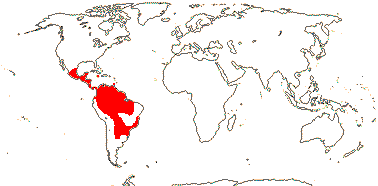 IA. Euglossine Bees - 5 genera, Euglossinae-Apidae. They are largely restricted to the tropical New World (map: from Ramírez et al. 2010), where the approximately 200(-230) species (189 in Michener 2007) of the notably long-tongued (from 15-42 mm long) euglossine orchid bees are very important pollinators, perhaps especially in the cloud forest (K. M. Cameron 2004). They visit many families for nectar, somewhat fewer for resin, pollen (often buzz pollination, for which, see e.g. Cardinal et al. 2018; Galati et al. 2019; Russell et al. 2024) or fragrances, the latter being collected by males alone, and the fragrances are both attractants and rewards (N. H. Williams 1982; Roubik 1989; Roubik & Hanson 2004; Hetherington-Rauth & Ramírez 2015, 2016); perhaps 800 species of orchids are pollinated in this way (J. W. Liu et al. 2023), although estimates vary considerably. The bees are vigourous fliers, some with a range of 23 km or so, and trap-line the plants they visit; these are often steady-state flowerers of the understory, and individual flowers are often short-lived (Janzen 1971; Ackerman 1985; Roubik 1988; Borrell 2005; Hentrich 2008). Euglossine bees also visit plants for exudates and other material, visits that are unconnected with pollination.
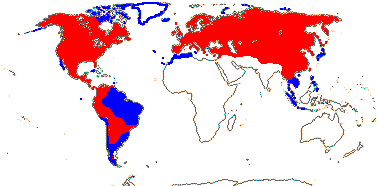 IB. Bumble Bees. Bumble bees, Bombus, Bombini-Apidae, are more widespread than euglossine bees, although they are not more diverse. There are only about 250 species of bumble bees, and that number includes a few species that are brood parasites (Goulson 2010). They are mostly north temperate, perhaps originating in Central/East Asia, and are rare in Amazonia, and absent from Africa-Arabia (the Sahara and southwards), peninsula India, and the East Malesian-Antipodean area (Hines 2008; P. Williams et al. 2009; Goulson 2010: Map: from Goulson 2010, blue areas with four or fewer species). Bumble bees can thermoregulate, hence their wide latitudinal and altitudinal ranges (Heinrich 1979, 1981).
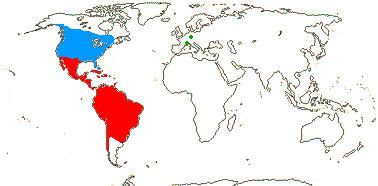 IIA. hummingbirds. There are about 366 species of hummingbirds (Ollerton 2017), all from the New World, and their centre of diversity (ca 1/2 the species) is the Colombia-Ecuador region (Snow & Snow 1980; McGuire et al. 2014: map; see also Bleiweiss 1998b, area visited by migratory hummingbirds alone in blue, localities of fossil stem-group hummingbirds in green).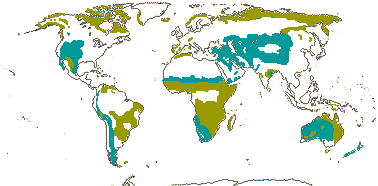
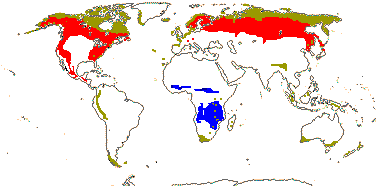
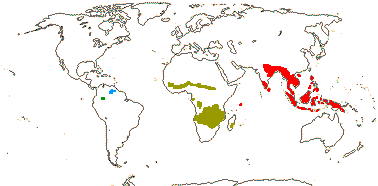 (map: Pakairaimaea, close to Cistaceae - blue; Monotoideae - green; Dipterocarpoideae - red: from Trop. Afr. Fl. Pl. Ecol. Distr. 1. 2003; Gottwald & Parameswaran 1966; Ashton 1982) dominate large areas of Southeast Asian l.t.r.f.. Common in Malesia, and in particular Borneo, they form extensive areas of peatlands but are also abundant away from peatlands, but in both cases the soil is rather humus-rich. In Lambir forest, Sarawak, dipterocarps make up only 7.4% of the species but 41.6% of the basal area (918.41 m2); the figures for Shorea alone are 4.7%, 21%, and 467.8 m2, Dryobalanops aromatica and Dipterocarpus globosus between them accounted for 13.2% of the basal area, and seven dipterocarps (out of the ten most dominant species) accounted for 23.1% (Davies et al. 2005). Dipterocarps are also important elements in drier and more open woodlands. Shorea robusta (sal) is a gregarious tree that grows in monsoon areas from Pakistan to China, especially in the India-Assam-Myanmar area. Sal forests occupy 115,000 to 120,000 km2 (11.5 x 10⁶ ha) and make up ca 15% of Indian forests (Tewari 1995). In Africa Monotes is a significant component of the rather dry forests and woodland otherwise dominated by ECM Fabaceae-Detarioideae (see below).
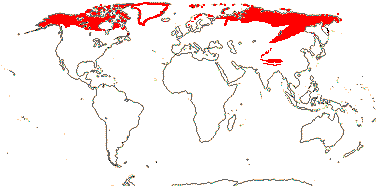 The northern polar permafrost encompasses the tundra region and also much of the boreal conifer forest above 60o N if areas of patchy permafrost are included, although permafrost is widespread only above 70o N in western Asia and even further north in much of Europe. The permafrost area includes extensive bogs dominated by Sphagnum and Cyperaceae (e.g. Camill et al. 2001). The map opposite is based on that by J. Brown et al. (2001, q.v. for detail; c.f. Tarnocai et al. 2009) - note that quite extensive areas with some, but less than 50%, permafrost are not included. Tarnocai et al. (2009) estimated permafrost to occupy about 18 x 106 km2, about 16% of the global soil area.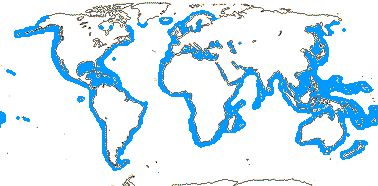
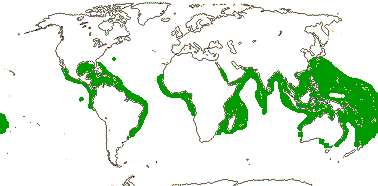 A mere 34 species in nine genera and five families dominate mangrove vegetation (map: from Tomlinson 1986), while another 20 species in 11 genera and ten families (only one also including dominant species) are quite common (Tomlinson 1986, 2016; Spalding et al. 2010: 38 core species, 73 species of true mangroves). Other than the clade of 4 genera and ca 17 species of Rhizophoraceae-Rhizophoreae, other mangrove dominants are largely unrelated and include Primulaceae-Myrsinoideae (Aegiceras), Lythraceae (Sonneratia: 7 species), Acanthaceae (Avicennia), Tetrameristaceae (Pelliceria) and Combretaceae (Lumnitzera and Laguncularia, 3/8 species of Laguncularieae). Nypa fruticans (Arecaceae) forms extensive monospecific stands growing along rivers to the upper limits of tidal influence in the South East Asian region.