EMBRYOPSIDA Pirani & Prado
Gametophyte dominant, independent, multicellular, initially ±globular, not motile, branched; showing gravitropism; glycolate oxidase +, glycolate metabolism in leaf peroxisomes [glyoxysomes], acquisition of phenylalanine lysase* [PAL], flavonoid synthesis*, microbial terpene synthase-like genes +, triterpenoids produced by CYP716 enzymes, CYP73 and phenylpropanoid metabolism [development of phenolic network], xyloglucans in primary cell wall, side chains charged; plant poikilohydrous [protoplasm dessication tolerant], ectohydrous [free water outside plant physiologically important]; thalloid, leafy, with single-celled apical meristem, tissues little differentiated, rhizoids +, unicellular; chloroplasts several per cell, pyrenoids 0; centrioles/centrosomes in vegetative cells 0, microtubules with γ-tubulin along their lengths [?here], interphase microtubules form hoop-like system; metaphase spindle anastral, predictive preprophase band + [with microtubules and F-actin; where new cell wall will form], phragmoplast + [cell wall deposition centrifugal, from around the anaphase spindle], plasmodesmata +; antheridia and archegonia +, jacketed*, surficial; blepharoplast +, centrioles develop de novo, bicentriole pair coaxial, separate at midpoint, centrioles rotate, associated with basal bodies of cilia, multilayered structure + [4 layers: L1, L4, tubules; L2, L3, short vertical lamellae] (0), spline + [tubules from L1 encircling spermatid], basal body 200-250 nm long, associated with amorphous electron-dense material, microtubules in basal end lacking symmetry, stellate array of filaments in transition zone extended, axonemal cap 0 [microtubules disorganized at apex of cilium]; male gametes [spermatozoids] with a left-handed coil, cilia 2, lateral, asymmetrical; oogamy; sporophyte +*, multicellular, growth 3-dimensional*, cuticle +*, plane of first cell division transverse [with respect to long axis of archegonium/embryo sac], sporangium and upper part of seta developing from epibasal cell [towards the archegonial neck, exoscopic], with at least transient apical cell [?level], initially surrounded by and dependent on gametophyte, placental transfer cells +, in both sporophyte and gametophyte, wall ingrowths develop early; suspensor/foot +, cells at foot tip somewhat haustorial; sporangium +, single, terminal, dehiscence longitudinal; meiosis sporic, monoplastidic, MTOC [= MicroTubule Organizing Centre] associated with plastid, sporocytes 4-lobed, cytokinesis simultaneous, preceding nuclear division, quadripolar microtubule system +; wall development both centripetal and centrifugal, 1000 spores/sporangium, sporopollenin in the spore wall* laid down in association with trilamellar layers [white-line centred lamellae; tripartite lamellae]; plastid transmission maternal; nuclear genome [1C] <1.4 pg, main telomere sequence motif TTTAGGG, KNOX1 and KNOX2 [duplication] and LEAFY genes present, ethylene involved in cell elongation; chloroplast genome with close association between trnLUAA and trnFGAA genes [precursors for starch synthesis], tufA, minD, minE genes moved to nucleus; mitochondrial trnS(gcu) and trnN(guu) genes +.
Many of the bolded characters in the characterization above are apomorphies of more or less inclusive clades of streptophytes along the lineage leading to the embryophytes, not apomorphies of crown-group embryophytes per se.
All groups below are crown groups, nearly all are extant. Characters mentioned are those of the immediate common ancestor of the group, [] contains explanatory material, () features common in clade, exact status unclear.
POLYSPORANGIOPHYTA†
Sporophyte well developed, branched, branching dichotomous, potentially indeterminate; hydroids +; stomata on stem; sporangia several, terminal; spore walls not multilamellate [?here].
II. TRACHEOPHYTA / VASCULAR PLANTS
Sporophyte long lived, cells polyplastidic, photosynthetic red light response, stomata open in response to blue light; plant homoiohydrous [water content of protoplasm relatively stable]; control of leaf hydration passive; plant endohydrous [physiologically important free water inside plant]; PIN[auxin efflux facilitators]-mediated polar auxin transport; (condensed or nonhydrolyzable tannins/proanthocyanidins +); borate cross-linked rhamnogalactan II, xyloglucans with side chains uncharged [?level], in secondary walls of vascular and mechanical tissue; lignins +; roots +, often ≤1 mm across, root hairs and root cap +; stem apex multicellular [several apical initials, no tunica], with cytohistochemical zonation, plasmodesmata formation based on cell lineage; vascular development acropetal, tracheids +, in both protoxylem and metaxylem, G- and S-types; sieve cells + [nucleus degenerating]; endodermis +; stomata numerous, involved in gas exchange; leaves +, vascularized, spirally arranged, blades with mean venation density ca 1.8 mm/mm2 [to 5 mm/mm2], all epidermal cells with chloroplasts; sporangia in strobili, sporangia adaxial, columella 0; tapetum glandular; sporophyte-gametophyte junction lacking dead gametophytic cells, mucilage, ?position of transfer cells; MTOCs not associated with plastids, basal body 350-550 nm long, stellate array in transition region initially joining microtubule triplets; archegonia embedded/sunken [only neck protruding]; embryo suspensor +, shoot apex developing away from micropyle/archegonial neck [from hypobasal cell, endoscopic], root lateral with respect to the longitudinal axis of the embryo [plant homorhizic].
[MONILOPHYTA + LIGNOPHYTA]Sporophyte growth ± monopodial, branching spiral; roots endomycorrhizal [with Glomeromycota], lateral roots +, endogenous; G-type tracheids +, with scalariform-bordered pits; leaves with apical/marginal growth, venation development basipetal, growth determinate; sporangium dehiscence by a single longitudinal slit; cells polyplastidic, MTOCs diffuse, perinuclear, migratory; blepharoplasts +, paired, with electron-dense material, centrioles on periphery, male gametes multiciliate; nuclear genome [1C] 7.6-10 pg [mode]; chloroplast long single copy ca 30kb inversion [from psbM to ycf2]; mitochondrion with loss of 4 genes, absence of numerous group II introns; LITTLE ZIPPER proteins.
LIGNOPHYTA† / [Progymnosperms + Seed Plants] - Back to Main Tree
Sporophyte woody; stem branching axillary, buds exogenous; lateral root origin from the pericycle; cork cambium + [producing cork abaxially], vascular cambium bifacial [producing phloem abaxially and xylem adaxially].
Age. The age for this node is estimated to be around 405 Ma in the Devonian-early Emsian (Toledo et al. 2018) or (436-)421(-405) Ma (Lutzoni et al. 2018). Also around (382-)374(-367) Ma (Silvestro et al. 2015), indeed, not that long (within 70 My) after the origin of embryophytes (Cooper et al. 2012 and references). Toledo et al. (2018) suggest a Devonian-Givetian age of perhaps 388 Ma for the clade and B. J. Harris et al. (2022: Fig. 2) an Early Carboniferous age of a little more than ca 350 Ma. [Clear this up.]
EARLY SEED PLANT EVOLUTION (very much under development)
Evolution: Divergence & Distribution. Niklas et al. (1983) noted that there was a marked increase in land plant diversity at the end of the Devonian through the Carboniferous and Permian, mainly the result of diversification of pteridophytes (ferns and lycopods), although gymnosperms were also slowly diversifying through this period. Cascales-Miñana (2015) suggested that diversity increase through the Mississippian could be understood as a series of gradually increasing peaks which represented within-lineage diversification events, not key innovations, although there was a hiccup in the mid-Devonian. Towards the end of the Devonian ca 372 Ma until 360 Ma at the Frasnian-Famennian boundary there were notable extinction events although apparently without any particularly negative effects on vascular plants (Cascales-Miñana & Cleal 2014; Muscente et al. 2018: marine animals, a protracted affair; Knope et al. 2020); Silvestro et al. (2015) noted that the extinction rate of spore-bearing vascular plants, which had been high, dropped markedly after this period but that overall net diversification rates for vascular plants across this whole period were high.
The origins of extant seed plants, Spermatophyta, the focus of this site, are to be sought in mid-Devonian lignophytes, progymnosperms like Archaeopteridales and Aneurophytales. These plants usually have complex - but basically two-dimensional - leaves, a three-dimensional branching system, and well-developed secondary thickening with much parenchyma mixed in with tracheids (e.g. Beck 1962; Carluccio et al. 1966; Doyle 2013). Bipolar growth of the plant, with a negatively geotropic stem and roots with positively geotropic responses, has been linked with this node (Kenrick 2013). In some early taxa the leaves proper may have been small, although the branch systems as a whole may have been flattened; there are no obvious leaf traces. The origin of a stele more like that of extant spermatophytes can be seen in taxa in which the solid central vascular tissue is ridged and dissected into vertical columns, pith developing. Ultimately the vascular system came to consist of sympodia terminating in leaves (the ultimate portion being the leaf trace), the other part of the sympodia continuing on up the stem as reparatory strands (e.g. Beck 1962; Kumari 1963; Namboodiri & Beck 1968a-c; Stewart & Rothwell 1993 for a good summary). Baucher et al. (2007) discuss the evolution of secondary thickening.
Spermatophytes evolved in the late Devonian ca 365 Ma from within a group pf plants that make up the paraphyletic progymnosperms (J. Wang et al. 2021). The clade that is their sister includes Protopitys, Archaeopteris and Noeggerathiales, free-sporing but heterosporous plants that have secondary thickening and gymnosperm-type wood; their spores were borne on modified leaves that sometimes formed a pseudostrobilus. They persisted alongside spermatophytes for some 110 Ma, dying out only at the end-Permian mass extinction ca 252 Ma (Wang et al. 2021). Vascular tissue with an inverted Ω shape is found in the petiole of Plagiozamites, a fossil from China 260-252 Ma, although there the Ω is made up of solid vascular tissue, not separate bundles, as in the Ω bundles of cycads (S.-J. Wang et al. 2017). The plant belongs to Noeggerathiales; other members of the order have similar bundles, but they are likely to have evolved independently here and in the cycads (J. Wang et al. 2021).
Both progymnosperms and many spermatophytes have fern-like foliage, hence the name "seed ferns" used to describe the latter (see J. Torrey Bot. Soc. 133(1). 2006, for much literature). Like most ferns they have megaphylls, but when (and how often) the megaphylls that characterise nearly all spermatophytes, fossil and extant, evolved is unclear (see e.g. Tomescu 2009; Tomescu et al. 2014). Floyd and Bowman (2010) compared gene expression patterns in shoots and leaves of spermatophytes, suggesting that the marginal blastozones of leaves and the shoot apical meristem may be similar in some respects, consistent with the hypothesis that spermatophyte megaphylls/leaves could represent a modified branch system. It remains an open question whether or not spermatophyte megaphylls arose in parallel with those of ferns (Boyce 2005a summarizes earlier literature, 2008a; Corvez et al. 2012), or, importantly, whether the issue should even be conceptualized in this way (Kaplan 1997, vol. 3: chap. 19, 2001); see also [Monilophyta + Lignophyta] for more on this topic.
The overall level of complexity, that is, the number of distinctive plant parts, of gymnosperms showed a notable increase over that of free-sporing plants, the latter including extant lycophytes and monilophytes (Leslie et al. 2021). However, the level of complexity then remained very much the same for the next 200 (slight uptick then?) or 250 Ma or so; plant complexity increased further only with the evolution of angiosperms (Leslie et al. 2021).
Spermatophytes are of course heterosporous, and spore-bearing and photosynthetic leaves seem to be quite different; for discussion about heterospory in general, see above. In some some Upper Devonian plants mega- and microspores were apparently mixed in a single sporangium (= anisospory: some Aneurophytales), but normally microspores, pollen, were produced in microsporangia and megaspores in what were soon recognizable as ovules. Microspores are produced in large numbers, megasporangia usually produce only a single megaspore, although those of Archaeopteris produced several (Bateman & DiMichele 1994). Megaspores are not always larger than microspores, although seeds are (see below). As Meyer-Berthaud et al. (2018) noted, the evolution of the seed habit involved the evolution of heterospory and the reduction of megaspore number per sporangium to one, development of an integument, endospory (development of the female gametophyte inside the spore), and pollination, the delivery of the male to the female gamete. Indeed, extant spermatophytes are distinctive because they have an ovule, a megasporangium almost enclosed by one or more integuments and generally surrounded by additional structures, and there usually only a single megaspore per megasporangium (see Boyce 2005b); four megaspores are the meiotic products of the megaspore mother cell, and three of these normally abort (Kenrick & Crane 1997a). The nucellus is the megasporangium wall, and the integument(s) that more or less enclose it are vascularized in pteridosperms in particular and may be lobed (Taylor et al. 2009). The megaspore germinates while still in the ovule and on the mother plant and the female gametophyte develops from it; the egg/ovum that develops in that gametophyte is fertilized when in the ovule by a male gamete that develops from the pollen grain, although the time between pollination and fertilization is often quite protracted in gymnosperms. The developing embryo receives its nutrition from the female gametophyte, although indirectly it comes from the parental sporophyte. The shoot apex develops away from micropyle/archegonial neck from the hypobasal cell, later reversing course; growth is endoscopic. Bateman and DiMichele (1994: esp. fig. 13) carefully dissected out the separate elements involved in heterospory and ovule production.
These basic relationships are the same in all extant spermatophytes: The seed is a fertilized ovule, and it contains a zygote/embryo, the beginning of the next generation sporophyte, the zygote is at least initially more or less surrounded by gametophytic reserve tissue (= the embryo sac), and this in turn by the seed coat, which develops from the integument(s) of the parental sporophyte. Embryo development in most extant gymnosperms is usually entirely dependent on the gametophyte that develops after pollination but before fertilization, while in flowering plants the gametophyte is very reduced and its function is taken over by the endosperm (nearly always a joint paternal-maternal production) or perisperm (maternal) that develop after fertilization (Friedman 2001b; Baroux et al. 2002; Lafon-Placette & Köhler 2014; L. Yuan et al. 2018). Rudall and Bateman (2019b) summarize how the megagametophyte and early embryo become cellularized; the megagametophyte is initially free-nuclear/coenocytic in spermatophytes, and this also seems to be the case in at least some fossil groups, while in extant gymnosperms the same sequence is also found in early embryo development.
Ovules are known in plants from the Devonian onwards (Stewart & Rothwell 1993; Kenrick & Crane 1997; Cleal et al. 2009 and references). Archaeopteridales are an early group of seed-bearing plants; they are seed ferns or pteridosperms and they flourished from about 377 Ma but were diminishing greatly by the beginning of the Carboniferous ca 363 Ma (Algeo et al. 2001). Ovules from these early plants may differ appreciably from those of extant seed plants, and there is a large body of literature on the origin/evolution of the ovule (e.g. de Haan 1920; Herr 1995). [Develop.] Some Archaeopteridales from ca 365 Ma had a lagenostome, a tubular projection of the nucellus with a central column that was probably involved in pollen capture, and pollination/fertilization mechanisms were probably quite like those of extant gymnosperms. The ovules of Runcaria, a spermatophyte probably to be assigned to Aneurophytales and from the middle Devonian of some 385 Ma, lacked a lagenostome and Gerrienne et al. (2004) suggested that the antherozoids reached the megagametophyte by lysis of the megasporangium wall, which forms a long, terminal projection in this plant. There is likely to have been zoidogamy in pteridosperms, as in extant Cycadales and Ginkgoales, and at least some glossopterids are also known to have multiciliate male gametes (Nishida et al. 2004; c.f. Lee et al. 2011: cilia lost and regained?). Fertilization is mediated by motile male gamete which swim with the cilia leading.
There are three main theories about the evolution of ovules (e.g. Zumajo-Cardona et al. 2021a): They may have evolved de novo, they may represent telomes, being fused vegetative structures that came to envelope the megasporangium, or they may be synangia in which there has been sterilization and modification of sporangia surrounding a single megasporangium that has remained fertile - or they may be structures combining different elements of these theories (Heer 1995). Zumajo-Cardona and Ambrose (2021) looked at the expression of four genes much involved in the development of the two integuments in Arabidopsis during ovule development in Gnetum gnemon, and noted that they were generally expressed differently in the two taxa. Gnetales (q.v.) have straight basically pachychalazal ovules with a single unvascularized integument (barely vascularized in Gnetum) that is surrounded by a vascularized envelope (two such envelopes in Gnetum). In Ginkgo things were rather different from both Gnetum and Arabidopsis (Zumajo-Cardona et al. 2021a; see also D'Apice et al. 2022: Ginkgo). Zumajo-Cardona and Ambrose (2020) had noted that such genes in Arabidopsis had different histories. Indeed, at the level of expression there are too few examples to work out the evolution of ovule morphology (Zumajo-Cardona et al. 2021a: fig 7 - three taxa); these authors noted the differences in gene expression between these taxa, and overall they inclined to a modified synangial origin of the ovule. The focus in D'Apice et al. (2022) was "simply" on the comparison between ovules of Arabidopsis and Ginkgo which was complicated by the far greater time ovules took to develop in Ginkgo. The recent work by Shi et al. (2021) on corystosperm cupules led to the interpretation of the recurved ovule there as having a single, unvascularized integument in turn surrounded by the cupule stalk and three unvascularized flaps of tissue, together equivalent to the asymmetric outer integument of angiosperms. Looking at this from another point of view, Marchant et al. (2022) suggested that genes inolved in flower and seed development and in overall plant construction in seed plants could be linked to genes involved in spore/sporangium/frond development in the fern Ceratotepteris (see also Pennisi 2022).
Integrate: In pteridosperms and their immediate relatives pollen probably germinated via the proximal surface of the microspore, as in cycads, and the tetrad of megaspores was linear (Taylor et al. 2009). Some early conifers and Cordiatales had microspores whose development was endosporic (e.g. Friedman & Gifford 1997), as is common in extant gymnosperms (Fernando et al. 2010).
In the Carboniferous in particular there was a considerable variety of gymnosperms (for gymnospermy, see also Tomlinson 2012), including the seed ferns with their fern-like leaves and ovules, indeed, although the Carboniferous has been called the age of ferns, perhaps as accurately it could be called the age of seed ferns. Recent studies are helping to clarify their morphology, although is is difficult to assemble whole organisms from dispersed leaves, ovules, and trunks (Taylor et al. 2006 and references, also other papers in J. Torrey Bot. Soc. 133(1). 2006; Taylor et al. 2009), and how the ovule was attached to the plant is not easy to establish (e.g. Spencer et al. 2012). Ovule morphology alone does not allow one to identify the organism - pteridosperm or coniferophyte - bearing the ovule (Seyfullah et al. 2010).
Gigantopteridales flourished in the Permian, and they include climbers like Vasovinea tianii that have distinctive vessel elements 4500-5000 x ca 500 µm with numerous perforations caused by the membranes separating pit pairs breaking down, these membranes being planar, and they lack torus-margo construction and often borders - so are unlike vessels of Gnetales - and they do not show modified scalariform construction - so are unlike angiosperms (Li & Taylor 1999). The plants can have prickles or branched grapnel-like spines, the latter perhaps being modified leaves, which in other taxa can be compound or simple, with palmate or pinnate venation; there are two leaf traces.
A link between fossil gymnosperms, especially Cordiatales, and extant conifers has been suggested, the short shoot made up of bract + ovuliferous scale of most extant members being linked to more complex and obviously shoot-like structures of fossil taxa (Florin 1951). The rather conifer-like Cordaitales and Callistophytales, which had compound pollen-bearing structures and saccate pollen, are found in the lower Carboniferous. Slightly later there are the still more conifer-like ("ancestral") Voltziales that lacked saccate pollen; they have been associated with Cupressaceae (Rothwell et al. 2011 and references; Taylor et al. 2009: survey of early gymnosperms). In the late Carboniferous-Permian walchian conifers, a paraphyletic group in which cladoptosis was common, were prominent in tropical vegetation (Looy 2013). Cheirolepidaceae, recently found in the northern hemisphere (Oregon, USA), have been associated with Araucariaceae and Podocarpaceae (Stockey & Rothwell 2013). The so-called coniferophytes are often distinguished from conifers, although what the two contain and their relationships are both unclear (Rothwell & Mapes 2001); phylogenetic studies are certainly not suggesting a simple answer (e.g. Crane 1985b; Doyle & Donoghue 1986a, 1992; Rothwell & Serbet 1994; Doyle 1996; etc.).
Cycadophytes include Cycadales and Bennettitales, unrelated groups (Condamine et al. 2015 and references). Ryberg et al. (2007) emphasise the large amounts of secondary phloem that persist in a cycad stem, presumably because the cork cambium is not very active; some larger cycads have fibres in tangential bands in this phloem. Both characters are common in the Bennettitales, probably parallelisms.
Ecology & Physiology. This section includes quite a bit of general spermatophyte evolution. There is also mention of extinctions, mass or otherwise, that have been popular subjects of discussion for 40 years or more (e.g. Raup & Sepkoski 1984), although not only may they not be clearly defined, but they are measured in various ways and they may be local or global in scale, furthermore, recent findings are changing our ideas of what might or might not have gone extinct, and both their cause(s) and any connection they might have with diversification and the evolution of novelty can be difficult to establish (e.g. Hoyal Cuthill 2020). Piombino (2016) discussed general connections between geological events and vascular plant evolution. For more detail in the context of possible extinctions across the Cretaceous-Palaeogene (K/P) boundary (see below.
For good general summaries of fossils and what they might disclose about plant physiology in the past, see Boyce (2009), Kenrick and Strullu-Derrien (2014: esp. roots) McElwain and Steinthorsdottir (2017: stomata) and especially J. P. Wilson et al. (2017, 2020: Carboniferous plants, no-analogue physiology). The bottom line is that spermatophytes in particular, and plants with secondary thickening in general, have long helped change the global environment, with substantial environmental forcing occurring (e.g. Beerling et al. 2001; Feild & Edwards 2012; Wilson 2020) and there are a number of feedback loops, many positive, between plants, changing climates, and atmospheric CO2 concentration (e.g. Berner 1999; Beerling 2005a; Beerling & Berner 2005). As spermatophyte-dominated vegetation developed, there was more efficient recycling of nutrients like P and net primary productivity greatly increased and weathering decreased (Porada et al. 2016).
Understanding the evolution of stomatal morphology and functioning and how these interacted with photosynthesis and water uptake is one key to understanding the success of lignophytes, although it is difficult to pinpoint exactly when some of the changes took place (McAdam & Brodribb 2011, see Fig. 4, Cycadaceae not examined, 2013). Stomatal size and density and genome size are also related (Beaulieu et al. 2008; Hodgson et al. 2010). Note that stomata in bryophytes and some polysporangiophytes appear to be involved in drying out of the contents of the sporangium, and the size of stomata with this function do not show the same relationships with genome size and atmospheric CO2 concentration as do more conventional stomata (Renzaglia et al. 2017) and all in all it is not that easy to interpret the palaeoecological signal of stomatal morphology, density, etc. (McElwain & Steinthorsdottir 2017). Seed plants as a whole have higher photosynthesis and transpiration rates and a higher stomatal conductance than do ferns and lycophytes. Interestingly, water use efficiency in seed plants is upregulated as conditions get drier – abscisic acid increases, excessive stomatal opening is reduced - while under severe drought, water use efficiency is unchanged – in ferns water use efficiency decreases gradually as conditions get drier, and leaf water potential decreases (Yang et al. 2021).
Secondary thickening has evolved several times in vascular plants, but in most cases the vascular cambium cuts off only a small amount of vascular tisue, sometimes only a little xylem to the inside and still less, if any, phloem to the outside, and only rarely were substantial amounts of both phloem and xylem produced. A number of early land plants had some sort of secondary thickening. Thus fossils from Canada and France from up to ca 407 Ma (Early Devonian), otherwise quite like Psilophyton, have secondary xylem with rays and tracheids (Gerrienne et al. 2011; Hoffman & Tomescu 2011, 2013: see also Donoghue 2005; Rothwell et al. 2008b for wood evolution in general). Strullu-Derrien et al. (2014a) examined the hydraulic properties of a very early wood with secondary thickening, but with much thinner stems. For further discussion about the evolution of growth forms and xylem in lignophytes, see also Rowe and Speck (2005: cambium as a nascent innovation), Gerrienne et al. (2011, 2016), and Stein et al. (2012).
Looking at the global distributions of the families of vascular plants over time, it is perhaps possible to recognize five diachronous "evolutionary floras" which differ in part because of interactions between environmental changes and evolutionary innovations. These are the Eotracheophyta (Rhyniophytes), the earliest vascular plants of the early Devonian, the Eophytic flora, which lasted to the mid-Devonian and made up of homosporous plants, the Palaeophytic flora, which lasted until the Carboniferous, the Mesophytic flora, dominated by gymnosperms and which lasted to the mid-Cretaceous, and finally the Cenophytic flora, dominated by angiosperms (Cleal & Cascales-Miñana 2014).
Back in the Late Ordovician ca 450 Ma and with an atmospheric CO2 concentration about eight times today's levels, land plant vegetation, probably made up of bryophytes, early vascular plants and lichens (the latter are known from the Lower Devonian - Honegger et al. 2013), may have supported a level of chemical weathering two to three times that of today's vegetation. P was mobilized, calcium and magnesium moved to the sea, and overall there was a draw-down of atmospheric CO2 (calcium carbonate deposited in the oceans) that may have greatly reduced atmospheric CO2 and have helped precipitate the Late Ordovician glaciation (Selosse et al. 2015; Porada et al. 2016). Modelling suggests net primary productivity of early bryophytes reached almost one third of their present levels by around 445 Ma, and P in particular was obtained by these early plants by increased rock weathering perhaps enhanced by their fungal associates (Lenton et al. 2016). Indeed, streptophyte algae may have moved onto land before embryophytes evolved (see also Stebbins & Hill 1980), and they and the xyloglucans they produced may have been part of early soil crusts (Del-Bem 2018; see also below. Perhaps relevant here, Slate et al. (2019) found that dessication-rehydration cycles in extant mosses may have an appreciable effect on soil nutrient balances since both carbon (C) and nitrogen (N) are lost from rehydrating mosses in appreciable quantities in the water used for rehydration (the equivalent of rainfall), the result being the amounts of C and N in the soil were increased.
Interestingly, alluvial mudrock deposition has increased since the late Ordovician ca 458 Ma; prior to that it is of marine origin (Zeichner et al. 2021: Fig. 1A). This can be attributed to the activity of land plants, early land vegetation encouraging proto-soil deposition, producing clays by weathering, and when roots evovlved they helped bind the small proto-soil particles together. Along these lines, Spencer et al. (2022) note a change in the composition of continental crust ca 430 Ma (Sliurian, Wenlock) that they associate with the evolution of vascular plants. Rivers became sinuous and meandering rather than braided, muddy flood plains developed, soils became thicker, etc., and overall the duration of weathering increased; the composition of the sediments laid down, the continental crust to which they gave rise and ultimately that of the magma produced from the crust (zircon isotopic correlation - Lu-Hf, U-Pb and elevated δ18O) changed (Spencer et al. 2022). There are coaly shales from as early as the Early Devonian suggesting that there were extensive peatlands by 410-400 Ma (Lenton et al. 2016); note also records of Sphagnum-like fossils from as early as 455 Ma (Cardona-Correa et al. 2016), although what ecological role they may have had is unclear. Mudrock deposition increased notably in the early to mid-Devonian, and especially in the later Devonian, along with the evolution of deeper-rooted tracheophytes, including the earliest spermatophytes (McMahon & Davies 2018; Raven 2018). Organic polymers derived from plant material in general causes clay/mud flocculation, and this affects river flow - for instance, the banks are muddier and hold together better - and there is also substantial C sequestration in the mudrock that is ultimately formed, and all this can happen whether or not there are rooted land plants (Zeichner et al. 2021). Clearly, a number of indicators are pointing in the same direction at about the same time.
Forests started developing towards the middle of the Devonian ca 390 Ma, and included lycophytes, monilophytes, and/or early lignophytes/spermatophytes. It should not be forgotten that many of these plants may have been associated with arbuscular mycorrhizal fungi (see elsewhere). Atmospheric CO2 fell precipitously during the Devonian (Kenrick et al. 2012), all told, some 90% over the late Palaeozoic. Thus estimates of the CO2 concentration in the atmosphere at the end Silurian are 4-20 times the pre-industrial concentration of 270 p.p.m.V, but only 3-13 times this by the end of the Devonian, a drop that may be connected with the development of these forests and the weathering activities of their roots (Morris et al. 2015; Berry & Marshall 2015) and/or the repeated origin of photosynthetically more efficient megaphylls by that time (D.-M. Wang et al. 2015). By the Late Carboniferous and in particular Early Permian CO2 concentrations were close to modern values, ca %. At the same time, the oxygen concentration in the atmosphere increased and fires are known from the Silurian and certainly from the Lower Devonian some 415 Ma (Lochkovian) onwards (Edwards & Axe 2004; Rimmer et al. 2015; Morris et al. 2018b; Lenton et al. 2018). These fires allowed the preservation of charcoalified fossils, sometimes showing exquisite detail. Furthermore, as atmospheric oxygen concentration increased in the Devonian it may have allowed the evolution of animals with larger bodies; the evolution of placoderm arthrodire fish, some of which reached ca 10 m in length, has been linked to the rise in oxygen concentration in the sea (Dahl et al. 2010), and there were also changes in pyrite deposition, etc. (Lenton et al. 2016).
Fossils of the middle Devonian cladoxylopsid pseudosporochnalean Calamophyton, perhaps an early monilophyte, were small trees to 2.5(-4) m tall, and the primary stem increased in width in plants up to 2 m (did the apical meristem increase in size at the same time?); there was secondary growth towards the base of the stem/trunk. The primary stem, at up to 10 cm across, was very stout; the branches themselves branched dichotomously and bore small appendages/leaves and were shed as units (= cladoptosis) (Giesen & Berry 2013). Cladoxylopsids from New York (30o S) were up to 12 m tall (Stein et al. 2012; Berry & Marshall 2015), Eospermatopteris even being ca 1 m across at the base (Stein et al. 2007). An individual of the cladoxylopsid Xinicaulis lignescens some 374 Ma (Devonian: Frasnian) ca 70 cm across showed diffuse secondary growth of the ground tissue and secondary thickening of the individual xylem strands (H.-H. Xu et al. 2017). Indeed, secondary thickening occured in a variety of ways in plants from the early-middle Devonian ca 408 Ma onwards (Gensel 2018).
The first lignophytes were small, and it was probably the need for increased water conductance in response to decreasing CO2 concentration (the stomata would have to be open more), rather than any need for support, that drove the early evolution of a vascular cambium (Sperry 2003; Gerrienne et al. 2011; see also Stein et al. 2012). Indeed, support for some early trees came from lignified sclerenchymatous tissue at the periphery of the stem (Sperry 2003 and references). Support for the stem in extant monilophytes is provided largely by the lignified stereome, in the outer cortex, and tracheids are relatively thin-walled, while in gymnosperms thick-walled tracheids provide much of this support (e.g. see Rowe et al. 2004; Pitterman et al. 2011; Klepsch et al. 2015). It was support provided by vascular tissue that facilitated the size increase of land plants evident from the Middle Devonian ca 385 Ma onwards (e.g. Beerling et al. 2001).
Mid-Devonian forests are surprisingly complex. The early spermatophyte group Aneurophytales were scramblers up much larger pseudosporochnalean trees (Cladoxylopsida, see above: Stein et al. 2007, 2012), and by the later Devonian there were true lignophytes about 1 m d.b.h. - up to 2 m d.b.h. by the lowermost Carboniferous (Algeo et al. 2001; Galtier & Meyer-Berthaud 2006). Although these lignophytes were not necessarily taller than the tree lycopsids of e.g. the Carboniferous, they were stouter, and they also had well developed true roots, the fine roots presumably having root hairs. Archaeopteridales, another group of early lignophytes, also showed cladoptosis (Algeo et al. 2001; Galtier & Meyer-Berthaud 2006). By the lower Carboniferous there was a variety of lignophytes, some seed ferns that were smaller plants with manoxylic (much parenchyma and few tracheids) vascular tissue and with a protostele (no pith), and others of uncertain identity that were (much) larger, pycnoxylic (little parenchyma) and with an eustele, sometimes with a massive pith, etc. (Galtier & Meyer-Berthaud 2006). Tree lycopsids flourished for around 100 Ma from the end of the Carboniferous to the beginning of the Permian, dominating in late Carboniferous peat swamps, but they are already well known in early late Devonian deposits ca 380 Ma; there dense forests of Protolepidendropsis puchra in Svalbard, hence palaeoequatorial, were made up of trunks up to 4 m tall and 9 cm across (although the flared base was up to 20 cm across), and were packed ca 140,000 trunks/hectare (Berry & Marshall 2015).
The evolution of megaphylls, known from most spermatophytes, may have been a two-stage process (see also ). The Mid- to Late-Devonian progymnosperm Archaeopteris and the Late Devonian-early Mississippian pteridosperms all had megaphylls (Osborne et al. 2004). A major problem that megaphylls face is overheating. Variables here are leaf blade size, atmospheric CO2 concentration, air and leaf temperature, and stomatal density (e.g. Hetherington & Woodward 2003; Osborne et al. 2004; Franks & Beerling 2009). As atmospheric CO2 decreased in the Devonian, stomatal density increased to allow more CO2 uptake, and transpiration also increased, but atmospheric temperature was decreasing along with the decrease in CO2 concentration, and this would tend to decrease transpirational loss (Osborne et al. 2004; Franks & Beerling 2009a). The possibility that megaphylls might overheat was reduced by dissection of the leaf blade and by evaporative cooling caused by transpiration (Beerling et al. 2001; Beerling 2005a and references). The well-developed vascular system produced by lignophyte secondary thickening would permit increased transpiration of these dorsi-ventrally flattened photosynthetic leaves/megaphylls that facilitated CO2 uptake (Raven & Edwards 2001; Beerling et al. 2001; see also below).
If evidence from extant land plants is any guide, how stomatal opening and closure is controlled has changed over time (see also stomatophytes and extant tracheophytes; Brodribb & McAdam 2017). Stomatal closure in ferns - in whatever habitat they grow, although many prefer moister conditions - occurs when the leaf still has a relatively high water potential when compared with angiosperms not growing in shade (Brodribb & Holbrook 2004). Furthermore, the water potential of the leaf at which irreparable damage occurs is only slightly lower than that at which stomatal closure occurs (McAdam & Brodribb 2013). Stomata of "bryophytes", lycophytes and ferns do not respond to abscisic acid (but c.f. e.g. Chater et al. 2011), and control over stomatal opening is passive (McAdam & Brodribb 2011, 2012, 2013; Haworth et al. 2013). Indeed, in spermatophytes there are two pathways in which there is antagonism between giberellic acid and abscisic acid and which have a common abscisic acid signalling cascade, these are involved in stomatal closing (here a particular type of anion channel has become part of the mechanism) and in seed dormancy in spermatophytes and spore dormancy and in the determination of the sex of the gametophyte in ferns (McAdam et al. 2016).
In extant spermatophytes stomatal control is active. On drying of the leaf, the stomata close more or less immediately, but open more slowly, being sensitive to the enhanced levels of abscisic acid (Brodribb & McAdam 2010; McAdam & Brodribb 2012a; Brodribb & McAdam 2017). In Metasequoia, at least, initial stomatal response to water stress on drying of the leaf is passive, as in ferns and lycophytes; subsequently, abscisic acid-mediated behaviour became apparent (McAdam & Brodribb 2014). When light is not saturating, the ratio of photosynthesis to water loss decreases in ferns with high photosynthetic rates, while in spermatophytes it remains about the same (McAdam & Brodribb 2012b). Such factors may have been involved in the success and ecological dominance of early spermatophytes as the late-Palaeozoic environments became drier (McAdam & Brodribb 2012b, 2013).
Stomatal conductivity of spermatophytes other than flowering plants does not respond to elevated CO2 concentrations in the atmosphere (Brodribb et al. 2009; McAdam & Brodribb 2011) or to blue light (Doi & Shimizaku 2008). In angiosperms, the subsidiary cells lose turgor first if water loss is rapid, and this causes guard cells to open the stomatal aperture (Brodribb & McAdam 2010). This difference in control, much more flexible in angiosperms, is related to the fact that angiosperm leaves may also have a relatively higher amount of water still available after stomata close and before leaf death occurs than in ferns or lycophytes.
Monilophytes, early spermatophytes, etc., have leaf blades with a low venation density, ca 3 mm/mm2 or less, and the venation is not closed and reticulate, but dendritic (open) and often dichotomizing, and this is true of extant members of these clades. Seed ferns like Glossopteridales and Giganopteridales did have reticulate venation (the veins in some of the latter may even have a quasi-hierarchical organization), and this might be linked with the development of a drier climate (Roth-Nebelsick et al. 2001). Stomatal density and size are also important variables here (e.g. Osborne et al. 2004), and stomatal density varies inversely with size (Franks et al. 2014). Stomata of Archaeopteris, at about 62±3µm long, were large, stomata reaching ca 78µm long in a few taxa (Hetherington & Woodward 2003), but large stomata at low density would allow less evaporative cooling. Stomatal density is negatively and size is positively correlated with atmospheric CO2 concentrations (e.g. Franks & Beerling 2012: esp. Fig. 3), and venation density may also be inversely correlated with CO2 concentration, although the variation is not extensive (2-3 mm/mm2, "large fluctuations": Retallack 2005). There seem to have been no major changes in plant productivity despite major changes in CO2 concentration (Boyce & Zwieniecki 2012 and refs, c.f. e.g. Franks & Beerling 2009a), certainly, there is no simple positive correlation. These aspects of spermatophyte evolution are discussed further later.
Roots are also implicated in these early atmospheric changes via a complex series of feed-back loops (e.g. Raven & Edwards 2001; Beerling & Berner 2005) - note that even early lignophytes are likely to have had arbuscular mycorrhizae (AM), whether the plants were associated with glomeromycotes and/or mucoromycotes (Quirk et al. 2012 and references; Maherali et al. 2016: spermatophytes; Field & Pressel 2018). Roots increased in size an the depth to which they grew from the Silurian to the late Devonian, relatively deep rooting developing by around 390 Ma (Bernier 1997 and references). The roots of early lignophytes penetrate some one metre or so into the ground, so greatly facilitating weathering by enabling CO2 to penetrate to greater depths. Indeed, there was a major drop in atmospher CO2 400-360 Ma during the Devonian, perhaps as vascular plants moved to upland areas where their deep roots weathered the rocks, so removing CO2 from the atmosphere. Roots and AM also produce chelates and organic acids, some photosynthate moves directly from the root tip to the soil, more is taken up by the fungus (Kaiser et al. 2015; Field & Pressel 2018), while decay of organic litter produces carbonic and other organic acids. The end result of all these of plant-soil-microbe interactions was the facilitation of plant micronutrient uptake and of rock breakdown (Berner 1997; Algeo et al. 2001; Raven & Edwards 2001; Beerling 2005a; Taylor et al. 2009; Kenrick et al. 2012; c.f. in part Jones et al. 2004). AM cause calcium silicate dissolution from basalt, although this is reduced when atmospheric CO2 concentrations are lower (Quirk et al. 2014), and fungus-mediated rock dissolution has always been associated with lignophytes.
Calcite-containing rocks are weathered faster under ECM than AM trees, the latter acidifying the soil more (Thorley et al. 2015):
CO2 + H20 ↔ H2CO3 ↔ HCO3- + H+
Field et al. (2012) estimated the amount and efficiency of P uptake by AM plants when simulating mid- to later Palaeozoic atmospheric CO2 concentrations. In both mucoromycote symbioses with liverworts and glomeromycote symbioses with vascular plants (Osmunda, Plantago were studied) the P gained from the fgungus per unit C delivered by the plant was the same or increased as [CO2] declined, and the efficiency of the symbiosis greatly increased, however, glomeromycote-liverwort symbioses were a "direct contrast", the amount of P delivered decreasing (Field et al. 2012; Hoysted et al. 2017: p. 3, 2018). Preissia (association with a glomeromycote) and Marchantia (?fungus) were the liverworts, and the amount of P gained and in particular the efficiency of the symbiosis in the former was negatively affected by decreasing [CO2], so as [CO2] declined in the Palaeozoic, AM associations in liverworts were perhaps likely to have become less efficient, those in vascular plants more efficient - and there are of course simultaneous changes in the vascular system, stomatal size and density, rooting, etc., to be considered (Field et al. 2012). Interestingly, however, the above-ground biomass of fern sporophytes decreased notably with decreasing [CO2], but liverwort gametophytes and the Plantago sporophyte showed no change, and the C allocation to AM fungal networks decreased in one of the the two vascular plants, Osmunda again, and one of the two hepatics being studied (Field et al. 2012). Integrate with Field et al. 2019....
There are several scenarios for the origin and evolution of mycorrhizal associations (Field & Pressel 2018 for a summary) depending i.a. on the ages of the various protagonists. For more discussion, and also suggested ages, see elsewhere. Field et al. (2015c, 2019) looked at the changing interactions between extant liverworts (as proxies for early land plants) and both glomeromycotes and mucoromycotes in the context of experiments that simulated the almost four-fold decrease in atmospheric CO2 concentrations from the Palaeozoic to the present (see e.g. Franks et al. 2014). Interestingly, if mucoromycotes were the only associates the efficiency of acquisition of both P (from the organic nutrients supplied) and N by the liverwort from the fungus slightly increased with decreasing [CO2], the amount of C going to the fungus decreased, and overall plant growth increased. However, if glomeromycotina were the only associates the efficiency of P transfer to the plant increased at higher atmospheric [CO2] (see also Rimington et al. 2016). However, when the liverwort was associated with both kinds of fungi, the efficiency of acquisition of both P and N by the liverwort from the fungus decreased with decreasing [CO2], although the plants benefited from both N and P transfer, although at an overall high metabolic cost.
ENDThis plant/fungus-aided chemical weathering of rocks entails the loss of atmospheric/soil CO2, most ultimately coming from plants, as it reacts with rock minerals, with rock silicates being broken down and dissolved. The basic equation is as follows (Raven & Edwards 2001: p. 388, equation 1):
CaMg(SiO3)2 + 4CO2 + 6H2O → Ca++ + Mg++ + 4HCO3- + 2Si(OH)4
And Rothman (2001) suggests an overall balance of
CaSiO3 + CO2 ↔ CaCO3 + SiO2
where left to right is weathering, and right to left metamorphism, magmatism and vulcanism; Mg can be substituted for Ca.
Appreciable quantities of silica are to be found in many vascular plants (Trembath-Reichert et al. 2015). Furthermore, bicarbonates and silicates are ultimately carried to the sea where they precipitate out as silica, limestome or dolomite over a period of a few million years (Franks et al. 2014), while silicates are also the basis of terrestrial clays. In general, silicate weathering is quite important in controlling atmospheric CO2 concentration in the 200-1,000 ppm range (Franks et al. 2014). The return of CO2 to the atmosphere is a complex and often far longer process, hence the reduction in atmospheric CO2 concentration (Raven & Edwards 2001; Quirk et al. 2012; Gibling et al. 2014). N derived directly from bedrock is a very important element in the current global N cycle and it can greatly increase ecosystem C storage in coniferous forests - admittedly, in this case it is ECM fungi that were emphasized (Morford et al 2011; Houlton et al. 2018).
Overall, photosynthesis and the sequestration of carbon by plants increased, so causing major changes in global carbon and nutrient cycling and energy flow (Qiu et al. 2012; Kenrick et al. 2012). (The ca 300 Ma dip in atmospheric CO2 is not explained by Rothman 2001). Transpiration of land plants, particularly trees, can lead to increased rainfall, and roots help retain the clay-rich soil, improve its structure and so increase the retention of water, and this extends the period over which rock weathering can take place and the rate of weathering may increase (Berner 1997; Retallack 1997a; Beerling 2005a; Boyce & Lee 2011; Gibling et al. 2014; c.f. Taylor et al. 2009 in part). Roots and organic material together also profoundly altered terrestrial drainage patterns. Rivers with shallow, braided and sandy channels, sheet-braided river systems, were largely replaced by more deeply channeled and often meandering rivers with stable banks beginning at the end of the Silurian ca 420 Ma (Gibling et al. 2014).
Atmospheric oxygen concentration/partial pressures started rising in the late Devonian, then declined, and then reached a high of around 26-35% (J. F. Harrison et al. 2010: Fig. 1) towards the end Carboniferous/beginning Permian 299-272 Ma during the Late Palaeozoic Ice Age or LPIA - this began ca 310 Ma (e.g. Shi & Waterhouse 2010) - the current concentration is ca 21%. There was much fire activity in the Early Permian, indeed, at such high oxygen concentrations (p(O2) above 30%) even wet plants burn (Watson & Lovelock 2013), while at ca 24% the chance of self-sustained propagation of fires reaches 100% (Belcher et al. 2010b). Perhaps paradoxically fires were particularly extensive in wetland mires (e.g. Scott & Glasspool 2006; Glasspool et al. 2015), in seasonally dry environments conifers like Walchia were common, and there cladoptosis may have reduced the extent/severity of fires, the fires being unable to reach the canopy so easily (Looy 2003). Later, gigantism, e.g. of dragonflies and in particular fusilinid foraminferans, has been linked to these increased oxygen concentrations (Harrison et al. 2010; Payne et al. 2012). All in all, this was a time when atmospheric CO2 concentrations were low and oxygen concentrations were high, and plants were adaptating to fires (e.g. Lenton et al. 2018; Lamont et al. 2018b; Pausas 2018); for further discussion, see elsewhere.
The extinct tree-like lycopsids flourished for around 100 Ma from the end of the Carboniferous to the beginning of the Permian, and this was at a time when atmospheric CO2 concentrations were low and oxygen concentrations were high. The plants had air canals that permeated both above- and below-ground parts of the plants, probably enabling oxygen to move to the roots and allowing the plants to grow in anoxic swamps (Green 2010); the oxygen was used up in respiration, while CO2 produced by the plant remained in the plant and also moved into the plant from the anoxic CO2-rich soil, ultimately going to the leaves, where it was used up in photosynthesis. However, although oxygen movement may have been facilitated, a pad of tissue at the base of the rootlets cut off their air spaces from those of the stigmarian roots, so overall CO2 movement and photosynthesis in the plant are likely to have been little affected (Boyce & DiMichele 2015), the construction discussed perhaps being as much to minimize biomass and improve the biomechanics of the plant. Robinson (1990) emphasized the very high periderm:wood ratio of lycopsids, common through the Carboniferous, an estimated 8-20:1 in arborescent lycopsids in particular, and he thought that late Devonian plants were about 40% lignin, a percentage that subsequently declined. However, although lycopsids did have very thick bark, their main support structure - some reached 30 m tall or so - evidence suggests that this bark was suberized rather than lignified (Boyce & DiMichele 2015). There has been discussion over the growth rates of arborescent lycopsids, and the evidence may suggest that they were not particularly high (Boyce & DiMichele 2018 and references), however, Montañwz et al. (2016) demurred (c.f. also Glasspool et al. 2015).
During the Pennsylvanian (359-299 Ma) arborescent lycopsids became less common and marattialean tree ferns more common (the latter at least temporarily), and Cordaitales were replaced by conifers, these, and also early cycads, preferring the seasonally drier conditions that were becoming commoner (DiMichele 2014; see also Cleal et al. 2012). Marattiales, represented by numerous species of the now-extinct Psaroniaceae, had basally-spreading adventitious roots that provided the plant stability in the peat swamps (Rothwell et al. 2018c), indeed, Philipps et al. (1985) suggested that they made up 60% to more than 80% of the peat biomass in the Pennsylvanian coal-swamp vegetation. Tree sphenopsids were also prominent in the Carboniferous vegetation, and although they and other Carboniferous plants may have had relatively low vein length:unit leaf area (e.g. Boyce & Zwieniecki 2019), it is difficult to argue that plant water conductance and overall photosynthesis were also therefore necessarily low. Even the tracheids of Arthropitys at ca 35 µm across would have a flow rate ca almost 30 times that of Equisetum, at ca 7.5 µm across, however, the width of the tracheids of Spehnophyllyum was commonly over 200 µm and its estimated flow rate 31,600 times that of Equisetum; overall, the productivity of such Carboniferous plants may have been quite high and these plants seem capable of substantial environmental forcing (J. P. Wilson et al. 2020).
DiMichele (2014) discussed the dynamics of coal-age tropical vegetation. He pointed out that even in places where vegetation indicated wetter conditions, there were periods when plants that preferred drier conditions predominated, and overall, there was a trend towards the drier conditions notable in the early Permian. Furthermore, Matthaeus et al. (2021) suggested that features involved in resistance to cold and drought might be similar, reduction in water flow being involved in both, and this affects the interpretations of the function of the xeromorphic characters of plants like the medullosan pteridosperm Macroneuropteris scheuchzeri that grew in wet conditions (Stull et al. 2012b). This linkage may also have facilitated the transition between the cold-tolerant vegetation that grew during the late Palaeozoic ice age and that growing in the drier conditions in the early Permian - there were glaciations through much of the Carboniferous, culminating in the extensive glaciations of the end-Pennsylvanian, with atmospheric CO2 concentrations then as low as they were ever to be until the later part of the Cenozoic (Franks et al. 2014; see also Montañez et al. 2016).
In forests today growing in warm and humid conditions, epiphytes are common, and perhaps especially in drier forests lianes and scramblers are also ecologically important. Evidence for epiphytes in the Carboniferous-Pennsylvanian is slight. Early "epiphytic" communities seem to consist of plants growing on prostrate osmundaceous rhizomes (McLoughlin & Bomfleur 2016: Early Jurassic; see also Bippus et al. 2019), while quite a variety of plants have been found growing/climbing on the marattialean tree fern Psaronius, from the mid-Carboniferous to Permian (Rößler 2000). Indeed, Burnham (2009) noted the relative abundance of climbers in the Pennsylvanian, although they became much less common, remaining so until the Cretaceous or Caenozoic. Some scrambling or climbing seed ferns like Callistophyton, Lyginopteris, and in particular Medullosa, had long and wide tracheids, from 65-237 µm across (the upper part of this range in Medullosa), overall, to ca 28 mm long and 150 µm across, and their water conductivity was probably on a par with that of some extant angiosperms with vessels (J. P. Wilson & Knoll 2010; Hacke et al. 2015). Giganopterid seed ferns from the Permian at least had vessels (e.g. H. Li & Taylor 1999). Krings et al. (2003) noted that such scramblers/climbers used hooks, leaflet tendrils, sometimes with adhesive pads, or stem roots, and some may have been twiners. They were perhaps especially common in the Stephanian, ca 300 Ma, when forests had relatively more closed canopies than those of their Westphalian predecesssors (Krings et al. 2003). However, even if forests with lianes were structurally quite complex, overall plant diversity in tropical Carboniferous wetlands was nothing like that of most contemporary tropical ecosystems, being only around 120 species in areas up to 105 km2 (Cleal et al. 2012).
Large amounts of carbon accumulated in the anoxic Carboniferous swamps (e.g. Nelsen et al. 2016 and references) and was ultimately converted into the massive coal deposits that characterize rocks from the later Carboniferous, the most in the last half billion years (J. P. Wilson et al. 2017); this removed the C from circulation. Prior to iii.2016 versions, a good explanation for this coal was that the absence of organisms that degraded lignin allowed the C to build up, lignin-decaying fungi evolving later, perhaps 300 Ma (Robinson 1990; Nagy et al. 2016 and references). However, Hibbett et al. (2016) noted that the high lignin content of plants then is questionable, the timing of the evolution of lignin-decaying fungi was uncertain, there was much more to plant cell walls than just lignin, and there were many different kinds of fungal decomposers (Goodell et al. 2008). It may be more a combination of everwet conditions in the tropics allowing the development of extensive Carboniferous forests along with burial on a very large scale of the C-rich soils produced by these forests - and agarics cannot decompose wood that is submerged (see also Beerling 2005a; Lutzoni et al. 2018); C-rich sediments were being laid down in depositional basins formed by the orogenic movements that were producing Pangea and then these sediments were converted to coal (Nelsen et al. 2016). Another contributing factor to low CO2 levels, steeply decreasing since the end-Devonian (Franks et al. 2014), may have been relatively infrequent continental arc volcanism, and hence relatively little CO2 production, at this time (McKenzie et al. 2016). As mentioned, conditions became drier and the orogenic context changed - and indeed, lignin decomposition by agarics would seem more likely under such conditions (Lutzoni et al. 2018). Furthermore, is not as if there has been no coal produced in the last 100 million years, despite the activities of lignin-decomposing fungi (Nelsen et al. 2016), nevertheless, the activities of fungi that decompose organic matter and the kinds of organic matter that they can decompose are certainly important in current ecosystems (e.g. see mycorrhizae in general and ectomycorrhizae in particular). Indeed, it has been estimated that the evolution of lignin-degrading fungal peroxidases in Agaricomycetes was between 350 and 295 Ma, a period spanning most of the Carboniferous into the later Permian (Lutzoni et al. 2018), and lignin-degrading enzymes evolved independently within these fungi (Ayuso-Fernández et al. 2018).
Organisms other than fungi are also involved in the breakdown of plant remains and C cycling. Oribatid mites might seem odd animals to bring up in this context, the more so since as of 1997 they were not known fossil from the Carboniferous-Permian era (fossils are known from the Devonian, and again from the (Jurassic-)Late Cretaceous onwards - Labandeira et al. 1997). However, traces of their activities - tunnels, coprolites - were pervasive in remains of vegetation from the Carboniferous-early Permian period. In the early to middle Pennsylvanian they ate leaf cushions, wood, bark, etc. of lycopsids, switching to foliar and reproductive remains of tree and seed ferns as the vegetation changed into the early Permian (Labandeira et al. 1997). Secondary metabolites protecting against herbivores may have evolved about this time, and they might decrease CO2 produced by the respiration of organisms that might otherwise have helped break down and ultimately aid in the decomposition of the plants (Retallack 1997a).
The largely southern hemisphere supercontinent Pangea had formed by around 320 Ma, and this would have increased chemical weathering and so aided in the CO2 decrease. The Permo-Carboniferous Ice Age/Late Palaeozoic Ice Age (LPIA) began in the late Carboniferous and is dated to about 320-290 Ma, perhaps persisting to ca 280 Ma in east Australia (Montañez et al. 2007). In general, in this latter part of the Carboniferous there were extensive climatic and associated vegetational changes, with lycophytes, tree ferns, pteridosperms, conifers, Cordiatales, etc., characterising different communities, and how these plants varied in stomatal and xylem (the latter sometimes quite high in different groups) conductance, leaf size, etc., all affected the climate and hence the vegetation (J. P. Wilson et al. 2017). At the end of the Carboniferous 305-295 Ma there were two or more extinction events, including the ecological collapse of the Euramerican tropical swamp forests, rainforest collapse, that was associated with a drying climate (Sahney et al. 2010), the diversity of free-sporing plants being reduced (Cascales-Miñana et al. 2016a). This was perhaps the first animal extinction event accompanied by notable vascular plant extinctions (Cascales-Miñana & Cleal 2014: family the unit of analysis), although it was not picked up by Silvestro et al. (2015: genus the unit); Wing (2004) suggested that the result of the extinction was a period of dominance by plants with weedy characteristics (see also Knope et al. 2020: marine extinctions).
In the early Permian ca 290-285 Ma atmospheric CO2 concentration dramatically increased to around 2,500 ppm, then crashed to ca 500 ppm, but had rebounded to about the same high levels by ca 282 Ma, increasing again in the later early Permian, pedogenic carbonate also oscillating wildly (Montañez et al. 2007). Although it has been suggested that reptile diversity and specialization (e.g. appearance of herbivores) increased markedly during the earlier Permian in particular, endemism increasing (Sahney et al. 2010), the drier climates evident then may have allowed more open landscapes and increased dispersal among animals, and hence perhaps lower local endemicity (Dunne et al. 2018). Note that at this time, and on to the mid Triassic and perhaps beyond, vertebrate latitudinal diversity peaked substantially north and south of the equator, i.a. the interior of Pangea being very hot and unsuitable for most life (e.g. Allen et al. 2020). In tropical western Euramerica during this time, as the climate dried and became warmer, vegetation with conifers (e.g. Walchia, see Looy 2013), cycadophytes, peltasperms and the gymnosperm Cordaites replaced Carboniferous pteridosperms and tree ferns, which did persist into the early Permian at times when precipitation was higher (Montañez et al. 2007; Retallack 2013b). Cycads, otherwise prominent Mesozoic plants, appeared at the end of the early Permian, but conifers were not to be a major feature of the vegetation until the end of the Permian (Montañez et al. 2007). Interestingly, serotiny, and hence association with fire regimes, is known in early conifers from around 332 Ma (He et al. 2015).
The global climate oscillated greatly, with mean annual temperature increases at times of 8-10o C as is evident in rocks from both tropical and more temperate environments. Temperatures may even have become lethally hot at the equator, with equatorial sea surface temperatures (SST) approaching 40oC (the current SST is 25-30oC), and land temperatures were even higher, in places exceeding 70oC in the Permian (Zambito & Benison 2013), a remarkable figure (see also Tabor 2013). Under such conditions, the rate of photorespiration increases, and it exceeds photosynthesis above 35o C (Sun et al. 2012); 45-52o C is lethal for non-succulent leaves (Beerling et al. 2001). (Note that in large simple leaves with high venation density as in angiosperms, the high venation density helps guard against such overheating, the evaporating water cooling the leaf - Sack et al. 2012.) Most animal and plant life would have had a hard time at 70oC. Partly linked with such changes, atmospheric CO2 concentrations fluctuated greatly at the end of the Permian to the beginning of the Triassic around 275-210 Ma, varying from 300-500 to almost 2,000 (or perhaps far more) p.p.m. (Algeo et al. 2001; Driese & Mora 2001; Montañez et al. 2007; Shi & Waterhouse 2010; Kaufman & Xiao 2012; Retallack 2013b; Franks et al. 2014).
Indeed, the Permo-Triassic (P/T) boundary ca 251 Ma is marked by an extinction that is thought to be about as severe as any in the earth's history; this is the End-Permian mass extinction event or "great dying" (Raup & Sepkoski 1982; Misof et al. 2014: insects affected?; Vajda & Bercovici 2014; Cascales-Miñana et al. 2016a; Muscente et al. 2018; also Clapham & Renne 2019: marine extinctions and flood basalts; Knope et al. 2020; Song et al. 2020 - all marine animals; Jablonski & Edie 2024). Overall, it is estimated that around 90% or more marine species and 75% or more terrestrial species became extinct (Erwin 2006). However, with three identifiable episodes spread over 20 Ma, the eruptions of the Siberian Traps (a quintessential Large Igneous Province degassing event - vulcanism here affected C-rich sediments) beginning ca 300,000 years before the marine extinctions in particular, and with a variety of factors involved in the extinctions, both terrestrial and marine (G. Li et al. 2021) that again were perhaps diachronic in nature, it was a rather protracted and complex affair (Sahney & Benton 2008; Cantrill & Poole 2012; Clarkson et al. 2015; Vajda & Bercovici 2014; Muscente et al. 2018; Shen et al. 2019). Recently Dai et al. (2023) reported on the Guiyang Biota (South China), remarkably diverse and dated to a mere 1 M years after the supposed extinction... (Trying to make sense of such apparent contradictions is pretty much par for the course, as will be seen in the discussion of the Cretaceous-Tertiary bolide impact.) Rogger et al. (2024) suggested that overall ca 40,000 Gt C were produced over some 200,000 years by the Siberian Traps eruptions, the temperature subsequently increasing some 5-10oC in the five million years after the event, but then declining to an increase of ca 2.5oC (E. J. Judd et al. 2024 show a noticeable, if temporary, increase in the mean surface temperature at this time. However, a series of mega El Niño events may also have been very important in causing the great dying - and given that the flora was greatly reduced, with shrubby vegetation replacing trees, CO2 sequestration was also reduced, and atmospheric CO2 increased, along with the severity of the El Niño events, as Y. Sun et al. (2024) describe in some detail; much else went on over this period.
Although there may have been only a single extinction event that affected the land biota (Cascales-Miñana et al. 2016a), this is unlikely, and may depend on where the event is being studied. However, in one event that seems to have been global, there was a switch from gymnosperm pollen-dominated to lycopsid spore-dominated assemblages around 500,000 years after the nominal extinction event, and this switch was probably connected with volcanic eruptions of the Siberian Traps and a change in the climate from cool and dry to hot and humid (Hochuli et al. 2016, q.v. for more details: there may have been marine extinctions at the same time). However, Y. Sun et al. (2024) link this period of floral changes - gymnosperm forest to shrubland, the demise of tropical peatlands, a period of increased fires, etc. - not to mention the demise of reefs, to before the development of oceanic anoxia and the marine extinctions, which may have happened tens or hundreds of thousands of years later. In the South African Karoo at least some of the faunal extinctions appear to be the result of deteriorating conditions before the P-T boundary that resulted in a catastrophic ecosystem collapse, and the appearance of some new taxa may reflect adaptation to conditions then; there is certainly no sedimentary evidence of anything like a bolide impact (Ward et al. 2005), although there may have been considerable erosion around this time (Glasspool et al. 2015) that Sun et al. (2024) link to irregular precipitation in areas with otherwise arid conditions in which the original flora had been lost. In South Africa initially faunal diversity was not high, and the appearance of new species was associated with high species turnover, while overall synapsids decreased and archosaurs and their relatives increased (Viglietti et al. 2021). Overall it may have taken 4-5 My for stable forest ecosystems to become established.
The P-T extinction event was the second to affect both plants and animals. Cascales-Miñana and Cleal (2014: family-level analysis; see also Schobben et al. 2015: major changes in the marine environment; Song et al. 2018: >90% marine extinction in under 105 years; Roopnarine & Angielczyk 2015: community stability; Button et al. 2017: recently evolved cosmopolitan land vertebrate fauna). Thinking of sporing vascular plants, seed ferns and conifers were negatively affected, indeed overall, spermatophytes more than free-sporing plants (McElwain & Punyasena 2007; Cascales-Miñana et al. 2016a), although their origination rates were quite high during this period (Silvestro et al. 2015). Pteridophytes, cycadophytes and pteridosperms seem to have been quite affected, conifers and ginkgophytes less so. However, there was a protracted fern, or pteridophyte–lycopsid, spore spike at the P-T boundary in the Barents Sea and elsewhere (Hochuli et al. 2010, 2016; B. A. Thomas & Cleal 2022). Again, it is a little difficult to interpret exactly what was going on because pteridophytes and cycadophytes in particular had increased in diversity in the very last stage of the Permian when compared with the immediately preceeding stage (Nowak et al. 2019; Gastaldo et al. 2019 for a summary). Glossopterids, giganopterids, tree lycopsids and Cordaites all became extinct (e.g. Retallack et al. 2006; Retallack 2013b) - well, most did. Indeed, there was a world-wide end-Permian "coal gap", a ca 7 Ma period when sediments with coal deposits were absent, perhaps because of the extinction of peat-forming plants and/or a collapse of terrestrial productivity (Retallack et al. 1996; Wing 2004; McElwain & Punyasena 2007; Sun et al. 2012), and Permian woodlands were replaced by herbaceous vegetation in the basal Triassic (Collinson et al. 2006). A global fungal or algal spike, perhaps comparable with that sometimes associated with the K/P event, preceded the recovery of gymnosperms and pteridophytes (Benton & Twitchett 2003).
As with the terrestrial vertebrate record, the plant record should be interpreted with caution. Thus the demise of the glossopterids in southeast Australia happened ca 370,000 years before the main marine extinctions, perhaps a more immediate response to the eruptions in the Siberian Traps (Fielding et al. 2019), yet glossopterids, although much affected by the Permo-Triassic extinction, may have survived this event in Antarctica, glossopterid pollen being found there into the Triassic (Cantrill & Poole 2012). Conversely, there are recent findings of Dicroidium (Corystospermales), Nilssoniopteris (Bennettitales) and podocarps, all new kids on the block, from deposits in Jordan dated to the late Permian ca 253 Ma that also rather question how much effect this event had on plants (Blomenkemper et al. 2018). The apparent increased extinction of gymnosperms may even be at least in part a sampling error, microfossils (sporomorphs) showing less evidence of changes across the P/T boundary than macrofossils (Nowak et al. 2019). (Possible reasons why plants might be less affected than animals by such extinction events as this are discussed elsewhere in the context of the K/P bolide impact.) Note that there are differences in the effect that the last three major extinction events - Permo-Triassic, end-Triassic and Cretaceous/Palaeocene - had on plants and animals (see Rogger et al. 2024); in all three events genera, families and even orders of marine and terrestrial animals might disappear, but this was less likely for land plants (McElwain & Punyasena 2007) - although of course one could argue that these taxa - although at the same rank - are not comparable.
Various ideas have been advanced to explain all these events. Possibly the marine bacterium Methanosarcina acquired the ability to break down organic compounds to methane by horizontal gene transfer, a process facilitated by nickel (needed by the enzymes) produced by the Siberian Traps volcanic episode, and/or nickel increased primary productivity in the oceans, driving down oxygen concentrations (Rothman et al. 2014; M. Li et al. 2021). Eruptions associated with the emplacement of the Siberian Traps also resulted in large amount of CO2 and other gases being discharged into the atmosphere (Clarkson et al. 2015), indeed, Y. Wu et al. 2021) estimated that atmospheric pCO2 increased from (330-)426(-559) ppmv at the latest Permian to (1314-)2507(-7721) ppmv at the time of the mass extinctions, and this over a period of a mere 75,000 years; the eruptions have been implicated in the marine aspect of the extinction event because they may have caused oxygen and sulphide stress there (Shen et al. 2010). Volcanic CO2 was not the only source of this increase, organic matter in sediments intruded by the traps being another. Land and sea were connected: Corso et al. (2020) linked a short-lived spike in mercury (Hg) and depressions in δ202Hg and δ13Corg at the time of the marine extinction to the rotting of terrestrial biomass, in turn the result of terrestrial ecosystem collapse; a flux of nutrients drove marine anoxia and eutrophificatication along with ecosystem turnover. Chu et al. (2020) noted that there were fires in tropical peatlands in S.W. China (there was an increase in charcoal) along with the demise of the tropical vegetation there (Giganopteris and other plants disappeared, being replaced by smaller plants, there was frequent drought) and a negative C isotope excursion, and this was followed by an increase in Hg and the Hg:total organic C ratio. The Hg could have come directly from the Siberian Trap eruptions, baking of C-rich sediments by the traps (Hg liberated), or fire (again Hg liberated). The increase of Hg in marine sediments was in turn linked to the marine extinctions that were to follow in short order (Chu et al. 2020). Overall, high pCO2 and temperatures ca 35oC may have persisted for at least half a million years (see also Rogger et al. 2024 - rather longer). Finally, Benca et al. (2018) suggested that damaging ultraviolet-B irradiation increased because the ozone shield deteriorated, there being ozone-depleting halocarbons in the volcanic plumes; pollen malformations occurred, and in the test plant they used, Pinus mugo, the ovulate cones died.
Atmospheric oxygen levels fell to somewhat below those current immediately after the end of the Permian (Glasspool et al. 2015), sometimes being only 12.5% in the Triassic, but they then increased and have shown only moderate changes since (e.g. Scott & Glasspool 2006; Labandeira 2007). Hochuli et al. (2016) note that there were pronounced climatic fluctuations and associated vegetational changes through the early Triassic. After a brief spore spike, gymnosperms initially predominated, but were followed by a lycopsid—isoetalean-type surge (?associated with vulcanism in the Siberian Traps), and gymnosperms became very rare, conditions initially became more humid, and then ca 1.3 Ma after the P/T event, gymnosperms more or less recovered (for recovery in marine habitats, see Song et al. 2018 and Allen et al. 2020). (There was a global fungal or algal spike, perhaps comparable with that associated with the K-P events, that preceded the recovery of pteridophytes at the P-T boundary (Benton & Twitchett 2003), although exactly how the ferns - or lycophytes - involved might relate to extant taxa is unclear.) Throughout the southern hemisphere cool forest area there was increased weathering with rivers becoming higher-energy in an environment that had become more unstable (McElwain & Punyasena 2007 for cautionary comments), the soils were more infertile (oligotrophic), and deciduous (= Glossopteris) forest was replaced by evergreen forest that had a lower albedo (Retallack & Krull 1999; Retallack et al. 2006 for more details; Gibling et al. 2014). Overall there was extensive die-off of coniferous forest, Walchiaceae, for example, apparently going extinct, while lycopsid and moss spores briefly predominated (Looy et al. 1999; Wing 2004; Grauvogel-Stamm & Ash 2005), there was soil erosion and loss of peat forests.
Grauvogel-Stamm and Ash (2005), Rogger et al. (2024), and others have emphasized the length of the recovery period of the vegetation after the P-T episode, perhaps up to 14 Ma, 1-2 Ma being the normal period after such events (e.g. McElwain & Punyasena 2007), and the estimate can be as high as 24 Ma (Labandeira & Currano 2013 and references). However, recent work suggests that marine ecosystems from about the Tropic of Cancer (ca 23o N) laid down a mere 1 My after the P-T event showed considerable trophic complexity. Fluctuations in both temperature and atmospheric CO2 concentrations continued into the Triassic. Temperatures could be very high, and high temperatures at higher latitudes were accompanied by increases of lycopsid spores and plants with stout stems, otherwise plants like conifers, seed ferns and ferns were common (Retallack 2013b). The heterosporous lycopsid Pleuromeia sternbergii or other lycopsids dominated for 5 million or more years early in the Triassic before being replaced by i.a. conifers like Voltzia in which fertilization was probably by siphonogamy (Looy et al. 1999; Looy 2013). These conifers, thought to be related to late Permian conifers, include the almost herbaceous Aethophyllum (Grauvogel-Stamm & Ash 2005). Coal formation had stopped at the end of the Permian and Peltaspermaceae and Corystospermaceae became common (Cantrill & Poole 2012). Indeed, Niklas et al. (1983) noted that this was the beginning of the period when gymnosperms dominated the flora, partly replacing pteridophytes, although Lehtonen et al. (2017) note that fern extinction led to accelerated origination rates and massive generic-level turnover, diversity not collapsing - there was an increase in ecospace availability.
Carbon dioxide concentrations then decreased abruptly and temperatures cooled somewhat, and there was an end-Triassic extinction event involving eruptions in the Central Atlantic Ingneous Province around 201.6 Ma (McElwain et al. 2009; Vajda & Bercovici 2014 for references; Franks et al. 2014: CO2 concentrations; Cantrill & Poole 2012; Button et al. 2017: land vertebrates; Muscente et al. 2018, Clapham & Renne 2019 and Knope et al. 2020, marine animals; Fox et al. 2020:). Again there was an increase of atmospheric CO2 (about four-fold, from ca 600 to 2,100-3,000 p.p.m.), an increase in temperature of 2.5-5o C, or locally even more; Rogger et al. (2024) estimate that ca 30,000 Gt C were produced over 200,000 years, and that vegetational recovery and recovery from the warmed temperatures was quite fast. There were extinctions/declines in standing diversity/increases in heterogeneity of community composition of both plants and animals (McElwain et al. 1999, 2007; Huynh & Poulsen 2005; Steinthorsdottir et al. 2011; Soh et al. 2017; Capriolo et al. 2020). The period has been characterised more by ecological rearrangement of the vegetation, but little extinction of sporomorphs, at least (Bonis & Kürschner 2012; see also Mander et al. 2010). Similarly, in eastern Greenland the new community dominants were previously rare, while the previous dominants tended to become rare (McElwain et al. 2007, 2009). Indeed, overall vascular plants were only slightly affected, although the origination rate of gymnosperm clades decreased at about this time (Silvestro et al. 2015; see also Cascales-Miñana & Cleal 2014), and there was a fern spore spike in deposits in the Newark Basin, U.S.A. (Olsen et al. 2002; B. A. Thomas & Cleal 2022). However, Lindström et al. (2017 and references) note palynofloral extinctions in the Rhaetian (end-Triassic) of 26-47%, and there had been major changes earlier in the Triassic. It is reproductively specialized plants like cycads, bennettitaleans and seed ferns that seem to have been particularly affected (e.g. Mander et al. 2010). Cribb et al. (2023: p. 1) compared the terrestrial and aquatic realms, and noted that "terrestrial functional groups experienced higher extinction severity, that taxonomic and functional richness are more tightly coupled in the terrestrial, and that the terrestrial realm continued to experience high ecological dissimilarity in the wake of the extinction." These end-Triassic changes may be linked with the beginning of major eruptions in the Central Atlantic Magmatic Province that were associated with the break-up of Pangea, perhaps because methane was released from clathrates then (McElwain et al. 2007; Bonis & Kürschner 2012; Fox et al. 2020; Cribb et al. 2023), and SO2 also increased (Soh et al. 2017 and references). Eruptions with associated spikes in atmospheric CO2 continued even when biological recovery was underway (Blackburn et al. 2013).
The increase in temperatures at the end of the Triassic mentioned above may again have increased leaf temperatures near or above the limit of lethality. Thus species that persist across the Triassic-Jurassic boundary or first occur in the early Jurassic had notably more divided and/or narrower leaf blades compared to those of the late Triassic flora, and this would result in lower leaf temperatures than if the leaves were broad and undivided (McElwain et al. 1999; Beerling & Berner 2005). These more dissected (or smaller, narrower) leaves were also more flammable (Belcher et al. 2010a). Fire activity in parts of the Northern Hemisphere, at least, increased, despite the rather low atmospheric oxygen concentration, less than 21% (Belcher et al. 2010a; Soh et al. 2017). As temperatures increased, so did stomatal size and transpiration, while stomatal frequency, as well as runoff and gross erosion, decreased (Steinthorsdottir et al. 2012). High temperatures and high CO2 concentrations then led to the replacement of plants with low LMA index (leaf mass/area) with those with a high index, Ginkgoales and Bennettitales in particular undergoing sharp ecological declines then, and insect herbivory and litter decomposition rate also probably decreased (Soh et al. 2017).
The Jurassic was a period with warm temperatures and high atmospheric CO2, and with bennettitaleans, conifers, and ferns prominent in the vegetation (Cantrill & Poole 2012). Gymnosperms like Cheirolepidaceae tend to be common in the drier interior of early Jurassic Pangea, where they might completely dominate the vegetation, while spore-bearing plants, including liverworts, were commoner around the more humid periphery (Bonis & Kürschner 2012)- but Pangea then started to break up. By some estimates the first angiosperms were evolving then, and angiosperm age - very much in limbo - is discussed further under e.g. angiosperms as a whole, also estimating ages and elsewhere. It is also at the end of this period, perhaps within the last 200 Ma, that ectomycorrhizal (ECM) relationships between plants and fungi develop. The clade including ECM truffles and relatives (ascomycetes) may have evolved as early as 185 Ma (Bonito et al. 2014), while the evolution of the ECM habit in Pinaceae, the oldest extant clade all of whose members are ECM plants, is estimated to be (271-)237-153(-100) Ma - these are crown-group ages, so the origin of the ECM association there may well be older. For further details, see also below.
Pollination Biology & Seed Dispersal and Plant-Animal Interactions. For details, see stem-group angiosperms. It is quite likely that the evolution of ovules in pteridosperms was associated with the production of pollination droplets, and Nepi et al. (2016, esp. 2017) discuss the composition of such drops in extant gymnosperms and its relation to the mode of pollination of the plant.
Plant-Animal Interactions. A resin-duct system was present in a late Pennsylvanian medullosan gymnosperm ca 300 Ma, and of course terpenoid- based systems are well known from extant gymnosperms, particularly conifers s.l. (L. Xiao et al. 2021b, 2025 and references). Such systems are important components of defences against herbivores.
Genes & Genomes. Jiao et al. (2011) suggest that there was a genome duplication, the ζ/zeta duplication event, in the lineage basal to all extant spermatophytes, and date the peak of the age curve of the duplicated genes that it caused to (352-)349, 347(-343) Ma in the early Carboniferous (Mississippian) - the overall age spread is from ca 400 to just over 250 Ma, however, this duplication is questioned by Ruprecht et al. (2017) but not by Zwaenepoel and Van de Peer (2019). 735-515 Ma is the age of a duplication in Ginkgo reported by Guan et al. (2016) that may be best placed here, but this, too, has been questioned by Roodt et al. (2017; see also Zwaenepoel & Van de Peer 2019) who date an apparently comparable duplication to around 300 Ma and are inclined to think that it is a duplication within the [Ginkgoales + Cycadales] clade. Z. Li and Barker (2019), however, suggest that this duplication should be placed here... Lang et al. (2010; see also Zhu et al. 2012) discuss the evolution of transcription-associated proteins, perhaps linked with genome duplications; three new protein families evolved somewhere between the lycophytes and flowering plants.
Chemistry, Morphology, etc.. For the genetic control of cambium development, with the possible cooption of genes that regulate shoot apical meristem development, see Baucher et al. (2007: comparisons within angiosperms). Phloem anatomy in early spermatophytes is discussed by Decombeix et al. (2014).
Some early conifers and Cordiatales had microspores of a kind often called prepollen. The microspores lack a sulcus, but there are proximal trilete or monolete ridges, haptotypic marks reflecting where the spores were attached in the tetrad before it broke up. The development of the male gametophyte probably took place inside the spore, so it was endosporic, and germination occurred via these ridges (e.g. Friedman 1993; Friedman & Gifford 1997). Motile gametes are likely to have been produced (Looy et al. 1999), and cycads and Ginkgo, also with motile gametes, have proximal germination, i.e., the pollen tube grows out through the part of the grain that was in contact with other members of the tetrad early in development (Fernando et al. 2010). Other extant spermatophytes have true pollen; here germination is distal, that is, the pollen tube grows out through the part of the pollen grain that was not adjacent to the the other members of the tetrad, and there are no haptotypic marks. Development is initially endosporic here, too; the gametes may or may not have cilia. However, the relationships between fossil plants with prepollen and those with true pollen, and extant gymnosperms, also with true pollen, are not well understood, and it is not easy to understand the evolution of the sulcus in fossil gymnosperms (Doyle 2013); distinguishing between prepollen and pollen may be of little value (Poort et al. 1996 for a review; see also D. L. Taylor and Taylor 2009).
SPERMATOPHYTA / EXTANT SEED PLANTS - Back to Main Tree
Plant evergreen; anthocyanin biosynthetic pathway, nicotinic acid metabolised to trigonelline, (cyanogenesis +) [via tyrosine pathway]; microbial terpene synthase-like genes 0; YABBY TF gene family + [specifies leaf adaxial-abaxial polarity], primary cell walls rich in xyloglucans and/or glucomannans, 25-30% pectin, cellulose fibers encased in a network of xyloglucan (XyG) [Type I cell walls]; lignin chains started by monolignol dimerization [resinols common]; strigolactone perception by roots; roots often ≥1 mm across, stele diarch to pentarch, xylem and phloem originating on alternating radii, cork cambium deep seated, gravitropism response fast; stem apical meristem complex [with quiescent centre, etc.], plasmodesmata density in SAM 1.6-6.2[mean]//μm2 [interface-specific plasmodesmatal network]; eustele + [vascular bundles in a ring around the pith], protoxylem endarch, endodermis 0, vascular cambium +, phloem formation from the cambium, wood homoxylous, tracheids and rays alone, reaction wood +; mature sieve tube/cell lacking functioning nucleus, sieve tube plastids with starch grains, phloem fibres +; cork cambium +, superficial; nodes 1:1 [a single trace leaving the vascular sympodium]; leaf vascular bundles amphicribral [phloem surrounding xylem]; guard cells the only epidermal cells with chloroplasts, stomatal pore with active opening in response to leaf hydration, control by abscisic acid, metabolic regulation of water use efficiency, etc.; axillary buds/branches +, exogenous, prophylls two, lateral; leaves megaphylls, with petiole and lamina, planated, development basipetal, lamina simple (compound - pteridosperms, some eudicots); plant heterosporous, sporangia borne on sporophylls, latter aggregated in indeterminate cones/strobili; spores not dormant, pollen grains monosulcate, aperture in ana- position [distal], primexine + [involved in exine pattern formation, sporopollenin from tapetum deposited there], exine and intine homogeneous, exine alveolar/honeycomb, glycosylated flavonols in relatively large amounts; ovule + [= megasporangium], unitegmic [surrounded by cupule/integument], micropyle +, parietal tissue + [= crassinucellate], megaspore tetrad linear, functional megaspore single, chalazal, sporopollenin 0; male gametophyte: pollen lands on ovule, tube develops from distal end of grain, male gametes two, developing after pollination, with cell walls, starch grains 0, nucleus not coiled, protamines 0; female gametophyte: development endosporic, dependent on sporophyte, apical cell 0, rhizoids 0, plant development continuing outside the spore; initially free nuclear divisions [syncytial], walls then surround individual nuclei, process proceeding centripetally; archegonium neck canal cells 0; embryo develops within a year from pollination, cellular ab initio, shoot apex endoscopic [developing away from micropyle/archegonial neck, from hypobasal cell], suspensor short-minute, axis straight [shoot and root at opposite ends], primary root [= radicle] produces taproot, from which other roots arise [= allorhizic], cotyledons 2, period of dormancy +; ?whole nuclear genome duplication? [ζ/zeta duplication event], 2 C genome size (0.71-)1.99(-5.49) pg, two copies of LEAFY gene, three copies PHY gene [BP [A/N + C/O]], SQUA-like, DEF/GLO-like, AG-like and AGL6/SEP1-like floral transcription factors [floral organ identity quartets, four-protein complexes that bind to and regulate genes that produce reproductive organs], 5.8S and 5S rDNA in separate clusters; chloroplast ycf2 gene in inverted repeat, chondrome rpl6 gene 0, RNA editing C→U, some Group II introns with trans-splicing. 370,492 spp.
Includes Angiosperms, Gymnosperms.
Note: In all node characterizations, boldface denotes a possible apomorphy, (....) denotes a feature the exact status of which in the clade is uncertain, [....] includes explanatory material; other text lists features found pretty much throughout the clade. However, the precise node to which many characters, particularly the more cryptic ones, should be assigned is unclear. This is partly because homoplasy is very common, in addition, basic information for all too many characters is very incomplete, frequently coming from taxa well embedded in the clade of interest and so making the position of any putative apomorphy uncertain. Then there are the not-so-trivial issues of how character states are delimited and ancestral states are reconstructed (see above).
Age. Early estimates of the age of crown-group spermatophytes range from 348-285 Ma (Becker et al. 2000; Theißen et al. 2001; Leebens-Mack et al. 2005). Some more recent molecular estimates are (456.9-)385.4(-313.9) Ma (Zimmer et al. 2007), (366-)330, 327(-296) Ma (S. A. Smith et al. 2010: see also Table S3), around (351-)330.3-324.3(-313.1) Ma (Magallón et al. 2013, 2015, Naumann et al. 2013, Iles et al. 2014 and S. A. Smith & Brown 2018 are all similar), (339.4-)317.5(-306.2) Ma (Zhang et al. 2014), ca 310 Ma (Hennequin et al. 2008) and about 302 Ma (Z. Wu et al. 2014) or (365.6-)337.4(-309.7) Ma (Rothfels et al. 2015b). Somewhat older ages of 377 Ma by Ran et al. (2018a), (395-)365(-338) Ma by Lutzoni et al. (2018), and (368-)351(-330) Ma are suggested by Clarke et al. (2011), q.v. for other estimates, see also 360-340 Ma by Clark & Donoghue (2017), 365-331 Ma by Morris et al. (2018), 422-340 Ma by Barba-Montoya et al. (2018), about 341 Ma by Gil and Kim (2018), (457-)385(-313) Ma by Zimmer et al. (2007) and ca 313.4 Ma by Fu et al. (2023); P. Soltis et al. (2002) offer a variety of estimates; see also Larsén and Rydin (2015).
Evolution: Divergence & Distribution. There has been much discussion as to why there are so few gymnosperms compared with angiosperms - there are around 300 times as many species in angiosperms as gymnosperms. Gymnosperms have large nuclear genomes, the mean being over three times the size of that in angiosperms (Pellicer et al. 2018), caused by large sets of transposable elements. There are maybe four times as many mutations per generation in gymnosperms when compared with angiosperms, at the same time, gymnosperms with their larger genomes have larger cells, absolute growth rates may be low, and there are fewer mutations per unit time. Large genomes seem to be positively correlated with positive selection, negatively correlated with the rate of silent site divergence (μ), etc. (de la Torre et al. 2017). De la Torre et al. (2017) noted that μ was higher in angiosperms, espcially Brassicaceae and Poaceae, than in gymnosperms, within which rates in Gnetales were highest (but still only ca 1/3 that of any angiosperm studied), however, there were more sites with a positive selection coefficient in gymnosperms than angiosperms, and also other differences between the two. Angiosperms are often ± herbaceous, a trait correlated with higher rates of molecular evolution perhaps to be linked to faster generation times, but finding and understanding correlations in this area is difficult (see also Lanfear et al. 2013, etc.). Ran et al. (2018a) found the same pattern of a low rate of molecular evolution in gymnosperms except Gnetales, which had a rate more like that of angiosperms, and they suggest possible reasons for this latter phenomenon, including faster generation time in Gnetales, their small size, ecological preferences perhaps more like those of angiosperms, etc..
Crisp and Cook (2011; also Davis & Schaefer 2011) discuss the general pattern of diversification in extant seed plants. There is a recurring pattern among extant gymnosperms of very stemmy genera, i.e. with long phylogenetic fuses; the genera may have originated in the Cretaceous or even before, but much diversification is Palaeogene or even Neogene in age (c.f. Won & Renner 2006; Nagalingum et al. 2011; Leslie et al. 2016). As Crisp and Cook (2011: p. 1002) summarized their findings "The median/⁄mean crown age estimate for gymnosperms (32/35.2 Ma) was younger by 18/13.6 Myr than that for angiosperms (50/48.8 Ma). Conversely, gymnosperm stem nodes were significantly older, by 16.5/33.3 Myr. Stem lengths, the difference between stem and crown node ages, were much longer in gymnosperms than in angiosperms, by 39.5/46.3 Myr" - the comparisons used clades that crossed the K/P boundary. Explanations vary, e.g. high extinction rates (Crisp & Cook 2011) and/or high turnover rates (Leslie et al. 2012; X.-Q. Wang & Ran 2014; Calonje et al. 2019) and/or rate of molecular evolution (see above).
Puttick et al. (2015) found that gymnosperms have the lowest rates of speciation and genome evolution, features that are generally correlated, across all land plants. Indeed, a very low rate of genome evolution in most gymnosperms has been confirmed, although again Gnetales are an exception, having a much higher rate, rather similar to that of angiosperms (de la Torre et al. 2017; esp. Ran et al. 2018a).
For possible apomorphies throughout this group, see e.g. Doyle (1998a, b, esp. 2006, 2009 [exine cavities], 2013); presence of scale leaves may need to be added to the apomorphies for Spermatophyta. C. Li et al. (2024) summarize the rather odd distribution of the YABBY TF gene family. Flavonoid 3'5'hydroxylase, involved in the synthesis of one of the three main classes of anthocyanins, the delphinidins, seems to be restricted to spermatophytes (Campanella et al. 2014); of course, in flowering plants in particular such pigments are part of pollinator/fruit disperser syndromes (Grotewold 2006). Salicylic acid, involved i.a. in resistance against pathogens that get their nutrition from living cells of the host and against some phloem feeding insects, and jasmonic acid, involved i.a. in resistance against parasites that get their nutrition from dead cells of their host and against chewing herbivores have an antagonistic relationship in many but not all spermatophytes; interestingly, some generalist plant enemies can exploit this system to their own benefit (Thaler et al. 2012). Although the character "stem apical meristem complex" is placed here, Evkaikina et al. (2017) have a character "several apical initials, no tunic" that is placed at the Extant Tracheophyta node, while this node, Extant Seed Plants, shows no changes of the apical meristem. For megaphylls, see the [Monilophyta + Lignophyta] clade. There may be similarities in control/expression of genes involved in the development of both flowers and gymnosperm cones, e.g. Welwistchia, also some Pinaceae, thus WelLFY, a LEAFY-like gene, may regulate B genes such as APETALA3/PISTILLATA-like (Moyroud et al. 2017), and it would have to be placed at this node if these similarities are homologous. All extant gymnosperms have a single integument, and this integument is equivalent to the inner integument of angiosperms (e.g. Gasser & Skinner 2018; Shi et al. 2021 and references). Many of the features of gametophyte and young sporophyte that characterize gymnosperms are likely to be features of the extant spermatophytes as a whole; some features that may seem to characterise angiosperms may also properly be put at the level of extant spermatophytes. An example may be successive microsporogenesis with the microspore walls developing by centripetal furrowing (Nadot et al. 2008). Blackmore (1990) noted that the ectexine of both angiosperms and gymnosperms was deposited within the primexine, made up of glycocalyx-like polysaccharides, and there was Special Cell Wall callose outside. Both angiosperms and gymnosperms lack protamines which in other eukaryotes are involved in the compaction of sperm chromatin, and indeed gymnosperm chromatin is not compacted, however, that of (?most) angiosperms is (see Buttress et al. 2022) - gymnosperms need more study from this point of view. For thoughts on the evolution of cotyledons, see Sokoloff et al. (2015b), and for the evolution of microbial-type terpene synthase-like genes, see Jia et al. (2016).
For the duplication of the CYP 73 gene (a gene involved in the very early steps of the synthesis of phenolics) that may have occurred in the common ancestor of extant spermatophytes, see Renault et al. (2017). However, it appears to be known from Taxus alone in the conifers which suggests that it has been lost several times - or was independently acquired here and in flowering plants. Dicer-like 2 (DCL 2), which makes sRNAs, is present in Pinaceae, Ginkgo and angiosperms, but not in Gnetum and Welwitschia (L. Ma et al. 2015), and it may be an apomorphy at this level. Roa and Guerra (2012) discuss the number and distribution of 45S rDNA sites along the chromosomes; there tend to be more sites than in angiosperms, although the modal number in both is two per genome. For type II MADS-box gene diversification in spermatophytes, see Becker et al. (2000) and especially Gramzow et al. (2014), for LEAFY gene duplication, see Frohlich and Parker (2000), for the phytochrome gene (PHY) duplication, see Mathews and Sharrock (1997), Donoghue and Matthews (1998), Mathews et al. (2003), Schmidt et al. (2002), and Matthews (2010), for the increase in numbers of LATERAL ORGANS BOUNDARIES DOMAIN genes to around double the number found in "bryophytes", see Chanderbali et al. (2015: angiosperms at least double again), for the PEBP gene family duplication, see Karlgren et al. (2011), for nuclear ribosomal DNA, see Wicke et al. (2011). F.-W. Li et al. (2015: e.g. Fig. 1) outline phytochrome (red/far red light sensors) across land plants. For the GC content of the genome, rather lower - and homogeneous within the genome - in seed plants other than monocots, see Serres-Giardi et al. (2012).
Piatkowski et al. (2020) looked at the evolution of red-violet pigmentation in land plants; the evolution of the full anthocyanin pathway can be pegged to this node. The enzymes are in the endoplasmic reticulum and the pigments are in the vacuoles; at least 7/20 genes in the pathway are missing in land plants other than seed plants. In mosses, for example, there may be "red" anthocyanins, but only in gymnosperms, etc., "blue" anthocyanins as well (see also Campanella et al. 2014).
Within gymnosperms as a whole, manoxylic wood, large ("megaphyllous") leaves, and radiospermic (polysymmetric) seeds are in general associated, as are pycnoxylic wood, smaller ("microphyllous") leaves, and platyspermic (disymmetric) seeds (Sporne 1965). In manoxylic taxa there is much parenchyma mixed in with the tracheids in the secondary xylem and the pith is broad, while in pycnoxylic taxa there is much less parenchyma in the seondary xylem and the pith is narrower. The cycadophytes, which include seed ferns like Lyginopteridaceae and Medullosaceae, cycads, and the immediately unrelated cycadeoids (e.g. Bennettitales), have manoxylic wood, while the coniferophytes, which include all other extant gymnosperms and several fossil groups (Chamberlain 1935; see also Gifford & Foster 1988), have pycnoxylic wood. However, xylem in the short shoots of Ginkgo is manoxylic and in the long shoots, pycnoxylic (Gifford & Foster 1988; Little et al. 2013). Although the distinction between homorhizy, roots developing sequentially from leaf axils, and allorhizy, the root system being separate from the stem and developing from the radicle, might seem clear-cut, monocots, with their so-called "adventitious" cauline roots, rather confuse the issue (Kaplan 2022) - and Cycadales may, too... The distinction between radiospermy and platyspermy is also unlikely to be that fundamental, especially if Bennettitales are close to Gnetales (see below). Indeed, both radiospermy and platyspermy are evident, but in different tissues, in the seeds of Stephanospermum braidwoodensis (Spencer et al. 2012) and radiospermic and platyspermic taxa are interspersed in phylogenetic analyses of ovule characters (Seyfullah et al. 2010).
Horizontal gene transfer (HGT) between bacterium/fungus/virus and plant seems not to be as common in seed plants as in other land plants, with few genes acquired by HGT being unique to seed plants. Interestingly, microbial terpene synthase-like genes are not known from seed plants, although they are found in other land plants (Jia et al. 2016; El Mahboubi et al. 2026), indeed, some genes acquired by HGT in embryophytes, etc., have since been lost in seed plants (Huang & Wang 2026). However, HGT is by no means absent even in seed plants (J. Ma et al. 2022), although the quite frequent HGT recorded in Poaceae may be something of an exception (Pereira et al. 2022). That being said, a number of important genes in floral and vegetative development in seed plants are derived from genes that had earlier moved to streptophytes by HGT. Ma et al. (2022) suggested that some genes acquired earlier by HGT had been lost in seed plants (e.g. some stress response genes), while biotic stress-response genes like pathogen resistance genes were indeed more specific to seed plants - somewhat confusing. Genes may also move between parasite/fungal endophyte and host in angiosperms (e.g. Poaceae - see the endophyte Epichloë, also Pereira et al. 2022 and elsehwere in the family, Orobanchaceae, Rafflesiaceae); transfer of mitochondrial genes is common (e.g. A. C. Schneider et al. 2013a). Indeed, "plant" metabolites in groups like some Fabaceae-IRLC, Poaceae-Pooideae and Convolvulaceae may in fact be produced by a fungal gene that moved to the plant by HGT. Of course, genes from chloroplasts and especially mitochondria may also move within the plant.
Thinking about host-parasite associations, including mycoheterotrophic associations, in particular, genes, including transposable elements, from various compartments may move between the host and parasite (Davis & Wurdack 2004: mitochondrion; Mower et al. 2004; Yoshida et al. 2010: nucleus; Filipowicz & Renner 2010; Davis & Xi 2015; Sanchez-Puerta et al. 2016; Gandini & Sanchez-Puerta 2017); movement may be extensive, and the genes moved may be expressed and functional (Xi et al. 2013; T. Sun et al. 2016: transposable elements; Sanchez-Puerta et al. 2016; Kado and Innan 2018; Z. Yang et al. 2019). Genes can also move between angiosperms and gymnosperms and even angiosperms and bryophytes, and this may result in large and complex chimaeric mitochondrial genomes that are little understood (Won & Renner 2003; Bergthorsson et al. 2004 and Rice et al. 2013: Amborella; Renner & Bellot 2012; Park et al. 2015); G. Petersen et al. (2006) sound a note of caution in the interpretation of such phenomena. Some parasites with a chimaeric chondrome have a reduced photosynthetic capacity (Gatica-Soria et al. 2021 and references). How such transfers, whatever the genomic compartments in question (e.g. foreign plastid sequences in mitochondria - Gandini & Sanchez-Puerta 2017), occur unless parasitism is involved is unclear. However, note that in Poaceae, at least, just about any random pollen grain can at least germinate on the stigma (Kellogg 2015 and references), and this may set up the possibility for wide HGT in that family. HGT between fungi and plants may occur via mycorrhizal/endophytic associations, and HGT between cnidaria, sea anemones and plants (for the latter, see Hoang et al. 2009) has also been recorded.
Genes from the crown gall-inducing gram-negative bacterium Agrobacterium tumefaciens (close to Rhizobium) have moved into plants like Nicotiana, Linaria and Ipomoea, and crown gall formation has been quite widely recorded in broad-leaved angiosperms, in gymnosperms, although there are apparently no records, either positive or negative, for Cycadales, but apparently not or only rarely in monocots (Kyndt et al. 2015; see esp. De Cleene & De Ley 1976: most positive records in monocots old; C. O. Smith 1942 for gymnosperms; perhaps c.f. Gelvin 2003: species/genus limits of the bacteria?). The gall itself is the result of a tumour-inducing plasmid moving from the bacterium to the plant and becoming integrated into the genome of the latter, a process that has been much studied (Hwang et al. 2017). For HGT, see also the examples in Wickell and Li (2019) who suggest that it may be quite an important factor in evolution, noting i.a. "horizontally acquired genes can have immediate and significant consequences for host fitness" (ibid. p. 114). Finally, it should be noted that nuclear and organellar genomes, even whole chloroplasts, can move through plasmodesmata connecting stock and scion in grafts (different lines, species) in tobacco (e.g. Stegemann & Bock 2009; Sanchez-Puerta 2014; A. C. Schneider et al. 2018a).
Chanderbali et al. (2010) found that genes involved in the production of microsporangia, etc., in at least some gymnosperms are also expressed in the perianth of angiosperms; only a few genes involved in ovular expression are also expressed there (see also Lovisetto et al. 2011, 2015 for similarities in gymnosperm seed development and angiosperm fruit development). S. Kim et al. (2004b) age the split that gave rise to the palaeo AP3 and PI genes, initially involved in seed development, to around (297-)290-230(-213) Ma (see also Gloppato & Dornelas 2018). For other studies plotting the evolution of genes involved in floral morphology and development, see the Amborella Working Group (2013) - some 70% of the genes involved were present in the most recent common ancestor of extant spermatophytes, others are still older. Lovisetto et al. (2015 and references, see also 2011) discussed the involvement of AGAMOUS genes in various aspects of seed development both in gymnosperms and more generally in spermatophytes. E-type genes are involved in fruit development in angiosperms, and the closely related AGL6 genes in seed development in gymnosperms, where they are involved in sarcotesta and aril development. Interestingly, homologues of 39/48 of the transcription factors expressed exclusively in seeds of Arabidopsis were also to be found in non-seed vascular plants (F.-W. Li et al. 2018).
For relationships and morphology at the base of the spermatophyte clade, see E. L. Taylor and Taylor (2009) and Toledo et al. (2018) and references.
Ecology & Physiology. The secondary wall of tracheary tissue in extant spermatophytes is more or less homogeneous, lignified and resistant, and so differs from that in monilophytes and lycophytes where there is a core of degradation-prone material (Cook & Friedman 1998; Friedman & Cook 2000). This feature of spermatophyte cell walls is a possible apomorphy for them. For other features of the cell wall, see also Vogel (2008). The dimerization of lignin units to start the development of lignin chains can probably be pegged to this node (Lan et al. 2015, 2016); in general, guaicyl lignin (G-type lignin) is associated with water conduction tissue, i.e. the walls of vessels and tracheids (for lignins and their evolution, see also elsewhere). Tracheids in gymnosperms function both in water transport and support, and contain predominantly G lignin, while in angiosperms vessels, with G lignin (as in the primary xylem), conduct water while fibres, mainly with syringyl lignin (S-type lignin), are largely involved in support - fibres are probably derived, and the genes involved here evolved more recently than those in G lignin synthesis (Peter & Neale 2004; Novo-Uzal et al. 2014). The specialization in function - water transport, support - in angiosperm wood is accompanied by a decrease in the amount of energetically expensive lignin in that wood, lignin content being ca 30% in gymnosperms, 20% in angiosperms (Peter & Neale 2004).
Shuai et al. (2025, see also Blaschek 2025: Fig. 1) compared xylem development in seed plants. They found that in Cunninghamia lanceolata (Cupressaceae), the only gymnosperm sampled, there was a population of tracheidal cells with distinctive gene expressions unique to seed plants, and in addition the wall thickness was extensive, a population of cells having thick walls for support, and another population thin walls when there was water transport. Overall, C. lanceolata had a greater diversity of cell types in its xylem than the other seed plants, and Shuai et al. (2025) suggested that xylem evolution in seed plants had involved simplification. Parallel studies on cycads, Gnetum, etc., are eagerly awaited, i.a. to see if the wood of Cunninghamia is characteristic of that of gymnosperms as a whole.
The production of ethylene, a major plant hormone involved in a number of important physiological activities, changes at this node, all and only spermatophytes having 1-aminocyclopropane-1-carboxylic acid (ACC) oxidase which is involved in the last step of the pathway that leads to ethylene production - other embryophytes also respond to ethylene, but produce it by a different pathway (F.-W. Li et al. 2018 and references). Trapp and Croteau (2001b) noted that gymnosperm monoterpene synthase genes contained 9 introns and 10 exons while in angiosperms the numbers were 6 and 7 respectively.
Kong et al. (2020) noted that the cuticle of spermatophytes was more highly hydrophobic than that of bryophytes and other vascular plants. Seed plants have larger amounts of, for example, very long chain alkanes (general formula: CnH2n + 2), C18 fatty acids and C>28 lipophilic compounds; overall, their cuticular wax loads are higher (Kong et al. 2020).
Although all land plants have the flavonoid naringenin, which, along with phenyl propanoid phenolics protects against UV-B irradiation, in their spore walls, seed plants have relatively far larger amounts than other land plants (J.-S. Xue et al. 2023: sampling a bit exiguous, no Cycadales, Ginkgoales or Gnetales). Seed plants also have other flavonoids in their pollen protoplasm that scavenge for damaging reactive oxygen species. However, the distribution of these latter is unclear; for instance, there are relatively low amounts in Pinus and large amounts of kaempferol, at least, in Ophioglossum (Xue et al. 2023: Fig. 5C) - ferns in general are grouped with seed plants in having several flavonoids in their protoplasm, if often only in very small amounts compared with seed plants (ibid.: Fig 5D). Glycosylation of the flavanols occurs in seed plants (when glycosylated, the flavanols are inactive); gymnosperms are 1-glycosylated, angiosperms are 2-glycosylated.
There is a large and somewhat confusing literature on the anatomical and physiological responses of the trunks and branches of woody spermatophytes to gravity. These responses are mediated by reaction wood: If a branch or a leaning trunk is cut, it will be seen that the pith is usually excentric, more wood forming on one side of the trunk/branch than the other, this is the reaction wood, and it ensures the return of the trunk/branch to its appropriate position. Compression wood, common in gymnosperms and stimulated by auxin, forms abaxially on branches and rather later in the season; it has tracheids with very thick/lignified walls, but there are no changes in adjacent xylem parenchyma cells (Donaldson et al. 2015). It is pressure exerted by the compression wood that forces the stem upright. Tension wood, common in angiosperms and inhibited by auxin, forms adaxially and has modified fibres with a lignified primary cell wall, at least, but on the other hand part of the secondary wall, the S3 and all or part of the S2 layers, is converted into the G[elatinous] layer that contains cellulose pectic mucilages, rhamnogalacturan and arabinogalactan proteins, etc. (G-fibres; the T[ension] fibres of Tomlinson et al. 2014); active contraction forces keep the plant upright (Dadswell & Wardrop 1955: review; Bowling & Vaughn 2008; Clair et al. 2011; Chang et al. 2015; Chery et al. 2021; Aloni 2021: hormonal control, role of auxin needs clarification). Groover (2016) noted that a surprisingly large number of genes in opposite wood, i.e. the wood on the opposite side of the stem from compression or tension wood and supposedly "normal", along with genes in reaction wood itself, were differentially expressed compared with normal wood (see also Timell 1986), but what if any connections there might be with function was unclear.
Ruelle et al. (2006) also noted that the wood in angiosperms with increased xylem, etc., on the upper side of the stem was highly tensile-stressed, while the wood on the lower side of the stem was less so, but they also found that anatomical correlates of tension wood were hard to come by. There can also be changes in the excentricity of the wood along the one branch or within a species (e.g. Kucera & Philipson 1977). Furthermore, a number of angiosperms, perhaps particularly in more basal branches (up to Buxaceae, perhaps, but not Trochodendraceae) and also scattered elsewhere, as in Ericaceae and Rubiaceae, have reaction tissue on the lower side. Perhaps connected with this, basal angiosperms tend to have lower amounts of syringyl lignins (e.g. Gibbs 1958), while Timell (1986: vol. 3, chapter 21) noted that there was a lower syringyl:guaicyl ratio in opposite wood of angiosperms and in compression wood of gymnosperms (see also Nawawi et al. 2016). Furthermore, Timell (1986) observed that the xylem in angiosperms with compression-type wood was made up mostly of axial tracheids, that of angiosperms with tension wood had xylem with fibres, vessels, etc.. Finally, Nawawi et al. (2016) noticed similar guaicyl/syringyl-rich lignin from compression wood in both Gnetum gnemon and Eusiderxylon zwageri (Lauraceae) - and also provided references to such wood in some Buxacee, Winteraceae, Plantaginaceae, Rubiaceae and Viburnaceae...
Rather little is known about the evolution of reaction wood. Although tree lycophytes produced little wood by secondary thickening, so making the detection of reaction wood difficult, the fossil wood of progymnosperms and of gymnosperms in general is not very informative, reaction wood from the lower side of the stem, i.e. gymnosperm reaction wood, being being known mostly from fossil woods of late Cretaceous age or younger (Timell 1983; Groover 2016). Excentric growth on the lower side of the stem has been noted in Cycas micronesica, but it is not associated with compression wood anatomy (Fisher & Marler 2006). In other gymnosperms (but excluding Gnetales) reaction wood growth on the lower side of the stem is associated with compression wood anatomy. For more on reaction wood, see Ruelle (2014: anatomy and ultrastructure), Fagerstedt et al. (2014: chemistry and function) and other papers in Gardiner et al. (2014).
I know little about cell-level changes that might keep the main stem and branches of more herbaceous plants properly positioned with respect to gravity, etc.. However, Mauseth (1999) described how some Cactoideae ensured the correct orientation of the bases of their branches or of their stems when these were prostrate and upcurved only near the apex. What he called "reaction cortex", distinctive non-collapsing cortical cells, developed on the abaxial side of the stem, and although there was little wood in the stems, there was more of that on the abaxial side of the stem, too (Mauseth 2019).
Y. Zhang et al. (2019) suggest that there has been a marked increase in the rate of root gravitropism at the seed-plant node. Gravity perception occurs via the amyloplasts/statoliths in cells (= statocysts) at the root apex of spermatophytes, the amyloplasts congregating at the bottom of the cells. When the orientation of the root changes, the amyloplasts move to that part of the cell that is now basal, and this ultimately causes auxin concentrations to increase on the lower side of the elongating zone of the roots, hence reducing cell expansion there and so leading to curvature of the root - all this over a period of a mere six hours (Zhang et al. 2019). There is starch at/near the root apex in other vascular plants, but roots there - and also gametophyte rhizoids (mosses, ferns) - did not respond to gravity nearly so fast. In angiosperms the amyloplasts are located in the root cap, but what is going on e.g. Pinus is less clear, some starch grains apparently being somewhat interior to the cap region (Zhang et al. 2019: Fig. 2).
J. Clarke and Bennett (2023: Fig. 1) noted that the ability of roots to perceive strigolactones - involved in the establiahment of mycorrhizae - could be pegged to the seed plant node.
Some of the discussion about general spermatophyte ecology and physiology above is relevant.
Pollination Biology & Seed Dispersal. Peris et al. (2017) summarize the literature on insect pollination of ancient gymnosperms. Thysanoptera (thrips), Neuroptera (including lacewings), scorpion flies, Diptera and Coleoptera were involved, and Cycadales, Ginkgoales, Caytoniales, corystosperm seed ferns, Bennettitales and Coniferales, including Cheirolepidiaceae, may all have been pollinated by these insects (see also Labandeira & Currano 2013 and references). For possible Mesozoic thrip pollination involving the pollen genus Cycadopites, see Peñalver et al. (2012). False blister beetles ca 105 Ma are associated with Monosulcites pollen, perhaps from cycads (Peris et al. 2017). There may have been pollination droplets in the earliest spermatophytes, as in many extant gymnosperms (Little et al. 2014).
The time between pollination and pollen germination in gymnosperms is often around two days (Fernando et al. 2010). Reese and Williams (2019, see also Fernando et al. 2010) noted that the rate of growth of the pollen tube in gymnosperms was up to 10(-14) µm h-1 but in angiosperms it was nearly always more than 10 µm h-1, and very frequently 10 times that or far more - interestingly, the slow rates are derived. This difference contributes to the long time betwen pollination and fertilization in most gymnosperms (it may be over a year) and the far shorter time in most angiosperms; this may reflect an antagonism between the diploid maternal tissue and the haploid paternal pollen tubes growing through it. Furthermore, the rate of pollen tube growth is largely unaffected by genome size in angiosperms, but there is a negative correlation in gymnosperms (Reese & Williams 2019). The time between pollination and fertilization in Ephedra is only 10-36 hours, the shortest period in extant gymnosperms, and this results from a combination of relatively fast germination (two hours or less) and a short pollen tube pathway (J. H. Williams 2008; Fernando et al. 2010).
For the integument and its possible evolution, see Andrews (1963), for ovule growth, see Leslie and Boyce (2012), and for the evolution of embryo size, see e.g. Forbis et al. (2002). Moles et al. (2005a: p. 578) noted that there was a "59-fold divergence between angiosperms (small seeded) and gymnosperms (large seeded)", although of course overall variation in the former is very great.
Plant-Animal Interactions. Labandeira and Currano (2013) note herbivory affecting leaves from the Early Devonian, while later in the Carboniferous ca 335-298 Ma just about all the parts of the plants were eaten.
Vegetative Variation. Radix carbonica, a ca 318 Ma fossil from the Carboniferous-Westphalian of Yorkshire, has recently been described. Radix may belong somewhere in this area, and is notable in that its Körper-Kappe boundary is shallower than that of gymnosperms. In the former, the Körper, distinguished by its inverted T-shaped cell junctions, includes the vascular tissue and much of the surrounding ground tissue, while in the latter, with T-shaped junctions facing in the opposite direction, only at most a thin layer of ground tissue is included in the Körper; in the former the Kappe is largely made up of epidermis + root cap, while in the latter it includes the ground tissue as well (Hetherington et al. 2016b). Furthermore, there is a discrete root cap, separate from the promeristem, in Radix while in extant gymnosperms the two cannot be clearly separated (Hetherington et al. 2016b).
Genes & Genomes. For a summary of chromosome numbers in gymnosperms, see Rastogi and Ohri (2020).
Jiao et al. (2011; see also Amborella Genome Project 2013; Z. Li et al. 2015; Li & Parker 2019/2020, but c.f. Ruprecht et al. 2017) suggested that there was a whole genome duplication, the ζ/zeta duplication, around here, estimates of peak ages are (245-)236, 234(-225) Ma, some time in the first half of the Triassic, although the overall spread of ages is 275-150 Ma, which gives the imagination pretty much free rein. J. W. Clark and Donoghue (2017) date this duplication event at 399-381 Ma, i.e. they suggest that it was very much older, predating the appearance of spermatophytes as a whole; they estimate that there was a period of 60-22 Ma before the diversification of crown-group spermatophytes. Guan et al. (2016) had dated a genome duplication in this area to 735-515 Ma, but Roodt et al. (2017) were not sure if the duplication was just before the divergence of Cycadales and Ginkgoales to as far back as basal to spermatophytes as a whole, while Zwaenepoel and Van de Peer (2019) were inclined to think that it could indeed be placed here. Things go back and forth. A duplication in the [Cycadales + Ginkgoales] clade (q.v.) is perhaps more likely to represent this ζ/zeta duplication event (Z. Li & Barker 2019/2020), although there may be a duplication at the level of extant gymnosperms (Y. Liu et al. 2022). A genome duplication has been linked to the duplication of, for example, B-class genes involved in floral development in angiosperms; in gymnosperms there is homodimerization of the copies while in angiosperms there is at least some heterodimerization (Hernández-Hernández et al. 2006; Gloppato & Dornelas 2018: see also elsewhere. For horizontal gene transfer, see "Divergence and Distribution" above.
General aspects of nuclear genome evolution in vascular plants are discussed elsewhere. Puttick et al. (2015) provide the estimates of the genome size of crown-group Spermatophyta above; see also Reese and Williams (2019), Leitch and Leitch (2013: estimates across all land plants) and Pellicer and Leitch (2020). Gymnosperms have by far the largest minimum homoploid genome size of seed plants; Zamiaceae, at over 12,000 Mbp, are the largest, then come Pinaceae, Cupressaceae (ca 8,000 Mbp), Amaryllidaceae, and Podocarpaceae (ca 4,000 Mbp). The great majority of angiosperms (53 out of a total of 61 seed plant families examined) have genomes smaller than 600 Mbp (Elliott et al. 2022b: Fig. S11, observations from at least 5 genera and 20 species/family, so Gnetaceae were not included). Introns in gymnosperms can be very long, as in Cycas, Ginkgo and Pinus (Y. Liu et al. 2022).
In general, DNA variation in plastomes and chondromes is lower than that of nuclear genes. Plastome transmission in most seed plants is maternal, gymnosperms being something of an exception; in any event, given that recombination in plastomes in particular is uncommon, there is the danger that deleterious mutations may accumulate, i.e. that Muller's ratchet will operate. Recent work suggests that biparental transmission of platids may be substantially more frequent under cooler conditions (Chung et al. 2023), however, genome recombination seems not to be affected.
For comparisons of plastome size and the proportion of non-coding genome in the major groups of spermatophytes, see C.-S. Wu and Chaw (2016) - by and large the latter is fairly constant, exceptions being Pinales and Cupressales other than Araucariaceae and Gnetales, while the former is much more variable.
Chaw et al. (2008: Cycas) and W. Guo et al. (2016a: Ginkgo and Welwitschia) discuss variation in the chondrome; there are some questionable reports of U→C RNA editing, but C→U editing seems to be prevalent (Ichinose & Sugita 2016; Knie et al. 2016). Y. L. Qiu and Palmer 2004) suggested that how mitochondrial introns are spliced (cis or trans) might be of systematic significance (Cameron et al. 2003), and such splicing occurs in five genes (W. Guo et al. 2016b); see also Knie et al. (2015). A recent survey of splicing suggested that trans-splicing occurred to a varying extent throughout seed plants (W. Guo et al. 2020, c.f. Qiu & Palmer 2004, but sampling), although least in Ginkgo and Cycadales; it was linked with the amount of genomic rearrangement in the chondrome. On the whole, mitochondrial introns are highly conserved in seed plants (Knoop 2012), and there is little variation within the three bryophyte groups, however, a couple of class II introns may have been lost (Gugerli et al. 2001; W. Guo et al. 2016b); for the absence of the rpi6 gene, see W. Guo et al. (2016a).
Chemistry, Morphology, etc.. Lignins derived from p-coumaryl alcohol are uncommon in gymnosperms, so S [syringyl] lignin units are also generally uncommon and there is no Maüle reaction. For the binding of ferulic acid to the primary cell wall, see Carnachan and Harris (2000); the concentration of ferulic acid is a third or less that in the commelinids and core Caryophyllales (Harris & Trethewey 2010). For triterpenoids, produced by CYP716 enzymes, see Miettinen et al. (2017: ?known from Cycadales).
Rather limited sampling suggests that fusiform initials in gymnosperms are substantially longer than those in broad-leaved angiosperms - 0.7-5(-9) mm vs 0.14-1.62 mm (Philipson et al. 1971).
Monopodial growth is scored as a feature of all extant spermatophytes; the main axis, and the axes of the branches, are monopodial, and the strobili are axillary. Morot (1885) noted similarities in cork cambium initiation in the roots of all spermatophytes (bar monocots). Korn (2013) suggested that all spermatophytes have stem meristems with but a single apical cell; for a review of stem apices in spermatophytes, see Gifford and Corson (1971). In the phloem, Strasburger/albuminous cells adjacent to sieve tubes have many plasmodesmata on the walls that they have in common. For nodal anatomy in extant and fossil spermatophytes, see e.g. Kumari (1963), who noted that Lyginopteris, Heterangium and Archaeopteris all had but a single leaf trace, although the leaves themselves may be large (see also Galtier (1999).
For general information, see Gifford and Foster (1988), Hill (2005) and Anderson et al. (2007: including fossils); for silica in spermatophytes, see Trembath-Reichert et al. (2015). For leaf anatomy, see Napp-Zinn (1966), for phloem lignification, see Esau (1969), for the shoot apex, see Johnson (1951), for the roots of lycophytes and of lignophytes, apparently quite different, see Gensel and Berry (2001) and Gensel et al. (2001), for stelar morphology and evolution, see especially Beck et al. (1982e), for venation development, see e.g. Boyce (2005b), for venation density, see Boyce et al. (2008a), and for stomatal morphology, see J. A. Doyle et al. (2008b)
For the distinction between angio- and gymnoovuly and angio- and gymnospermy, see Tomlinson (2012), for variation in life cycle and embryology, see Saxton (1913) and in particular Singh (1978) and Sakai (2013), for pollen, including the lamellate endexine, see van Campo (1971), van Campo and Lugardon (1973), B. A. Thomas and Spicer (1986), Xi and Wang (1989), Faegri and Iversen (1989), Page (1990), Osborn and Taylor (1994), Kurmann and Zavada (1994) and Poort et al. (1996); for coenocytic/free nuclear growth of the megaspore and embryo, see Rudall and Bateman (2019b), for ovule and seed anatomy, inc. that of fossils, see Schnarf (1937), and for the etiolation of seedings in continuous far red light (sporadic: Sarcandra, Ceratophyllum, Ginkgo, Araucaria, Pinus) and the greening of seedlings in the dark, see Mathews and Tremonte (2012).
VI. EXTANT GYMNOSPERMAE / ACROGYMNOSPERMAE (refers largely to extant gymnosperms, but inc. e.g. Cordaitales) - Back to Main Tree
Biflavonoids +; ferulic acid ester-linked to primary unlignified cell walls, silica usu. low; root apical meristem organization?; reaction tissue on lower side of stem, with thickened tracheids [?here]; protophloem not producing sieve tubes, with secretory cells, sieve area of sieve tube with small pores generally less than 0.8 µm across, these have cytoplasm and E.R. joining to form a median cavity in the region of the middle lamella, Strasburger/albuminous cells associated with sieve tubes [the two not derived from the same immediate mother cell], phloem fibres +; sclereids +, ± tracheidal + parenchymatous transfusion tissue +, rays uniseriate [?here]; shoot apex simplex-type [= several apical initials in surface layer]; stomata perigenous, haplocheilic, poles raised above pore, (Florin rings +), no outer stomatal ledges or vestibule, epidermis lignified; cuticle waxes as tubules, nonacosan-10-ol predominates, n-alkyl lipids scanty; buds perulate/with cataphylls; leaves simple, lamina 1-veined, development marginal; plants dioecious; sporophylls in strobili, spirally arranged; microsporangia abaxial, dehiscing by the action of the epidermis [= exothecium]; pollen saccate, tectate, endexine lamellate at maturity all around grain, esp. intine with callose, flavonols 1-glycosylated; ovules erect, pachychalazal, free integument base broad, tapering [triangular], nucellus massive, pollen chamber formed by breakdown of nucellar cells [?level]; ovules increasing considerably in size between pollination and fertilization, pollination droplet + [catches pollen; ?level]; male gametophyte: pollen germinates on ovule, germination takes a week or much more, tube distal, branched, growing 1-10(-20) µm/h-1, haustorial; basic unit of male gametophyte?, gametes two, with cell walls, >1000 cilia, tube wall breaks down proximally, zooidogamy, basal body 800-900 nm long, spline hundreds of tubules wide, chromatin not condensed; female gametophyte: initially several rounds of free nuclear divisions, to ca 2 mm from ovule surface to egg, fertilization 7 days to 12 months or more after pollination; seeds "large" [ca 8 mm3], not much bigger than ovule, with morphological dormancy [embryo development a rather protracted affair]; testa with coloured sarcoexotesta, scleromesotesta, endotesta ± degenerating; embryo first zygotic nuclear division with chromosomes of male and female gametes lining up on separate but parallel spindles, embryogenesis initially free nuclear, mature embryo ± chlorophyllous; gametophyte persists in seed; genome size [1C] 10< pg [1 pg = 109 base pairs]/(2201-)17947(-35208) Mb, ω genome duplication, two copies of LEAFY gene [LEAFY, NEEDLY] and three of the PHY gene, [PHYP [PHYN + PHYO]],SQUA-like, AGL6/SEP1-like floral transcription factors 0; plastid and mitochondrial transmission paternal; plastome IR expanded, with duplicated ribosomal RNA operons; chondrome with second intron in the rps3 gene [group II, rps3i2]. 4 orders, 12 families, 86 genera, 1,201 species (see in part Y. Yang et al. 2022: Table 1).
Includes Cycadales, Cupressales, Ginkgoales, Gnetales, Pinales.
Age. This clade may be (382-)366(-344) Ma (Won & Renner 2006), ca 353.9 Ma (Y. Lu et al. 2014), 337-308.5 Ma (Morris et al. 2018), (330-)321.2(-304.5) Ma (Leslie et al. 2018), (337-)316(-306) Ma (Clarke et al. 2011: other estimates), ca 311.6 Ma (Magallón et al. 2013), ca 310 Ma (Gil & Kim 2018) or >315 Ma (Crisp & Cook 2011). Some estimates are as little as ca 150 Ma (Z. Wu et al. 2014) or 180-140.1 Ma (Naumann et al. 2013), but these ages are unlikely. (285.3-)224.1(-165.4) Ma is the age in Zhang et al. (2014), ca 271 Ma in Magallón et al. (2015), ca 289 Ma in Evkaikina et al. (2017) and (308.5-)299.8(-291) Ma in Rothfels et al. (2015b). From the tree in Leslie et al. (2012: Gnetum, etc., not included) one can estimate an age of ca 325 Ma (see also Ran et al. 2018a); other ages for this node are (316-)302, 301(-293) Ma (S. A. Smith et al. 2010; see Table S3), ca 213 Ma (Larsén & Rydin 2015) and ca 271 Ma (Fu et al. 2023); P. Soltis et al. (2002) offer a variety of estimates.
If Pinales are sister to all other extant conifers (see above), the age of this node must be well over 200 Ma, the oldest fossils assigned to Pinales being Rissikia (Podocarpaceae: Townrow 1967) from ca 220 Ma (see Eckert & Hall 2006; Rothwell et al. 2012).
Evolution: Divergence & Distribution. Stull et al. (2021) looked at gymnosperm diversification after the rise of angiosperms to dominance, i.e., in the last 70, and especially the last 25 Ma. They thought that diversification was associated with environmental heterogeneity and ecological opportunity, global climates becoming cooler and drier, especially in the latter part of this period. Although they noted a number of genome duplications, they found no connection beween genome duplication and diversification - indeed, there seemed to be no such connection in euphyllophytes in general - but innovation/phenotypic diversification increased, especially at nodes where there was high gene-tree conflict (Stull et al. 2021).
Lee et al. (2011) discussed character evolution in the context of the relationships [Gnetales [[Pinales + Cupressales] [Cycadales + Ginkgoales]]], suggesting that "motile male gametes would be independently and uniquely evolved (apomorphic) in cycads plus Ginkgo, and loss of motile male gametes in Gnetales would be ancestral in the gymnosperms (plesiomorphic)". That is, such a loss would be an apomorphy for [angiosperms + extant gymnosperms], and the motility of the male gametes of cycads would need to be restored by regaining cilia, etc. - Dollo would be decidedly unhappy. This aside, other aspects of character evolution interpreted in the context of this topology still need not be the same as in the Anthophyte hypothesis (c.f. Lee et al. 2011). But simple parsimony can be a rather blunt instrument to use when thinking of character evolution. Thus compression wood is known from Ginkgoales, Pinales and Cupressales; can it be considered an apomorphy for extant gymnosperms, perhaps lost in Cycadales....??
Some of the characterisation of extant gymnosperms may apply to that of all extant spermatophytes (see above). The initial stages of embryonic development in extant gymnosperms are characterized by free-nuclear divisions (summary in Owens et al. 1995c; Biswas & Johri 1997; for Gnetales see e.g. Coulter 1908); the initial stages in angiosperms are cellular. Given that sporophyte development in ferns and lycophytes is also ab initio cellular, the condition in gymnosperms may perhaps be derived. Although there is quite extensive variation in the number of nuclei peroduced during this initial free-nuclear stage - 4-1024 (Owens et al. 1995c: Cycadales>Ginkgoales>Pinales and Cupressales) there are overall few reports and this character has not been polarized. Recently Chomicki et al. (2017b, esp. Fig 18; see also Leslie et al. 2012 in part) looked at various aspects of gymnosperm branching in the context of architectural models (e.g. Hallé 2004). They found that orthotropic and plagiotropic branches were scattered throughout the group, although the latter were uncommon in Cupressaceae. Rhythmic branching predominates in Pinaceae and Araucariaceae, but it is quite variable elsewhere, although in terms of numbers of species, if not genera, what they call diffuse branching predominates in Cupressaceae (Chomicki et al. 2017b). However, the pachycaulous and largely unbranched Cycadales are difficult to fit in here. Stevenson (2013) summarized morphological variation among extant gymnosperms.
Cell wall polysaccharides are interesting. In most conifers galactoglucomannans are more abundant than xylans, especially in secondary walls, unlike other land plants (Scheller & Ulvskov 2010), although galactoglucomannans are an important component of cell walls in embryophytes in general, if not in angiosperm hardwoods, at least (Zhong et al. 2019). Conifers do have some xylans, and there are glucoronosyl units every 6 or 8 or so xylosyl residues, and in gymnosperms (except Gnetales) there are α-arabinosyl units two residues away from the glucoronosyl units (Busse-Wicher et al. 2016).
Cuticle waxes in gymnosperms (?inc. Cycadales) are often tubular structures in which the fatty secondary alcohol nonacosan-10-ol is an important element. n-alkyl lipids are also produced, but only in small quantities, thus deciduous angiosperms, for example, produce 200 times more of these lipids than do deciduous gymnosperms (Diefendorf et al. 2011; Bush & McInerney 2013). For cuticle waxes in general, their morphology and their composition, see Wilhelmi and Barthlott (1977), Barthlott et al. (1998), Jetter et al. (2006) and Jeffree (2006).
Ecology & Physiology. Extant gymnosperms are notable for showing an increase in the ratio of leaf mass per area, i.e., a decrease in SLA (Cornwell et al. 2014).
An important element in the control of water and sugar movement in hte leaf of all gymnosperms is transfusion tissue, made up of interdigitated groups of water-transmitting tracheids and sugar-transmitting parenchyma cells that are found just outside the vascular bundles but inside the endodermis; details of the morphology of this tissue vary according to species (Mai et al. 2024 and references). Transfusion tissue facilitates liquid flow along the length of the needles, and Mai et al. (2024) model this for Pinus pinea. Transport across the endodermis is symplastic, with sugars flowing one way by diffusion and water the other by advection, bulk flow, within the one cell (see Mai et al. 2024). Transfusion cells collapse as the leaf loses water and water deficits are not too great (-3> MPa), but readily regain their size when the leaf becomes rehydrated. When collapsed, they reduce the flow of water from the xylem (Y.-J. Zhang et al. 2014). The plesiomorphic condition for controlling water flow in the leaf during drought is for rising foliar abscisic acid concentrations to cause the stomata to close; the tracheids are prone to cavitation (Brodribb et al. 2014), however, abscisic acid is not involved in stomatal closure in some conifers, a change that can perhaps be placed at the [Taxaceae + Cupressaceae] node.
For some important features of gymnosperm wood, see e.g. Bannan (1934) and Mauseth (2009). Margo+torus type pitting of the tracheids is found in perhaps 60% of gymnosperms, although not in cycads, etc.; for its distribution and also other aspects of pitting, vessel presence, etc., in gymnosperms, see Jacobsen (2021), also elsewhere.
Protophloem cells in the root are much longitudinally and somewhat radially elongated cells that start to vacuolate early; sieve tubes do not develop (in the metaphloem) until about 3 mm behind the root cap, and it is unclear how sugars, etc., are supplied to the root tip (Pesacreta & Purpera 2014). Endoplasmic reticulum associated with the phloem sieve areas may expand if damaged, so blocking flow through the sieve tube (Evert 1990; Schulz 1992 and references).
As mentioned above, compression wood is common in gymnosperms, and it has been studied a great deal in Pinales because of the great economic importance of the wood of Pinus, etc.; Timmell (1986, 3 vols) should be consulted here, and see also papers in Gardiner et al. (2014). Interestingly, the wooly adelgid Adelgis piceae causes compression wood to form without any gravitational stimulus on the plants it attacks (Timell 1986: vol. 3, chapter 20).
The ratio of the surface area of the mesophyll to its volume is below 0.9 or thereabouts in those gymnosperms studied (this includes Gnetum), a ratio on the low side for vascular plants in general and for quite a number of eudicots and monocots in particular; a low ratio suggests a low rate of CO2 diffusion inside the cells (Théroux-Rancourt, Roddy et al. 2021).
Pollination Biology & Seed Dispersal. In most extant gymnosperms mature but unfertilised ovules are relatively large compared to the seed since the female gametophyte in particular keeps on growing until fertilization occurs, which may be a long time after pollination. The female gametophyte then provides the immediate resources that the developing sporophyte needs; Gnetum gnemon may be an exception, although the rest of the genus is poorly known (Friedman 1995; Friedman & Carmichael 1996). Thus if fertilization does not occur, the loss to the plant is quite substantial (Haig & Westoby 1989). On the other hand, Sakai (2013) suggested that this rather protracted gametophytic stage represents an evolutionarily stable strategy; at fertilization little more in the way of nutrients is needed for the development of the embryo - another interpretation of the same data.
For pollination in gymnosperms, see Stützel and Röwekamp (1999b). Thrip-, beetle-, fly- and moth-pollination are all known in extant gymnosperms (Kato & Inoue 1994; Schneider et al. 2002; Oberprieler 2004; Labandeira 2005), and moth pollination may even be the ancestral condition in Gnetales (Rydin & Bolinder 2015). For the composition of pollination droplets, widespread in extant gymnosperms, see Nepi et al. (2009), Little et al. (2014), von Aderkas et al. (2014). Nepi et al. (2016, esp. 2017) found that the droplets of wind-pollinated taxa were lower in sugar but higher in total amino acids than those of ambophilous (with both wind- and insect-pollination) taxa, but the ambophilous taxa had a greater proportion of non-protein amino acids, and these amino acids may influence pollinators; all in all, pollination droplets are rather comparable to the nectar of angiosperms, even if the sucrose concentration of the latter is higher. Interestingly, in cycads insects may visit the plant to oviposit, their larvae eating male cones, for example, and the composition of cycad stigmatic exudate is more like that of wind-pollinated taxa (Nepi et al. 2017, see also below). For pollination in fossil gymnosperms, see elsewhere. Fernando et al. (2010) summarized the literature on the morphology and development of the male gametophyte; details of the variation, quite extensive, will be found at the level of the individual orders and families.
Prior et al. (2013, 2019) looked at the proteome in the pollination droplets of the ovules; it was present in all gymnosperm groups, even in droplets of the sterile ovules of pollen cones. Although only a single menber of the proteome was detected in the ovule exudate of the insect-pollinated Welwitschia mirabilis, there were many more in the drops produced by the sterile ovules. In general, the members of the proteome found were involved in carbohydrate modification and defence (Prior et al. 2019).
Givnish (1980) discussed the general correlation of monoecy with dry disseminules and dioecy with fleshy disseminules in gymnosperms (see also Nigris et al. 2021 and references). Leslie et al. (2017) comment on general correlations between seed size and animal dispersal, noting that in some cases animals initially involved in seed dispersal must be different from those currently involved.
Plant-Animal Interactions. Overall, herbivory here is relatively low (Turcotte et al. 2014: see caveats). There are a number of old but not very speciose clades of weevils (Curculionoidea: for weevils and pollination in cycads, see below) and leaf beetles (Chrysomeloidea) that are found on gymnosperms, including cycads, an association that has been dated to the Jurassic or earlier, and initial diversification of these insects may have been on gymnosperms in the Jurassic (e.g. Labandeira et al. 1994; Farrell 1998; McKenna et al. 2009), although this story needs to be rethought (see Hunt 2007; Rainford & Mayhew 2015). Oleoresins (mono-, sesqui- and diterpenes) are common in gymnosperms (?Cycadales, ?Gnetales) and make up part of their defences against herbivores, including a variety of insects and even ungulates, and also pathogens (Celedon & Bohlmann 2019).
Vegetative Variation. Young roots of gymnosperms tend to be thicker than those of angiosperms, although data are few (Comas et al. 2012 and references). For root nodules, see Khan and Valder (1972); they lack both root cap and apical meristem, and the end of the vascular tissue is completely surrounded by endodermis. They are found in some fossils, but their position on the phylogeny is uncertain. For primary root anatomy, see Pesacreta and Purpera (2014), the position of the secretory cells ("idioblasts") varies from group to group, but is often in or around the protophloem, and the width of the pith seems to vary quite a bit.
Genes & Genomes. Most gymnosperms have large to massive nuclear genomes - and chromosomes - mainly because of the number of repetitive elements they contain and the lack of a mechanism for removing transposable elements, and pseudogenes are much more common than functional genes (Nystedt et al. 2013; see also Ickert-Bond et al. 2014b, 2015a; X.-Q. Wang & Ran 2014; Guan et al. 2016: transposable elements; Wan et al. 2018; esp. Pellicer et al. 2018; c.f. in part Leitch et al. 2001, 2005). The spread of nuclear 1C values is (2.25-)18.6(-36) pg (Leitch & Leitch 2013; to 38 pg, Zonneveld 2012), i.e. nothing small but nothing really huge, either. In Taxaceae, Amentotaxus has the largest genome (30, vs 11.5-26 pg) yet the fewest chromosomes (n = 7, all others n = 12) (Zonneveld 2012). There have been reductions in genome size, as in Podocarpaceae and in particular in Gnetum (but not in Ephedra - H. Wu et al. 2020), while genomes of Cupressaceae are not very large, so increase in size in gymnosperm genomes is not totally a one-way ticket (c.f. Bennetzen & Kellogg 1997). Recombination rates in gymnosperms are notably low (Jaramillo-Correa et al. 2010; Stapley et al. 2017).
There may have been a whole genome duplication, the ω duplication, in stem gymnosperms (M.-H. Li et al. 2022; Y. Liu et al. 2022). Note, however, that increase in genome size in Pinales/Cupressales, at least, seems not to be caused by any such duplication (Nystedt et al. 2013; Scott et al. 2016; Zwaenepoel & Van de Peer 2019; c.f. in part Z. Li et al. 2015); introns can be huge and ancient repetitive elements are common (e.g. Marchant et al. 2022; Liu et al. 2022). Polyploidy is notably less common than in monilophytes and angiosperms, although. Ephedra and Juniperus are exceptions, while endopolyploidy has not been reported (Barow & Jovtchev 2007). For the duplication of the phytochrome gene, see Schmidt and Schneider-Poetsch (2002); although Gnetaceae appear to have only two copies, one may have been lost.
Both plastids and mitochondria are transmitted paternally, although in taxa like Taxus mitochondrial transmission is both paternal and maternal or entirely maternal (X.-Q. Wang & Ran 2014). The few records in other gymnosperms all suggest that maternal plastid transmission is widespread (see Moussel 1978: Ephedra; Chesnoy 1987; Neale et al. 1991; Mogensen 1996: summary for Pinales; Cafasso et al. 2001: Encephalartos; V. R. Wilson & Owens 2006: podocarps).
For gymnosperm plastomes - there has been a substantial expansion of the IR in all of them - see Mower and Vickrey (2018). The plastid CCD protein is a little over 300 amino acids long, but is much longer in most Cupressales and has moved to the nucleus in Sciadopitys and Gnetales (Sudianto & Chaw 2019). For the distribution of the tufA gene, see C.-S. Wu and Chaw (2015).
Variation in mitochondrial genomes is poorly understood (X.-Q. Wang & Ran 2014), but comparative studies may throw light on its structure in ancestral spermatophytes (W. Guo et al. 2016a and references); see Knoop (2012) for a suggestion. Although the mitochondrial genome of Cycas taitungensis is similar in size to that of angiosperms, the two have a number of differences (for which, see S.-M. Chaw et al. 2008), while the chondrome of Picea abies is about ten times as big, and at at least 4.3 Mbp it is one of the largest known (Nystedt et al. 2013). For the rps3 gene, see Ran et al. (2010).
Chemistry, Morphology, etc.. Gerrath et al. (2002) discuss the distribution of root cortical cell wall phi [φ] thickenings. Lignin composition is little known (Novo-Uzal et al. 2012). There are few reports of cork cambium initiation in the roots for gymnosperms. Where to put the character "pits with a margo-torus structure" on the tree is unclear (Bauch et al. 1972: pit membrane variation in gymnosperms; Dute 2015: summary), but here an origin is placed within the gymnnosperm clade (they are also to be found in a few angiosperms). Microfilament-rich peripheral phloem cells may be restricted to this clade (Pesacreta 2009). The nucleus in mature phloem cells of all(?) gymnosperms is degenerated and pycnotic (c.f. angiosperms where the nucleus is usually chromolytic: e.g. Behnke 1986). For transfusion tissue, which may look very sclereidal (it even consists of astrosclereids in Sciadopitys), but which has bordered pits and functions in water transport, see Hu and Yao (1981: little information from Cycadales) and Brodribb et al. (2007). Dörken (2012) discusses the long-/short-shoot distinction in gymosperms, notable in taxa like Ginkgo, Pinaceae and Sciadopityaceae.
Although gymnosperm pollen can be divided into grains with alveolate and granular infratectal layer, the former grains often also being saccate, the distinction may not be that sharp; some Pinaceae seem to have some basal granules in their otherwise alveolate infratectum (Kurmann 1992). There are up to perhaps 40,000 cilia per male gamete in Zamiaceae, however, few taxa have been studied, not even Cycas (Norstog et al. 2005). Y. Li (1989) noted that there were no golgi bodies and plastids in the sperm of Zamia. For a standardized set of terms for the cells formed during male gametophyte development, see Fernando et al. (2010). In a number of gymnosperms, including Cycadales, Taxaceae, Gnetum, etc., the ovules have a nucellar cap (Singh 1978). Reports of a kind of double fertilization are well attested only in Gnetales (Friedman 1992).
The actual process of cellularisation of the gymnosperm embryo is apparently similar to that in the endosperm of flowering plants (Fineran et al. 1982 and references). The female gametophyte initially has a central vacuole with peripheral nuclei plus cytoplasm, and its cellularization/alveolarization is by centripetal formation of anticlinal walls, the inner periclinal face being open, with nuclei being connected to adjacent nuclei by spindle fibres (Rudall & Bateman 2019b and references). Dogra (1993) compared early embryo development in Ginkgo and cycads, finding a number of differences between them (see characterizations). For an interpretation of embryo development, in particular, whether the young embryo is tiered or not, and how the secondary suspensor develops, see Doyle (2006). "Cap cells" at the apical/internal end of the proembryo seem to be widespread in gymnosperms; these do not persist (Owen et al. 1995c). Dörken (2014) noted that the embryo was chlorophyllous even in taxa with cryptocotylar germination; Ye et al. (2015) discuss seedling morphology and evolution.
For general information, see Walters and Osborne (2004) and Byng (2015), for anatomy, see Greguss (1968), for additional information on the cellular organization of the shoot apex, see Johnson (1951), for sieve tube plastids, see Behnke (1974: starch grains often club-shaped) and Behnke and Paliwal (1973), for seed lipids, see Wolff et al. (1999), for reproduction, see Favre-Duchartre (1956: esp. Ginkgo), for pollen, see Blackmore (1990), for pollen tube growth, see Williams (2008) and Abercrombie et al. (2011), and for the female gametophyte, see Maheshwari and Singh (1967).
Phylogeny. Establishing the relationships between the six clades of extant seed plants, Cycadales, Ginkgoales, Gnetales, Pinales, Cupressales (all gymnosperms - in some tellings of the tale) and angiosperms, into which extant spermatophytes are placed, is proving tricky, mainly because of continuing uncertainties over the position of Gnetales. Below I focus on
1) the relationships of Cycadaceae,
2) the various hypotheses for the relationships of Gnetales,
3) fossils associated with Gnetales,
and finally, there is the issue of
4) the morphology of Gnetum and Gnetales and how it might relate to that of angiosperms and other gymnosperms.
1. Relationships of Cycadaceae.
Cycads, with their stout, usually unbranched trunks, large leaves, massive strobili, distinctive xylem, motile sperm, etc., have seemed to fit our preconceptions of primitive seed plants. Several studies have suggested that Cycadales might be sister to all other extant gymnosperms (Hasebe 1997 for early literature; Evkaikina et al. 2017). Variation in some morphological characters is consistent with this position, thus L. Wang et al. (2011) thought that the embryological similarities between Ginkgo and Cycadales were plesiomorphic and the other morphological similarities between Ginkgo and Pinales were apomorphies. Features supporting a [Ginkgoales [Cupressales + Pinales]] clade include: tree branched; wood pycnoxylic; tracheid side wall pits with torus:margo construction, bordered; phloem with scattered fibres alone [Cycadales?]; at least some nodes with axillary buds; microsporangiophore/filament simple with ± terminal microsporangia; microsporangia abaxial, dehiscing by the action of the hypodermis [endothecium]. However, in another wrinkle of the issue of the monophyly of extant gymnosperms, Mathews et al. (2010) suggested a [cycad + angiosperm] clade was supported in analyses of two out of the three phytochrome genes studied, while the other gymnosperms formed a sister clade; the positions of fossil taxa using this topology as a constraint tree and a morphological data set (of Doyle 2008b) had little bootstrap support and posterior probabilities from unconstrained analyses were very low (Mathews et al. 2010). On balance, extant gymnosperms appear to be monophyletic (e.g. Goremykin et al. 1996, Raubeson 1998; Frohlich & Parker 2000: duplication of Floricaula/LEAFY gene; Antonov et al. 2000; Winter et al. 1999; Bowe et al. 2000; Sanderson et al. 2000; Chaw et al. 2000; Pryer et al. 2001a; Aris-Brosou 2003; Magallón & Sanderson 2002; Qiu et al. 2006: support weak; Xi et al. 2013b; Shen et al. 2017: evaluation of support; etc.).
A clade [Ginkgoales + Cycadales] (the Gi + C clade below) is increasingly frequently being recovered, perhaps especially in maximum parsimony analyses and initially in analyses using chloroplast data, but now more generally (Schmidt & Schneider-Poetsch 2002; Qiu et al. 2006a; Raubeson et al. 2006: 61 plastid genes; C.-S. Wu et al. 2007: 56 cp protein-coding genes; Chumley et al. 2008; de la Torre-Bárcena et al. 2009: expressed sequence tags; Finet et al. 2010; Soltis et al. 2011: weak support; Moore et al. 2011: weak support; Lee et al. 2011; Burleigh et al. 2012; Ruhfel et al. 2014 and Z. Wu et al. 2014, both whole chloroplast genomes; Davis et al. 2014a; Magallón et al. 2015; He et al. 2015; Sen et al. 2016; S.-M. Chaw et al. 2018a: see below). In a careful series of chloroplast studies by C.-S. Wu et al. (2013), the Gi + C clade was consistently recovered in amino acid analyses, being unaffected by taxon sampling, tree-building methods, and the like. The position of the two was much less stable in nucleotide analyses, and here the inclusion of the highly variable third position was in appreciable part to blame (Wu et al. 2013). The G + C clade was also recovered in the transcriptome analyses of Wickett et al. (2014), the phylotranscriptomic study of Ran et al. (2018a) and by Gitzendanner et al. (2018a: plastid data). Xi et al. (2013b: much nuclear and plastid data, few taxa) recovered this relationship in most analyses, and only with concatenation analyses of few (25) subsampled plastid genes did Ginkgo move to become sister to all other gymnosperms. Finally, the Gi + C clade was recovered in the 1000 transcriptome analysis of O.T.P.T.I. (2019), W. J. Baker et al. (2021a: see Seed Plant Tree, gymnosperms not the focus there), Stull et al. (2021), Y. Liu et al. (2022) and Y.-E. Lin et al. (2025: nuclear, plastome, but not chondrome analyses). However, Cycadales alone were sister to all other gymnosperms in the analyses of Y. Lu et al. (2014) whether only two or all three positions were included, and also in the plastome analysis of H.-T. Li et al. (2021: only moderate support). On balance, the hypothesis of a Gi + C clade is preferred, and the main tree has been adjusted accordingly (ii.2014). This topology has also been recovered by Stull et al. (2021: 121 spp., transcriptome analyses, 790 inferred orhologs, support generally good, but see below under individual orders), M.-H. Li et al. (2022) in their 15- and 90-taxa nuclear analyses and by Liu et al. (2022), support being notably weaker in organellar, especially mitochondrial, analyses; there may have been ancient hybridization here (see also Stull et al. 2023).
Given the rich fossil history of conifers sensu latissimo, a major issue in this area is the role fossils can play in establishing phylogenies by themselves and/or what they show when they are optimised on molecular phylogenies (see also papers in American J. Bot. 105(8) and references). Hilton and Bateman (2006) discussed sampling in morphological and molecular phylogenies (see also Bateman et al. 2006b, much else besides). From their point of view, molecular studies were inherently flawed because the sampling cannot be improved, while more fossils can always be included in morphological studies, and they allowed only a slight possibility that their morphology-based tree could be superseded (Hilton & Bateman 2006; see also Farjon 2007). Interestingly, adding morphology to molecular data for extant taxa may improve resolution and support, adding fossils to a morphology-only data set for extant taxa decreased support and resolution, using implied weighting (weighting in inverse proportion to homoplasy) improved things (Gernandt et al. 2016). One bottom line is that adding incomplete fossils or scoring terminals with many polymorphic characters is unsatisfactory, as has indeed been evident for some time (e.g. Donoghue et al. 1989; Pol & Escapa 2009).
So what about the position of Gnetales in particular? This is complicated, and there is more discussion elsewhere under the stem relatives of angiosperms. In the last twenty years or so there have been six different suggestions as to where Gnetales should be placed, and these are discussed below.
1. Gnetales are sister to a clade including all other spermatophytes (e.g. Sanderson et al. 2000: two genes, third positions only; Seider et al. 2002: rbcL gene only; Rydin et al. 2002: nuclear genes only; Rai et al. 2003: large chloroplast data set; Quandt et al. 2004: trnL intron; C.-S. Wu et al. 2012b: LBA, 2013: some analyses). If this hypothesis holds, extant gymnosperms would then be paraphyletic (see also Burleigh & Mathews 2004; Rai & Graham 2010: [Pinales [Ginkgoales [Cycadales + Angiosperms]]]; C.-S. Wu et al. 2011b: only in maximum parsimony, high substitution rates; Z.-D. Chen et al. 2016).
2. There is a [Gnetales + [Pinales and Cupressales]] clade or something similAr - the Gnetifer hypothesis. This clade has been recovered quite frequently (e.g. Samigullin et al. 1999: not all analyses; Antonov et al. 2000; Sanderson et al. 2000; Chaw et al. 2000; Gugerli et al. 2001: rather strong support; de la Torre et al. 2006: much hidden support, but not from the chloroplast partition, 2017; Wu et al. 2007; Rydin & Korall 2009: Bayesian analysis; Ran et al. 2010: the mitochondrial rps3 gene; Rai & Graham 2010: support not very strong; Burleigh et al. 2012; C.-S. Wu et al. 2013: some analyses; Magallón et al. 2013; Rothfels et al. 2015b; Ickert-Bond & Renner 2016; Puttick et al. 2018: a variety of analyses; O.T.P.T.I. 2019: ASTRAL analyses), and it is the preferred topology in Englund et al. (2011) and Groth et al. (2011). Majeed et al. (2021) looked at codon usage pattern in the genomes of Gnetales and compared it with those of other gymnosperms, and found that overall it was consistent with the Gnetifer hypothesis of relationships, although perhaps tending to the GneCup hypothesis. The relationships ---[Pinales [Gnetales [Araucariaceae, etc. [Taxaceae + Cupressaceae]]]] were recovered in an analysis of mitochondrial data when RNA editing sites were included (Dong et al. 2023), although the authors did not recommend doing this - but c.f. 4 below. Note that 2/3 Gnetales included had very long branches.
3. Gnetales are sister to the Cupressaceae/Cupressales/conifer II group, the GneCup hypothesis, as in an analysis of an amino acid matrix derived from chloroplast genomes (Zhong et al. 2010; see also Ruhfel et al. 2014); both quickly-evolving proteins and also proteins in which there appeared to be much parallel evolution in Cryptomeria and the branch leading to all Gnetales were removed. If they were not removed, a clade [Cryptomeria + Gnetales] was obtained (Zhong et al. 2010; see also Moore et al. 2011; C.-S. Wu et al. 2013; Y. Lu et al. 2014: some analyses). Similarly, an analysis of variation in 83 plastid genes strongly suggested a grouping [Pinaceae [Gnetales + Cupressales]], although other relationships could not be entirely rejected (Chumley et al. 2008; see also Ruhfel et al. 2014; Evkaikina et al. 2017; Gitzendanner et al. 2018a: chloroplast data; O.T.P.T.I. 2019: plastid data; H.-T. Li et al. 2021: plastomes, very weak support; Y.-E. Lin et al. 2025: plastome and most chondrome analyses). Raubeson et al. (2006) found that Welwitschia grouped with Podocarpus, but this may be due to rate heterogeneity.
4. Gnetales are sister to the Pinaceae/Pinales/conifer I group, the GnePine hypothesis (e. g. Chaw et al. 2000; Bowe et al. 2000; Gugerli et al. 2001; Hajibabaei 2003; Burleigh & Mathews 2004, 2007c: supermatrix analyses; Hajibabaei et al. 2006: genes from all three compartments, sampling?; Qiu et al. 2007; Graham & Iles 2009; Finet et al. 2010: quite strong support; Soltis et al. 2011; Y. Lu 2014: some analyses; Shen et al. 2017; evaluation of support; O.T.P.T.I. 2019: nuclear genes, supermatrix analysis; Parins-Fukuchi et al. 2021; Stull et al. 2021). This topology was also found by Zhong et al. (2011, see also 2010; also C.-S. Wu et al. 2011b, 2014) when the most variable sites in concatenated alignments were removed, so reducing the LBA/heterotachy problem (clpP and matK genes in particular showed considerable heterotachy - Wu et al. 2011b), and by the concatenation-based transcriptome analyses of Wickett et al (2014). As Wu et al. (2011b: p. 1293) noted, "ndh genes (Braukmann et al. 2009) and the rps16 gene (Wu et al. 2007), and expansion of IRs to 3# psbA gene (Wu et al. 2007, 2009)" all supported this position. Although the possibility of any paraphyly of conifers s.l. has been strongly questioned (Rydin et al. 2002), a phylotranscriptomic study that included members of all gymnosperm families provides strong support for the GnePine hypothesis (Ran et al. 2018a; see also Chaw et al. 2018a). S. A. Smith et al. (2019) analysed problems associated with determining the relationships of Gnetum, overall, they thought that the GnePine hypothesis was best supported, and this was the topology recovered by M.-H. Li et al. (2022), support being strong in their 90 taxa nuclear analyses, stronger than in the 15-taxa nuclear analyses; see also Stull et al. (2021) and X.-Q. Liu et al. (2022). However, support in organellar analyses was weak, and there the GneCup topology was preferred (Li et al. 2022); Y. Liu et al. (2022: esp. Fig. 1b, c) also recovered this topology, although support in some analyses was again weak (± equal support for alternative topology). Y.-E. lin et al. (2025) recoverd a GnePine clade in analyses of nuclear, but not organellar, genomes. Interestingly, the relationships ...[Ginkgoales [[Pinaceae + Gnetaceae] Cupressales]] were recovered in an analysis of mitochondrial data when RNA editing sites were removed (Dong et al. 2023: check) and Lin et al. (2025) - c.f. 2 above.
5. Gnetales are sister to all other gymnosperms. These relationships have been found a number of times over the years. Schmidt and Schneider-Poetsch (2002: see also Samigullin et al. 1999) looked at patterns of duplication of PHY genes, and they thought that Gnetales were sister to all other extant gymnosperms since they had fewer duplicated genes than other gymnosperms - assuming that they had not been lost. A whole genome duplication found only in cycads, conifers, and Ginkgo also separates Gnetales from other extant gymnosperms (M. S. Barker et al. 2010). The relationships [Gnetales [Pinales [Cycadales + Ginkgoales]]] were also found in an analysis of large amounts of nuclear gene data from 101 genera of spermatophytes (E. K. Lee et al. 2011: see also de la Torre-Bárcena et al. 2009; Cibrián-Jaramillo et al. 2010: most data from ESTs, much missing; Shanker et al. 2011: no Ginkgo; Magallón et al. 2015; He et al. 2015; Wickett et al. 2014: coalescent-based transcriptome analyses; Sen et al. 2016: psbA gene). Although relationships between gymnosperms was not the focus of the nuclear analyses of Baker et al. (2021: see Seed Plant Tree), they found that [Gnetum + Ephedra] were sister to the other gymnosperms they included - although rooting is an issue here.
6. Gnetales are sister to angiosperms, the anthophyte hypothesis. In the 1980s and '90s in particular morphological phylogenetic studies suggested that extant spermatophytes were to be placed in five groups: Ginkgo, cycads, conifers (Pinales + Cupressales), Gnetales (Gnetum, Ephedra and Welwitschia), and angiosperms. Extant gymnosperms were thought to be para/polyphyletic, the botanical equivalent of reptiles. Plants with a heterosporangiate strobilus, the so-called anthophytes (see Coiro et al. 2018 for a useful summary), included flowering plants, Gnetales, and also fossil gymnosperms like Bennettitales; the glossopterid seed ferns were also thought to be fairly close. These groups formed a clade embedded in a paraphyletic assemblage made up of conifers, cycads, etc. (e.g. Crane 1985a, b; Doyle & Donoghue 1986a, b; Nixon et al. 1994; Taylor & Hickey 1995; Doyle 1998a, b; Friis et al. 2011 for a good summary); Doyle (in Sanderson et al. 2000: p. 783) noted that this position was "well supported" in bootstrap analyses that were carried out subsequently. The evolution of features such as insect pollination and endosperm have been interpreted in the context of the anthophyte hypothesis (Lloyd & Wells 1992; Friedman 1995), and indeed this phylogenetic context has not lost its appeal (Rudall & Bateman 2019). However, the molecular work that soon started appearing either removed Gnetales from both angiosperms and gymnosperms or, more often, linked Gnetales with a particular gymnosperm group (see above); overall, current evidence does suggest that extant gymnosperms are monophyletic (e.g. S. A. Smith et al. 2019).
Analyses of morphological data and including fossil taxa continue to suggest that extant gymnosperms are para/polyphyletic, the botanical equivalent of reptiles. The five main gymnosperm groups are thought to be independently derived from plants of a pteridosperm grade. Gnetales are often placed close to angiosperms and associated with Bennettitales and their like, thus supporting some kind of anthophyte hypothesis (Ye et al. 1993; Rydin et al. 2002; Doyle 2006; Hilton & Bateman 2006; Rothwell et al. 2009; Schneider et al. 2009; Crepet & Stevenson 2009, esp. 2010; Friis et al. 2007: seed morphology, 2011: summary, 2013a; Zavialova et al. 2009: pollen, walls homogeneous or granular; Rothwell & Stockey 2016). Thus Hilton and Bateman (2006) considered that their finding of the paraphyly of gymnosperms, all four groups (they recognized a conifers s.l.) arising separately along the spine of the tree and most interspersed with seed ferns, strongly contradicted most molecular topologies, which were incorrect. However, bootstrap support for such relationships was often low (e.g. Doyle 2006; Hilton & Bateman 2006; Rothwell & Stockey 2016). In one study possible relationships among seed plants even included a paraphyletic Gnetales, with angiosperms sister to [Gnetum + Welwitschia]; [Archaefructus + Ceratophyllum] were sister to all other angiosperms (S. Wang 2010: e.g. Fig. 8.10), although this would seem to be rather unlikely.
Doyle (2006, see also 2008b) studied seed plant evolution in the context of a morphological analyses constrained by a (molecular) topology in which Gnetales were nested within gymnosperms; he noted that this was almost as parsimonious as if Gnetales were linked with angiosperms. Recent work shows that even morphological analyses now place Gnetales with conifers; reconsideration of the morphological characters thought to show relationships with angiosperms in the context of a possible relationship with conifers and use of Bayesian, not just Maximum Parsimony, methods of analysis have driven the shift. Coiro et al. (2017/8) provide a careful analysis of this whole problem, and as they observed of some character reconsiderations, "These changes in character definition do involve a subjective element and were doubtless influenced by knowledge of the molecular evidence for a relationship of Gnetales and conifers," (ibid.: p. 21/504) - indeed, knowing where you want to go does help...
To conclude: A number of problems became apparent in the molecular analyses just discussed. Burleigh and Mathews (2007a) showed that different topologies were obtained from analyses using single genes or the same number of sites chosen from twelve separate loci, and maximum likelihood and maximum parsimony were found to be susceptible to systematic error in an analysis of a twelve locus data set (Burleigh & Mathews 2007b; see also Chumley et al. 2008; Rydin & Korall 2009 - see also several other papers by Rydin et al. on gnetalean topics; Zhong et al. 2010). Long-branch attraction involving the branch leading to angiosperms (Rydin & Källersjö 2002; Stefanovic et al. 2004; Geuten et al. 2007: discussion of rather easier - although still difficult - examples) may affect the results of molecular studies, especially the position of Gnetales, but this is very hard to deal with given the relatively few extant gymnosperms and still fewer angiosperms in the ANA grade. Coalescent and concatenation analyses may also produce different results, perhaps because of the signal produced by fast evolving sites in the latter (Xi et al. 2013b); see also S. A. Smith et al. (2019).
Finally - and importantly - note that some of the analyses mentioned individually above, including those by O.T.P.T.I. (2019), suggest that nuclear and chloroplast genomes may be telling different stories. Thus Xi et al. (2013b), using much nuclear and plastid data, although they included only ten gymnosperms, found a poorly to moderately supported [Gnetum + Pinaceae] clade, but in analyses of nuclear genes only. In analyses of chloroplast data a relationship with Cupressaceae was preferred (see also Davis et al. 2014a for the influence of different genomes); in both cases the alternative topology was rejected with a p-value of 0.001. This suggested to Xi et al. (2013b) that the two genomes of Gnetum had different histories. See also X.-Q. Wang and Ran (2014) and Y.-E. Lin et al. (2024) for more discussion; they noted that analyses of different classes of genes resulted in different topologies.
Overall, current evidence sugests that Gnetales may find a resting place as sister to Pinales, and that is how they are treated below. Thus the discussion elsewhere in this site is largely structured around relationships suggested by the GnePine hypothesis (and also a [Cycadales + Ginkgoales] clade - see above).
3. Gnetales and links with fossil gymnosperm groups.
Various fossil groups have been associated with Gnetales, rather complicating our understanding of their relationships and evolution. Members of the BEG group (Bennettitales, Erdtmanithecales, Gnetales) have chlamydospermous seeds (the group has been called Chlamydospermae) in which a thin testa is surrounded by a thicker, sclerified layer probably derived from (a) bract(s); there is a long micropylar tube (Friis et al. 2013a, 2014 and references). The ovules are radiospermic and lack a cupule, the nucellus but not the integument is vascularized, and the seeds have an outer sarcotesta, a sclerotesta, and a layer inside that (e.g. Rothwell & Stockey 2002). A further link with Ephedra is in the granular infratectum of the pollen that all share (Friis et al. 2007), although the pollen of Jurassic-Cretaceous Eucommiidites (Erdmanithecales) is psilate and has two equatorial colpi as well (Pedersen et al. 1989); this latter pollen had been considered to be that of some eudicot (Coiro et al. 2019 and literature). Detailed studies of small Early Cretaceous seeds suggests that both Erdmanithecales and Bennettitales have seeds very similar to those of Gnetum and Welwitschia in particular, the latter order agreeing in details of micropylar closure, and all have paracytic stomata (Rydin et al. 2006: Ephedraceae perhaps similar to Erdmanithecales; Friis et al. 2007, 2009, 2011, 2019c; Mendes et al. 2008; Cullen & Rudall 2016; Pott 2016 and references; c.f. Rothwell et al. 2009). Finally, both Gnetales (minus Ephedraceae) and Bennettitales commonly have stomata that are mesogenous/syndetocheilous and paracytic (Rudall & Bateman 2019). Members of the BEG group were very diverse in the northern hemisphere in the Lower Cretaceous and they co-occur with early angiosperms (Friis et al. 2014). Recent work on the composition of the cuticle waxes of fossils suggests a connection between Bennettitales and Nilssoniales (Vajda et al. 2017).
Some 16 genera and 28 species of plants with such chlamydospermous seeds have been described from the early Cretaceous alone (perhaps 20 genera and 50 species all told), but many soon became extinct (Friis et al. 2019c). One of these, Ephedrispermum, even has ephedroid pollen in the micropyle. (However, Rothwell and Stockey (2013), Pott (2016), and others suggest alternative interpretations of such fossils.) Indeed, particularly in the early Cretaceous there was considerable diversity and diversification of gymnosperms, including gnetophytes and plants with gnetophyte-like seeds (e.g. Coiffard et al 2013b: Crato deposits in N.E. Brazil; Rothwell & Stockey 2016; Friis et al. 2020: 11 genera of the BEG clade from the Puddledock flora alone). Drewria, from the Early Cretacous in Virginia (Crane & Upchurch 1987), and some other chlamydosperms seem to have been quite small plants of open habitats. Friis et al. (2019f) note that chlamydosperms and contemporary angiosperms have similarly-sized seeds, but the BEG group had larger embryos. Gnetalean pollen was still quite diverse in the mid-Cretaceous at rather lower latitudes (Crane & Lidgard 1989; Y. Yang et al. 2017: fossil history of gnetophytes).
The reproductive morphologies of some of the early (Upper Triassic) Bennettitales are rather different from those of later fossils (e.g. Pott et al. 2010), and the interpretation of their complex reproductive structures is not easy (see Crane & Herendeen 2009 for careful analyses) Thus Crane and Kenrick (1997) suggest that the interseminal scales of Bennettitales are sterile [ovule + cupule] complexes. Stockey and Rothwell (2003) noted that in Williamsonia pollination appeared to be siphonogamous, there was no pollen chamber, and a nucellar plug filled the micropylar canal. A more or less close phylogenetic association between Cycadeoids or Bennettitales, so-called "fossil beehives", and angiosperms has long been mooted (see also J. A. Doyle 2006 and Hilton & Bateman 2006 for morphological cladistic analyses and literature; Little et al. 2014). Interestingly, the triterpenoid oleanane, found pretty much throughout angiosperms, also occurs in Bennettitales, but it is also scattered elsewhere (Moldowan et al. 1994; E. L. Taylor et al. 2006; Feild & Arens 2007; see also Banta et al. 2017), so it is not easy to interpret the significance of its presence.
The gnetalean fossil record is quite rich, and most are from the Ephedra area, for example including genera described from the Brazilian Crato formation, some 115-112 Ma (Löwe et al. 2013; Coiffard et al. 2013b), a few are welwitschiaceous (again, known from the Crato formation), and still fewer can be associated with Gnetum (see Y. Yang et al. 2017 for references). Distictive polyplicate ephedroid pollen is well known from deposits in the Northern Hemisphere, being found as early as the Triassic (Crane 1996; T. N. Taylor et al. 2008); fossil pollen from the Permian may have been associated with a more coniferous-type plant (Norbäck Ivarsson 2013). Such pollen was notably common 125-85 Ma (Barremian-Santonian) in lower latitudes between 30o N and S (northern Gondwana), angiosperms and Gnetales perhaps preferring similar habitats (Crane & Lidgard 1989, 1990; see also Friis et al. 2014); the plicae are unbranched, the pollen being of the E. foemina type (Norbäck Ivarsson 2013; Bolinder et al. 2017b). Indeed, Parins-Fukuchi et al. (2021) saw a relationship qualitatively apparent if not statistically evident between periods of morphological innovation and those of phylogenomic conflict in the acrogymnosperms, Gnetales (sister to Pinales) forming the largest spike. This happened perhaps somewhat before the Permo-Triassic boundary at ca 251 Ma, although what caused this spike was unclear (Parins-Fukuchi et al. 2121). Crane (1996) summarized the fossil history of Gnetales (see also Won & Renner 2006; Rydin & Friis 2010; Ickert-Bond & Renner 2016: not pollen); Herendeen et al. (2017) discussed some pre-Cretaceous supposedly angiosperm fossils that seem better placed in this general area.
As mentioned, morphological phylogenetic analyses have often suggested a connection between the "flowers" of Bennettitales and those of angiosperms (Rothwell et al. 2008a, 2009; Crepet & Stevenson 2009, esp. 2010). However, the topology in Crepet and Stevenson (2009, 2010) is sensitive to the change of one character state in one taxon, in some analyses Bennettitales do not group with anthophytes and are associated with cycadofilicalean plants, and extant gymnosperms are not monophyletic, Gnetales being sister to angiosperms. On the other hand, Rothwell et al. (2009) and Rothwell and Stockey (2013) strongly questioned the idea of a close relationship between Bennettitales and Gnetales, noting i.a. that the former had spiral, not decussate, insertion of parts, the nucellus formed a plug in the micropyle, and there was no pollen chamber. However, Little et al. (2014) suggested that Bennettitales lacked motile sperm, just like Pinales and Gnetales. Interestingly, the triterpenoid oleanane, found in angiosperms, is also found in Bennettitales, but it is also scattered elsewhere (Moldowan et al. 1994; E. L. Taylor et al. 2006; Feild & Arens 2007), the triterpenoid isoarborinol also being synthesized by a marine bacterium (Banta et al. 2017). Coiro et al. (2017/2018) thought that wherever Gnetales ended up, Bennettitales et al. were not necessarily to be associated with them. Herrera et al. (2020) noted connections between the possible gnetalean fossils Dechellya-Masculostrobus, the fossil Krassilova mongolica 125-96 Ma that has strap-shaped leaves with transversely orientated paracytic stomata, Bennettitales which have similar stomata, and extant and extinct conifers, including Gnetales, the latter which also have paracytic stomata - some of the fossils are Triassic in age. These plants all came out in the same part of the tree (Herrera et al. 2020, Bennettitales not included). It is also interesting that a clade [Pinaceae [Gnetales + Bennettitales]] appeared in the recent morphological analysis that focused on ovule/seed/cupule morphology (Shi et al. 2021), Bennettitales having switched branches from an earlier analysis (see Doyle 2008b).
4. The morphology of Gnetales, and what it might say about their relationships to extant seed plants.
We turn now to details of similarities and differences between Gnetales and Pinaceae in particular, the GnePine hypothesis. There are some specific points of genomic similarity between Gnetum, etc., and some or all Pinales, and there are also some morphological similarities between the two groups, perhaps particularly with Pinaceae. The binucleate sperm cells, basic proembryo structure, development of polyembryony, etc., of Ephedra agree with conifers in general and perhaps Pinaceae in particular (Ran et al. 2018a). Some Pinus species have mesogenous stomata in which the subsidiary cells are produced from the same initial that gives rise to the guard cells (Gifford & Foster 1989; see also Mundry & Stützel 2004), as in Gnetales. Strobili that have both micro- and megasporangia are common as abnormalities in conifers (Chamberlain 1935; Rudall et al. 2011a) and of course occur normally in Gnetum.
Some Pinaceae have lost a number of the chloroplast genes that are also missing in Gnetales (Wu et al. 2009). All eleven NADH dehydrogenase genes in the plastome of Pinus thunbergii are absent - or are present, but as pseudogenes (Wakasugi et al. 1994); other work suggests that these genes are absent in all Gnetales and Pinales alone (Braukmann et al. 2009, also 2010; Martín & Sabater 2010; Wicke et al. 2011). The rps16 gene in Gnetales and Pinaceae is commonly lost (Wu et al. 2007, 2009), and for the loss of NDH expression in Gnetales and Pinales, see Ruhlman et al. (2015). Interestingly, one end of the inverted repeat of Welwitschia has expanded (Welwitschia is derived within Gnetales) with duplication of trnI-CAU and partial duplication of pscbA gene region at the end of the Large Single Copy region, and these match those of the remnant inverted repeat known from Pinus and other Pinaceae, but not Cupressaales (Margheim et al. 2006; McCoy et al. 2006, 2008: details of relationship depend on methods of analysis; see also Braukmann et al. 2009; Hirao et al. 2009).
Of course, wherever Gnetales are placed, they will have numerous apomorphies. Thus although nearly all Pinales have megasporangiate strobili with spirally-arranged ovuliferous scales or modifications of them, Gnetales have decussating bracts (Magallón & Sanderson 2002); loss of the ovuliferous scale, etc., might be additional apomorphies (Finet et al. 2010).
Some characters that Gnetales, nd Gnetum in particular, and angiosperms appear to have in common fail to meet one or more of Remane's three criteria of similarity ("homology"), those of position, special properties, and intermediates. Thus the sieve areas in the phloem cells of Gnetales are very like those of other gymnosperms and are unlike those of the sieve tubes of angiosperms (Behnke 1990a). Vessels in Gnetales develop from circular pits and those in flowering plants from scalariform pits (e.g. Rodin 1969; Carlquist 1996), and although Muhammad and Sattler (1982) suggested that in Gnetum, at least, the distinction was not so clear, there is some evidence from whole genome analyses that vessels in Gnetum and in angiosperms have little immediately to do with each other (Wan et al. 2018). The tunica of Gnetales has only a single layer, not two or three as is common in angiosperms (e.g. Donoghue & Doyle 2000a; Doyle 2006). Similarly, what appears to be tension (reaction) wood in Gnetum, produced on the adaxial sides of branches as they maintain their orientation with respect to gravity, as is common in angiosperms, consists of gelatinous extra-xylary fibres; this makes it unique among seed plants and unlike the tension wood of angiosperms, although the tension wood of angiosperms themselves shows considerable variation (Tomlinson 2001b, 2003; see also Höster & Liese 1966; Ruelle 2014 also elsewhere). Indeed, in Ephedra these fibres seem not to function as reaction wood (Montes et al. 2012), while Nawawi et al. (2017) discuss a compression wood from G. gnemon that has guaiacyl/syringyl lignin. Xylan substitution patterns in Gnetales and angiosperms do seem to be quite similar, and there is less similarity with those of other gymnosperms (Busse-Wicher et al. 2016). The Gnetales pattern could be plesiomorphic for seed plants, or it might be functionally associated with the vessels that are found in both groups (Busse-Wicher et al. 2016). See Coiro et al. (2017/2018) for more details. The ratio of the surface area of the mesophyll to its volume is below 0.9 or thereabouts in gymnosperms, here including Gnetum, a ratio on the low side for vascular plants in general and for quite a number of eudicots and monocots in particular; this low ratio suggests a low rate of CO2 diffusion inside the cells (Théroux-Rancourt, Roddy et al. 2021). However, leaf development, particularly the expression of members of the WOX (Wuschel-related homeobox) gene family, does seem to be quite similar in Gnetum and angiosperms, with fewer similarities to other gymnosperms (Nardmann & Werr 2013). The leaves of Gnetum, at least, have increased venation density compared with other gymnosperms and more like angiosperms, although details of leaf anatomy, etc., differ and physiologically New Guinean species of Gnetum are like understorey angiosperms (Feild & Balun 2007; Boyce et al. 2009).
Turning now to features immediately associated with reproduction, relatively fast pollen tube growth, a feature in common between Gnetales and angiosperms, differs in detail between the two (J. H. Williams 2008). I do not know if particularities of the loss of sperm cilia and the associated development of a pollen tube growing towards the ovule are similar in the two groups, but given the GnePine hypothesis (see above), it is likely that gymnosperms and angiosperms with non-motile sperm lost their cilia independently. The ovules of Gnetum (and other Gnetales) are distinctive in their long micropyles, unlike the ovules of both gymnosperms and basal (and most other) angiosperms, and they have a massive nucellus/nucellar cap; they produce a pollination droplet like many gymnosperms but unlike angiosperms. Ovule size in angiosperms does not increase between pollination and fertilization, while the ovule in Gnetum increases appreciably in size during this period, as in a number of other gymnosperms, but there is also some development of the gametophyte after fertilization (Leslie & Boyce 2012), unlike the situation in other gymnosperms (Friedman & Carmichael 1996). Zumajo-Cardona and Ambrose (2021) looked at the expression of four genes much involved in the development of the integuments in Arabidopsis during ovule development in G. gnemon, and of these four genes plus one other in Ginkgo biloba (Zumajo-Cardona et al. 2021a), and found substantial differences between all three. Gnetum gnemon did not obviously seem to be intermediate (Zumajo-Cardona et al. 2021a: fig. 7), and in both Gne. gnemon and Gin. biloba some genes were expressed in the microsporangia.
Relationships within Gnetales are well established as being [Ephedra [Gnetum + Welwitschia]], and all three genera are very distinctive both morphologically and ecologically. To the extent that the features of Gnetum just mentioned are unique to Gnetum in Gnetales, they are likely to be apomorphies for the genus and parallelisms between Gnetum and angiosperms in the greater scheme of things - if synapomorphies with angiosperms, they would have then had been lost twice in other Gnetales.
For further information on the major spermatophyte groups, see also angiosperms, Cupressales, Cycadales, Ginkgoales, Gnetales and Pinales, and for futher discussion about their relationships, see also Angiosperm History I and conifers in general.
Classification. For a linear sequence of gymnosperms, see Christenhusz et al. (2011b) - but things may change. Indeed, Y. Yang et al. (2022) suggest a somewhat different and perhaps rather splitty classification of extant gymnosperms based on an evaluation of the recent literature. Interestingly, although Yang et al. suggest that Cycadaceae and Ginkgo and also Pinales and Gnetales should go together, these relationships are not reflected in their classification.
[CYCADALES + GINKGOALES]: mucilage +; tracheid torus 0, phloem with scattered fibres; cataphylls +; double leaf trace; leaves petiolate, lamina/leaflet midrib 0; plant dioecious; strobili simple; ovule with pollen chamber, nucellar cap +, archegonial neck with one 4-celled tier of cells; pollen tube branched, growth haustorial, intracellular, penetrates nucellus, spermatogenous cells delimited by circular anticlinal wall; male gametophyte: sterile cell and gametes produced after pollen discharge, pollen tube develops distally, spermatids released from its swollen proximal part, ± spherical, with cell wall, cilia ≥1000, zooidogamy, MLS with lamellar strip only along anterior rim, spline 00s of tubules across, mitochondria numerous; female gametophyte with chlorophyll, photosynthesising [at least under some conditions]; embryo with ≥250 nuclei before cellularization; seeds large, ≥2 cm long, ?platyspermic, with coloured sarcoexotesta, scleromesotesta, and ± fleshy endotesta that becomes crushed and papyraceous, endotesta/pachychalazal zone vascularized; male-specific region of Y chromosome similar; plastome with tufA gene; trans-splicing of chondrome minimal; germination hypogeal, cryptocotylar.
Age. The age of this node is estimated to be around 158 Ma (Magallón et al. 2015), (257.7-)163.3(-75.9) Ma (Zhang et al. 2014), ca 174.1 Ma (Gil & Kim 2018), (276.3-)196.7(-102.2) Ma (Rothfels et al. 2015b), 256 Ma (Ran et al. 2018a), as little as ca 107 Ma (Z. Wu et al. 2014) or as much as (365-)323(-274) Ma (Condamine et al. 2015) or ca 341 Ma (J. Liu et al. 2021b).
Evolution: Divergence & Distribution. Cycadales and Ginkgoales are the only seed plants which have motile male gametes (for which, see Friedman 1987, 1993; Rudall & Bateman 2007; etc.); these gametes are propelled by a thousand or more cilia. Cycadales and Ginkgoales also have pollen tubes, while other gymnosperms, also with pollen tubes, are, however, siphonogamous - i.e. the male gametes are not motile, but are delivered straight to the female gamete via the pollen tube. Toyama et al. (2026) found that sperm of Cycas revoluta shared a number of orthologous genes with the sperm of angiosperms, but they lacked a number of the genes involved in the fast and guided pollen tube growth of the latter. Indeed, siphonogamy would seem to have evolved at least twice - in Gymnosperms, and in an ancestor of angiosperms - seed ferns like Glossopteris also have motile gametes and a pollen tube, early-diverging conifers are not siphonogamous, but siphonogamy is known in Bennettitales (Toyama et al. 2026).
Genes & Genomes. There may have been a genome duplication in the common ancestor of this clade (e.g. Z. Li et al. 2015). Roodt et al. (2017) date an apparently comparable duplication to around 300 Ma and are indeed inclined to think that it is a duplication here, and although they discount the likelihood that this duplication can be found in Gnetales, there is no discussion of any possible presence in Pinales/Cupressales.
Liu et al. (2022) noted that the male-specific region of the Y chromosome in Cycas and Ginkgo was similar, and they also commented on the length of the introns in the two.
Rai et al. (2003) noted that Ginkgoales and Cycadales had a reduced rate of molecular evolution in the plastome and an elevated transition:transversion ratio. The size of the plastome is similar to that of other vascular plants, and so is unlike the small genome of Cupressales, etc. (Y. Yu et al. 2019b). Residual sequences of the tufA gene have been found in both Cycadales and Ginkgoales (S.-M. Chaw et al. 2018a).
There is not much trans-splicing of the chondrome here (W. Guo et al. 2020).
Chemistry, Morphology, etc.. Cyclitols like polyhydroxycyclohrxanes are found in gymnosperms in general (Osborne et al. 2025).
Carothers (1907) noted that cells of the angiosperm female gametophyte early had chloroplasts, comparing this with the situation in Cycas. There photosynthesis takes place only when the mesotesta splits and the protruding megagametophyte turns green (e.g. Caputo et al. 1988).
CYCADALES Berchtold & J. Presl - Main Tree.
Stout, apparently unbranched treelets; ß-methylamino-L-alanine and compounds producing azoxyglycosides +, unique biflavones, polysaccharide gums/mucilage copious, in ducts, (S [syringyl] lignin units common [S:G ratio more than 2-2.5:1 - positive Mäule reaction] - Stangeria, Cycas, Zamia); roots and stems with contractile tissue, roots with successive cambia +, coralloid roots +, apogeotropic, with N-fixing Nostoc or Anabaena, cork cambium in these roots, at least, superficial, root hairs 0; shoot apex massive, primary thickening meristem +, cone dome +; (stem centrifugally polyxylic); cortical steles +; wood manoxylic, (vessels +), tracheid pit margo 0, large amounts of secondary phloem persisting; pith cell packets, rows of tracheids and abundant parenchyma cells, (reaction wood +, anatomically undistinguished); nodes of foliage leaves multilacunar, traces girdling stem, protoxylem poles changing from endarch in the stem to exarch in the leaf traces, (bundles with abaxial xylem in the periphery of the pith); petiolar vascular bundles forming an anchor/inverted omega shape [Ω]; leaf vascular bundles amphicribral; stomata surrounded by subsidiary cells [cyclocytic], with encircling cells; internodes short; axillary buds 0 (+), (branching +, dichotomous [= isotomous]); cataphylls + (0 - Stangeria); leaves large, pinnate, circinate [?all], bases persistent [protective] (not St.); plant dioecious; microsporangia typically in groups of two to five [synangia], abaxial, borne on the surface of the basal stalk-like structure, dehiscing by the action of the epidermis [= exothecium]; megasporophylls with terminal sterile portion; integument free only in apical portion, pollen chamber +; male gametophyte: pollen shed at the 3-nuclear stage, germinates after several months, 5-nucleate [prothallial cell + tube cell + sterile cell + 2 gametes], generative cell nucleus spherical, lacking associated bodies, tube develops distally, growth haustorial, intracellular, penetrates and breaks down nucellus, wall with abundant pectins, spermatids (≥16, additional members from the sterile cell - Microcycas), released from swollen proximal part of tube, cell wall +, cilia 2500-50000, plastids numerous, undifferentiated [check], Golgi apparatus 0; proembryo with 64 [Bowenia]/256/512/1024 nuclei in initial phase of free nuclear divisions, nuclei tending to congregate at the chalazal end, at micropylar end divisions fewer and wall development slower, suspensor cells ± elongated; seeds large, 2∠ cm long, sarcotesta and endotesta/nucellus [pachychalazal zone] both vascularized; coleorhiza +; mitochondrial nad1 intron 2 and coxIIi3 intron and trans-spliced introns present, one duplication in the PHYO gene group; seedling root with gelatinous fibres (not - Stangeria). - 2 families, 10 genera, 375 species.
Includes Cycadaceae, Zamiaceae.
Note: In all node characterizations, boldface denotes a possible apomorphy, (....) denotes a feature the exact status of which in the clade is uncertain, [....] includes explanatory material; other text lists features found pretty much throughout the clade. However, the precise node to which many characters, particularly the more cryptic ones, should be assigned is unclear. This is partly because homoplasy is very common, in addition, basic information for all too many characters is very incomplete, frequently coming from taxa well embedded in the clade of interest and so making the position of any putative apomorphy uncertain. Then there are the not-so-trivial issues of how character states are delimited and ancestral states are reconstructed (see above).
Age. The Cycas clade may have diverged from Zamiaceae by the Permian, at least 250 Ma (Hermsen et al. 2006a; see also Bogler & Francisco-Ortega 2004). The age in Tank et al. (2015: Table S2) is around 156.7 Ma while that in Laenen et al. (2014; see also Y. Lu et al. 2014), at around 158.3 Ma, is similar, Magallón et al. (2013: with temporal constraints) suggested an age of around (181-)171.5(-167) Ma, Salas-Leiva et al. (2013) an age of (271-)223(-179) Ma, while Crisp and Cook (2011) estimated the age at over 260 Ma, (332-)274.5(-235) Ma is the estimate in Condamine et al. (2015, q.v. for justification), while Won and Renner (2006) offered an age of (307-)283(-271) Ma and Salzman et al. (2020) and J. Liu et al. (2021b) an age of ca 300 Ma. However, some suggset that Zamiaceae may have diverged from Cycas only ca 92 Ma (see Wink 2006; Treutlein & Wink 2002; Nagalingum et al. 2009) or even ca 57 Ma (Evkaikina et al. 2017). This is another case where age estimates seem hopelessly at odds. A recent estimate is (358.9-)330.4(-296.2) Ma (Coiro et al. 2023: total evidence dating).
Cycads (the term is often used to refer to the whole order) are known fossil from the Upper Palaeozoic 290-265 Ma and are perhaps derived from Palaeozoic pteridosperms (Mamay 1969; Gao & Thomas 1989); Coiro et al. (2023) estimate a Carboniferous origin. The Permian Antarcticycas may be stem-group Cycadaceae (Condamine et al. 2015), while Crossozamia, from ca 270 Ma, may be sister to extant Cycadaceae (Hermsen et al. 2006a) or Cycadales (Condamine et al. 2015) and/or its megasporophylls represent a morphology from which the megasporophylls of both Cycadaceae and Zamiaceae have been derived (Gao & Thomas 1989). Zamialean cycads are known from Late Permian ca 253 Ma deposits from Jordan (Blomenkemper et al. 2018). See also Pant (1987) and especially Coiro et al. (2023) for cycad fossils, the latter noting that genera like Pseudoctenis (Zamiaceae) appeared to be polyphyletic.
Evolution: Divergence & Distribution. The diversity of cycads was particularly high in the Late Triassic to Cretaceous, although extinction in the latter part of this period is likely (Condamine et al. 2015).
Thinking of diversification within Cycadales as a whole, there are quite strong Gondwanan connections in several Zamiaceae. Indeed, dispersal by continental drift was early invoked to explain the scattered distribution of species of apparently ancient groups like Cycas with propagules that could not float (Dehgan & Yuen 1983). Coiro et al. (2021: fossils included) found that all genera within Zamiaceae are Cretaceous (although the [Lepidozamia + Encephalartos] genus pair - ca 67 Ma - is only just) to late Early Jurassic in age, while Cycas itself has a stem age of perhaps ca 250 Ma (J. Liu et al. 2021b, ?extinction). Cycadales as a whole are probably Palaeoarctic (Laurasian) in origin and grew at mid to low latitudes, moving to Gondwana in the Jurassic. The history suggested by Coiro et al. (2023) is indeed far "busier" with fossils included, and most fossils are found in a band ca 20o N and S until the early Miocene, both Antarctica and Greenland being important in early cycad spread and diversification (see also de la Estrella et al. 2019b).
Species-level diversification within extant genera of Cycadales is estimated to have occurred far more recently - a mere 20-11 Ma (e.g. Y. Liu et al. 2022; Hsia et al. 2023) or (50.9-)32.8-18.6(-11.7) Ma (Coiro et al. 2023). Other estimates may differ somewhat, e.g. ca 42.9 Ma for Cycas (J. Liu et al. 2021b), but relatively young ages do seem very likely. Thus diversification within many of the extant genera in Zamiaceae may have happened more or less synchronously in the late Miocene, extant species being at most a mere 12 Ma or so (Nagalingum et al. 2011). Crisp and Cook (2011) also thought that diversification within all cycad genera was Caenozoic (the spread of ages they give for Zamia does extend into the later Cretaceous), but it was not synchronous, while for Salas-Leiva et al. (2013) stem ages of the genera were 75-33 Ma while divergence within the genera was late Miocene at the earliest. In the analysis of Condamine et al. (2015) divergence within the genera began (33.2-)19.2-9.1(-5.1.) Ma, i.e. diversification was largely Miocene, again, it was not synchronous between genera (however, (67.6-)44.3, 31.5(-17.1) Ma, largely Palaeocene to Oligocene, were the ages they suggested using a Yule prior). Gutiérrez-Ortega et al. (2017) dated crown group Dioon to around 56 Ma in the Palaeocene while Crisp and Cook (2011) estimated ca 50 Ma - yet Coiro et al. (2023) proposed a crown-group age of ca 32.1 Ma and Dorsey et al. (2018) an age of a mere 8-7 Ma, most diversification occurring within 2.5 Ma in the Pleistocene. Species within Zamia diverged within the last ca 9.5 Ma, Calonje et al. (2019) estimating that the stem age of the genus was (84.5-)68.3(-51) Ma, but a stem age estimate of ca 31.1 Ma was suggested by Nagalingum et al. (2011); although crown-group estimates in Coiro et al. (2023) were (37.2-)26.3(-18.4) Ma, the phylogenetic fuse was still around 60 Ma. Klaus et al. (2017) thought that this late diversification was connected with the Middle Miocene extinction 14.8-14.5 Ma, a mere 3.6 Ma being the median node age that they found for Cycadales. The pattern of recent diversification, much more recent than in most other gymnosperm groups (c.f. also angiosperms), and very long stems is also very clear in Stull et al. (2021: esp. Fig. 4). See also under the families for more on diversification here.
If cycads are an old group - and certainly stem Cycadales are old - why are there so few extant species? Olsen and Gorelick (2011) found no evidence of whole genome duplications restricted to the clade (or in Ginkgo - but c.f. Guan et al. 2016). This might reduce the amount of speciation and also curtail various developmental changes, but the low venation density of the leaves, general absence of axillary branching, and a variety of other features could equally reasonably be invoked as explanations - although the two ideas are not incompatible. There have, however, been a number of later Caenozoic bouts of speciation in cycads (see below); perhaps extinction has been higher in gymnosperms in general than in angiosperms (Crisp & Cook 2011).
Mustoe (2007) suggested that the seeds of cycads were of three kinds, being held in different ways and borne on plants of different sizes, each dispersed by dinosaurs in different ways; it was the sweet sarcotesta that attracted the animals, the leaves, etc., being poisonous. These three kinds of plants are represented by Cycas, Encephalatos manikensis and Dioon spinulosum. Mustoe thought that Tertiary cycads, having lost their original dispersers, became for the most part less common and were dispersed over more limited distances by mammals, etc.. Nice idea, perhaps, but the evidence suggests that diversification within cycad genera is a Tertiary phenomenon, and so presumably reflects interactions of the plants with Tertiary biota and has nothing to do with dinosaurs. Other aspects of pollination and seed dispersal in Cycadales, probably an ancestrally insect-pollinated group, are discussed under Pollination Biology & Seed Dispersal below.
Artabe and Stevenson (1999) suggest a number of possible apomorphies for the clade, while Hill et al. (2003) provide a useful list of characters varying within Cycadales (see also Hermsen et al. 2006a).
Ecology & Physiology. The nitrogen-fixing cyanobacteria Nostoc and Anabaena are probably to be found in all cycads (Rai et al. 2000 for a review; see also Bacterial/Fungal Associations below), but other genera are involved. They are to be found either inter- or intracellularly in the apogeotropic coralloid roots that grow near the surface of the soil (e.g. Lindblad et al. 1985; Chang et al. 2019). Fixation of nitrogen has been demonstrated (Vessey et al. 2004 and references), and it is translocated to the host as citrulline and glutamine, or sometimes just as the latter (Costa & Lindblad 2002).
Cycadales often live in rather open, fire-prone habitats; a number are fire-tolerant, and there may be reproductive events after burns (Lamont & Downes 2011; Cousins & Witkowski 2017).
(see elsewhere)Pollination Biology & Seed Dispersal. Beetles have commonly been found to be pollinators here, and first I discuss fairly conventional aspects of beetle pollination, then some more recent findings. D. Schneider et al. (2002), Terry et al. (2012a, b), Cousins & Witkowski 2017; Toon et al. (2020) and Haran et al. (2023: weevil pollination in general) discuss what is known about pollination in Cycadales, which is often by beetles, especially weevils, pollination tending to occur at sunset, but thrips, etc., are also pollinators, pollination then occurring around midday. Salzman et al. (2020) noted that the behaviour of both cycad and pollinator, whether weevil or thrip, was similar: Daily temperature increases of the male cone were associated with a parallel increase in volatile production, the latter causing the insects to leave the cone, but not before they had become laden with pollen; lower concentrations of the same volatiles earlier in the day had attracted them - a push-pull pollination mechanism. Thermogenesis is under circadian control in those cycads examined (Roemer et al. 2022), and it may result in the male cone in particular becoming more than 10o C above ambient and causing pollination as the heat, but more probably the increasing concentrations of the volatiles, drives the pollinating insects from the cone. Thermogenesis occurs particularly in the male cones of Cycadales, sometimes for a matter of weeks, and odours are also produced; alternative oxidases may be involved (Tang 1987; Seymour 2001; Roemer et al. 2013; Suinyuy et al. 2013; Terry et al. 2014; Roemer et al. 2017; Ito-Inaba et al. 2019; Skubatz et al. 2019). Salzman et al. (2020) noted that the behaviour of both cycad (Macrozamia and Zamia were the two genera studied) and pollinator, whether weevil or thrip, was similar, with daily temperature increases of the male cone being associated with a parallel increase in volatile production, the insects being repelled by the higher concentrations of the volatiles and leaving the cones, but they were attracted by lower concentrations. Osborne et al. (2025) discuss cone volatiles and pollination across the order. For the aerodynamics of cycad pollen, see Hall and Walter (2011); the pollen tends to clump, as is common in animal-pollinated taxa; wind pollination is relatively infrequent (Downie et al. 2008; Toon et al. 2020).
Hall and Walter (2018) and Cai et al. (2018) suggested that the oldest insect pollination systems in cycads may be very old, pre-continental drift in age. For instance, Cretoparacucujus, a boganiid (a mmeber of the major beetle clade Polyphaga) from Burmese amber ca 90 Ma, has features of cycad-pollinating boganiids and was collected associated with cycad pollen. It may be part of a clade made up ofMetacucjus (southern Africa) and Paracucujus (S.W. Australia) that is perhaps 167 Ma (Cai et al. 2018); boganiids, only a small clade, have a Gondwanan distribution (including New Caledonia). Mound and Terry (2001), Cai et al. (2018) and others note that the cycad pollinator Cycadothrips is quite a basal thrip, and there are Cycadothrips specimens from Spain that are covered with Cycadopites pollen, the fossils being 110-105 Ma (Peñalver et al. 2012: pollen ca 20.4 x 12.6 μm), this thrip also pollinates extant cycads. On the other hand, Toon et al. (2020), emphasizing the really quite young ages of extant cycad species (mentioned above) and the diversity of pollinators (mostly weevils, but also other beetles, thrips and sometimes moths), questioned the age of any particular cycad—pollinator relationship, although insect pollination of some sort might indeed be quite old. Thus the sometimes quite close associations between the insects that commonly pollinate Cycadales and the plants that they pollinate are probably fairly recent, howvever, the general pollination mechanism involved - thermogenesis plus insects - may be ancient, over 200 Ma, pretty much the age of the cycad clade itself (Roemer et al. 2022); the push-pull pollination mechanism described above was possibly ancestral in Zamiaceae/Cycadales. Valencia-Montoya et al. (2025: see also below) suggested an age of ca 275 Ma for insect pollination here - the base of the order. Hsiao et al. (2023) noted of the Australian cycad-pollinating weevils (brood-site mutualisms, curculionid-Molytinae) that they studied that a) the weevils (the Tranes group - some cycad stem borers were closely related) began diversifying quite recently, perhaps (28.4-)24.6–14.1(–11.9) Ma (the stem-group age of the clade was Early Eocene, ca 55 Ma), b) the main diversification in the weevil group was 14.1-3.4 Ma ago and that of the cycads 13-5 Ma, and c) the relationships between cycads and weevils were not specific, and co-speciation was unlikely. Weevils pollinating Cycas were about the same age, also had a long phylogenetic fuse, and were members of the related Cossoninae (Hsiao et al. 2023).
All this being said, recent work by Valencia-Montoya et al. (2025) that focuses on Zamia but applies to all seed plants with thermogenesis in their flowers/sporangia suggests a rather different interpretation of the function of thermogenesis in pollination. Thermogenesis may indeed volatilize compounds in the cones that serve as attractants for beetle pollinators, but Valencia-Montoya et al. (2025) found that beetles moved on to the thermogenic cones because they could sense the ultraviolet radiation that the cones emitted - rather remarkably, thermal signaling played an important role in pollination. The focus in this study was on two beetles, Rhopalotria furfuraceae-Curculionidae and Pharaxonotha floridana-Cucujoidea, quite distantly related, which have bichromatic vision and so are unable to see much in the way of colours. The cycads broke down sugar, hence producing heat, and both these beetles had thermosensitive genes like Transient Receptor Potential Ankyrin 1, TRPA1 (as do some other insects and snakes which can also detect ultravioilet radiation), the expression of TRPA1 being restricted to sensory neurons in the most distal antennal segment (Valencia-Montoya et al. 2025). Over half of known thermogenic plants are cycads, and thermogenesis has also been reported in Pinaceae and it is scattered in angiosperm flowers, including those of a few monocots.
Animal dispersal of the seeds, which are large, often brightly coloured, and with a sweet, fleshy outer layer, is likely for most genera, altough some species of Cycas, at least, have seeds that can float (e.g. Cousins & Witkowski 2017).
Plant-Animal Interactions. Cycad foliage is poisonous; for a general account of the chemistry of cycad toxins, see Osborne et al. (2025). However, a few caterpillars, in particular those of the lycaenid Eumaeus (this is a recent association) eat cycads in the Neotropics (D. Schneider at al. 2002; Opitz & Müller 2009; Prado et al. 2014; Robbins et al. 2021; Quicke et al. 2025). They rarely eat old leaves, which are too tough, or very young leaves, which have very high azoxyglycoside (= cycasin) concentrations; the highly toxic methyl-azoxymethanol core is released by glycosidases, and this deters generalist herbivores (Prado et al. 2014). The brightly-coloured and conspicuous eumaeid caterpillars are distasteful to potential predators because of the cycad glycosides they contain, and although the caterpillars themselves may be somewhat poisoned by cycad chemicals, they have evolved (in parallel within the genus) the ability to remove poisoned cells and regenerate new cells (Robbins et al. 2021). Orsodacnid beetles also sequester the azoxyglycosides (Schneider et al. 2002; Prado et al. 2014: see also below under Zamiaceae). In general, however, few insect herbivores eat Cycadales.
Indeed, cycads are, as mentioned, noted for having some rather potent toxins that may have contributed to the persistence of the clade. Thus ß-methylamino-L-alanine (BMAA) is widespread, as is methylazoxymethanol (MAM), produced by the hydrolysis of glycosides such as cycasin (= β-D-glucopyranosyyloxyazoxymthane, a monosaccharide) and macrozamin (= 6-β-D-xylopyranosyloxy-β-D-glucopyranosylyoxyazoxymethana, a disaccharide). BMAA is a possible neurotoxin, while MAM can cause severe digestive upsets, cancers, etc. (Brenner et al. 2003 and references; see also Chang et al. 2019; Osborne et al. 2025).
Bacterial/Fungal Associations. The nitrogen-fixing cyanobacteria Nostoc and Anabaena - and other genera of N-fixers - commonly grow in cycads (review in Rai et al. 2000; see Warshan et al. 2018 for the relationships of N-fixing members of Nostoc; Chang et al. 2019). Several species of Nostoc have been found in Australian species of Macrozamia and there is no host specificity there (Gehringer et al. 2010). However, cyanobacteria in Dioon may be specific to that genus (Gutiérrez-García et al. 2018). But the endophytic community of cycads consists of far more than cyanobacteria. Thus in Dioon 27 genera and 10 orders of endophytic bacteria were detected, including the N-fixing Burkholderia, Rhizobium, etc.; the diminutive Caulobacteria seemed to be obligately associated with the cyanobacteria, and all had a number of biosynthetic gene clusters involved in coding for specialized metabolites involved in the cycad-bacterium association (Gutiérrez-García et al. 2018). Interestingly, although N-fixation is pervasive here, it seems to have evolved independently in the extant clades of Cycadales; Kipp et al. (2023) found that all extinct cycad genera sampled had nitrogen isotope ratios that were inconsistent with microbial N2 fixation, suggesting rather that there had been parallel evolution of this habit among extant lineages. This would be remarkable: N2 fixation is not a simple feature.
Bustoz-Diaz et al. (2024) looked at the phylometagenomics of the denizens of the cycad coralloid roots in which N is fixed, also mentioning other groups (lichens, mosses, Azolla) that are associated with Nostoc. In all these groups Nostocales, Burkholderiales, Hymenomicrobiales, Sphingomonadales, Xanthomonadales, Sphingobacteriales and Caulobacter were to be found, interestingly, cycads and mosses had more bacterial groups in common than did the other two groups. Bustoz-Diaz et al. (2024) found three main groups of Nostoc associated with cycads. One, found in cycads including those from Mexico, was rather different from the rest and was cycad specific, and it included taxa associated with the cyanobacterium Calothrix, also Nostocales. In all three Nostoc groups there were genes involved in carbohydrate and lipid metabolism in common, while the two other clades, related (they are sister taxa and host generalists) there were genes related to amino acid and secondary metabolism in common; there were also conserved gene families in the genomes of the non-symbiotic bacteria. The general bacterial composition of coralloid roots in cycads from America and Australia were similar and had similar supporting roles in the Nostoc N-fixing system (Bustoz-Diaz et al. 2024).
The toxic ß-methylamino-L-alanine (BMAA, see above) is probably synthesized by the cyanobacterial associates of cycads (Cox et al. 2005).
Vegetative Variation. The roots of Cycadales lack pith, the vascular tissue is (2-)4(-8)-arch and the xylem is exarch. Roots may have both superficial and deep-seated cork cambium (Pant 1973). Superficial cork may be paricularly well developed in the coralloid roots, and its presence may also be connected with the reported absence of root hairs in cycads (Vessey et al. 2004). Ahern and Staff (1994) described the development of coralloid roots. There is little and conflicting information as to whether root cortical cell walls have phi thickenings (Gerrath et al. 2002). Tomlinson et al. (2014) recorded the presence of gelatinous fibres (g-fibres) in the roots of both Cycas and Zamia that may be involved in contraction in length of these roots, and although such fibres are common in roots of seedling Cycadales, their function bears examination (Magellan et al. 2015).
Stevenson (1988) discussed branching in cycads, which nearly always appears to be dichotomous and is usually associated with reproduction; one of the branches forms the strobilus, the other, the relay branch that makes up the new stem (= Chamberlain's architectural model). Of course, there is no branching in the female plants of Cycas (= Corner's model). Stevenson (2020) recently noted that in both Zamiaceae and Cycadaceae there was sometimes branching, perhaps dichotomous, that was not associated with reproduction, and he not unreasonably called it isotomous.
It would be good to relate the development of the manoxylic vascular anatomy of Cycadales to that of the pycnoxylic anatomy of other extant seed plants. The shoot apex in Cycadales is notably broad, being 500-3,300 µm across, sometimes increasing dramatically with the age of the plant (Clowes 1961; Stevenson 1980); a primary thickening meristem is also developed which is responsible for the development of the characteristically stout cycad stems (Stevenson 1980). Ryberg et al. (2007) emphasise the large amounts of secondary phloem that persist in a cycad stem, presumably because the cork cambium is not very active; some larger cycads have fibres in tangential bands in this phloem. It is unclear if successive cambia develop in Zamiaceae in the same way as they do in Cycas. The vascular traces to cataphylls and sporophylls take a direct course through the cortex, and some traces may also proceed directly to the expanded leaves; nodal anatomy appears to be complex (Pant 1973). Coulter and Chamberlain (1917) described the vascularisation of the young leaves of Ceratozamia; the cotyledons have split lateral vascular traces. The leaf traces become mesarch or are endarch near the base and exarch in the upper portions (Chamberlain 1935). There is transfusion tissue in the leaf.
The vernation of the leaf is complex and changes over the course of leaf expansion; there is a well-illustrated summary in Haynes (2017). Petiolar anatomy was studied in detail by Matte (1904), and the bundles are usually arranged in the shape of an inverted omega (Ω), although the arrangement of the numerous bundles in, for example, Encephalartos is very complex (for similar bundles, see also Noeggerathiales above). Stomatal development is surveyed by Coiro et al. (2021) 'quartet' prepatterning is scattered here; the emphasis is on Zamiaceae, but Cycadaceae are summarized.
Genes & Genomes. There is no correlation between chromosome number and genome size in Cycadales, and chromosome number changes are probably the result of chromosome fissions or fusions (Gorelick et al. 2014; Zonneveld & Lindström 2016).
The plastome of cycads seems to have changed little, with low overall rates of change in their protein-coding sequences (as in Ginkgo, presence of a residual elongation factor gene, tufA, low substitution rates and GC-biased gene conversion in the IR region, and AT-biased conversion in the single copy region (C.-S. Wu & Chaw 2015; Chaw et al. 2018).
Chemistry, Morphology, etc.. In their analysis of the genome of Cycas panzhihuaensis, Y. Liu et al. (2022) noted differences in rhamnogalacturonan II synthesis, gene families including those encoding hydroxyproline-rich glycoproteins, etc., all involved in various aspects of cell wall extension and loosening, when comparing Cycas with other gymnosperms. All cycads have mucilage ducts, and Osborne et al. (2025) noted that the gums of Encephalartos, Stangeria and Lepidozamia lacked L-rhamnose and L-3-O methyl rhamnose.
Mundry and Stützel (2003) found that sporangia in Zamia developed on a lateral lobe of the microsporophyll, which were thus basically pinnate in construction. Individual sporangiophores had a radial construction, and they suggested a link to medullosan pteridosperms, which are part of the spermatophyte clade (Wang et al. 2021); this morphology is unlike that of other extant gymnosperms (Mundry & Stützel 2003). The tapetum plays no part in the formation of the sporoderm.
There are several excellent general references and bibliographies on cycads, including Gifford and Foster (1988), Johnson and Wilson (1990), Stevenson (1990), Norstog and Nicholls (1997: I used this a great deal), Schneider et al. (2002: biology and evolution), Friis et al. (2011), Stevenson et al. (2012), Cousins and Witkowski (2017: African taxa) and N. Li et al. (2018), also proceedings of symposia, and The Cycad Pages (Hill & Stevenson 2002 onwards); see also The World List of Cycads, Gymnosperm Database. Martínez-Domínguez et al. (2022) monographed Ceratozamia. For phytochemistry, see Osborne et al. (2025), and for neurotoxic compounds, see Whiting (1989), and for gums, see Lambert et al. (2016), for anatomy, see Chrysler (1937) and Artabe and Stevenson (1999), epidermal features, see Khan et al. (2019), branching, see Stevenson (1988), embryology, see Singh (1978), seeds, see Caputo et al. (1988) and (Zumajo-Cardona et al. 2021b), and for a coleorhiza in the seedling, see Robbertse et al. (2011).
Phylogeny. Studies generally show that Cycas is sister to other cycads (Condamine et al. 2015 and references).
Classification. There are good morphological characters supporting the division of the order into two families (K. D. Hill et al. 2003).
See Jones (2002) for an account of all taxa, Walters and Osborne (2004) for problems of species delimitation, etc., Christenhusz et al. (2011b) for a linear classification and The Cycad Pages for a list of included taxa.
Synonymy: Cycadineae D. W. Stevenson, Zamiineae D. W. Stevenson, Dioales Doweld, Stangeriales Reveal, Zamiales Burnett - Cycadidae Gorozh., Zamiidae Doweld - Cycadopsida Brongniart, Zamiopsida Endlicher - Cycadophytina Reveal - Cycadophyta Bessey - Cycadophytanae Doweld
CYCADACEAE Persoon - Cycas L. - Back to Cycadales
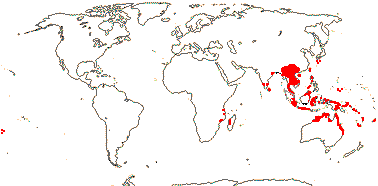
(Plant ± tuberous); (Si02 accumulation [C. revoluta]); also successive cambia, al cambia persistent; hairs transparent; outer periclinal wall of epidermis pitted, stomata not oriented; leaf bases persistent, leaflets circinate, (dichotomously divided), midrib + [single U-V-shaped bundle], secondary vasculature diffuse; megasporophylls not forming a cone, on stem in zones alternating with leaves, margins lobed or toothed; ovules (1-)3-8/sporophyll; ?spermatids; seeds platyspermic; n = 11, genome ca 10.6 Gb; tenfold increase in mitochondrial tandem repeat sequences, Bpu mobile sequences; testa splits longitudinally during germination.
1/119: [list]. E. Africa and Madagascar, South East Asia to New Caledonia and Tonga (map: from Jones 2002). [Photo - Cycas megasporophyll.]
Age. Diversification within Cycas may have begun ca 36 Ma (see Wink 2006; Treutlein & Wink 2002; Nagalingum et al. 2009), however, Condamine et al. (2015) estimate an age of (29.1-)17.6(-10.1) Ma, although other estimates were around 51.4 Ma. Coiro et al. (2023) estimate a crown-group age of (40.0-)24.4(-18.1) Ma, while ages in J. Liu et al. (2021b: Fig. 2, Table 2) using three different calibration schemes and two different priors are ca 93.7, 87.4, 69.3, 52.6, 42.9 and 9.3 Ma - Liu et al. preferred the 42.9 Ma age.
Coiro et al. (2023) recovered a clade including fossils of Ctenis, etc., that was sister to Cycas. Traskia maahlae, in Jurassic-Callovian deposits ca 163 Ma from British Columbia, has platyspermic seeds that crack open longitudinally during germination, both features of Cycas, however, the vascular anatomy of the seeds is unlike that both of Cycas and of Zamiaceae (Rothwell et al. 2022).
Evolution: Divergence & Distribution. Crown-group Cycas is, as just mentioned, quite young, but the phylogenetic fuse of the genus seems to be over/around 250 Ma (Condamine et al. 2015; J. Liu et al. 2021b; Coiro et al. 2023; see also Ramírez-Barahona et al. 2020 for such fuses). Cycas may have diversified initially in East Asia (J. Liu et al. 2021b), other suggestions - hardly incompatible - including Indochina (Mankga et al. 2020a) and subtropical South China (Xiao & Möller 2015). Liu et al. (2021b) noted the position of section Wadeae, from Palawan, presumably reflecting a vicariance event, growing as it does on an Eurasian micro-continental block. Also worthy of note are the distributions of the sister taxa C. thouarsii, from East Africa-Madagascar, and C. zeylanica, from Sri Lanka; these species are firmly embedded in an Australo-Malesian clade that have floating seeds (Liu et al. 2021b), and although Liu et al. (2021a) found that they shared a 317-bp chloroplast deletion, relationships in this area are not very tidy. (Note that the Cycas fossils, much mentioned, are relevant to dating issues only insofar as they are members of the crown-group.)
The genome of Cycas panzhihuaensis is enriched in gene families involved in pathogen interaction pathways, e.g. plant immunity, also stress-response genes (c.f. Ginkgo not), including genes that are involved in the plant's defence against insects. Some of these genes may have moved to Cycas via horizontal transfer from bacteria (Y. Liu et al. 2022 for details).
Ecology & Physiology. Tomlinson et al. (2017) noted that the leaflets of Cycas were innervated by vascular bundles successively leaving the inverted Ω in which the bundles are arranged in the petiole and at least the lower part of the blade, and they left from bundles at the tips of the Ω. Towards the apex of the leaf a shallowly arcuate series of bundles is all that is left, but the traces still leave from the marginal bundles; in all cases, the bundles divide and anastomose only as they leave. This may have consequences for the plumbing of the leaf, and although the Cycas Ω is about the simplest in Cycadales, the diagrams in Matte (1904) suggest that in Zamiaceae the story may be more complicated.
Pollination Biology & Seed Dispersal. Beetles and a microlepidopteran were found to visit the the male cones of Cycas micronesica, and the latter, at least, is a pollinator. It oviposits in the male cone which its caterpillars eat, and in some localities new male cones are produced more frequently when the cone is eaten than when it is not (Marler 2010), but beetles are overall the commonest pollinators (Xu et al. 2015; Hall & Walter 2018 and references). Roemer et al. (2013) and Ito-Inaba et al. (2019) discuss thermogenesis, which is quite protracted and may cause the male cone to be 10o C or more above ambient temperatures; in the first study the temperature was highest somewhat before and somewhat after microsporangium dehiscence, which seems a little odd. Thermogenesis was more apparent in the microsporophylls than in the microsporangia (Ito-Inaba et al. 2019). The ovulate cone is the brood site for some pollinators (Toon et al. 2020). There may also be wind pollination, if not very efficient, so ambophily may be the basic condition for the clade (Kono & Tobe 2007; Hall & Walter 2018).
Hori and Miyamura (1997) discussed fertilization in Cycas.
Many species of Cycas probably have animal-dispersed seeds, and species ranges are narrow. Some 10 species like C. circinalis have larger seeds with spongy tissue that can float, the persistent sarcotesta with a thick, waxy, resinous epidermis being water-repellant, such species often have broader distributions (Dehgan & Yuen 1983; J. Liu et al. 2021a). Furthermore, the embryo develops to maturitry as the seed floats along (Liu et al. 2021a), although how this relates to the often rather protracted embryo development in other cycads and in gymnosperms in general I do not know.
Genes & Genomes. Cycas, dioecious, appears to have an X—Y sex determination system (Y. Liu et al. 2022 - what about Zamiaceae?).
For the plastome of Cycas taitungensis, see C.-S. Wu et al. (2007).
Chaw et al. (2008) discuss the distinctive chondrome of Cycas, which may even include some self-replicating elements.
Chemistry, Morphology, etc.. Cycas revoluta contains a fair amount of silica (Trembath-Reichert et el. 2015). There are large amounts of non-structural carbohydrates, particularly starch, in the cortex and pith of the stem of C. micronesica; some mono- and disaccharides, although overall less abundant, are found mostly in the pith (Marler 2018).
Terrazas (1991) discussed the development of successive cambia in Cycas; all cambia seem to remain fuctional. For a detailed survey of leaflet anatomy, see Griffith et al. (2014).
ZAMIACEAE Horaninow - Back to Cycadales —— Synonymy: Boweniaceae D. W. Stevenson, Dioaceae Doweld, Encephalartaceae Doweld, Microcycadaceae Tarbaeva, Stangeriaceae L. A. S. Johnson
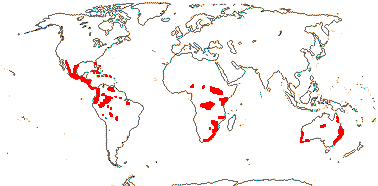
(CAM photosynthesis - Dioon edule); (cone dome 0); (cortical steles 0, stem not polyxylic); (plant prickly - Cerat.); hairs coloured; lamina with abaxial sclerenchyma girdles, transfusion tracheids at phloem pole, mesophyll fibres + (0), (mucilage canals 0); epidermis with thin- and thick-walled cells, encircling cells of stomata distally sclerified (not - Bowenia), stomata axially oriented (± unoriented - Stan.), elongated, (subsidiary cells 0 - Bow.); (cataphylls 0); leaves circinate (inflexed - Cerat. matudae, Stan.), leaflets flat [erect], (circinate - Bow., ?Stan.; plicate - some Zamia), midrib bundles several (one -Stan.), veins regular, subparallel, (stipules at apex of leaf base - Cerat.); megasporophylls peltate; ovules 2(-3)/sporophyll, inverted [but not anatropous]; microgametophyte: spermatids (up to 22 - Microcycas), nucleus spherical; seeds radiospermic; suspensor long, spirally twisted, cotyledons (1-3); x = 9, n = 9 (8, 13; 8-14, Zamia), nuclear genome [1 C] 6.7-22.8 pg; germination via apical pore in seed coat [= operculum], coronula + [= lines of dehiscence following outer set of vascular bundles in sclerotesta around micropyle].
9/250: [list], Zamia (86), Encephalartos (65), Macrozamia (41), Ceratozamia (36). Scattered throughout the tropics and subtropics. Map: from Jones (2002). Photo: Encephalartos, Zamia.
Age. Downie and Donaldson (2005) dated early divergence within Zamiaceae to ca 94 Ma, and the estimate in Salas-Leiva et al. (2013), at (111-)91(-70) Ma, is similar, while around 185 Ma is the age suggested by Crisp and Cook (2011), (208-)156(-107) Ma by Condamine et al. (2015), ca 107.6 Ma by Y. Lu et al. (2014), perhaps ca 125 Ma by Salzman et al. (2020), 199-198 Ma by J. Liu et al. (2021b) and (236.3-)183.5(-159.8) Ma by Coiro et al. (2023).
If the assignments of fossils like Kurtziana to near Zamia are correct, a crown-group age of over 200 Ma for the family may be likely (Wilf & Escapa 2014). In morphological analyses of fossil and extant Cycadales, including a Late Cretaceous fossil from Argentina, Kurtziana and many other fossils were embedded well within Zamiaceae (Martínez et al. 2012): [Bowenia + Stangeria] were sister to the rest of the family. This might also suggest an older age for crown-group diversification. The [Macrozamia [Lepidozamia + Encephalartos]] clade is currently to be found in Africa and Australia, although the fossil Austrozamia stockeyi is known from the early Eocene in Patagonia ca 52.2 Ma and is perhaps closest to the African Encephalartos - or to the Australian Lepidozamia if the adaxial epidermal cell pattern is taken into account (Wilf et al. 2016b). Interestingly, Encephalarteae are known from Cretaceous India (see Wilf et al. 2016). Eobowenia, found in Early Cretaceous rocks ca 118-116 Ma from Patagonia, has recently been described; there is some support for a position sister to the Australian Bowenia, but overall there is very little support for deeper relationships in Zamiales in this morphological analysis (Coiro & Pott 2017), and it is unclear if this bears on crown-group ages for diversification (c.f. Coiro & Pott 2017). Ceratozamia, now largely from Mexico, but also Guatemala, Honduras and Belize in Central America, is known from Lower Oligocene deposits in Europe (Martínez-Domínguez et al. 2024).
Evolution: Divergence & Distribution. For the evolution and biogeography of Central American cycads, see Taylor B. (2012); Mexico may the centre of origin of Zamia (Zonneveld & Lindsrtöm 2016; Lindstrom et al. 2024: MegaMexico) - crown-group age ca 26.3 Ma (Coiro et al., 2023) - and ca 32/36 species of Ceratozamia are also endemic there (Martínez-Domínguez et al. 2022) - crown-group age ca 22.2 Ma (Coiro et al., 2023). Martínez-Domínguez et al. (2024) looked at the evolution of morphological characters in Ceratozamia, finding that the volume of ovulate strobili was linked with phylogeny and the variability of reproductive structures was associated with heterogeneous climates. If the stem age of Microcycas - ca 68.3 Ma - holds, then its biogeography becomes interesting, because its sole species (M. calocoma) is restricted to western Cuba, not yet emergent then (Calonje et al. 2019). Habib et al. (2025, see also earlier references) suggested that the age of crown-group Encephalartos was some (26.8-)26.3(-25.5) Ma, the genus originating in southern Africa where most of the extant species can be found, then moving northwards in the eastern part of the continent, and finally into central and West Arica (the latter including Nigeria, etc., with 1 species).
The relatively recent development of particular pollination associations may have contributed to diversification in Encephalartos, Macrozamia, etc., in the (late) Caenozoic (Oberprieler 2004). However, Habib et al. (2025) link diversification in Encephalartos to cooling - and drier - climates in the Miocene. In Australia, Cycadothrips, a basal thysanopteran, pollinates Macrozamia alone, and there may be both co-diversification in allopatry (but not co-evolution, since the insect pollinates any Zamia growing where it does) and also host-switching in this association, so divergence times in plant and pollinator may be quite different, sometimes being very much earlier in the pollinator and sometimes being more or less contemporaneous (Brookes et al. 2015; see also Mound & Terry 2001; Terry et al. 2007a, b; 2014).
Chaw et al. (2005) suggest apomorphies for Zamiaceae and some clades within it. Coiro et al. (2020b) examined foliar anatomy in some detail, emphasizing characters on a tree where Bowenia is sister to a clade containing Microcycas, Zamia, Stangeria and Ceratozamia (ibid.: Fig. 8, but c.f. topology in Fig. 1, left). Habib et al. (2025) optimised 12 morphological characters on their tree of Macrozamia and suggested that some characters occured in basal members of the genus.
Stangeria is perhaps particularly distinctive: It develops buds from its roots, it lacks cataphylls, and its leaflets have a midrib and pinnate venation, all derived features. Bowenia produces only a single frond per season and cataphyll production is irregular, it has tuberous structures, and although the xylem of young plants of Zamiaceae usually have scalariform tracheids, they are not found here, perhaps progenesis (Coiro et al. 2020b). The xylem of the tubers of species of Zamia and Stangeria also have scalariform tracheids, not the tracheids with circular bordered pits found in the trunks of other genera, including species of Zamia itself that have trunks rather than tubers (Chrysler 1937).
Donaldson (1993) noted that there was mast seeding in some species of African Encephalartos, and sometimes large numbers of seeds were eaten by the weevil Antliarhinus, but overall the predator satiation hypothesis did not hold. For more on masting, see Fagaceae.
Pollination Biology & Seed Dispersal. There are widespread, close and specific associations between Zamiaceae and their beetle (often weevil) and thrip pollinators (e.g. Stevenson et al. 1998b; Schneider et al. 2002; Terry et al. 2007; Hall & Walter 2018; Toon et al. 2020). For thermogenesis - up to 15o C or so above ambient temperatures - in the male cone, with complex temperature changes over its life, see Roemer et al. (2017 and references). The pollinators move from the male cone as heating occurs; heating in female cones is far less, sometimes almost non-existent, longer, and metabolic peaks were substantially earlier than temperature peaks - it is not totally clear what is happening with female cones (Roemer et al. 2005). In the push-pull pollination mechanism thrips, for example, enter male cones in particular when they are somewhat warm and emitting attractive odours; when the temperature of the male cone increases all the thrips leave abruptly, entering male (and female, hence fertilization) cones only when temperatures are lower - although looking at cycads as a whole, various other stimuli, including volatiles, are also involved (e.g. Suinyuy et al. 2010; Terry et al. 2013; Toon et al. 2020), and of course pollinating beetles can dtecet the ultraviolet radiation emitted by the heated cones (Valencia-Montoya et al. 2025: see above under Cycadales). The timing of this thermogenic maximum varied depending on whether thrips or weevils were the pollinators, and the steepness of the ascent to the maximum also varied (see Terry et al. 2020). Wind pollination may also occur (Suinyuy et al. 2009), and Cucujoidea are also pollinators, so there is ambophily here at times - all told, however, wind pollination is not very common (Toon et al. 2020). The larvae of the pollinators eat either the stamens or the ovules, while in Stangeria eriopus there is deceit pollination (references in Toon et al. 2020). All in all a complex system that has been quite extensively studied, even if there is still much to find out. Thus Terry et al. (2021) found prenyl crotonate, unknown from any other natural source, in receptive pollen and ovulate cones of Macrozamia chadwickii, where it attracted a member of the Cycadothrips chadwickii species complex.
Animal dispersal of the seeds - they are large, often brightly coloured, and have a fleshy outer layer - is likely for most genera.
Plant-Animal Interactions. In S.E. Africa a group of brightly coloured diptychine geometrids (loopers) with brightly-coloured caterpillars is more or less restricted to cycads (Cooper & Goode 2004). Quicke et al. (2024, see also 2025) noted that very few caterpillars were to be found on cycads in the Guanacaste (Costa Rica) area, and those that were there were oligophagous.
Plant-Bacterial/-Fungal Interactions For more on diversification of fungal associations in Zamiaceae, see under Cycadales above.
Genes & Genomes. Variation in genome size in Zamia - from 33.7-45.7 2C pg - is relatively far less than that in chromosome number - n = 8-15 - but variation in the former is correlated with geography (Zonneveld & Lindström 2016). Kokubugata et al. 2002) looked at the distribution of ribosomal DNA in somatic chromosomes.
Chemistry, Morphology, etc.. For stomatal morphology and evolution in Dioon in particular, see Barone Lumaga et al. (2015), for stomatal development, see Coiro et al. (2021). Leaf vernation is rather complicated (Coiro et al. 2021: Table 2).
There are stomata at the apex of the nucellus in Zamia, perhaps reflecting a time when the nucellus - really the wall of the megasporangium - was exposed; megagametophytogenesis in Zamiaceae is discussed by Sánchez-Tinoco et al. (2022: Zamia furfuracea, 2023): The free nuclei form radially-elongated tri- to hexahedral alveoli, there is ca ca 3-layered transfer tissue of nucellar origin, and the large egg nucleus pushes the two neck + associated epithelial cells apart as it in turn is pushed towrds the micropyle by expanding vacuoles. Microcycas produces multiple male gametes per male gametophyte and several - even hundreds - of ovules are produced by each female gametophyte - potential polyembryony.
Phylogeny. For relationships within Zamiaceae, see e.g. Treutlein and Wink (2002: rbcL), Rai et al. (2003, 2008b), K. D. Hill et al. (2003, 2004), Bogler and Francisco-Ortega (2004) and Wink (2006). Details of relationships in the clade remain rather unclear, support for nodes along the spine mostly being low, and they conflict in part, at least, with those suggested by previous morphological studies. The positions of Bowenia, Stangeria and Dioon have been particularly uncertain; all three are distinctive genera. Stevenson (1992; see also Brenner et al. 2003) placed Bowenia and Stangeria in Boweniaceae (see also Martinez et al. 2012), however, Chaw et al. (2005, see also Rai et al. 2003; Zgurski et al. 2008) suggested the following quite well supported relationships within Zamiaceae: [Dioon [Bowenia (not always here) [the rest - including Stangeria]]]. Dioon was also found to be sister to the rest of Zamiaceae by Crisp and Cook (2011: support strong), Griffith et al. (2012: morphology and molecules), Gorelick et al. (2014) and Y. Lu et al. (2014), and this position is consistent with e.g. variation in the micromorphology of the cuticular waxes (Wilhelmi & Bartlott 1997), Dioon and Cycas having a plesiomorphic micromorphology. Relationships in Condamine et al. (2015) are [Dioon [[Bowenia [Stangeria + Ceratozamia]] [Microcycas + Zamia]]] [Macrozamia [Lepidozamia + Encephalartos]]]] (the Macrozamia et al. trinity is commonly recovered), and relationships are largely similar, although Bowenia was part of the [Macrozamia [Lepidozamia + Encephalartos]] clade, in Little et al. (2015). Stangeria never forms a clade with Dioon or Bowenia in molecular studies, but it is similar to Ceratozamia cytologically (Kokubugata et al. 2002). For additional papers, see Y. Lu et al. (2014), Sen et al. (2016) and Salzman et al. (2020). Relationships recovered by Stull et al. (2021) in their transcriptome analyses were rather poorly supported, apart from the Macrozamia et al. trinity and [Microcycas + Zamia]. Coiro et al. (2023) carried out a comprehensive study of Cycadales as a whole, including 321 species and 2 plastid, 1 mitochondrial and 16 nuclear loci, also 60 species of fossils and 31 foliar characters, these latter also scored for extant taxa. They recovered the relationships [Dioon [[the Macrozamia et al. trinity] [Bowenia [[Stangeria + Ceratozamia] [Microcycas + Zamia]]]]], and these seem best followed for now.
Topologies in morphology- (95 characters) and molecule-based trees of Ceratozamia recovered by Martínez-Domínguez et al. (2024: 36 spp.) differed, and there were contrasting phylogenetic signals in pollen and ovulate strobili; when two fossil taxa were included in the analyses, they were recovered as sister to the rest of the genus.
For relationships within Encephalartos, see Treutlein et al. (2005, also references in Habib et al. 2025), with Lepidozamia, it may have diverged as recently as 5-20 Ma. Mankga et al. (2020b) looked at relationships here - all species, 2 nuclear and 3 plastid markers - and dated the crown group of Encephalartos to ca 9 Ma, diversification beginning a mere 6 Ma or so; sister to Encephalartos was Lepidozamia, the two diverging ca 22 Ma. In a recent study by Habib et al. (2025: 64/65 spp., 3545 single-copy nuclear genes) recovered a generally well supported phylogeny with 8 main groups and decidedly different relationships than in Mankga et al. (2020b); they suggested that the age of crown-group Encephalartos was (26.8-)26.3(-25.5) Ma.
Caputo et al. (2004b; see also Zonneveld & Lindström 2016; Clugston et al. 2016) looked at relationships within Zamia, where there is a geographic signal [Caribbean [Central America + South America]]. Lindstrom et al. (2024: 77 spp., 2901 coding sequences of single-copy nuclear genes) recovered similar relationships here, MegaMexico being the origin of the genus; reticulation seems to have been notable.
Classification. Zamiaceae are circumscribed broadly - the family is not very big. Chaw et al. (2005) suggested a realignment of generic limits throughout the family; see also The Cycad Pages.
There are various infrageneric classsifications of Encephalartos; Nabib et al. (2025) recovered eight main groups, in turn represented by two groups, two of eight group were subdivided into three more groups. - i.e 2:8:12.
Botanical Trivia. Cones in male plants of Dioon edule are produced every 3-9 years and in female plants every 10-52 years (Vovides 1990).
)